Quick summary
To experience authentic Bali without the tourist crowds, skip congested southern hubs like Kuta and Canggu in favor of serene retreats in Sidemen, Munduk, or luxury jungle lodges 3–8 kilometers outside central Ubud. We recommend trading crowded tourist queues for pristine natural wonders like the 80-meter multi-tiered Sekumpul Waterfall and East Bali's black-sand diving havens. Reach Bali well-rested by taking advantage of consolidator business class fares starting at $3,800–$5,200 round-trip—slashing over 50% off standard $8,000–$11,000 retail prices.
Bali is not overrated. That claim usually comes from someone who spent three days in Kuta, got stuck in Canggu traffic, and paid $25 for a smoothie bowl next to a co-working space. The island itself — its volcanic highlands, sacred water temples, black-sand fishing villages, and offshore reefs — remains genuinely extraordinary. The problem is pure geography: too many visitors concentrated into too few square kilometers.
The fix is straightforward, if not always obvious from a standard itinerary. Go to different places, at different times, and stay somewhere that isn't on the Seminyak hotel strip. Do that, and Bali delivers everything the brochure promised.
Before you start planning flights, one practical note: CEOFLIGHTS regularly runs business class fares from the US to Bali's Ngurah Rai International Airport (DPS) — typically through Singapore (SIN) or Kuala Lumpur (KUL) — that come in well below published retail. Through our airline contracts, fares that retail at $8,000–$11,000 round-trip in Singapore Airlines Suites or Business Class often drop to $3,800–$5,200. We're top rated on Trustpilot and ASTA-accredited (member #900292735). Call (888) 851-6897 to check current availability before you build an itinerary around a fare that's already gone.
The places worth skipping (and why it matters to admit that)
Most travel guides won't tell you to avoid destinations by name. We will.
Kuta
Kuta built its reputation on cheap beer, surf lessons, and proximity to the airport. It delivered on all three for decades. What it can't deliver anymore is any semblance of peace. The beach itself is long and actually decent for body-surfing, but you'll share it with several thousand people, a rotating cast of vendors who won't take no for an answer, and enough sunscreen-and-Bintang energy to last a lifetime.
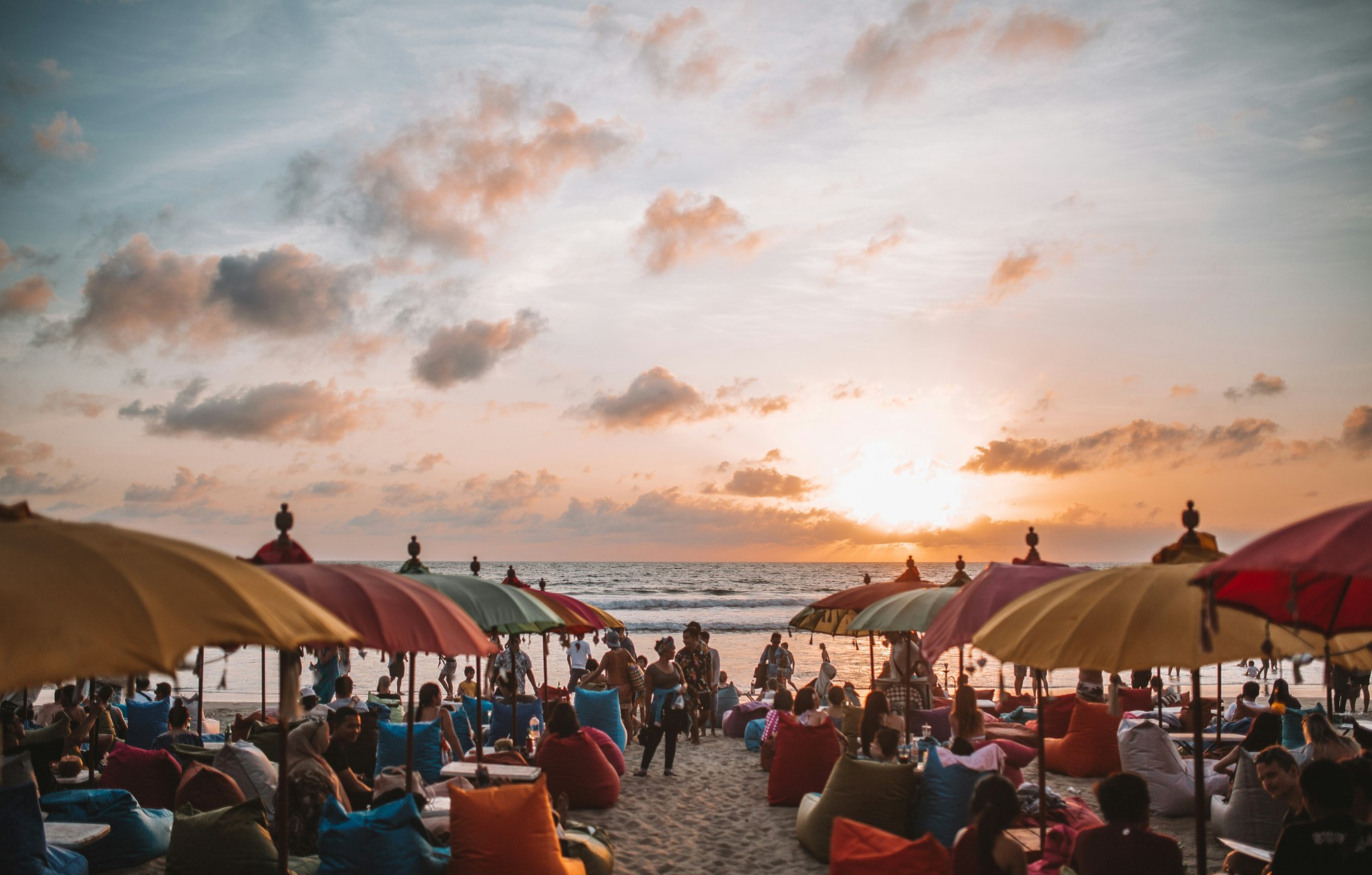
If you're 22 and on a gap year, Kuta makes sense. If you're flying business class and have four days in Bali, it makes none.
Seminyak
Seminyak is Kuta with a styling budget. The resorts are genuinely good, the restaurants are better, and the sunset beach clubs are legitimately fun for an evening. But "less chaotic than Kuta" is a very low bar. The streets gridlock from noon onward, the beach gets packed by 10am, and the whole district runs on a service economy calibrated entirely for foreign consumption. It's not Bali — it's a beachfront international resort zone that happens to be located in Bali.
Canggu
Canggu's transformation over the past decade is remarkable and not in a good way. What was a quiet stretch of rice paddies and reef breaks is now a continuous sprawl of cement mixers, beach clubs, and cafes with neon signs about "good vibes only." The surf at Echo Beach and Batu Bolong is still real. Everything around it increasingly isn't. Digital nomads have effectively colonized the place, and the construction shows no sign of stopping.
Ubud
This one is more nuanced. Ubud's cultural core — the royal palace, the traditional dance performances, the craft traditions — is authentic and worth your time. The problem is the Monkey Forest Road corridor and the central market, which have become a genuine tourist bottleneck. Expect slow-moving crowds, aggressive touts, and restaurants with laminated picture menus. The good news: the area around Ubud is spectacular, and staying five kilometers outside the center changes the experience entirely.
Activities that aren't worth the queue
Mainstream waterfall and temple tours
Tegenungan Waterfall is on every tour operator's roster precisely because it's close to Ubud and easy to reach. On any given morning between 9am and 2pm, it looks like a theme park. Tanah Lot at sunset has become essentially a crowd-management exercise. Pura Tirta Empul, where tourists wade through holy spring water for Instagram content, has crossed a line between tourism and something more uncomfortable.
None of this means these places have no value — it means there are better alternatives with comparable or superior beauty and a fraction of the foot traffic.
Sekumpul Waterfall in North Bali is objectively more impressive than Tegenungan: multiple cascades dropping 80 meters through dense jungle, requiring a legitimate hike that filters out the casual day-trippers. Leke Leke Waterfall involves a short jungle walk and almost no one else. Aling-Aling has natural rock slides. These aren't consolation prizes — they're the real thing.
For temples, Pura Gunung Kawi (ancient rock-cut shrines in a river valley outside Tampaksiring) and Pura Kehen in Bangli are architecturally stunning and routinely empty by comparison. Pura Taman Ayun in Mengwi — a royal temple surrounded by a moat — is the kind of place you can actually stand still and absorb.
Crowded beaches
The beaches at Kuta, Seminyak, and Canggu aren't bad beaches. They're just not the best Bali has, and they involve sharing space with enormous numbers of people. Suluban Beach near Uluwatu requires descending through a cave and only works at certain tides — which naturally limits the crowds. Green Bowl Beach involves a steep staircase that deters most visitors. Gunung Payung, also on the Bukit Peninsula, sees a fraction of the traffic of its northern neighbors.
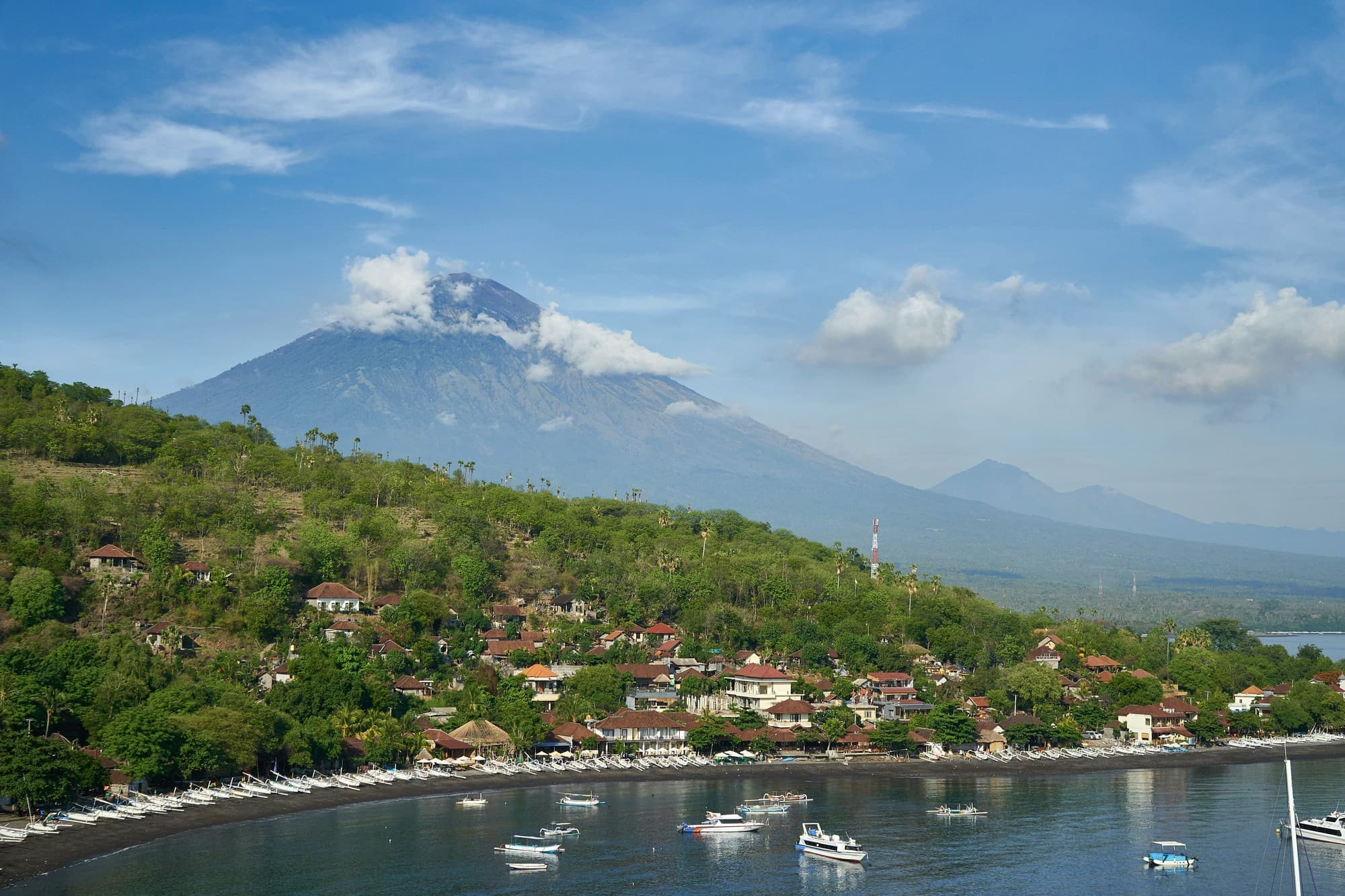
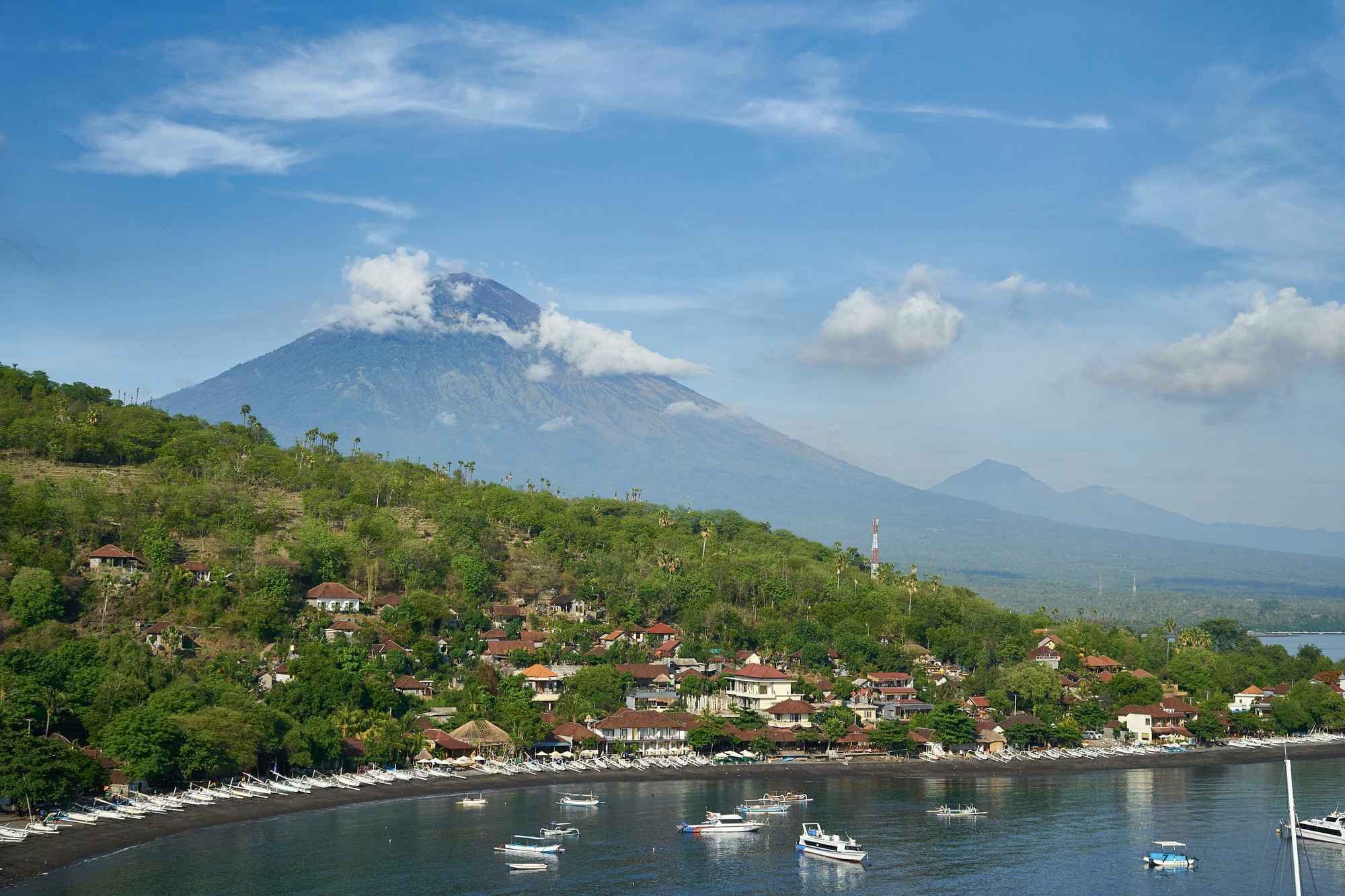
Amed on the east coast is a different world entirely: black volcanic sand, outrigger fishing boats, Mount Agung rising behind you, and dive sites that put Kuta's waterfront to shame.
Peak-hour cultural performances
The Kecak fire dance at Uluwatu Cliff is spectacular theater and I won't pretend otherwise. But the 6pm performance draws hundreds of people, and the viewing area feels more like stadium seating than a sacred ceremony. Look for village-level performances in Batuan or Sukawati, arranged through a local guide rather than a hotel concierge. They're smaller, less produced, and considerably more affecting.
Where to actually stay
The accommodation decision is probably the single most important choice you'll make for a crowd-free Bali trip. Stay in the south and you're fighting the crowds by default. Stay elsewhere and the problem largely solves itself.
Jungle properties outside Ubud
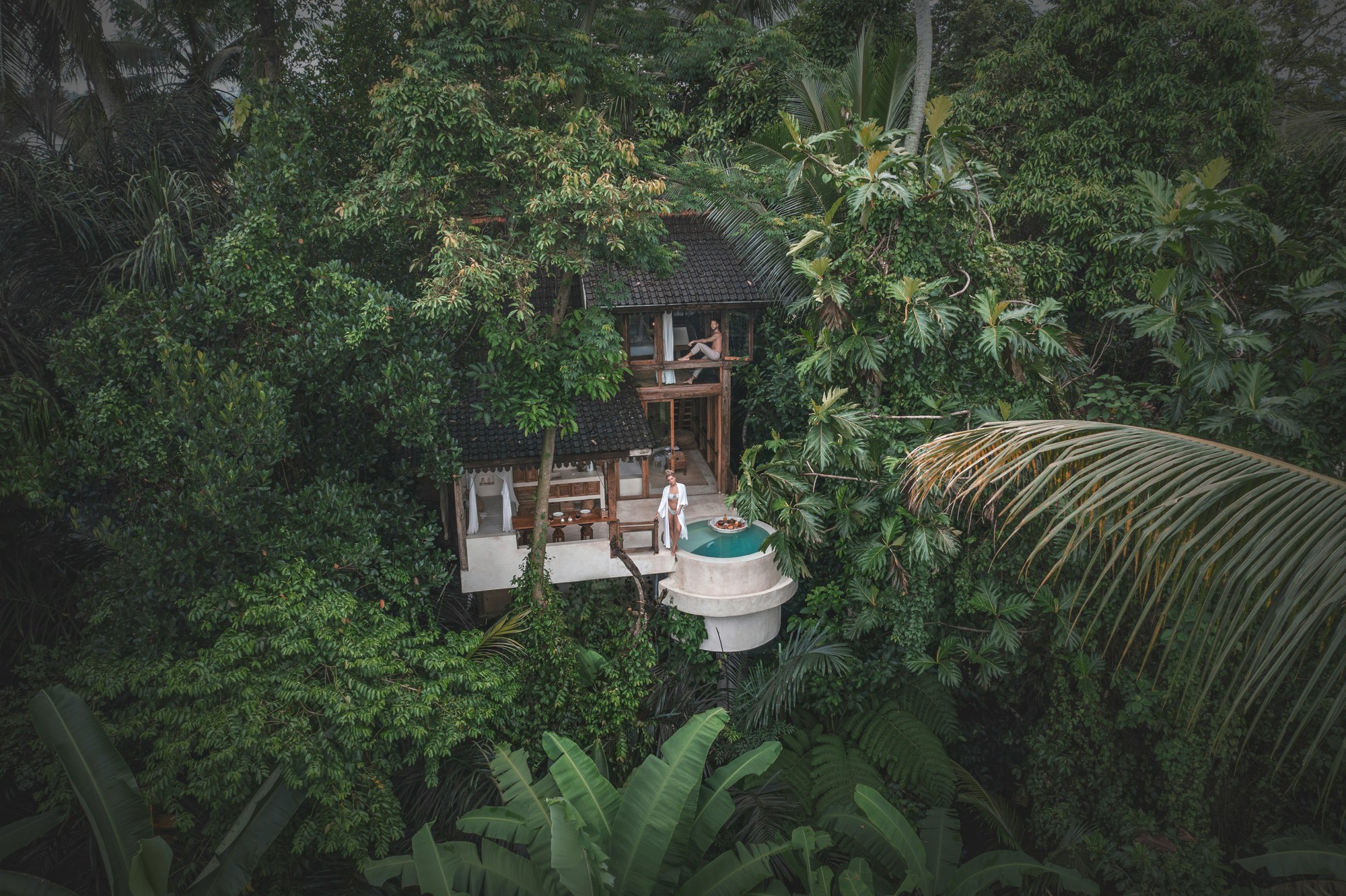
The jungle lodges 3–8 kilometers outside central Ubud — properties tucked into river valley gorges above the Ayung or Wos rivers — represent some of Southeast Asia's finest accommodation. You're looking at private plunge pools suspended over jungle canopy, rice paddy views from your breakfast table, and the kind of silence that becomes physically noticeable. This is where Bali's resort product genuinely punches above its weight internationally.
East Bali: Amed and Sidemen
Amed is a string of small fishing villages along the northeast coast, and it's my honest answer when anyone asks where to go in Bali. The diving is exceptional — the USAT Liberty wreck at Tulamben is 15 minutes down the road — the accommodation ranges from simple guesthouses to boutique cliff properties, and the pace is entirely different from the south. Sidemen, inland from the coast, sits in a valley surrounded by terraced rice fields with Agung looming behind it. The views are better than Tegalalang, the village life is unperformed, and there are almost no tour buses.
Nusa Lembongan
A 30-minute fast boat from Sanur puts you on an island with crystal-clear water, minimal traffic (no private cars at all), and a pace of life calibrated to hammocks and morning dives. Nusa Lembongan's neighbor Nusa Ceningan is even quieter. These islands absorb Bali's overflow without becoming overwhelmed by it.
North Bali: Lovina and Munduk
Most tourists never make it north of Ubud. That's your advantage. Lovina sits on a calm black-sand bay; the dolphin-watching boats go out at sunrise into genuinely empty water. Munduk, up in the coffee-growing highlands, is cool, misty, and stocked with waterfalls and spice plantations. If you find yourself wanting a sweater in Bali, you're probably somewhere good.
Boutique villas in Uluwatu, Candidasa, and Tabanan
Uluwatu's clifftop villa market has exploded but hasn't yet reached Seminyak's saturation point. Candidasa on the east coast is understated and largely ignored by the main tour circuit. Tabanan, on Bali's west coast, sits near Jatiluwih's rice terraces (UNESCO-listed, and far more impressive than Tegalalang) and the black-sand surf breaks of Medewi.
The places worth going out of your way for
Temples that reward the effort
- Pura Gunung Kawi — Eleventh-century royal mortuary shrines carved directly into volcanic rock, set in a gorge beside the Pakerisan River. The scale of the carvings is genuinely surprising when you round the final bend of the path.
- Pura Kehen — Bangli's temple complex features 11-tiered meru towers and a massive banyan tree at the entrance that's been growing for centuries. Almost no one goes to Bangli.
- Pura Taman Ayun — Royal temple in Mengwi with a wide moat and beautifully maintained grounds. Arrive before 8am and you may have it nearly to yourself.
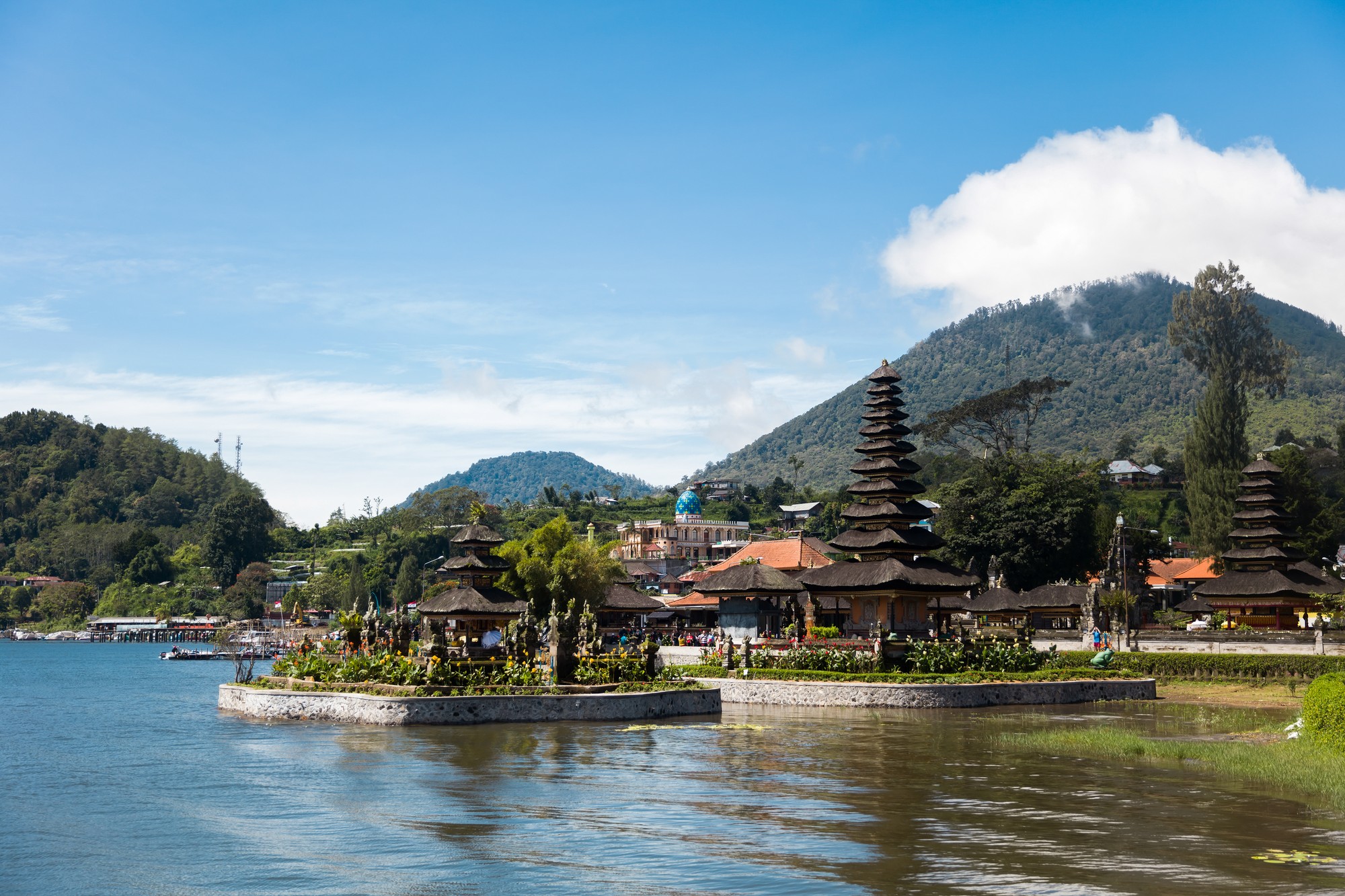
- Pura Ulun Danu Beratan — The lake temple at Bedugul gets a mid-morning rush of day-trippers. Get there at 7am and the mist is still on the water and there are perhaps a dozen people. It photographs like a dream and actually feels like a sacred site.
Waterfalls worth the hike
- Sekumpul — Two to three hours round-trip through genuine jungle, multiple separate falls, almost certainly the most beautiful waterfall on the island. Non-negotiable if you're in North Bali.
- Leke Leke — Short walk, big reward, almost no one there. A good half-day from a Ubud base.
- Aling-Aling — Brings natural water slides and cliff jumps into the equation if you want them. Adventure tourists have found it but it hasn't tipped into overcrowded yet.
- Banyumala Twin Waterfalls — Highland North Bali, cool air, twin cascades into a green pool. Requires a bit more navigation than most visitors are willing to attempt.
Hikes with actual solitude
Mount Agung is the real Bali volcano: 3,142 meters, active, and a demanding 6–8 hour round-trip depending on which route you take. The summit sunrise views extend to Lombok and Java on a clear morning. It sees a fraction of Mount Batur's traffic because it's harder and requires a guide who actually knows the mountain. Batur has become a tourist conveyor belt; Agung remains a genuine undertaking.
Mount Batukaru, Bali's second-highest peak, sits within dense primary forest and gets almost no visitors by comparison. The approach through Jatiluwih adds the rice terrace scenery to the day.
Local villages and ceremonies
Tenganan, a pre-Hindu Bali Aga village near Candidasa, operates under its own customary law and produces the double-ikat geringsing textile — one of the rarest weaving traditions in the world. The village is small, the residents are accustomed to visitors but not overrun by them, and an hour there is worth more culturally than an afternoon in the Ubud Art Market.
When planning your trip, ask a local guide about any upcoming temple ceremonies or odalan festivals in the region you're staying. Attending a ceremony as a respectful observer (dress appropriately, follow the guide's cues) is the single most immersive cultural experience Bali offers. These happen constantly — the Balinese calendar is dense with them — and most tourists never see one because it requires some local knowledge to know where to be.
Diving and snorkeling without the crowds
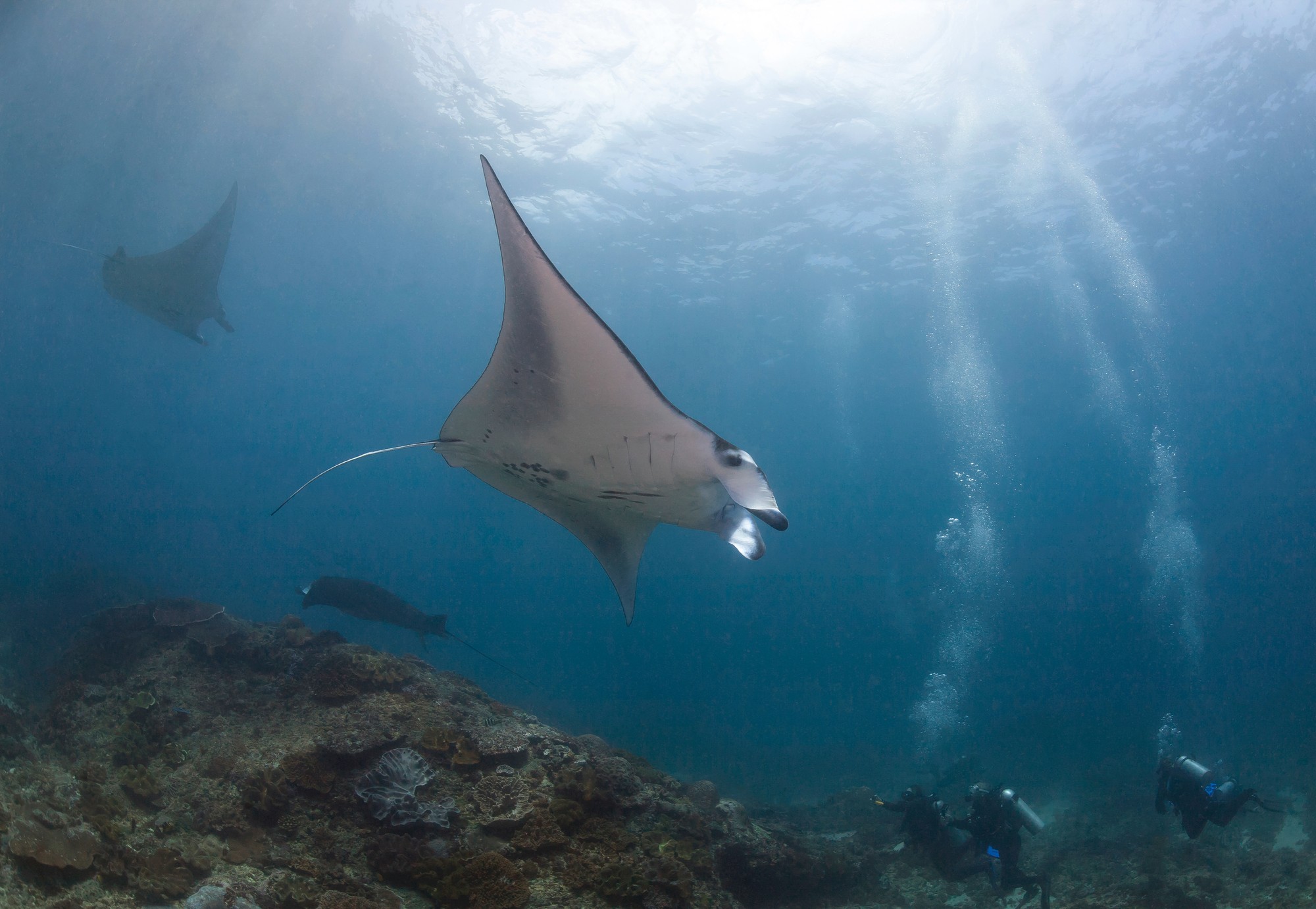
- Amed and Tulamben — The USAT Liberty wreck at Tulamben is accessible from the beach and dive-able at all skill levels. The Amed reef system has excellent coral health and visibility. Neither site feels crowded the way Nusa Penida's Manta Point does on a busy day.
- Nusa Lembongan — Manta rays and mola mola (ocean sunfish) on the right season, with dive operators who are small enough to care about your experience. The channel between Lembongan and Ceningan runs strong currents — check conditions before booking.
- Menjangan Island — West Bali National Park, wall diving, pristine coral, barely any visitors. Requires a bit more logistics to reach, which is exactly why it stays good.
East Bali's overlooked circuit
Most itineraries skip East Bali entirely. Here's a rough circuit worth a dedicated two to three days:
- Tirta Gangga — Former royal water gardens with lotus pools and stone carvings, genuinely peaceful in the early morning
- Taman Ujung — Historic water palace with a slightly melancholy grandeur; ocean views from the upper terraces
- Pura Besakih — Yes, it's famous, but it's also Bali's most important temple complex and sits on Agung's flanks at 1,000 meters. Go early, hire the official government guide at the entrance, and don't let anyone else try to "guide" you inside
- Candidasa — Underrated coastal town; low-key restaurants, good diving nearby, and almost no gap-year tourists
Practical tactics for avoiding crowds
Time your visits deliberately. The mid-morning rush at major sites runs roughly 9:30am to 2pm. Sunrise access to Beratan, Gunung Kawi, or any rice terrace viewpoint transforms the experience. Late afternoon, 4pm onward, sees another window as day-trip buses head back to the hotel strip.
Travel in shoulder season. April through early June and September through November offer genuinely pleasant weather — warm but not oppressively humid — with meaningfully thinner crowds and lower accommodation rates. July and August are peak season; avoid them if your schedule allows.
Plan your own itinerary rather than defaulting to package tours. The standard tour vans all go to the same 12 stops in the same order. Renting a private driver for the day (roughly $50–$70 USD, non-negotiable value) gives you the flexibility to arrive early, stay longer somewhere that deserves it, and skip stops that don't.
Hire local guides for off-circuit experiences. A good guide in Amed, Munduk, or Sidemen knows which temple has a ceremony this week, which trail cuts through the forest before the tourist path, and which warung serves the best babi guling on the east side of the island. This knowledge is not on TripAdvisor.
Stay outside the south. I've said it twice already but it bears repeating: your accommodation location determines your entire experience. The south is convenient. It's also the problem.
Getting there: the flight equation
The routing matters more than most people consider. Bali's Ngurah Rai International Airport (DPS) is served by Singapore Airlines, Cathay Pacific, and Garuda Indonesia, among others, from major hubs. Singapore Airlines' Business Class on the SIN–DPS sector is solid — fully flat bed, good catering, short enough that you won't have time to really settle in, but far better than arriving economy after 20+ hours of travel. Cathay Pacific routes through Hong Kong (HKG) and their Business Class product on long-haul widebodies is genuinely good, particularly on the newer A350 configuration.
Retail fares for premium cabins to Bali can be punishing, particularly in peak season. Call CEOFLIGHTS at (888) 851-6897 to see what consolidator pricing looks like for your dates. Through our airline contracts, we regularly price these routes at 35–50% below what you'd find on the airline's own website. We're ASTA-accredited (member #900292735) and top rated on Trustpilot — you're not gambling on an unknown quantity.
Bali rewards the traveler who does a little more work. The island hasn't been ruined — it's just that its best parts require you to get off the main road, wake up earlier than you'd like, and stay somewhere that doesn't have a beach club with a DJ. Do that, and the place delivers everything that made it famous in the first place: rice fields that run up volcanic slopes, temple incense in the early morning air, water clear enough to see the reef from the surface. It's all still there. You just have to want it enough to look in the right direction.