Amex Centurion Lounges in 2026: locations, access rules, and honest assessment
Twenty-plus lounges, a $50 guest fee that adds up fast, and a five-hour connection rule nobody saw coming. Here's what Centurion access actually gets you in 2026, and where it falls short of a real business class cabin.
CEOFLIGHTS Team14 min read
Quick summary
16 U.S. locations and 11 international locations open as of late 2026, with Boston, Newark, and a second London lounge at Terminal 5 still listed as coming soon
Guest fees run $50 per adult (up to $70 in Mexico City), and new rules require guests to be on your same flight
The card gets you a decent lounge. It does not get you a lie-flat seat, a Krug pour at 35,000 feet, or eight hours of uninterrupted sleep. The ticket you book still matters more than the card in your wallet
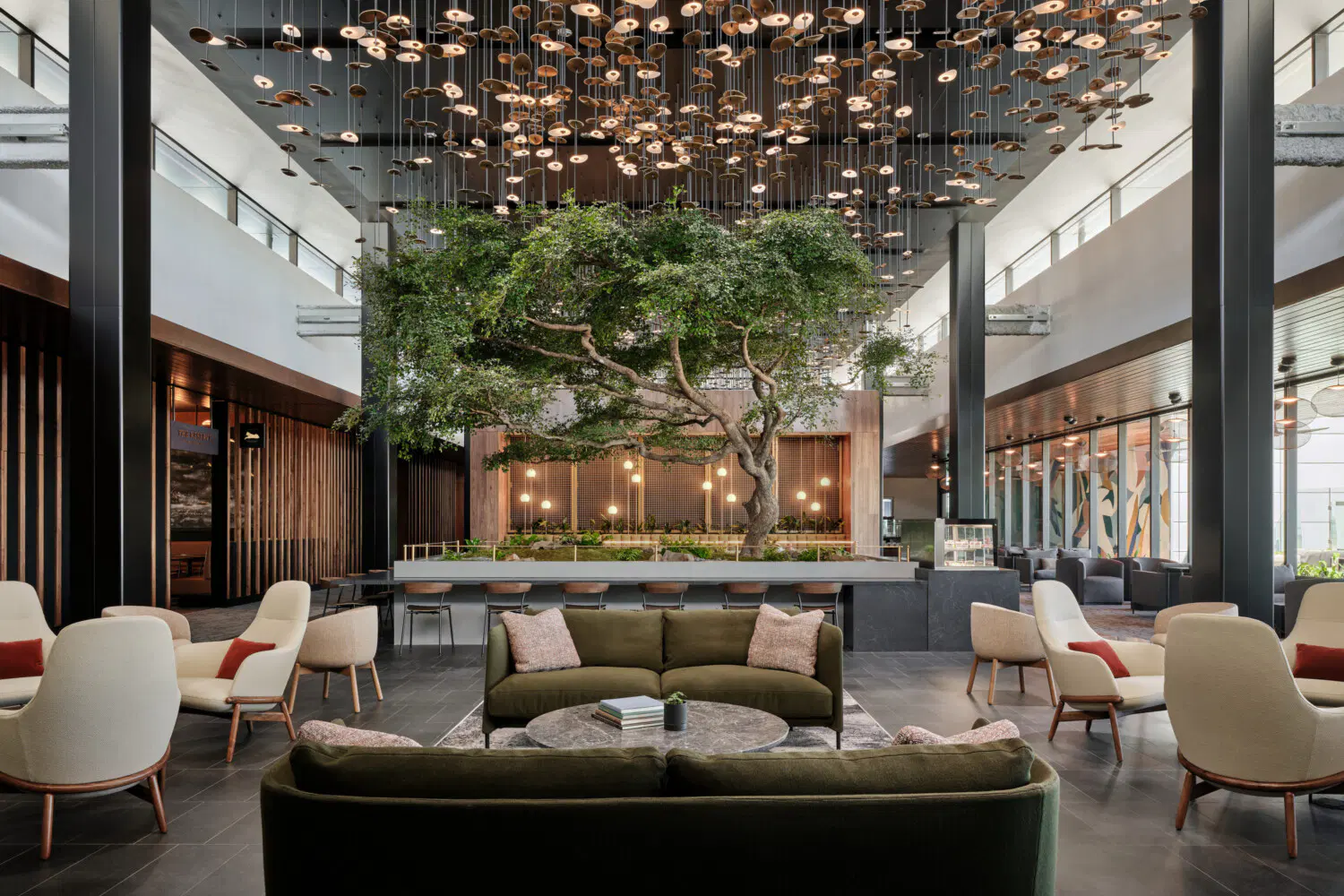
I've sat in enough Centurion Lounges over the past three years to have opinions about the short rib at DFW versus the one at ATL (DFW wins, not close). I've also missed connections because I lingered too long over the noodle bar in Hong Kong. So this isn't a press-release rundown. It's what actually happens when you walk up to that black-marble check-in desk with a Platinum Card and a boarding pass in hand.
Amex has spent a decade building the Centurion network into the most recognizable premium lounge brand in American aviation, arguably more recognizable than any airline's own lounge tier below first class. That's a real achievement. It's also created a crowding problem so severe that Amex has rewritten its access rules three times in eighteen months just to keep the lounges from becoming a fire-code violation with charcuterie.
Here's the full picture for 2026: where the lounges are, who gets in, what changed on July 8, and how much any of it matters next to the seat you actually book.
Where the Centurion Lounges actually are in 2026
Domestically, Amex now operates lounges at sixteen U.S. airports. The full list, as of this writing:
Charlotte Douglas (CLT), Dallas Fort Worth (DFW), Denver (DEN), Houston Bush Intercontinental (IAH), Las Vegas Harry Reid (LAS), Atlanta Hartsfield-Jackson (ATL), JFK, LaGuardia (LGA), Los Angeles (LAX, in the Tom Bradley terminal), Miami (MIA), Philadelphia (PHL), Phoenix Sky Harbor (PHX), Reagan National (DCA), Salt Lake City (SLC), San Francisco (SFO, currently in a temporary Terminal 2 space while the Terminal 3 build finishes in 2027), and Seattle-Tacoma (SEA).
Internationally, you'll find Centurion Lounges in Mumbai (BOM), Buenos Aires (EZE), Tokyo Haneda (HND), London Heathrow (LHR), Hong Kong (HKG), New Delhi (DEL), Melbourne (MEL), Mexico City (MEX), Monterrey (MTY), Amsterdam Schiphol (AMS, opened in September 2026 for non-Schengen departures), and Sydney (SYD).
Three more are listed as coming soon: Boston Logan, Newark, and a second Heathrow lounge in Terminal 5. None have opening dates confirmed as of November 2026, and anyone who's watched Amex's construction timelines knows to treat "2027" as aspirational.
Amex runs 27 Centurion Lounges: 16 in the United States and 11 abroad. Boston, Newark and a second Heathrow lounge are still listed as coming soon, with no dates.
27Centurion Lounges open worldwide, with three more coming soon
One genuinely new wrinkle: Amex has launched a spinoff concept called Sidecar by the Centurion Lounge. Think smaller footprint, cocktail-forward, "speakeasy" branding. The first one opened at LAS, tucked away from the main lounge, and a second is slated for CLT in 2027. It's a smart move on Amex's part, frankly, because it lets them add capacity without building another 15,000-square-foot buffet hall. Whether it actually reduces crowding at the flagship LAS lounge or just gives cardholders another line to stand in remains to be seen.
Insider Strategy
If you're connecting through LAS and want a quieter experience, skip the main Centurion Lounge entirely and check whether Sidecar has room. It's smaller, but that's exactly the point.
Who actually qualifies for entry
Not every American Express card gets you through the door, and the list is narrower than most people assume. Complimentary access belongs to:
Platinum Card members (the primary cardholder and paid additional Platinum cardmembers, though no-annual-fee Companion Platinum cards don't include lounge access)
Business Platinum Card members, same structure
Corporate Platinum Card members
Delta SkyMiles Reserve and Delta SkyMiles Reserve Business cardmembers, but only when flying same-day on a Delta-marketed or Delta-operated flight booked with a U.S.-issued Amex card
Centurion Card members (the invitation-only black card)
That Delta Reserve carve-out trips people up constantly. If you're holding a Delta Reserve card and flying United through IAH, you don't get in. The lounge access is tethered to Delta metal specifically, and only for the day of travel.
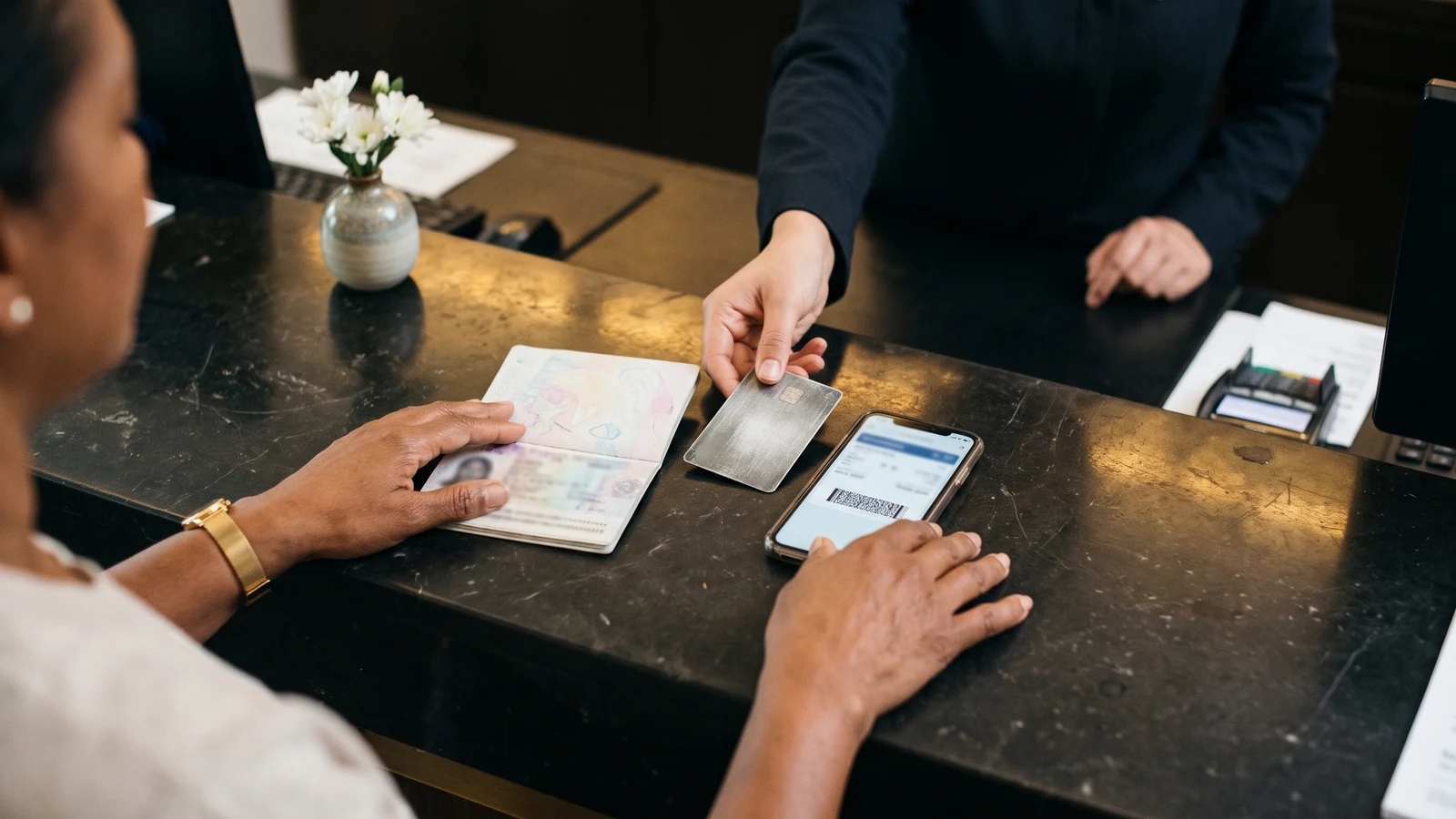
At the desk, you need three things to line up: a valid eligible card, a same-day boarding pass showing a confirmed seat (standby and nonrevenue passengers are turned away), and a government-issued ID. The name on all three has to match.
At the desk, three things must line up: an eligible card, a same-day boarding pass with a confirmed seat, and government ID, all in the same name. Standby passengers are turned away.
One more restriction worth flagging: uniformed airline, airport, or industry employees can't use the lounge even if they hold a qualifying card. Amex is explicit about this in its terms, presumably to keep the space from turning into an off-duty crew lounge.
New York to London is one of the few routes with a Centurion Lounge at both ends, though not in British Airways' own terminals: at JFK the Centurion Lounge sits in Terminal 4 while British Airways flies from Terminal 8 (where BA Business Class passengers already get direct access to the joint BA/AA Greenwich Lounge without changing terminals), and at Heathrow the Centurion Lounge is in Terminal 3 while most BA long-haul flights depart from Terminal 5. Always check terminal alignment before planning your ground time around a card lounge.
The three-hour rule, and the new five-hour rule that changes everything for connections
Most Centurion Lounges in the U.S., plus Hong Kong, London, and Tokyo, restrict entry to within three hours of your departing flight's scheduled time. That's been the standing policy for a while and it's reasonable enough if you're flying nonstop from your home airport.
The problem was always connections. Historically, if you had a same-day layover, you were exempt from the three-hour window entirely, which meant you could land at DFW at 9 a.m., camp in the lounge until your 4 p.m. onward flight, order six rounds of the smoked salmon, and nobody said a word. Great for the traveler. Brutal for capacity.
As of July 8, 2026, Amex tightened this. Cardholders and their guests on connecting or layover itineraries can now only access participating Centurion Lounges within five hours of their departing connecting flight, not the entire layover window. This applies to U.S. locations plus Hong Kong, London, Melbourne, Sydney, and Tokyo specifically. If your layover runs longer than five hours, you'll need to find somewhere else to spend the extra time before the lounge clock starts.
Since July 8, 2026, connecting passengers can enter only within five hours of their onward flight. On a longer layover, the first stretch is spent somewhere else.
Centurion Card members carry exemptions from these window restrictions, though the specifics vary by lounge, so check the terms for your specific card and location before you build your itinerary around lounge access.
Plan around the new window
If you're connecting through a Centurion hub with a long layover, the five-hour rule (effective July 8, 2026) means you can no longer camp in the lounge for the full gap. Factor this into your ground plans, especially at hubs like ATL or DFW where the alternative options outside the lounge are thin.
There's a softer exception for travelers whose departure is scheduled after the lounge closes for the night. In that case, you can typically get in up to three hours before closing time rather than being locked out entirely.
The guest fee math nobody likes to talk about
This is where Centurion access starts to feel less like a premium perk and more like a metered service. Bring a guest who doesn't hold a qualifying card themselves, and you're generally paying $50 per adult and $30 per child (ages 2 through 17). Children under two get in free, always.
Do that math across a year of travel with a spouse or a business partner who doesn't carry their own Platinum, and you're looking at real money. Twelve round trips, one guest each way, comes out to $1,200 in guest fees alone, on top of the $895 annual fee for the U.S. Platinum or Business Platinum card itself.
Amex does offer relief: spend $75,000 or more on eligible purchases with your Platinum or Business Platinum card in a calendar year, and you unlock complimentary access for up to two guests per visit, good through the rest of that calendar year plus the following calendar year through January 31. It's a meaningful perk if you're already running that kind of spend through the card for business expenses. If you're not, adding a paid additional Platinum cardmember ($195/year on the consumer Platinum) is often cheaper than paying $50 per visit.
$50Standard adult guest fee per visit (waived after $75,000 annual card spend)
The rules tightened here too. Starting July 8, 2026, any guest you bring must be traveling on the same flight as you. Previously, Amex allowed more flexibility, where a guest could accompany you into the lounge even if they were flying on a different flight out of the same terminal. That loophole is now closed system-wide.
International pricing varies, and it's worth checking before you assume the U.S. rate applies. Mexico City charges $70 per guest, notably higher than the domestic standard. Corporate Platinum members get two complimentary guests at U.S. lounges plus London and Hong Kong, a meaningfully better deal than the consumer Platinum card. Centurion members get two complimentary guests or immediate family members at every location worldwide.
What you'll actually find once you're inside
Let's talk about the product itself, because access rules only matter if what's behind the door is worth the hassle.
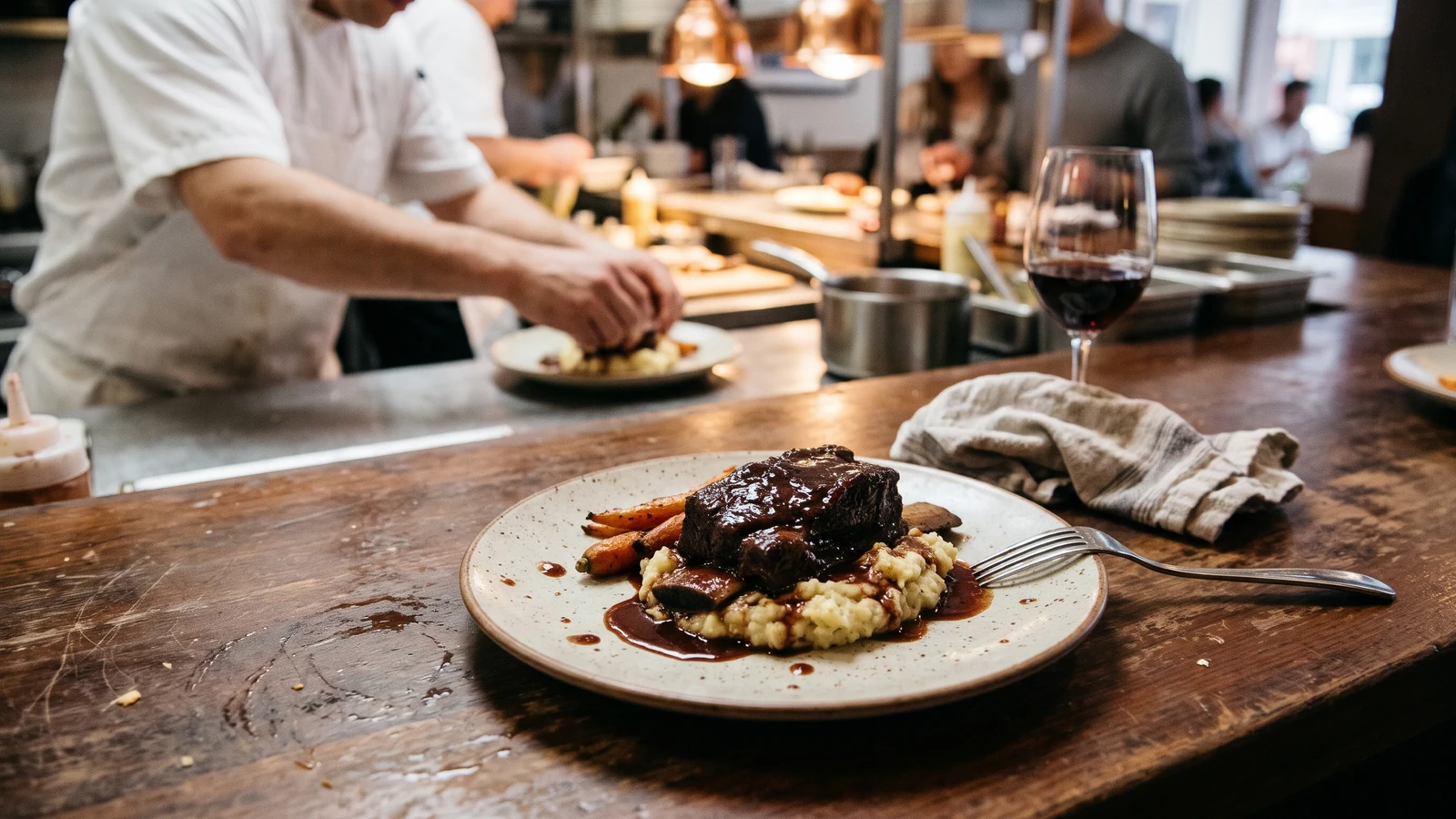
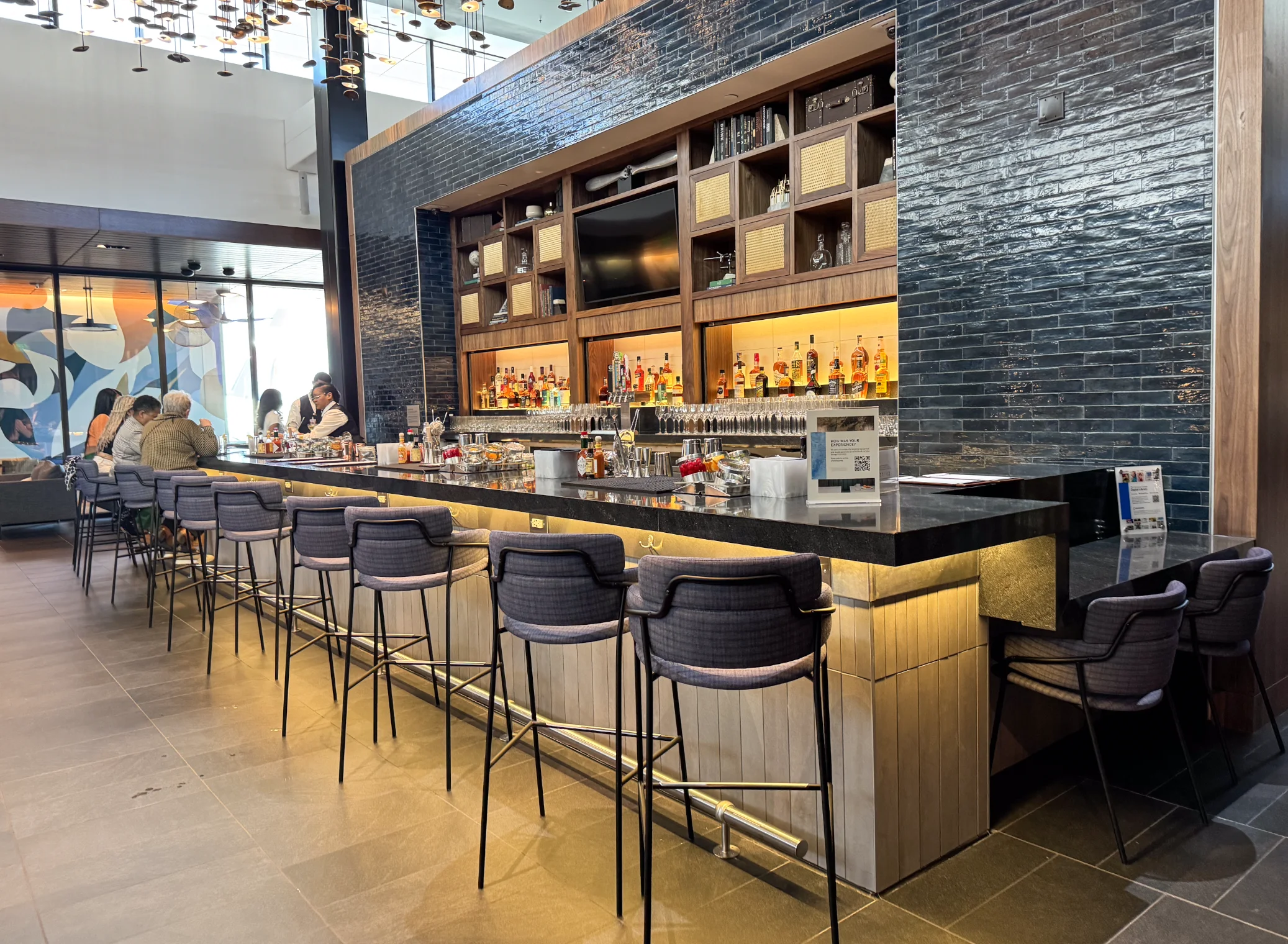
The food program has genuinely improved over the past several years. Most domestic lounges now run a James Beard Award-winning chef menu that rotates seasonally, with a hot buffet and made-to-order stations at the flagship hubs (like Resy-partnered culinary counters in Atlanta and JFK). DFW's braised beef short rib with a red wine reduction is better than it has any right to be for a lounge that serves several hundred people a day.
Most domestic Centurion Lounges serve a rotating James Beard Award-winning chef menu. DFW's braised short rib with red wine reduction is the standout.
The cocktail program is the real differentiator versus domestic airline clubs. Centurion locations staff a dedicated bartender making cocktails designed by mixologist Jim Meehan and wine selections curated by sommelier Anthony Giglio, rather than charging upcharges for top-shelf pours the way domestic Admirals Clubs and United Clubs do.
Centurion bars are staffed by a dedicated bartender pouring Jim Meehan's cocktail menu, with no top-shelf upcharge of the kind Admirals Clubs and United Clubs charge.
Here's the honest problem: capacity. Centurion Lounges have become victims of their own popularity. Weekday mornings and late-afternoon departure banks at ATL, MIA, and DFW routinely see digital waitlists in the Amex app, and it's not unusual to wait 15 to 25 minutes for entry during peak banks. Checking the live capacity meter in the Amex mobile app before walking across terminals is mandatory in 2026.
Centurion Lounge versus airline-operated business class lounges: an honest comparison
This is the question everyone actually wants answered, and most credit card blogs avoid giving a straight opinion, so here's mine.
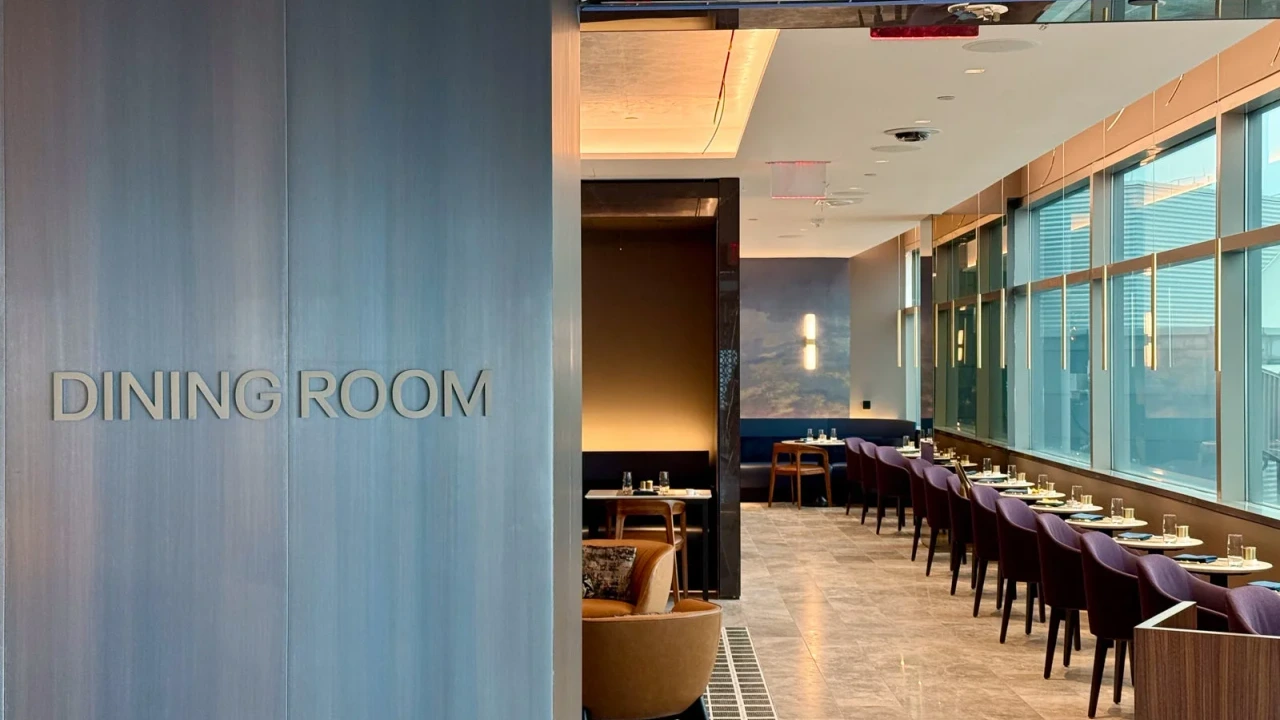
United Polaris lounges (at EWR, ORD, SFO, IAH, LAX, and IAD) beat every domestic Centurion location on food quality, sit-down dining, and space per passenger—largely because Polaris Lounge access is strictly gated by a same-day long-haul Star Alliance Business or First Class boarding pass. Credit cards and domestic upgrades cannot buy their way into a Polaris Lounge, which keeps the sit-down dining room calm even during the evening European departure bank.
Polaris Lounges at EWR, ORD, SFO, IAH, LAX and IAD admit only same-day long-haul Star Alliance business or first class passengers. No credit card buys entry.
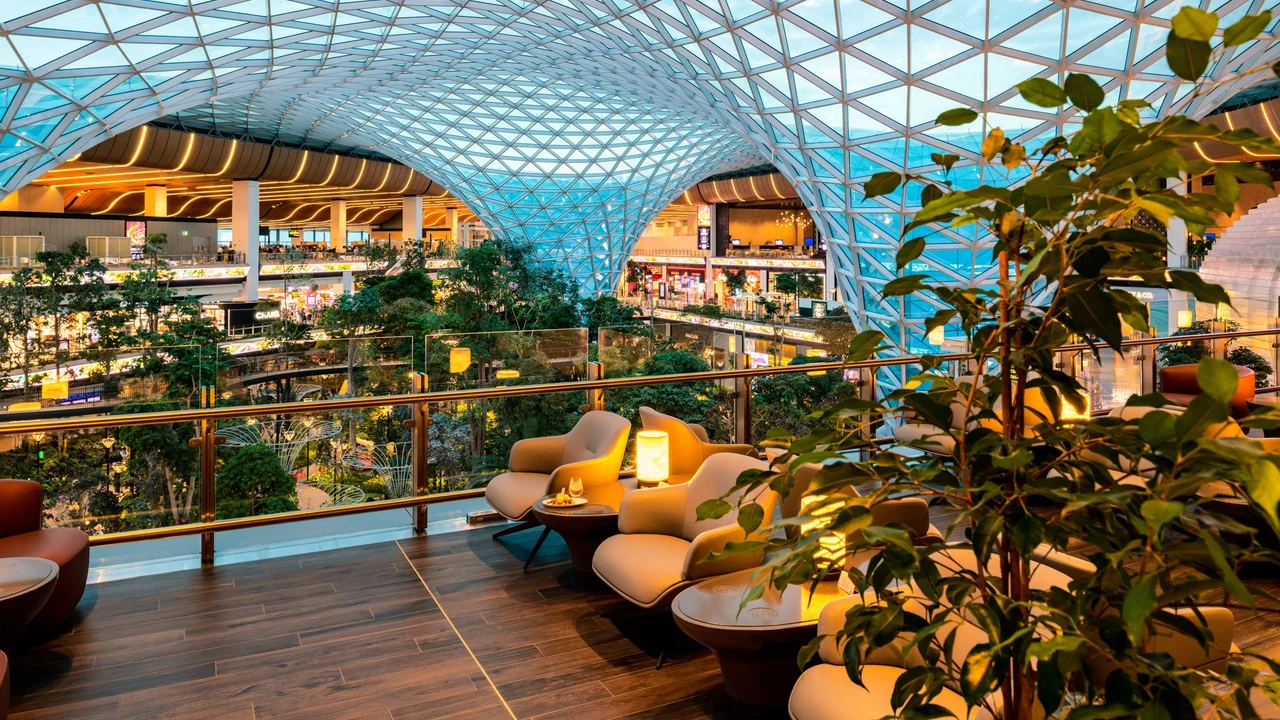
Qatar Airways' Al Mourjan Business Lounge in Doha isn't even in the same category because nothing in the U.S. card-lounge ecosystem competes with it. Spanning over 100,000 square feet across two levels (plus the newer Al Mourjan Garden lounge in the North Node overlooking the indoor tropical orchard), it offers à la carte dining, quiet nap rooms, shower suites, and enough architectural volume that you can find a quiet table even during a midnight bank of twenty widebody departures.
Qatar's Al Mourjan lounges in Doha span over 100,000 square feet, with a la carte dining, nap rooms and shower suites. Nothing in the U.S. card-lounge world competes.
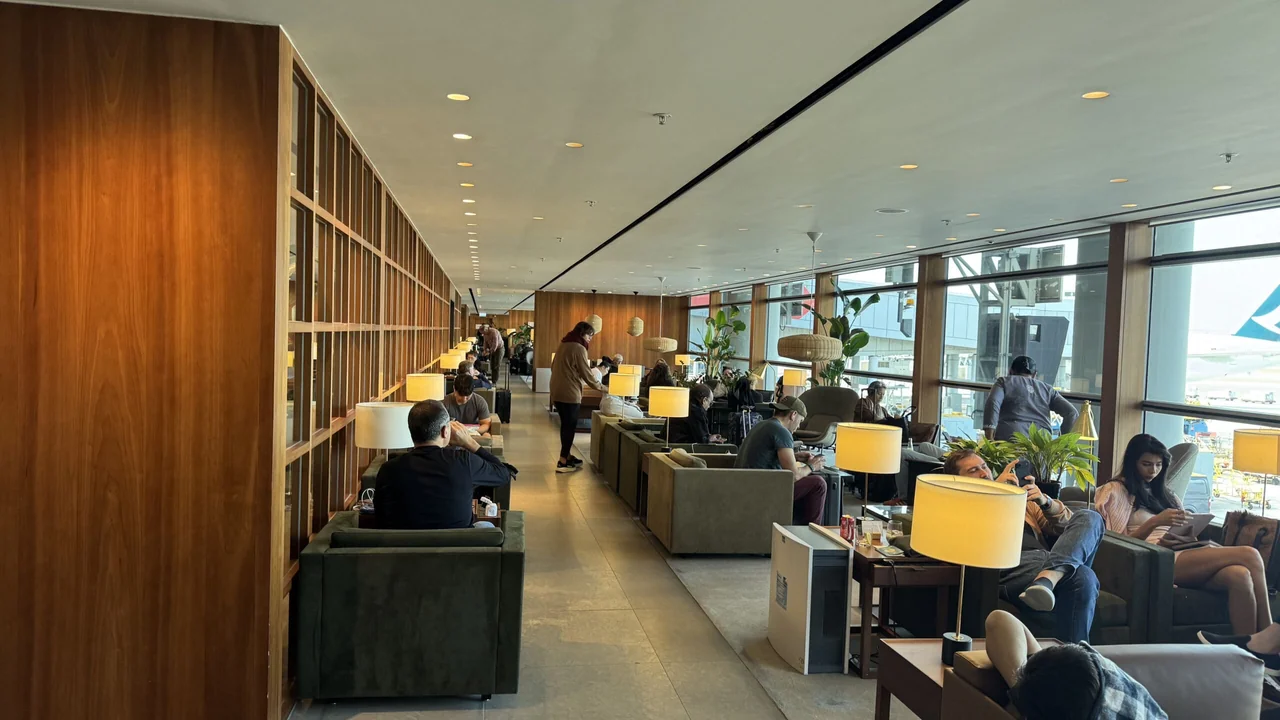
Cathay Pacific's flagship lounges in Hong Kong, particularly The Pier and The Wing, occupy that same upper echelon: made-to-order dan dan noodles and dim sum at The Noodle Bar, a tranquil Teahouse, private shower suites, and daybeds overlooking the runway. The HKG Centurion Lounge sits in the same terminal and, while pleasant, simply isn't in the same league as The Pier.
Cathay Pacific's flagship Hong Kong lounges offer made-to-order noodles, a Teahouse and shower suites. The HKG Centurion Lounge in the same terminal is pleasant, but not in that league.
The honest takeaway: Centurion Lounges are excellent value relative to their cost of entry (an $895 annual card fee that also includes $200 airline fee credits, Uber credits, Clear Plus, and hotel perks), especially when flying domestic narrowbody routes that wouldn't otherwise grant flagship lounge access. Against a standard Delta Sky Club, American Admirals Club, or domestic United Club, Centurion wins easily on food and beverage quality. Against true international Business Class lounges tied to a long-haul premium ticket—Polaris, AA/BA Greenwich and Soho at JFK, Al Mourjan, or The Pier—the airline's flagship lounge wins every time.
The real comparison
Use Centurion Lounges on domestic trips where your ticket doesn't include flagship lounge access. When flying international Business Class out of JFK, EWR, ORD, SFO, LAX, LHR, DOH, or HKG, skip the Centurion waitlist and head straight to the dedicated long-haul Business Class lounge included with your ticket.
Where lounge access stops mattering entirely
Here's the thing nobody at Amex will tell you: the lounge is the warm-up act.
You spend 90 minutes in the lounge and seven to fifteen hours in the aircraft seat, and a Platinum Card does nothing for the second part. A long-haul business class ticket on a flagship carrier already includes that airline's top-tier departure lounge—where there is no three-hour entry lockout on connections and no $50 fee for a colleague traveling in the same cabin.
The fare is where the real money moves: unpublished business class fares, the kind consolidators negotiate directly with airlines, routinely save $1,500 to $4,000 off published retail pricing for the exact same lie-flat suite and flagship lounge access.
If you fly long-haul often enough to be doing guest-fee math, a personal travel manager is worth more than another card benefit: someone who picks the right aircraft and seat, builds connections in the right terminal so you aren't sprinting between JFK Terminal 4 and Terminal 8, and handles rebooking immediately when a meeting moves.
The bottom line on Centurion access in 2026
If you fly domestically and route through airports with Centurion Lounges, the $895 Platinum or Business Platinum card remains a strong tool in your wallet, especially when traveling solo or after clearing the $75,000 annual spend threshold. The moment you're regularly bringing colleagues or family without that waiver, $50 per person per visit adds up fast.
And if you've reached the point in your career where you're calculating lounge guest fees against an $895 annual fee, the bigger savings are sitting in your airfare, not your wallet. Talk to a CEOFLIGHTS travel manager to see what unpublished business class fares look like on your upcoming international routes.
Content creator and business travel specialist at CEOFLIGHTS, bringing you the latest insights, tips, and trends in premium business and first-class travel.
Become the CEO of Your Journey
You take the lead. Your dedicated Personal Travel Manager handles every detail.