Airline Baggage Policies for Business Class Passengers: Everything You Need to Know
Business class tickets come with generous baggage allowances, but the fine print on weight limits, codeshares, and connecting itineraries can still cost you thousands if you don't read it first.
CEOFLIGHTS Team14 min read
Quick summary
Most full-service carriers allow two checked bags at 32kg (70lb) each in business class, roughly double the economy weight cap
On codeshare and mixed-cabin itineraries, legal rules (U.S. DOT 14 CFR 399.87 and IATA Resolution 302) often clash with the first operating carrier's check-in desk software—a friction point that catches travelers off guard
Garment bag closets, connecting-leg allowances, and oversize items all depend on the specific aircraft and ticket structure, so check the flight you're actually on, not the airline's general policy page
A business class ticket buys you a lot of things: a seat that turns into a bed, a lounge with a shower, priority everything. What it doesn't automatically buy you is clarity on how much luggage you can bring. That's the part nobody explains until you're standing at a check-in counter in Frankfurt watching an agent weigh your garment bag on a scale that seems to have it out for you personally.
The baggage rules for premium cabins are genuinely better than economy. Two bags at 32 kilograms is standard on most full-service airlines, compared to one bag around 23 kilograms in economy. But "standard" is doing a lot of work in that sentence, because the moment you add a codeshare, a positioning flight, or a connection through a hub with a tight layover, the rules start to bend in ways that catch even frequent flyers off guard.
This is the guide we wish existed before our clients' assistants had to call three different airlines to confirm whether a business class ticket on a partner carrier still came with the full allowance. (Spoiler: sometimes it doesn't.)
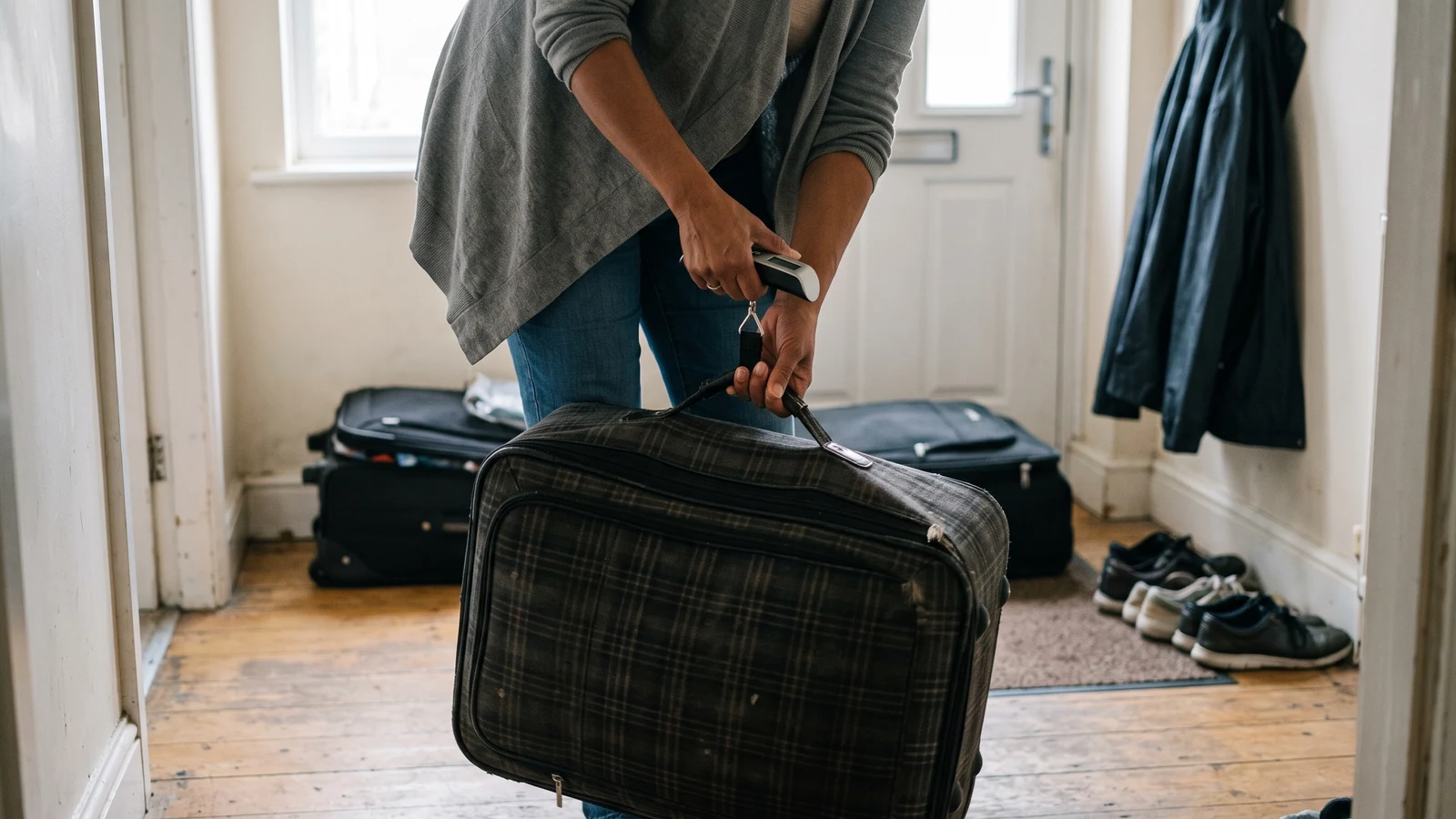
Two bags at 32 kg each is the business class norm on most full-service airlines, against one bag of about 23 kg in economy. A hand scale settles it before you leave home.
The Actual Business Class Baggage Allowance, Airline by Airline
Here's the number that matters most: 32kg (70.5lb) per bag is the ceiling most major international carriers set for business class checked luggage, and most permit two of them. That's a meaningful jump from the 23kg (50lb) cap that applies to most economy tickets.
64kgTypical total checked baggage allowance for business class (2 bags x 32kg)
But "most" isn't "all," and the differences show up most on U.S. domestic carriers, where weight-based allowances (common on international routes) give way to piece-count systems that don't always scale as generously for the front cabin.
Turkish Airlines and the Gulf carriers are worth flagging on their own because they split the world into two regulatory zones: the Piece Concept (all flights touching the U.S., Canada, Brazil, and parts of Africa, where you get 2 bags at 32kg = 64kg total) and the Weight Concept (Europe-to-Asia or Middle East-to-Asia itineraries that never touch North America, where Business Class is capped at 40kg total across as many bags as you like, with no single bag exceeding 32kg). If you fly JFK–IST–SIN on a single ticket, the U.S. origin locks in the generous 2 x 32kg (64kg) piece allowance all the way to Singapore; book IST–SIN on a separate ticket, and your allowance drops to 40kg total.
The domestic U.S. picture has its own nuance. While American, Delta, and United allow 2 x 32kg (70lb) in both international Business Class and domestic First Class, regional feeder jets (like CRJ-700s or E175s) have tiny overhead bins that force even full-sized carry-on rollers to be valet-checked at the jet bridge—and if a domestic positioning flight is booked in Economy on a separate reservation, you immediately drop to standard domestic economy weight caps of 50lb (23kg) per bag. Check the specific fare rules attached to your booking, not the airline's general marketing page.
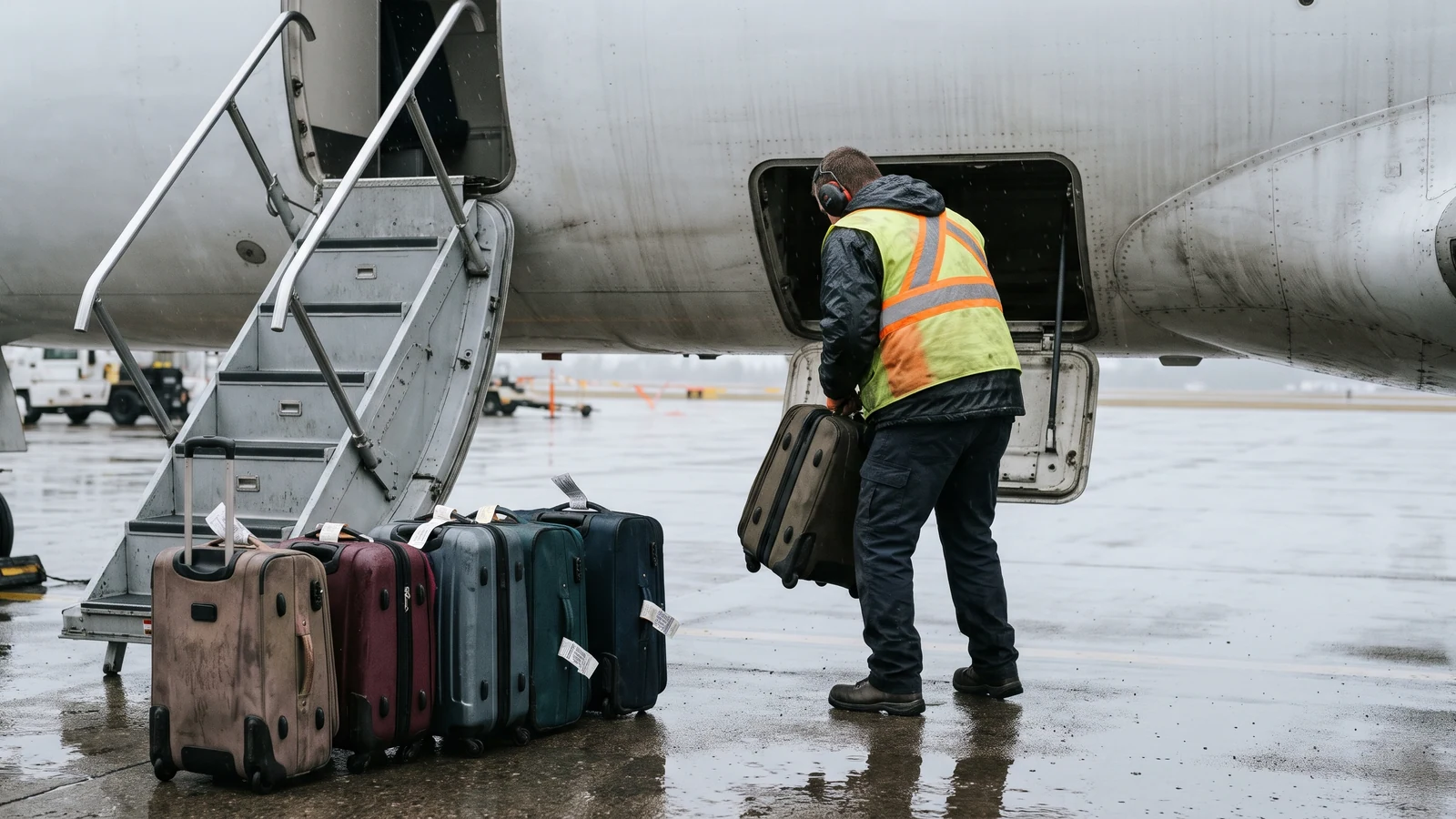
Regional jets such as the CRJ-700 and E175 have overhead bins too small for full-size rollers, so those bags are tagged at the aircraft and travel in the hold.
Insider Strategy
Weight limits are enforced per bag, not averaged across your total allowance. A 36kg bag and a 20kg bag on a piece-concept route will get the 36kg bag rejected at check-in—airlines cap any single checked bag at 32kg (70lb) for baggage-handler safety, so anything heavier has to be split into two pieces.
Carry-On and Garment Bag Rules for Premium Cabins
Business class carry-on allowances typically run two cabin pieces plus a personal item on European carriers, or one cabin roller plus a personal item on U.S. carriers.
The garment bag is where things get specific, and where a lot of business travelers waste time guessing. Most carriers treat a soft-sided garment bag as a substitute for one of your carry-on pieces, not an addition to it. Fly EmiratesBusiness Class and you get two carry-on pieces: one briefcase plus either one handbag or one garment bag, each capped at 7kg (15lb). Qatar Airways allows two cabin pieces totaling 15kg (33lb), and on widebody aircraft equipped with a forward cabin closet, the crew will hang a soft garment bag near the galley during boarding.
Here's the detail that actually matters if you're traveling for a specific event: not every aircraft has a full-length garment closet. Narrowbody aircraft on shorter routes (an A320 or 737 doing a three-to-five-hour sector) often only have a shallow coat rod for suit jackets rather than space for a thick tri-fold garment bag. If you're bringing formalwear that cannot be folded into an overhead bin, verify the aircraft type on your route before you assume there's a full-height wardrobe.
A widebody on a flagship transatlantic route, like British Airways' A350-1000 between JFK and Heathrow, is where you'll find both an integrated suite wardrobe cubby for a jacket and forward galley closet space, alongside BA's industry-leading carry-on weight limit of 23kg (51lb) per cabin bag. Even then, confirm the aircraft type on your specific flight number, because equipment swaps happen.
Excess Baggage on Positioning Flights and Mixed-Cabin Itineraries
This is the trap nobody warns you about, and it's cost more than a few executives an unpleasant surprise at a regional airport check-in desk.
Say you book a business class ticket from Kansas City to Singapore. The long-haul international leg (say, ORD-SIN or SFO-SIN in Business Class) carries the full 2 x 32kg allowance. But the domestic feeder leg into Chicago or San Francisco is sometimes ticketed in Economy, either because First Class was sold out on the regional jet or because the aircraft is an all-economy configuration.
Here's the rule: on a single ticket number, the long-haul Business Class allowance governs the entire journey—under U.S. Department of Transportation regulations (14 CFR § 399.87) and IATA's Most Significant Carrier rule (Resolution 302), the baggage allowance displayed on your e-ticket receipt (set by the first marketing carrier on U.S. itineraries, or the Most Significant Carrier elsewhere) applies to every connecting segment on that ticket. Book the domestic positioning leg on a separate ticket, however, even on the same day and with a partner airline, and you're now playing strictly by that domestic ticket's rules—which means a 50lb (23kg) weight cap and $100–$200 overweight fees per bag at the regional check-in counter.
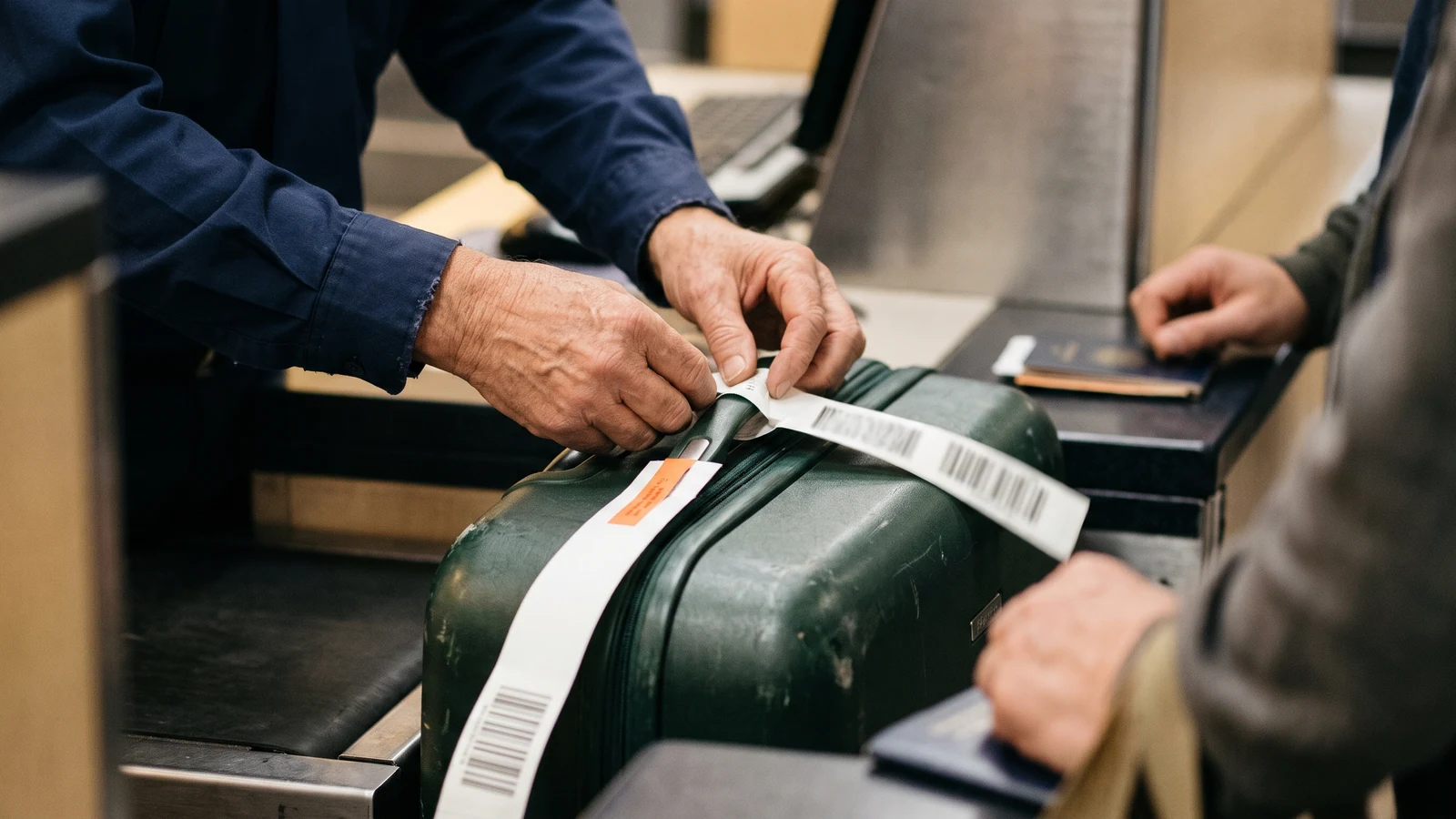
On a single ticket, the bag is tagged through and the allowance on your e-ticket covers every segment. A separately ticketed domestic leg falls back to its own 23 kg (50 lb) cap.
The fix is straightforward: make sure your positioning or connecting flight is issued under the same PNR and 13-digit e-ticket number as your international business class segment. If an online booking engine splits these into separate reservations, you are trading a minor fare difference for overweight baggage fees and losing interline protection if the feeder flight is delayed.
Check your ticket number, not just your itinerary
If your domestic connecting flight shows a different 13-digit ticket number than your international business class segment, your baggage allowance defaults to whatever that domestic flight's fare class allows, even if both flights appear in the same calendar trip.
Codeshares are where airline baggage policy gets genuinely tricky because legal rules and airport check-in software don't always agree on the first try.
By law, two frameworks govern single-ticket codeshare itineraries:
Itineraries beginning or ending in the United States (14 CFR § 399.87): The baggage rules of the first marketing carrier (the airline whose two-letter code appears on the very first flight of your ticket) apply across the entire itinerary, outbound and return.
All other international itineraries (IATA Resolution 302): The baggage allowance is set by the Most Significant Carrier (MSC)—the airline operating the first flight that crosses from one IATA tariff area to another (for example, the carrier flying across the Atlantic or Pacific).
Here is where travelers get burned at the airport: on the day of departure, you physically check in with the operating carrier of your first segment. That airline's airport departure control system (DCS) defaults to its own cabin and weight rules unless it properly reads the baggage entitlement field (2PC / 32KG) stored inside your e-ticket. If a regional European or Asian partner's check-in kiosk fails to read the marketing carrier's allowance, the screen will demand an excess baggage fee on the spot.
Always keep a PDF copy of your e-ticket receipt showing the Baggage Allowance: 2PC field and the operating vs. marketing carrier codes. Showing the printed e-ticket entitlement to a supervisor resolves 90% of codeshare check-in desk disputes in under two minutes.
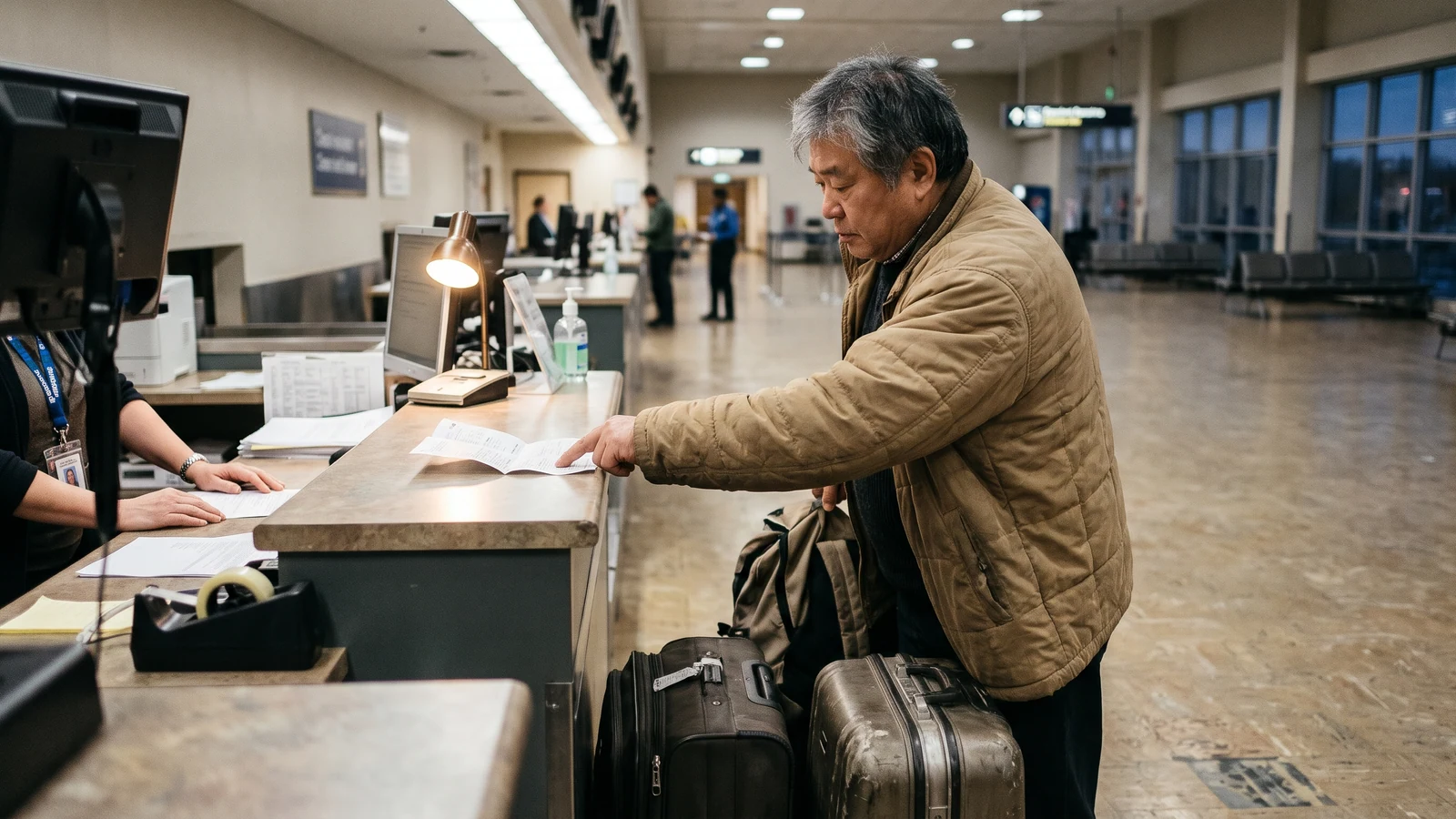
A printed e-ticket showing the 2PC baggage field and both carrier codes is the quickest way to settle a codeshare check-in dispute with a supervisor.
1,519 SDRMaximum airline liability for lost or damaged baggage under the Montreal Convention (~$2,000 USD)
Alliance status can stack on top of your ticketed allowance in a helpful way. Top-tier status such as Star Alliance Gold, oneworld Emerald, or SkyTeam Elite Plus typically adds an extra checked bag (one more piece on piece-concept routes, or around +20kg on weight-concept routes for oneworld Emerald) across member airlines. Mid-tier oneworld Sapphire adds little in Business Class, because its extra allowance is measured against the Economy baseline. Confirm the exact figure with the operating airline before you pack heavy.
Connecting Flight Baggage Transfer: What Actually Happens to Your Bag
The good news first: on a single-ticket, multi-segment itinerary, your checked luggage is almost always checked through to your final destination (subject to first-port-of-entry customs clearance in countries like the U.S.), meaning it transfers automatically between partner carriers with an interline agreement.
The exception that catches people out is the self-transfer connection, increasingly common on itineraries built through third-party consumer booking tools that stitch together separately ticketed flights. If your connecting flights aren't on a single ticket, or if the connection involves a carrier without an interline agreement, you have to exit airside, collect your bags at the carousel, clear landside security, and recheck them before the next flight's bag-drop cutoff (usually 60 minutes prior to international departure).
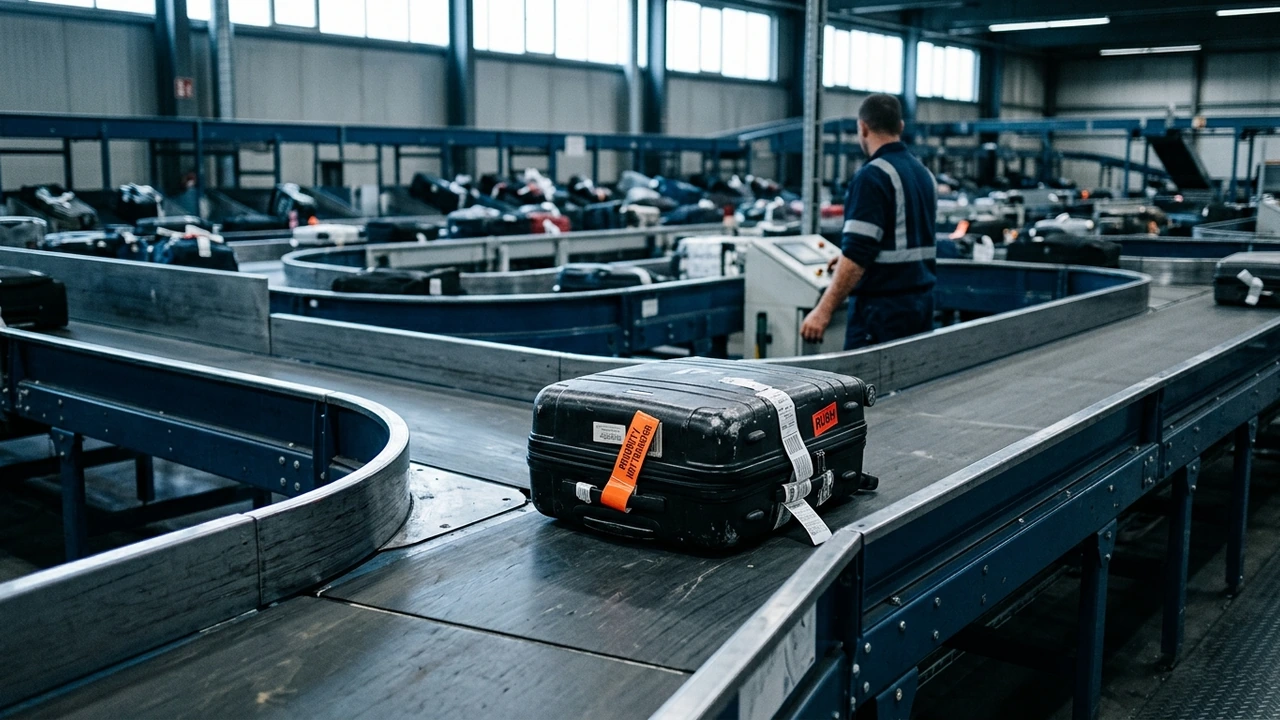
Minimum connection times (MCT) matter for baggage just as much as for passengers. Automated baggage sorting systems at mega-hubs like Heathrow, Frankfurt, or CDG require 45 to 60 minutes to unload a ULD container from an inbound widebody, route the bag through underground security screening tunnels, and load it onto your outbound aircraft. A 50-minute connection that you make by briskly walking from Gate B12 to Gate B28 is still the number-one cause of delayed Business Class luggage.
At hubs like Heathrow, Frankfurt and CDG, moving a bag between widebodies takes 45 to 60 minutes, so a 50-minute connection is still the top cause of delayed business class luggage.
Insider Strategy
Ask your check-in agent to show you the printed three-letter airport codes on your bag tag receipt before they attach it to your boarding pass folder. Confirming that your final destination code—and the orange PRIORITY strip—are both attached takes ten seconds and prevents misrouted bags on multi-leg trips.
Overweight, Oversize, and Special Items: What's Actually Included
Business class weight allowances are generous, but the 32kg (70lb) per-bag ceiling is absolute on almost every airline due to international airport health-and-safety laws for baggage handlers. Cross 32kg in a single suitcase and you won't just pay an overweight fee—in airports like London Heathrow, Sydney, or Frankfurt, the airline will require you to repack items into a second bag or ship the trunk as commercial air freight.
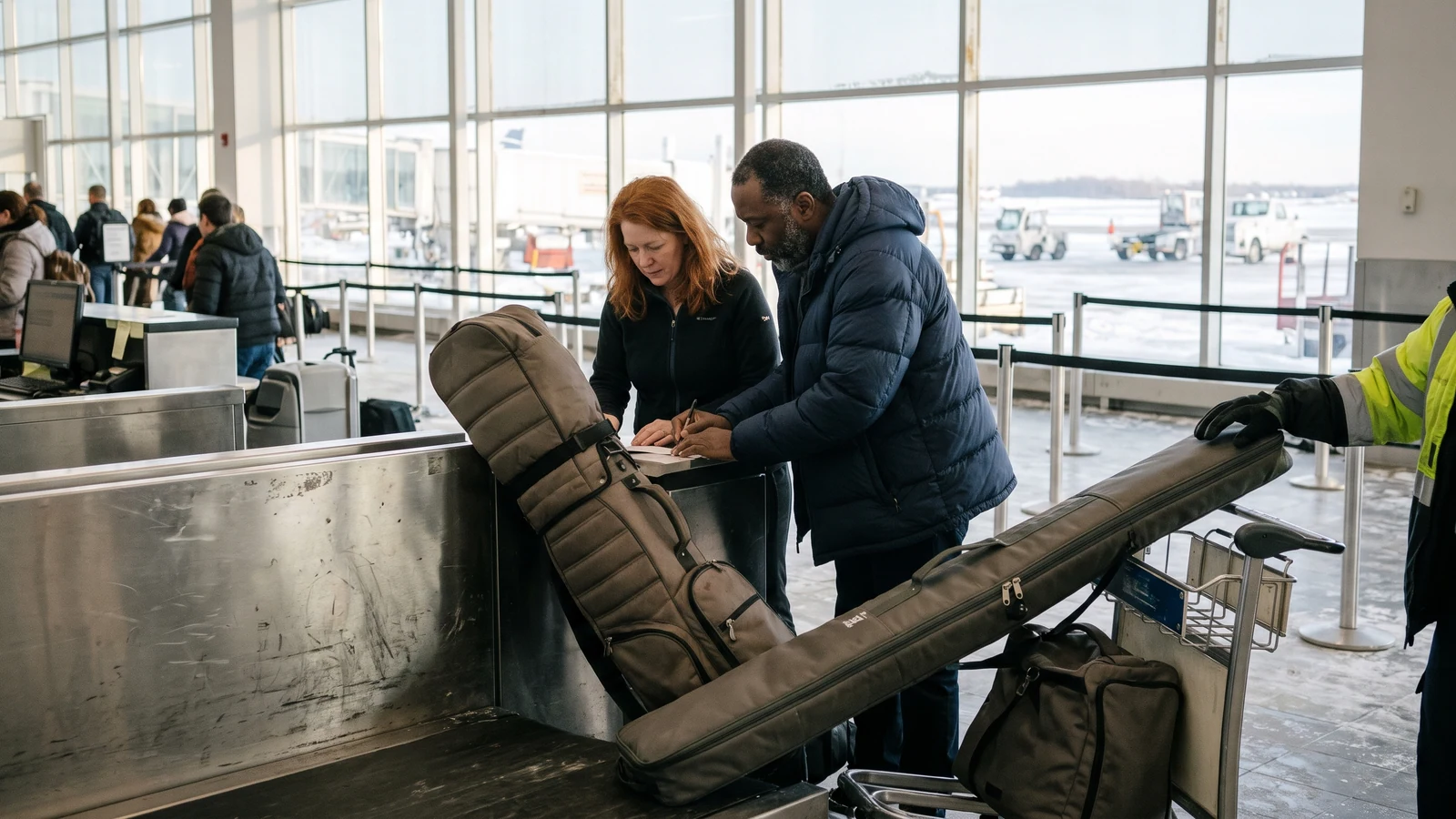
Golf clubs, skis, and musical instruments occupy a useful middle ground. Many major international carriers count a single golf bag or ski bag (plus boot bag) as one of your two standard 32kg checked pieces in business class at no extra oversize fee, even if it exceeds standard 158cm (62-inch) linear dimensions. A musician flying business class internationally can either check a reinforced hard case within the 32kg limit or purchase an adjacent cabin seat (CBBG) for a cello or vintage guitar.
Many international carriers count one golf bag, or a ski bag plus boot bag, as one of your two 32 kg business class pieces with no oversize fee, even past 158 cm.
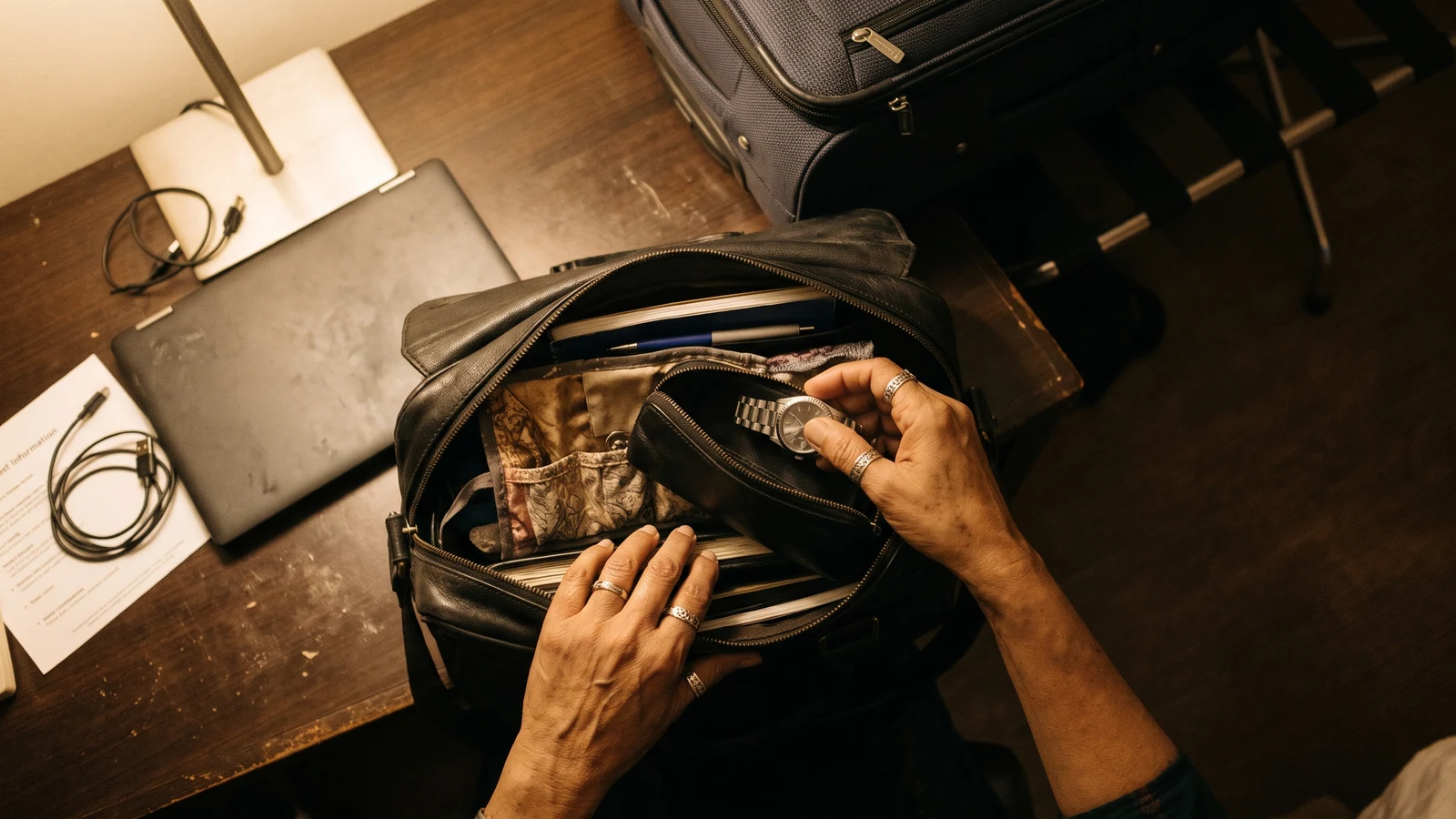
Excess valuation is the quiet gap in every airline's contract of carriage. Under the Montreal Convention (following the ICAO's inflation adjustment that took effect in December 2024), an airline's maximum legal liability for lost, damaged, or delayed baggage is capped at 1,519 Special Drawing Rights (roughly $2,000 USD) per passenger—the exact same cap whether you paid $600 for Economy or $9,000 for Business Class. Never check high-value watches, jewelry, laptops, or irreplaceable prototypes in the hold; keep them in your cabin bag and rely on primary corporate inland-marine or credit card baggage coverage for the rest.
Montreal Convention liability for lost, damaged or delayed bags stops at 1,519 SDR, about $2,000, in any cabin. Watches, jewellery and laptops belong in the bag you carry on.
When It's Worth Handing the Baggage Rules to Someone Else
At a certain point, the calculus shifts. If you're traveling with trade-show equipment, product samples, formal attire, or four weeks of luggage across multiple continents, the accumulated friction of piece-vs-weight rules, codeshare check-in quirks, and tight hub transfers costs more in executive time than the ticket itself.
This is where a personal travel manager earns their keep. A CEOFLIGHTS travel manager issues connecting legs under a single 13-digit ticket number so the long-haul 2 x 32kg allowance governs every segment, verifies whether a route falls under the Piece Concept or Weight Concept, and checks the exact aircraft sub-type if you need onboard wardrobe space. Sporting equipment and excess pieces get pre-cleared in the PNR SSR fields ahead of time instead of debated at the airport counter.
Unpublished business class fares help here too, because they remove the temptation to split positioning flights onto separate tickets just to shave the fare—which is where almost every mixed-cabin baggage headache begins.
Practical Takeaways: What to Check Before You Fly
A short checklist worth reviewing before your next multi-leg itinerary:
First, check the Baggage Allowance box on your e-ticket receipt (2PC vs. 40K) and carry a PDF copy in case a codeshare operating carrier's check-in screen defaults to lower local rules. Second, never pack more than 32kg (70lb) into a single suitcase—split heavy items across your two included bags instead. Third, verify your domestic feeder flight shares the exact same 13-digit ticket number as your international Business Class segment. Fourth, allow at least 75 to 90 minutes at European and U.S. hubs if you want your priority-tagged bags to make the same aircraft you do.
If your itinerary has grown complicated enough that you're cross-referencing IATA Resolution 302 and fare rules PDFs at midnight, hand it off. Talk to a CEOFLIGHTS travel manager and we'll structure the carrier, single-ticket routing, and aircraft so your bags arrive on the carousel right when you do.
Content creator and business travel specialist at CEOFLIGHTS, bringing you the latest insights, tips, and trends in premium business and first-class travel.
Become the CEO of Your Journey
You take the lead. Your dedicated Personal Travel Manager handles every detail.