Global Entry vs TSA PreCheck: the premium traveler's definitive guide
One of these programs saves you four minutes at domestic security. The other saves you forty minutes at JFK immigration after a redeye from Doha. Here's which one actually matters.
CEOFLIGHTS Team16 min read
Quick summary
Global Entry costs $120 and includes TSA PreCheck automatically; standalone PreCheck runs roughly $80 to $85 and gets you nothing at customs
The real time savings happen at international arrivals, not domestic departures: Global Entry kiosks can cut a 45-minute immigration line to under 5 minutes at JFK, LAX, and MIA
Stack Global Entry, CLEAR Plus, and a private terminal membership if you fly internationally more than six times a year; the marginal cost is trivial against what your time is actually worth
Somewhere around your third trip to Terminal 4 at JFK, standing in an immigration line that snakes past the currency exchange kiosk and back again, you start doing math you shouldn't have to do. Forty minutes here. Another twenty at TSA on the way out next week. Multiply that by however many international legs you fly a year, and you're looking at entire working days lost to lines that other people, the ones who filled out a form eighteen months ago, simply walk past.
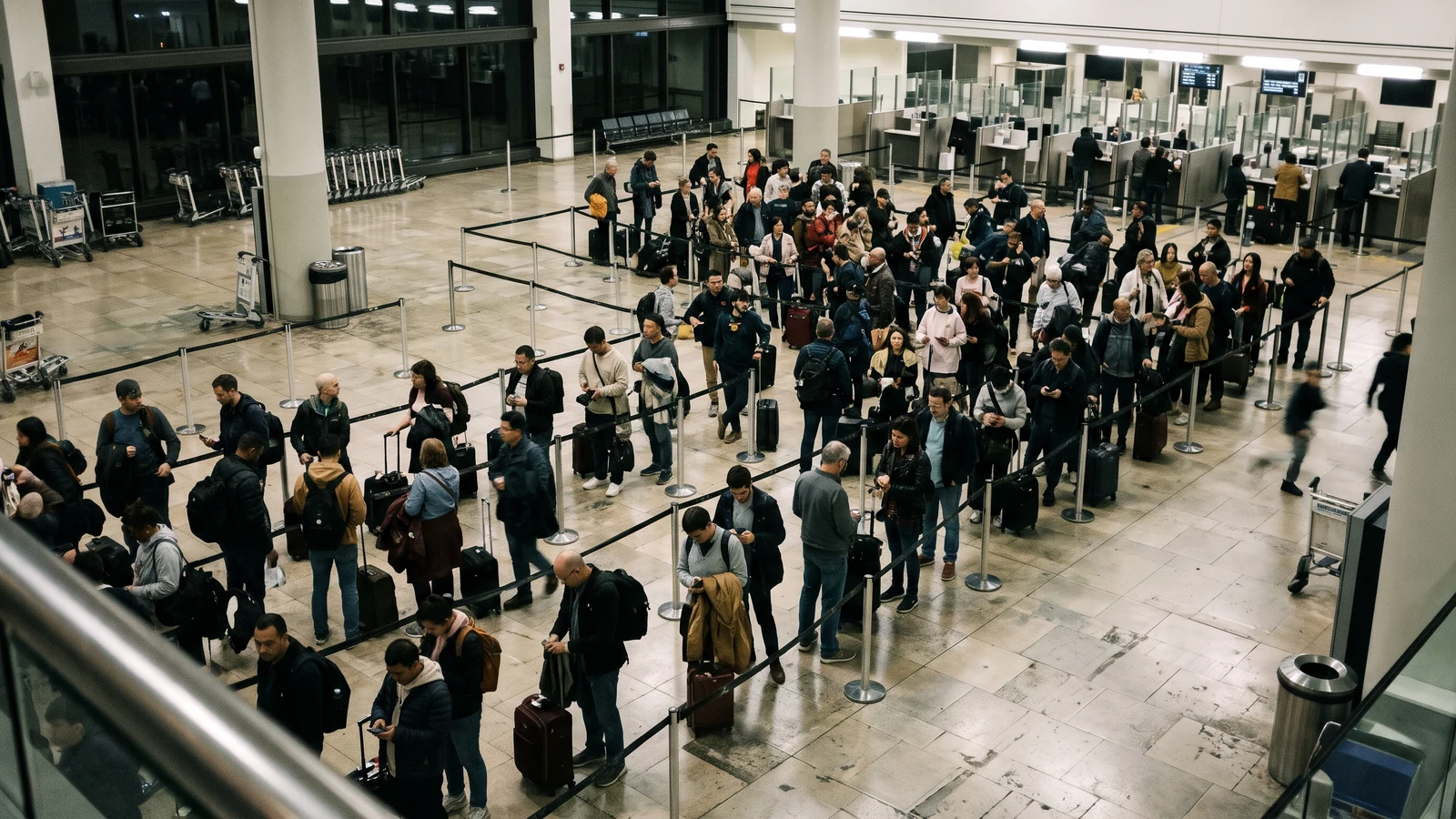
On a busy evening of widebody arrivals, standard immigration can run 45 minutes to over an hour. Global Entry, at $120 for five years, is the program built for this line.
That's the entire premise behind Global Entry, TSA PreCheck, CLEAR Plus, and NEXUS. Four programs, four different problems, and an enormous amount of confused advice online about which one you actually need. Most of it, frankly, treats these programs as roughly interchangeable conveniences for the leisure traveler doing two trips a year. If you're running a company, or sitting on a board, or flying to Zurich and back twice a month, the calculus is different. So let's separate the toys from the tools.
TSA PreCheck: useful, overrated, and frequently misunderstood
TSA PreCheck is the expedited domestic security lane run by the Transportation Security Administration. You keep your belt and light jacket on, your laptop in the bag, your 3-1-1 liquids where they are. Since July 2025 TSA no longer requires shoes off in standard lanes either, so the gap is narrower than it used to be. You still walk through a metal detector rather than the millimeter-wave body scanner, which is a genuine upgrade if you've ever been randomly flagged for a pat-down because your knee replacement set off an alarm.
It's available at more than 200 U.S. airports and honored by upward of 90 airlines, domestic and foreign. The application process is straightforward: fill out the online form through the Trusted Traveler Programs portal, book an in-person interview at one of more than 1,300 enrollment locations, sit through ten minutes of fingerprinting and background check, and wait. Most applicants receive their Known Traveler Number within 3 to 5 days, though TSA says some take up to 60 days, and during peak application seasons it sometimes does.
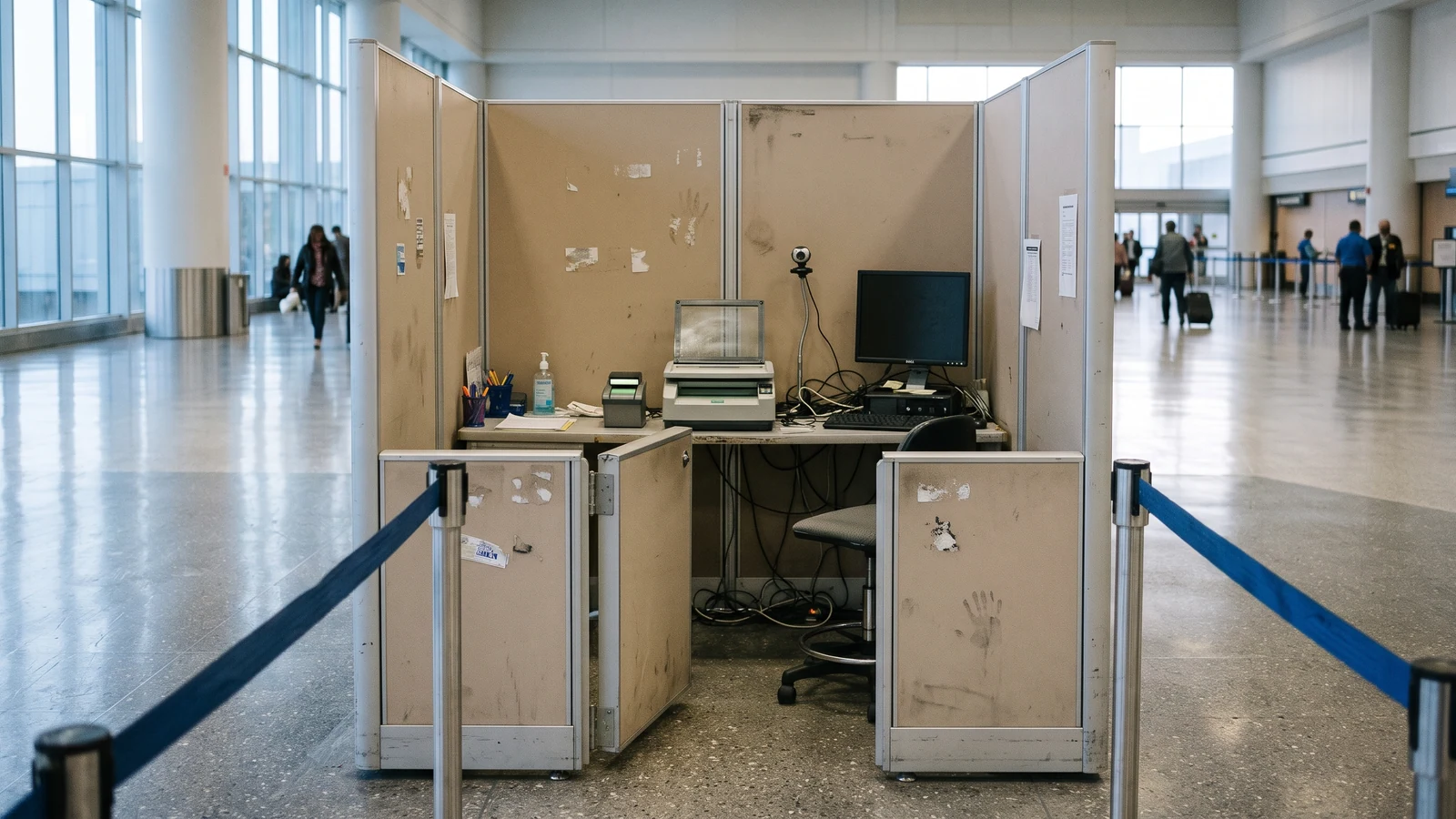
The application starts online, then a short in-person appointment at one of more than 1,300 enrollment locations. PreCheck alone costs roughly $80 to $85; Global Entry is $120 and includes it.
Once approved, you get a Known Traveler Number. Add it to every airline profile you have, add it to every booking, and don't forget it, because a KTN typo is the single most common reason business travelers show up at the airport expecting PreCheck and get sent through the standard line instead.
Here's the part almost every consumer guide glosses over: TSA PreCheck does nothing for you at customs and immigration. It's a domestic security program. If your travel is 80% Miami to New York and back, PreCheck alone might genuinely be enough. If any meaningful share of your travel touches an international border, PreCheck by itself is solving the smaller problem.
200+U.S. airports with a TSA PreCheck lane
Global Entry: the one that actually moves the needle
Global Entry is a Customs and Border Protection program, not a TSA program, and that distinction matters more than most people realize. It exists to expedite your re-entry into the United States after international travel, using automated kiosks (or, increasingly, facial recognition gates that don't require a kiosk at all) at about 77 airports, including preclearance locations abroad such as Dublin, Abu Dhabi, and several Canadian cities.
A Global Entry membership includes TSA PreCheck. Full stop. There is no version of "Global Entry without PreCheck." So the $120 fee, five-year membership, isn't really $120 for one program and a separate cost for the other. It's $120 for both, against roughly $80 to $85 for PreCheck alone, depending on the enrollment provider. Unless you have specific reasons to believe you'd never qualify for Global Entry (certain past customs violations, pending charges, an inability to satisfy CBP of your low-risk status), there's no financial argument for choosing standalone PreCheck over Global Entry. None. The math doesn't work in PreCheck's favor even before you factor in the time saved on the international side.
And the time saved on the international side is the whole point. At JFK on a busy Sunday evening with three widebodies landing within twenty minutes of each other, standard immigration processing can run 45 minutes to over an hour. Global Entry members walk to a dedicated kiosk or facial recognition lane, look at a camera, and are often through in under five minutes. I've watched clients clear a full A380 arrival crowd in the time it took the person ahead of them in the regular line to find their customs declaration form (which, as of recent years, most travelers don't even need to fill out anymore, but plenty still fumble for one out of habit).
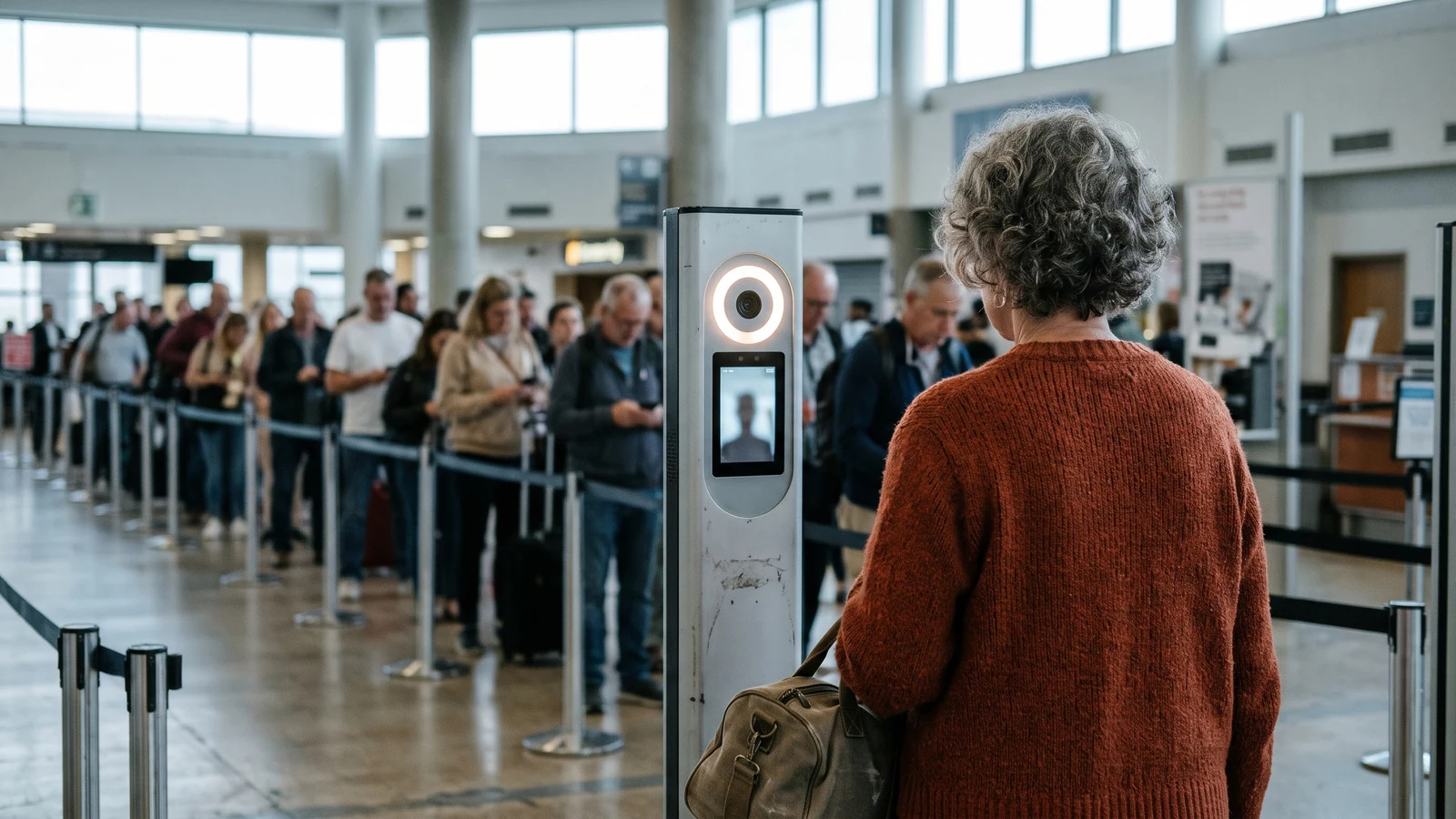
Global Entry members look at a camera at a kiosk or facial recognition lane and are often through in under five minutes. Standard processing at JFK on a busy evening can take over an hour.
Now think about the return leg: a red-eye landing at 6 a.m. after a 13-hour flight back from Doha. You're jet-lagged, you have a 9 a.m. meeting, and the difference between a 5-minute kiosk clearance and a 50-minute immigration queue isn't a minor convenience. It's the difference between showering and changing before your meeting or walking into it in yesterday's clothes.
Enrollment works similarly to PreCheck but with one crucial wrinkle: because Global Entry interview slots at physical enrollment centers have been backlogged for years in major cities, CBP created something called Enrollment on Arrival. If you're conditionally approved online but can't get an interview scheduled, you can simply complete the interview process when you land in the U.S. from an international trip. One of our team members went through this exact process at Newark last year; the whole thing, background check and fingerprinting included, took about five minutes at the arrivals hall, tacked onto a flight they were already taking anyway. It's the most efficient enrollment workaround CBP offers, and most people don't know it exists.
If you are conditionally approved but cannot get an appointment, Enrollment on Arrival lets you finish the interview when you land in the U.S. from an international trip.
Insider Strategy
Apply for Global Entry at least four months before an international trip you already have booked. If your interview slot never materializes, you'll still be able to use Enrollment on Arrival on that same trip, and you'll walk away with your card before you've spent a single dollar on a dedicated appointment.
Who's actually eligible, and where the fine print bites
Global Entry is open to U.S. citizens, U.S. lawful permanent residents, and, through reciprocal agreements, citizens of more than 20 partner countries—including the United Kingdom, Germany, the Netherlands, Switzerland, Singapore, South Korea, Japan, Australia, Panama, and Mexico. Canadian citizens and residents get equivalent benefits through NEXUS membership rather than a direct Global Entry application, which we'll get to.
TSA PreCheck is broader on paper: U.S. citizens, nationals, and lawful permanent residents. Kids 12 and under can ride along in the PreCheck lane if traveling with a parent whose boarding pass shows the PreCheck indicator, and teens 13 to 17 can also use the lane when on the same reservation as a PreCheck parent. Global Entry doesn't extend a "ride-along" courtesy at customs: every family member, including infants, needs their own Global Entry approval and interview to use the arrivals lanes. Fortunately, under CBP's updated fee structure that took effect in October 2024, children under 18 are completely exempt from the $120 Global Entry fee when a parent or legal guardian is already a member or applies concurrently—so enrolling a family of five no longer requires five separate $120 payments, just the time to submit each child's application.
Disqualifiers for Global Entry include any criminal conviction, pending charges, outstanding warrants, or CBP simply deciding it isn't satisfied you're low-risk, a determination that isn't always transparent and occasionally frustrates travelers who assumed a clean record guaranteed approval. It generally does, but not always, and CBP doesn't owe you an explanation if you're denied.
CLEAR Plus: the program the airport lines make you forget exists
CLEAR is a private biometric verification service, not a government program, and it solves a completely different problem than Global Entry or PreCheck. CLEAR doesn't get you through the metal detector faster; it gets you to the front of the identity-verification line before the metal detector, using a face or iris scan instead of an agent checking your driver's license against your boarding pass.
Used alone, CLEAR is honestly a middling value proposition; you're paying roughly $219 a year to skip a queue that's usually only five or ten minutes long anyway. Used in combination with TSA PreCheck, it becomes something else entirely, because CLEAR now operates dedicated PreCheck lanes at dozens of major airports (Atlanta, Denver, Dallas-Fort Worth, LaGuardia, Newark, and a growing list of others) that let CLEAR-plus-PreCheck members walk from curb to checkpoint in a single uninterrupted motion. No ID line, no PreCheck line, just a scan and a walk-through.
CLEAR Plus costs about $219 a year. Paired with PreCheck, it swaps the ID check for a face or iris scan, so at many large hubs members go from curb to checkpoint without stopping.
If you fly out of a hub airport regularly, particularly on Mondays and Fridays when every executive in the city seems to be departing at the same hour, this combination is worth every dollar of the membership fee. Many premium credit cards, including the Amex Platinum and Amex Business Platinum, bundle an annual statement credit covering CLEAR Plus, which changes the value equation considerably. Check your card's current benefits before paying out of pocket.
The stacking strategy
Global Entry plus CLEAR Plus is the combination that actually eliminates airport friction end to end: CLEAR handles identity verification at departure, PreCheck (bundled inside Global Entry) handles the security screening line, and Global Entry handles arrival immigration. Standalone PreCheck solves one-third of the problem.
NEXUS: the overlooked fourth program, and why cross-border flyers need it
NEXUS is a joint U.S.-Canada program run by CBP and the Canada Border Services Agency (CBSA) that functions like Global Entry's cross-border sibling. If you're a Canadian citizen or permanent resident, NEXUS membership gets you full Global Entry benefits when entering the U.S. plus TSA PreCheck on domestic and U.S.-departing flights, along with expedited processing at land borders and NEXUS eGates at major Canadian airports. American citizens who fly frequently between the U.S. and Canada, or who cross northern land borders regularly for business, should also consider it because it includes every single benefit of Global Entry and TSA PreCheck while adding expedited entry into Canada.
In October 2024, CBP and CBSA raised the NEXUS five-year application fee from $50 to $120—aligning it dollar-for-dollar with Global Entry (children under 18 remain free). The catch is logistics: NEXUS requires dual vetting by both U.S. and Canadian border agencies, and interviews must be completed either at a land border enrollment center or via split interviews at a Canadian airport preclearance location. For someone whose international travel regularly touches Toronto, Vancouver, Montreal, or Calgary, NEXUS delivers strictly more capability than Global Entry for the exact same $120 fee, because it unlocks expedited border clearance in both directions.
Mobile Passport Control: the free backup worth keeping on your phone
What if you are traveling with a colleague, spouse, or client who doesn't have Global Entry yet? That's where Customs and Border Protection's official Mobile Passport Control (MPC) app earns its spot on your phone. Not to be confused with the retired third-party Airside app that operated years ago, CBP's own free MPC app lets U.S. citizens, lawful permanent residents, and Canadian B1/B2 visitors submit their passport details and customs declaration digitally upon landing and take a quick selfie before reaching the terminal.
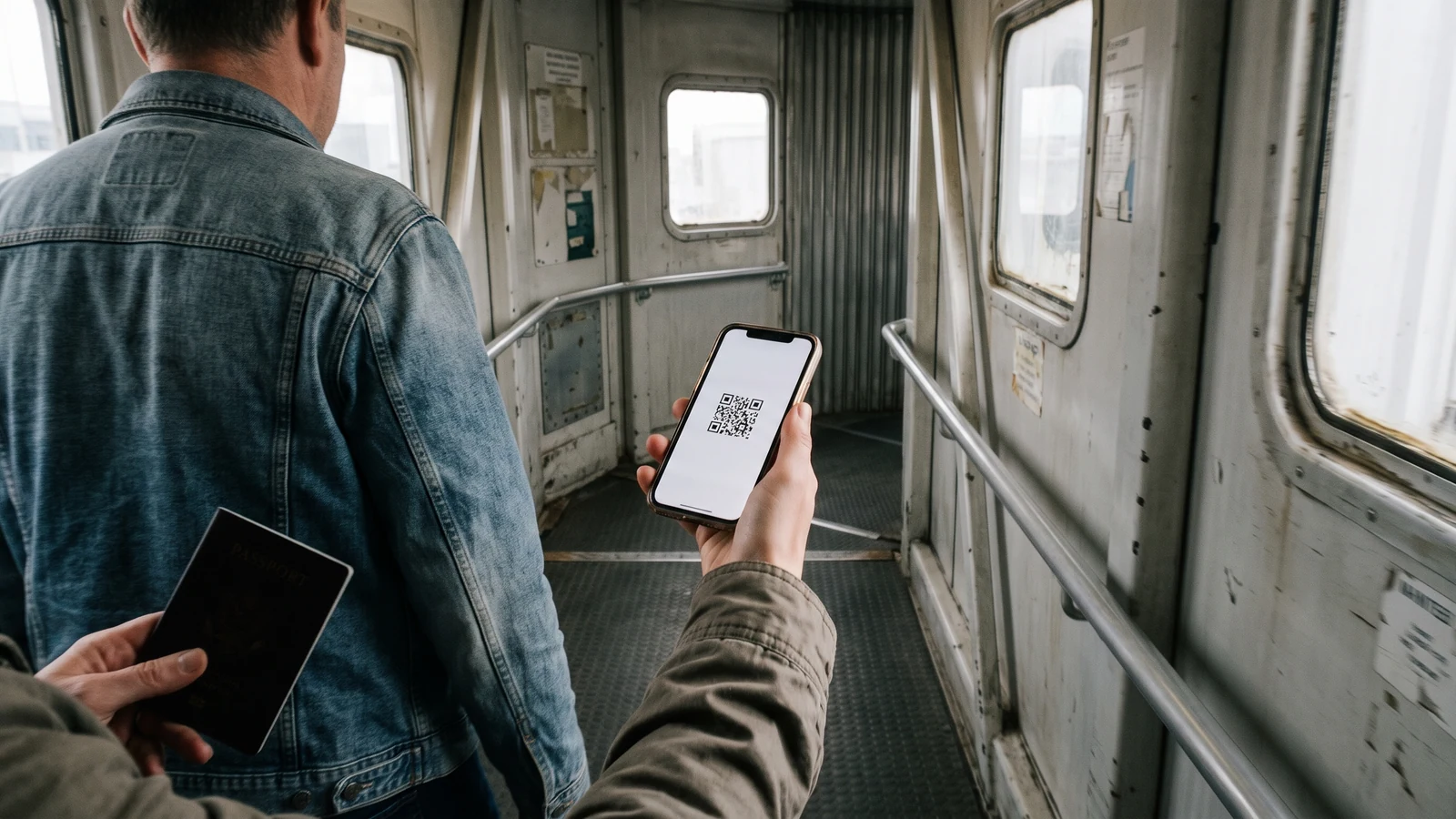
CBP's free Mobile Passport Control app gives you a QR receipt for a dedicated lane at more than 50 airports and preclearance sites. Useful for companions, but it does not include PreCheck.
The app generates an encrypted QR receipt that grants access to a dedicated MPC inspection lane at more than 50 U.S. international airports and preclearance sites. While MPC is a genuine lifesaver for companions without Trusted Traveler status, treat it as a backup rather than a replacement for Global Entry: MPC does not include TSA PreCheck, requires you to pull out your phone and submit a form after every flight, and still routes you past a staffed booth rather than Global Entry's touchless three-second biometric portals.
The actual cost comparison, done properly
Let's put real numbers next to each other instead of vague characterizations.
Global Entry: $120, nonrefundable, five-year membership, includes TSA PreCheck (children under 18 free when applying with or linked to a member parent).
TSA PreCheck standalone: roughly $80 to $85 depending on provider (TSA lists $79.75 to $84.95), five-year membership; online renewal runs $58.75 to $72.95.
CLEAR Plus: $219 annually at standard retail pricing (up from $209 as of July 2026) (discounted for airline elite tiers and covered via annual statement credit on cards like the Amex Platinum).
NEXUS: $120, five-year membership (children under 18 free), includes full Global Entry and TSA PreCheck benefits plus expedited Canadian airport and land border entry.
Run the arithmetic and Global Entry wins on pure value even before considering time saved: $120 for five years works out to $24 a year for a program that includes everything PreCheck offers plus expedited international re-entry. Standalone PreCheck, at roughly $80 to $85 for five years, costs nearly two-thirds as much as Global Entry while delivering a fraction of the benefit. There is genuinely no scenario, short of a documented ineligibility for Global Entry, where standalone PreCheck is the smarter financial choice for someone who travels internationally even occasionally.
$120Global Entry fee covers both Global Entry AND TSA PreCheck for 5 years
Making the credit card fee disappear entirely
Here's where the calculus becomes almost trivial. A long list of credit cards reimburse the application fee for Global Entry or TSA PreCheck, up to $120, once every four to four-and-a-half years. Cards offering this benefit include the Chase Sapphire Reserve, the Amex Platinum, the Amex Business Platinum, the Capital One Venture X, the Citi/AAdvantage Executive World Elite Mastercard, and even sub-$100 annual-fee options like the United Explorer Card. If you're already carrying a premium travel card for lounge access or airline credits, check whether it includes this benefit before you pay for enrollment out of pocket.
Many premium cards reimburse up to $120 for Global Entry or PreCheck once every four to four-and-a-half years, and most issuers let you put that credit toward someone else's application.
The more interesting detail, and one that surprises even experienced flyers, is that most issuers let you apply the credit toward someone else's application. Because the credit is triggered automatically by the merchant billing descriptor (CBP GLOBAL ENTRY), if you have an Amex Platinum or Chase Sapphire Reserve with an unused credit, you can charge your assistant's, spouse's, or colleague's $120 Global Entry fee to your card and receive the automatic statement credit. The Amex Platinum goes a step further and provides a separate $120 Global Entry credit for each additional Platinum Card member on the account, allowing an executive team or family to enroll at zero net cost.
Read the fine print before you charge multiple fees
Statement credits for Global Entry and PreCheck typically only reimburse once per card every four to four-and-a-half years, and a single card will only reimburse one $120 charge during that window. Spread multiple adult applications across different eligible cards in your wallet—or across authorized user cards—if you're enrolling several people at once.
The interview: what actually happens, and how to not waste the appointment
The Global Entry and TSA PreCheck interviews are shorter and less intimidating than the online forums make them sound. Expect roughly ten minutes for a standard PreCheck interview: they verify your identity documents, take your fingerprints, ask a handful of questions confirming details from your application, and send you on your way. One member of our team clocked their Global Entry interview at just under five minutes, background check, fingerprinting, and a short conversation about travel history included.
The interview is short: your documents are checked, fingerprints taken and a few questions asked about your application. Expect about ten minutes, sometimes less.
Bring your valid passport (or permanent resident card, if applicable) and a driver's license showing your current residential address; enrollment centers move faster when you hand over both immediately, and it eliminates any chance of a hiccup. Arrive ten minutes early. Don't schedule the appointment during a trip where you're already stressed about a connection; these centers run on their own schedule and delays happen.
If you're going the Enrollment on Arrival route for Global Entry, the process folds into your normal immigration line at dozens of participating airports (including JFK, LAX, EWR, ORD, MIA, SFO, and DFW). Simply follow the Enrollment on Arrival signs in the primary inspection hall: a CBP officer conducts your interview, takes your photo and fingerprints right at the booth, and activates your Known Traveler Number before you even reach the baggage carousel.
Which combination actually matters if you fly internationally on business
If you fly long-haul premium cabins several times a year, here's the honest hierarchy, ranked by actual impact on your travel time:
Global Entry first, always. It's the only program on this list that addresses the single biggest time sink in international travel: the immigration line after a long-haul arrival. Everything else is incremental by comparison.
CLEAR Plus second, particularly if your home airport is a major domestic hub where morning departure lines run long. Skip it if you fly primarily out of smaller regional airports where CLEAR isn't installed, or if your credit card doesn't already bundle it free.
NEXUS third, specifically if a meaningful share of your travel touches Canada—since for the same $120 fee it gives you full Global Entry and TSA PreCheck plus Canadian eGates and land border lanes. Otherwise Global Entry is simpler to schedule.
Standalone TSA PreCheck: essentially never the right choice for this audience. If you qualify for Global Entry (and almost everyone reading this does), there's no reason to pay nearly the same fee for a fraction of the benefit.
Even travelers who occasionally fly private don't escape this. Arriving on an international itinerary, CBP still requires primary inspection processing at U.S. ports of entry, and Global Entry status expedites clearance on the ramp or inside the FBO customs facility. It's one of the few frictions no ticket, cabin, or aircraft fully erases, which is exactly why it's worth having the membership regardless of how you're flying.
The bottom line
Skip standalone TSA PreCheck. Apply for Global Entry, use a credit card that reimburses the $120 fee, and add CLEAR Plus if your home airport supports it and your card covers the annual membership. If Canada is a regular part of your travel pattern, choose NEXUS for the same $120 fee to get dual-border privileges alongside Global Entry and PreCheck. The entire stack costs less than a single airport transfer and saves you more working hours over a year of travel than almost anything else you can buy.
Trusted traveler programs handle the airport queues. The rest of the trip, from choosing a nonstop over a tight connection to timing an arrival so you clear immigration before the morning wave of widebodies, is where a CEOFLIGHTS travel manager earns their keep, alongside sourcing unpublished business class fares for the flights themselves.
Content creator and business travel specialist at CEOFLIGHTS, bringing you the latest insights, tips, and trends in premium business and first-class travel.
Become the CEO of Your Journey
You take the lead. Your dedicated Personal Travel Manager handles every detail.