The world's best business class products in 2026 — and why most rankings get it wrong
An opinionated ranking of the world's best business class products in 2026 — why soft product matters more than seat specs, and where Qatar, JAL, ANA, and Singapore actually stand.
CEOFLIGHTS Editorial12 min read
Quick summary
Qatar Airways takes our #1 business class ranking for 2026, followed closely by Japan Airlines and ANA, because exceptional soft product execution matters far more than just seat dimensions. We recommend choosing airlines based on hospitality and dining consistency rather than judging seats solely by whether they have sliding doors. Booking through consolidators can slash published $7,800 long-haul fares down to approximately $3,600 on top-tier carriers.
The world's best business class products in 2026 — and why most rankings get it wrong
I was on a Qatar Airways QSuite flight out of Doha last year, watching a guy in 2K methodically photograph his caviar service for what I assume was an Instagram post, when it hit me: everyone ranks business class the same way. Seat first. Photos of caviar second. Everything else as an afterthought.
That's backwards, and it's why so many "best business class" lists read like spec sheets instead of honest accounts of what it's actually like to fly eleven hours in a metal tube.
I've flown most of the products on this list more times than I can count, on positioning flights, mileage runs, and — through our contracts at CEOFLIGHTS — plenty of paid tickets at rates that make the whole exercise worth it. This isn't a spreadsheet ranking. It's an opinionated list, and I'll defend every position on it.
A few ground rules before we get into it. This is subjective, so if your list looks different, that's fine — it should. I'm weighing the entire experience: seat, food, service, amenities, tech, the whole thing, not just whether the seat has a door. I'll generally sort from favorite to less favorite, though I'd happily swap several of these by a spot or two on a different day. And I'll always tell you which specific aircraft or cabin I'm talking about, because airline consistency across a fleet is often terrible — the same carrier can be spectacular on one plane and mediocre on another.
Qatar Airways still sets the bar, and it's not particularly close
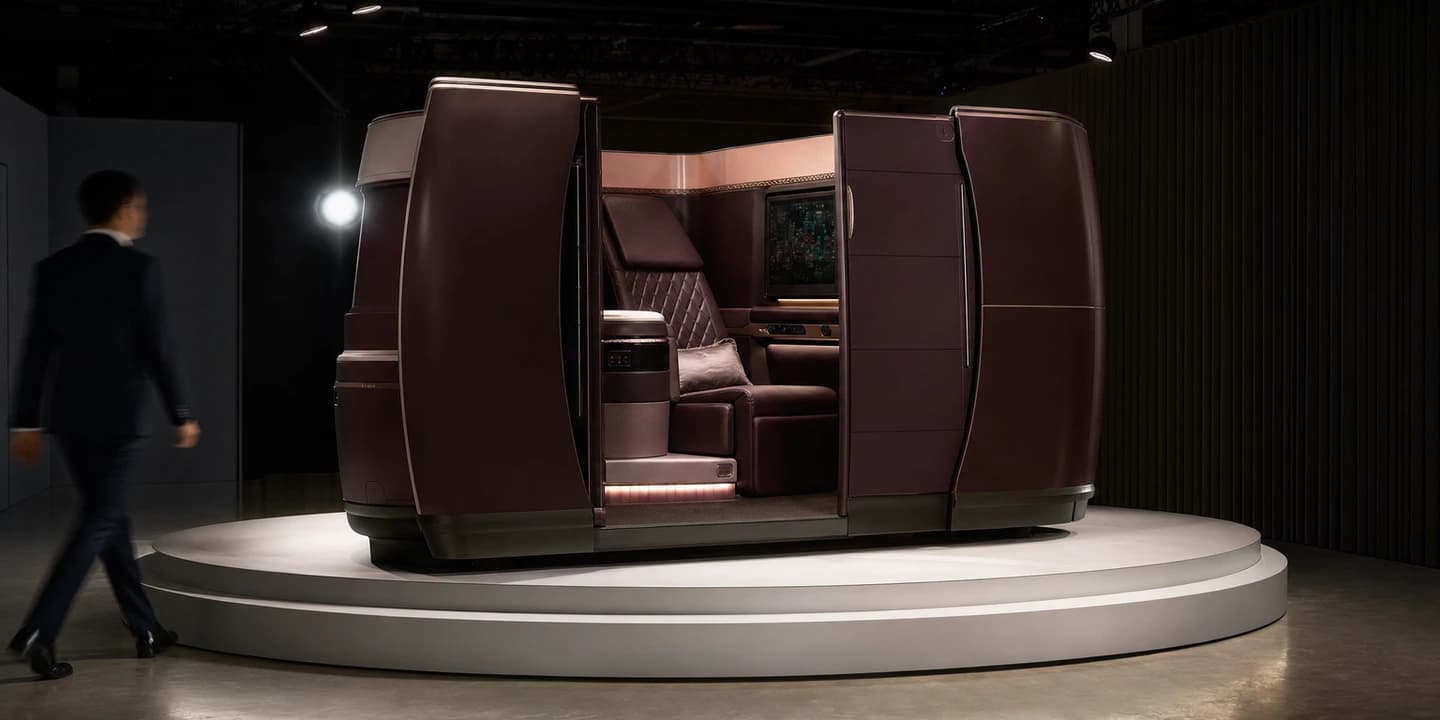
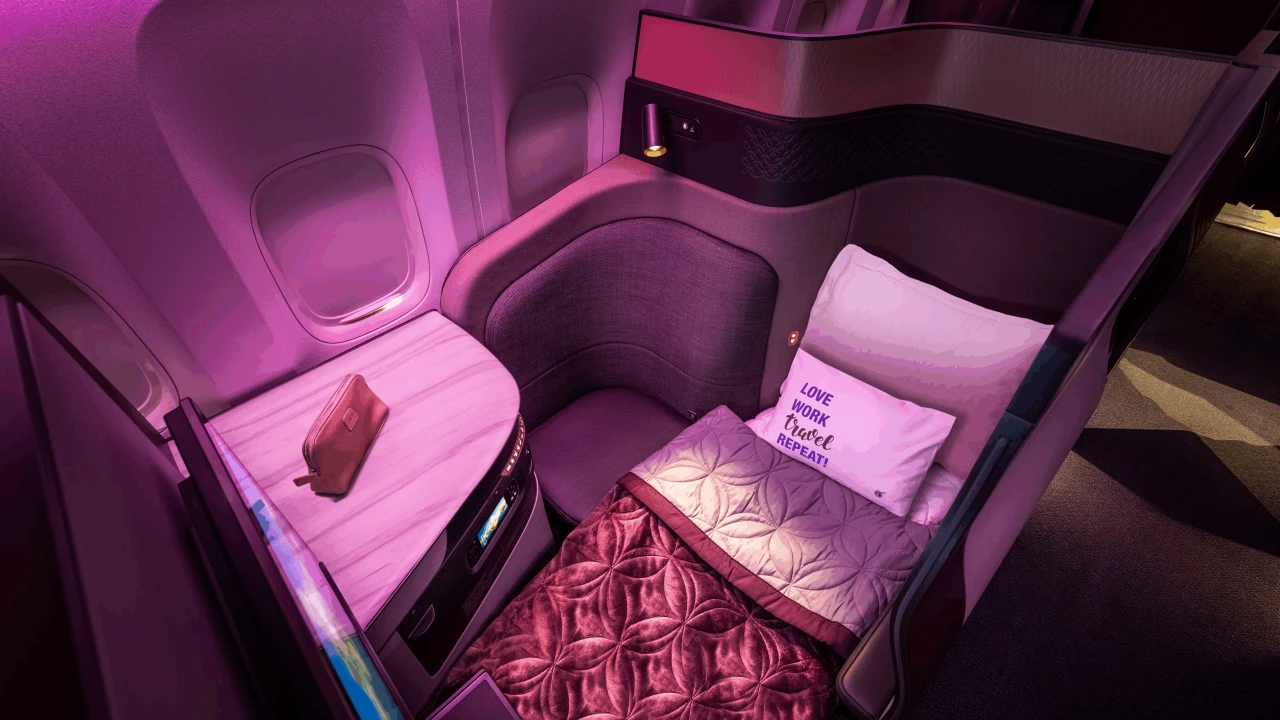
The QSuite changed business class forever, offering sliding privacy doors and exceptional personal space that set the benchmark for competitors.
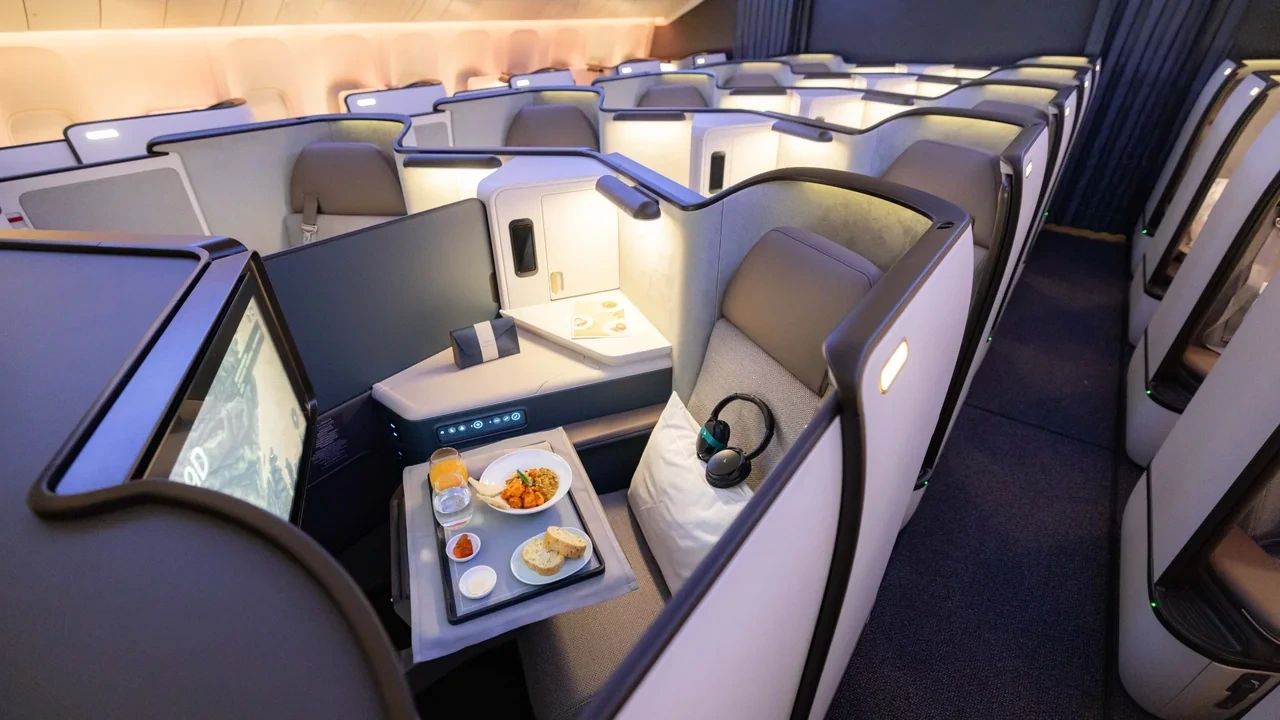
Qatar Airways is the standard everyone else gets measured against, and there's a reason for that. QSuite — available on select Airbus A350s and Boeing 777s — gives you sliding privacy doors, dine-on-demand catering that actually delivers on the promise, pajamas, free Starlink Wi-Fi, and on select routes, caviar service that isn't just for show. The Boeing 787-9 runs a different, slightly less elaborate product, but it's still excellent.
What separates Qatar from the pack isn't any single element. It's that nothing is weak. The seat is private and spacious. The food is genuinely restaurant-quality. The service is attentive without being intrusive. And the airline keeps refining the formula — a next-generation QSuite is already in development, which tells you they're not resting on a decade-old design win.
If I could fly exactly one airline in business class for the rest of my life, this is it. I wrote up the full experience in our QSuite review if you want the seat-by-seat detail.
A round-trip Doha QSuite fare that publishes around $7,800 has, through our contracts, come in closer to $3,600 on the routes we book most often. That gap is the entire reason a consolidator exists.
Japan Airlines and ANA prove Japan just does this better than anyone
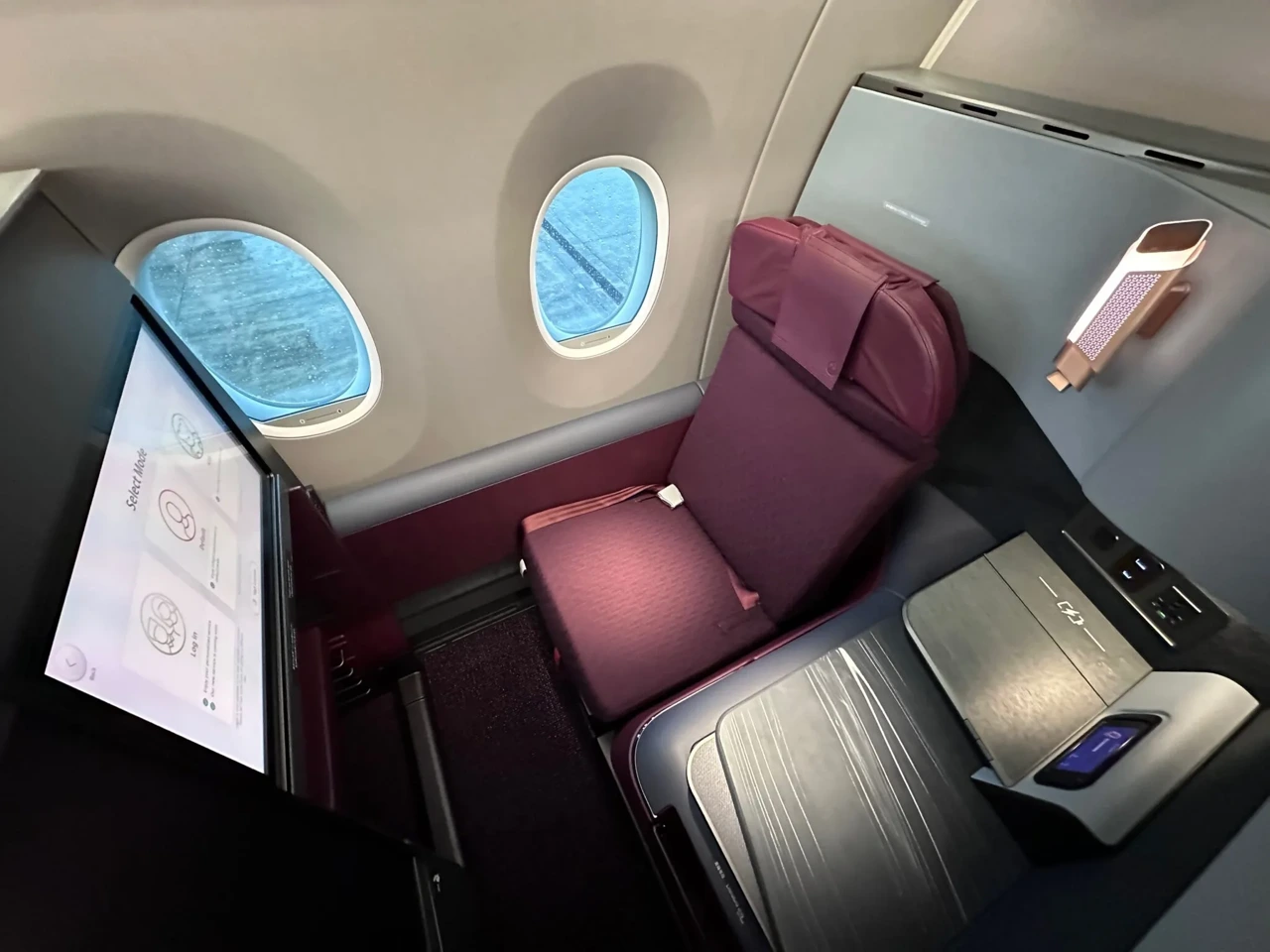
Japan Airlines flies the Airbus A350-1000 as its flagship, and it's the launch customer for the Safran Unity seat — one of the most spacious, thoughtfully designed business class seats in the sky right now. The tech is ahead of the curve too, including headrest speakers, a detail I hadn't seen on any other airline before flying JAL.
JAL's business class combines meticulous Japanese craftsmanship with a comfortable lie-flat seat and refined soft product that consistently earns top rankings.
Beyond the hardware, JAL's soft product is close to flawless: warm, unfussy service, excellent food, free Wi-Fi, comfortable bedding. It's remarkable that both of Japan's major carriers are now fielding some of the best business class products on earth.
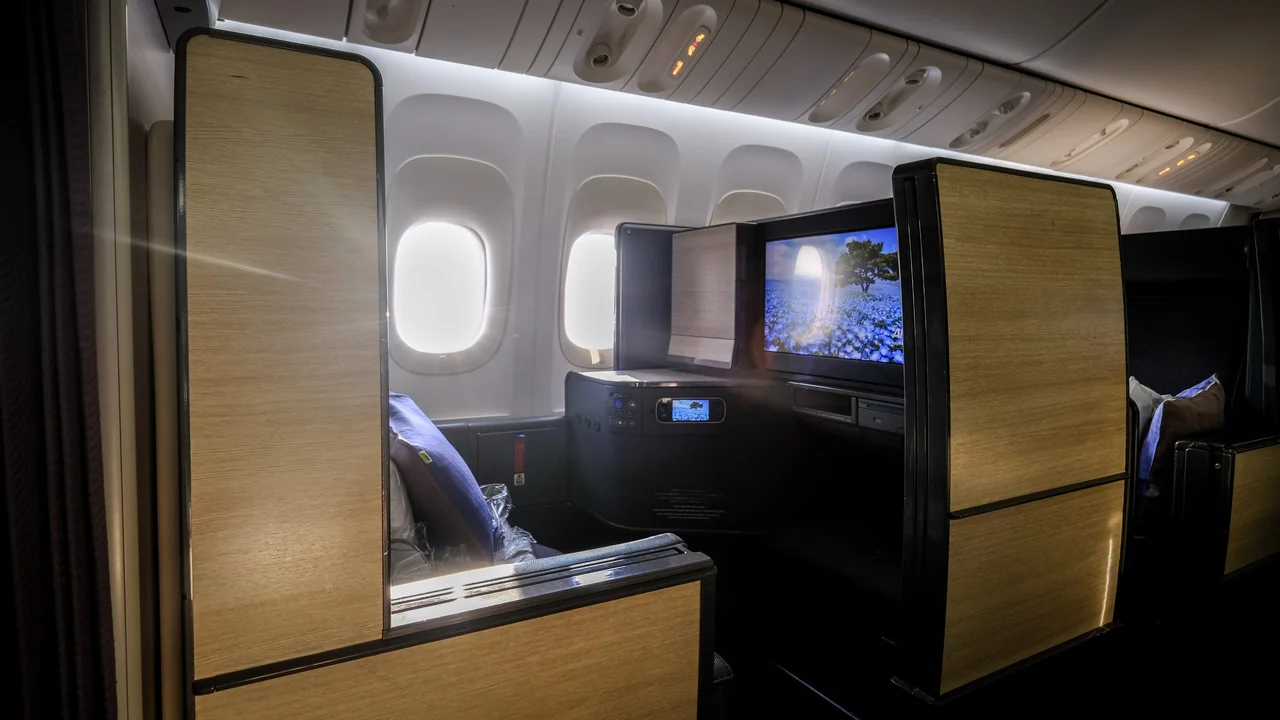
ANA's 'The Room' blurs the line between business and first class, offering a sprawling footprint that arguably outclasses QSuite as a pure piece of seat design
ANA is the other half of that story, and it might have the single best hard product in business class anywhere — "The Room," found on select Boeing 777s. I'd call it better than QSuite as a piece of design; it feels closer to a first class suite than a business class seat. Service matches the standard you'd expect from a Japanese carrier, with both Japanese and Western menus and solid amenities including free Wi-Fi.
Where ANA loses a step to JAL is tech — the entertainment and connectivity experience isn't quite as polished — and I give JAL's soft product a slight edge overall. Neither Japanese carrier, though, has a soft product quite as well-rounded top to bottom as Qatar's.
Singapore Airlines wins on service, not hardware, and that's the whole point of this article
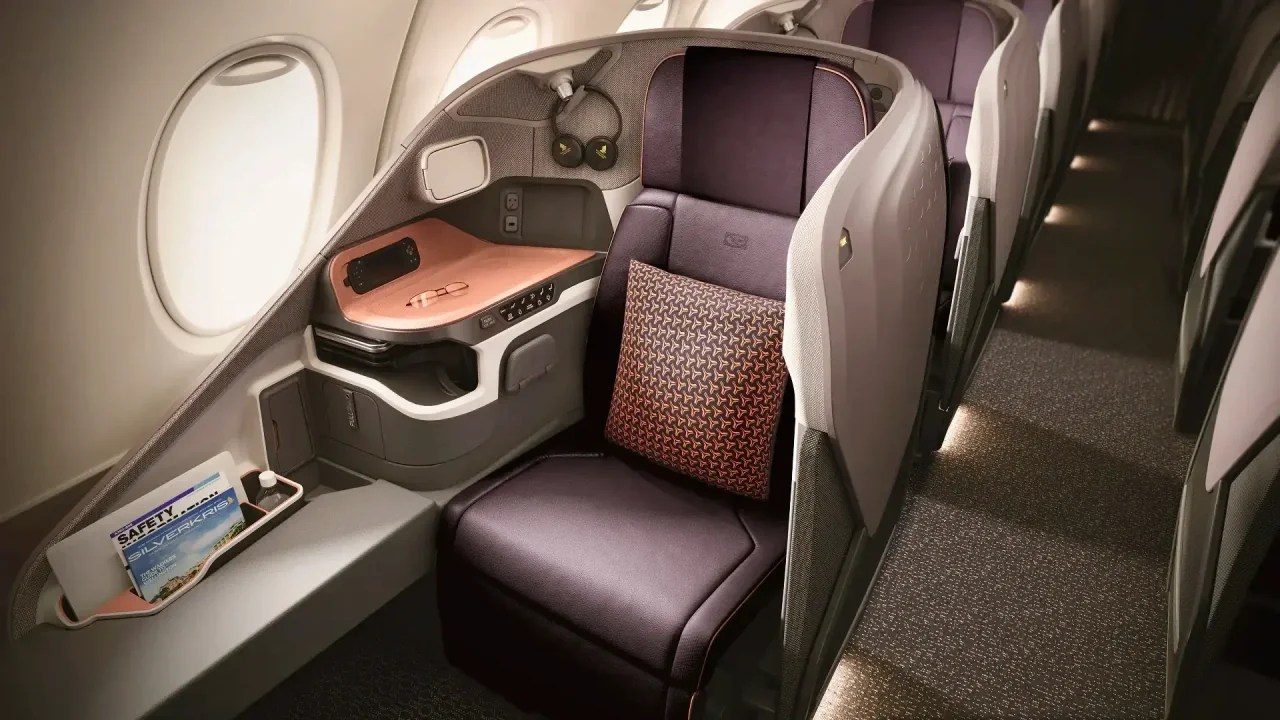
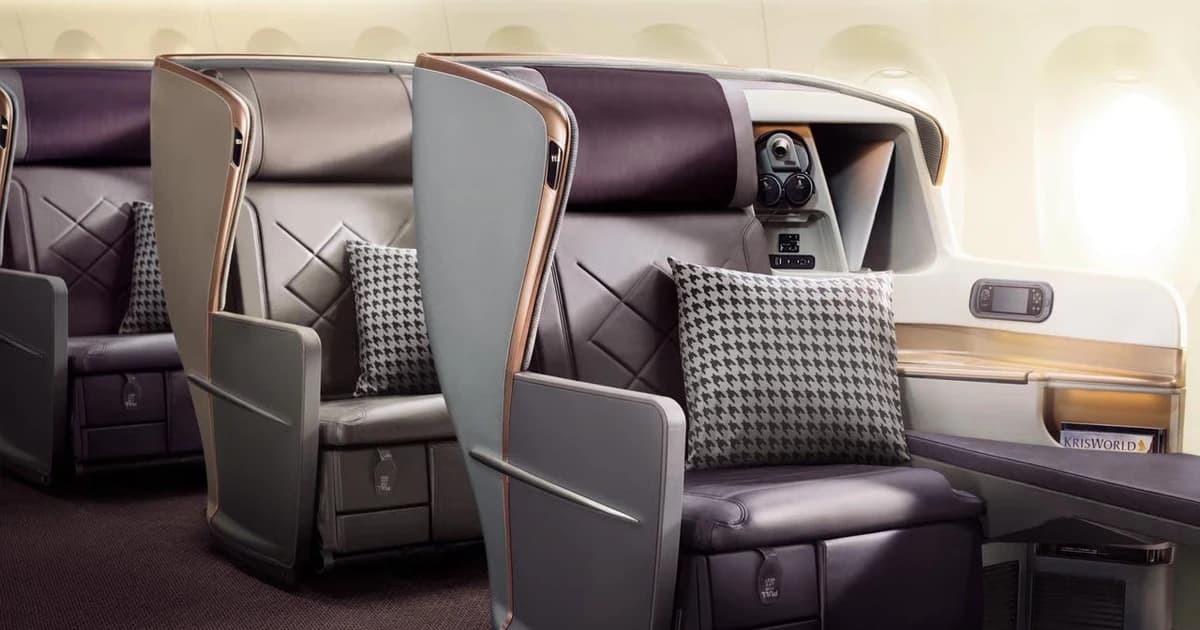
While the hard product may not feature sliding doors, the wide seats and unmatched hospitality make Singapore Airlines a top choice.
Here's my contrarian claim: Singapore Airlines doesn't have a cutting-edge hard product, and that barely matters.
The seats on the Airbus A350, Airbus A380, and Boeing 777 are solid but not groundbreaking (a new seat is reportedly coming). The amenity kits are basic. There's no dine-on-demand, no pajamas. On paper, this should be a mid-pack product.
In practice, no airline in the world delivers more consistent, more genuinely gracious service in business class. I've flown Singapore dozens of times and can't remember a bad flight. That's not a coincidence — it's a culture of hospitality that shows up in the small moments, not the marketing copy.
Add in free Wi-Fi, the deep KrisWorld entertainment library, and "Book the Cook" — which lets you pre-order dishes that aren't even part of the standard onboard menu — and you get a product that wins almost entirely on soft product execution. That's the point of this whole piece: hard product gets the Instagram posts, soft product gets you a good flight. We break down the full experience in our Singapore Airlines review.
Etihad's new A350 suite is the airline hitting its stride
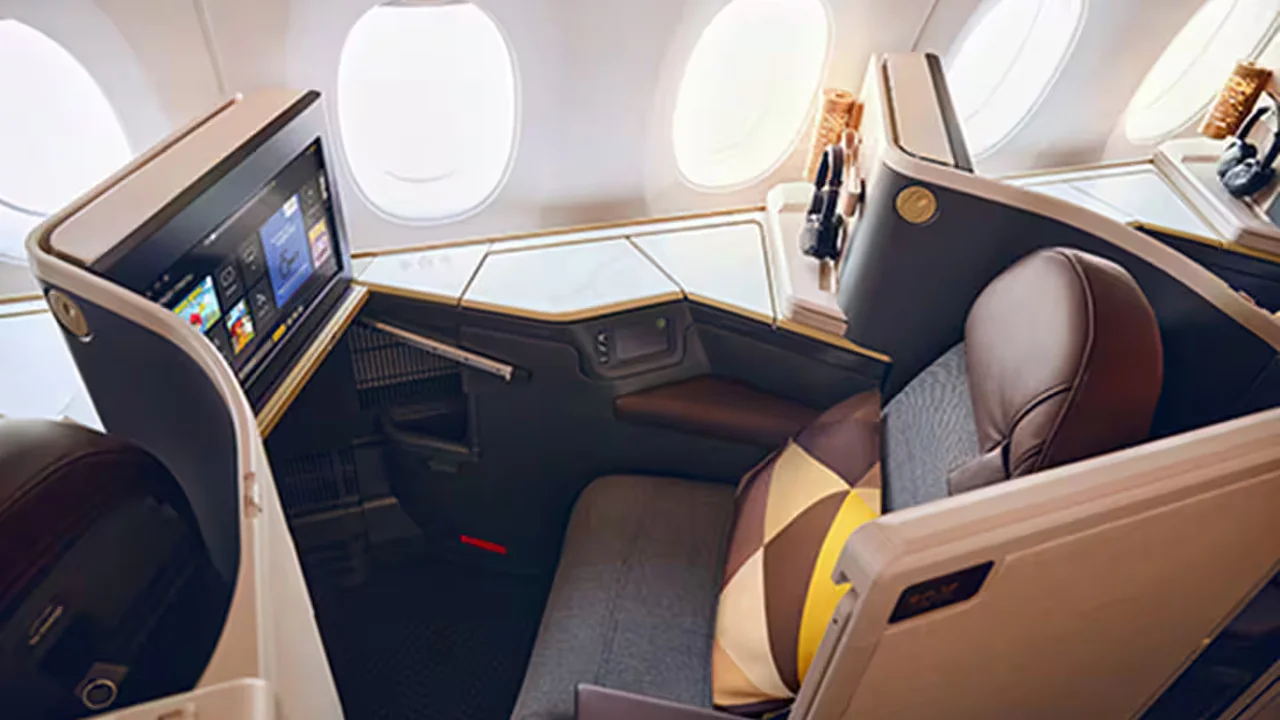
Etihad has quietly put together one of the more complete products in the sky with its new Airbus A350 business class suite. The reverse herringbone seats have doors, genuinely impressive tech — Bluetooth audio, wireless charging — and solid Wi-Fi and entertainment.
Etihad's A350 suite hits every modern requirement flawlessly — sliding doors, Bluetooth audio, and wireless charging — making an Abu Dhabi connection a genuine choice rather than a default
The soft product has come a long way too, largely thanks to the Armani/Casa collaboration: excellent bedding, dine-on-demand catering, and a coffee selection that's better than it has any right to be on a Gulf carrier. Etihad's newer Boeing 787 business class cabin is also excellent. If you're flying through Abu Dhabi, this is worth booking on purpose, not just connecting through by default.
EVA Air and Starlux prove Taiwan is punching way above its weight
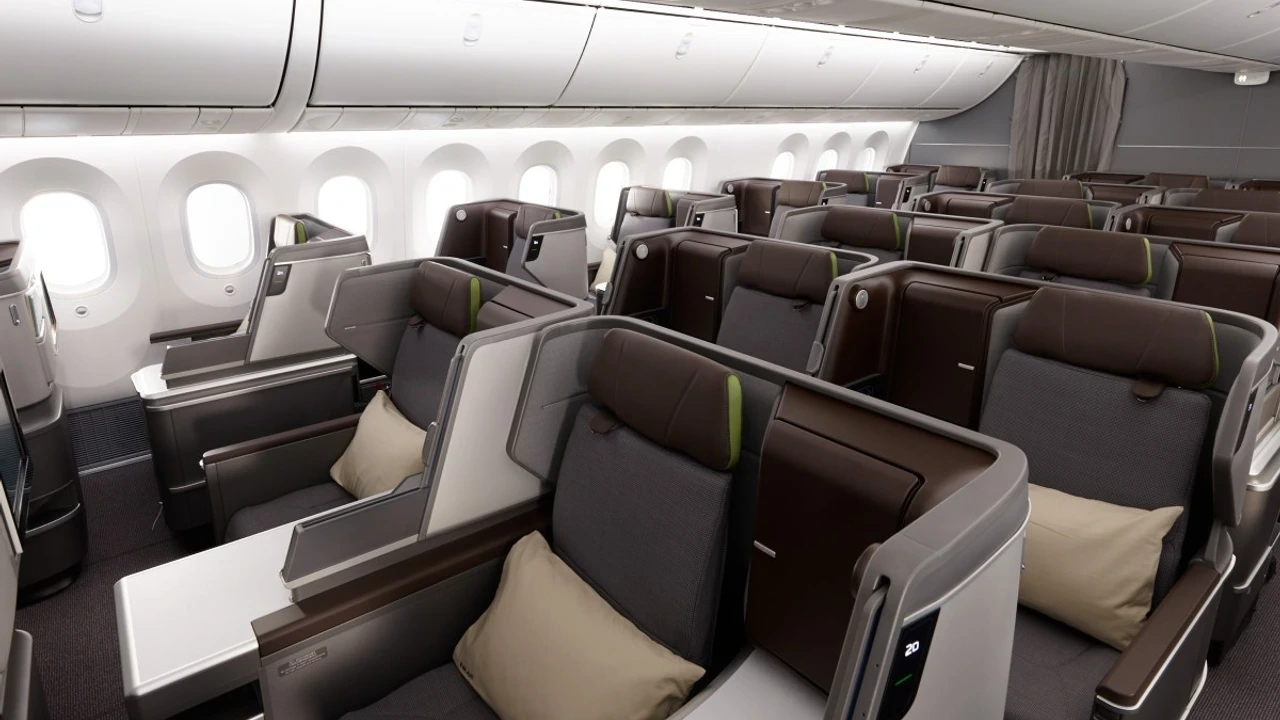
EVA Air's Royal Laurel Class delivers a polished, private business class experience with lie-flat beds and solid Taiwanese hospitality across both 777 and 787 fleets.
Taiwan has three excellent airlines, and while China Airlines gets some love, EVA Air has the edge. The hard product is unremarkable — reverse herringbone on the Boeing 777, staggered seats on the Boeing 787 — but the soft product is one of my favorites anywhere: excellent champagne, a Din Tai Fung catering collaboration that's better than most restaurant meals, comfortable pajamas. Fly out of Taipei at the right time and you might even land one of the Hello Kitty jets.
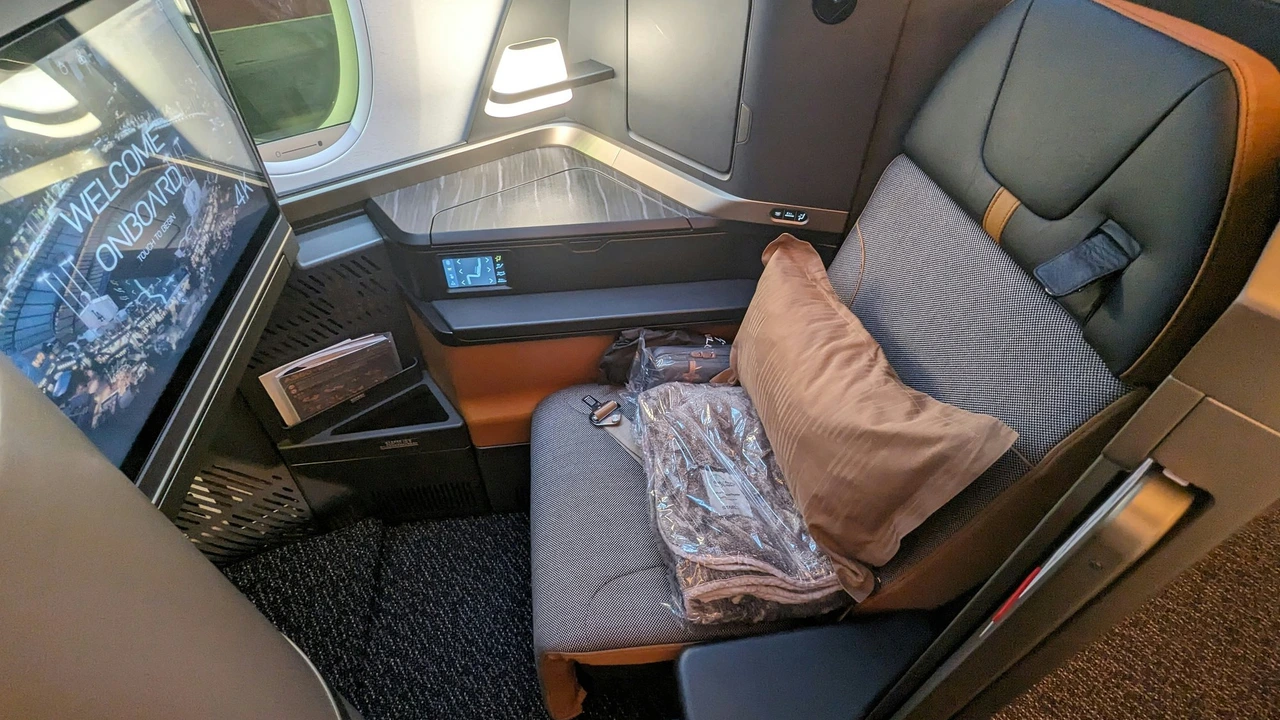
Starlux pairs the exceptional Collins Aerospace Elements seat with complimentary Wi-Fi and pajamas, instantly positioning Taiwan's newest long-haul carrier in the top tier of premium travel
Starlux, Taiwan's newest long-haul carrier, is the one to watch. It's the launch customer for the Collins Aerospace Elements seat — arguably the best reverse herringbone design flying today, with doors, a genuinely large footwell, and excellent tech. The soft product backs it up: free Wi-Fi in business class, pajamas, good amenity kits and bedding, and an extensive food and drink list. This airline is still expanding its long-haul network, and I'm watching it closely.
Cathay Pacific's Aria Suite deserves more attention than it gets
Cathay Pacific's business class offers a refined reverse herringbone seat with generous 81-inch bed length and excellent Hong Kong-inspired dining on 777 routes.
Cathay Pacific rolled out its new Aria Suite business class, currently being retrofitted onto Boeing 777s, and it's a legitimately excellent product that doesn't get talked about enough. Like Starlux, Cathay chose a modified Collins Aerospace Elements seat, and the execution goes beyond the shell: crisp entertainment screens, Bluetooth audio, wireless charging, and bedding that's genuinely among the best in business class anywhere.
The food and drink program is imaginative too — the signature Cathay Delight, plus vegan and wellness-focused options that don't feel like an afterthought. I'll say it plainly: the Aria Suite can go toe-to-toe with QSuite or JAL's product on hard product alone. Fly through Hong Kong and see for yourself.
Turkish Airlines wins on food alone, and I'll defend that
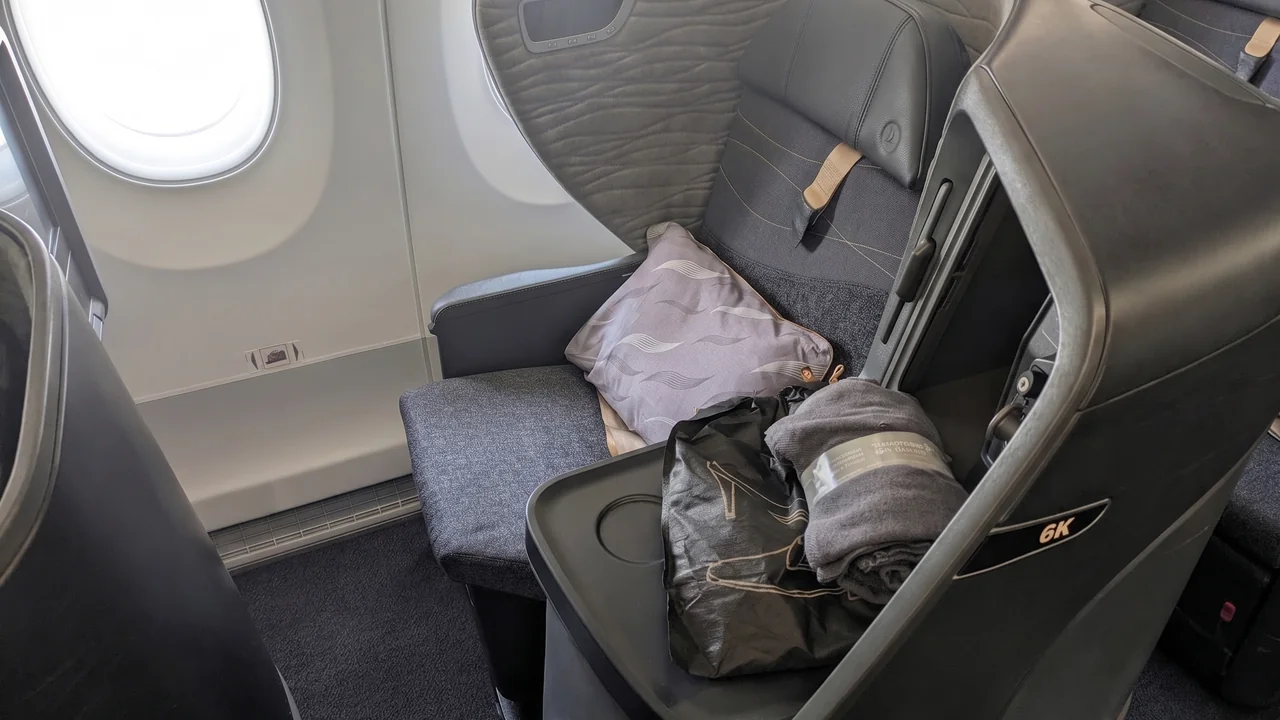
Turkish Airlines has, frankly, a mediocre hard product. The Boeing 787 runs staggered seats, the Boeing 777 crams seven seats per row, though a handful of ex-Aeroflot Airbus A350s have a much better seat, and a new product is reportedly coming.
Turkish Airlines' Flying Chef program delivers restaurant-quality meals at 40,000 feet — a genuine differentiator that many premium carriers still can't match.
So why does Turkish rank this high? The food. I'll say it without hedging: Turkish Airlines has the best food of any airline in business class, full stop, plus a coffee program that punches above its weight. Service is consistently warm and genuinely hospitable, not performatively so. Türkiye itself — the food, the culture, the history — makes connecting through Istanbul a pleasure rather than a chore. We go deeper on this in our Turkish Airlines review.
Emirates' A380 isn't cutting-edge, and people love it anyway
The Emirates A380 business class seat remains a fan favorite, combining decent space with iconic touches like an onboard bar.
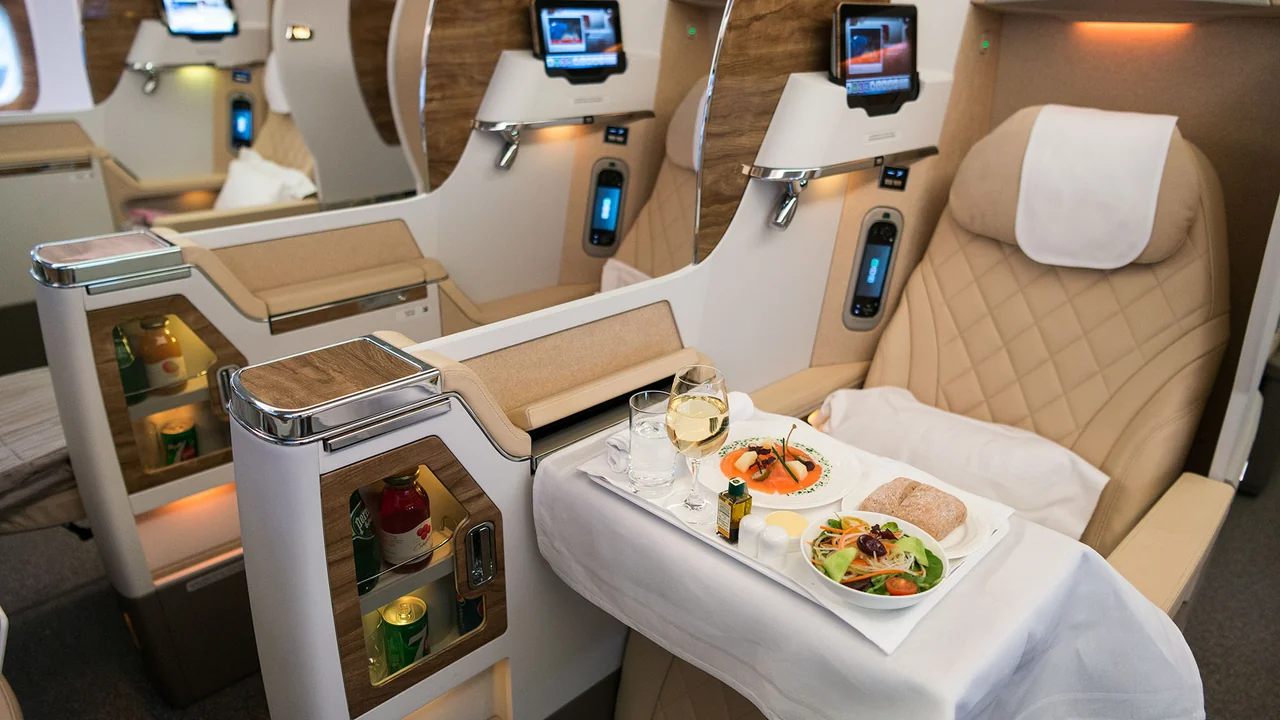
Emirates has one of the most recognizable airline brands on earth, largely on the strength of its A380 fleet's halo effect. Here's my honest take: the A380 business class hard product isn't cutting-edge, and on some aircraft it looks genuinely dated. The cabin is enormous too, which means service loses some of the personal touch you get on smaller planes.
None of that stops people from loving it, and there are real reasons why. The onboard bar is a genuinely fun touch on a long flight. The cocktails are excellent. Entertainment is deep, Wi-Fi is free, and the amenities — gorgeous kits, actual pajamas — are a cut above. We covered this cabin in detail in our Emirates A380 review. It's proof that hard product age doesn't automatically sink an experience if everything around it is strong.
Round-trip business to Dubai on the A380 regularly publishes north of $6,500; through CEOFLIGHTS contracts we've booked the same routing closer to $3,100.
Air France and ITA Airways are the European wildcards worth knowing about
Nearly every airline on this list is Asian or Middle Eastern, and that's not bias — that's just where the competitive pressure has been most intense for the last decade. But two European carriers deserve a mention.
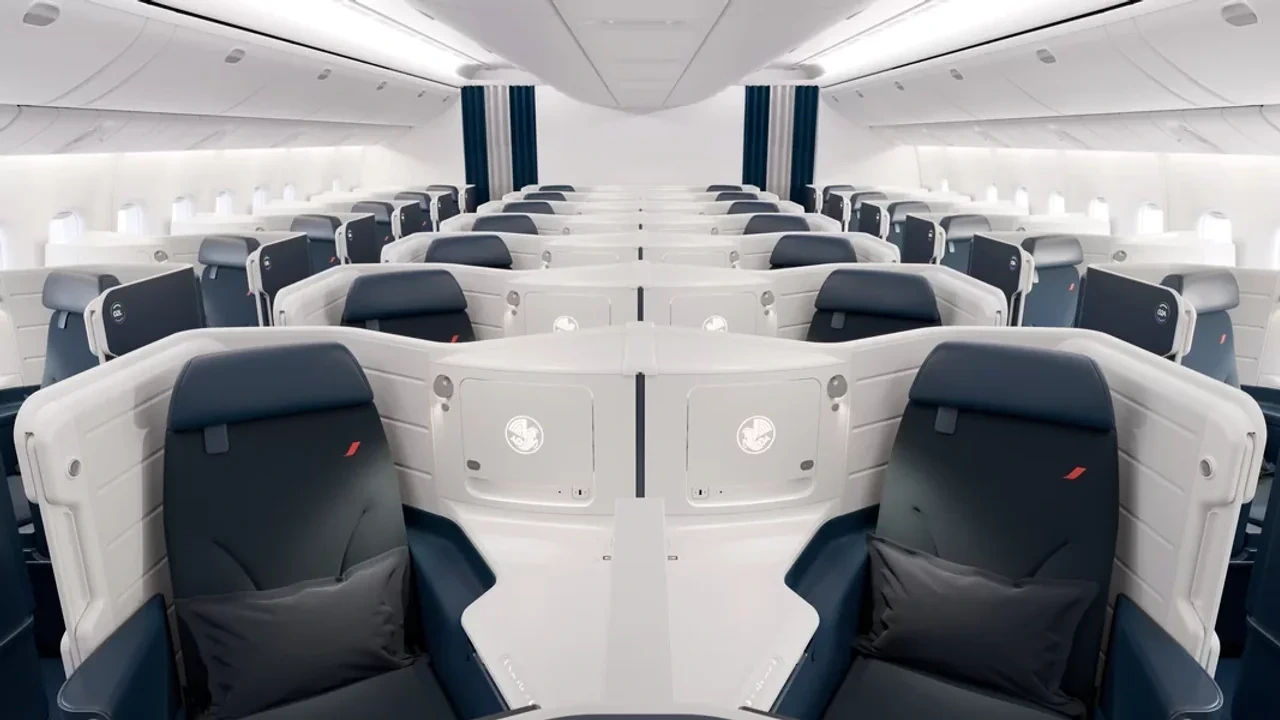
Air France's new reverse herringbone suites with sliding doors finally match their consistently excellent soft product, making it the premier European choice for transatlantic crossings
Air France's new Airbus A350 and Boeing 777 business class cabins are, in my opinion, the best in Europe by a clear margin. Comfortable reverse herringbone seats with doors, strong tech, and genuinely excellent bulkhead seats. The soft product backs it up — friendly crews, good food, strong entertainment, decent Wi-Fi speeds, with free Starlink Wi-Fi reportedly on the way. If you're flying between Paris and the US, this is the European product to book.
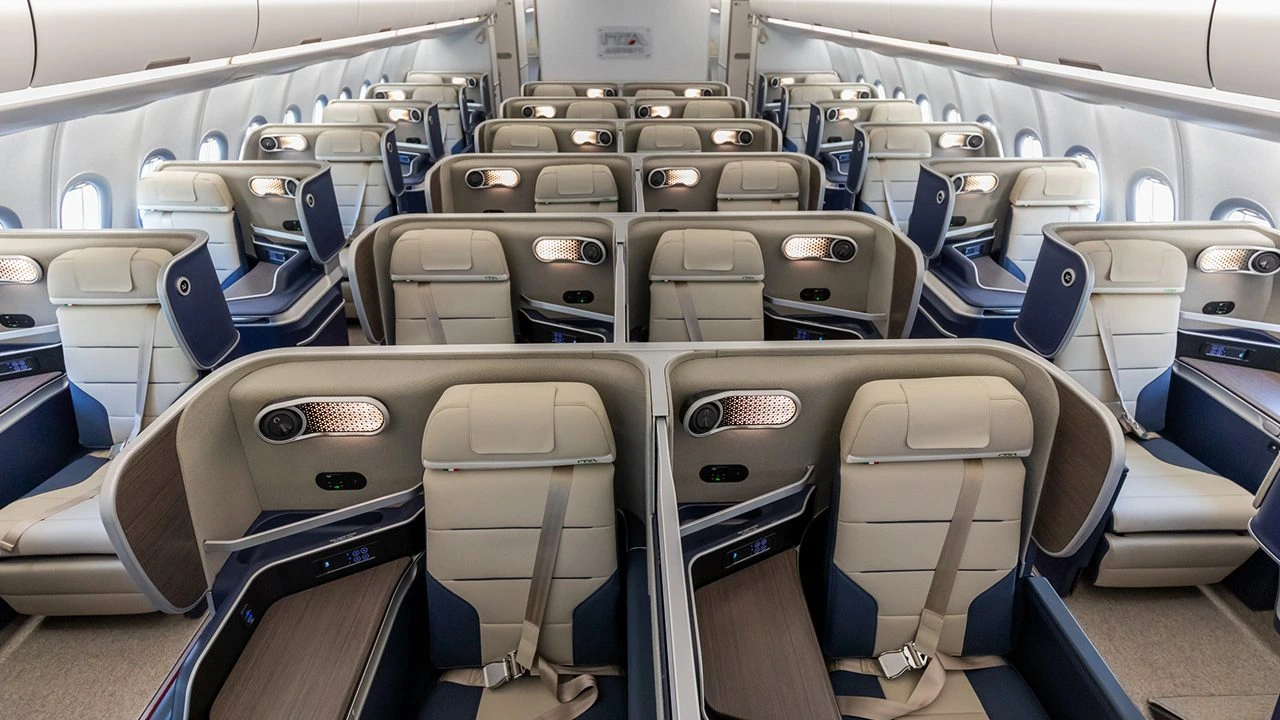
ITA Airways provides a comfortable business class seat complemented by fantastic Italian food and wine, making it a great transatlantic option.
ITA Airways is the other wildcard. The hard product across the Airbus A321neo, A330neo, and A350 fleet isn't groundbreaking, but the food and drinks are exactly what you'd hope for from an Italian carrier, and service has consistently impressed me. It doesn't match the top-tier Asian carriers point for point, but I enjoy flying ITA immensely, and that counts for something a spreadsheet ranking can't capture.
Why hard product obsession gets business class rankings wrong
Most rankings — and I include some of my own past work in this critique — over-index on the seat because seats photograph well and specs are easy to compare. Door or no door. Direct aisle access or not. Screen size. These are real factors, but they're not the whole experience, and treating them as the whole experience produces bad recommendations.
Singapore Airlines proves this. Mediocre hard product, best-in-class service, and I'd fly it over airlines with objectively better seats. Turkish Airlines proves it from another angle: nobody's booking Turkish for the seat, they're booking it for the food and the warmth of the crew. If you only compare specs, you'll pick the wrong flight for what you actually want out of eleven hours in a metal tube.
The honest way to rank business class is to ask what you personally value on a long flight — sleep quality, food, service, connectivity, amenities — and weight accordingly. My list reflects my priorities. Yours should reflect yours. If you're deciding between premium cabins entirely, our guide to business class versus first class is a useful gut check before you spend the money either way.
The bottom line on my top three
Business class has come remarkably far. Plenty of today's business class seats beat first class seats from fifteen years ago, full stop. There's no single "best" product we'll all agree on, because we're not all looking for the same thing on a flight.
My top three, in order: Qatar Airways, Japan Airlines, ANA. After that it gets genuinely close, and I could see myself reshuffling several spots on a different day, a different route, a different mood.
If you're planning to actually book one of these — rather than just argue about rankings in a comment section — that's where CEOFLIGHTS earns its keep. We're ASTA-accredited (member #900292735), top rated on Trustpilot, and our entire business is built on getting you into QSuite, The Room, Aria Suite, or Etihad's A350 suite at rates that don't require you to mortgage anything. Whether it's Tokyo, Singapore, or Hong Kong on your itinerary, call us at (888) 851-6897 or visit CEOFLIGHTS before you pay the published fare — because on every airline on this list, there's usually a considerable gap between what the airline lists and what we can get you into that same seat for.
Content creator and business travel specialist at CEOFLIGHTS, bringing you the latest insights, tips, and trends in premium business and first-class travel.
Become the CEO of Your Journey
You take the lead. Your dedicated Personal Travel Manager handles every detail.