Quick summary
For flights over 10 hours, seat layout and privacy are critical—Qatar Airways' QSuite takes the top spot for overall privacy, while Singapore Airlines offers unparalleled dining and a massive 28-inch wide seat, proving that choosing the right carrier and accessing consolidator fares (saving upwards of 50%) is essential for surviving ultra-long-haul travel.
Best airlines for long-haul business class — 10+ hours in the sky, ranked
Somewhere over the Bering Sea, on a 15-hour sector from Doha to Los Angeles, I once watched a passenger three rows up get his flat bed made up with actual linen and a duvet that smelled faintly of lavender — at 2am cabin time, lights dimmed to nearly nothing, cabin crew moving like they'd done this ten thousand times. That's the difference between a good long-haul business class product and a mediocre one. It's not the champagne on boarding. It's whether you land functional after crossing eight time zones.
Anything under six hours, business class is a nice-to-have. Above ten hours, it stops being a luxury and starts being a medical intervention. The seat needs to actually go flat — not "cuddle class" recline — the food needs to work with your circadian rhythm instead of against it, and the crew needs to leave you alone when you want to sleep and appear instantly when you don't.
I've ranked the airlines below by what actually matters on a red-eye or double red-eye: sleep quality, privacy, food timing, and entertainment. Prices quoted are what you'd typically see on published fares versus what shows up through CEOFLIGHTS contracts — the gap is usually the difference between "nice trip" and "I'm doing this every quarter."
Qatar Airways — the QSuite changed the math on privacy
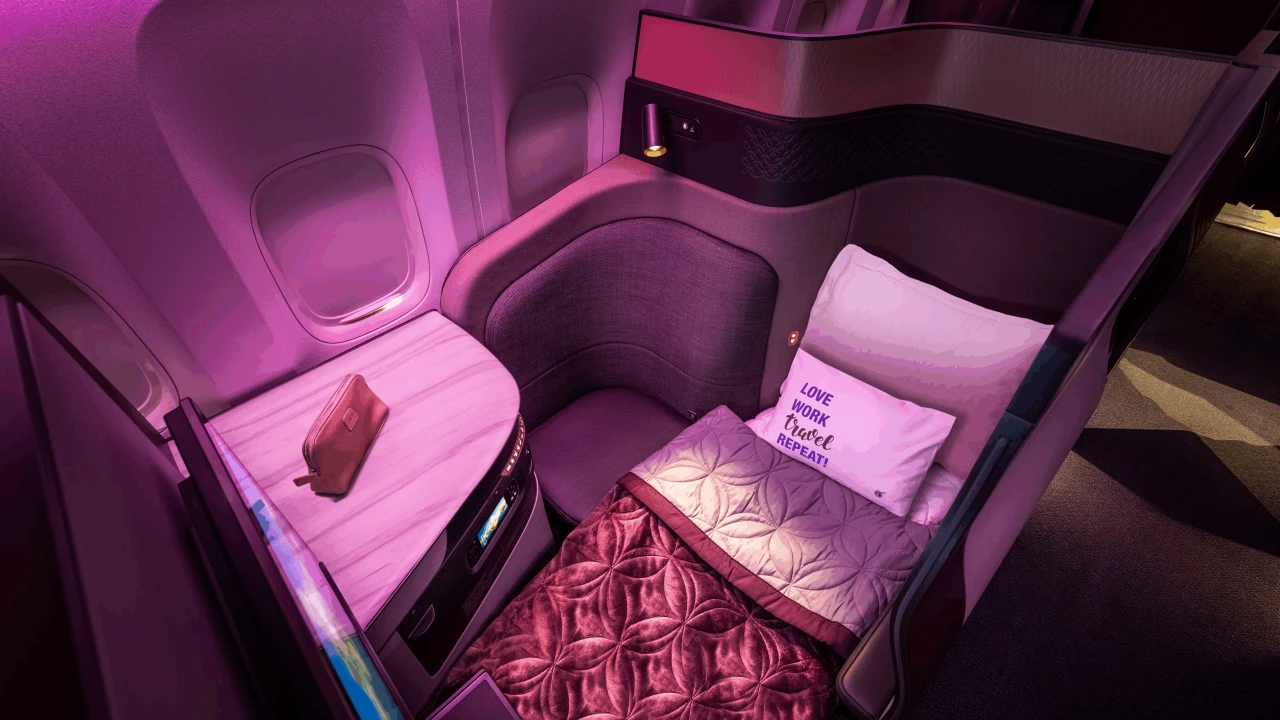
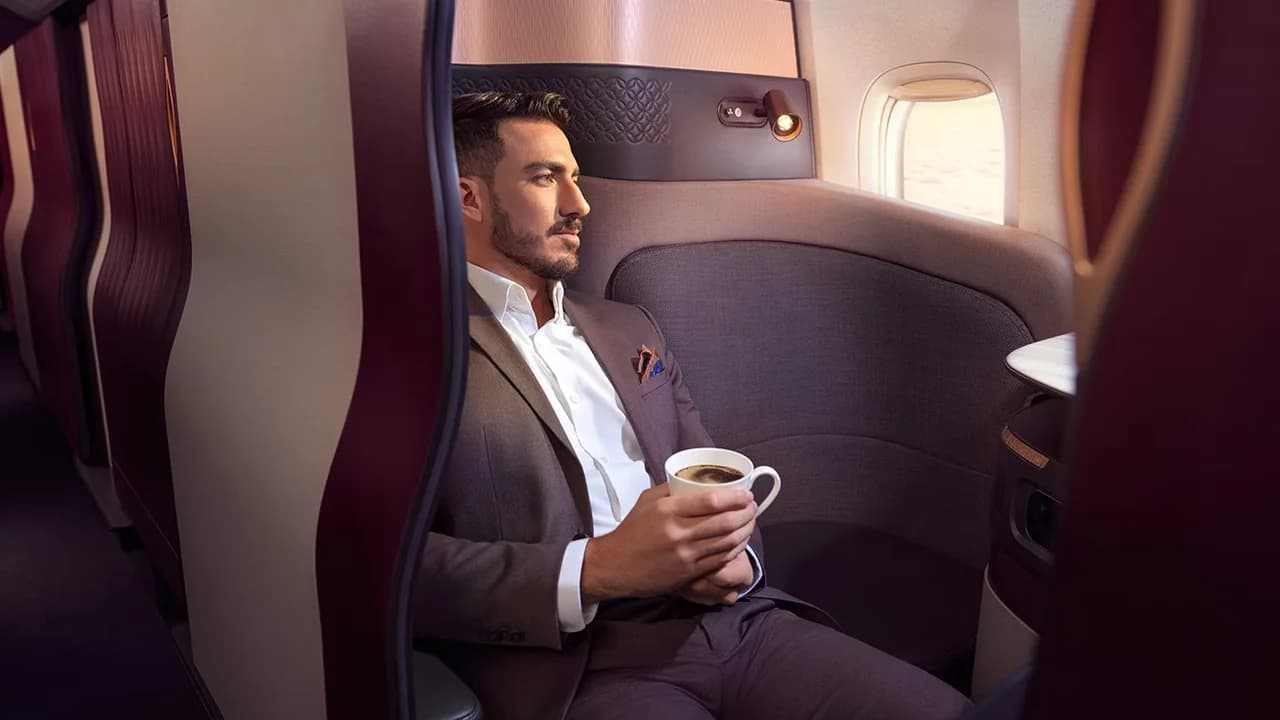
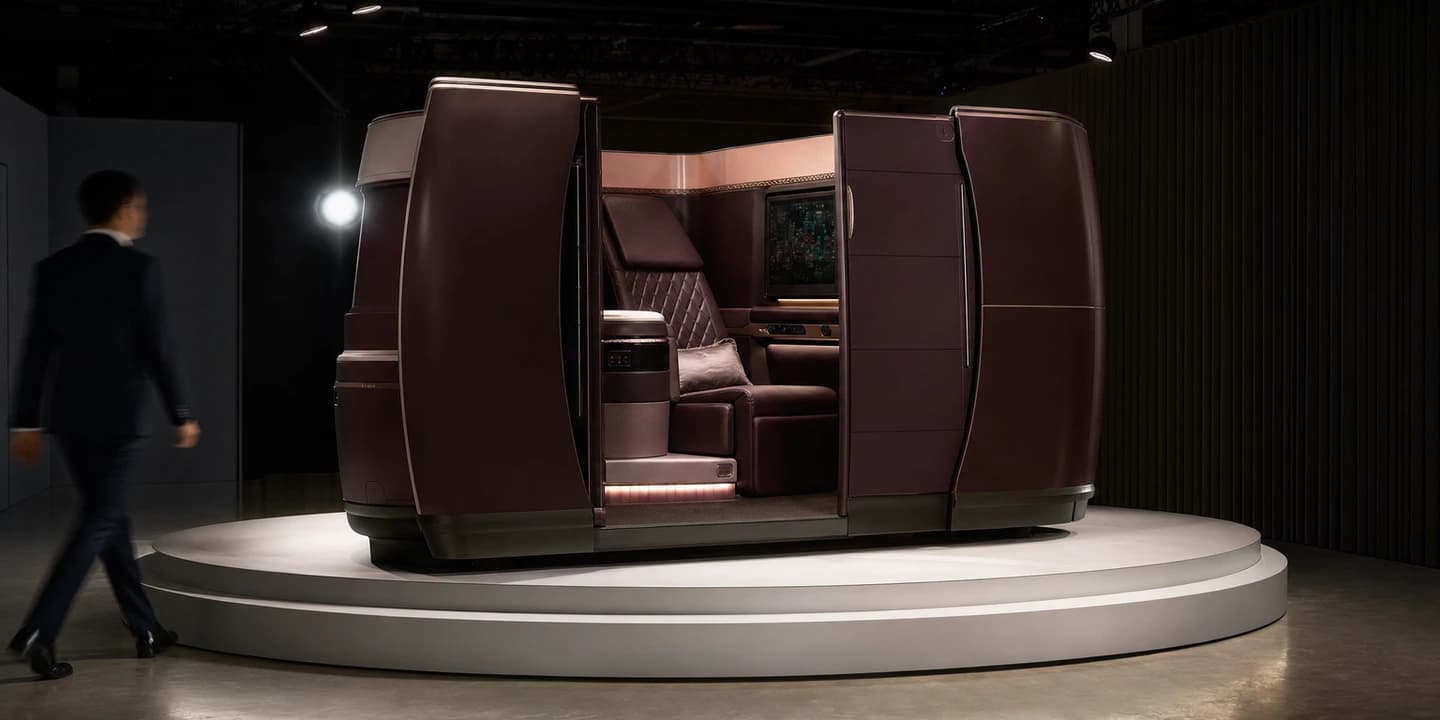
If you're flying more than ten hours and privacy is your top priority, nothing else in the sky currently competes with Qatar Airways's QSuite. Sliding doors on every seat. Movable partitions that let couples convert two seats into a double bed. Combine four suites in the center section and you've got a private room for a family or a group of colleagues who'd rather not perform politeness at each other for fourteen hours.
Boarding starts with Arabic coffee, saffron chai, and fresh dates, and you get handed 100% cotton pajamas that are yours to keep — not a loaner set you awkwardly return before landing. When the crew turns down the bed, it's White Company linens, and someone leaves a small box of chocolates on the pillow. Small gesture. Sticks with you anyway.
Qatar's US footprint into Doha is extensive — New York, San Francisco, Atlanta, Houston, Boston, Dallas, Los Angeles, Philadelphia, DC, and Chicago all connect through, and from there you're onward to hundreds of destinations across Europe, Asia, Africa, and Australia. We've seen QSuite fares on routes like Doha to Bangkok or the Maldives publish at $7,800 and drop to $3,400 through our contracts — same cabin, same door that closes, less than half the number.
I wrote a longer breakdown in our QSuite review if you want the seat map details before you pick a suite number.
Cathay Pacific — best for the China and Southeast Asia grind
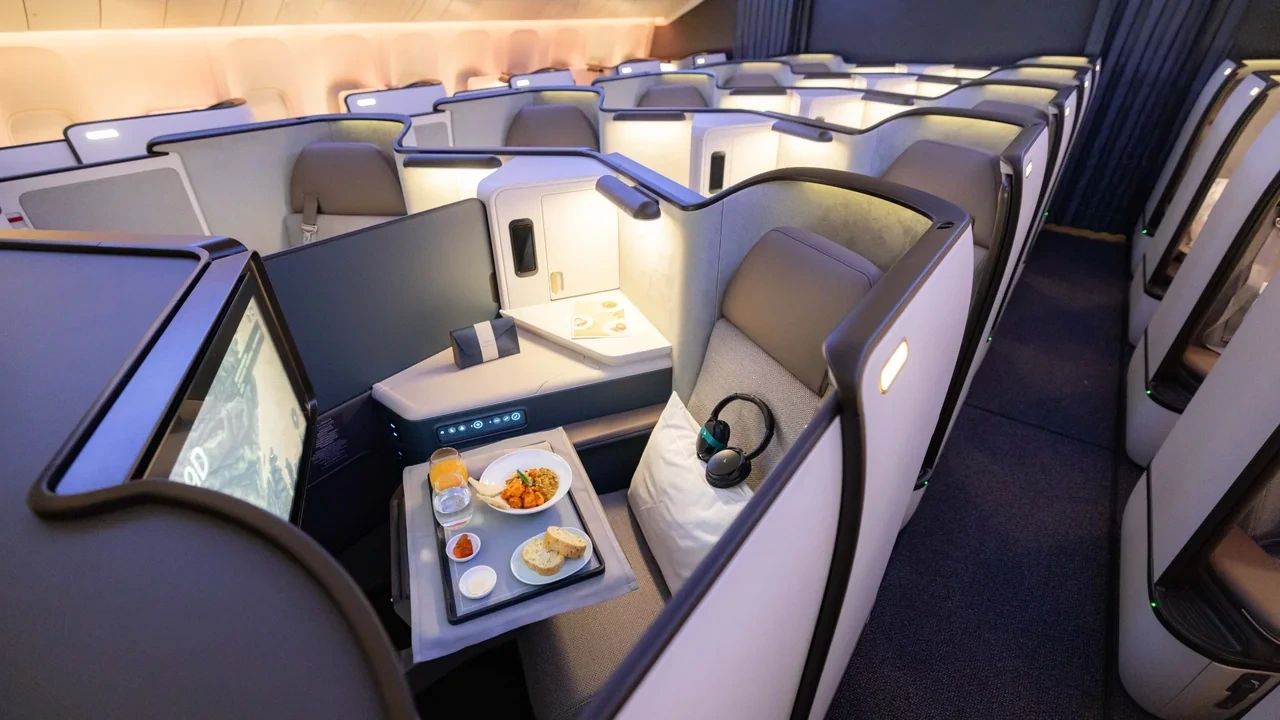
Cathay Pacific's newest Cirrus seats, installed on the A350 fleet, run just over 82 inches (2 meters) flat — longer than most competitors — with more legroom and storage than the traditional herringbone layout most Asian carriers still fly.
The welcome sequence is understated and it works: a personalized note, a hot towel, a glass of sparkling jasmine silver needle JING tea before the door even closes. Amenity kits use Bamford, the UK skincare brand built on sustainability principles — 400-thread-count pillowcases, a two-piece duvet, both from sustainably sourced cotton. The A350 cabin itself runs quieter than most, with intelligent lighting that actually seems to understand what hour your body thinks it is.
If you're routing through Hong Kong onward into mainland China or deeper Southeast Asia, this is the seat I'd book first.
Singapore Airlines — the widest seat in the sky, and the only airline where dinner is the highlight
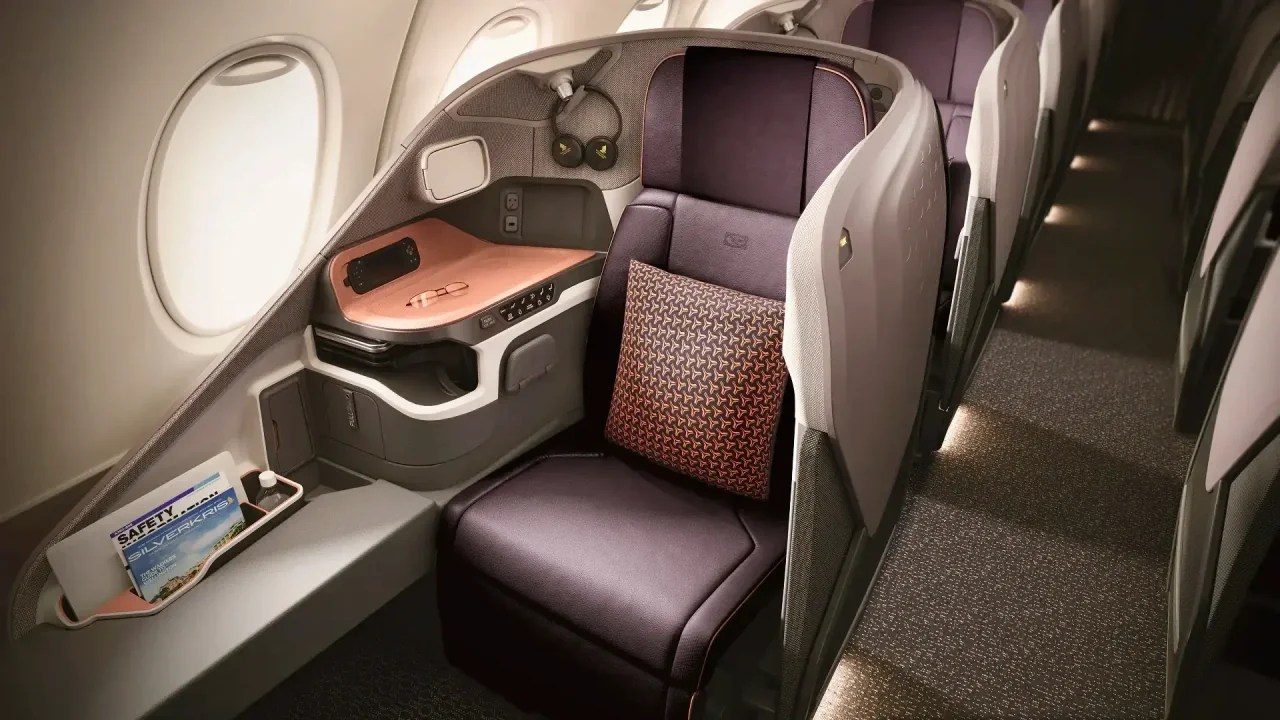
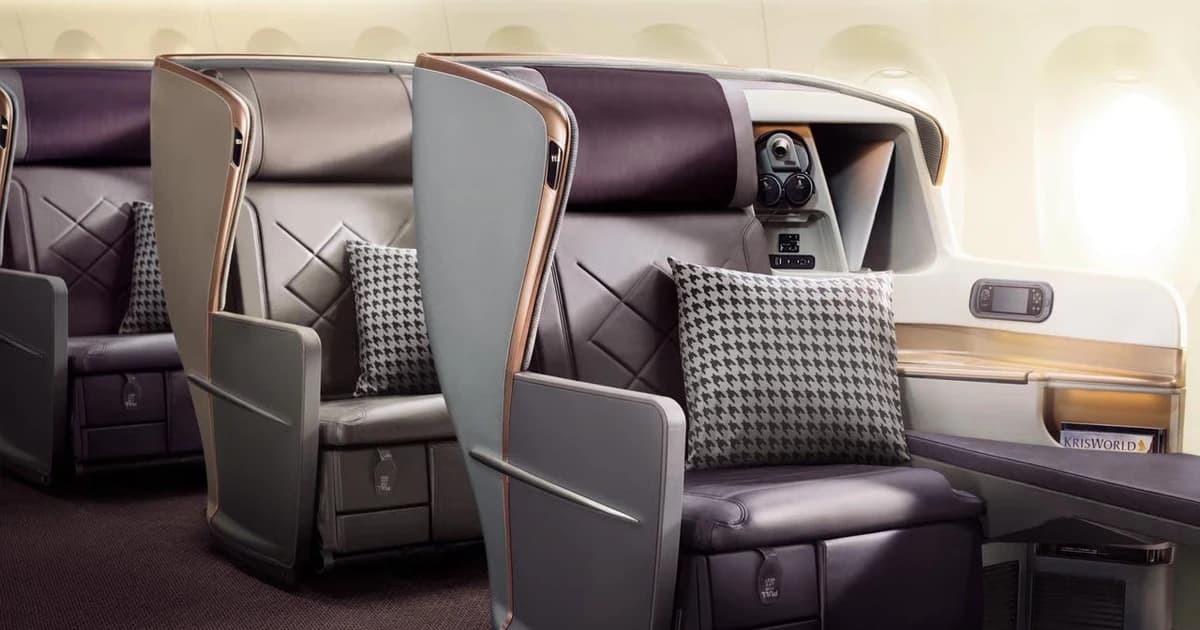
At 28 inches wide on the A350 and 777 fleets, Singapore Airlines has the widest business class seat flying, full stop. On the A380, business class seats can combine into two fully flat joined beds — genuinely useful if you're traveling as a pair and don't want a partition between you for eighteen hours.
The food program is the real differentiator. Book The Cook lets you order a personalized dinner up to 24 hours before departure, prepared by chefs the airline has spent decades cultivating relationships with, plated on fine porcelain and paired with wines chosen to actually complement red-eye timing rather than just impress. It's Michelin-adjacent execution at 30,000 feet, and it's one of the only long-haul business products where I actually look forward to the meal service instead of tolerating it.
Singapore's all-business and premium-economy configuration on its New York routes — currently among the longest scheduled flights in the world — makes the exclusivity tangible rather than marketing copy. The airline also runs nonstop service to Tokyo, Frankfurt, and Manchester from the US, and pricing on those routes tends to be surprisingly competitive even before you talk to a consolidator. I go deeper on the seat specs in our Singapore Airlines review.
ANA — "The Room" is the largest business seat you've never heard of
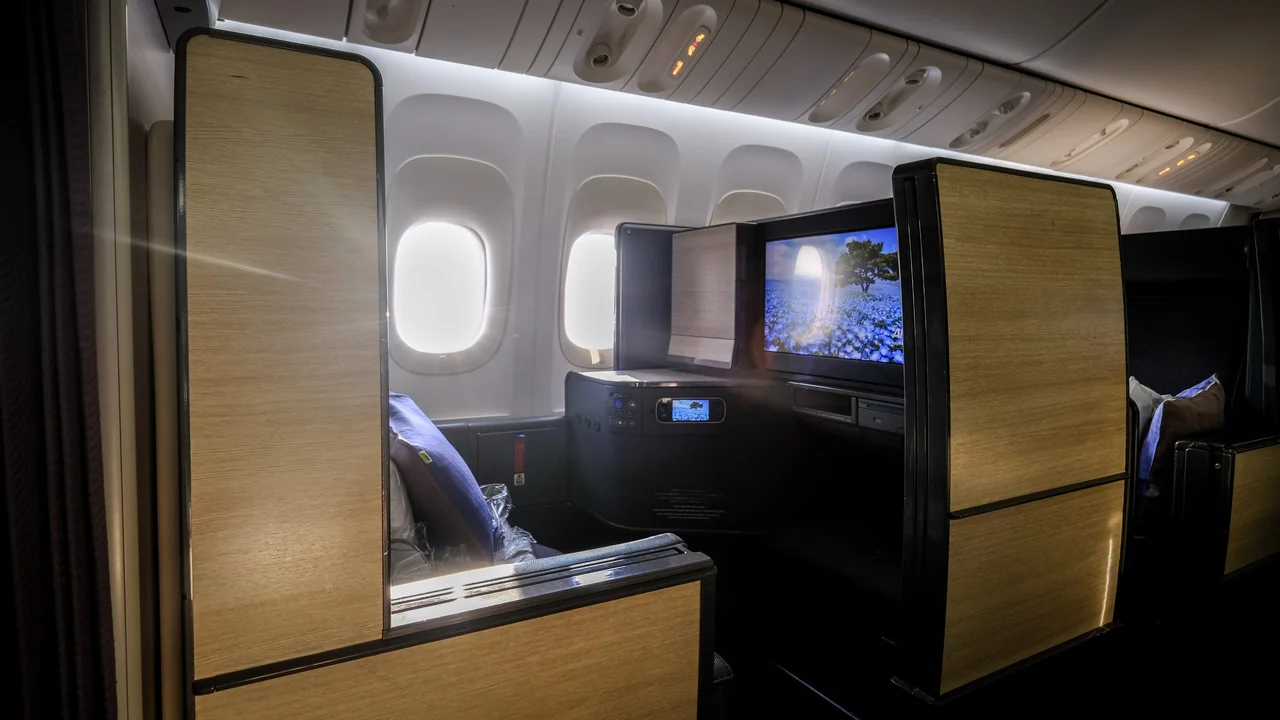
ANA's flagship business product, called simply "The Room," flies on the carrier's long-haul 777-300ER — currently out of JFK, with expansion planned to other US gateways. At approximately 28 inches wide, 53 inches of pitch, and 72 inches of length, it was designed in collaboration with architect Kengo Kuma and the British design firm Acumen, and it shows: the cabin borrows from Japanese multifunctional living-space design, with flexible doors that go from full privacy to a shared social space depending on who's traveling with you.
Sixty-four business seats per flight makes it one of the larger configurations flying long-haul, which sounds like a downside until you realize it means more award availability and more competitive published fares than you'd expect on a premium Japanese carrier. For flights into Tokyo, this is the seat worth planning your itinerary around.
Etihad — the staggered layout worth knowing before you book
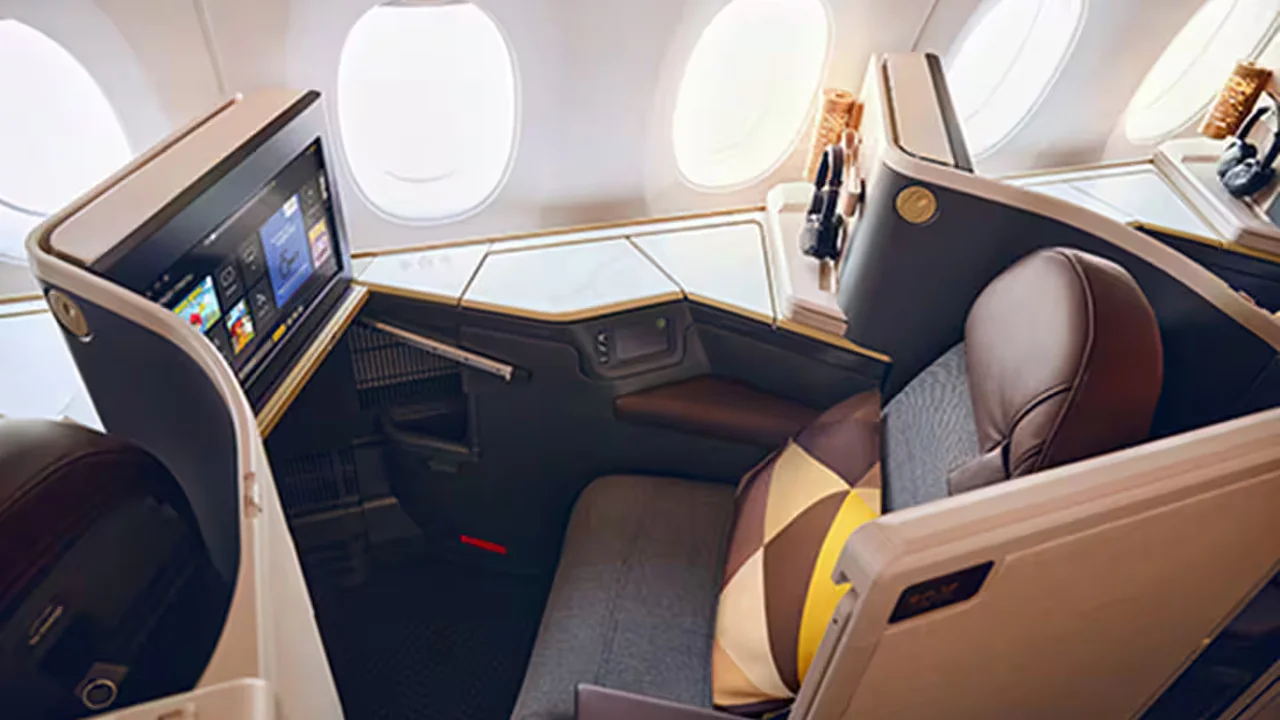
Etihad's business product, Etihad Studio, flies on the 787-9 fleet in a staggered 1-2-1 configuration that alternates forward-facing and rear-facing seats — pick an even-numbered seat if you want to face forward, a detail most people don't discover until they're already strapped in.
The 22-inch-wide seat converts to a 6-foot-8-inch flatbed at the touch of a button, with touchscreen controls for firmness, position, and a built-in massage function. Business and first passengers get dedicated check-in, a chauffeured Mercedes when departing from the UAE, and — a genuinely useful quirk — if Dubai is your actual destination, Etihad will book you through Abu Dhabi and transfer you to Dubai by luxury coach.
Turkish Airlines — the widest network, and a lounge worth the layover
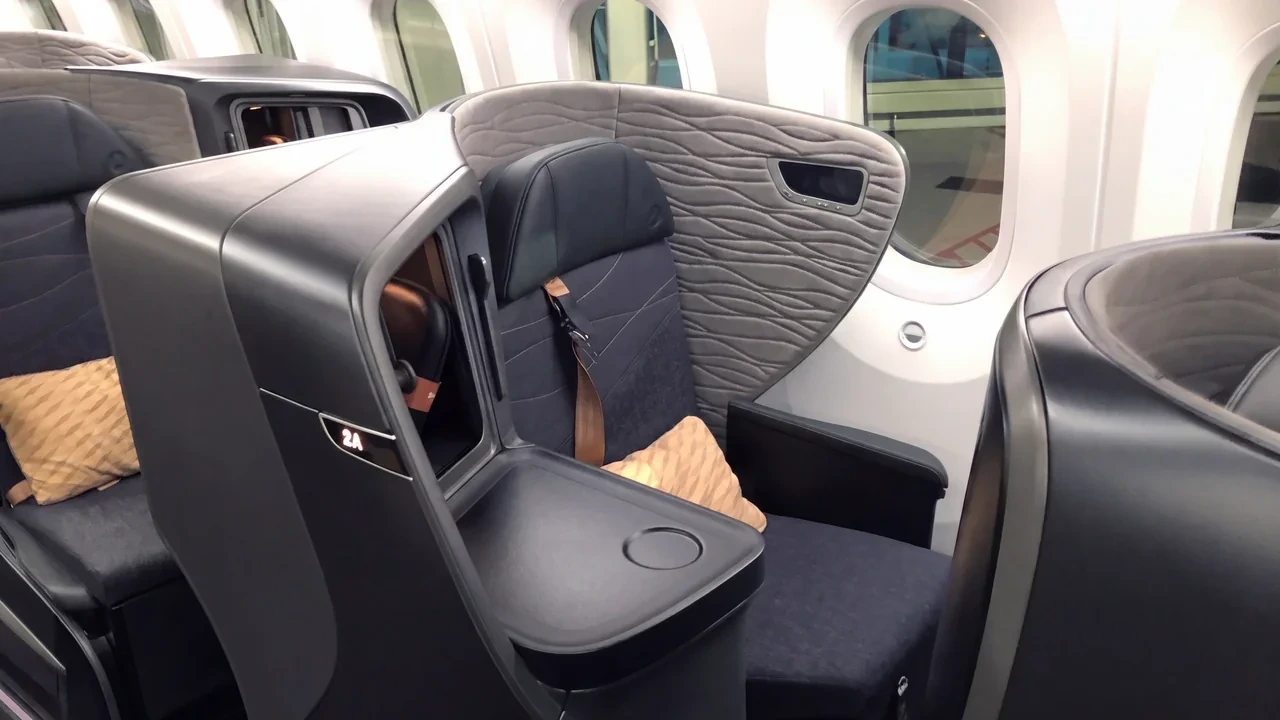
Turkish Airlines flies to roughly 120 countries, which means it covers ground almost nobody else touches directly — Central Asia, Mongolia, North Africa, deep into Europe — nearly all of it routed through Istanbul.
It's also one of the few carriers still running genuine business class seats on intra-Europe short-hops, rather than blocking a middle seat in economy and calling it done. Onboard, you can preorder meals from picture menus posted a week ahead, then eat off appetizer and dessert carts wheeled through the cabin by chefs — a level of service theater most long-haul carriers dropped years ago.
If Istanbul isn't your final stop but you'd like it to be for a few hours, certain layovers qualify for a free city tour or hotel stay, courtesy of the airline. And the Istanbul lounge itself deserves the reputation it has — multiple buffet stations, live cooking, a golf simulator, and quiet rooms that don't feel like an afterthought. I wrote up the full experience in our Turkish Airlines review.
Delta One — the domestic pick that actually holds up on ultra-long-haul
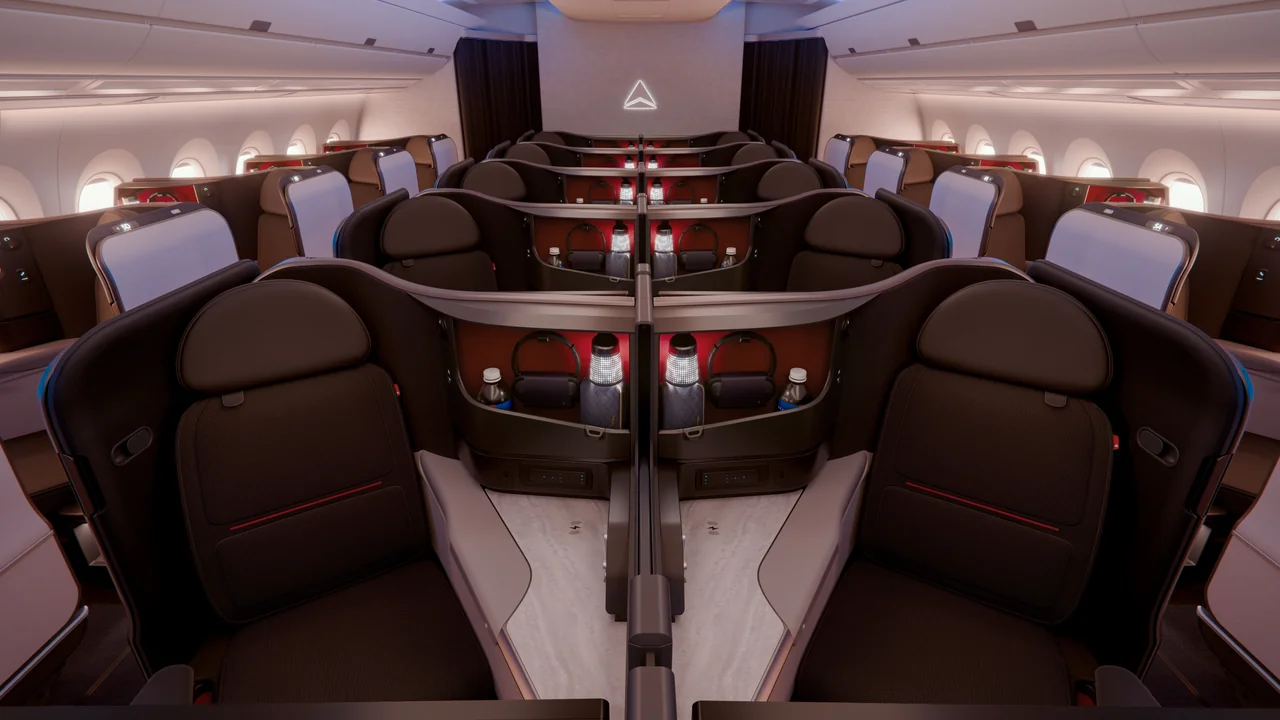
Delta took the top spot in J.D. Power's 2021 North America Airline Satisfaction Study, and on long-haul routes — Shanghai, Tokyo, Paris, Amsterdam — the Delta One product justifies it. Thompson Vantage XL seats on the A350-900 and A330-900neo fleets come with full-height sliding doors, which is not something you'd expect from a US carrier even five years ago.
Each seat gets an oversized Westin Heavenly duvet and a down-alternative pillow — hotel-grade bedding, not the thin blanket-in-a-bag most domestic carriers still hand out on international routes. Sky Priority gets you accelerated check-in, expedited security, priority bags, and Delta Sky Club access. Full details in our Delta One breakdown if you're deciding whether it's worth the upgrade over economy comfort.
Air New Zealand — best for the South Pacific stretch nobody else does well
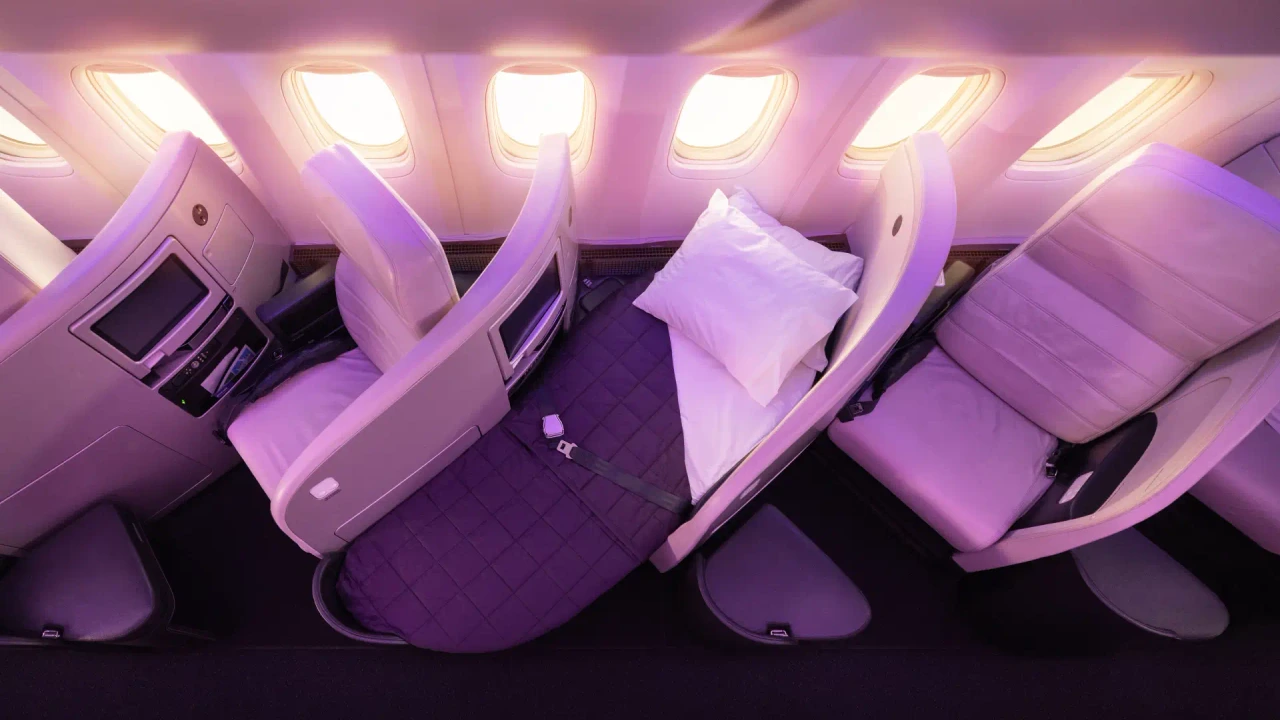
Air New Zealand's Business Premier cabin, flying on the 777-200, 777-300, and 787-9, feels less like an airline seat and more like a designed nest — leather seating fitted with a memory foam mattress topper, proper duvet, and pillow, all under the soft pink cabin lighting the airline is known for.
The 777s run a cozier 1-2-1 herringbone; the 787 runs 1-1-1, which is noticeably more private if you're traveling solo. Every seat gets its own ottoman, which doubles as a face-to-face dining spot if you're traveling with a companion in the seat ahead or behind. The wine list leans hard into New Zealand producers, and you can order bottles for home delivery after the flight — a nice touch if you found something you actually liked at 35,000 feet.
EVA Air — best in-flight entertainment on the ultra-long-haul routes
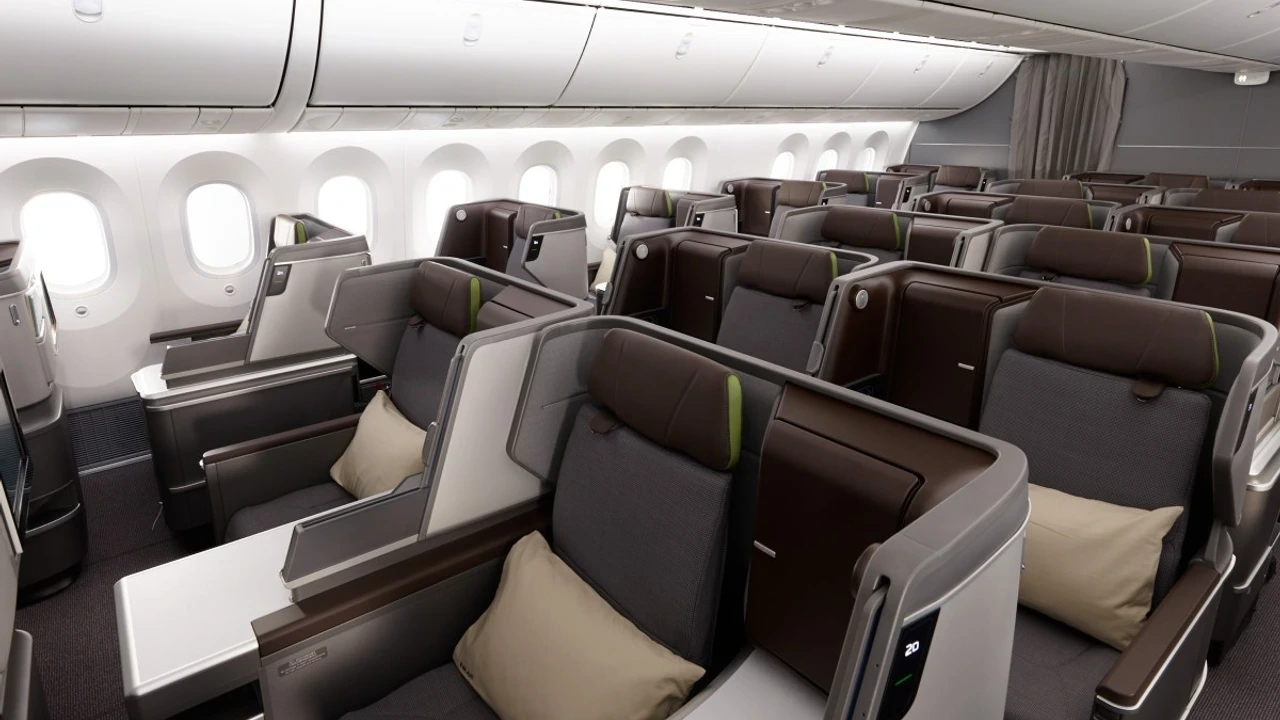
EVA Air's Royal Laurel Class, redesigned on the 787 fleet, is built for passengers who'd rather binge four movies than sleep eight hours — an 18-inch HD touchscreen and noise-canceling headphones make that a genuinely good option.
Sleepwear comes from Apujan, the London-based designer label, and amenity kits pair Rimowa hard cases with Salvatore Ferragamo contents — a small flex that signals the rest of the cabin experience. Vintage champagne gets poured before the meal service starts. On the 777-300ER, Royal Laurel seats convert to a 6.5-foot flat bed at the push of a button, plenty of room for most passengers to stretch out fully. Best used on the run into Taipei and onward into Southeast Asia.
Qantas — best for the red-eye into the South Pacific
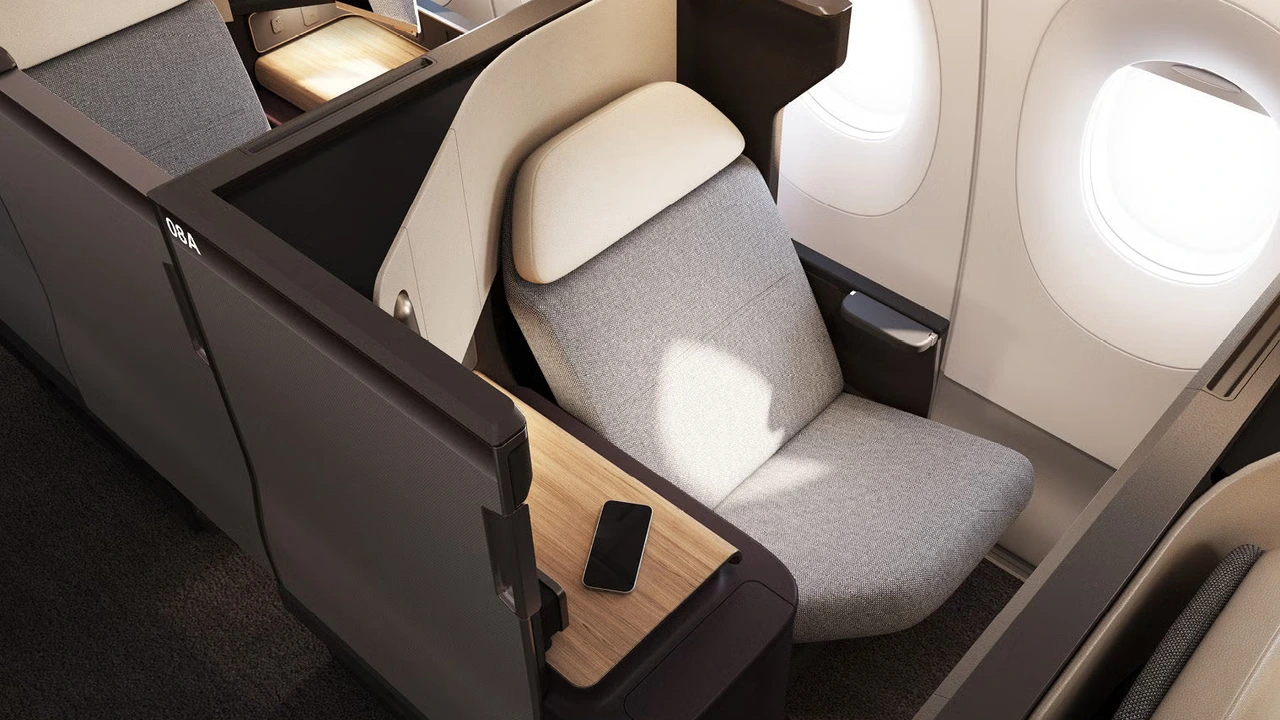
Qantas's 787-9 Dreamliner runs 42 business seats in a staggered 1-2-1 layout, 23 to 24 inches wide with an 80-inch bed length — solid numbers, though not class-leading. What sets it apart is the aircraft itself: windows 65% larger than comparable jets, which sounds like a marketing detail until you're eleven hours in and the extra light genuinely reduces the claustrophobia these routes can induce.
Qantas partnered with the University of Sydney's Charles Perkins Centre on a wellbeing program built specifically around jet lag reduction — nutritionally dense meals, native Australian aromatic-infused waters, and a healthy snack bar rather than the usual candy tray. Dreamliner service connects New York, Los Angeles, San Francisco, and Chicago direct to major Australian cities, landing you into Sydney in noticeably better shape than the old kangaroo-route stopovers ever managed.
JetBlue Mint — worth mentioning, even if it's not technically ultra-long-haul
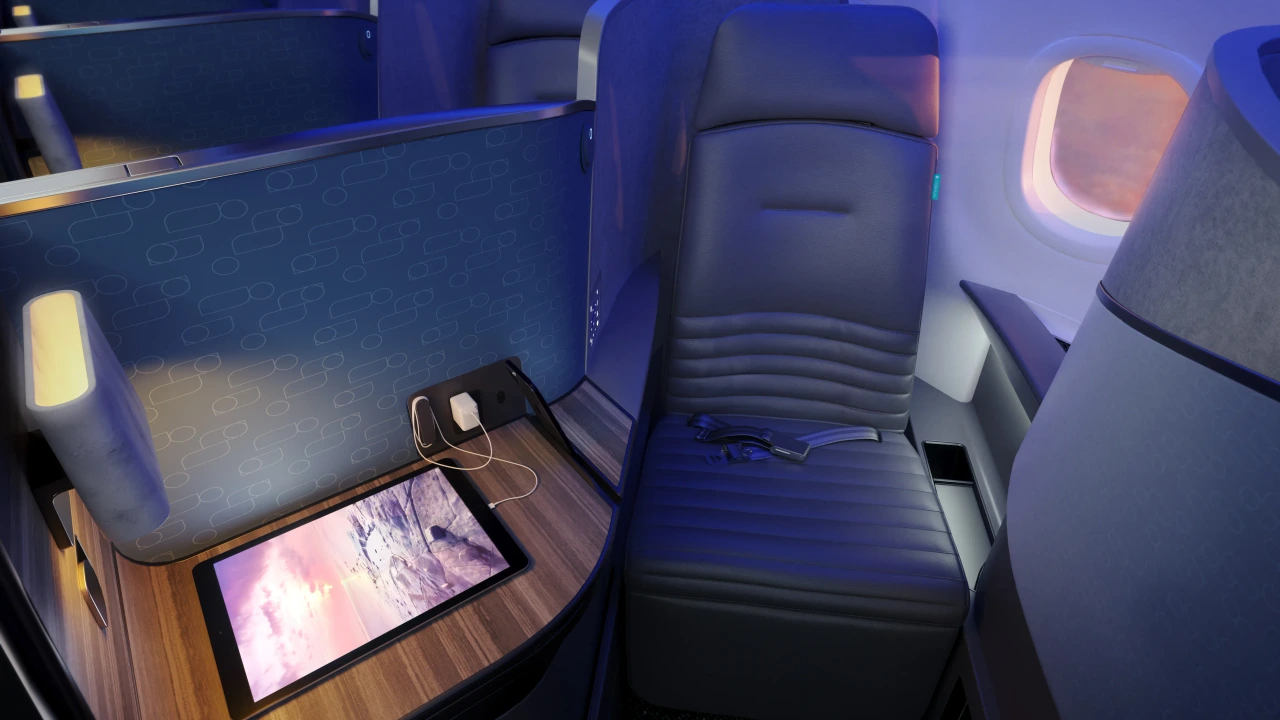
JetBlue's Mint product runs on the Airbus A321LR, connecting JFK and Boston to London Heathrow. It's a single-aisle narrow-body — capacity around 160 — which sounds like a downgrade until you sit in one of the 24 fully lie-flat suites with sliding doors and custom Tuft & Needle seat cushions.
The transatlantic crossing isn't ten-plus hours, so it doesn't belong at the top of an ultra-long-haul list on merit alone. But free high-speed wifi across the entire Atlantic crossing, if JetBlue keeps delivering on it consistently, is a genuine differentiator nobody else in this list has matched. I cover the seat dimensions and door mechanism in our JetBlue Mint review.
What actually matters when you're picking for 10+ hours
Cutting through the marketing copy, four things determine whether you land functional:
- Does the seat fully flat-bed, or just recline steeply? Anything under 180 degrees isn't a bed, it's a recliner with delusions.
- Is there a door, or at least a real partition? QSuite and Delta One's Thompson Vantage XL both nail this; older herringbone configurations still leave you semi-exposed to the aisle.
- Does the meal service respect your body clock, or just the airline's schedule? Singapore's Book The Cook lets you dictate timing; most carriers still serve dinner regardless of what timezone your stomach thinks it's in.
- How's the bedding, actually? White Company on Qatar, Westin Heavenly on Delta, memory foam on Air New Zealand — this matters more than people admit until they're the ones shivering under a thin polyester blanket at cruising altitude.
If you want the fuller taxonomy of seat types before booking, our guide to business class seat configurations breaks down herringbone versus staggered versus reverse-herringbone in more depth than I have room for here.
Book it through someone who actually knows the fare buckets
Published business class fares on these routes routinely run $6,000 to $12,000 round-trip. We've moved QSuite seats to Doha from $7,800 down to $3,400, Delta One to Tokyo from $8,900 down to $4,100, and Singapore's premium cabins from $9,600 down to $4,700 — all through contracted consolidator fares that never show up on the airline's own site or the usual search engines.
CEOFLIGHTS is ASTA-accredited (member #900292735) and is top rated on Trustpilot, which matters more than it sounds when you're wiring five figures for a seat. We're not a discount broker guessing at availability — we work directly with airline contracts to get you the same cabin, same seat, same crew, at a fare that doesn't require you to justify the trip to your CFO twice.
Call (888) 851-6897 or head to CEOFLIGHTS before your next long-haul booking. Ten-plus hours is a long time to spend regretting the seat you picked.
The one I'd book tomorrow
If I had to pick one seat for a genuine ultra-long-haul — twelve, fourteen, sixteen hours — it's the QSuite, no real debate. The door closes, the bed is actually flat and actually long, and the crew treats a sleep request like a serious instruction rather than a suggestion. Singapore wins on food, ANA wins on seat size, Cathay wins on cabin quiet. But when the flight is long enough that sleep quality decides how your first meeting goes on the other end, privacy wins every time.