Quick summary
Opt for one-stop routings through Middle Eastern hubs or choose top-tier nonstop flights on JAL and Singapore Airlines to ensure you get a true lie-flat experience. While retail business class to Asia can cost up to $15,000, utilizing consolidator fares can secure the same premium seats for $4,200 to $7,500 roundtrip.
Flying business class to Asia is one of the great long-haul experiences in aviation — if you choose the right airline. Do it wrong, and you spend 16 hours in a glorified recliner, eating reheated pasta somewhere over the Pacific. Do it right, and you arrive in Tokyo or Singapore genuinely rested, having slept flat in a proper suite with a door.
The problem is that "right" looks very different depending on where you're flying from, where you're going, and how much you're willing to spend. Retail business class to Asia from major US hubs runs $7,000 to $15,000 roundtrip. That's not a typo. Through CEOFLIGHTS consolidator pricing — built on direct airline contracts developed over years in the premium travel space — those same seats routinely come in at $4,200 to $7,500, depending on the route and cabin. We're top rated on Trustpilot and ASTA-accredited (member #900292735), so if you'd rather talk through options before committing, call us at (888) 851-6897.
But let's get specific. Here's how to actually think about booking business class to Asia.
The routing question comes first
Before you compare airlines, compare routings. The US-to-Asia market offers two broad approaches: transpacific nonstop (mainly from the West Coast) or one-stop through a Middle Eastern or European hub (accessible from virtually anywhere in the US). Each has real tradeoffs.
Nonstop transpacific routes — think LAX to NRT on Japan Airlines, SFO to SIN on Singapore Airlines, or JFK to HKG on Cathay Pacific — are the obvious choice if you value time. You land without a connection. But these routes often run on older widebody configurations, and availability in premium cabins can be thin.
One-stop routings through Doha (DOH), Dubai (DXB), or even Amsterdam (AMS) add 3-5 hours of total travel time, but open access to some of the best cabin products in the world. Qatar Airways QSuite, Emirates First Class, KLM Business Class — none of these fly nonstop to Asia from most US cities, but connect through their respective hubs and suddenly a trip from Dallas to Bangkok becomes very manageable, and very comfortable.
The one-stop option also tends to produce better pricing. A routing from JFK to BKK via DOH in Qatar QSuite will often retail for $1,000–$2,000 less than a comparable nonstop, and consolidator fares make that gap even wider.
Airline by airline: what you're actually getting
Not all business class seats are business class. The gap between the worst and best products in the category is roughly equivalent to the gap between a Marriott Courtyard and a Park Hyatt. Here's what to know.
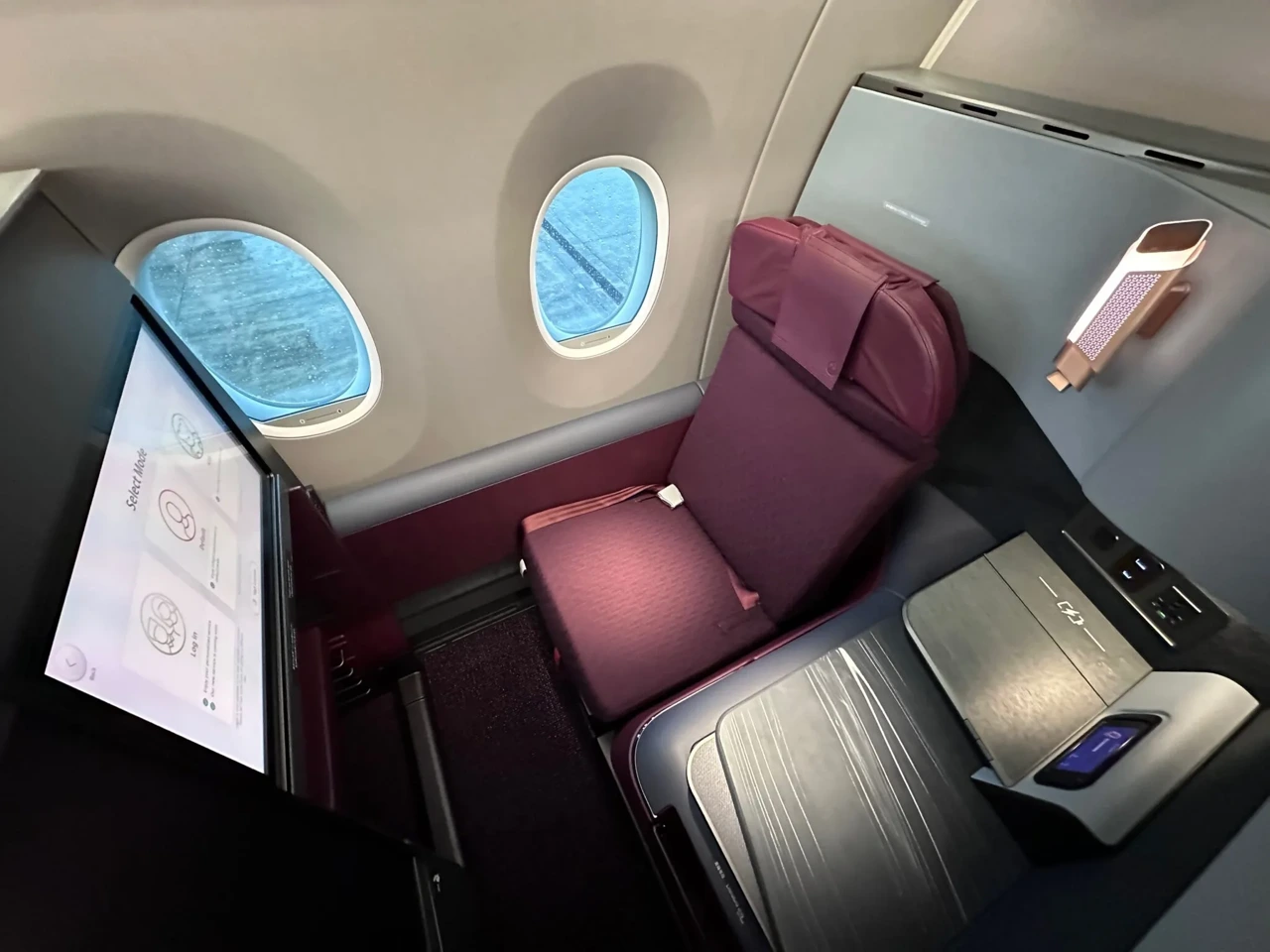
Japan Airlines (JAL) operates one of the most underrated business class products in the sky. Their JAL Sky Suite III — found on 787-9s and select 777-300ERs — gives you direct aisle access from every seat, a genuine lie-flat bed running 76 inches long, and service that is quietly excellent without being performative. JAL JL006 (NRT–JFK) and JL004 (NRT–ORD) are reliable workhorses on this route. Retail roundtrip from New York runs $8,500–$12,000. CEOFLIGHTS fares on JAL transpacific routings start considerably lower — call us and we'll quote the current window.
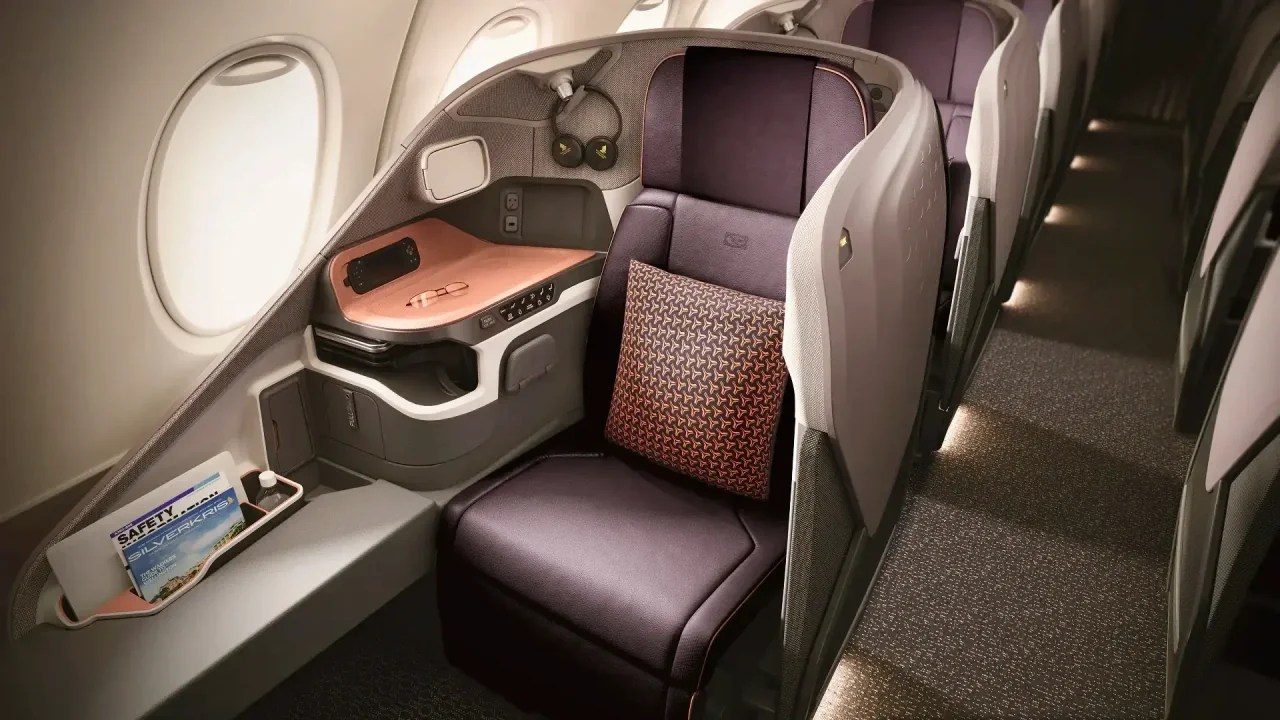
Singapore Airlines remains the gold standard for many frequent flyers, and for good reason. Their Business Class on A350-900ULR routes — including the nonstop SFO–SIN (SQ37) at 17+ hours — features full-flat beds, direct aisle access, and the kind of cabin crew consistency that other carriers spend decades trying to replicate. Their regional Business Class on shorter intra-Asia segments is less impressive, so manage expectations if you're connecting onward. Retail SFO–SIN roundtrip: $9,000–$14,000.
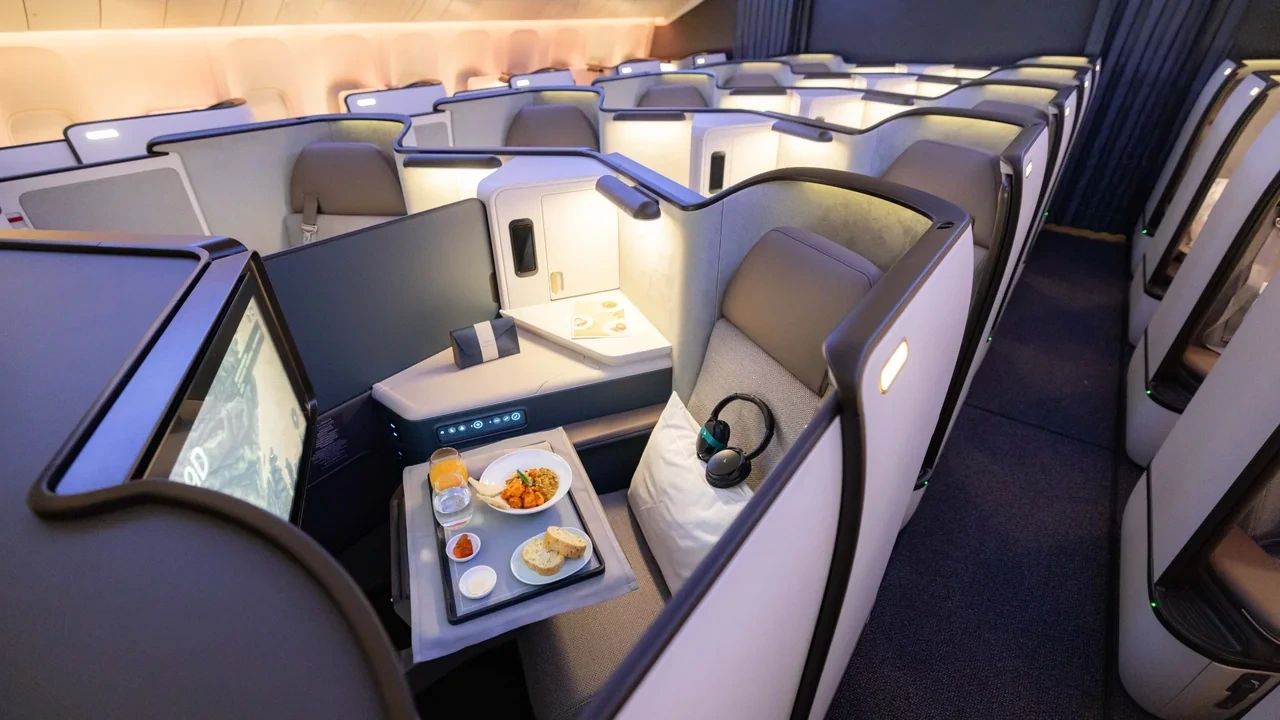
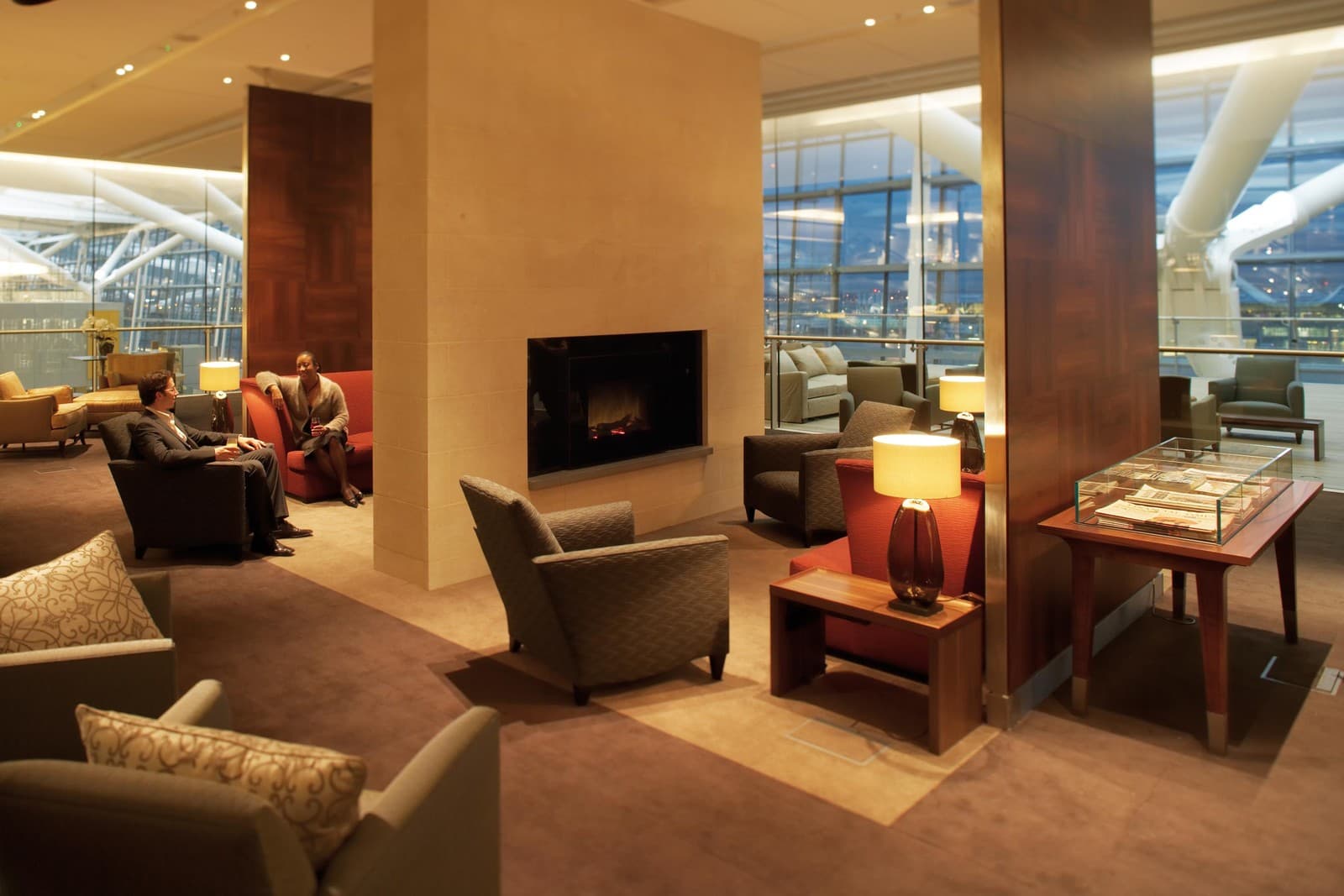
Cathay Pacific flies JFK–HKG nonstop on CX842/CX845, and their current Business Class product — the reverse herringbone configuration with 76-inch lie-flat beds — is genuinely good. Hong Kong as a connecting hub also gives you access to virtually all of Southeast and East Asia within three hours. The lounge situation at HKG is excellent: The Wing Business Class Lounge has a proper noodle bar and shower facilities worth using. Retail JFK–HKG: $7,500–$11,000 roundtrip.
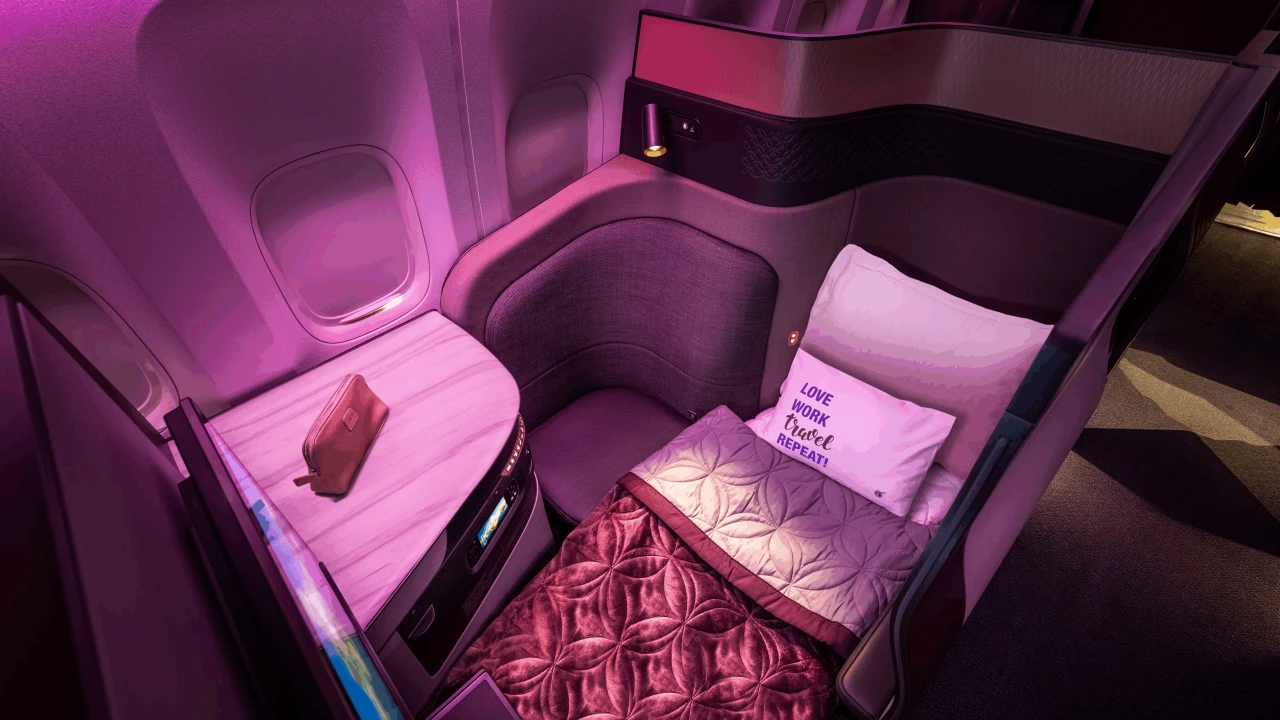
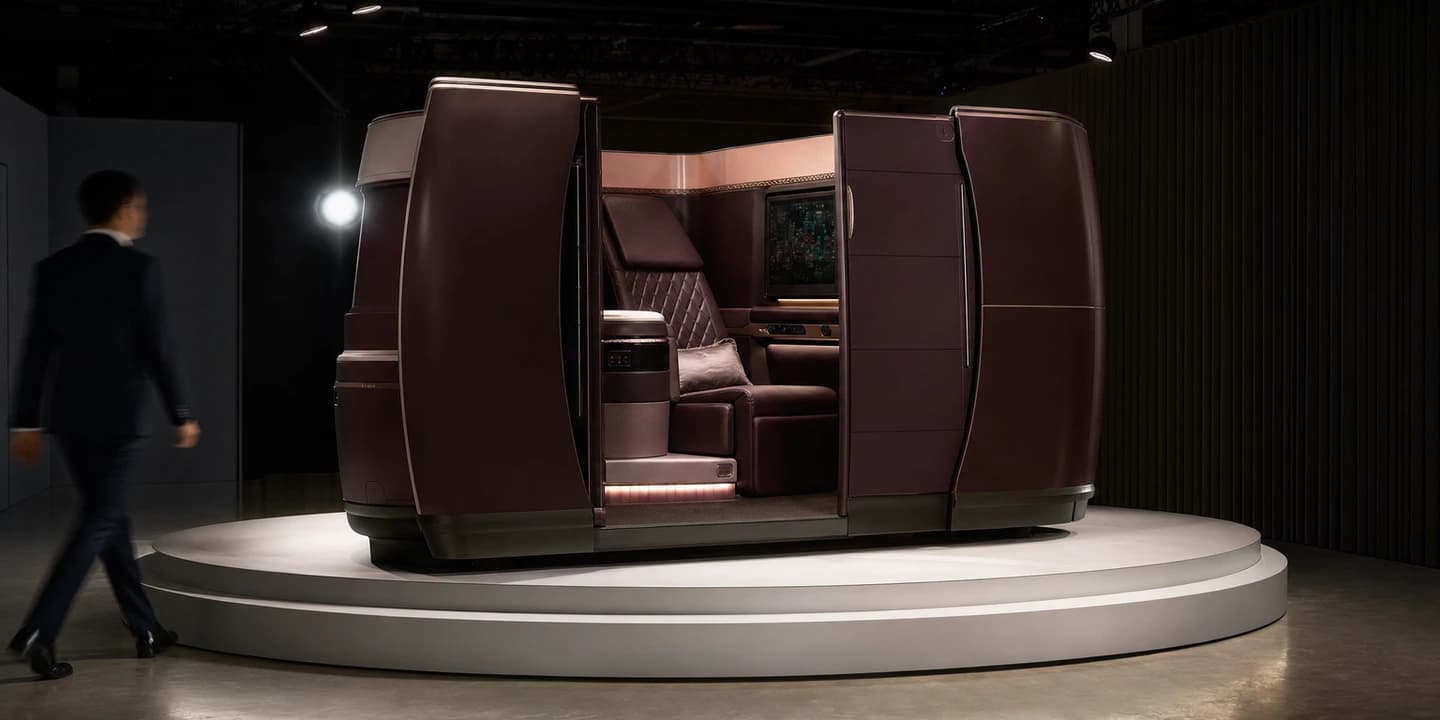
Qatar Airways QSuite is the most talked-about business class product flying today, and it deserves most of the hype. The suite doors actually close. The double-bed configuration for two travelers is genuinely novel. Flying QR702 (JFK–DOH) and connecting onward to Bangkok, Singapore, or Tokyo puts you in a product that outclasses most airlines' first class. The Hamad International Airport Al Mourjan Business Lounge in Doha is a destination in itself — 10,000 square meters, a la carte dining, and showers that don't feel rushed. Retail JFK–BKK via DOH in QSuite: $8,000–$13,000. Through CEOFLIGHTS airline contracts, we've placed clients in QSuite on this routing for under $5,500.
Cathay Pacific vs. Singapore Airlines — if you're asking which one to choose for a first business class trip to Asia, Singapore Airlines wins on service consistency and the SFO nonstop is hard to argue with if you're on the West Coast. East Coast travelers should look harder at Cathay or Qatar.
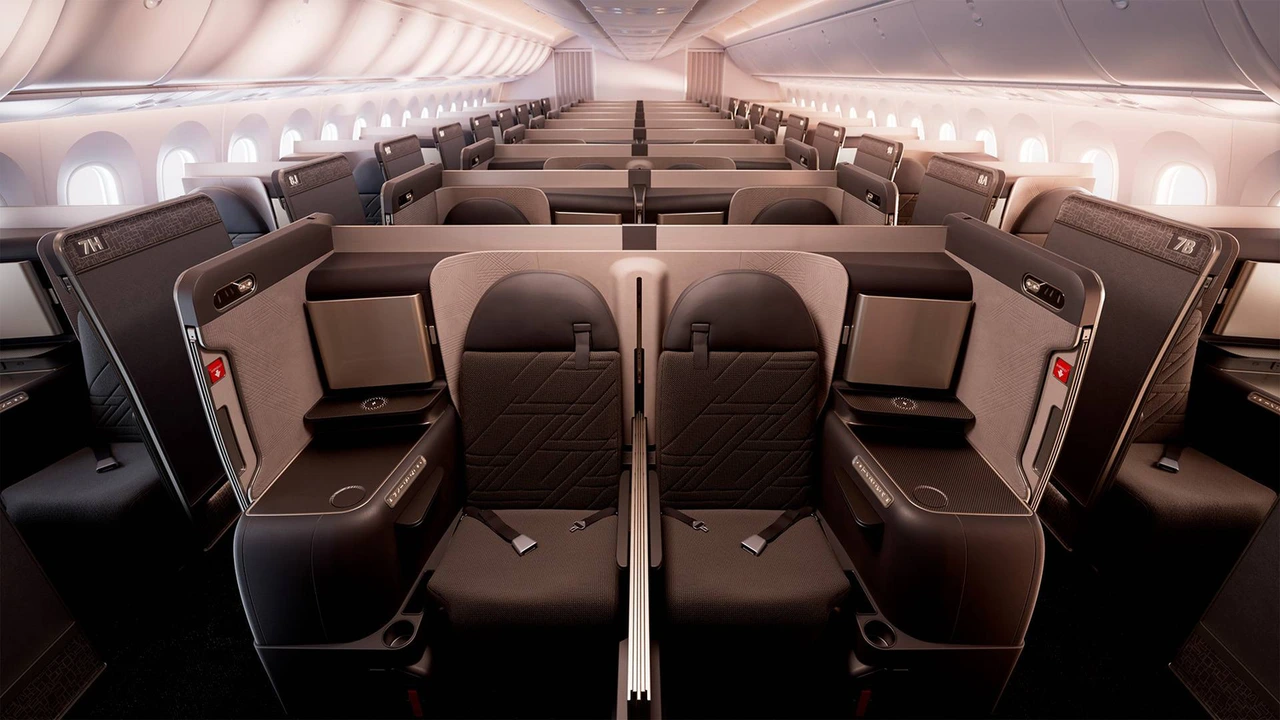
Korean Air rounds out the major options with solid business class on routes through Incheon (ICN). Their Prestige Suite product on 787s is competitive, and ICN is one of the most efficient connecting airports in Asia — fast, clean, and with a lounge network that handles transit passengers well. Less talked-about than JAL or Singapore Airlines, but worth pricing out, especially from cities like Seattle or Los Angeles where Korean Air has strong lift.
The case for positioning flights
Here's something most booking guides won't tell you: sometimes the smartest move is flying a cheap domestic positioning leg to a gateway city, rather than insisting on your home airport.
A business class flight from Dallas (DFW) to Tokyo is expensive and often routed through LAX anyway. A Southwest or American fare from DFW to SFO, followed by a Singapore Airlines nonstop to Singapore, might save you $1,500 and put you in a dramatically better cabin. Run the math before you commit to your origin city.
This matters even more for travelers in mid-sized markets — Columbus, Salt Lake City, Nashville. If your nearest hub is Atlanta, flying to JFK or LAX for a dedicated transpacific business class routing almost always produces better results than trying to cobble together a connecting itinerary through multiple US hubs.
When to book and what to watch for
Business class to Asia rewards early planners. The sweet spot for most routes is 4 to 6 months out — close enough that airlines have loaded real inventory, far enough that premium cabin seats haven't been scooped up by corporate accounts and frequent flyer redemptions.
Mid-week departures (Tuesday through Thursday) consistently price below weekend flights, often by 10–15%. On a $6,000 ticket, that's real money.
Peak travel periods to watch out for: Golden Week in Japan (late April through early May), Chinese New Year (January/February depending on the year), and Songkran in Thailand (mid-April). Premium cabin inventory evaporates during these windows. Book 6+ months out if your dates fall anywhere near them.
Off-peak windows that work well: February through mid-March, late September through October. Airlines discount more aggressively in these periods, and consolidator fares — already lower than published fares — can get particularly attractive.
What to actually do in Asia when you land
Your $8,000 flight deserves a hotel that matches it. A few specifics worth knowing.
In Tokyo, the Park Hyatt Tokyo (the Lost in Translation hotel) remains excellent for a reason — the 47th-floor New York Bar, the 52nd-floor pool with views of Shinjuku. Rooms start around $600/night. The Aman Tokyo is the upgrade from there: extraordinary service, ryokan-influenced design, and rates starting above $1,000 that don't feel unreasonable in context.
Singapore's premium hotel market is led by the Raffles Singapore (post-renovation, it's as good as it's been in decades) and the Capella Singapore on Sentosa, which operates at a level of service that makes most five-star hotels look ordinary. Budget $700–$1,500/night at either.
Bangkok rewards travelers who get off the main tourist circuit. The Mandarin Oriental Bangkok — one of the oldest luxury hotels in Asia — sits on the Chao Phraya River and has been doing this longer than most of its competitors have existed. From $600/night and worth it.
How CEOFLIGHTS actually saves you money
We're a consolidator, which means we hold negotiated contracts with airlines that allow us to ticket published routes at unpublished fares. This isn't a points scheme or a bait-and-switch — you're flying on the same metal, in the same seat, as the person who paid retail.
The difference is the price on the ticket.
On transpacific business class routes, the savings typically run $1,500–$4,000 per roundtrip compared to booking directly with the airline or through an OTA. On multi-segment itineraries involving connecting hubs — especially through the Middle East — the gap can be even wider.
We also handle changes, rebooking, and the inevitable complications that come with long-haul international travel. You're not calling a chatbot at 2am when your connection in Doha goes sideways.
Call us at (888) 851-6897 to get a current quote on any of the routes mentioned above. We're ASTA-accredited (member #900292735) and top rated on Trustpilot — but the best evidence is just asking us to price something specific and seeing what comes back.
A few things worth knowing before you call
- Consolidator fares are typically nonrefundable but changeable for a fee — the same terms as most discounted business class fares booked direct
- Not every airline participates in consolidator pricing on every route; JAL, Singapore Airlines, Cathay Pacific, and Qatar Airways are generally strong for us
- First class availability to Asia is thin and expensive regardless of how you book; business class is where the value lives
- If you're using miles to book one leg, we can often ticket the other leg as a paid fare and blend the itinerary — ask us about this
Asia is worth the ticket. The 14-hour flight in a proper flat bed, arriving somewhere genuinely different from where you started, is one of the better uses of a premium fare. The question is just paying the right price for it.