Quick summary
Trading rushed multi-city itineraries for extended stays in a single anchor destination delivers far richer cultural immersion while cutting accommodation costs by 40–60% through weekly rates. To maximize the value of your trip from day one, arrive well-rested via premium business class cabins booked below standard $6,000–$12,000 retail prices.
There's a particular kind of exhaustion that hits you at baggage claim in your fifth city in eight days. Your body is present; your mind checked out somewhere over a different time zone. You've photographed everything and experienced almost nothing. Sound familiar?
Mass tourism has spent decades selling us the wrong thing — breadth over depth, a highlight reel over an actual story. The correction to that isn't a travel trend. It's a philosophy with roots going back centuries, and it's overdue for a serious look.
A brief history of slow travel
The idea didn't start on Instagram. Its most direct ancestor is the Grand Tour, the extended journey undertaken by European aristocrats in the 17th and 18th centuries. These weren't quick trips. Young nobles would spend months — sometimes years — moving through France, Italy, Greece, and beyond, absorbing art, politics, architecture, and language at a pace that allowed genuine comprehension. Travel was considered education. The destination wasn't the point; the transformation was.
The 19th century broke that model. Steamships and railways democratized movement, which was largely a good thing, but the economics of mass transport also pushed operators toward speed and volume. Cook's Tours began bundling experiences into packages, and the template for modern tourism was born: see as much as possible, feel as little as possible.
The countercurrent arrived in the 1980s, fittingly in Italy. The Slow Food movement — a direct protest against the opening of a McDonald's near the Spanish Steps in Rome — argued that how you consume something matters as much as what you consume. That logic spread. Slow Cities, slow fashion, slow reading — and eventually, slow travel.
Environmental pressure accelerated the shift. As carbon accounting became part of the cultural conversation, travelers started questioning the ethics of flying six segments in two weeks. Scenic rail journeys, long-stay villa rentals, and language immersion programs gained traction not just as romantic alternatives but as genuinely more responsible choices.
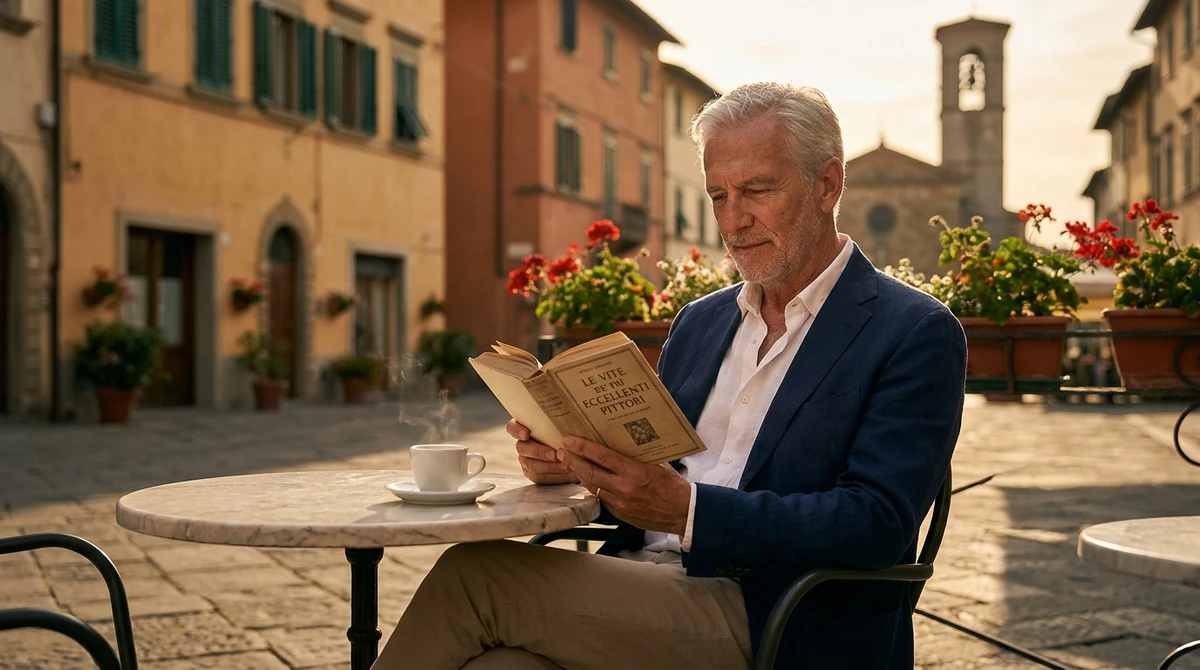
What slow travel actually means
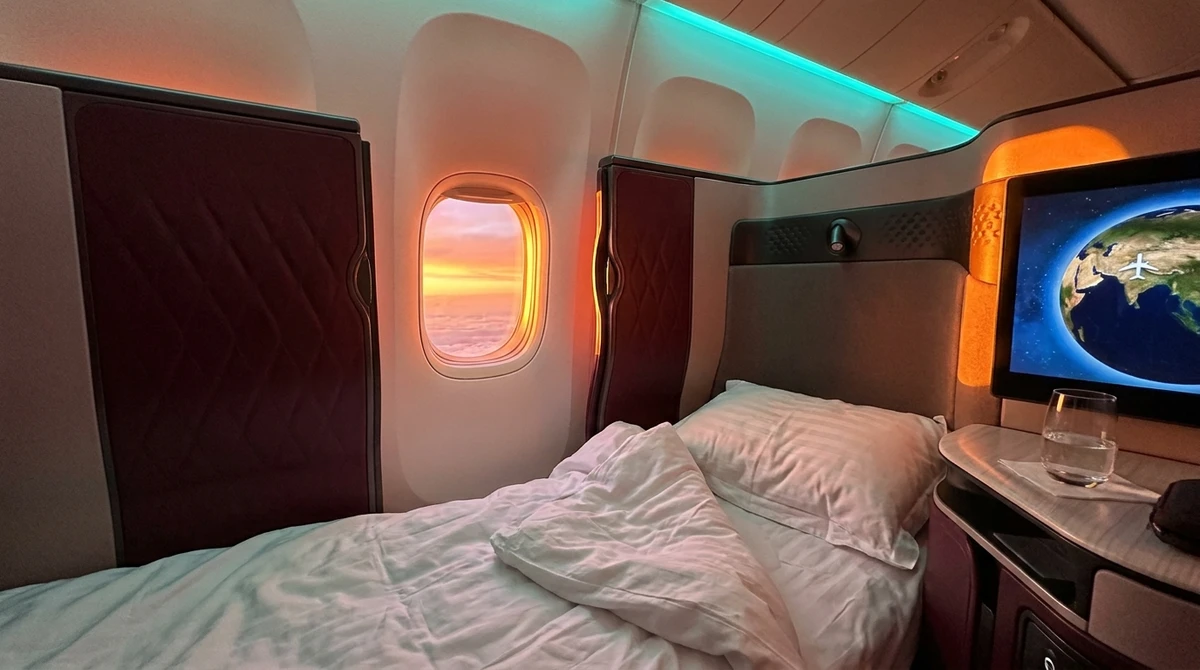
It doesn't mean traveling slowly in the literal sense. You can take a business class flight — Qatar Airways QSuite from JFK to DOH, say, or Lufthansa's First Class on LH 400 out of Frankfurt — and still arrive as a slow traveler. The speed of arrival is irrelevant. What matters is what you do once you land.
Slow travel means choosing fewer destinations. It means staying long enough in one place to have a favorite café, not just a photographed one. It means your accommodation starts to feel like a residence, not a hotel room. It means you know the name of at least one person who lives there.
The benefits are concrete, not aspirational:
- Deeper cultural understanding — A week in one neighborhood teaches you more than a day each in seven cities. Full stop.
- Lower costs, counterintuitively — Weekly and monthly rental rates often undercut nightly hotel rates by 40–60%, and you stop paying tourist-trap prices once locals recognize your face.
- Genuine rest — The kind that doesn't require a recovery week when you get home.
- Relationships that last — Not LinkedIn connections from a conference; actual friendships formed over repeated meals and conversations.
- Off-itinerary discoveries — The best things I've experienced in thirty years of travel were never in the guidebook. They required time.
- A smaller footprint — Fewer flights, less transit, more walking and cycling.
- Stories worth telling — Not "we did the Colosseum" but "we got invited to a family dinner in Trastevere and didn't leave until midnight."
There's also something more personal at stake. Slow travel forces a confrontation with yourself. Without the noise of constant novelty, you notice your own reactions, preferences, and limitations in ways that rushed travel obscures.
The slow traveler's mindset in practice
Starting is the harder part. Most of us have been trained by decades of "must-see" lists to feel guilty about staying put. Here's how to break the pattern.
Choose one anchor city per trip. If you're heading to Japan for three weeks, consider spending twelve days in Kyoto rather than splitting time between six cities. Take a day trip to Nara. Take another to Osaka. But let Kyoto become genuinely familiar.
Research before you go — but not obsessively. Know the neighborhood you'll be staying in, the local market days, a handful of recommended restaurants that don't appear on every tourist list. Leave the rest to discovery.
Stay in locally-owned accommodations whenever possible. A family-run ryokan in Kyoto, a converted farmhouse in Umbria, a heritage riad in Marrakech — these aren't just aesthetically preferable. The owners know things no concierge desk will tell you.
Join something. A cooking class, a language exchange, a morning tai chi group in the park, a local running club. The fastest way to meet people who actually live somewhere is to show up for the same activity two days in a row.
Walk before you take transport. The first three days in a new city, I walk everywhere. Not because it's virtuous, but because you notice things at walking pace that disappear at taxi speed — the fruit vendor who speaks four languages, the bookshop that doubles as a wine bar, the alley that cuts through to the good market.
Be adaptable about the plan. The best slow travel experiences I've had arrived uninvited: a conversation at a train platform that turned into a two-hour coffee, a market stall that led to a kitchen, a wrong turn that was anything but. Rigid itineraries are the enemy of genuine discovery.
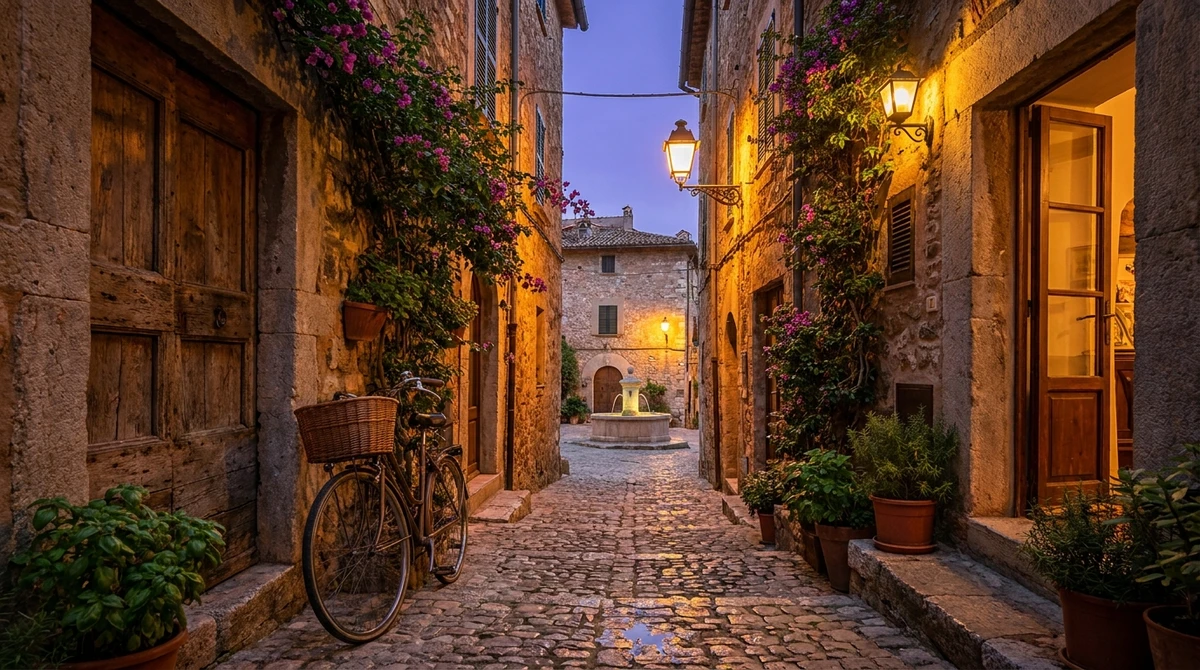
Choose sustainable transport within the destination. Cycling, public transit, and ferries aren't sacrifices — they're experiences in themselves. A slow boat down the Mekong or a regional train through Tuscany reveals things a direct flight never could.
The premium angle worth considering
Here's the paradox that most slow travel writing ignores: getting to a destination well actually complements the slow travel philosophy rather than contradicting it.
If you're going to spend three weeks deeply embedded in one place, the worst thing you can do is arrive jet-lagged, back-knotted, and sleep-deprived from a cramped economy cabin. Arriving rested and clear-headed — in a flat bed, with a real meal and a proper night's sleep — means day one is actually day one, not recovery day.
Routes worth considering for destinations that lend themselves to slow travel: Turkish Airlines business class via Istanbul is consistently underpriced on transatlantic routes and gets you to southern Europe, the Levant, and East Africa in solid comfort. Singapore Airlines' Business Class on the A350 routes through SIN opens up Southeast Asia and Australasia. For the Mediterranean, Qatar Airways' QSuite via DOH remains one of the best long-haul products in the air — the closing doors on the double suite, the Michelin-star-level catering, the 21-hour network reach.
Retail business class fares on these routes regularly run $6,000–$12,000 roundtrip. Through our airline contracts at CEOFLIGHTS, we routinely bring those numbers down to ranges that make the upgrade from economy a genuine decision rather than a fantasy. We're top rated on Trustpilot, ASTA-accredited (member #900292735), and our advisors have flown these routes personally. Call us at (888) 851-6897 if you want someone to talk you through the options for your specific itinerary.
The real return on investment
Travel marketers sell transformation, and they almost always fail to deliver it — because transformation doesn't happen in seventy-two-hour sprint tours. It happens in the accumulation of small, repeated encounters with somewhere that isn't home.
The Camino de Santiago takes weeks because it needs to. A language immersion program in Oaxaca or Lisbon changes you not on day one but around day ten, when your brain stops translating and starts thinking. A long stay in a rural Italian village stops being a vacation after day five and becomes something closer to living — which is, after all, what you're supposedly doing this for.
The traveler who returns from three weeks in one place with a notebook full of observations, a few new friendships, and a working knowledge of a neighborhood is carrying something the five-country sprint tourist simply isn't. That's not sentiment. It's just what depth produces.
Your next trip doesn't need more destinations. It needs more time in the ones you've chosen.
Some images in this article may be AI-generated and are used for illustrative purposes only.