Quick summary
KLM's overhauled World Business Class on the Boeing 777 brings a much-needed 1-2-1 layout with lightweight sliding doors and fully flat 198cm beds. The seats are 10–15% lighter than competitors, making this a more sustainable option without compromising on comfort. It is now a highly recommended, top-tier choice for executives connecting through Amsterdam.
KLM has been flying business class passengers across the Atlantic for decades, and for most of that time, the product was perfectly fine — no more, no less. Comfortable enough, Dutch-efficient, reliably unmemorable. The new World Business Class seats KLM is rolling out across its Boeing 777 fleet change that calculus in ways that actually matter.
This isn't a reupholstery job or a screen upgrade. KLM rebuilt the seat architecture from scratch, rethought the privacy model, and managed to do it while making the seats meaningfully lighter. For executives who fly AMS routes regularly — New York JFK, Los Angeles, Houston, Singapore, Tokyo Narita — this is worth paying close attention to.
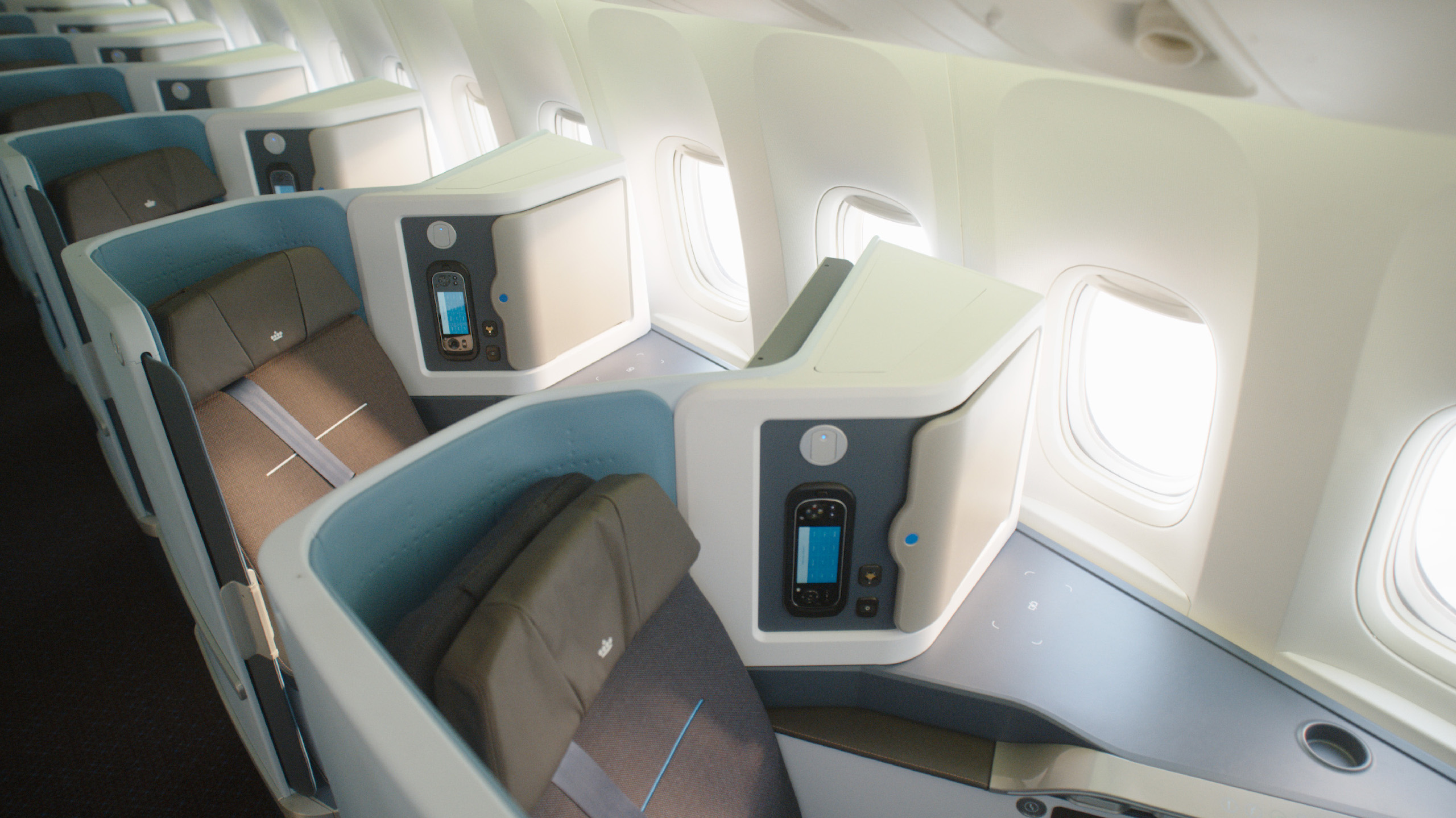
What the new seat actually looks like
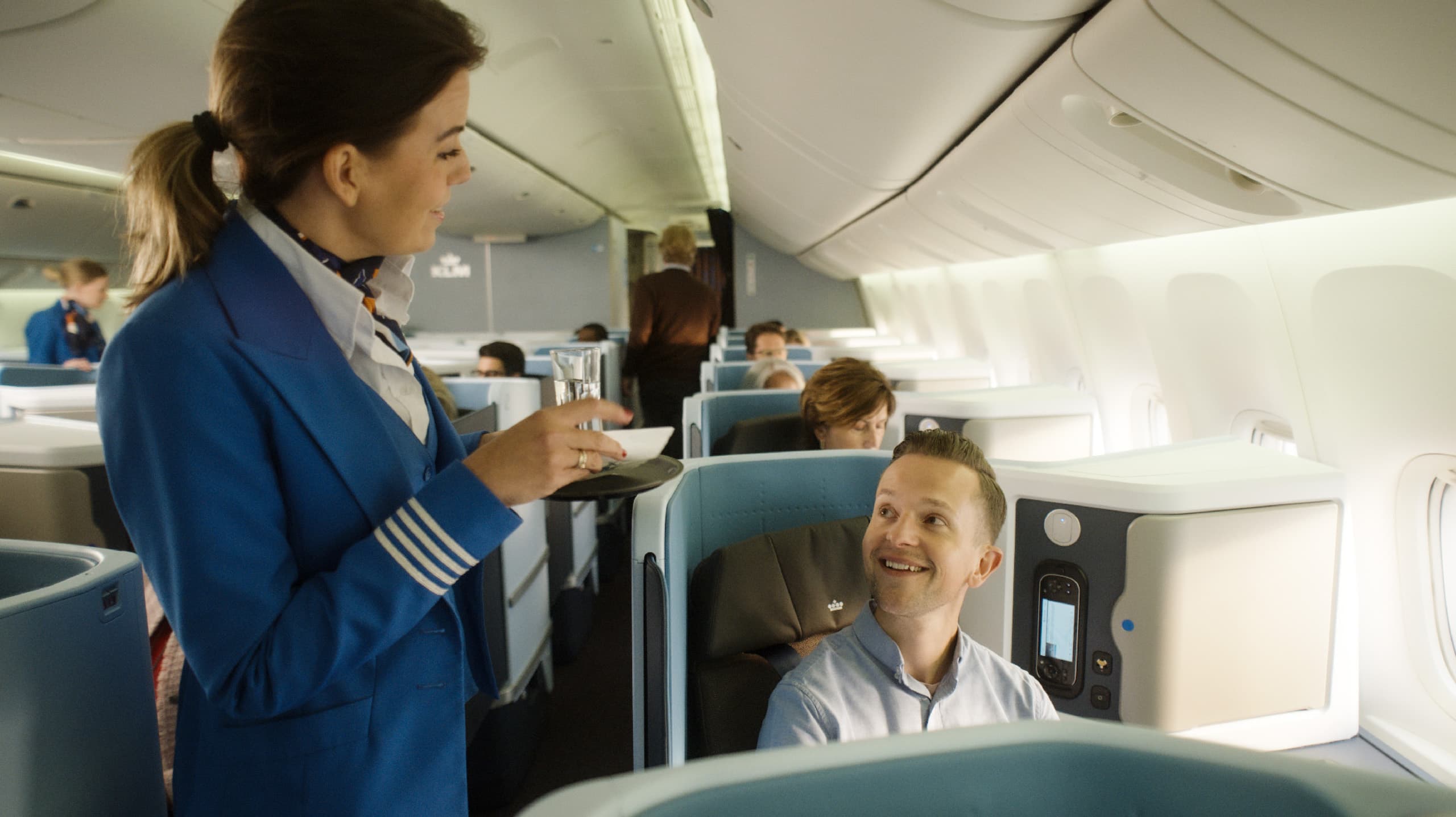
The configuration alone is a statement. KLM has moved to a 1-2-1 layout, meaning every single seat in World Business Class has direct aisle access. No more middle-seat passengers climbing over you at 3 a.m. over the North Atlantic. On a widebody like the 777-300ER, that's the configuration you should expect at this price point, and KLM is finally delivering it.
The seats are wider than the previous generation — KLM hasn't published an exact inch figure publicly, but the cabin architecture and Jamco Venture's design specs point to a competitive 20–22 inch shoulder width, which puts it in the same conversation as Air France's new business cabin and above the older angled-flat products you'll still find on some carriers.
Each seat reclines to a fully flat 198cm bed. That's 6'6" of sleeping length — longer than British Airways' Club Suite and competitive with Qatar's QSuite. For tall passengers, this has historically been the dealbreaker on European carriers. KLM has removed that objection.
The lower-back support is adjustable in flight, and there's a subtle massage function built into the seat. I'll be direct: massage features are often gimmicks, the kind of thing that's impressive in an airport lounge demonstration and forgotten by hour two. But adjustable lumbar support on a 12-hour flight to Singapore? That's genuinely useful, particularly if you're working through a long document review or sitting through a film after a red-eye.
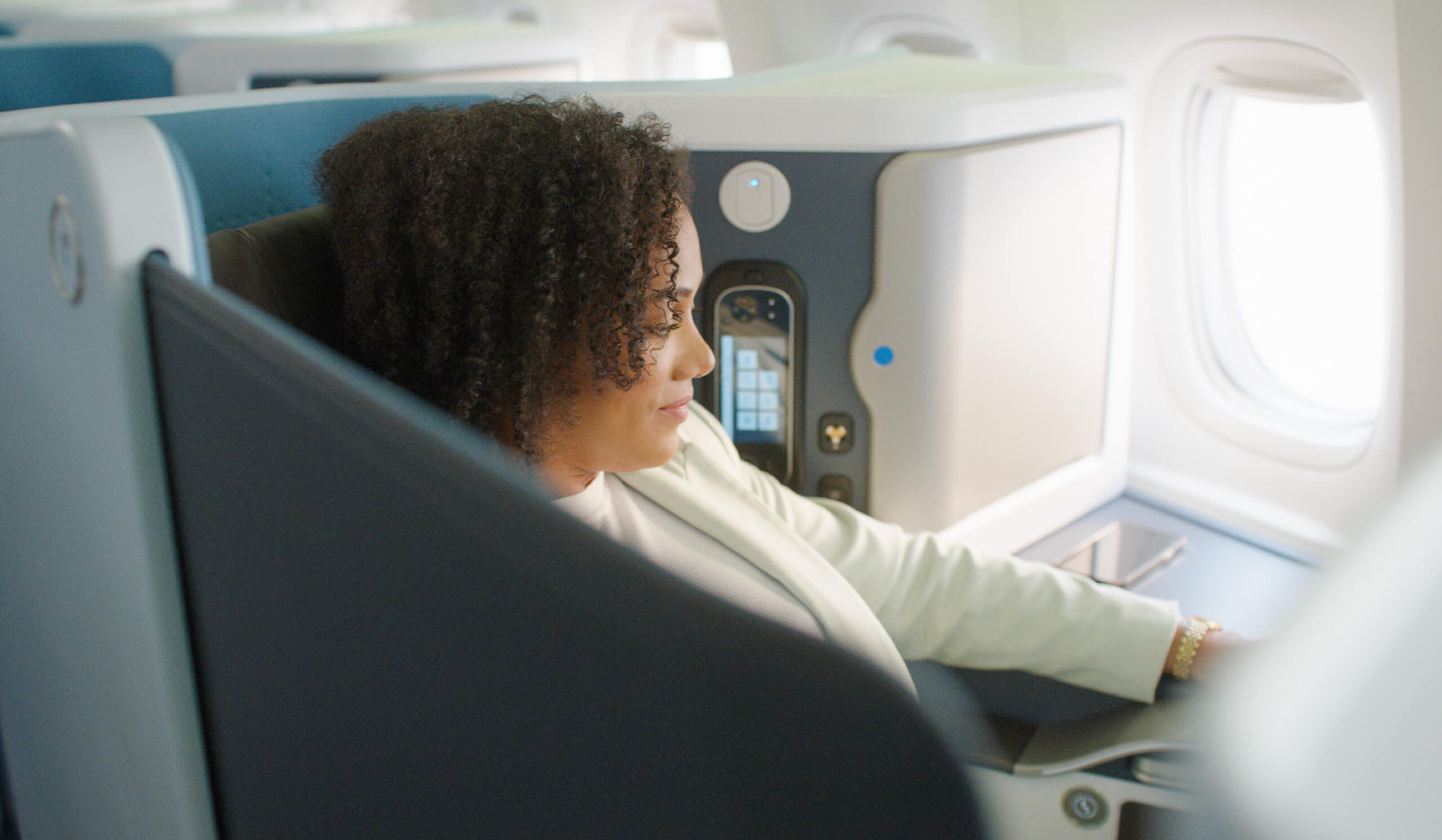
The sliding door: the feature that actually changes the experience
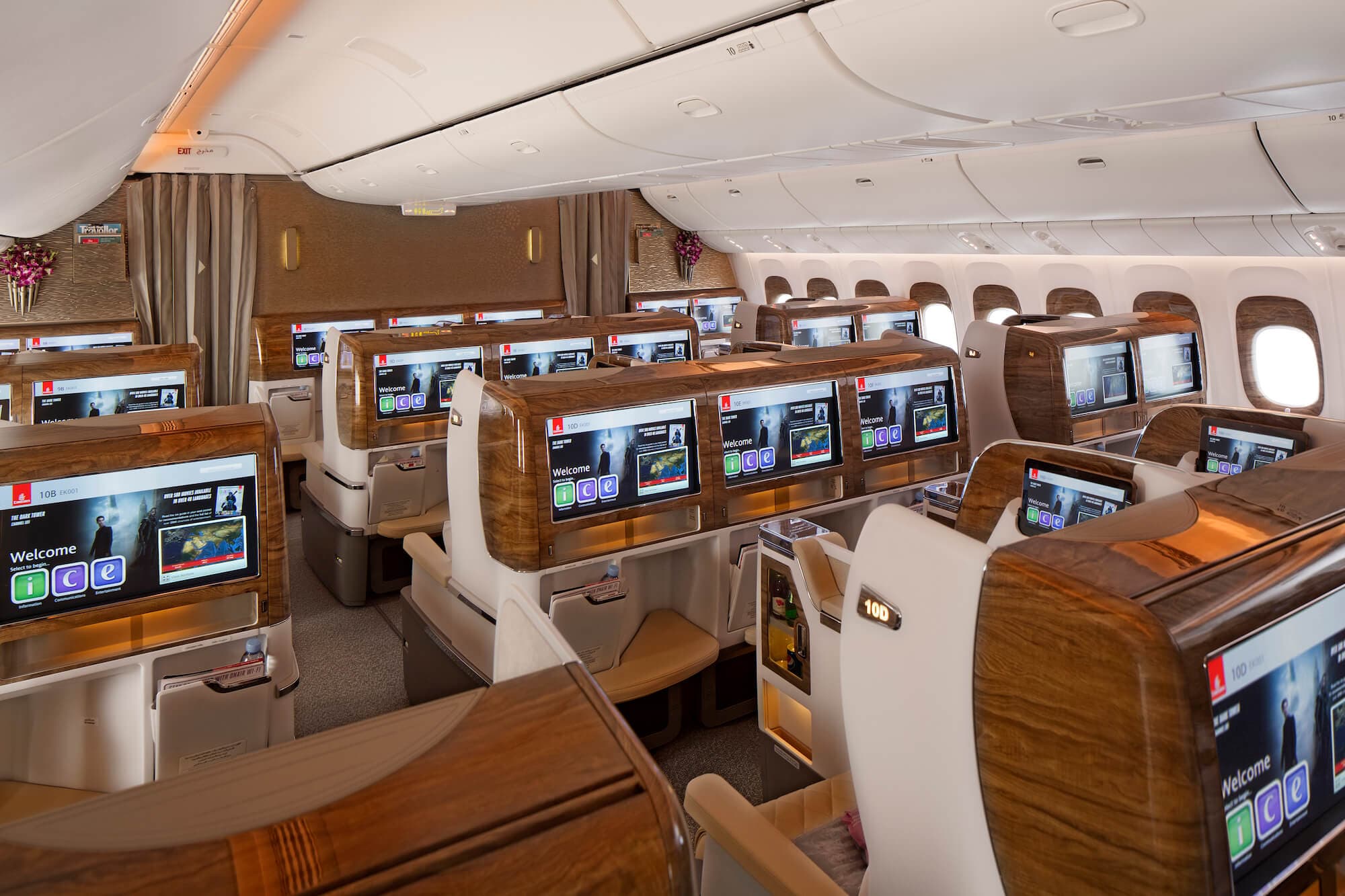
Airlines have been chasing the private-suite model since Qatar Airways introduced QSuite in 2017 and changed what business class passengers think they're entitled to. Emirates followed with its 777 first-class-style business pods, Singapore Airlines rebuilt the A350 cabin with doors, and now KLM is in the game.
The lightweight sliding door is the single most significant upgrade in this redesign. It closes off the seat into a genuine private space — not a high divider you can see over, not a partition that blocks the aisle view but not your neighbor's, but an actual door you can close. The door opens and closes easily, which matters at 2 a.m. when you don't want to fumble with latches.
For passengers who regularly use the flight to sleep, decompress, or take sensitive calls via satellite Wi-Fi, this is a categorical improvement. The previous WBC seats were arranged to allow some privacy, but they didn't provide anything close to enclosure.
It also changes the social dynamic on a flight. When you want to interact with a travel companion seated adjacent, you open the door. When you want to disappear, you close it. That flexibility is what business travelers have been asking for, and it's why the door-equipped seats from Qatar, Singapore, and now KLM command a premium over open-plan competitors.
Storage, charging, and the details that add up
KLM clearly did the research on what business travelers actually need within arm's reach during a flight, and the seat design reflects that.
- Multiple charging sockets, positioned for easy access without reaching into awkward compartments — a detail every airline gets wrong until they don't
- Wireless charging pad built into the seat, so your phone doesn't die before landing
- A lockable personal compartment with a built-in mirror — useful for freshen-up before landing, keeps valuables secure during sleep
- A recessed bottle holder on the tabletop surface, designed to hold a water bottle securely even in moderate turbulence — this sounds minor until you've watched your water roll into the aisle at 35,000 feet over Greenland
The recessed bottle holder is the kind of detail that separates a seat designed by people who actually fly from one designed by committee. KLM gets points for it.
The wireless charging is worth flagging for frequent flyers who travel with a full device kit. If you're managing a phone, AirPods, and a watch simultaneously, you're still going to use the wired sockets — but having the wireless pad as a primary option for your phone during sleep keeps the cables off your bed surface.
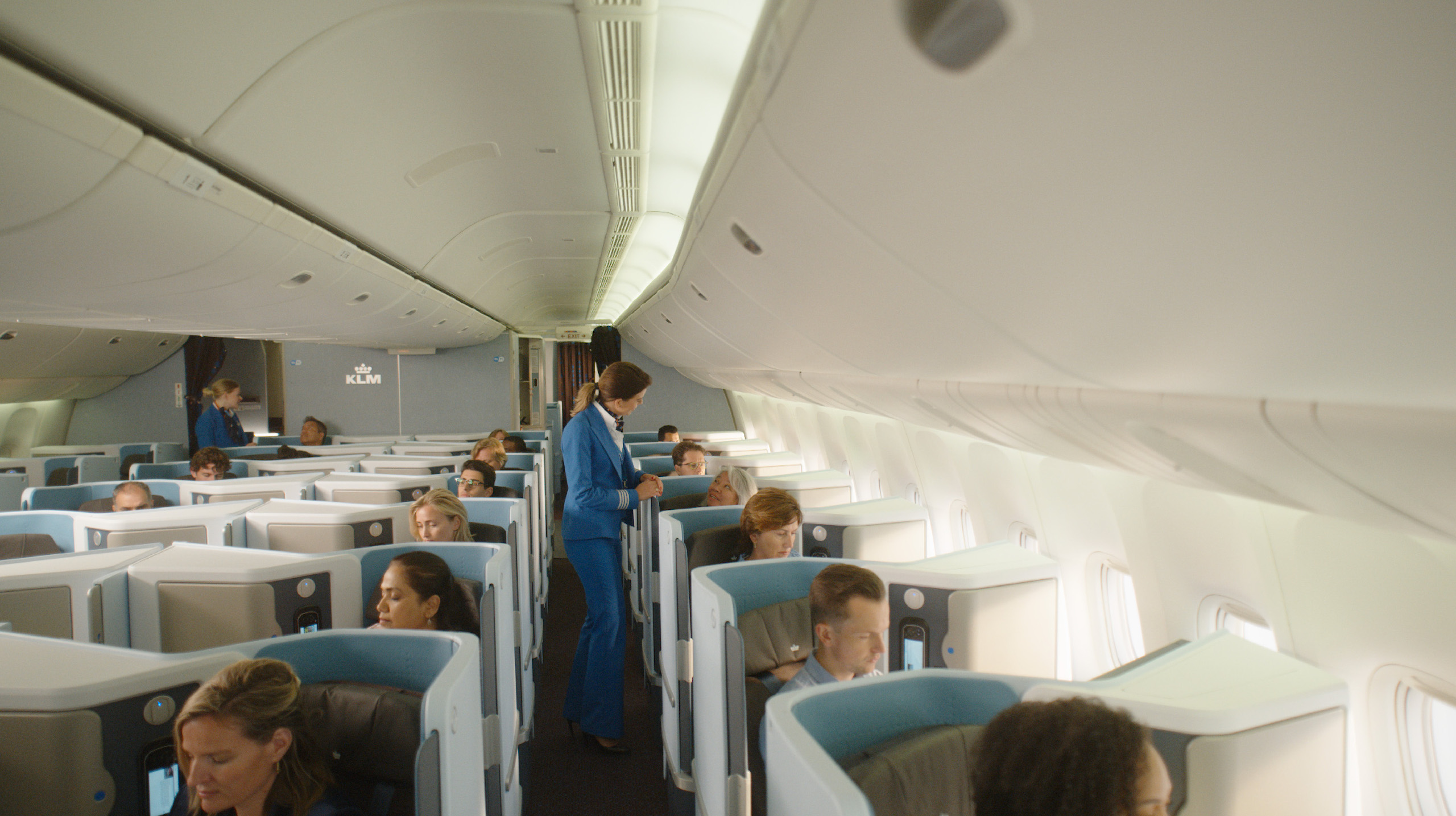
Why the weight reduction matters more than you think
KLM says the new WBC seats are 10–15% lighter than comparable business class seats in the same market segment. That number is more significant than it sounds.
On a full Boeing 777-300ER configured with, say, 52 business class seats, a 15% weight reduction per seat across the entire cabin represents a meaningful reduction in total aircraft weight. Less weight means less fuel burned per flight. Less fuel burned means lower CO2 emissions per passenger. KLM has been public about its sustainability commitments — the airline's Flying Blue program has incorporated carbon offset options, and the airline participated in SAF (sustainable aviation fuel) programs at Amsterdam Schiphol.
The seats are installed as part of Jamco Venture's lighter cabin layout design. This is a full-cabin systems approach, not just a lighter frame bolted into the same architecture. The overhead bin configuration, partition weights, and galley positioning all contribute to the overall weight target. It's a genuine engineering project, not a press release claim.
This matters to the executives and institutional frequent flyers who make up most of our CEOFLIGHTS clientele. ESG considerations are increasingly part of travel procurement decisions at the corporate level — knowing that KLM's updated cabin has a lighter emissions footprint per seat is a real data point, not greenwashing.
How the new WBC compares to the real competition
Let's be honest about where KLM's new product sits in the competitive hierarchy.
Qatar QSuite remains the standard by which all business class is measured. The double-bed configuration for couples, the fully enclosed suite, the Doha hub's connectivity — KLM's new seat doesn't beat it. If you're flying New York to Southeast Asia and Qatar's routing works, QSuite on the 777 or A350 is still the first call.
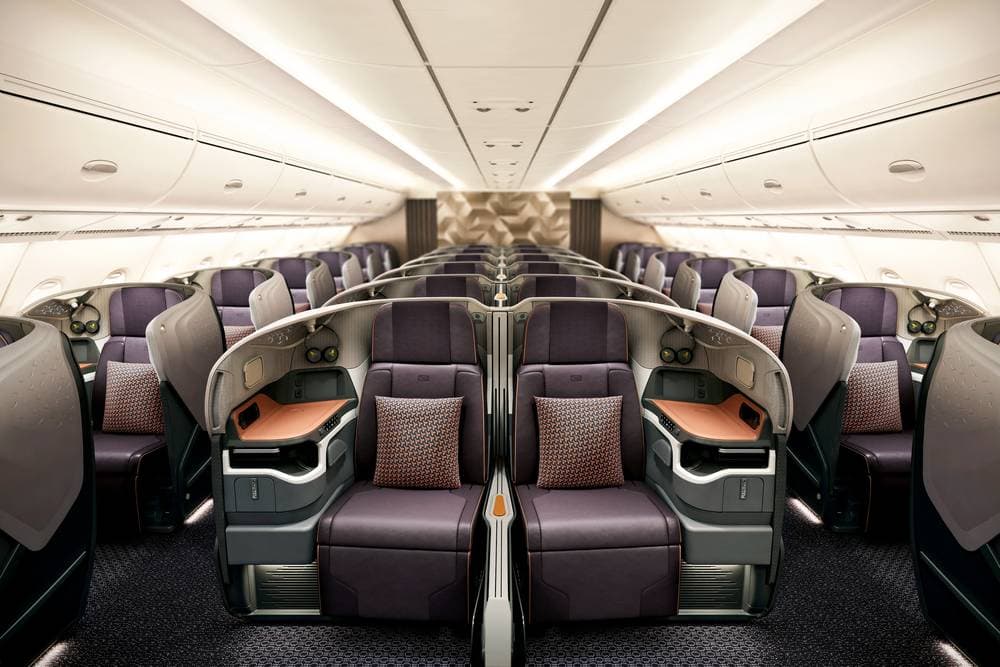
Singapore Airlines' Business Class on the A350 and 777 offers exceptional seat width and one of the best dining services in the sky. Singapore's door-equipped suites on the A380 upper deck are a tier above, though those require specific routing through Changi.
Where KLM competes, and competes effectively, is on European network connectivity and price. Amsterdam Schiphol (AMS) is one of the best-run hub airports in Europe — clear signage, fast security for premium passengers, no chronic terminal chaos — and KLM's network from AMS into Africa, the Middle East, and Asia is deep. If your routing starts or ends in Europe, or if you're connecting through Amsterdam, the new WBC seat is now a genuinely strong option rather than a fallback.
Lufthansa's Business Class on the 747-8 and A350 is a fair comparator. Lufthansa's seat width on the A350 is excellent, but the airline still operates some older angled-flat products on medium-haul widebody routes, which creates inconsistency. KLM's fleet-wide 777 rollout means you know what you're getting.
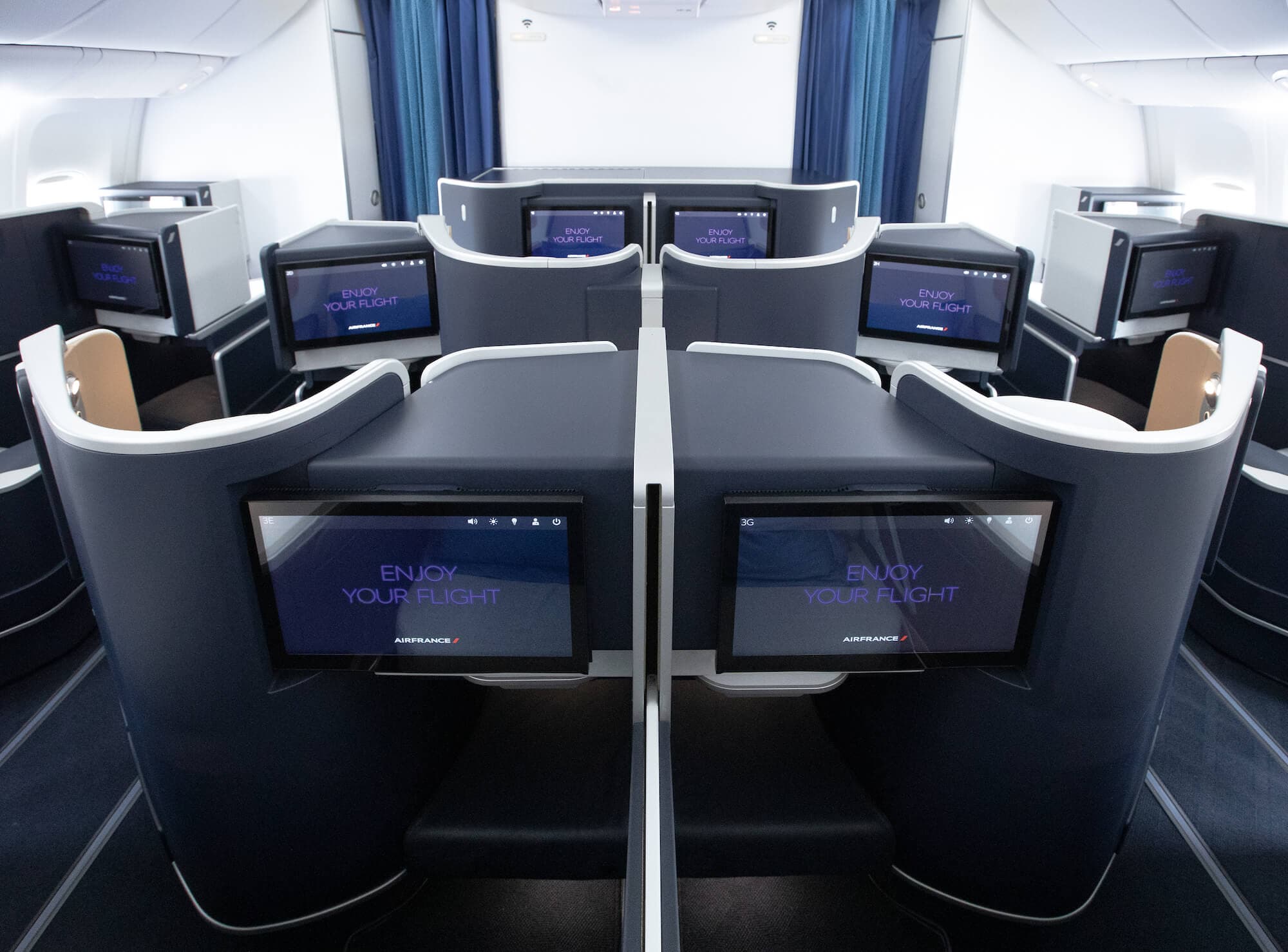
Air France's new Business seat is probably the closest competitor in terms of positioning and network overlap. Both carriers have sliding doors, 1-2-1 configs, and similar Atlantic route structures. The choice between them often comes down to whether you prefer CDG or AMS as a hub — and AMS wins that argument on operational reliability almost every year.
The fleet rollout timeline
KLM is installing the new World Business Class seats across the entire Boeing 777-300 and 777-200 fleet. The 777-300ER is KLM's primary long-haul workhorse, operating routes including:
- Amsterdam AMS to New York JFK (KL 641/642)
- Amsterdam AMS to Los Angeles LAX (KL 601/602)
- Amsterdam AMS to Singapore SIN (KL 835/836)
- Amsterdam AMS to Tokyo Narita NRT (KL 861/862)
The full cabin transformation — which also includes installation of the new Premium Comfort cabin as an upgraded economy-plus tier — is scheduled to complete across the 777 fleet within the coming year from the announcement. Given where we are in the rollout cycle, a significant portion of the 777 fleet should now be operating with the new interior. Before booking, it's worth confirming with your travel consultant which aircraft configuration is scheduled for your specific flight.
That's not a minor caveat. KLM operates multiple 777 sub-variants, and aircraft swaps happen. Knowing the tail number and scheduled configuration before you pay business class money is basic due diligence.

What you should pay for this — and what you shouldn't
Retail pricing for KLM World Business Class on the AMS–JFK route runs between $4,800 and $9,000 round-trip depending on season, booking window, and availability. Peak summer and holiday shoulder periods push toward the upper end; January and February open up space for deals closer to $4,500.
Through CEOFLIGHTS' airline contracts, fares on KLM's transatlantic business class routes regularly come in 20–35% below published retail — meaning the same AMS–JFK round-trip that prices at $6,500 on KLM.com can drop to the $4,200–$4,800 range when booked through our consolidator agreements. On long-haul routes where you're spending 10+ hours in the air, the per-hour cost of that upgrade starts looking very different.
We're ASTA-accredited (member #900292735) and top rated on Trustpilot — if you want to know what configuration is scheduled on your specific flight, and what fare class makes sense for your routing, call us at (888) 851-6897. We've booked enough KLM metal to know which routes have the new seats locked in and which ones are still mid-rollout.
The verdict
KLM's new World Business Class seat is a meaningful upgrade that puts the airline back in serious contention for premium transatlantic and long-haul bookings. The sliding door is the headline, but the 198cm fully flat bed, the adjustable lumbar support, and the intelligent storage design are the features that hold up on a 13-hour flight to Singapore.
It doesn't unseat QSuite. Nothing does right now. But for executives routing through Amsterdam — or for anyone who wants a strong, door-equipped business class product without paying Qatar or Singapore prices — the new WBC is a legitimate first choice. KLM has stopped being the sensible fallback and started being the considered pick.
That's a more significant shift than any press release makes it sound.
Photos courtesy of KLM.