Quick summary
While the 2-3-2 configuration is a drawback for solo travelers, Emirates' new 777-300ER business class delivers a massive upgrade with 72-inch fully flat beds, the industry-leading 23-inch ICE entertainment screen, and excellent service that justifies the price if you book the right seat.
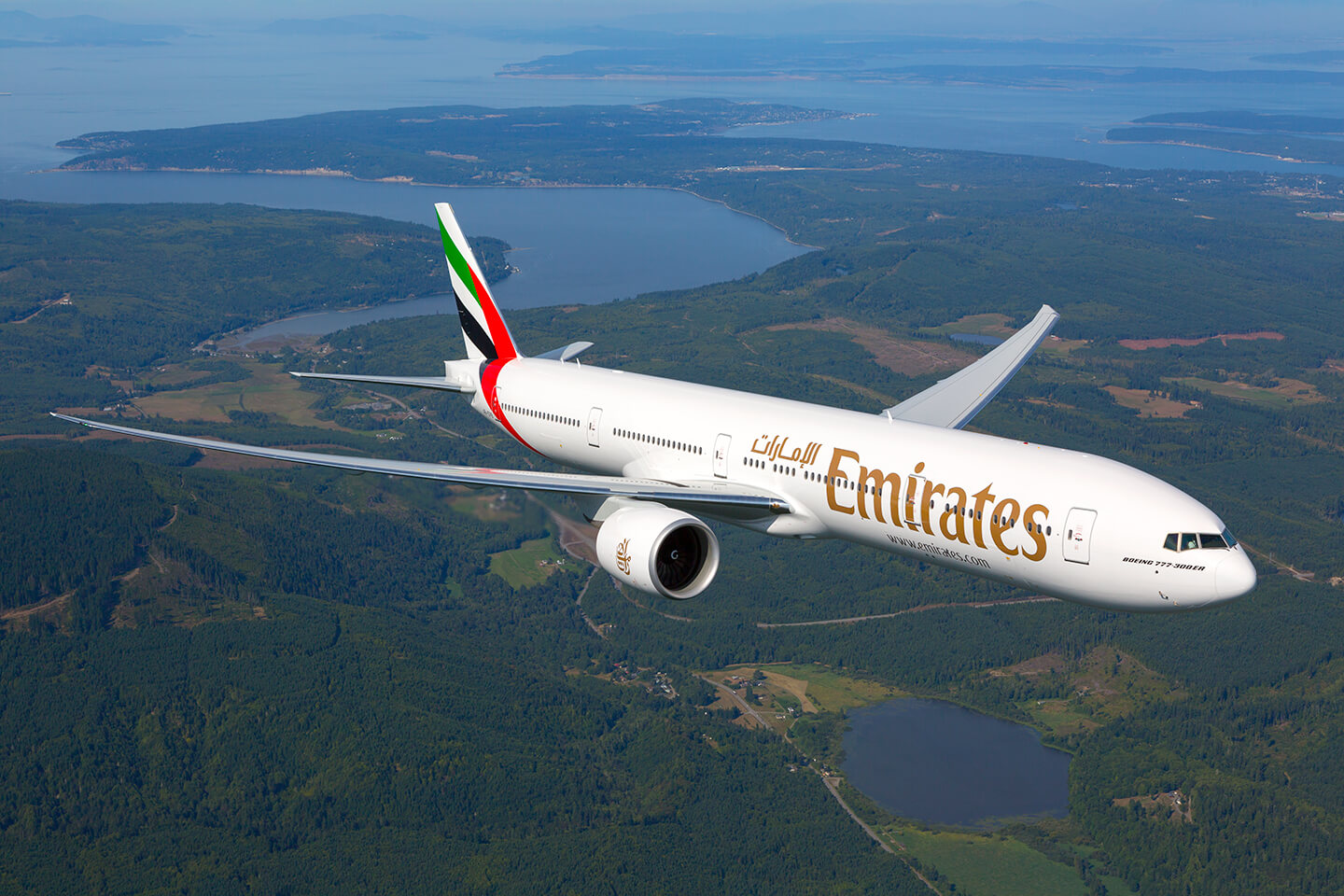
Emirates has been selling the dream of premium air travel for three decades, and for the most part, they deliver. The new business class product on the Boeing 777-300ER is their most ambitious cabin update in years — a direct answer to the criticism that the old angled-flat seats were showing their age in a market where Qatar's QSuite and Singapore's Business Class had raised the bar considerably.
Is it perfect? No. Is it worth booking? Absolutely — with a few caveats.
Here's everything you need to know before you commit a five-figure budget to a seat.
The cabin layout: honest about its limitations
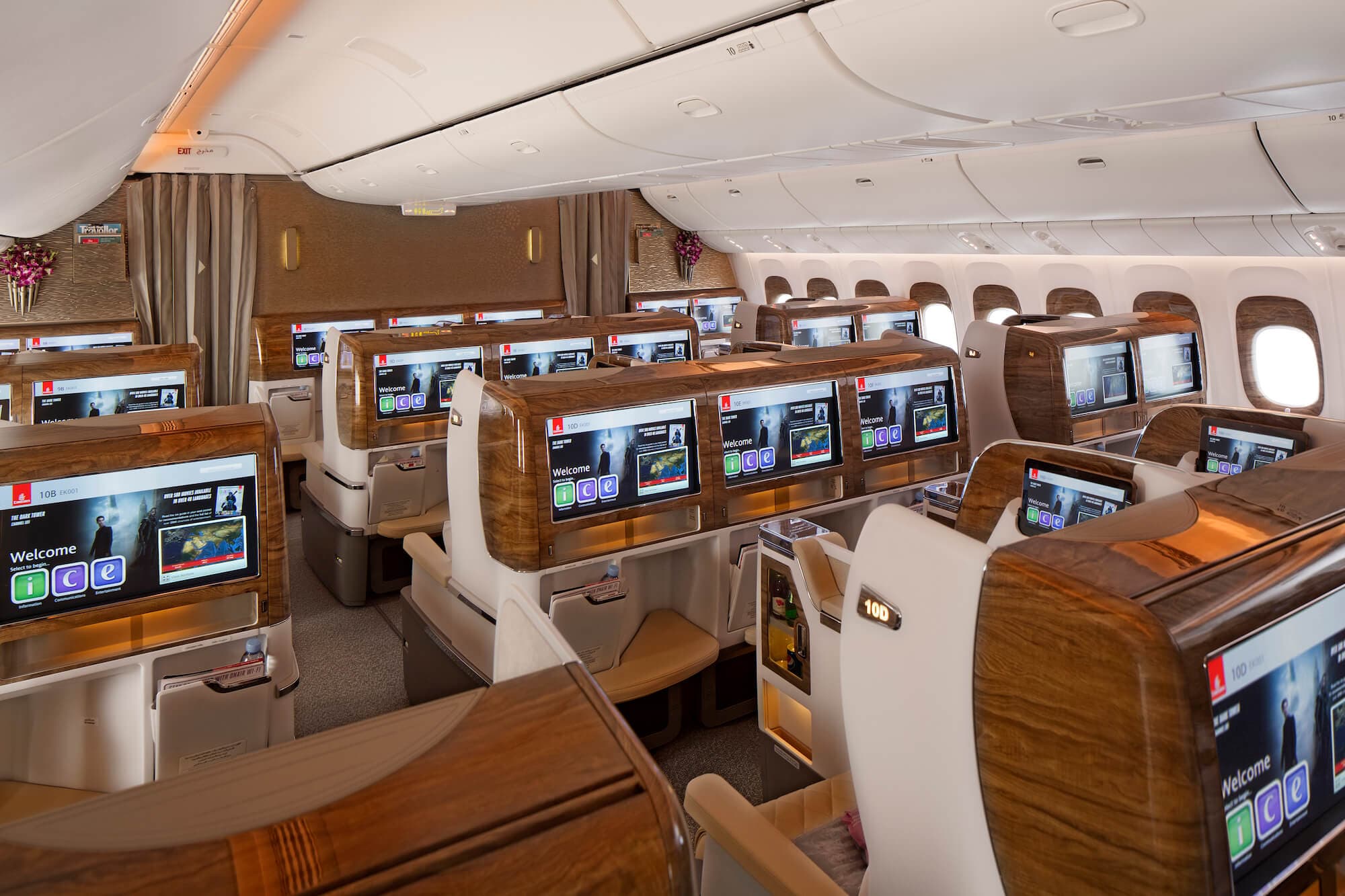
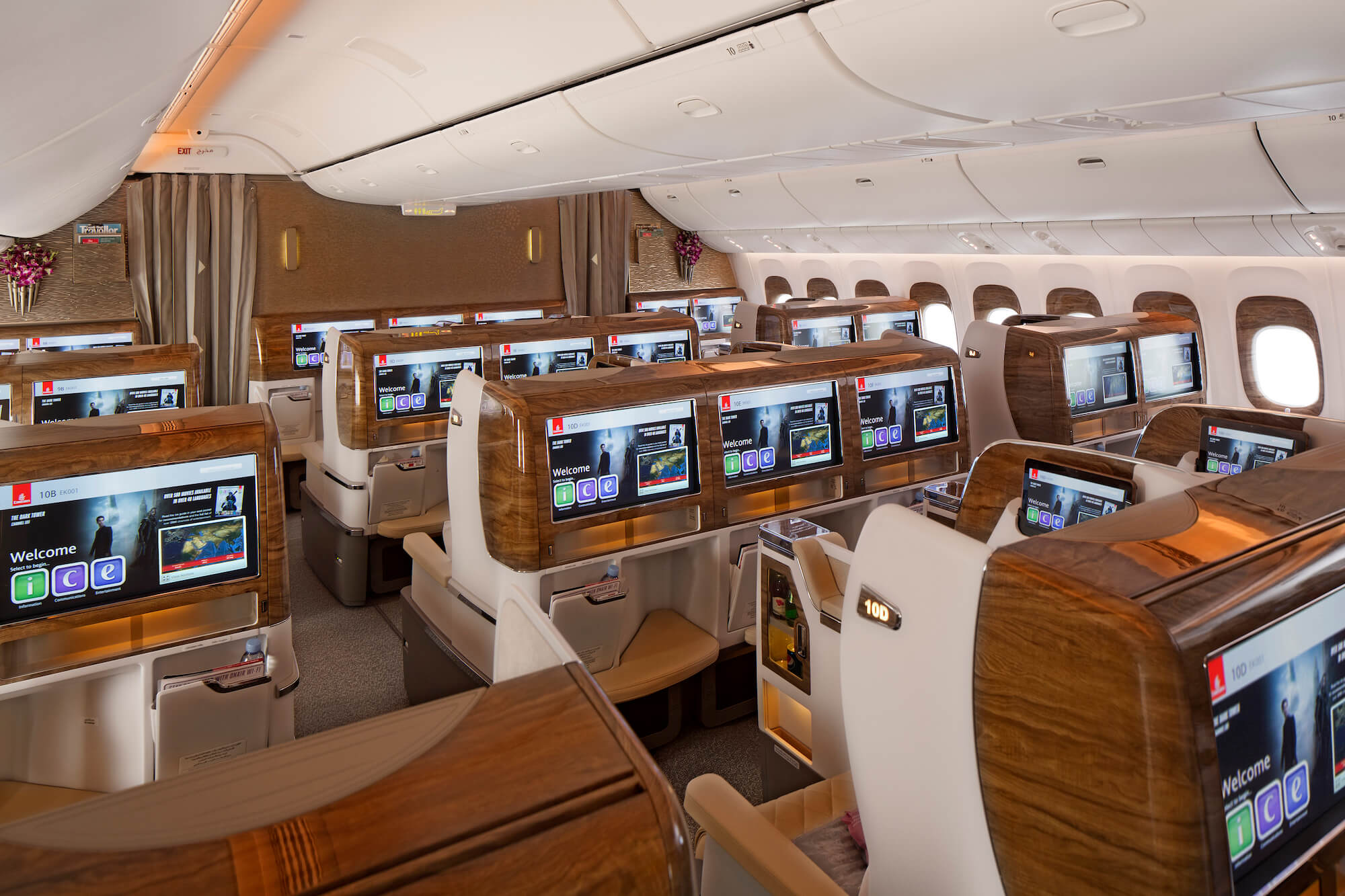
The business class section on the 777-300ER splits into two cabins. Up front, a mini-cabin of 14 seats across two rows gives you a quieter, more exclusive feel. The larger aft cabin holds 28 seats across four rows. Between them sit the lavatories, the galley, and the main exit doors — which means you get a bit of buffer from economy, but also some foot traffic near the galley if you're in the forward rows of the aft cabin.
The seating configuration is 2-3-2. That's the one number in this entire review that should give you pause.
For solo travelers, a middle seat in a 3-across center block means you're climbing over someone to reach the aisle. Emirates knows this is a weak point — their A380 runs a far superior 1-2-1 configuration where every seat has direct aisle access. On the 777, if you're flying alone, book a window seat and accept the trade-off, or avoid the center block entirely by using Emirates' seat map before you board. The good news: Emirates is already retrofitting its 777-200LR fleet with a 2-2-2 layout, which is a meaningful improvement, even if it still doesn't match the A380.
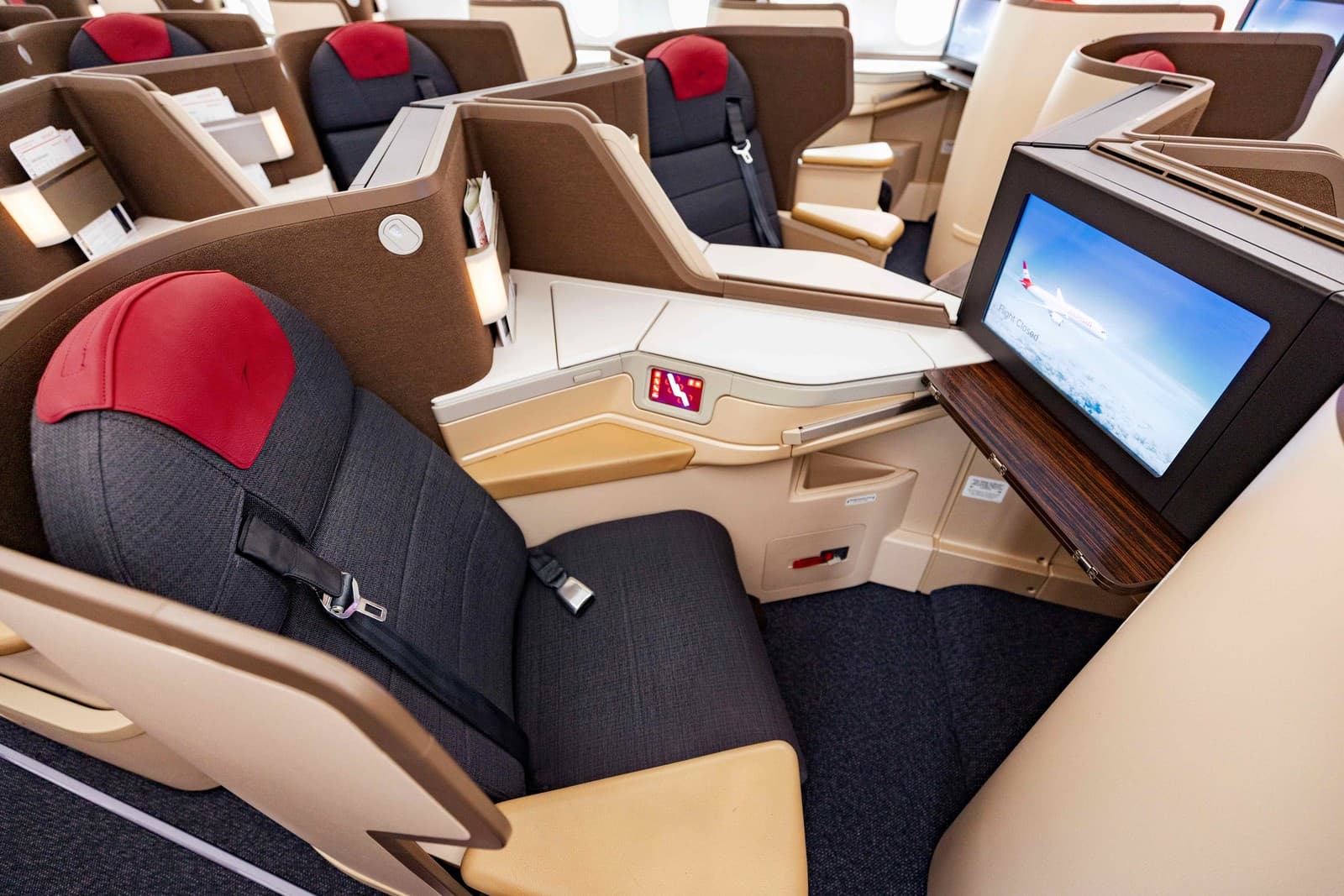
The interior design is genuinely striking. Seats are upholstered in full leather with diamond-stitched headrests, and the cabin carries Emirates' signature aesthetic — burled walnut veneer, gold trim, pearlized plastic accents. It sounds excessive on paper. In person, it reads as polished rather than gaudy. The StarLight ceiling (tiny fiber-optic stars embedded in the overhead panels) is one of those touches that sounds gimmicky until you're lying flat at 38,000 feet looking up at it. Mood lighting shifts with local time, which genuinely helps reset your circadian rhythm on overnight flights.
The seats: what actually changed
The new seats share a 20.5-inch (52cm) width with the previous generation — so the footprint is familiar. What's different is meaningful.
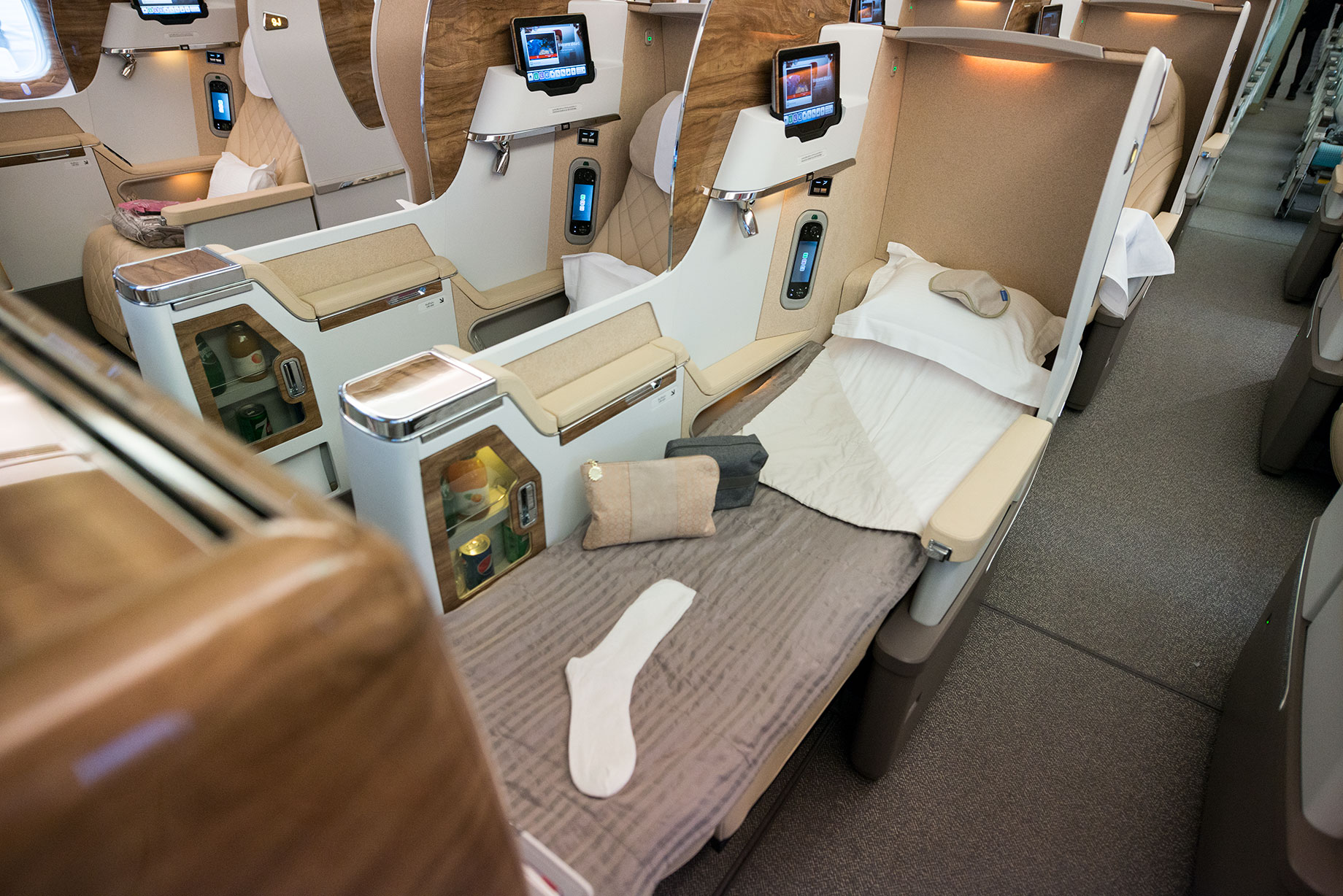
The old seats reclined to an angled-flat position. The new ones go fully flat, 180 degrees, with a pitch of 72 inches (183cm). That's a 12-inch increase over the previous 60-inch pitch. Anyone who has woken up with their knees against a seat shell at 4 a.m. over the Indian Ocean knows exactly why that matters.
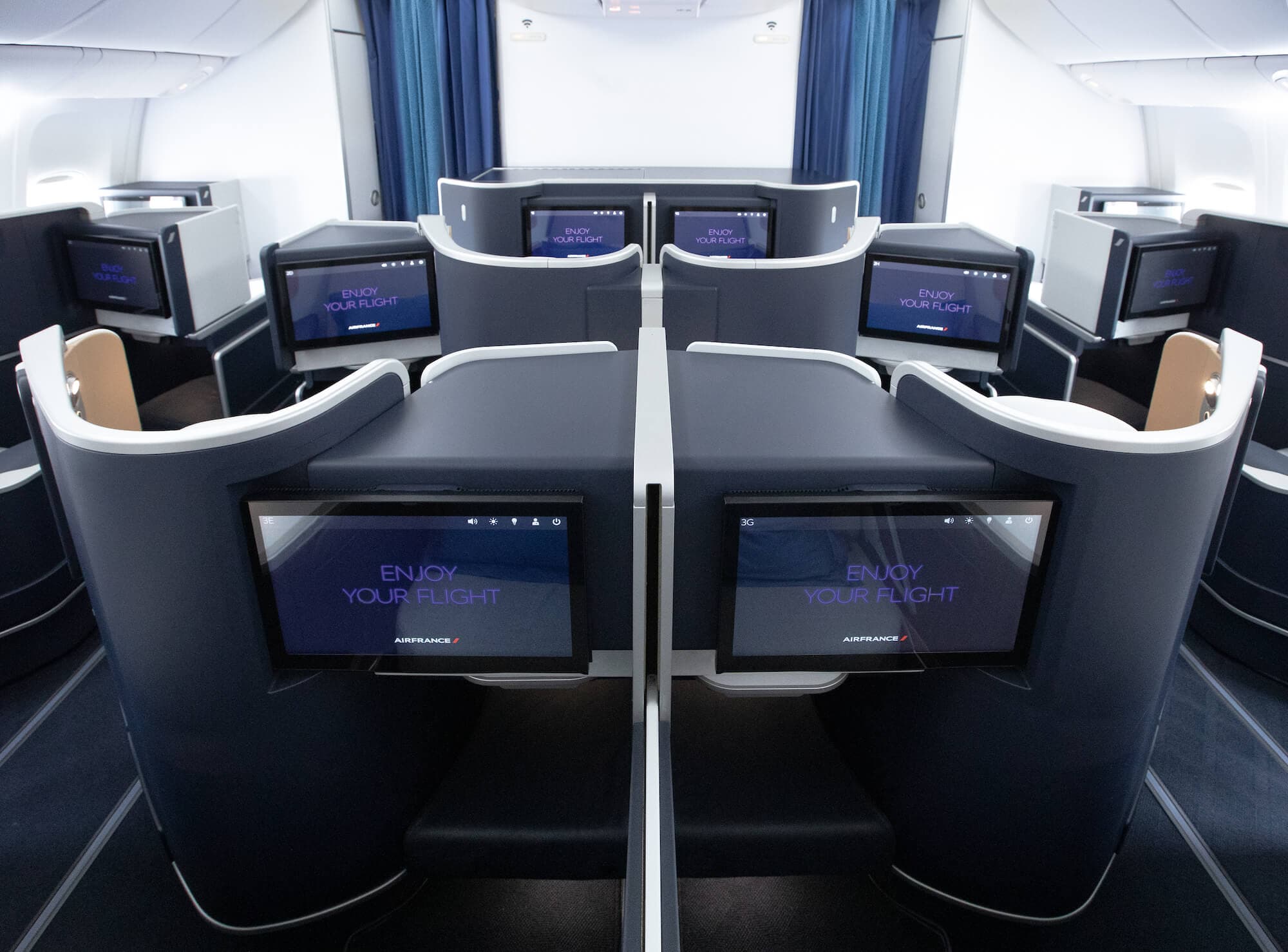
Each seat comes with a dedicated footrest in soft white leather, touchscreen controls for both the seat and IFE system, personal lighting options, privacy panels, and shoe stowage. There's also a personal mini-bar built into the armrest — stocked with non-alcoholic beverages only, which is a sensible design choice given that Emirates' bar service is already generous.
The IFE screen measures 23 inches. That is, without question, the largest standard-fit screen in any business class cabin currently flying. For reference, Qatar's QSuite runs a 21.5-inch screen, and most European carriers top out at 15–17 inches. Emirates wins this category decisively.
One practical note: the storage compartment below the IFE screen is deep enough for a 13-inch laptop and a few personal items. It's not a full work desk, but it functions well enough for a few hours of serious work on a longer sector.
Amenities: good on long hauls, thin on medium sectors
This is where expectations need calibrating. On medium-haul flights, you get a blanket, pillow, a duvet (delivered by crew once you're ready to sleep), Emirates-branded noise-canceling headphones, flight socks, and earplugs. The headphones are solid — better than most carrier-supplied sets — but they're hardwired to the aircraft's power system, so you can't pocket them on your way off.
No amenity kit on medium-haul routes. No pajamas. Both are understandable omissions for a four-hour sector; less forgivable on a six-hour overnight.
On long-haul flights over eight hours — think Dubai (DXB) to London Heathrow (LHR), or DXB to JFK — the picture improves dramatically. Full amenity kits appear, pajamas are offered on select routes, and the overall service cadence reflects the length of the journey. The lavatories are stocked with Bvlgari toiletries throughout, which is a thoughtful touch that many carriers have quietly dropped in recent years.
Food and dining
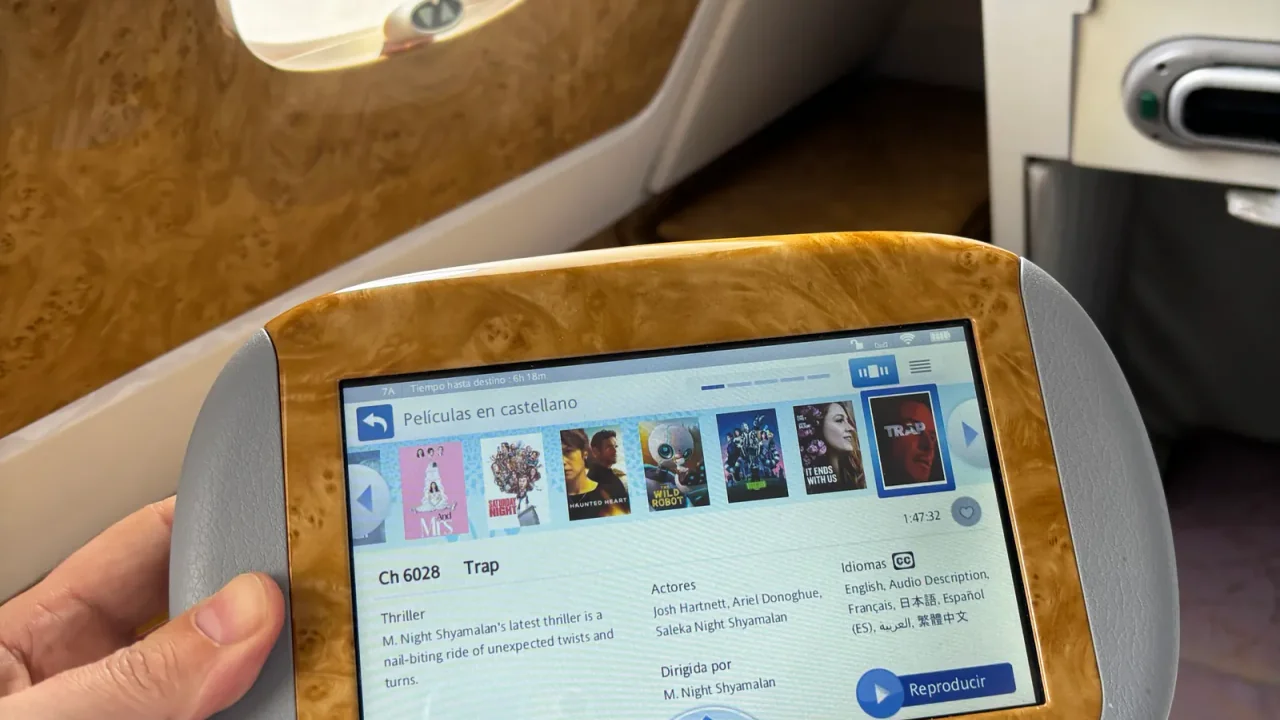
Emirates operates a "Dine on Demand" service in business class on most long-haul sectors, meaning you eat when you want rather than when the galley decides it's time. On shorter routes, service follows a more conventional meal schedule.
The menu skews toward regionally inspired dishes, and the execution is consistently above average for cabin food. The wine list is curated and changes seasonally. Emirates takes its beverage program seriously — if you're a wine drinker, you'll find the selection thoughtful rather than token. The onboard bar, originally an A380 signature, is now available on select 777 aircraft as well, which makes the long wait at DXB feel like a distant memory once you're airborne.
ICE entertainment: still the best in the sky
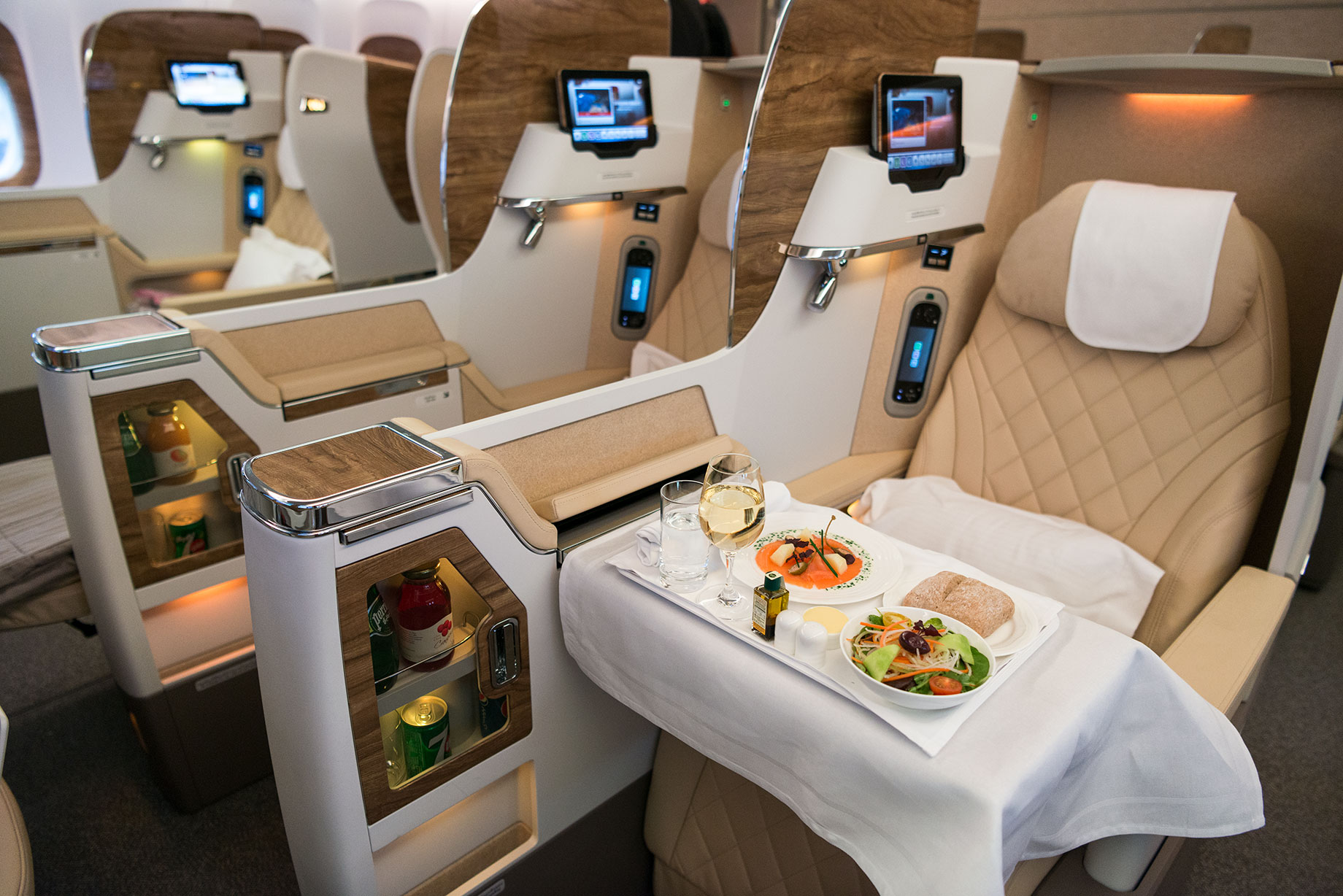
Emirates' ICE (Information, Communications, Entertainment) system remains the benchmark. Over 1,800 channels across movies, TV series, box sets, music, podcasts, and games, available on demand in multiple languages. The interface is controlled via touchscreen, wired remote, or the secondary touchscreen monitor — roughly tablet-sized — mounted in the armrest.
Satellite TV channels including CNN, BBC World, and Sport 24 are available throughout the flight. For sports fans on long sectors, that alone can justify the seat choice.
The feature most passengers discover mid-flight and immediately love: the external cameras. Emirates' 777s carry two — one nose-mounted forward-facing camera and one belly-mounted downward-facing camera. Watching a takeoff from the forward camera at night, with runway lights spreading below you, is a genuinely memorable experience. It's available right on your IFE screen, no app required.
Onboard internet: functional, not free (mostly)
Emirates structures its Wi-Fi pricing in tiers, and the options are more flexible than most carriers:
- Unlimited chat (WhatsApp, iMessage, Facebook Messenger, WeChat, Line, Viber): $2.99–$5.99 depending on flight duration. Text-only, no images or video calls.
- Full Wi-Fi for the entire flight: $9.99–$19.99. Speeds are adequate for email and video calls; don't expect to stream 4K video.
- Easy Connect (select regions): 30 minutes of uncapped internet access for $9.99.
- Skywards Blue, Silver, and Gold members in business class get complimentary unlimited chat — no purchase required.
- Skywards Platinum members in business class and First Class passengers on any tier get full Wi-Fi free for the entire flight.
If you fly Emirates more than a handful of times a year, getting your Skywards number linked to your booking at least 24 hours before departure is worth the two minutes it takes.
What it costs — and how to pay less for it
Retail pricing for Emirates business class on the 777-300ER varies widely by route and timing. DXB to LHR in business class lists at around $4,500–$8,000 return at published fares. Transatlantic routes from the U.S. via Dubai can push $9,000–$15,000 retail depending on the season.
CEOFLIGHTS works directly with Emirates and other carriers through wholesale airline contracts that most travelers never see. Through that pricing access, fares on routes like New York (JFK) to Dubai (DXB) in Emirates business class can run meaningfully below what you'd find on Google Flights or Emirates.com — often in the range of $3,200–$5,500 return, depending on travel dates.
We're ASTA-accredited (member #900292735), top rated on Trustpilot, and have booked Emirates business class for clients ranging from first-time premium flyers to executives who put 200,000 miles a year on their Skywards accounts. If you want a quote on a specific route, call us at (888) 851-6897 — we'll tell you exactly what we can do and won't waste your time if we can't beat what you've already found.
Final read
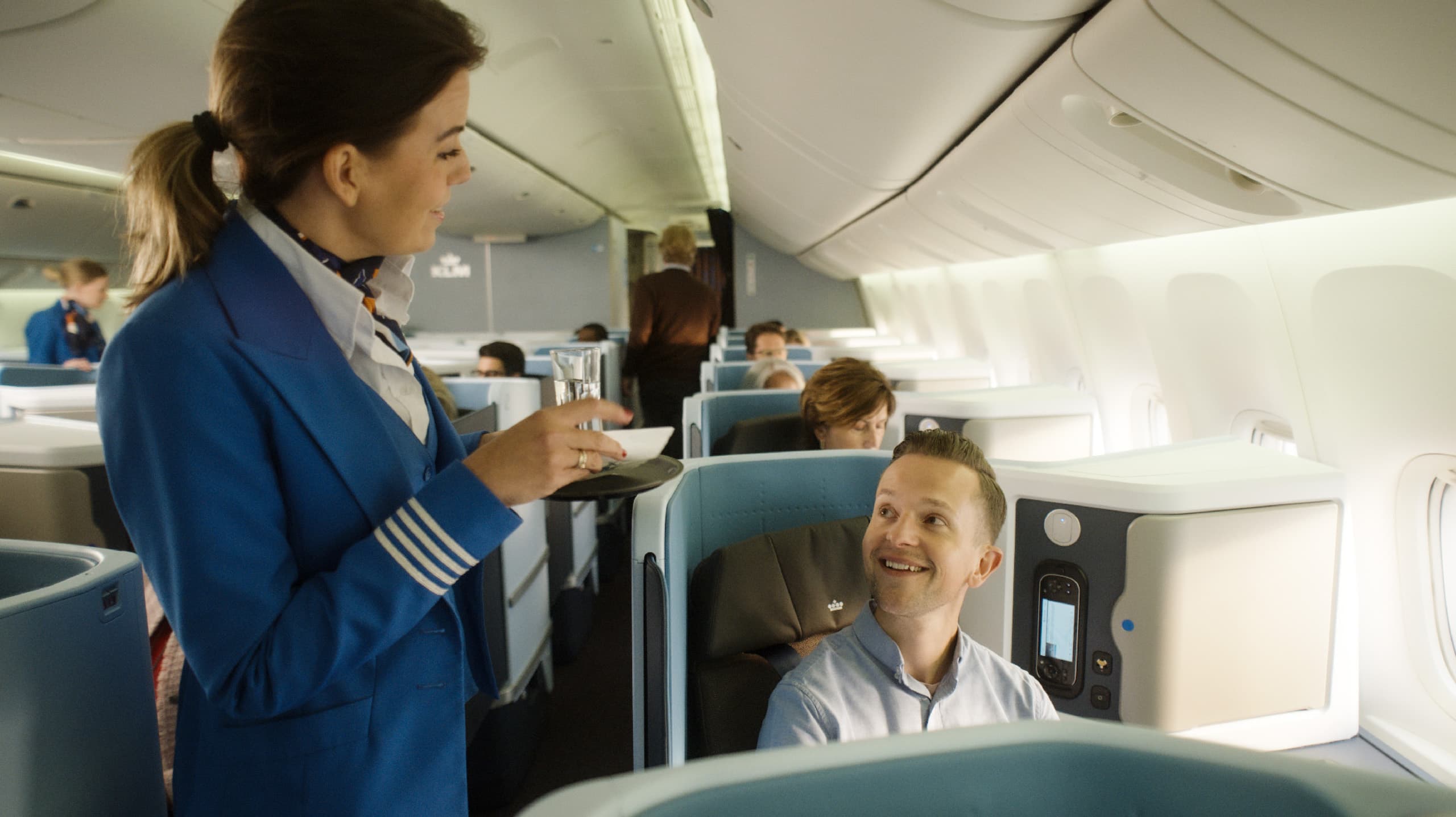
The Emirates 777-300ER business class is not the most cutting-edge product in the air. Qatar's QSuite still wins on privacy for solo travelers, and Singapore Airlines' business class on the A350 is harder to beat for outright refinement. But Emirates brings something different: scale, consistency, a genuinely world-class entertainment system, and a service culture that very few carriers can replicate at altitude.
The 2-3-2 layout is a real drawback if you're traveling alone. Book the right seat, know what you're getting, and the rest of the experience will hold up.