Quick summary
The 2025 SWISS Senses redesign delivers lockable first-class suites boasting 3.5 square meters of space and a highly flexible business class that eliminates awkward layouts. For long-haul travelers connecting through Zurich, we highly recommend prioritizing these new cabins, especially when you can access them for $2,800–$4,500 round-trip through our consolidator rates.
Swiss International Air Lines has never been the loudest voice in the premium cabin arms race. Qatar Airways gets the headlines with QSuite. Singapore Airlines rewrites the rulebook every few years. Emirates drops chandeliers. SWISS, meanwhile, has quietly served some of the most precisely executed flights in Europe while flying seats that, frankly, were starting to show their age.
That changes with "SWISS Senses" — the airline's comprehensive cabin overhaul for long-haul routes, rolling out from 2025. This isn't a new seat cushion and a firmware update. SWISS is redesigning first class with lockable suites, rethinking business class from scratch, and giving Premium Economy a shell that finally justifies the fare difference. After reviewing the full spec sheets and cross-referencing them against what the current product actually delivers, I'd call this the most consequential thing SWISS has done for its premium passengers in a decade.
Here's what you need to know before you book — or before you let someone talk you into the old configuration.
What SWISS Senses actually is
The SWISS Senses concept is a full cabin interior redesign for the airline's long-haul fleet, scheduled for rollout beginning in 2025. The design language draws from Switzerland's alpine architecture, natural materials, and a restrained but warm color palette — bordeaux, anthracite, beige — that manages to feel expensive without screaming it.
The name is intentional. SWISS is framing this around how the cabin feels, smells, sounds, and looks, not just what's bolted to the floor. Human-centric lighting, high-resolution screens, seat heating and cooling, and material quality are all part of the same design brief.
What's genuinely new: first-class suites with lockable sliding doors and, in business class, a complete rethinking of the seating configurations to offer genuine flexibility. Both are overdue.
The design language — why it matters more than you'd think
Cabins that look afterthought eventually feel like one. Anyone who has spent 11 hours in a seat that looks like it was designed in 2008 knows that visual fatigue is real. The SWISS Senses interior uses warm, muted tones throughout — not the clinical grey-and-blue palette that haunts too many widebody interiors — and pairs them with materials that are meant to feel substantive underhand.
The Switzerland reference point isn't just marketing copy. The architectural influence shows up in how walls and partitions are proportioned, how light interacts with the surfaces, and in the overall sense of calm that the renderings project. Whether the physical build matches that vision when it's actually flying will be the real test.
One detail worth noting: the cabin walls in first class reach 1.80 meters high. That's not a symbolic gesture. At that height, standing in your suite feels genuinely enclosed rather than performatively private.
SWISS Senses first class — the suites, in detail
SWISS First is already a product people remember. The new configuration takes it somewhere legitimately different.
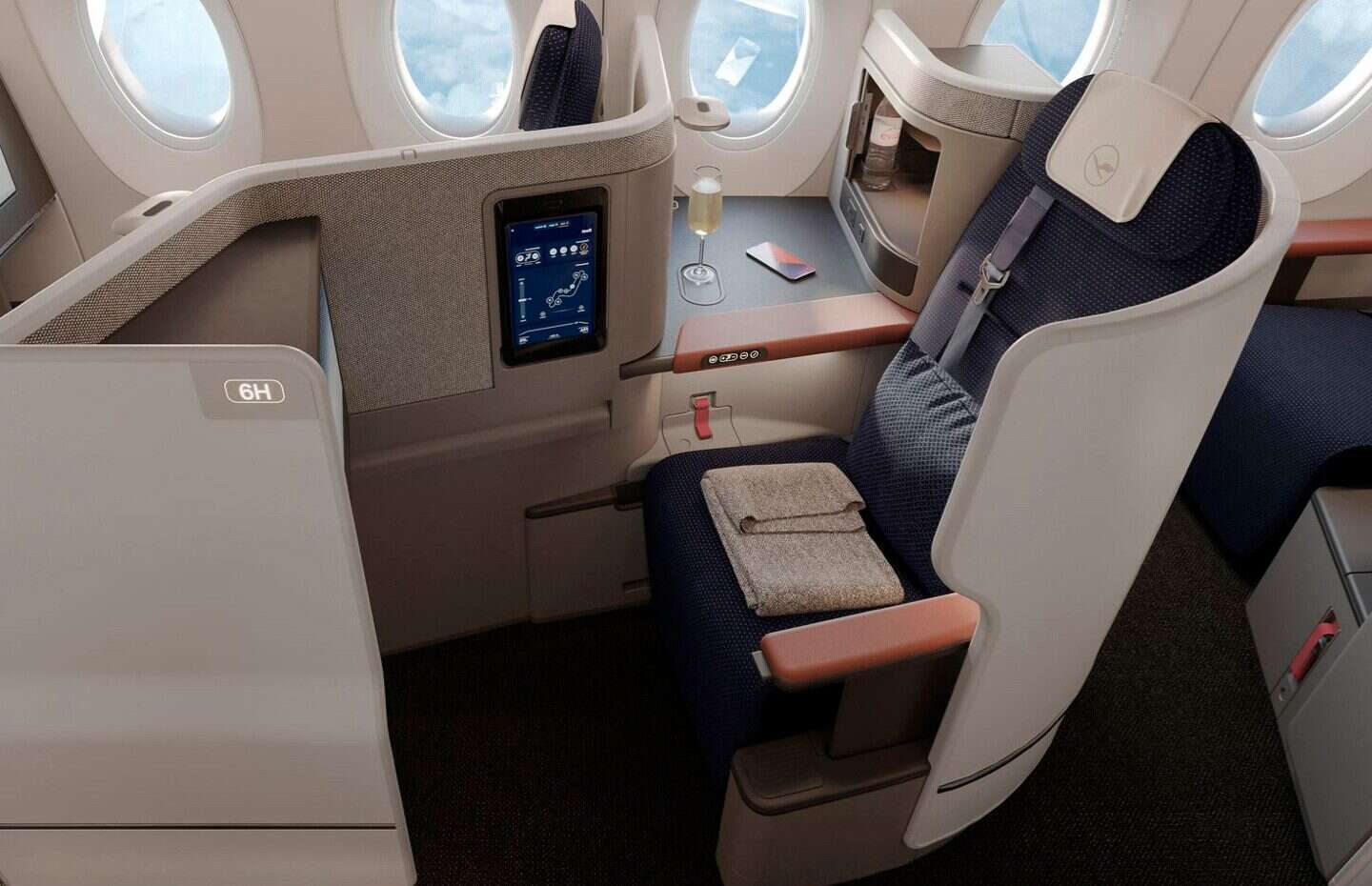
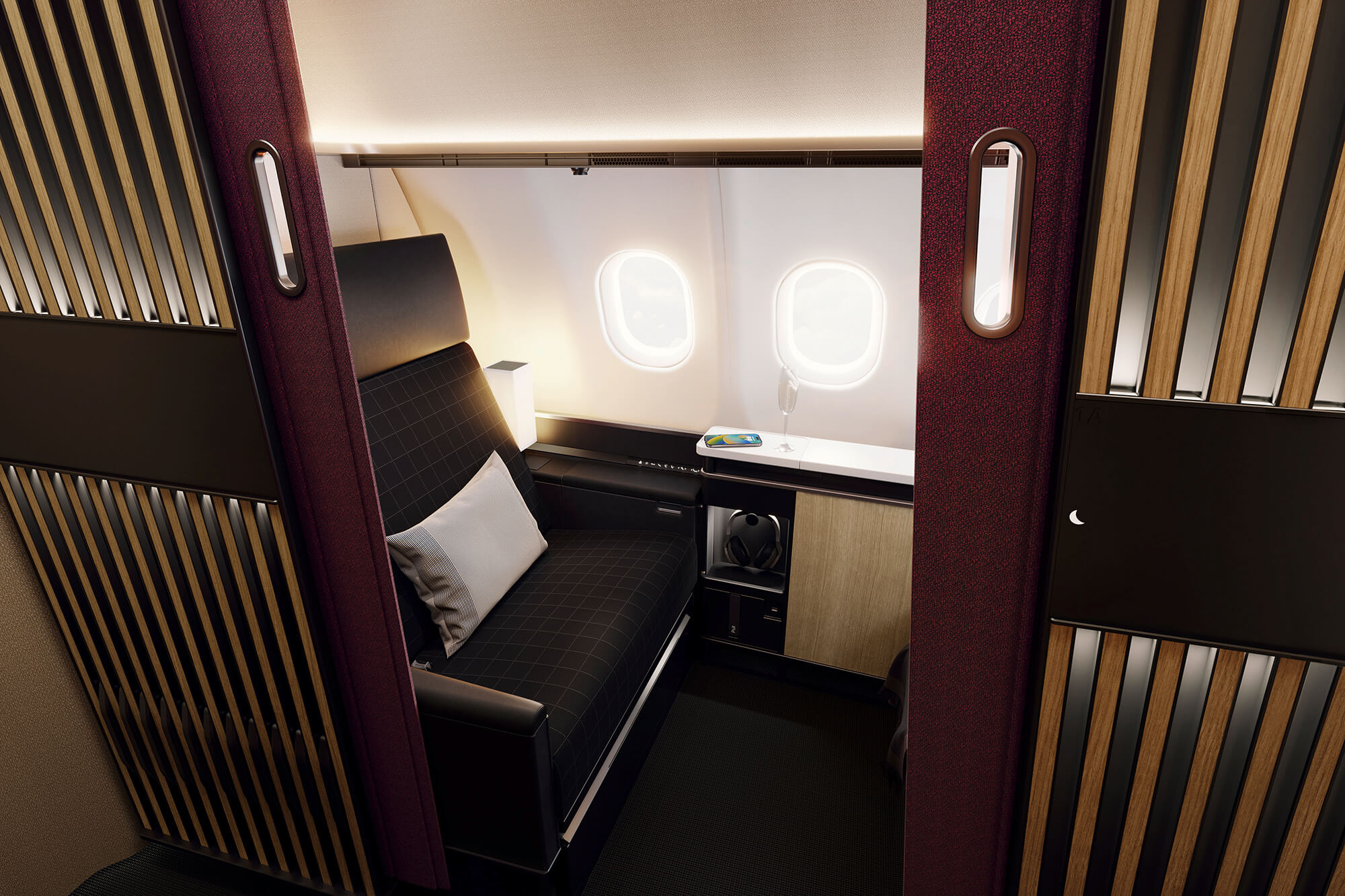
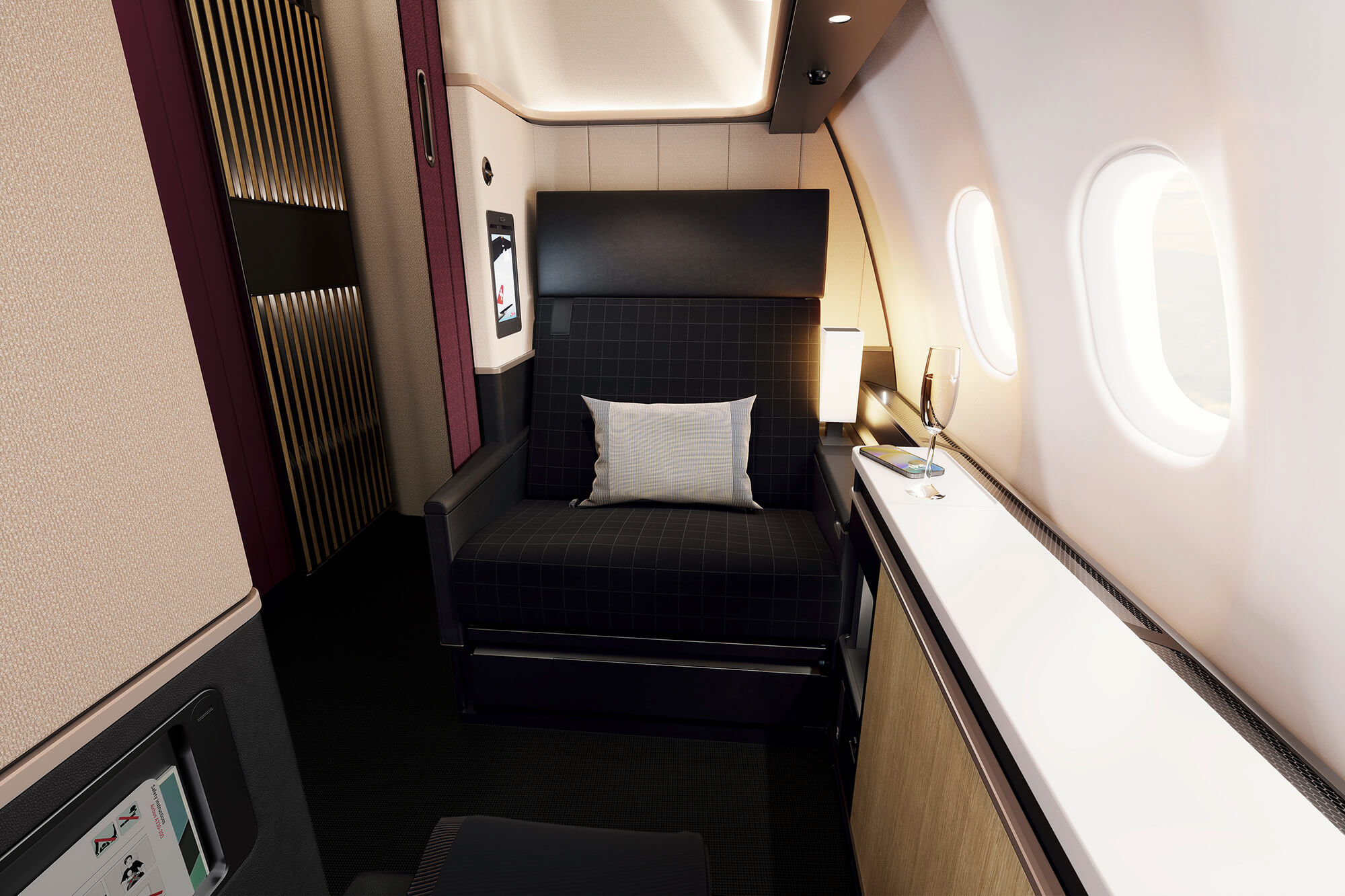
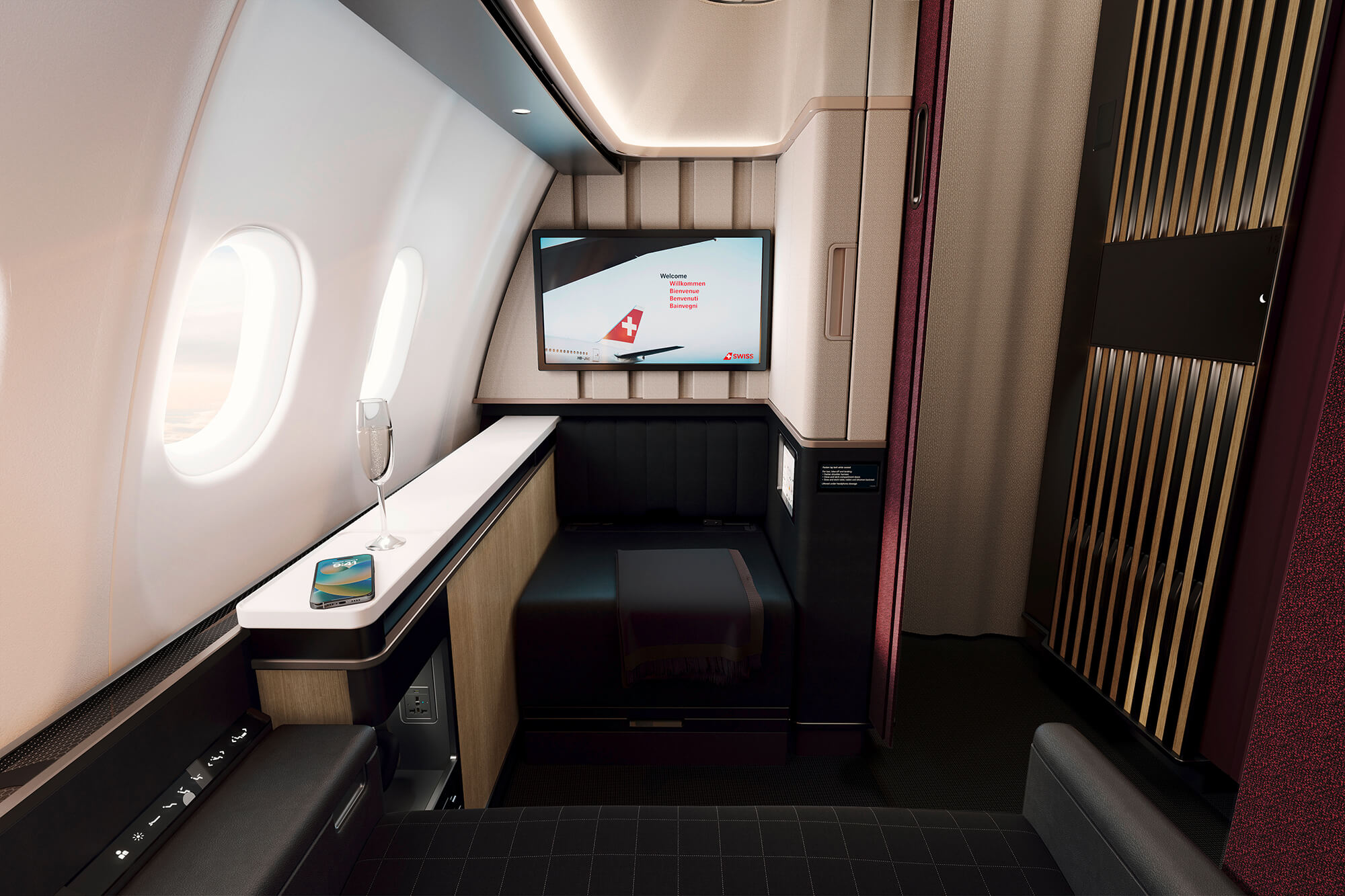
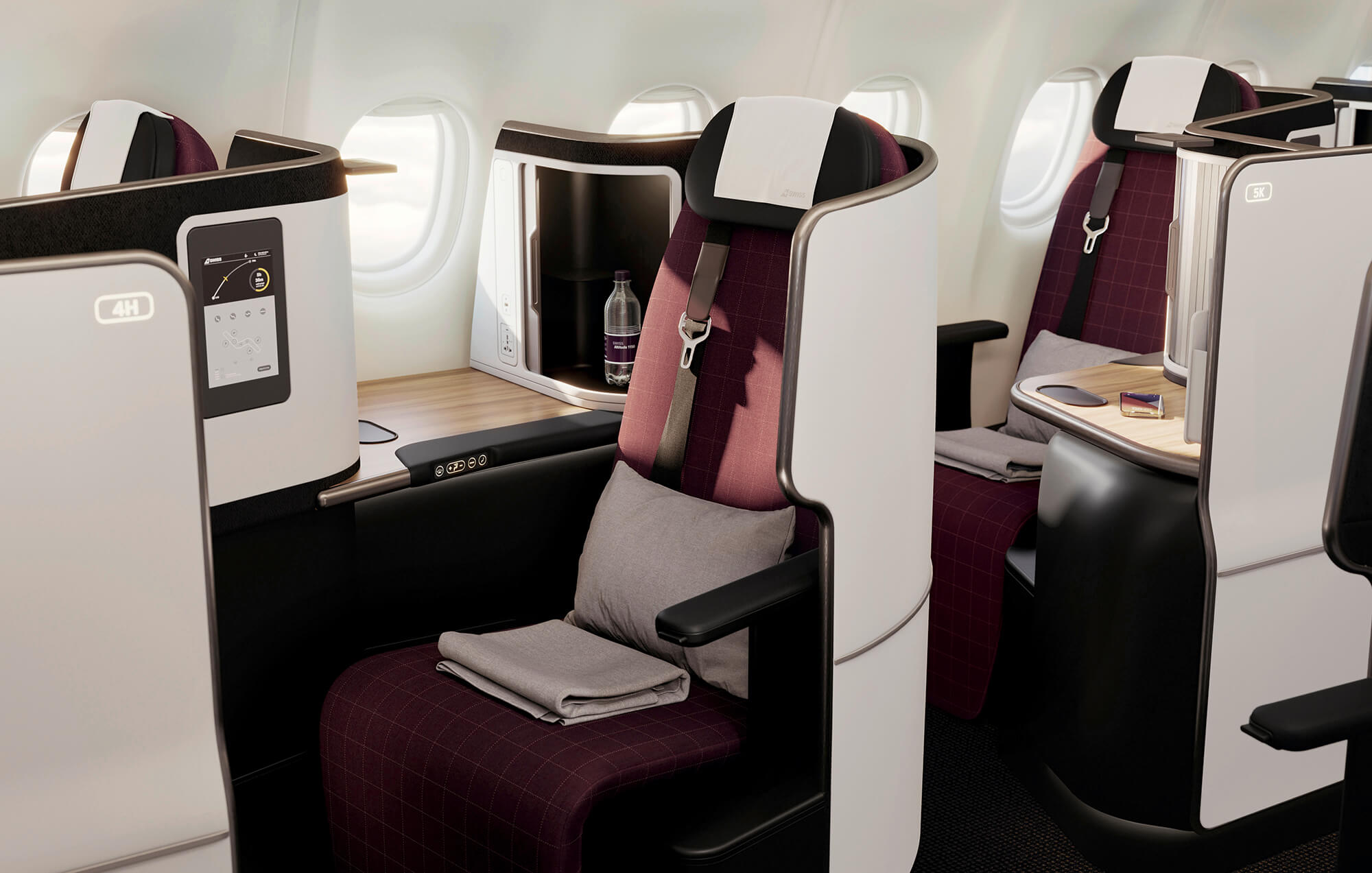
The cabin offers two suite types. The Center Suite is the flagship: 3.5 square meters of floor space, a seat that's 117 cm wide, a 43-inch 4K screen, and a bed that runs 2 meters long. The Window Suite is more compact at 2.4 square meters, with a 77 cm-wide seat and a 27-inch 4K screen — still a proper suite, still with a full-length 2-meter bed.
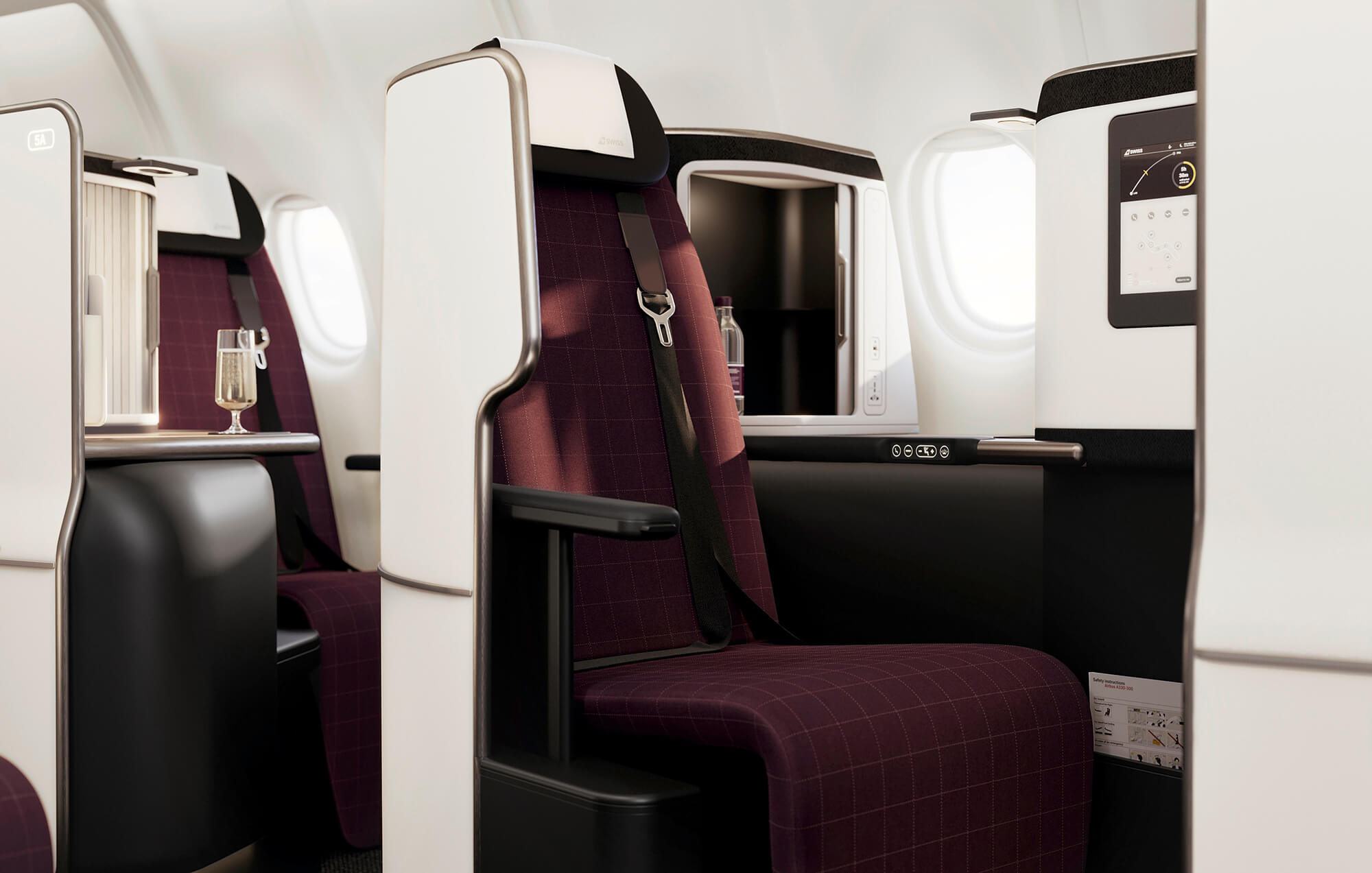
Both configurations include lockable sliding doors, personal wardrobes, seat cooling and heating controls, an illuminated haptic control panel, an inflight entertainment tablet, and a "Do Not Disturb" indicator. The stowage is described as spacious, which for first class means you should be able to store a carry-on without hunting for an overhead bin.
The honest comparison: Qatar's QSuite in business class gives you approximately 1.8 square meters and a 21.5-inch screen. The SWISS First Center Suite is nearly double that floor space, with a screen almost twice the size. For passengers who have been treating QSuite as the ceiling of what's available, the SWISS First product — priced at consolidator rates through CEOFLIGHTS — represents a meaningful step beyond.
Through our airline contracts, SWISS First fares on routes like ZRH–JFK or ZRH–ORD regularly retail above $12,000 round-trip. CEOFLIGHTS clients routinely access the same seats in the $6,500–$8,500 range. Call (888) 851-6897 to confirm current availability and pricing — our team, ASTA-accredited (member #900292735) and top rated on Trustpilot, knows exactly which routing and travel window gets you the best value.
SWISS Senses business class — more options, fewer compromises
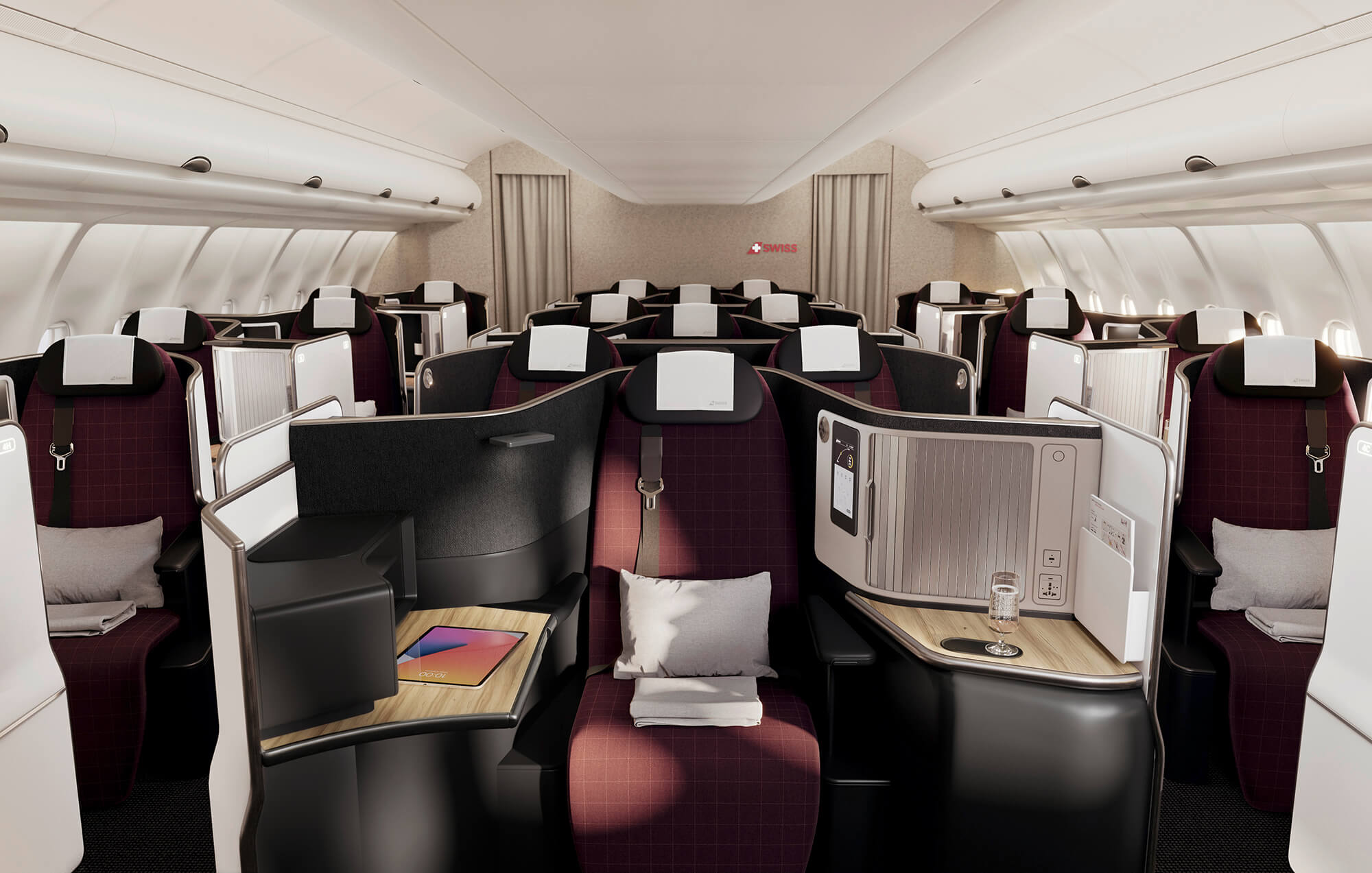
This is where the SWISS Senses redesign gets practically interesting for the most passengers. The current SWISS Business product is competent but inflexible. The new cabin fixes that with five distinct seat configurations, each targeting a different type of traveler or trip.
The five types: Privacy Seat, Extra Long Bed, Double Seat, Extra Space Seat, and Classic Seat. All-aisle access is guaranteed across the entire cabin — that alone eliminates one of the most aggravating features of the old staggered layout, where window seat passengers had to step over sleeping neighbors.
Seat width runs 80–82 cm depending on configuration, with a 2-meter flat bed and the same heating and cooling controls found in first class. The screen is 17 inches at 4K resolution — smaller than first class, obviously, but still a significant upgrade over what most business class cabins currently deploy. Wireless charging is standard, as is a dedicated inflight entertainment tablet and what SWISS calls a "signature lamp" that functions as both ambient lighting and a task light.
The design aesthetic mirrors Lufthansa's new first and business class seats — not surprising given the shared Lufthansa Group engineering — but SWISS's material choices and color palette give it a distinctly different feel. Less corporate, more considered.
For transatlantic routes out of Zurich (ZRH), the business class product on the SWISS Senses-equipped fleet will be directly competitive with Lufthansa's own new business on FRA–JFK, and in some configurations — particularly the Extra Long Bed — arguably more comfortable for taller passengers.
Retail pricing for SWISS Business on ZRH–JFK runs $4,000–$7,500 depending on season and booking window. Through CEOFLIGHTS consolidator pricing, those same seats regularly come in at $2,800–$4,500 round-trip. Ring (888) 851-6897 and ask specifically about SWISS Senses-equipped aircraft — we can confirm which flight numbers are scheduled to operate the new configuration once the rollout progresses.
Human-centric lighting — the detail that actually earns its press release
Airlines talk about wellness in the cabin constantly. Most of it is noise. The SWISS Senses lighting system is one of the few implementations that has genuine physiological backing behind it.
Human-centric lighting adjusts both intensity and color temperature throughout the flight to mimic natural daylight cycles — warmer and dimmer during rest periods, cooler and brighter during meal and activity periods. The practical effect is a measurable reduction in melatonin disruption. On an 8-hour ZRH–EWR flight departing in the evening, that's the difference between landing reasonably functional and landing feeling like you've been mildly sedated.
This isn't new science, but it's still relatively rare in actual deployment at this level of execution. Lufthansa has done it, Singapore Airlines has done it. SWISS joining that group matters because it extends the benefit to business class passengers, not just first.
SWISS Senses Premium Economy — finally a hard-shell product
Premium Economy is the class that airline marketing departments abuse most shamelessly. The SWISS Senses version earns more credibility than most.
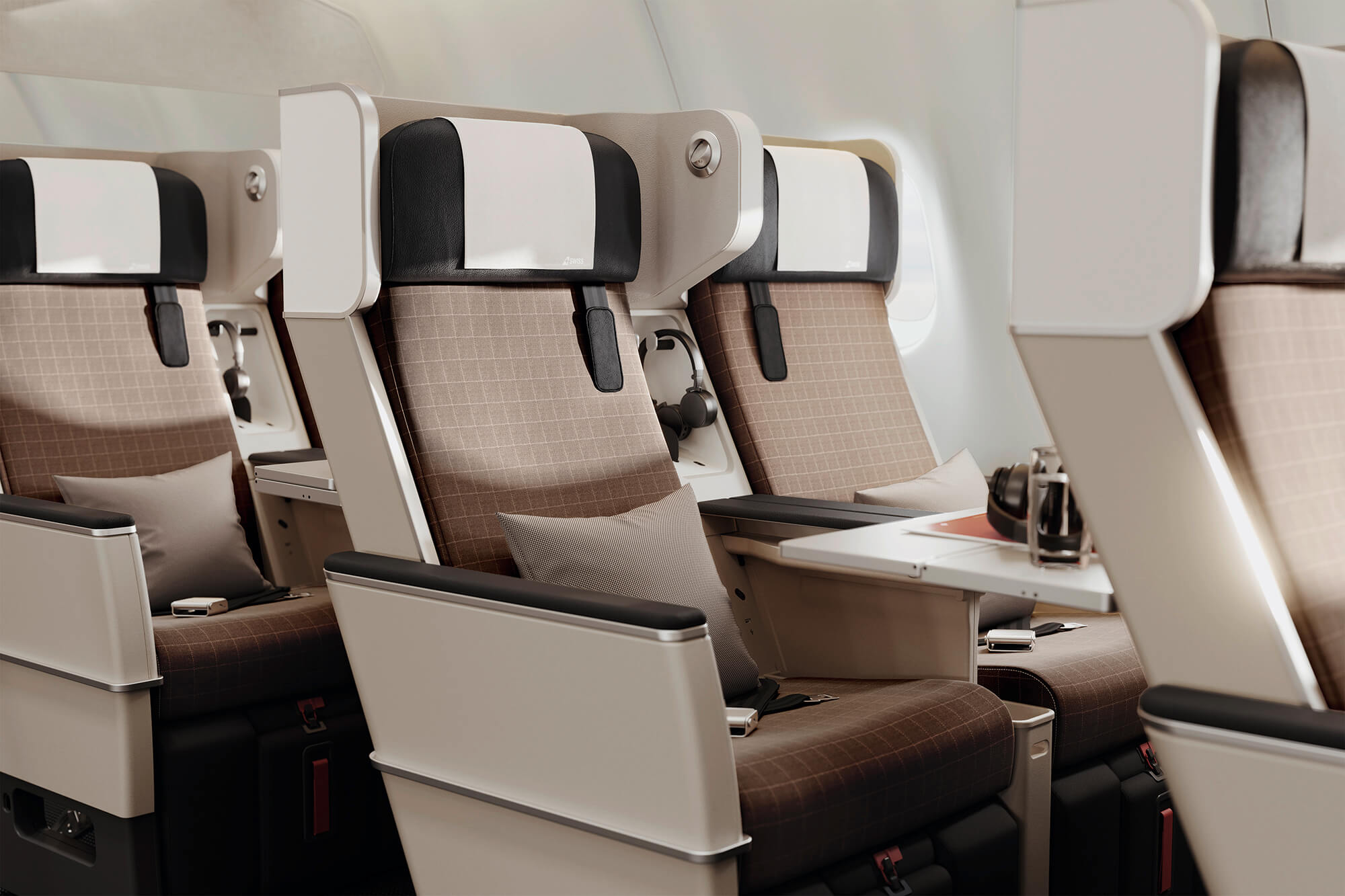
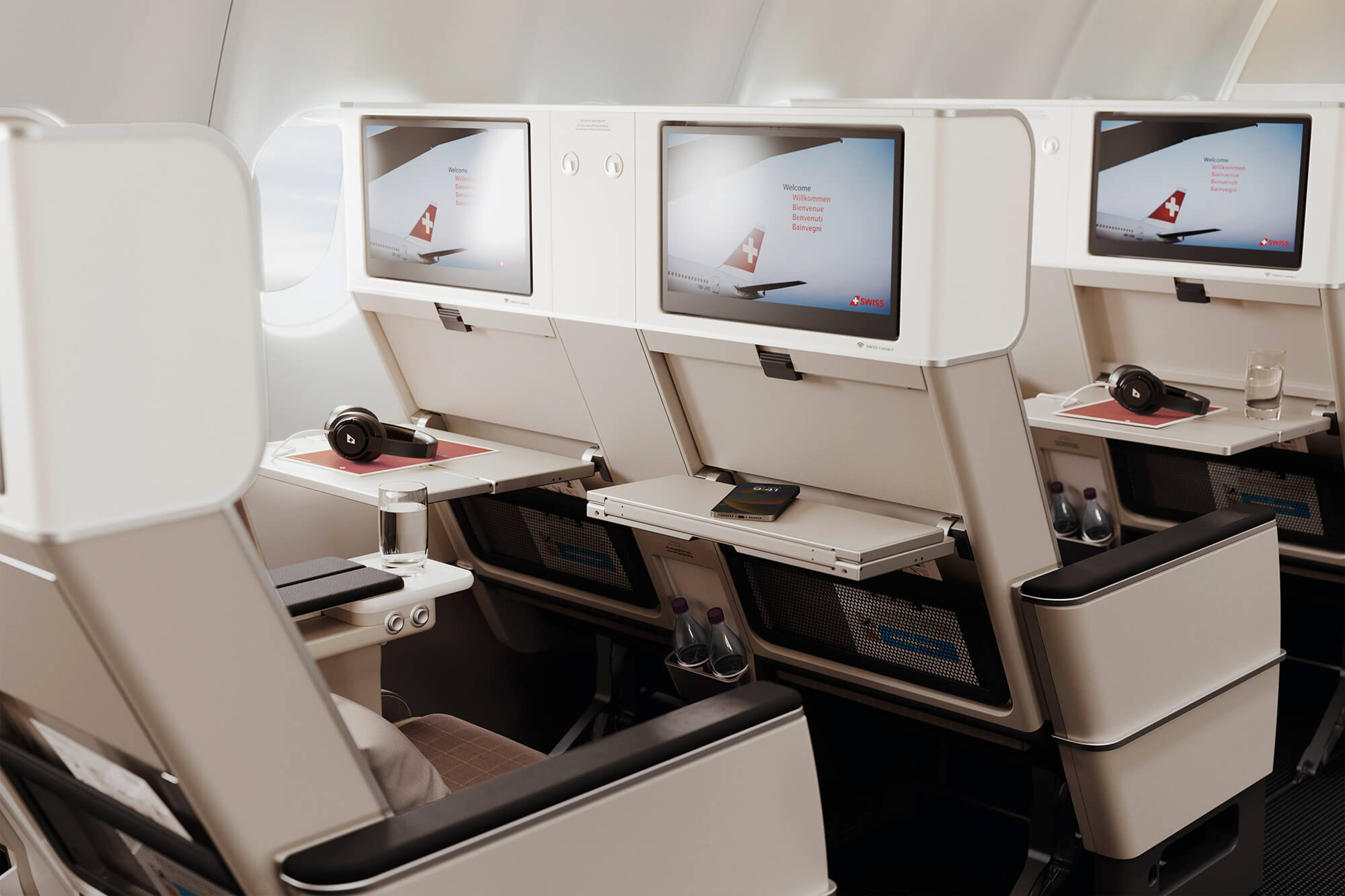
The seat is a hard-shell design — meaning the seat reclines by moving the base and seat pan forward rather than pushing into the passenger behind you. Seat width runs 46–48 cm, which is genuinely roomier than the 44 cm that most legacy carrier premium economy products deliver. The pitch sits at nearly a meter — 97–99 cm by most SWISS specs — and the 15.6-inch 4K screen is the best in class for this cabin tier.
Features include a privacy divider between seats, wireless charging, a reading light positioned not to destroy your neighbor's sleep, and a cocktail table designed to hold drinks without requiring a degree in spatial geometry to deploy.
My opinion: SWISS Premium Economy on the Senses configuration will be one of the two or three best hard-shell premium economy products available on transatlantic routes. The only real competition at this specification level comes from Air France's Premium Voyageur — which, despite the fancy name, still uses a recline-into-your-neighbor design on some aircraft.
How this positions SWISS against the real competition
Let's be direct about where SWISS Senses lands in the global premium cabin hierarchy.
First class: The Center Suite competes seriously with Lufthansa's new first class and holds its own against Singapore Suites on a value-per-dollar basis. It doesn't have the sheer theater of Emirates First, but it doesn't need to — SWISS's service execution and catering have always been better.
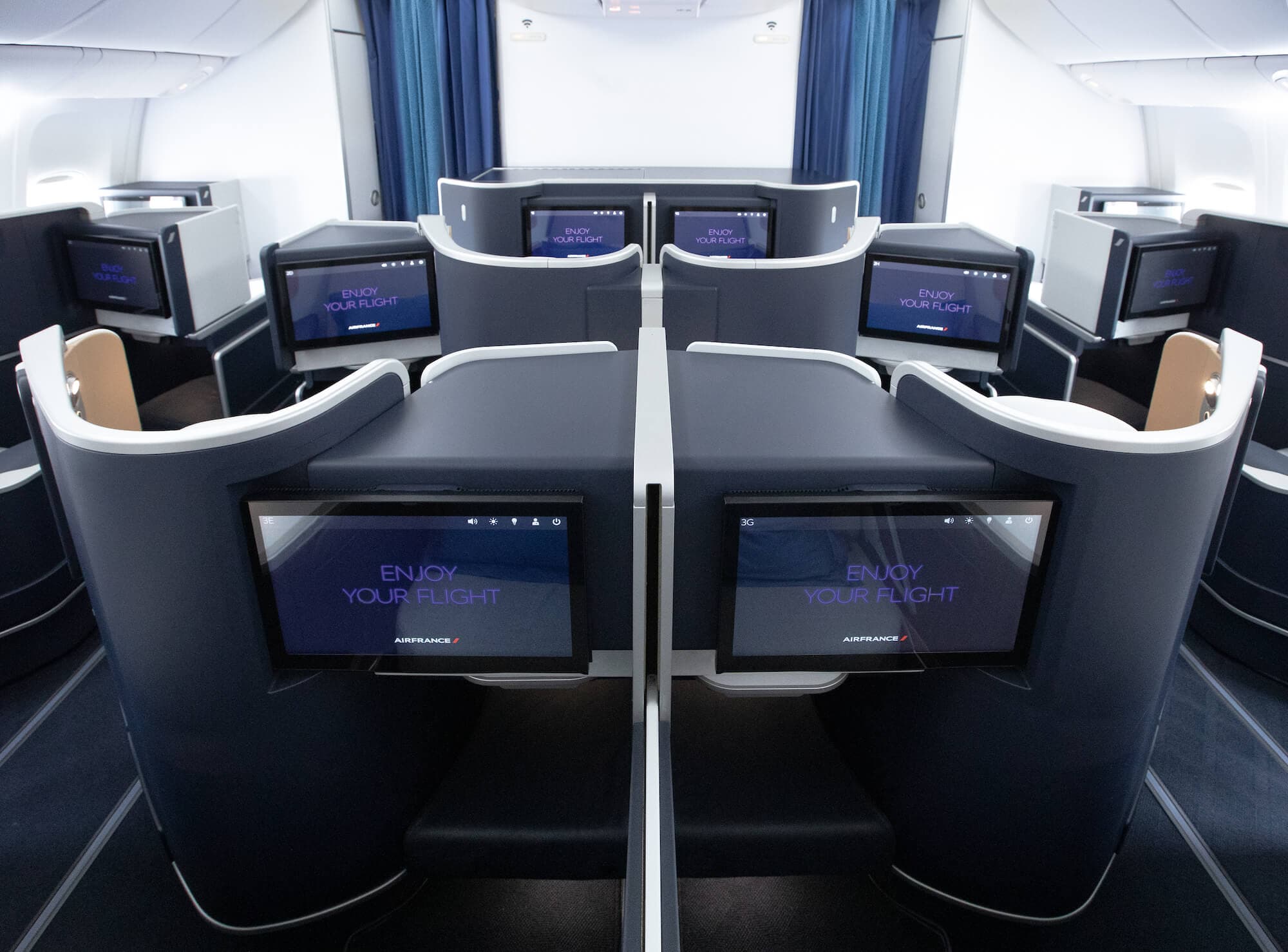
Business class: The all-aisle access, seat width, and five-configuration flexibility put it solidly in the top tier of European carriers. It's better-specified than the current Air France business class and at least comparable to British Airways Club Suite — which remains the standard on point-to-point transatlantic routes out of LHR.
Premium Economy: Genuinely excellent. Hard-shell, wide, long, 4K. Book it without apology.
The rollout question — and why timing matters for your booking
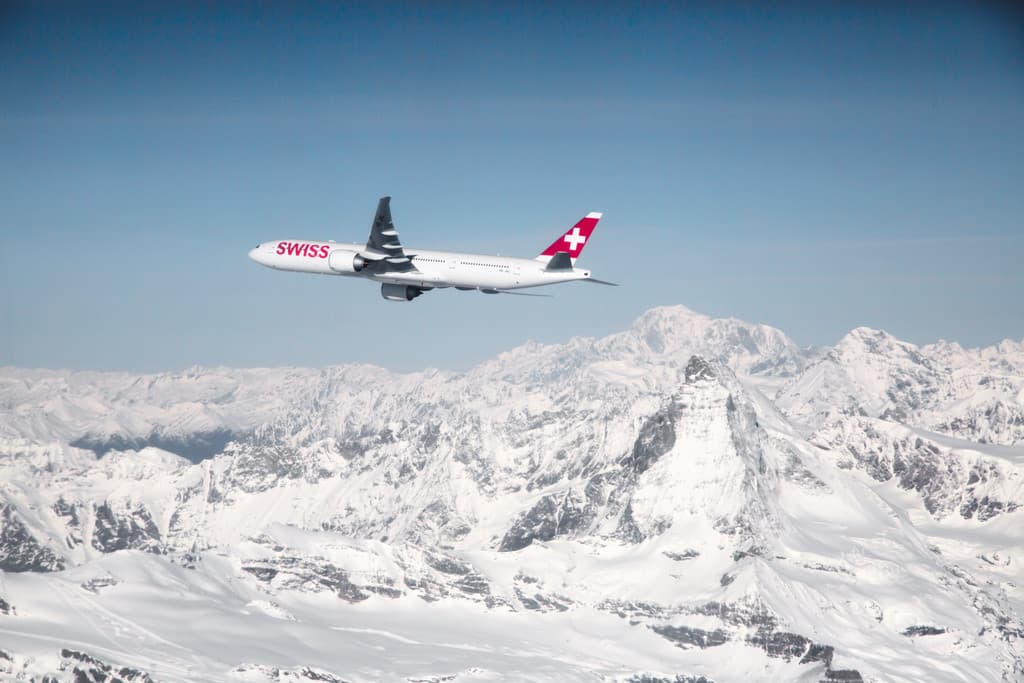
SWISS has committed to the 2025 rollout, but fleet-wide retrofits on widebody aircraft take time. The airline operates a mix of Airbus A330s and Boeing 777s on long-haul routes, and not every aircraft will carry the Senses interior from day one.
If you're booking a SWISS long-haul flight in 2025 or 2026, the specific aircraft and its configuration matters. LX 16 (ZRH–JFK) and LX 22 (ZRH–ORD) are among the high-frequency transatlantic routes most likely to receive early-rollout aircraft, but that schedule shifts based on maintenance windows and delivery sequencing.
This is exactly the kind of detail that CEOFLIGHTS handles for clients at booking. When you call (888) 851-6897, you're talking to specialists who track fleet configurations and can steer you toward the right flight numbers — not just the cheapest fare on the route.
Why SWISS specifically — and why now
Zürich (ZRH) is one of the best-connected hubs in Europe for North American travelers who want to continue east. SWISS's network from ZRH reaches Bangkok, Singapore, Tokyo, Mumbai, and Cape Town — often with shorter connections than you'd clear through Frankfurt or London. The new Senses product makes those long-haul connections considerably more appealing.
Beyond the network, SWISS's food and beverage service has always been a genuine differentiator. The airline has maintained a serious Swiss chef partnership for long-haul menus, and that hasn't changed with the cabin redesign. The physical product is catching up to the service product.
For frequent transatlantic or long-haul travelers who have been defaulting to the same three or four carriers out of habit, SWISS Senses gives you a concrete reason to reconsider the routing through Zurich.
We're ASTA-accredited (member #900292735), top rated on Trustpilot, and our airline contracts mean you're not paying retail for any of this. Reach us at (888) 851-6897 — the call takes ten minutes and the savings on a business class or first class booking typically run into the thousands.