Quick summary
As the epicentre of global marine biodiversity, Raja Ampat hosts 75% of the world's known coral species and over 1,300 fish species, making it the ultimate destination for adventurous divers. We recommend visiting between October and April for calm seas and peak visibility, while prioritising must-see sites like Cape Kri and the karst pinnacles of Wayag. To handle the remote multi-leg journey to Sorong, fly lie-flat business class via Singapore or Jakarta to secure 20% to 35% savings off standard $7,000–$14,000 retail fares.
There is exactly one place on Earth where marine biologists run out of superlatives. Raja Ampat, an archipelago of more than 1,500 islands in Indonesia's West Papua province, holds roughly 75% of the world's known coral species, over 1,300 fish species, and dive sites so consistently spectacular that experienced divers — people who've been to the Red Sea, the Maldives, Palau — come back humbled.
Getting there requires effort. That's partly why it remains extraordinary.
The four main islands — Misool, Salawati, Batanta, and Waigeo — give the archipelago its name: Raja Ampat means "Four Kings." The capital, Waisai, sits on Waigeo and serves as the main gateway once you've made the crossing from Sorong by ferry. The journey itself is part of the experience. But let's start where most journeys actually start: your departure airport.
Flying to Raja Ampat — routing options worth knowing
No airline flies nonstop from the US or Europe to Sorong (SOQ), the closest airport to Raja Ampat. You're looking at a multi-leg journey regardless of where you originate. The question is how many connections, which hubs, and what you're sitting in for each segment.
The most practical routing from the US East Coast or Europe runs through Singapore (SIN). Singapore Airlines operates daily nonstop service from New York JFK (SQ24) and London Heathrow (SQ322), both in their excellent A350 Business Class — fully flat seats, 76-inch pitch, direct aisle access from every seat. Transfer at Changi Terminal 3, use the SilverKris Lounge (genuinely one of the best airport lounges in the world), and connect to Jakarta (CGK) or Makassar (UPG) on a codeshare or Garuda Indonesia metal.
Qatar Airways via Doha (DOH) is the strongest option for transatlantic travelers who want a seamless premium experience through to Asia. QSuite on the DOH–Singapore or DOH–Jakarta sectors is the best business class product flying right now — double beds, closing doors, quad configurations for couples. Retail on a US–DOH–Jakarta itinerary runs $6,800–$9,200 in business class. Through our airline contracts at CEOFLIGHTS, we routinely bring that down by $1,500–$2,500 depending on the season and carrier. Call (888) 851-6897 for current availability.
Cathay Pacific via Hong Kong (HKG) deserves mention. Their new business class on the A350-900 — known internally as the "Aria Suite" — offers full closing doors, a genuinely impressive bed, and solid connectivity. HKG has strong onward connections to Indonesian cities via partner carriers. The Pier Business Class lounge at HKG is worth planning a 2-hour layover around.
Garuda Indonesia operates the Jakarta (CGK)–Sorong (SOQ) domestic sector and is your likely final flight. Don't expect lie-flat on this segment — it's a domestic Indonesian route on narrowbody equipment, typically a Boeing 737 or ATR. Book it in the highest available cabin, be realistic about the product, and sleep on the long-haul sector instead.
One routing worth avoiding: connections through Bali (DPS) add time without adding value unless you're planning a Bali stopover. Makassar (UPG) is marginally faster if you're routing through eastern Indonesia.
Retail business class pricing from New York to Sorong, all-in across carriers, runs $7,000–$14,000 depending on routing and season. CEOFLIGHTS, top rated on Trustpilot and ASTA-accredited (member #900292735), works with consolidator contracts that regularly produce fares 20–35% below published rates on the long-haul segments. The domestic Indonesian legs are low-cost by nature.
What to do in Raja Ampat
Diving — why this place is genuinely different
Raja Ampat sits at the heart of the Coral Triangle, the most biodiverse marine region on Earth. That isn't marketing. The Cape Kri dive site holds the world record for the highest number of fish species recorded in a single dive: 374 species counted in one pass. For context, that's more species than in the entire Caribbean.
The dive sites here aren't interchangeable. Each has a distinct character:
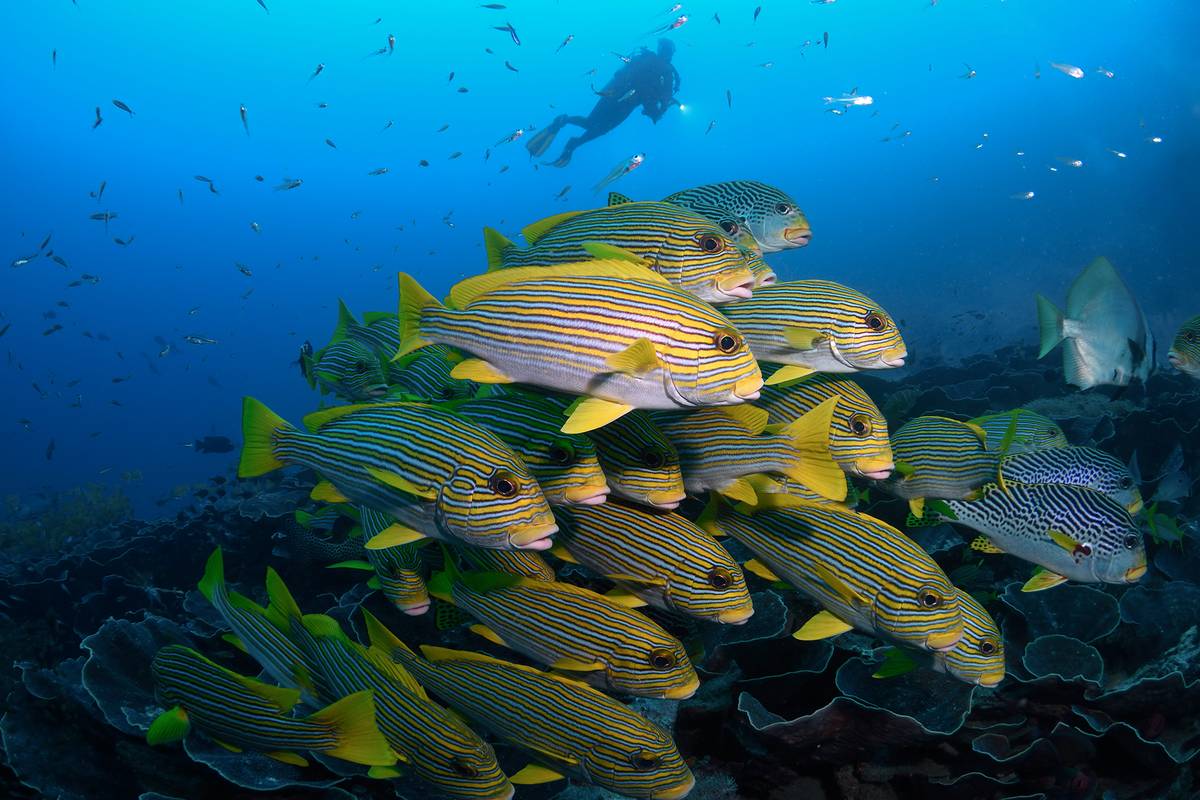
- Cape Kri — the record-holder. Expect schooling sweetlips, reef sharks, and coral walls that make experienced divers stop mid-descent just to stare
- Blue Magic — an underwater pinnacle that draws large pelagics: tuna, trevallies, oceanic mantas, and the odd Wobbegong shark drifting along the bottom like a discarded carpet
- Manta Ridge — a cleaning station where manta rays queue up with the oblivious confidence of creatures that have no natural predators. Go at slack tide
- Melissa's Garden — a plateau of healthy hard coral that photographs beautifully in both wide-angle and macro; one of the few sites where conditions consistently reward both approaches
- Sauwandarek Jetty — better than it sounds. Jetty pilings encrusted with soft coral, excellent for macro work, and accessible even for less experienced divers
- Sorido Wall — a wall dive with nudibranchs, invertebrates, and small reef fish packed into every crevice; visibility regularly exceeds 25 meters
- Yenbuba Jetty — doubles as an outstanding night dive; the bioluminescence alone justifies staying after dark
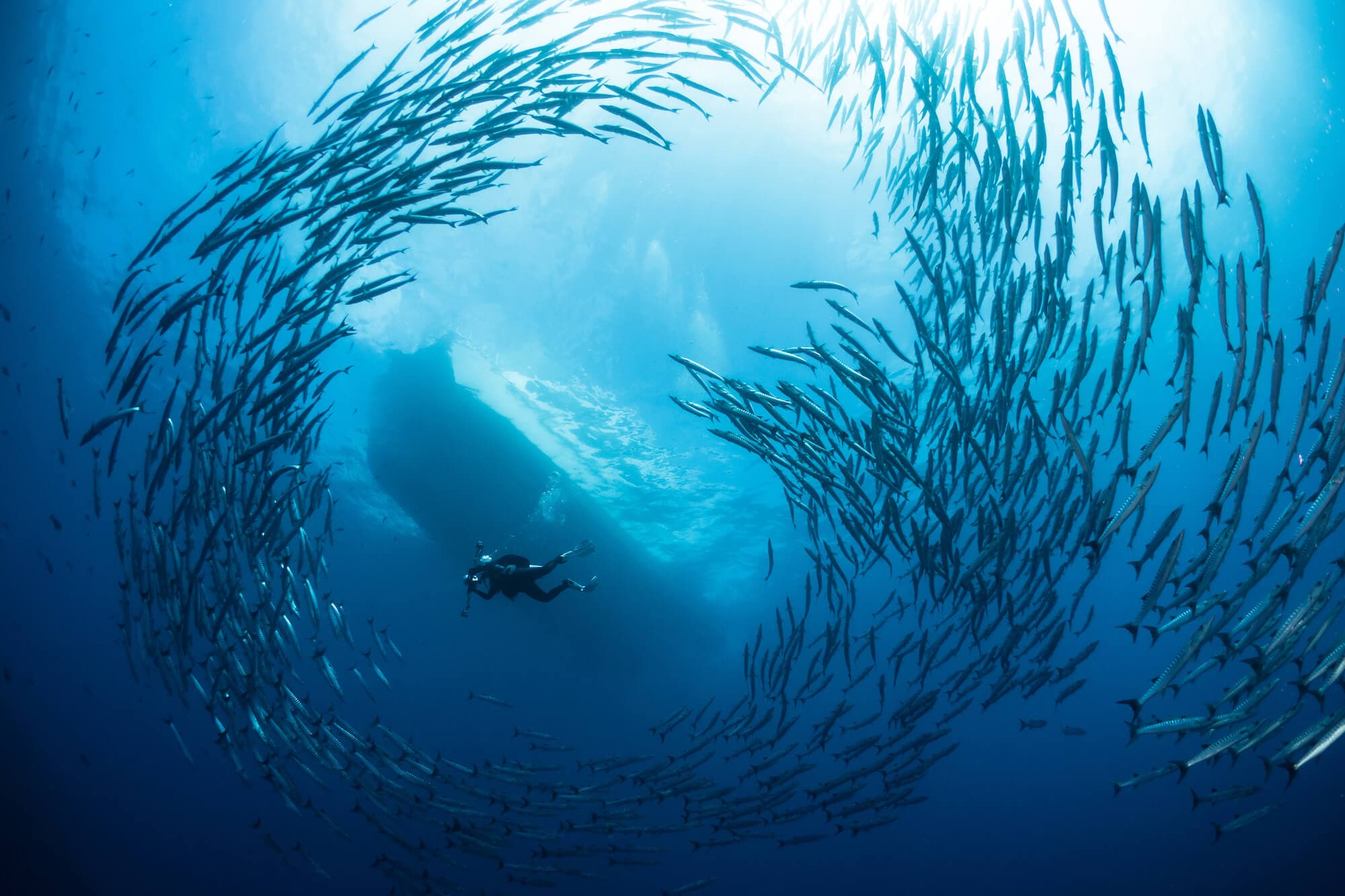
- Lau Lau — strong currents, not for beginners, but the schooling barracuda and shark sightings are consistently excellent
- Chicken Reef — mixed topography with slopes, overhangs, and walls; colorful soft corals and a good probability of encountering something large mid-water
- Sardine Reef — named for the obvious reason; bait ball behavior here is spectacular and somewhat terrifying in equal measure
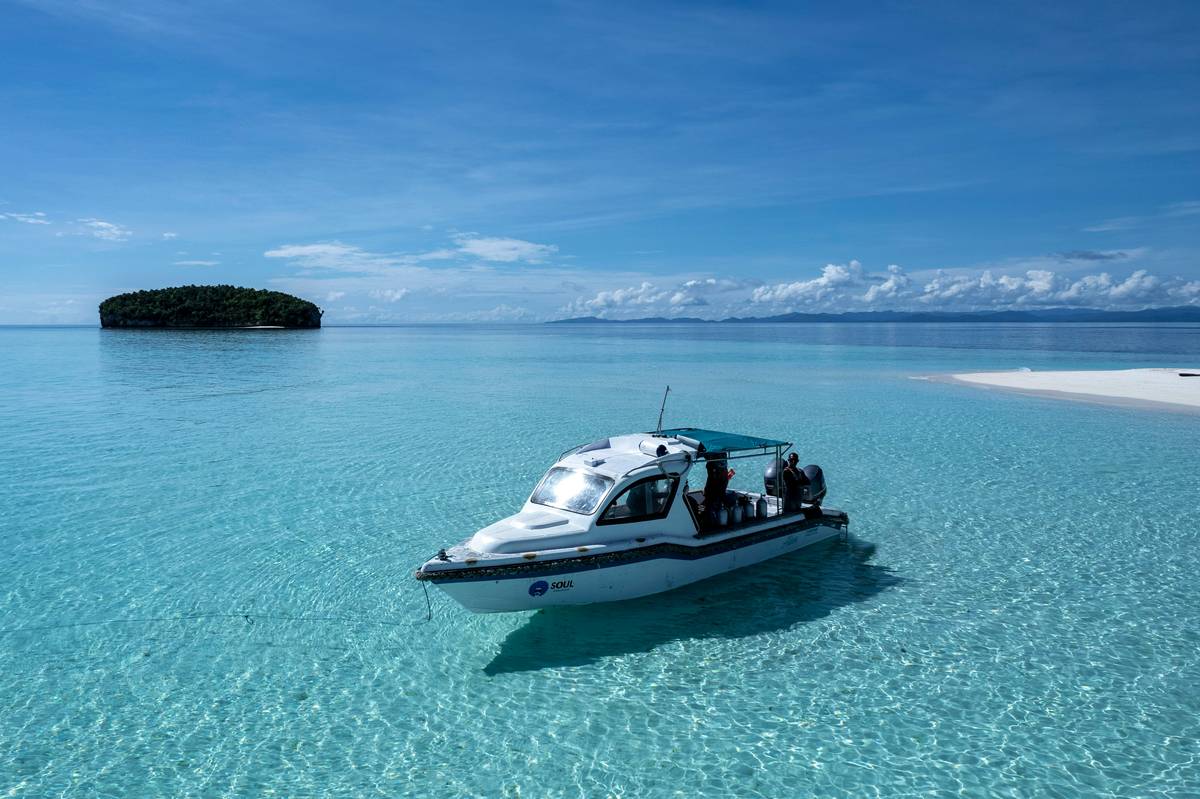
Water temperature runs 27–30°C year-round. Visibility ranges from 10 to 30 meters depending on season and current. Currents can be serious — some sites are advanced-diver territory. Don't let enthusiasm override certification level.
Macro enthusiasts should specifically look for Pygmy Seahorses (there are several species endemic to this region), Mandarinfish at dusk around Yenbuba, and the Epaulette Shark, which walks along the reef on its pectoral fins in a way that is both scientifically fascinating and mildly unsettling.
The best diving conditions run October through April, coinciding with calmer seas and peak visibility. This is also peak season for accommodation, so plan accordingly.
Island hopping — the four main islands and beyond
The archipelago's scale is easy to underestimate. Over 1,500 islands means weeks of exploration if you're systematic about it. Most visitors aren't, and they still leave satisfied.
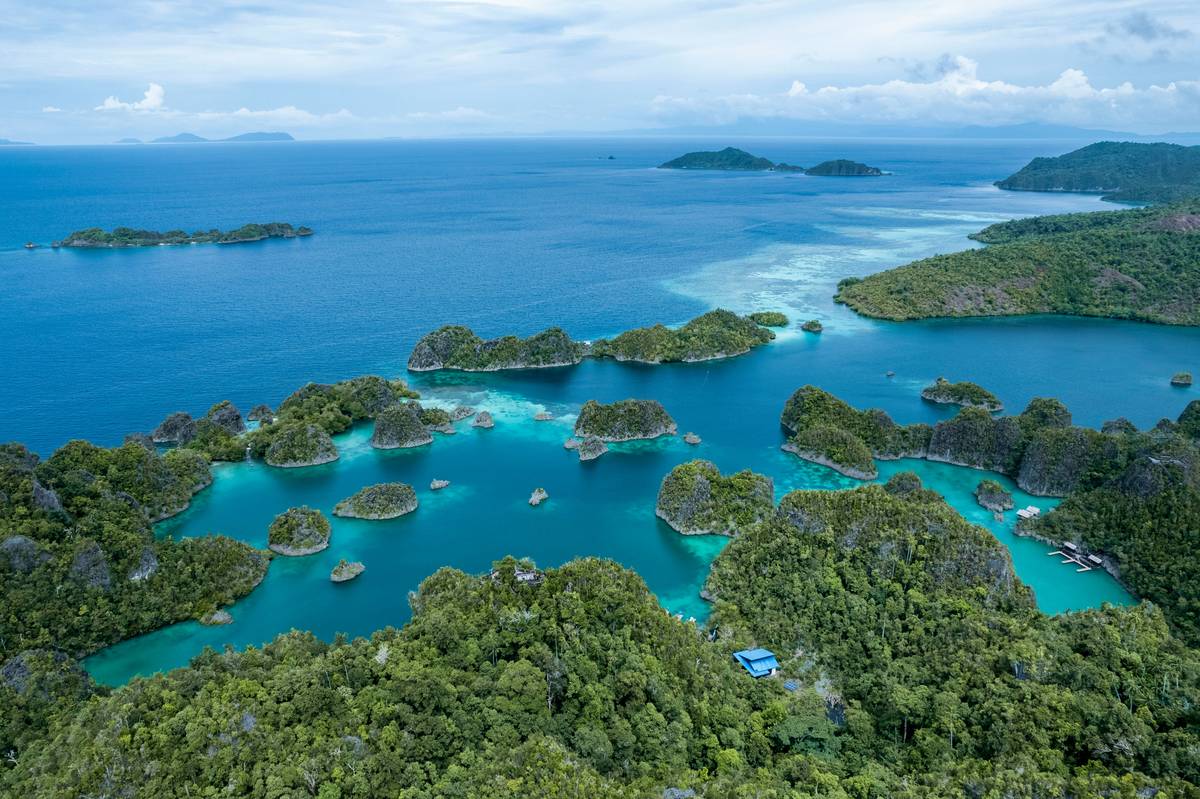
The four main islands each offer something distinct:
- Waigeo — the largest, home to Waisai, the Pianemo viewpoint, and the bulk of the archipelago's infrastructure. The Ayau Islands to the north are worth the extra boat time
- Misool — the southern outlier, known for ancient rock paintings, the Blue Magic and Boo Windows dive sites, and a remoteness that feels genuinely earned. Getting here takes longer; it's worth it
- Batanta — jungle interior, waterfalls, minimal tourist infrastructure. If you want to feel like you've gone somewhere most visitors haven't, Batanta is the answer
- Salawati — the least visited of the four, with traditional villages and cultural heritage that rewards travelers who slow down
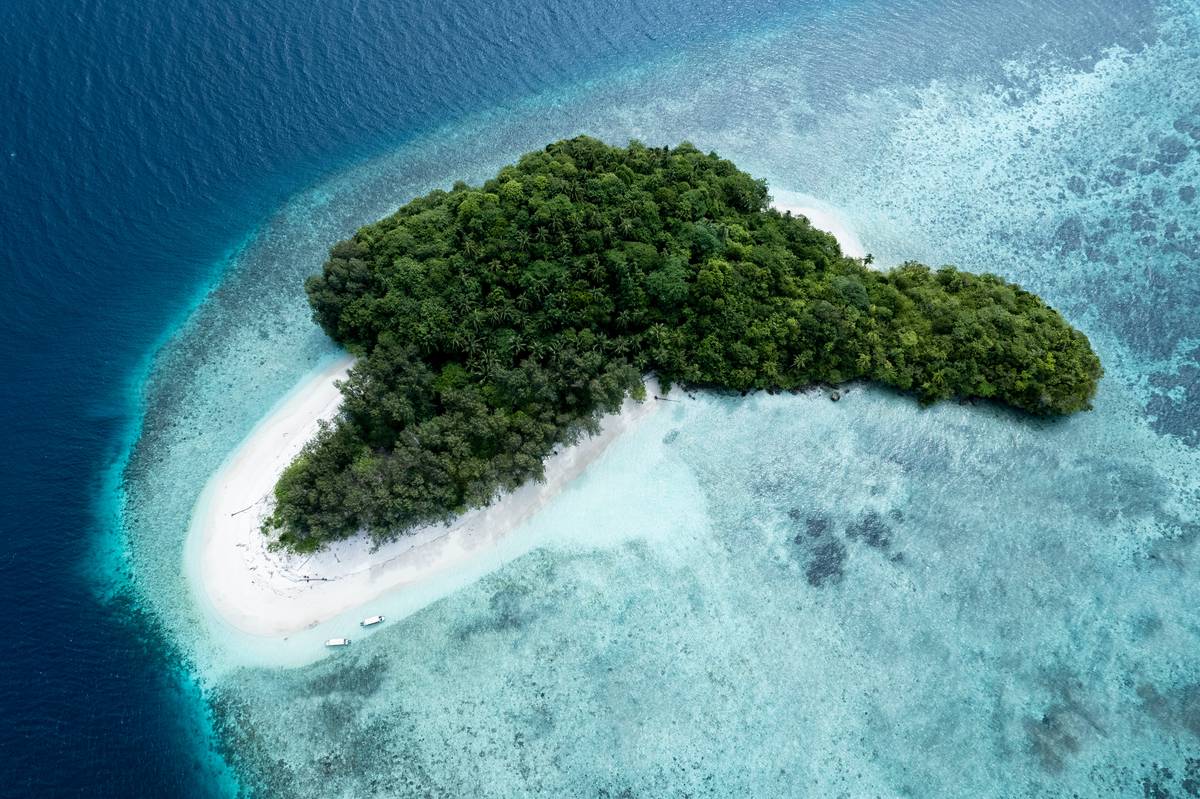
Among the smaller islands and spots:
- Wayag — the karst island viewpoint that appears on every Raja Ampat photograph. The journey requires a full day by speedboat from Waisai; non-negotiable if this is your only visit
- Pianemo — a closer and almost equally dramatic karst viewpoint, more accessible for shorter trips
- Kri Island — the hub for most divers; near Cape Kri, home to several resorts, and connected to Mansuar by a sandbar walkable at low tide
- Arborek Village — small, welcoming, known for traditional weaving and dances. The snorkeling directly off the jetty is excellent
- Fam Islands — a group of scenic islands ideal for a day trip, with good viewpoints and calm snorkeling waters
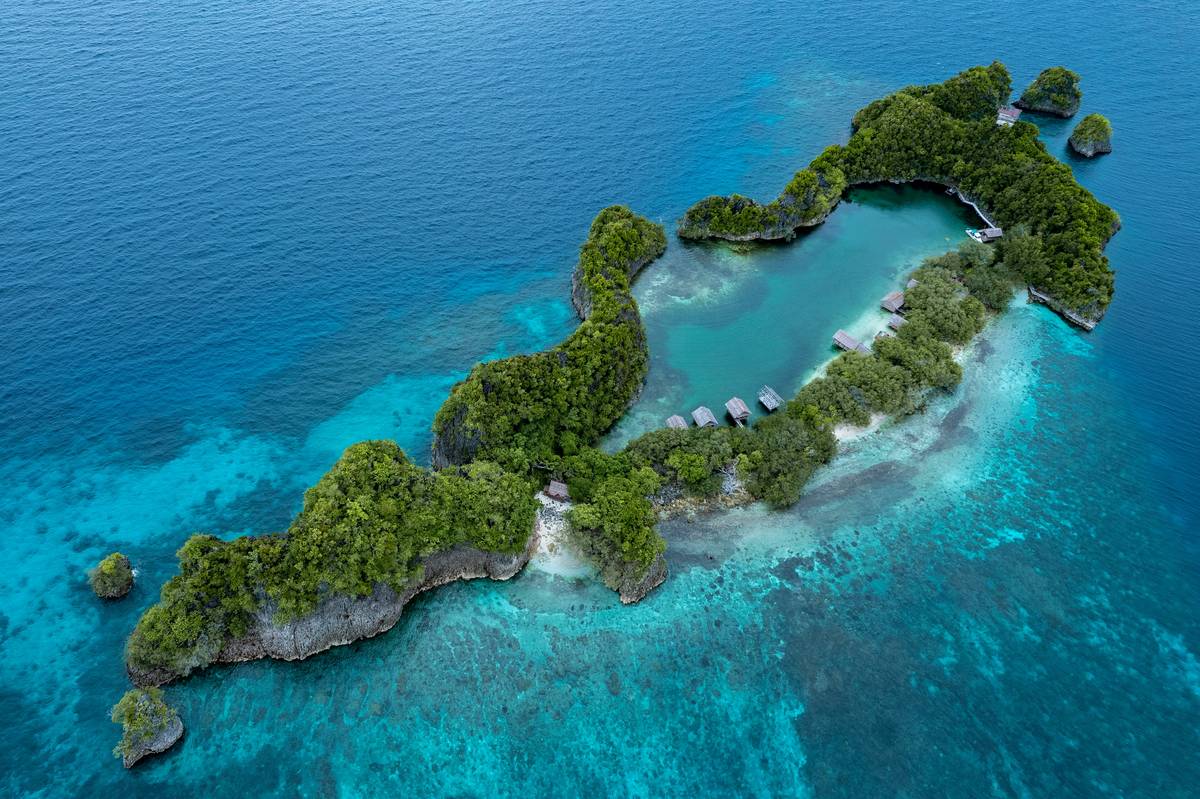
Transportation between islands is by boat exclusively. Arrange through your resort or a local operator in Waisai. For remote destinations like Wayag, expect to charter a speedboat — budget $150–$300 for a full-day trip depending on group size and fuel costs.
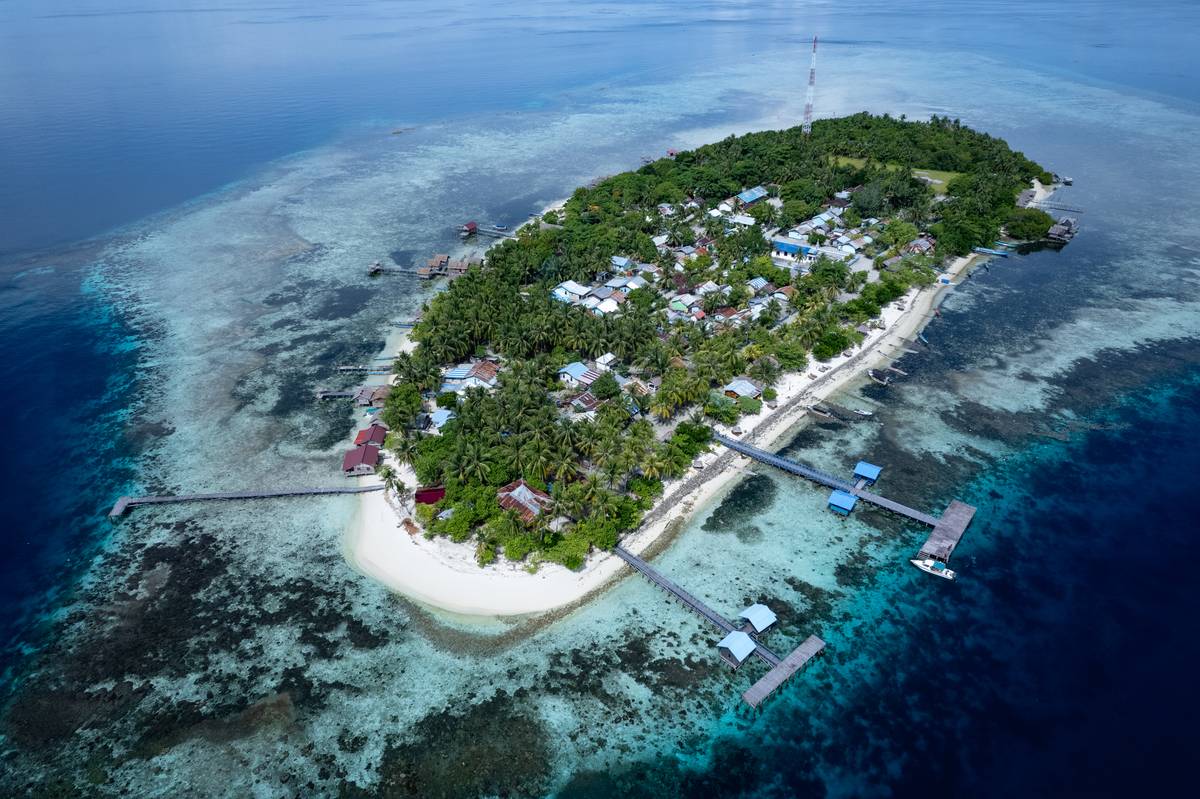
Beyond diving — birdwatching, kayaking, and cultural visits
Raja Ampat's terrestrial biodiversity doesn't get the attention it deserves. The Red Bird of Paradise and Wilson's Bird of Paradise are both present and both spectacular. Guided dawn birdwatching treks are available from most resorts — worth doing at least once even if you're primarily here for the water.
Kayaking the coastlines is genuinely rewarding. The calm, sheltered bays between islands are made for it. Several resorts provide kayaks as part of their package; standalone rentals are available in Waisai.
Village visits to communities on Arborek, Sauwandarek, and Yenbuba offer cultural context that makes the whole trip more meaningful. These are real communities, not curated experiences. Arrive with appropriate expectations and basic courtesy.
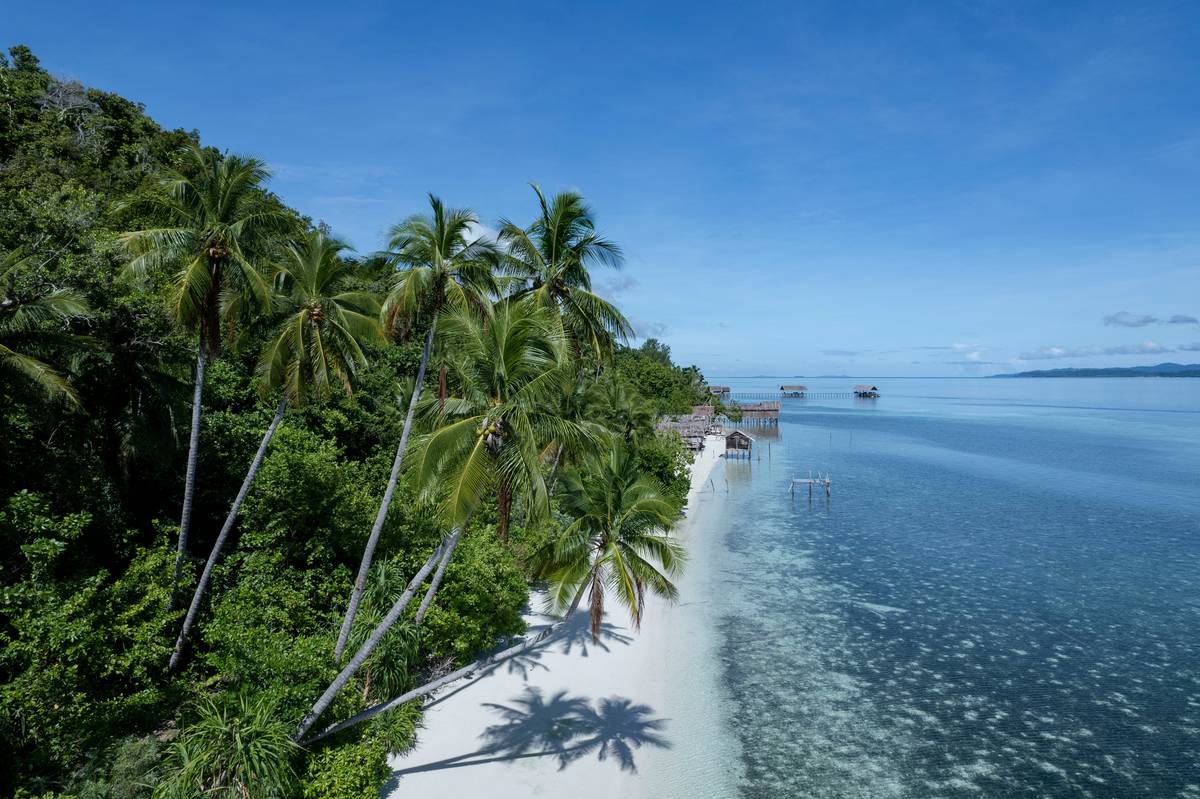
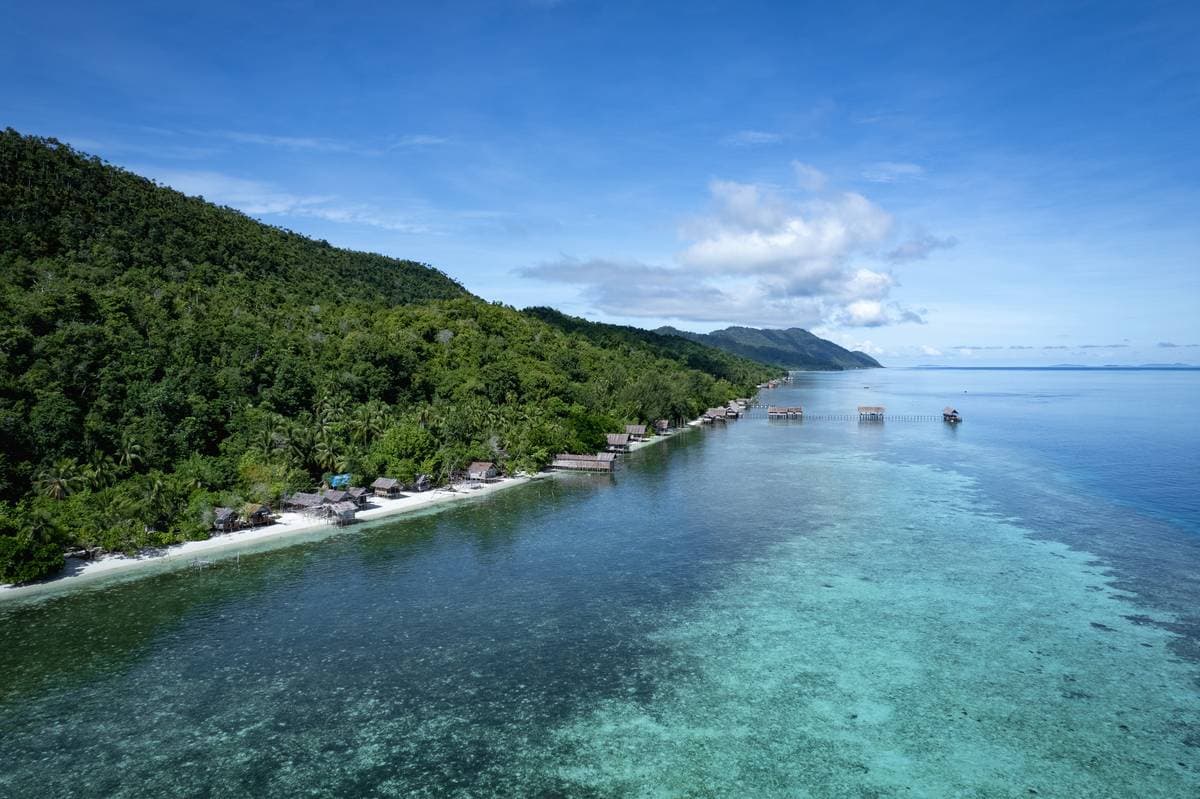
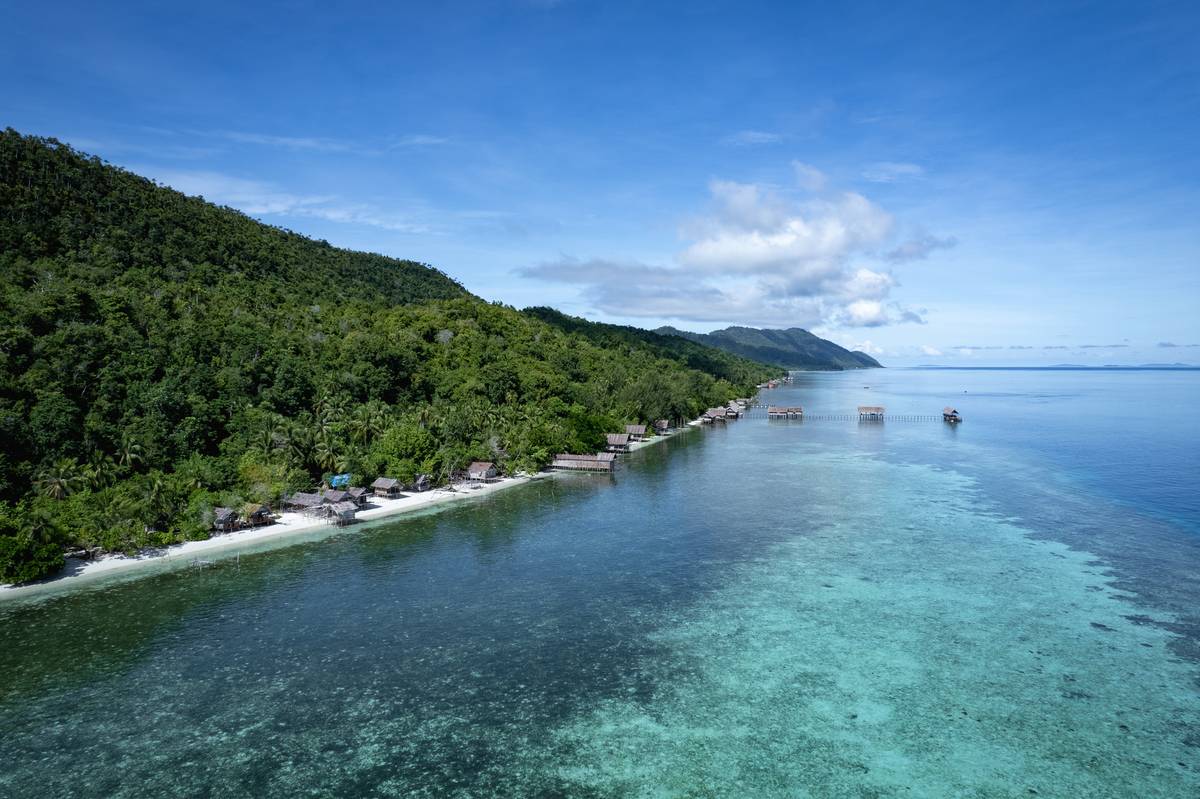
The beaches need no program. Kri Island's beaches are as good as anything in Southeast Asia, without the development and crowds. Sitting still here is not wasted time.
How to get to Raja Ampat — the full routing
The journey has four stages, and each one requires advance planning.
Stage 1: International flight to Indonesia. Your gateway options are Jakarta (CGK), Bali (DPS), or Makassar (UPG). Jakarta is the most connected. Makassar has fewer flight options but cuts an hour off the journey east.
Stage 2: Domestic flight to Sorong (SOQ). Garuda Indonesia, Batik Air, and Sriwijaya Air all serve Sorong from Jakarta and Makassar. The Garuda flight from Jakarta (GA644 or similar, schedule varies) takes approximately 5 hours. Book these segments early — Sorong capacity is limited and prices spike during Indonesian school holidays.
Stage 3: Ferry from Sorong to Waisai. The public ferry runs twice daily and takes 2–3 hours. Speedboats are faster and more expensive. Check current schedules before finalizing your arrival time — crossings are occasionally cancelled in adverse weather, and the schedule shifts around Indonesian public holidays.
Stage 4: Resort boat transfer. Most resorts in Raja Ampat include this in their package and will arrange pickup from Waisai upon arrival. Communicate your exact arrival time in advance. Miss the coordinated transfer and you're arranging a private speedboat at your own expense.
Total journey time from New York: approximately 30–36 hours door-to-door, depending on routing and connection times. This is why the long-haul segments matter enormously — a proper business class bed on the transoceanic leg is not a luxury, it's functional.
Where to stay in Raja Ampat
Accommodation here sorts itself naturally by what you're trying to do. Unlike other Indonesian destinations, there are no international five-star hotel brands in Raja Ampat. The premium tier is eco-resort, and it's genuinely premium.
Papua Explorers Resort is the closest thing to luxury in the traditional sense: overwater bungalows, an all-inclusive diving package, fine dining, and spa services. Nightly rates in peak season run $500–$800 per person including meals and diving.
Sorido Bay Resort on Kri Island is our preference for serious divers. The proximity to Cape Kri is unmatched, the bungalows are well-appointed, and the service is personalized in the way that only small resorts can manage. Guests here tend to do 4–5 dives per day without burning out.
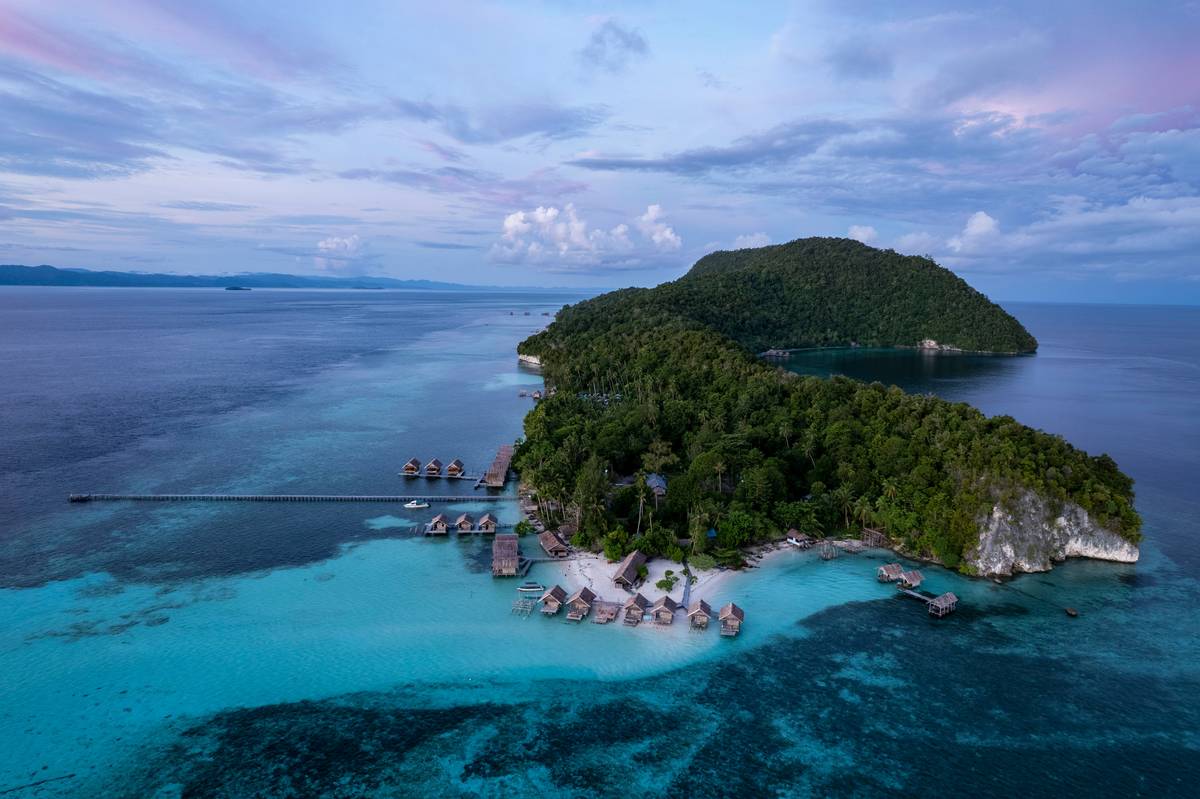
Waiwo Dive Resort on Waigeo offers comfortable mid-tier accommodation with competent dive operations. Good value for the quality.
Kri Eco Resort is rustic, sustainable, and positioned within swimming distance of excellent reef. Wooden bungalows, no air conditioning, generator power only — this is a deliberate choice, not a shortcoming.
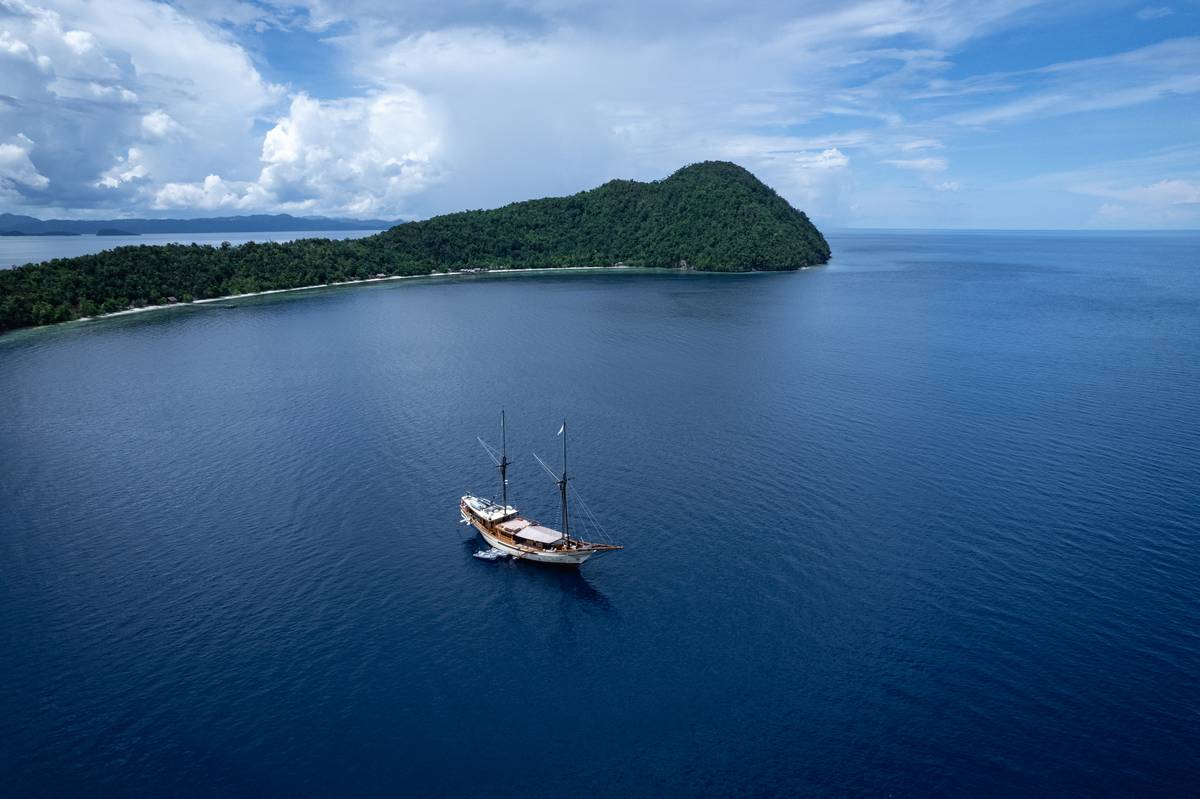
Liveaboards deserve serious consideration for anyone with more than 10 days and a focus on diving. The ability to reposition overnight and wake up at remote sites that day-trip boats can't reach justifies the cost premium. Expect $400–$900 per person per night on reputable vessels; the top-end liveaboards offer private cabins, proper dining, and experienced divemasters.
Yenbuba Homestay and similar local homestays across the smaller islands provide the most authentic cultural experience in the archipelago. Basic rooms, local meals, and direct contact with communities who've been living on these islands for generations. If your group includes non-divers who'd rather have a human experience than a marine one, homestay + kayak is the combination.
The rule here: book 6–9 months in advance for peak season (October–April). Premium properties fill completely, and options narrow fast after August.
What to know before you arrive
A few things that matter more in Raja Ampat than almost anywhere else:
- Cash is essential. Credit cards are accepted at the major resorts and nowhere else. ATMs exist in Sorong and essentially nowhere in the islands. Arrive with sufficient Indonesian Rupiah (IDR) — withdrawing from a Sorong ATM before the ferry crossing is not optional
- Reef-safe sunscreen only. Standard sunscreens containing oxybenzone or octinoxate are genuinely harmful to the coral ecosystems here. This isn't performative environmentalism — it's basic respect for a place that can't be replaced
- Connectivity is intermittent. Some properties near Sorong, including parts of Kri Island, have surprisingly good 4G or 5G coverage. Remote islands have none. Plan accordingly and inform contacts of your itinerary before departure
- Waterproof everything. Every bag transfer involves boats. Assume water. Dry bags for cameras, documents, and anything electronic
- Pack your own snacks and medications. Small islands have minimal provisioning. Bring what you need from Sorong or before departure
- Littering is unacceptable. Waste management infrastructure in the islands is minimal. Pack out everything you pack in. This is a non-negotiable if you have any interest in the place remaining what it currently is
The dry season — October through April — is when conditions are best for diving and island exploration. Seas are calmer, visibility peaks, and the weather cooperates. May through September brings swells and reduced visibility on many sites, though Misool in the south is sometimes sheltered when the north is rough.
Planning your trip with CEOFLIGHTS
Raja Ampat demands a properly planned journey. The logistics are more complex than a standard Asia trip, the in-destination experience is unlike anywhere else, and the long-haul component is significant enough that the cabin you're sitting in will genuinely affect how you arrive.
CEOFLIGHTS specializes in exactly this type of routing — multi-segment, mixed-carrier itineraries to remote destinations where the premium cabin experience matters most. Top rated on Trustpilot and ASTA-accredited (member #900292735), we work with consolidator contracts on routes through Singapore, Doha, Hong Kong, and Abu Dhabi that bring business class fares well below what you'd find booking directly.
Current business class pricing from New York to Jakarta via Singapore Airlines runs around $8,400–$11,000 retail. Our contracted rates on the same routing regularly come in at $6,200–$8,500 depending on travel dates. Call (888) 851-6897 and tell us your routing, dates, and connecting hub preferences. We'll find the best available product at the best available price — and we know which seats to book on which aircraft.
Raja Ampat will still be extraordinary when you arrive. The goal is to make sure you arrive ready to experience it.