Quick summary
Only a handful of the world's 1,400 dive destinations genuinely justify crossing oceans, but reaching them often requires grueling 20 to 30-hour transits. Arriving rested is essential; by securing consolidator business class fares, you can cut retail prices of $7,000–$11,000 down to $4,200–$6,500 for locations like Raja Ampat, leaving more budget for your liveaboard.
There are roughly 1,400 recognized scuba diving destinations on this planet. Most of them are not worth the jet lag.
The ones that are — the handful of places where the underwater world genuinely stops your breath — tend to require serious travel. Long-haul flights, layovers through Singapore or Doha, the odd puddle-jumper at the end. If you're going to fly 20 hours to drop into the blue, you should at least arrive rested, with your gear checked and a flat bed behind you.
This is a list of the ten dive destinations that genuinely justify that investment, written for people who fly business class and want to know exactly how to get there — and what awaits them when they do.
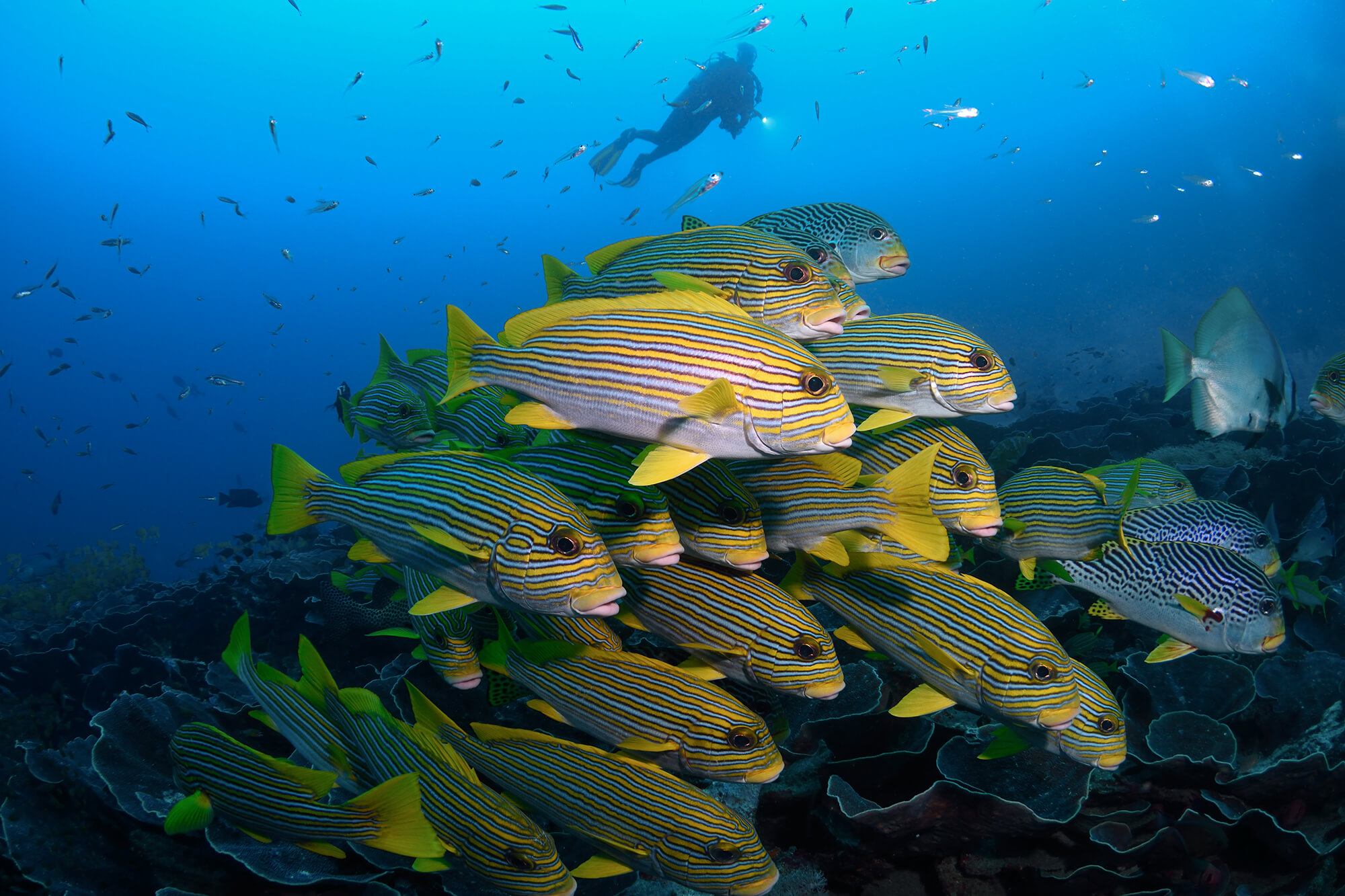
Raja Ampat, Indonesia
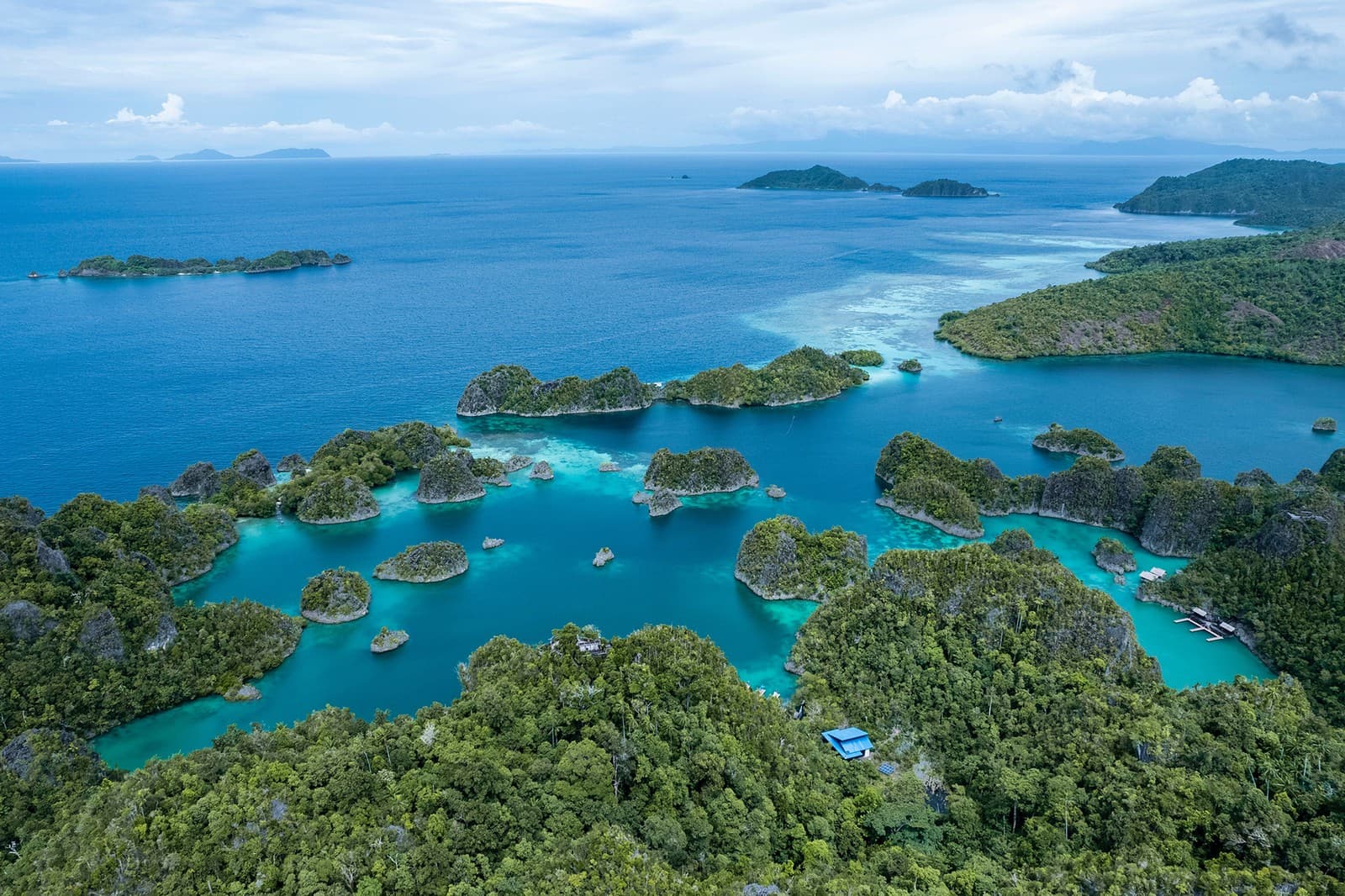
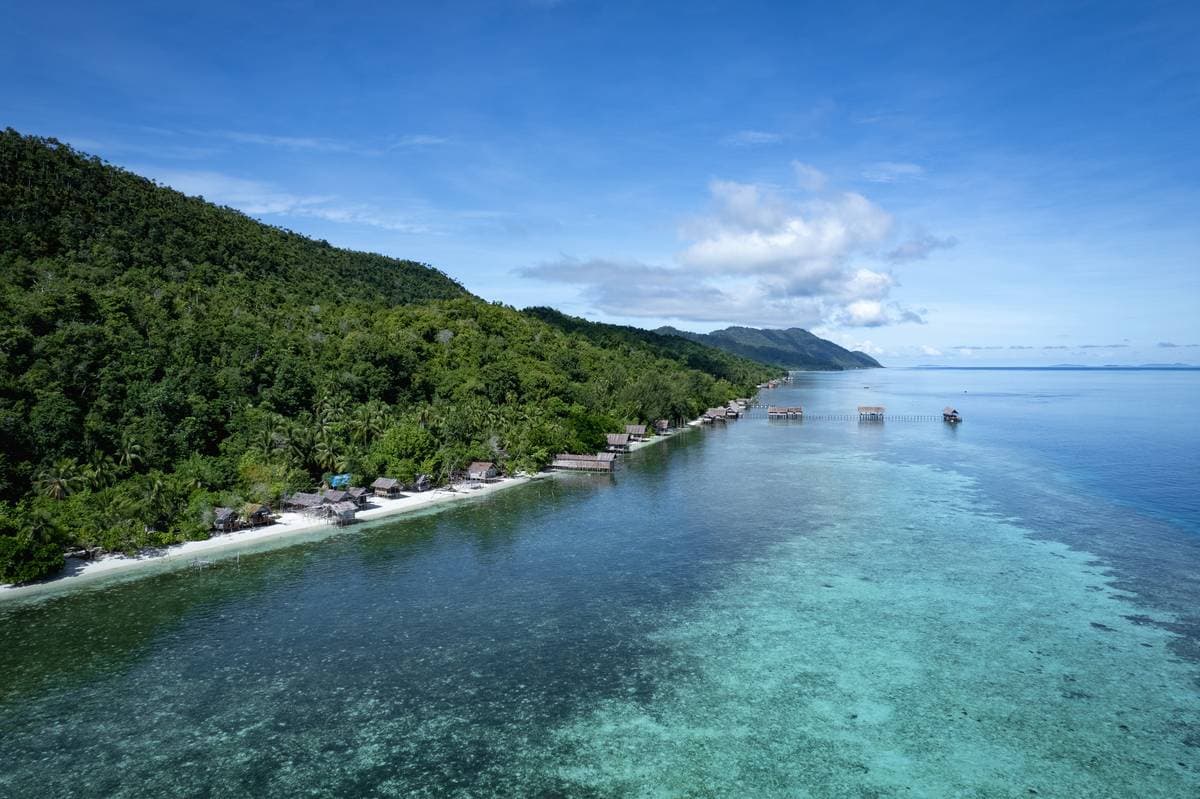
Raja Ampat is the benchmark. If you're serious about diving and you haven't been, everything else is a consolation prize. This Indonesian archipelago — 1,500-plus small islands hanging off the northwest tip of West Papua — sits at the center of the Coral Triangle and holds the highest recorded marine biodiversity on earth. That's not marketing copy. Scientists have counted more fish species per square meter here than anywhere else on the planet.
Getting here from the US or Europe requires commitment. From New York or London, you're routing through a major Asian hub — Singapore (SIN) on Singapore Airlines, Dubai (DXB) on Emirates, or Doha (DOH) on Qatar Airways — then connecting to Jakarta (CGK) or Bali (DPS), and finally catching a domestic Garuda or Wings Air flight to Sorong (SOQ). From Sorong, a speedboat transfer deposits you at your resort or liveaboard. The whole journey runs 24–30 hours door to door.
Qatar Airways' QSuite on the DOH–Singapore or DOH–Bali routing is the strongest business class product on this corridor — full-suite privacy, a true double bed when you're traveling with someone, and direct aisle access from every seat. Singapore Airlines' regional business class on the SIN–Sorong connection is a step down, but you'll survive a two-hour flight in anything.
Retail business class fares from the US to Sorong via these hubs typically run $7,000–$11,000. Through our airline contracts at CEOFLIGHTS, we regularly place clients on these itineraries for $4,200–$6,500 — call us at (888) 851-6897 to check current availability.
Best dive sites
Cape Kri holds the world record for fish species counted in a single dive — 374 in one pass. You'll understand why the moment you descend: a wall of trevally and barracuda so dense it blocks the light. Blue Magic, a submerged seamount, is where pelagic species congregate — reef sharks, tuna, and the bizarre wobbegong, a carpet shark that looks like a shag rug someone dropped on the reef. Manta Sandy is exactly what it sounds like: a cleaning station where manta rays queue up like jets on approach. Arborek Jetty rewards macro photographers willing to slow down.
Best time to go
October through April. Seas are calm, visibility hits 20–30 meters consistently, and manta ray encounters are almost guaranteed. Skip June and July — swells pick up and some sites become inaccessible.
Experience required
Intermediate minimum at most sites. Strong currents at Blue Magic and some offshore pinnacles demand solid buoyancy control. Open Water certification gets you in the water; Advanced Open Water gets you to the good stuff.
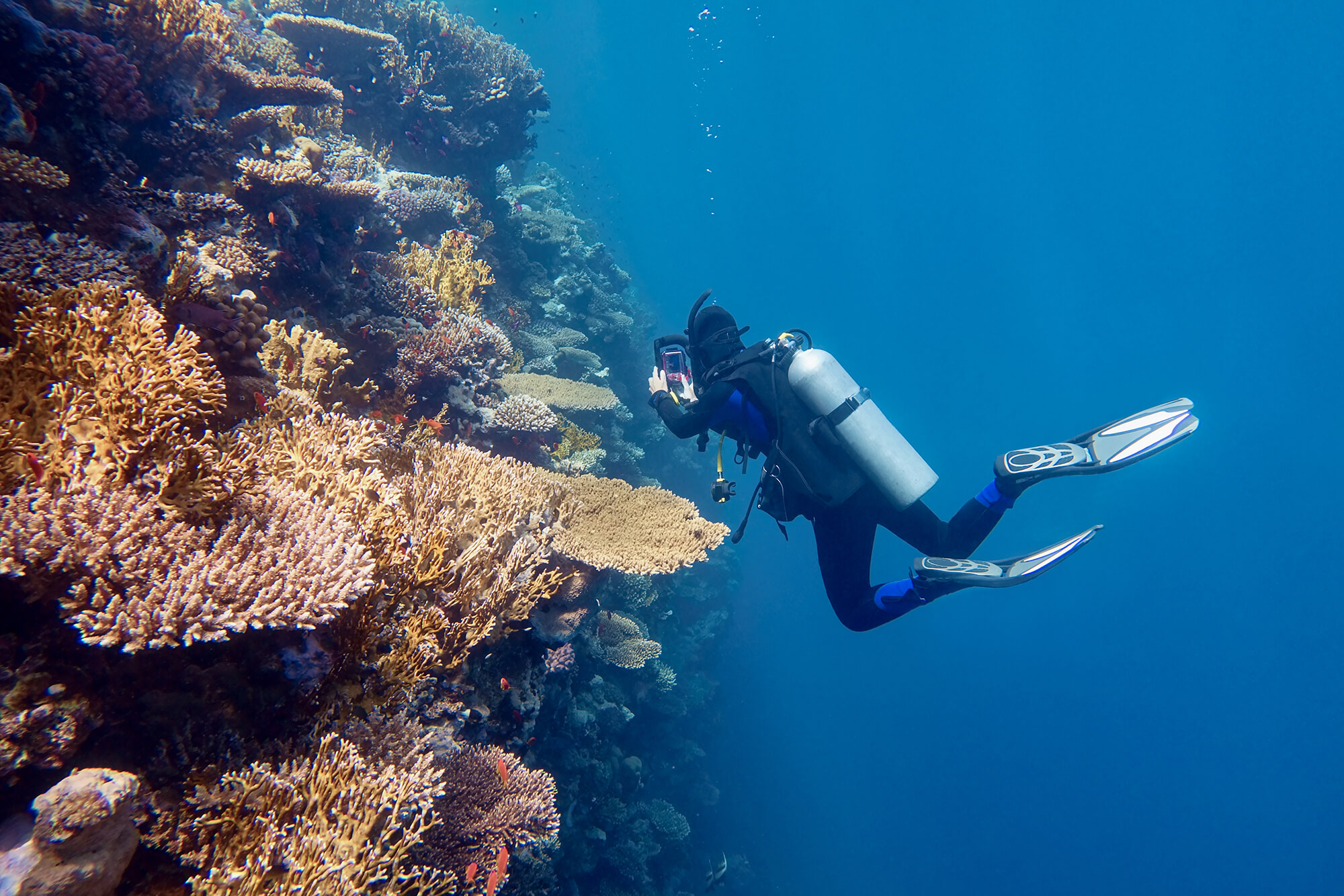
Great Barrier Reef, Australia
The Great Barrier Reef is the world's largest coral reef system — 2,300 kilometers of it running along the Queensland coast. It's a UNESCO World Heritage Site, home to 1,500-plus fish species and six sea turtle species, and it's been in the conservation headlines enough that some divers write it off. Don't. The outer reef and the Coral Sea sites remain genuinely spectacular, and the access infrastructure is the best of any destination on this list.
From the US East Coast, fly United or Qantas direct to Sydney (SYD), then connect to Cairns (CNS). Qantas' Business Suite on the transcontinental A330 between Sydney and Cairns is comfortable, if brief. From the US West Coast, Los Angeles to Sydney on Qantas (QF11) or United (UA839) puts you in a fully flat bed overnight — Qantas' Dreamliner Business suite is solid, with 23-inch wide seats and direct aisle access. From London, Qantas' Project Sunrise A380 service via Singapore into Sydney is the premium routing, or you can transit through Dubai on Emirates' Business Class with the famous Emirates bar experience on the A380 upper deck.
Retail fares from LAX to Cairns in business class run $5,500–$9,000. We've gotten clients there for $3,400–$5,200.
Best dive sites
Cod Hole, in the far north Ribbon Reefs, is where you come face to face with potato cod the size of golden retrievers — they're genuinely friendly in a way that unsettles you. The Ribbon Reefs span ten individual reef systems with minke whale encounters during their June–July migration that are among the most surreal wildlife experiences in diving. Osprey Reef, 350 kilometers offshore in the Coral Sea, delivers dramatic wall dives and reliable shark action. It requires a liveaboard commitment, but it's worth every dollar.
Best time to go
June through November. Water temperatures sit around 23–26°C, visibility is peak, and the minke whale migration runs through July. The box jellyfish season (November through May in nearshore waters) is a genuine hazard for beginners at some sites.
Experience required
The reef accommodates everyone. Cairns and the Whitsundays have gentle, shallow sites for beginners. Osprey Reef and the Coral Sea demand advanced certification and comfort with current.
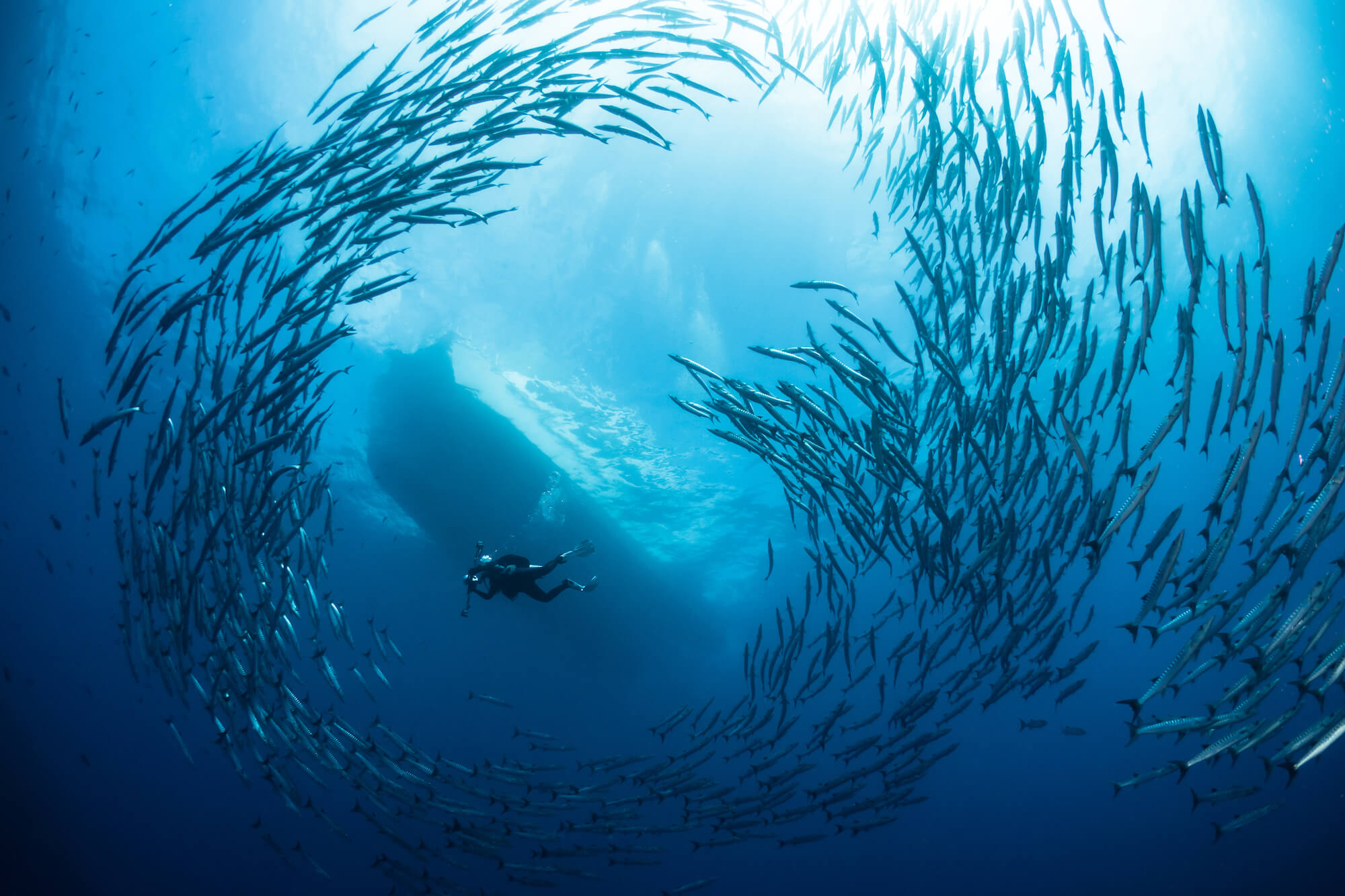
Sipadan, Malaysia
Sipadan is what happens when a limestone pillar rises from 600 meters of open ocean to just below the surface. The walls are vertical, the currents are real, and the marine life has nowhere else to go — so it concentrates here in numbers that feel almost theatrical. Permits are tightly controlled (only 120 divers per day), which keeps the experience from becoming a theme park.
Getting there from the US involves a connection through Kuala Lumpur (KUL) on Malaysia Airlines, where their Business Class seats on the A350 — 1-2-1 configuration, direct aisle access — are underrated and often significantly cheaper than the flagships. From KUL, a domestic flight to Tawau (TWU) followed by a short drive to Semporna and a boat to the islands completes the journey. European travelers often route through Dubai on Emirates into KUL.
Best dive sites
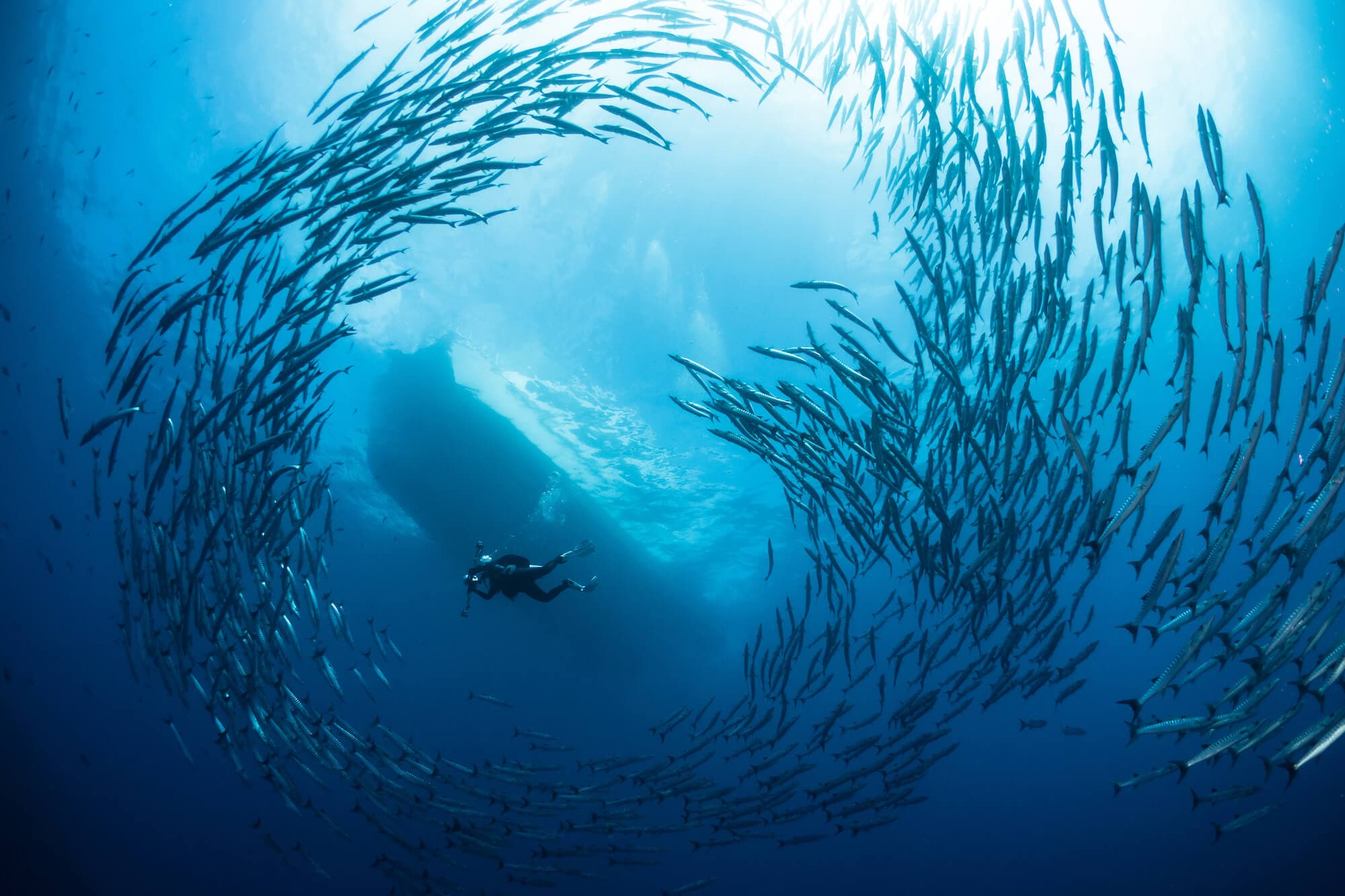
Barracuda Point is the postcard: a massive tornado of barracuda and jackfish swirling in the current, tight enough to block out the sun above you. Turtle Tomb is an underwater cave system where sea turtles rest — the viz inside is low and it's not for the claustrophobic, but it's unlike anything else in diving. South Point produces hammerheads, threshers, and white-tips with enough regularity to justify the permit price alone.
Best time to go
April through December, with July and August offering the best all-round conditions. Visibility regularly exceeds 20 meters during peak season.
Experience required
Intermediate to advanced. The currents at Barracuda Point are not subtle. Advanced Open Water is the practical minimum; drift diving experience is a genuine asset.
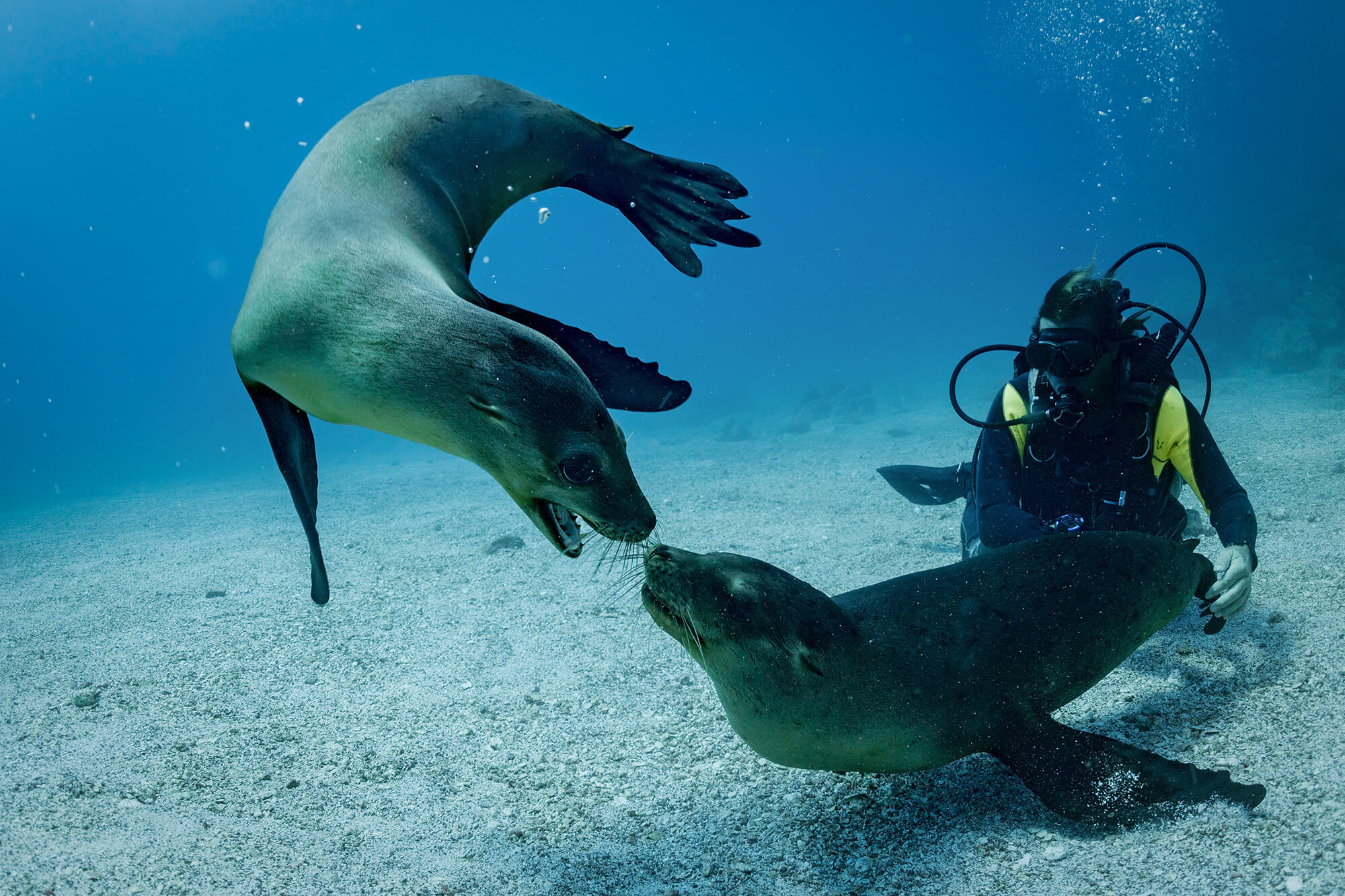
Galápagos Islands, Ecuador
The Galápagos operates on its own logic. The wildlife here — marine iguanas, sea lions, flightless cormorants, prehistoric-looking sharks — evolved with no natural predators, which means they have no concept of fear. A sea lion pup will bite your fin to initiate play. A hammerhead will cruise within three meters and ignore you entirely. It's the most disorienting, extraordinary wildlife experience in diving, and nothing else compares.
From the US, the routing is Quito (UIO) or Guayaquil (GYE) on LATAM or American, then a domestic hop to either Baltra (GPS) or San Cristóbal (SCY). Business class from Miami or New York to Quito runs on American's 777 — the Flagship Business product with fully flat seats. Retail fares hover around $3,500–$5,000; we place clients there for $2,200–$3,400. The real investment is the liveaboard or land-based diving package, which adds another $3,000–$8,000.
Best dive sites
Darwin's Arch and Wolf Island are famous for one reason: the largest aggregations of scalloped hammerhead sharks accessible to recreational divers anywhere on earth. Hundreds of them. Gordon Rocks — known locally as the "washing machine" — earns that name through currents that'll spin you if you're not paying attention, but it delivers sharks, rays, and turtles in return. Kicker Rock is more accessible and equally dramatic, with sea lions performing acrobatics around the rock formations.
Best time to go
The Galápagos divides roughly into warm season (December–May) and cool season (June–November). Warm season brings clearer water and manta rays. Cool season brings whale sharks and the hammerhead aggregations at their densest. Serious divers should come in the cool season.
Experience required
Advanced Open Water minimum, and they enforce it. Drift diving certification is strongly recommended. If you haven't logged significant drift dives before, practice somewhere else first — Gordon Rocks has turned back divers who weren't ready.
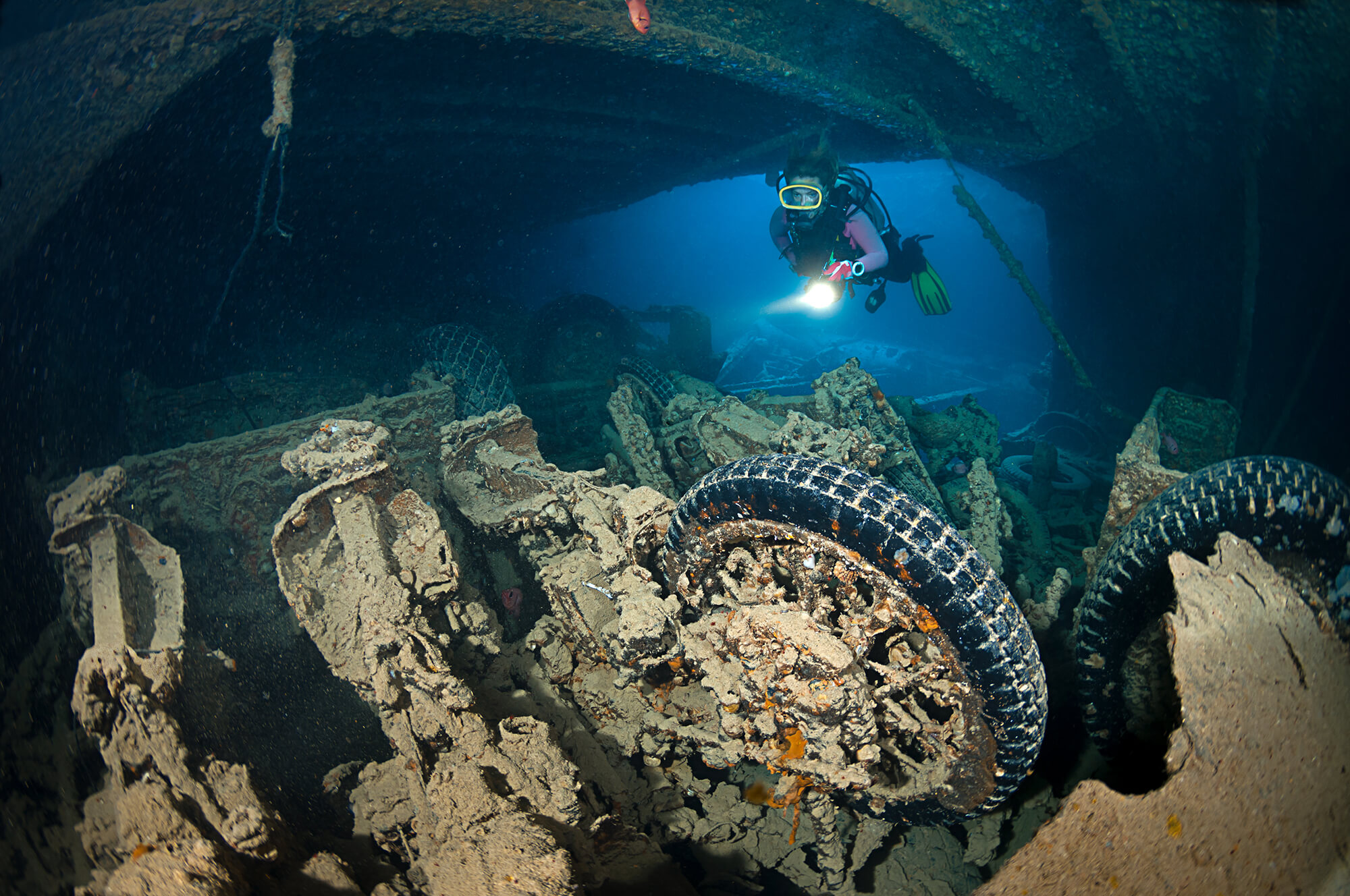
Red Sea, Egypt
The Red Sea is the world's most accessible world-class dive destination. Sharm El Sheikh alone has more than 50 operators, Hurghada is a budget dive hub, and the infrastructure from Cairo is mature enough that you can organize a week-long liveaboard with 48 hours' notice. None of that convenience diminishes what's underwater. The Thistlegorm is one of the greatest wreck dives on the planet, full stop.
From the US, most travelers route through a European hub — London Heathrow on British Airways into Cairo, or Frankfurt on Lufthansa into Sharm. BA's Club Suite on the JFK–LHR leg has become genuinely good since they upgraded their long-haul fleet — direct aisle access, a proper door, and a mattress pad that makes the transatlantic crossing comfortable. From LHR to Sharm (SSH), you're on a short-haul narrowbody in economy, so don't romanticize it. European travelers have the advantage of short direct flights from most major cities.
Best dive sites
The Thistlegorm sits 40 kilometers from Sharm El Sheikh in 30 meters of water. A British WWII cargo ship sunk by Heinkel bombers in 1941, it still holds its cargo: BSA motorcycles, Bedford trucks, Lee-Enfield rifles, and railroad cars. It's a museum you can swim through. Ras Mohammed National Park has among the most dramatic reef walls in the Red Sea, with visibility regularly exceeding 30 meters. Elphinstone Reef, a finger of reef in the open ocean near Marsa Alam, delivers oceanic whitetip sharks reliably. The Brothers — two isolated islands 70 kilometers offshore — are liveaboard-only and produce thresher sharks at dawn.
Best time to go
April through October for warmth and visibility. November through March is still diveable and significantly less crowded — worth considering if you hate sharing a buoy line.
Experience required
The Red Sea works for everyone. Beginners will do fine around Sharm and Hurghada. The Brothers and Elphinstone are for advanced divers only — the currents at Elphinstone are famous for their unpredictability.
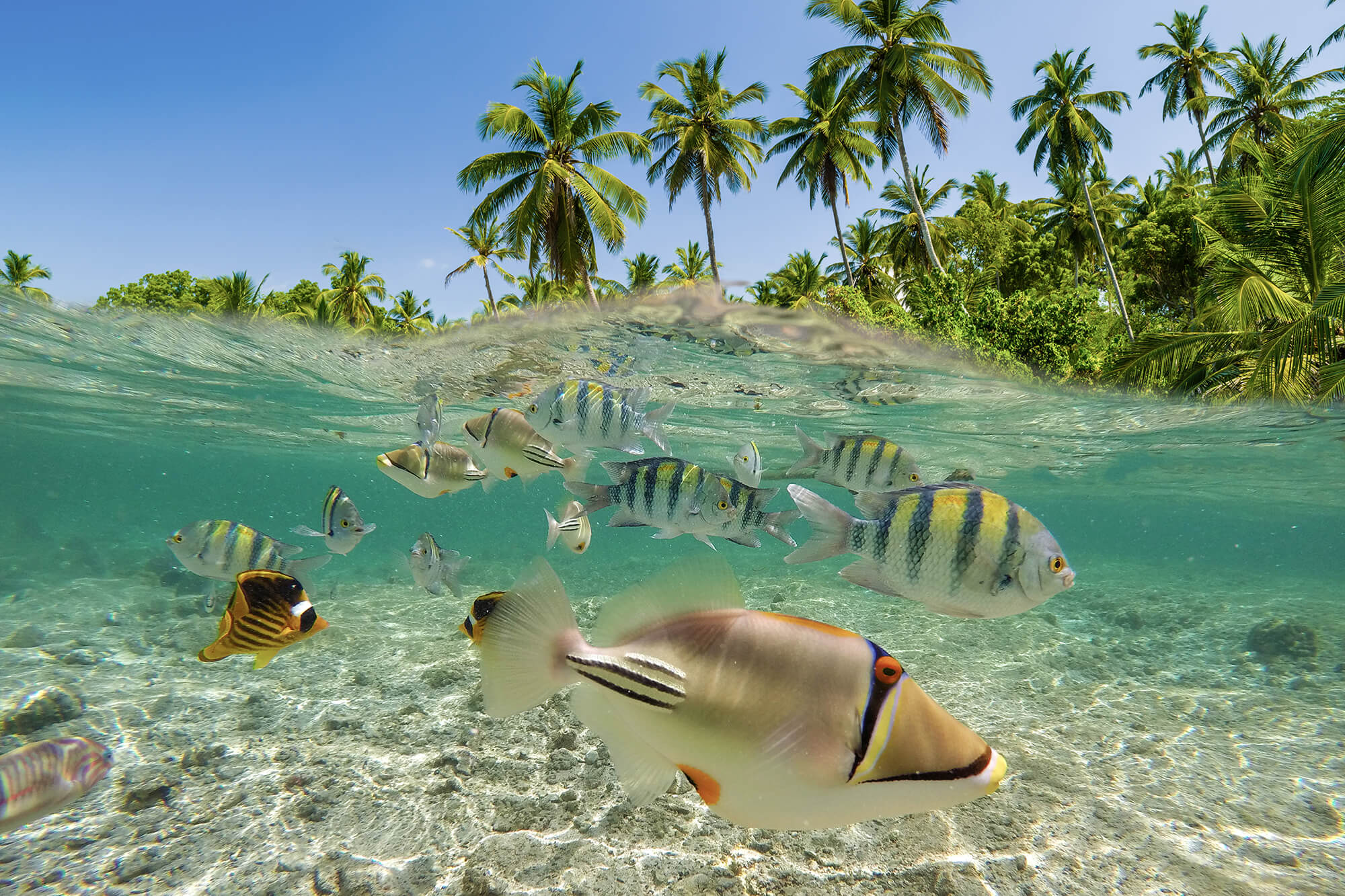
Bonaire, Caribbean
Bonaire's secret is simplicity. The island passed a marine protection ordinance decades before anyone else thought to, and the reef running the length of its western coast is in better shape than almost anything in the Caribbean. You don't need a boat for most dives. You drive to the site, gear up, walk in, and dive. No briefings, no divemasters counting heads, no waiting.
Getting there from the US is straightforward — direct flights from New York (JFK) and Houston (IAH) on American and United, with regional connections from Miami. These are relatively short routes (3–4 hours), and business class on the domestic-gauge jets is a standard lie-flat or recliner, not a premium long-haul product. The upside: no 20-hour journey required. European travelers often connect through Curaçao (CUR) or Amsterdam.
Best dive sites
Salt Pier is the surprise: the pilings are coated in corals and sponges, and schools of fish pack the structure so tightly it looks artificial. Karpata, on the wild north coast, has wall diving that holds its own against anything in the region. Hilma Hooker — a drug-running cargo ship sunk in 1984 at 30 meters — is an excellent wreck accessible to intermediate divers. 1,000 Steps is misnamed (there are 67 steps) but genuinely rewards the entry effort with pristine coral gardens and eagle rays patrolling the slope.
Best time to go
April through November, when trade winds calm and conditions are most reliable. That said, Bonaire dives year-round better than almost any Caribbean destination.
Experience required
Genuinely open to all levels. The shore-diving format means beginners can take their time without feeling rushed. Advanced divers will find enough depth and current at the north coast sites to stay engaged.
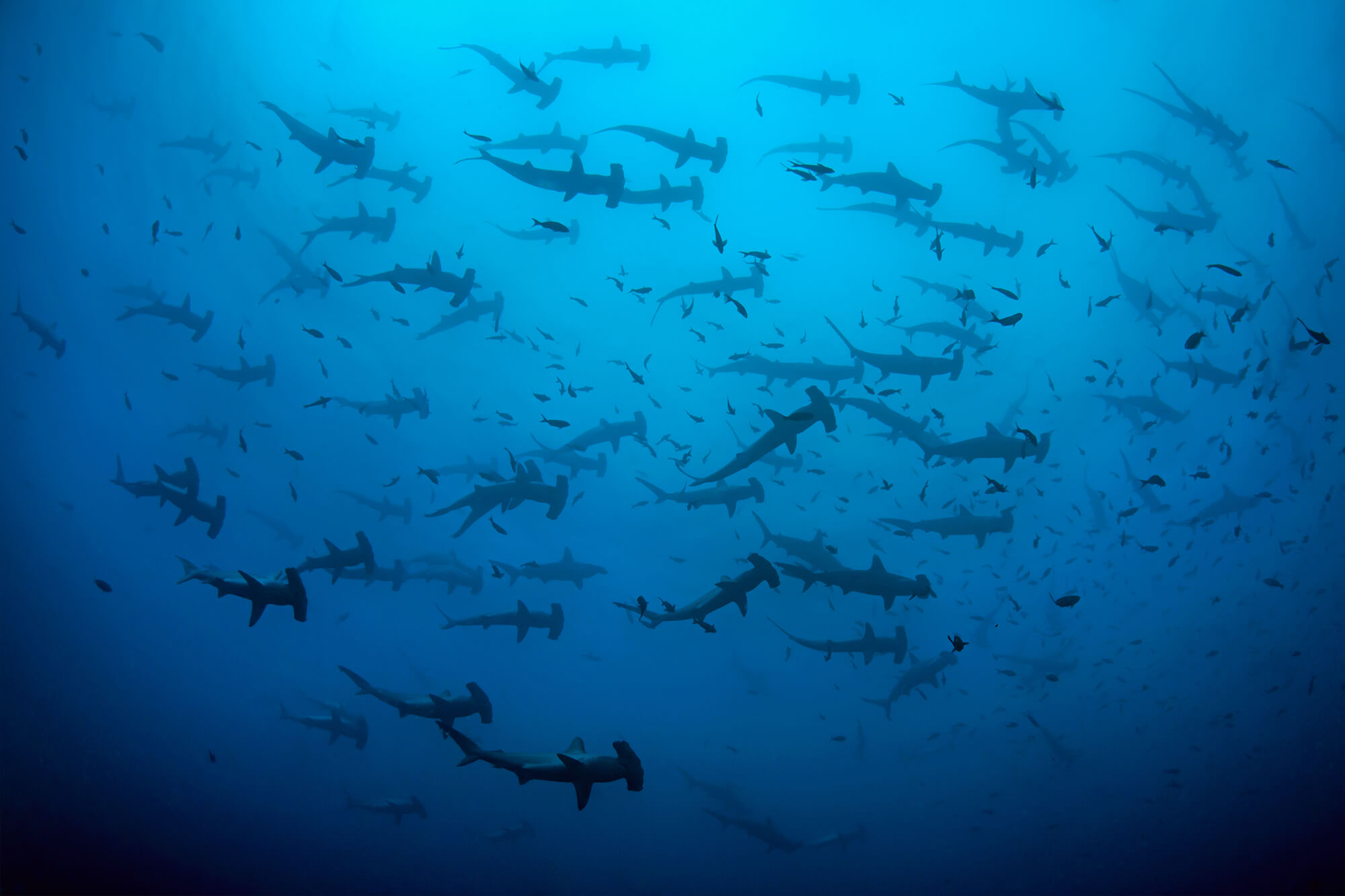
Cocos Island, Costa Rica
Cocos Island is not convenient. It's 550 kilometers off the Pacific coast of Costa Rica, accessible only by a 36-hour liveaboard crossing. There's no other way there. The island is uninhabited, the weather is unpredictable, and the diving conditions can be demanding. Go anyway.
The hammerhead aggregations at Bajo Alcyone are as good as anything the Galápagos offers, and the silky sharks at Punta Maria form walls that block your entire field of vision. The visibility is not always perfect — Cocos sits in nutrient-rich water that clouds things up — but what's in that water is extraordinary.
From the US, fly into San José (SJO) on American, United, or Delta, then make your way to Puntarenas for the liveaboard departure. The San José routing is a 5–6 hour flight from most US gateways, and business class on these routes is standard domestic-style recliner seating. The real premium experience is the liveaboard vessel itself — operators like the Undersea Hunter Group or Okeanos Aggressor run the itinerary, typically 9–12 night trips starting around $6,000 per person.
Best dive sites
Bajo Alcyone is the headline: scalloped hammerheads gather at cleaning stations here in numbers that make your dive computer irrelevant — you forget to check it. Dirty Rock delivers white-tip reef sharks in quantities so absurd that the sandy bottom looks like it's moving. Dos Amigos Grande features a submerged archway packed with marine life so dense it requires stopping to process. Punta Maria is where the strong currents concentrate Galápagos and silky sharks — not a dive for the unconfident.
Best time to go
December through May for calmer seas and better visibility. June through November brings rougher crossing conditions but peak pelagic activity — if hammerheads are the priority, the trade-off is worth it.
Experience required
Advanced Open Water minimum, with logged drift diving experience. Liveaboard comfort is essential since that's the only way to access the island. First-time liveaboard divers should gain experience elsewhere before committing to a Cocos trip.
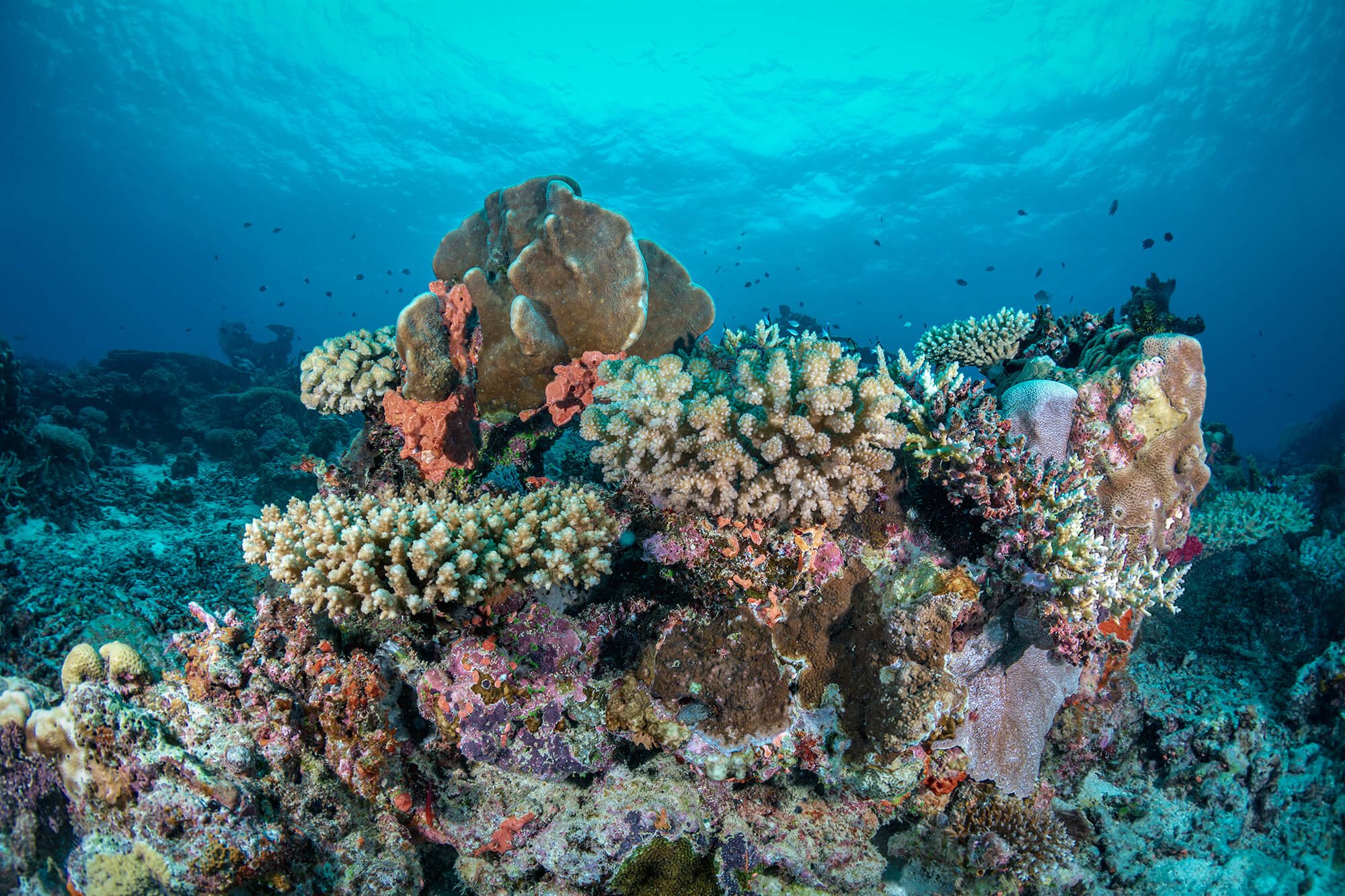
Fiji, South Pacific
Fiji has earned the "Soft Coral Capital of the World" designation through sheer profusion. The reefs here — particularly in the Somosomo Strait and around Beqa Lagoon — are smothered in soft corals of colors that don't look real in photographs and somehow look more real underwater. It's the kind of diving that doesn't demand perfect visibility or epic pelagic encounters. The reef itself is the spectacle.
From the US West Coast, Fiji Airways flies direct from Los Angeles (LAX) to Nadi (NAN) — roughly a 10-hour flight. Their Business Class on this route is a solid product with lie-flat seats, not the cutting-edge of aviation engineering, but comfortable enough for the crossing. From the US East Coast or Europe, connections through Auckland or Sydney on Air New Zealand or Qantas work well. Air New Zealand's Business Premier on the long-haul routes — reverse-herringbone seats, wide enough to sleep across — is excellent and often priced reasonably through consolidators like CEOFLIGHTS (top rated on Trustpilot, ASTA-accredited, member #900292735). Retail on LAX–NAN in business runs $4,500–$7,000; our consolidated pricing typically comes in at $2,800–$4,500.
Best dive sites
The Great White Wall in the Somosomo Strait is the defining Fiji dive: a vertical drop-off coated entirely in white soft corals, which only appear fully extended in the cooler, deeper water below the thermocline. Descending through the thermocline into that wall is an image that stays with you. Beqa Lagoon runs a shark dive that puts you in the water with bull sharks, nurse sharks, and reef sharks simultaneously — managed, conducted twice daily, and significantly more thrilling than you expect even when you expect it. The Namena Marine Reserve, with its documented 1,000-plus fish species, is the reef photography site on this island.
Best time to go
May through October — the dry season. Visibility is best, sea conditions are cooperative, and manta ray sightings pick up around the Yasawa Islands.
Experience required
Fiji is welcoming to all levels. Beginners can handle most Beqa Lagoon sites and the protected reef systems around the main islands. The Great White Wall involves a thermocline dive to around 30 meters and requires intermediate skills minimum.
Mexico
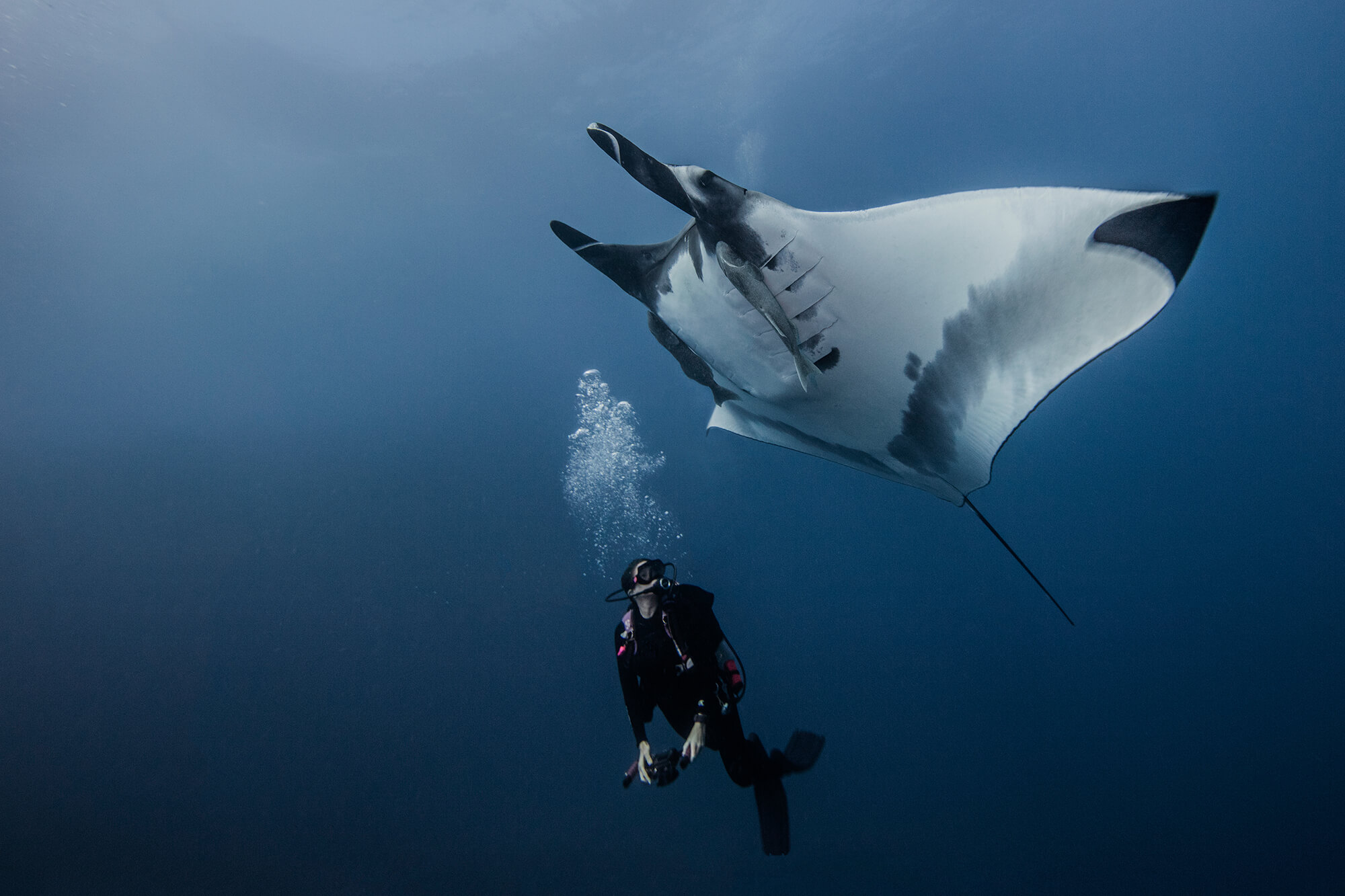
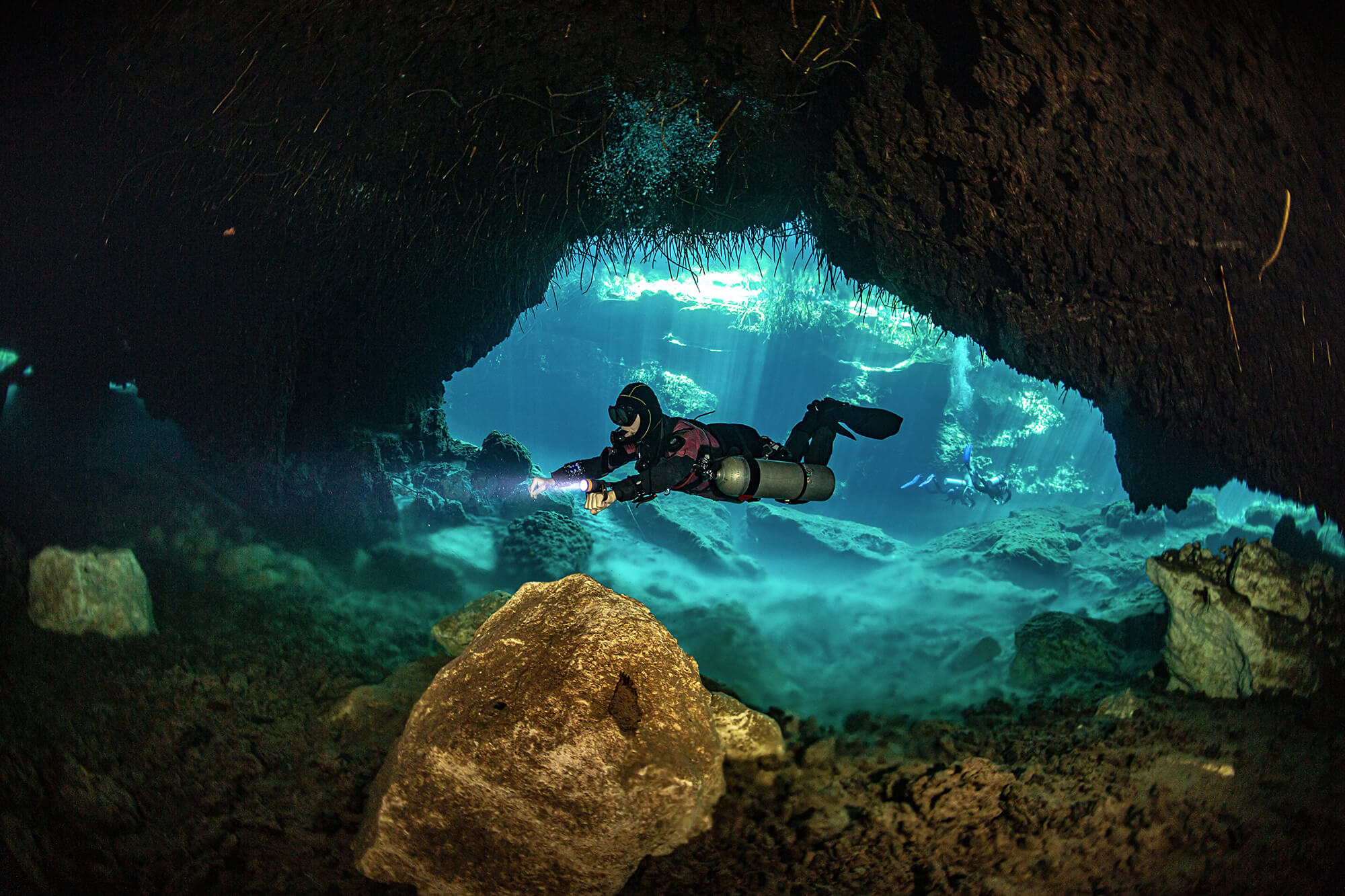
Mexico is the only destination on this list where you can have genuinely world-class diving on both a Caribbean coast and a Pacific coast — within the same country. The cenotes of the Yucatán Peninsula are a category of their own: freshwater cave systems with visibility measured in the hundreds of meters and geological formations that look like CGI. Cozumel's reef system is outstanding. The Sea of Cortez is marine biodiversity on a scale that rivals anything in the Pacific. And Socorro Island, 400 kilometers offshore, delivers manta ray encounters as good as any in the world.
From the US, access couldn't be more straightforward. American, United, Delta, and Aeromexico all fly business class into Cancún (CUN), Mexico City (MEX), and Los Cabos (SJD). From New York to Cancún in business class on American, retail runs $1,800–$3,500. We bring that to $1,200–$2,200 regularly. European travelers connect through Mexico City from most major hubs. Aeromexico's business class on their 787 transatlantic routes — called Premier — is an underrated product with lie-flat seats and surprisingly good catering.
Best dive sites
The cenotes of the Riviera Maya are unlike any diving experience elsewhere on the list. Dos Ojos, Gran Cenote, Carwash — the names are unglamorous, the diving is extraordinary. Visibility runs 80–100 meters in some systems, and the light columns that penetrate from the surface turn the cave formations into something from another world. Cozumel, accessed by ferry from Playa del Carmen, sits atop the Mesoamerican Barrier Reef and delivers drift diving in crystal-clear Caribbean water through coral formations that remain in excellent health. The Sea of Cortez — operating from La Paz or Loreto — produces sea lions, whale sharks (seasonally), and hammerheads. Socorro Island is liveaboard-only and puts giant oceanic manta rays in water so clear you can watch them banking toward you from 30 meters away.
Best time to go
For cenotes and the Caribbean coast: November through April, when visibility peaks and conditions stabilize. For the Pacific coast, Sea of Cortez, and Socorro: November through May, with whale shark season running November through March around La Paz.
Experience required
Mexico genuinely does cater to every level. Cenotes around Tulum have guided beginner options in open sections; deeper cave systems require cavern or full cave certification. Socorro and the offshore Sea of Cortez sites require advanced certification and drift experience.
French Polynesia
French Polynesia is where overwater bungalows meet serious pelagic diving, which is a combination not many places can offer. Bora Bora handles the luxury accommodation brief as well as anywhere on earth. Rangiroa and Fakarava handle the diving brief with equal authority — passes that funnel sharks and dolphins in numbers that require multiple dives to fully believe.
Getting to French Polynesia from the US West Coast means a direct flight from LAX or SFO to Papeete (PPT) on Air Tahiti Nui or Air France. Air Tahiti Nui's Poerava Business — their long-haul business class — is a capable product with flat beds, though the cabin is smaller and the routing is longer than some alternatives. Air France's route from LAX via Paris (CDG) puts you in their excellent Business Class cabin (the long-haul seat, not the regional one) with a genuine bed and direct aisle access. From Europe, Air France's CDG–PPT service is the natural routing, and their business cabin on that run is among the better products on any South Pacific route.
Retail business class from LAX to Papeete runs $5,000–$8,500. Through CEOFLIGHTS, clients consistently reach French Polynesia for $3,200–$5,500. Call (888) 851-6897 to get current pricing on this corridor — availability shifts quickly.
Best dive sites
Tiputa Pass in Rangiroa is the signature dive: a narrow channel where the tide pushes you through at drift-diving speed while grey reef sharks, dolphins, and schools of jack swirl around the current line. You're not really swimming — you're being delivered. The Coral Gardens in Tikehau are among the most pristine atoll reefs remaining in the Pacific, with lemon sharks, turtles, and the kind of hard coral coverage that the more-visited destinations can't match. Manta Ray Alley in Bora Bora is exactly what the name promises — consistent manta encounters in accessible conditions. The underwater caves around Tahiti are for the experienced and adventurous; low viz, tight passages, and dramatic formations.
Best time to go
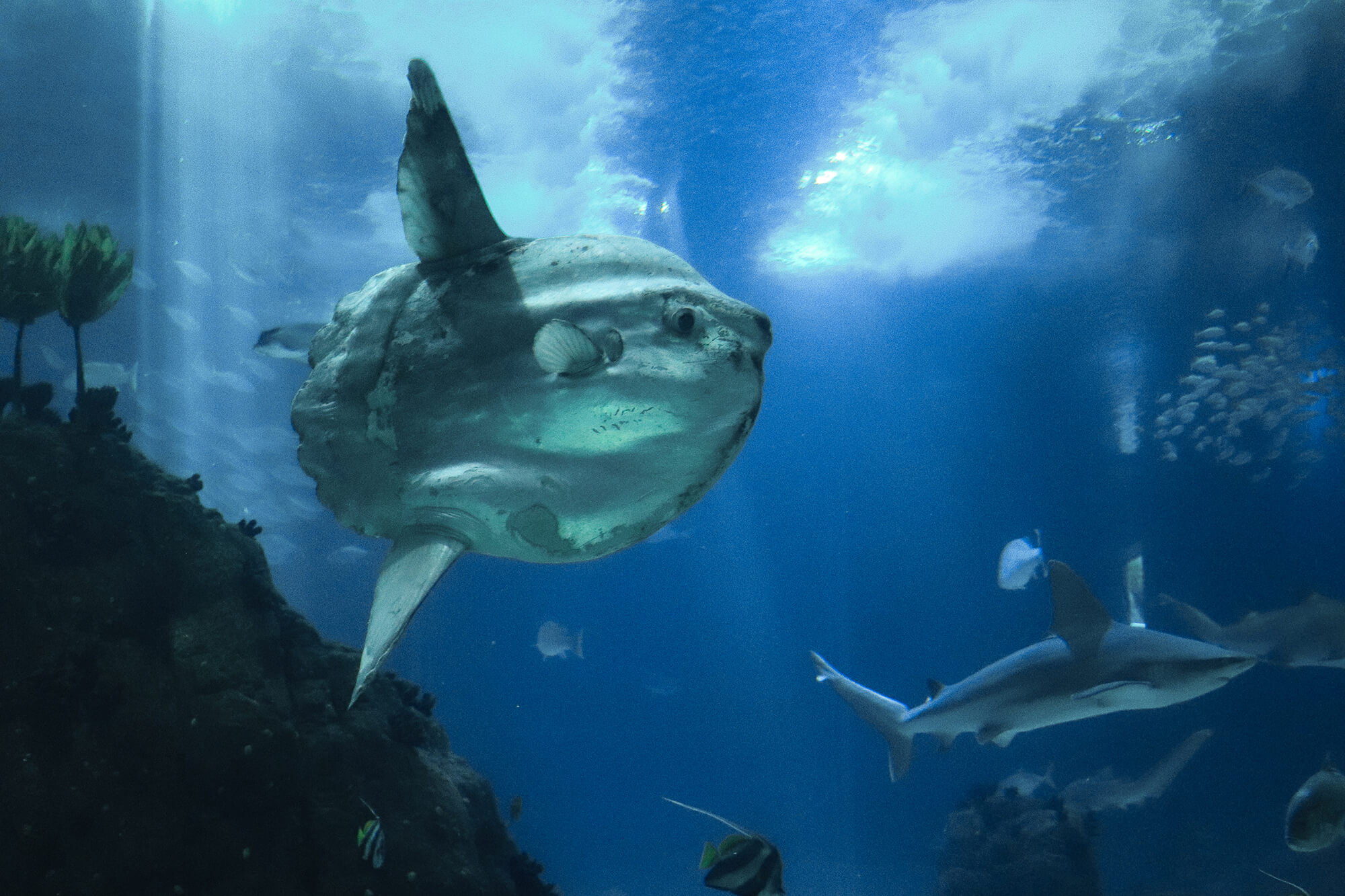
April through October. The dry season delivers excellent visibility, calm lagoon conditions, and increased sunfish (Mola mola) sightings between July and October — one of the stranger and more magnificent encounters in Pacific diving.
Experience required
The full range. Bora Bora's lagoon dives are suitable for beginners; Tiputa Pass requires intermediate skills minimum and active management of the current. The Tahiti cave dives are advanced-only.
Getting the flights right
Every destination on this list requires a significant international flight, and arriving exhausted undermines the investment you've made in the trip. There's no version of a great dive day that starts with a night in economy across the Pacific.
The routing decisions matter. For Raja Ampat and Sipadan, Qatar's QSuite routing via Doha is genuinely superior to most alternatives — the sleep quality alone justifies the premium. For Australia and Fiji, Qantas and Air New Zealand offer the most logical connections with competitive consolidated pricing. For the Galápagos and Cocos Island, the short Central/South American flights are less critical — focus your premium spend on the transatlantic or transpacific leg rather than the connection.
CEOFLIGHTS specializes in exactly these routes. We're ASTA-accredited (member #900292735), top rated on Trustpilot, and our airline contracts consistently price business class fares 30–45% below published retail on the corridors that matter for this list. The savings aren't marginal — on a Raja Ampat or French Polynesia routing, the difference between retail and our consolidated fare can fund half the liveaboard.
Call us at (888) 851-6897 before you book anything. The conversation takes ten minutes and the math usually takes care of itself.
The diving is waiting. Arrive flat.