The future of business class: what's already here and what's coming fast
Business class is being rebuilt from the ground up. Here's what savvy premium travelers should know before their next booking.
Alex Rivera8 min read
Quick summary
Business class is rapidly shifting toward enclosed private suites, Starlink satellite Wi-Fi, and emerging supersonic transit that cuts transatlantic crossings to 3.5 hours. To maximize comfort and value, prioritize modern cabin products like Qatar's QSuite and book through consolidated airline contracts to save 30–60% off standard $5,000–$15,000 retail fares.
Business class used to mean a wider seat and a hot meal. That era is over.
What airlines are building now — and in some cases have already deployed — is closer to a private studio apartment at 40,000 feet than anything that existed a decade ago. The pace of change is genuinely striking, and for frequent flyers spending $5,000–$15,000 per ticket, understanding what's available (and what's coming) is the difference between a great booking and a mediocre one.
Here's where the industry is heading, with a clear eye on what's already flying versus what's still on a whiteboard.
Fully private suites are becoming the standard, not the exception
The first-class cabin is quietly dying. Airlines figured out that passengers will pay near-first-class prices for a business class product that delivers genuine privacy — and that configuring a dedicated first section eats into revenue-generating real estate. The result is a wave of enclosed or semi-enclosed business class suites that have absorbed the best features of old-school first class.
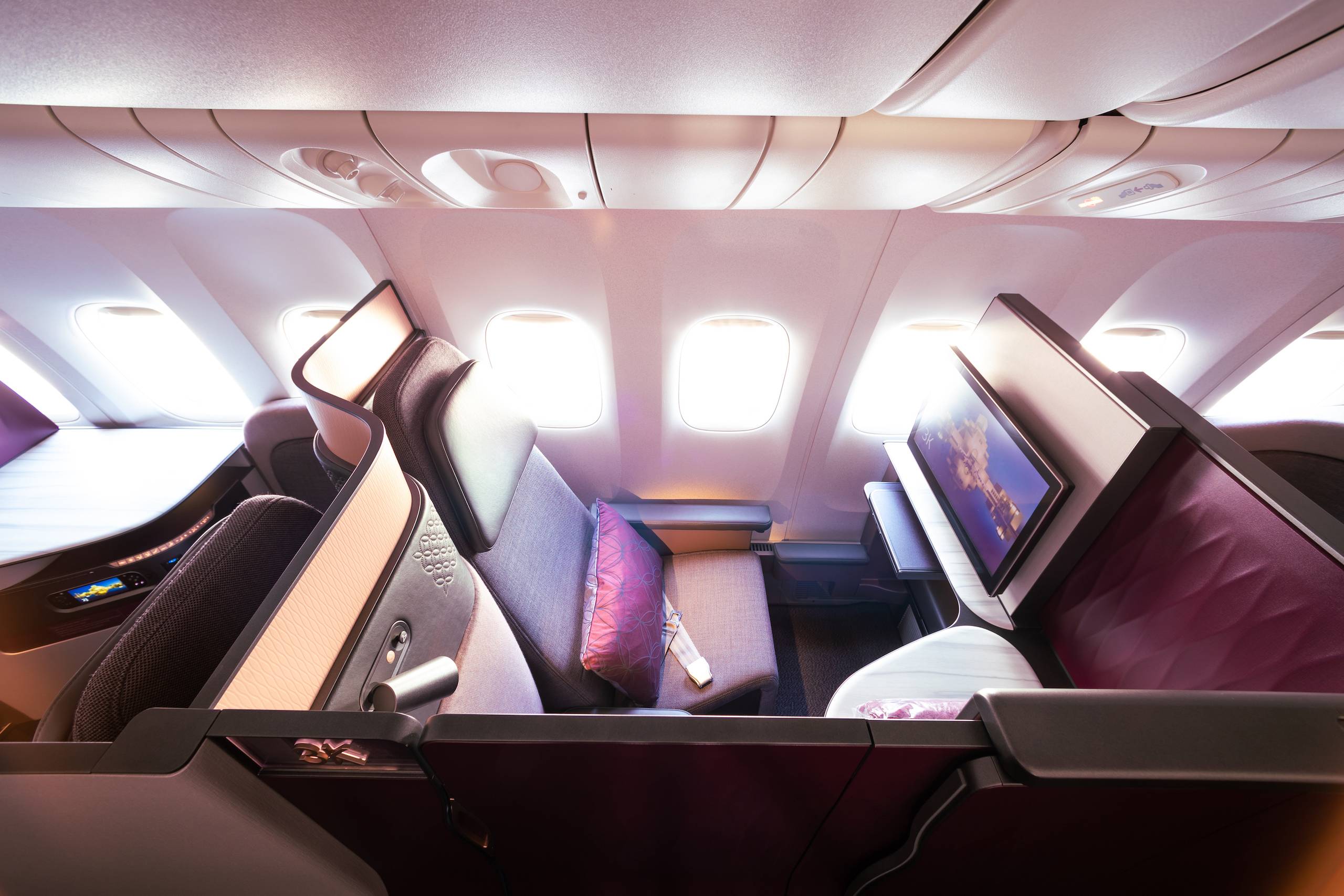
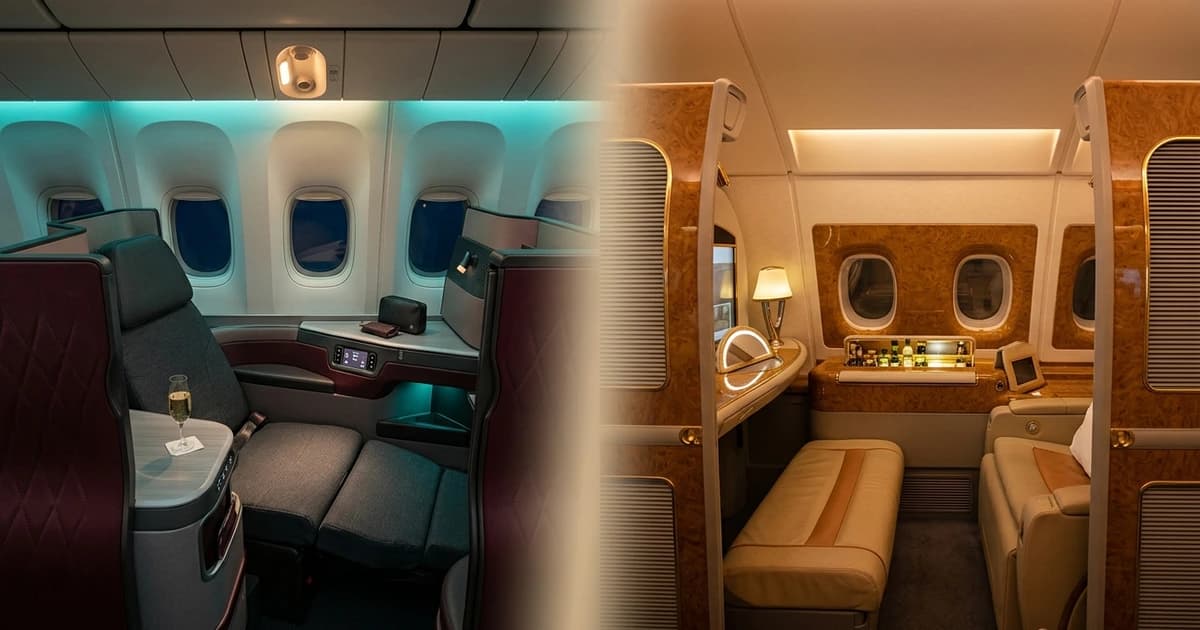
Qatar Airways' QSuite remains the benchmark. Its 21-inch-wide seat, sliding door, and optional double-bed configuration (on select 777 and 787 routes) set a standard that most competitors are still chasing. British Airways' Club Suite, now rolling out fleet-wide on the 777 and A350, finally gave BA a competitive enclosed product after years of falling behind. ANA's "The Room" on the 777-9 is another product worth seeking out if you're transiting Tokyo.
Qatar Airways' QSuite remains the benchmark for enclosed business class products, offering 21-inch-wide seats and double-bed configurations that are now migrating from long-haul to shorter sectors like Doha to Europe.
Suites are appearing on routes you wouldn't expect
What began as a long-haul-only proposition is migrating to shorter sectors. Qatar operates QSuites between Doha and several European destinations — flights of roughly six to seven hours — meaning you can experience the full suite product on a DOH-LHR or DOH-CDG sector without committing to a 16-hour journey. JetBlue's Mint Suites have been doing something similar domestically for years: BOS-LAX or JFK-LAX in a proper enclosed suite for a fraction of what international business class costs.
This matters for how you route. If you're crossing the Atlantic, the suite experience you get on a QR flight from JFK to Doha and onward often beats a direct product on carriers that haven't refreshed their cabins. The connection is worth it.
Comfort customization has gotten genuinely sophisticated
Modern suites do more than close a door. Noise-attenuating materials built into the suite walls, independently controlled lighting that cycles through a circadian rhythm during long flights, and seat controls that let you fine-tune lumbar support, recline angle, and footrest position independently — these are standard features on leading products now. They're not gimmicks. The ability to dial in a consistent sleep environment makes a measurable difference on an 11-hour red-eye.
Connectivity has crossed the threshold from acceptable to actually good
For years, in-flight Wi-Fi was a cruel joke — slow, expensive, and unreliable enough that most experienced travelers didn't bother. That's changing fast, and the shift is largely attributable to low-earth-orbit satellite networks.
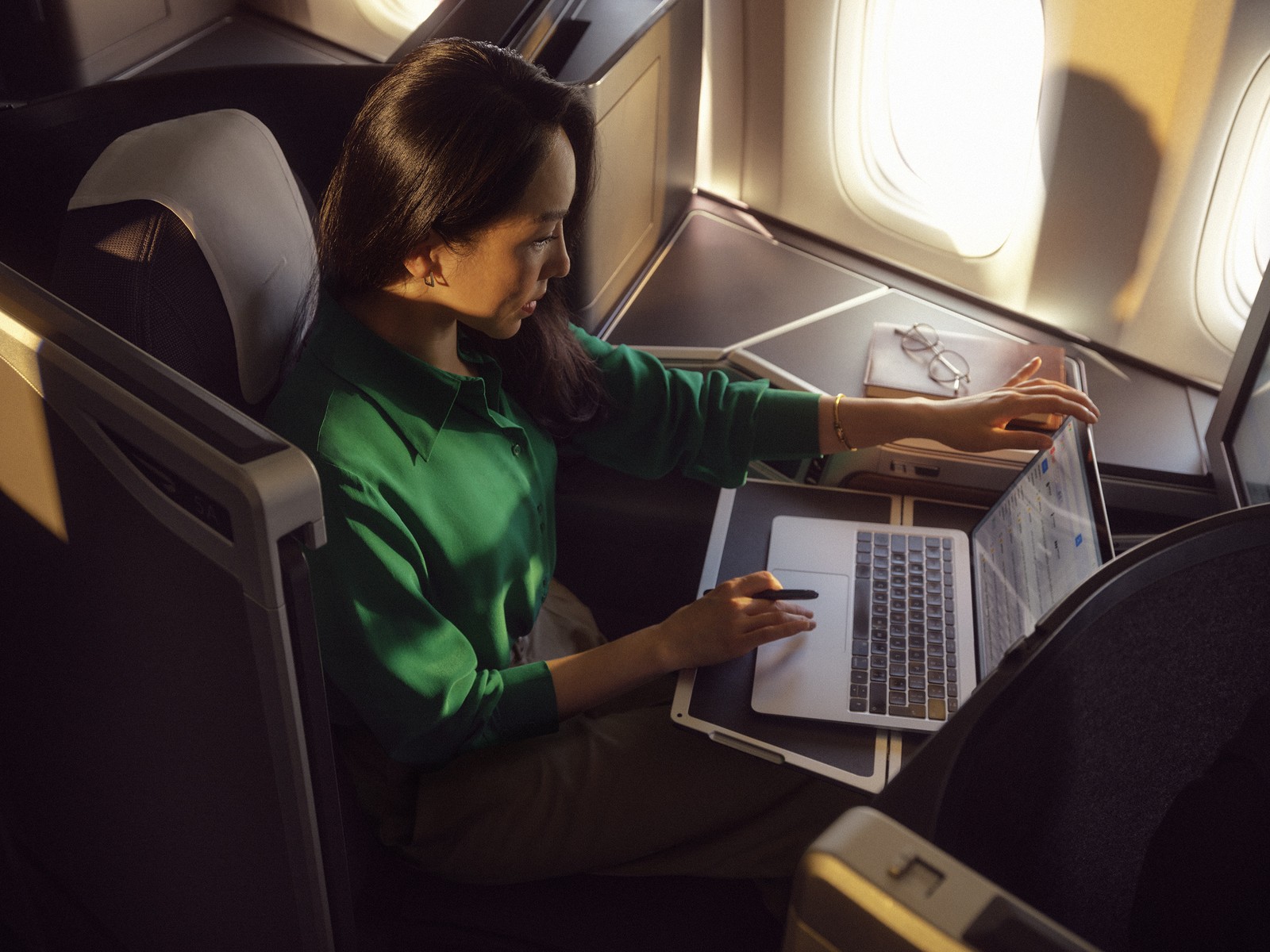
In-flight connectivity is crossing the threshold from acceptable to actually good, with low-earth-orbit satellite networks like Starlink enabling millisecond latency and bandwidth capable of supporting real video conferencing.
Starlink's aviation rollout is the one to watch. Hawaiian Airlines and JSX have already deployed it; other carriers are in various stages of integration. The practical implication is latency measured in milliseconds rather than seconds, and bandwidth that can support real video conferencing — not the pixelated, frozen-frame experience of Ka-band connections at capacity.
Airlines offering unlimited high-speed data plans at the business class tier are no longer a rarity. For anyone who needs to run a live client call at 35,000 feet over the Atlantic, this is now genuinely possible on the right carrier and equipment.
Entertainment has also matured
The IFE arms race has produced some impressive results. Larger screens (Qatar's QSuite features an 18.5-inch 4K display), curated content libraries running into the thousands of titles, and live satellite TV are table stakes on top-tier products. Some carriers are experimenting with personalized content recommendations based on past viewing history. It sounds trivial until you're 10 hours into a flight and the system actually surfaces something you want to watch.
AI is beginning to reshape the booking and service experience
Smarter booking tools are already in use
Predictive booking platforms are starting to cross from novelty to genuinely useful. Systems that interpret your calendar, past routing preferences, and loyalty tier to suggest optimized itineraries — including strategic layovers that minimize travel fatigue — are in active development at several carriers. Some are already in limited deployment.
What this means practically: the gap between what a smart algorithm can find and what a casual search on Google Flights surfaces is widening. Knowing which consolidators have access to unpublished fares, and which booking platforms actually read your preferences rather than just your credit card, matters more than ever.
At CEOFLIGHTS — top rated on Trustpilot and ASTA-accredited (member #900292735) — our team combines those airline contracts with actual human expertise. When algorithmic tools fall short, you reach a person who knows the product. Call us at (888) 851-6897 to talk through your routing before you book.
Biometric check-in is rolling out globally
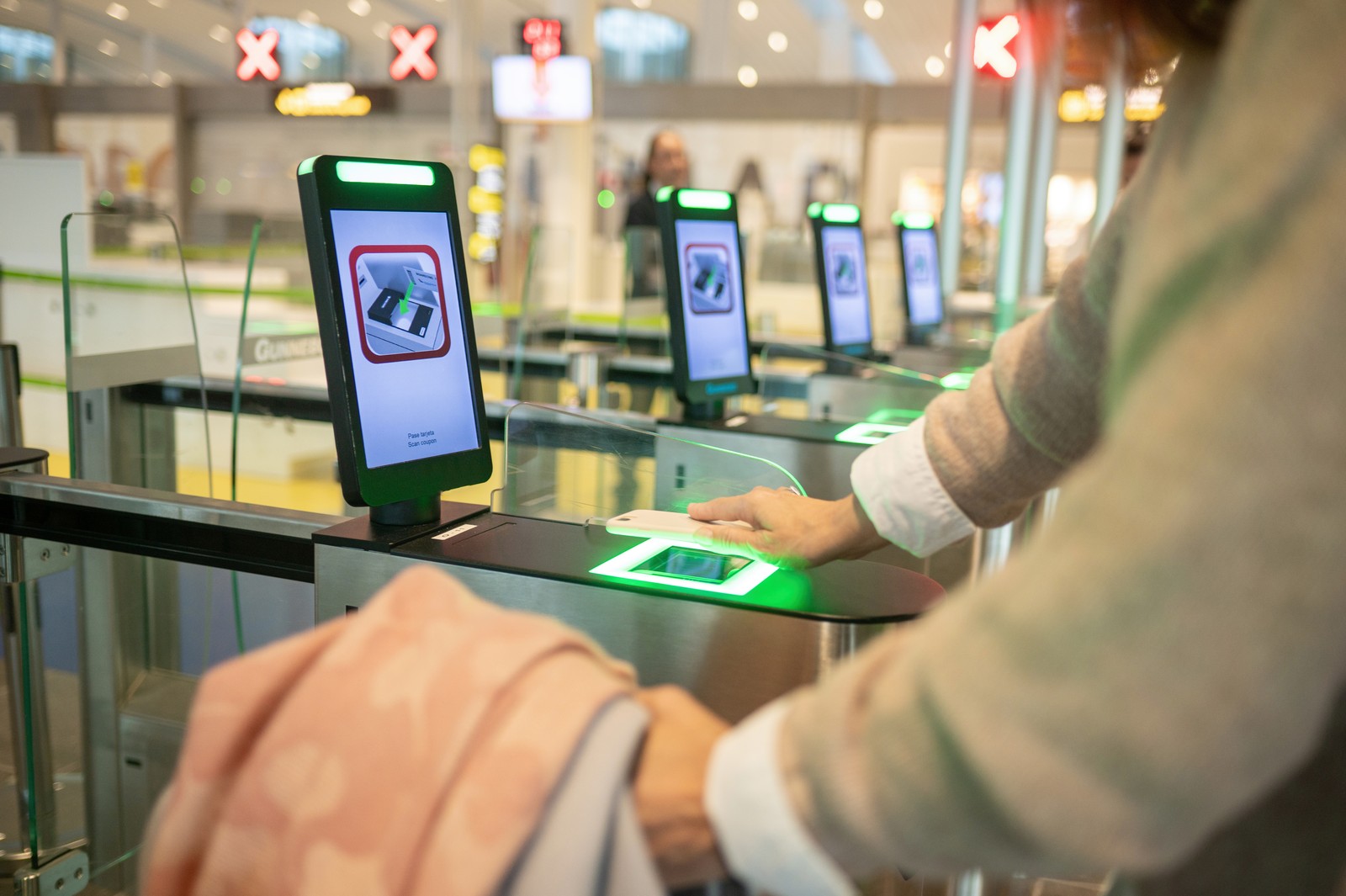
Facial recognition and fingerprint scanning at check-in and security are no longer science fiction. They're live at major hubs including Singapore Changi, Dubai International, and several U.S. airports under TSA PreCheck and CBP's Simplified Arrival programs. The practical benefit isn't just speed — it's the elimination of the mid-terminal document scramble that plagues even experienced travelers.
Facial recognition and fingerprint scanning at check-in are eliminating the mid-terminal document scramble, while onboard AI assistance tools are proactively adjusting meal timing and cabin temperature based on individual passenger data.
Onboard AI assistance is the next frontier
Flight attendants on some carriers are already equipped with tablets showing real-time passenger preferences, dietary restrictions, and even predicted sleep windows based on origin timezone. The next step — AI tools that proactively adjust meal timing, cabin temperature, and entertainment suggestions based on individual passenger data — is in active testing. It sounds intrusive until it works, at which point it feels obvious.
Sustainability: more substance than greenwashing, finally
Materials and cabin design are changing
Airlines are moving toward recycled and bio-based materials in seat construction and amenity kits — not as a PR exercise, but because they're under genuine regulatory and investor pressure to demonstrate measurable progress. Lighter composite materials reduce fuel burn per seat, which is both an environmental and economic argument. Expect this to accelerate.
Sustainable aviation fuel is real, though scaling is slow
SAF can reduce lifecycle carbon emissions by up to 80% compared to conventional jet fuel, depending on feedstock. United, Lufthansa, and Air France-KLM are among the carriers actively purchasing SAF and offering transparent offset options at booking. These aren't empty gestures — the fuel is physically being burned on commercial flights today. The problem is volume: global SAF production still covers a fraction of aviation's demand, and prices remain significantly higher than conventional kerosene.
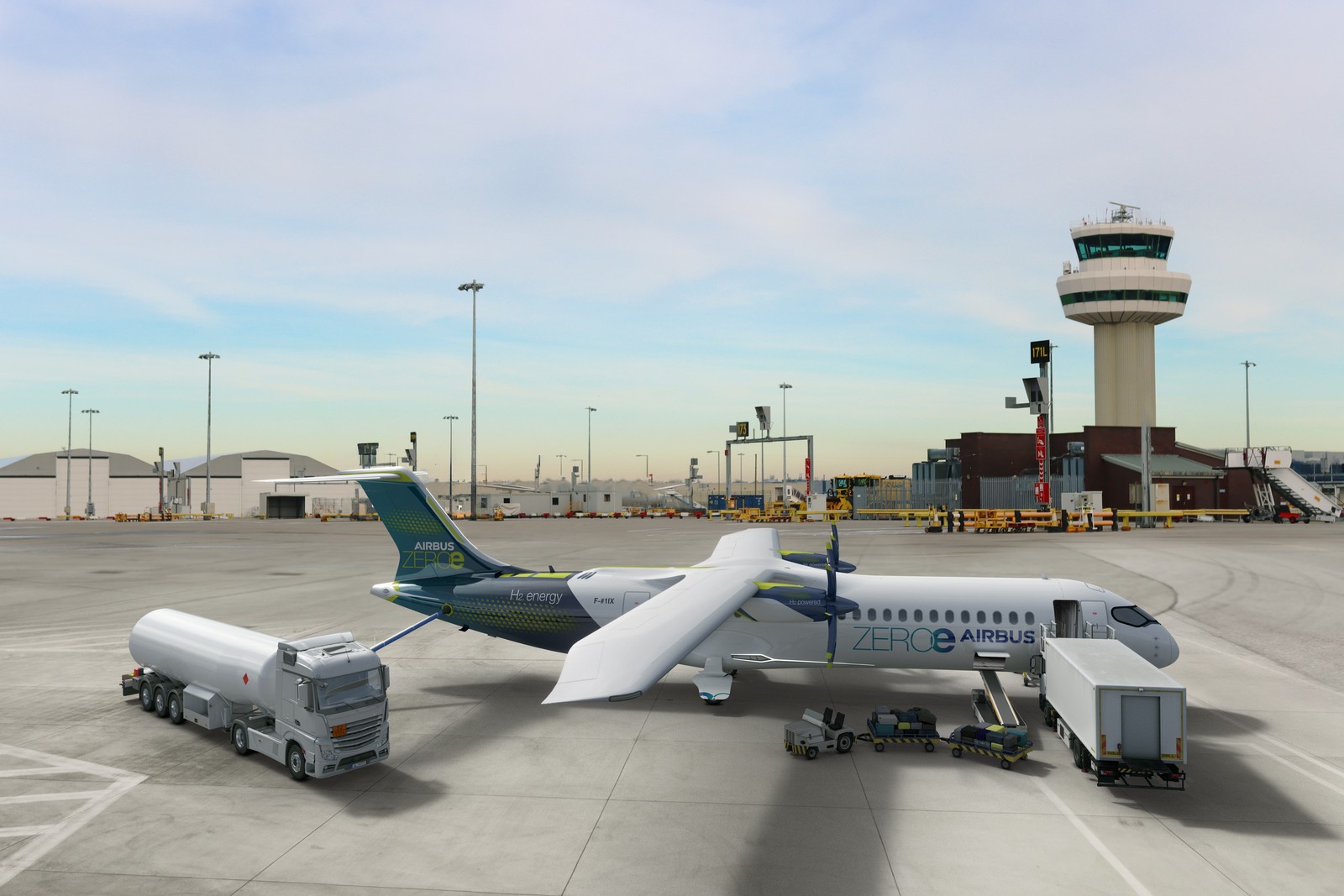
While Sustainable Aviation Fuel (SAF) physically burns on commercial flights today to reduce carbon emissions by up to 80%, true zero-emission concepts like Airbus' ZEROe hydrogen aircraft are realistically a 2035–2040 story at the earliest.
Airbus' ZEROe hydrogen concepts point toward true zero-emission commercial aviation, but widespread hydrogen adoption is realistically a 2035–2040 story at the earliest. The engineering challenges around storage, airport infrastructure, and engine design are substantial. Worth watching, not yet worth banking on.
Supersonic: the revival is real, the timeline is uncertain
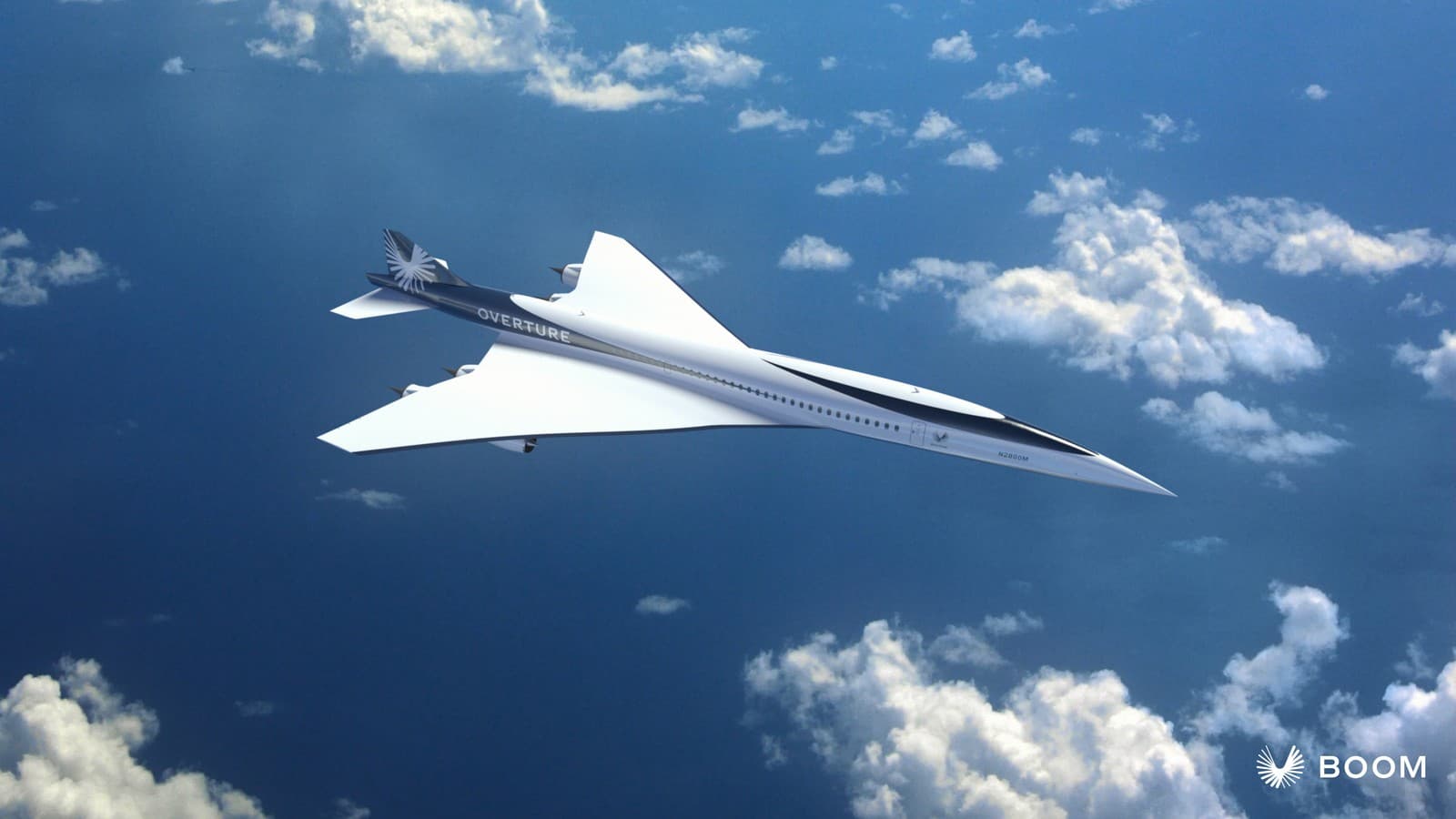
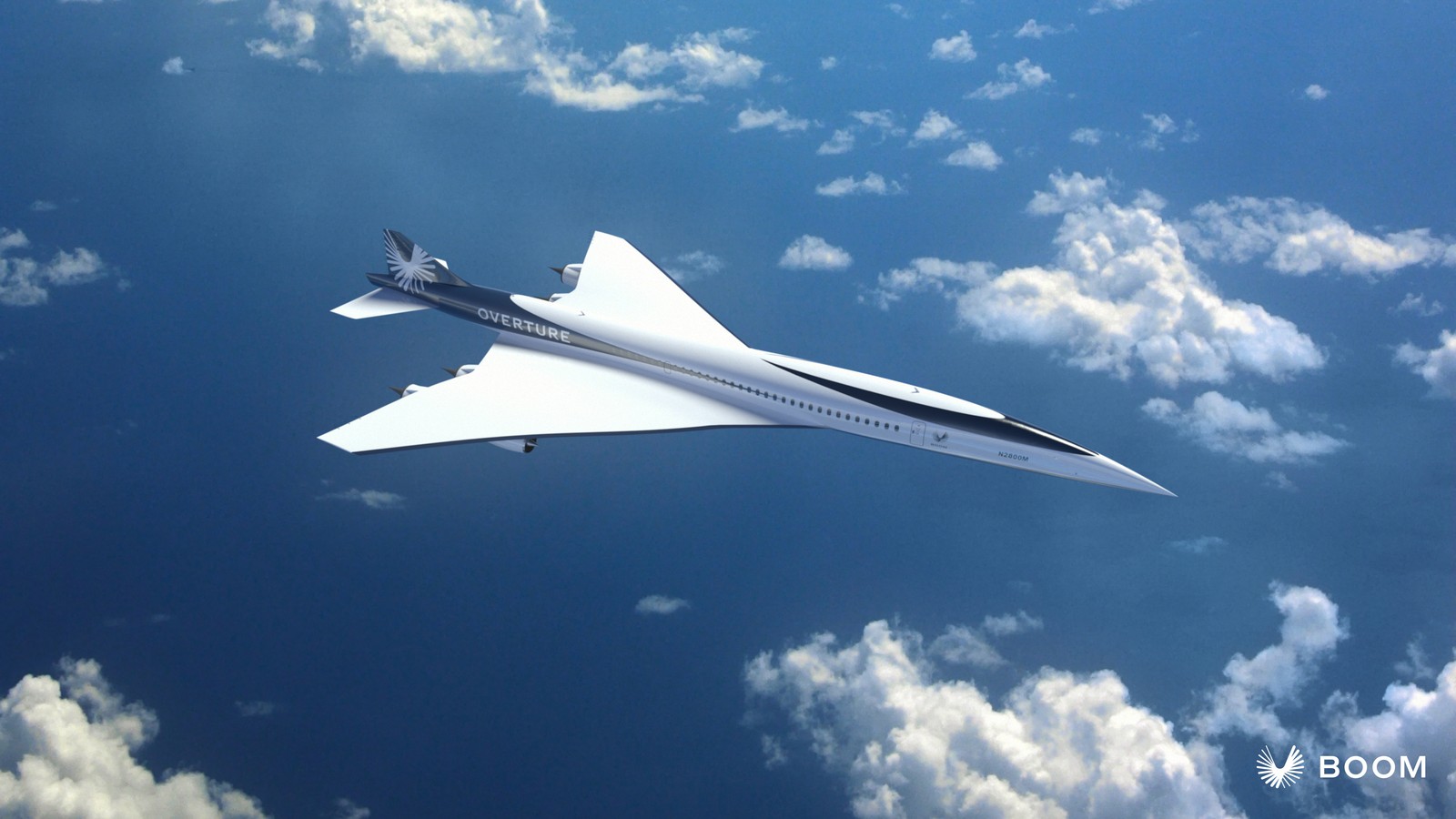
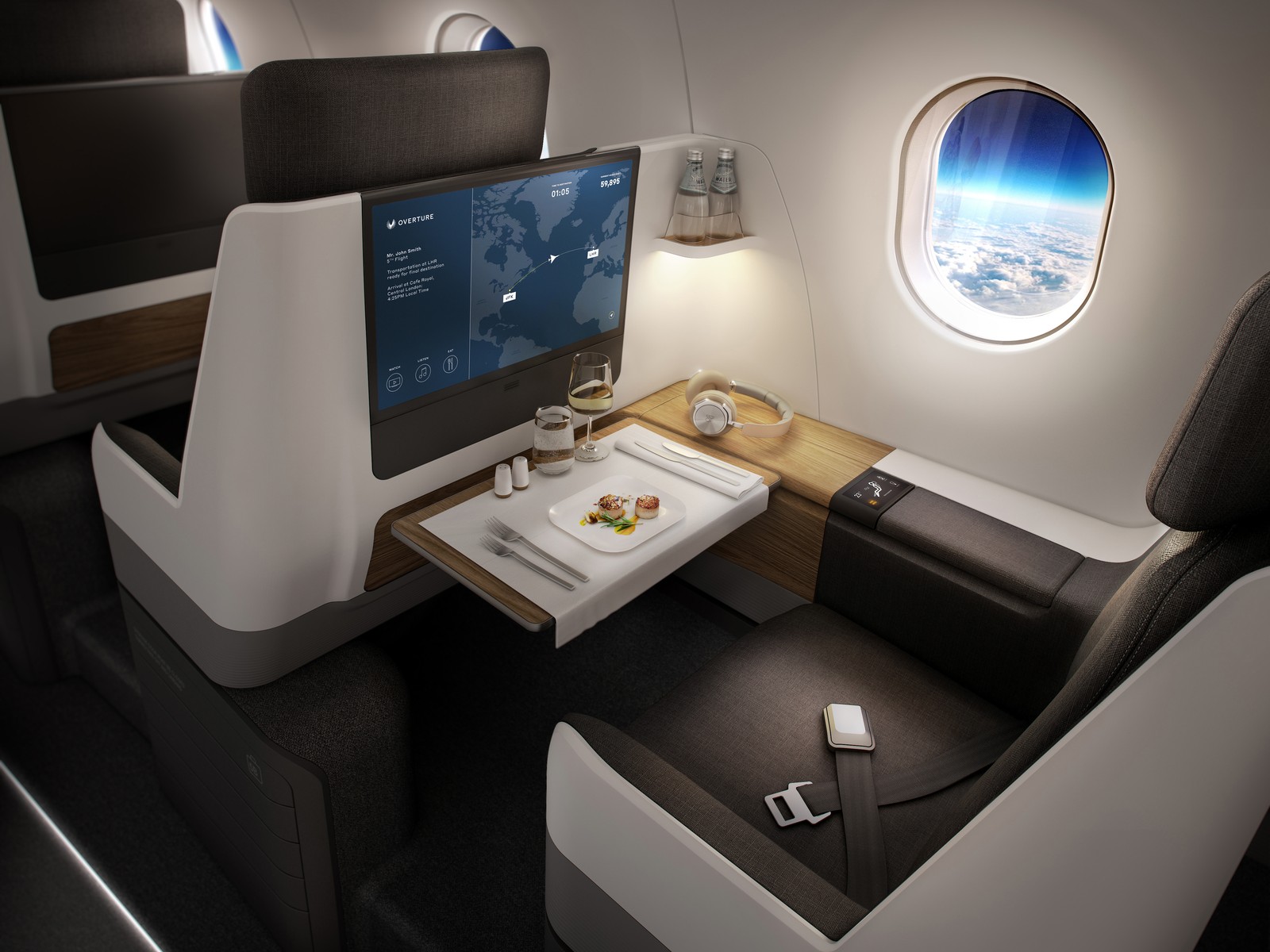
Boom Supersonic's Overture aircraft has attracted serious investment and serious airline interest — American Airlines and United have both signed letters of intent. The pitch is compelling: New York to London in 3.5 hours at speeds exceeding Mach 1.7, with a cabin designed specifically for the premium traveler.
Boom Supersonic's Overture aircraft aims to fly New York to London in 3.5 hours at Mach 1.7, though early tickets will almost certainly carry premium pricing given the economics of a ~80-seat aircraft on transoceanic routes.
Early tickets will almost certainly be priced above current business class, possibly significantly so. Development costs, fuel burn (even with SAF), and the economics of a ~80-seat aircraft on long transoceanic routes don't lend themselves to accessible pricing in the launch phase. Think Concorde economics with modern safety and efficiency improvements — still a premium product for a premium buyer.
With Concorde-style economics and modern safety improvements, a 3.5-hour transatlantic crossing fundamentally changes the calculus for same-day meetings in London for the premium buyer.
That said, if Overture flies commercially as projected in the late 2020s, the routing implications are significant. A 3.5-hour transatlantic crossing changes how you think about same-day meetings in London from New York. It doesn't need to be cheap to be worth it for the right trip.
Book the best product available today
Much of what's described above is already flying — QSuites, Club Suites, Starlink Wi-Fi, biometric security, and SAF-blended fuel are not future concepts. They exist on specific routes, specific aircraft, and specific days. The challenge is knowing where to find them and how to access them without paying full published fares.
Through our airline contracts, CEOFLIGHTS regularly prices business class fares 30–60% below what the same seats cost on the carrier's own website. A transatlantic business class ticket retailing at $8,000 round-trip can often be booked through us for $3,500–$4,500, on the same aircraft and in the same cabin.
The team is available at (888) 851-6897. We're ASTA-accredited (member #900292735), top rated on Trustpilot, and we've been doing this long enough to know which routes are worth the premium and which aircraft you should quietly avoid. Call before you book.
Content creator and business travel specialist at CEOFLIGHTS, bringing you the latest insights, tips, and trends in premium business and first-class travel.
Become the CEO of Your Journey
You take the lead. Your dedicated Personal Travel Manager handles every detail.