Quick summary
Stick to business class for flights under 10 hours, but consider upgrading to first class (which can cost $10,000+ in cash but only 30,000-40,000 extra miles) on ultra-long-haul routes for superior ground experience, unmatched privacy, and a true lie-flat bed.
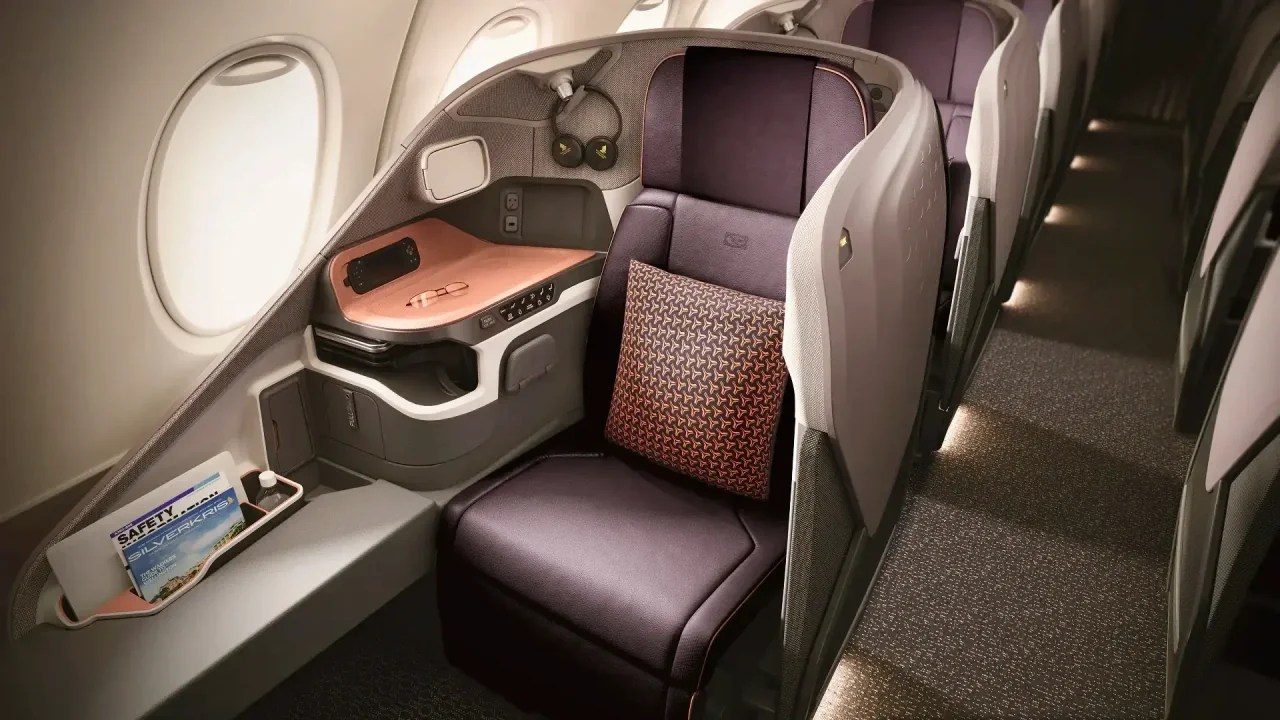
You are standing at the boarding door of an Airbus A380. To the right, business class stretches out in a sea of reverse herringbone seats. The flight attendants are busy handing out pre-departure champagne in actual glass flutes. The seat has a sliding door. The screen is massive. The lie-flat bed looks incredibly comfortable. You turn left, and first class offers almost exactly the same things, but slightly wider, slightly quieter, and significantly more expensive.
This is the modern dilemma of premium cabin travel. Ten years ago, the distinction was obvious. Business class meant angled-flat seats or sleeping next to a stranger. First class meant a private bed. Now, with business class products offering sliding doors, dine-on-demand menus, and high-end amenities, the line is heavily blurred. Many carriers have dropped their first class cabins entirely, opting instead for a "business plus" model that maximizes revenue per square foot.
Yet, a handful of elite airlines continue to pour millions into their flagship first class experiences. They offer private suites, dedicated terminals, caviar service, and onboard showers. The price difference between these two cabins can easily be five figures in cash, or double the frequent flyer miles.
The question we answer every day at CEOFLIGHTS is simple. Should you spend the extra money or miles to fly up front, or is business class good enough? The answer depends entirely on the airline, the route, and what you actually value when flying.
The ground experience makes or breaks the trip
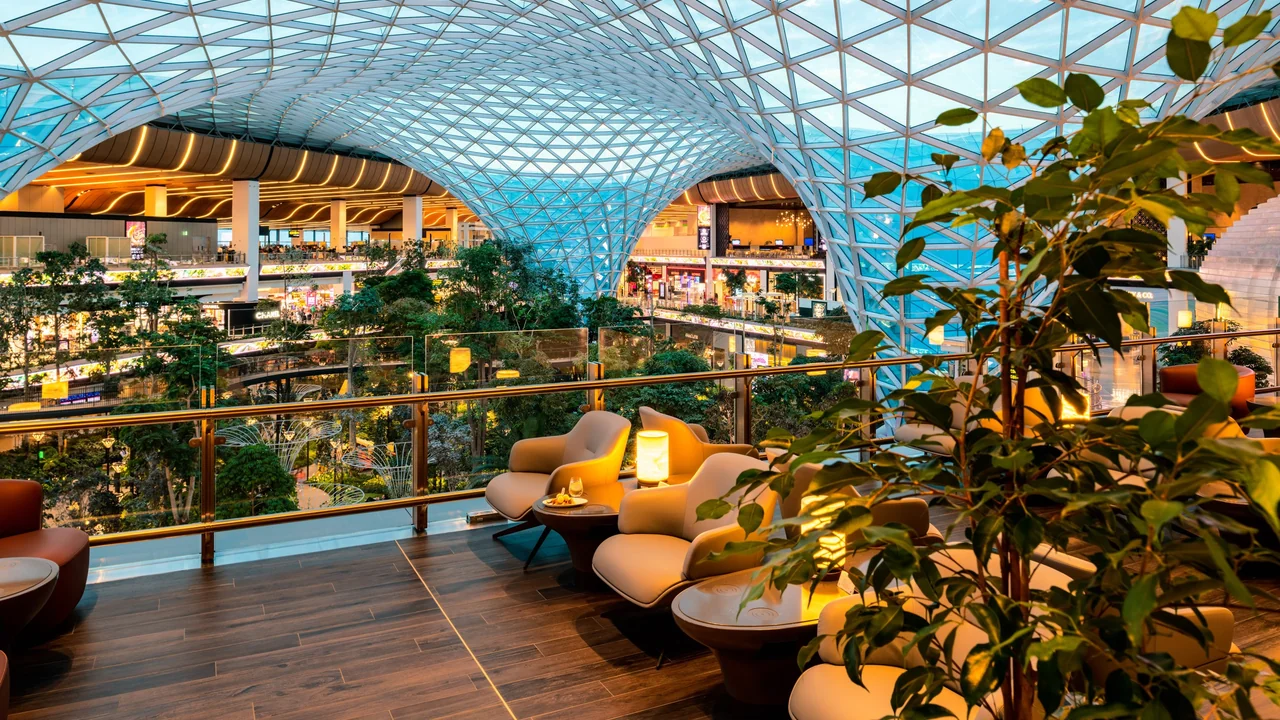
Long before you board the aircraft, the first class difference begins on the ground. This is where the gap between business and first is widest.
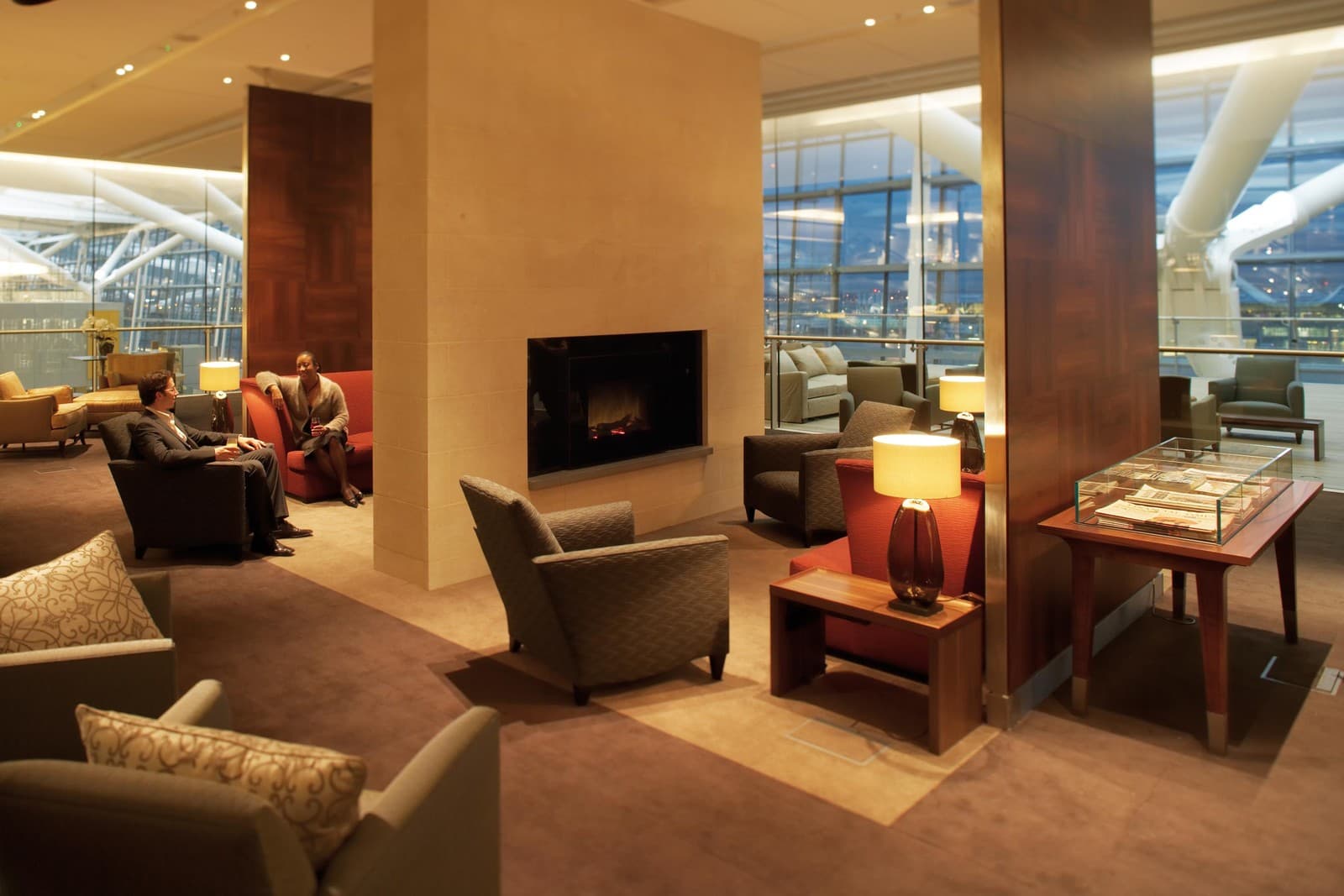
A standard business class ticket grants you access to an airline lounge. These spaces are certainly better than the terminal concourse, offering free food, decent alcohol, and a place to sit. However, at major hubs during peak hours, business class lounges frequently resemble crowded cafeterias. Finding a seat can be a challenge. The buffet food might sit under heat lamps for hours. The Wi-Fi bogs down as hundreds of people attempt to download movies before boarding. You might have to put your name on a waiting list just to use the shower, hoping your buzzer goes off before boarding begins.
First class ground services operate in an entirely different reality.
If you fly Lufthansa First Class out of Frankfurt, you don't even enter the main terminal. You are driven to the dedicated First Class Terminal. A personal assistant takes your passport. You clear private security in seconds. You can order a perfectly cooked Wiener Schnitzel from the dining room, relax in a soaking tub, and collect a highly sought-after Lufthansa rubber duck. The bartender can mix you a cocktail from a selection of hundreds of premium spirits. When your flight is ready, a Porsche or Mercedes driver takes you across the tarmac directly to your plane.
Air France's La Première lounge in Paris Charles de Gaulle operates similarly. You receive a complimentary spa treatment upon arrival. The menu features dishes designed by legendary chef Alain Ducasse. The wine list rivals Michelin-starred restaurants in central Paris. A private car transfers you to the aircraft steps. You never see a boarding gate. You never stand in a queue.
Even U.S. domestic carriers offer differentiated ground experiences for international first class passengers. American Airlines Flagship First Dining provides an a la carte, sit-down restaurant experience within the lounge, shielding you from the chaos of the main Admirals Club.
- Crowd control: First class lounges restrict entry strictly to actual first class passengers. Business lounges admit elite status holders from partner airlines, leading to massive overcrowding.
- Dining: Buffet dining in business class versus a la carte dining with personalized table service in first class.
- Security: Escorts through private immigration and security channels save you an hour of standing in line.
- Transfers: Tarmac transfers eliminate the need to walk through the terminal and fight for overhead bin space.
If privacy and zero stress on the ground are worth a premium to you, first class delivers completely. If you just want a quick snack and a place to plug in your laptop before boarding, business class is more than adequate.
The hard product comparison
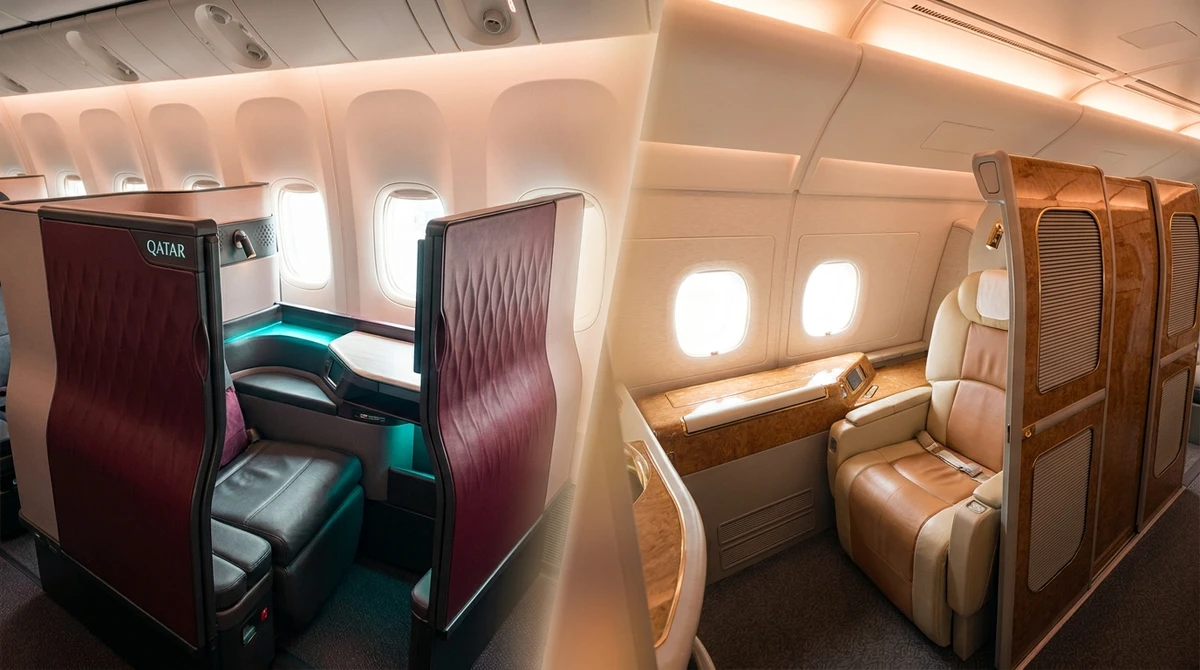
Airlines refer to the physical seat and the surrounding physical environment as the "hard product." Over the last five years, business class hard products have improved so drastically that they cannibalized first class sales.
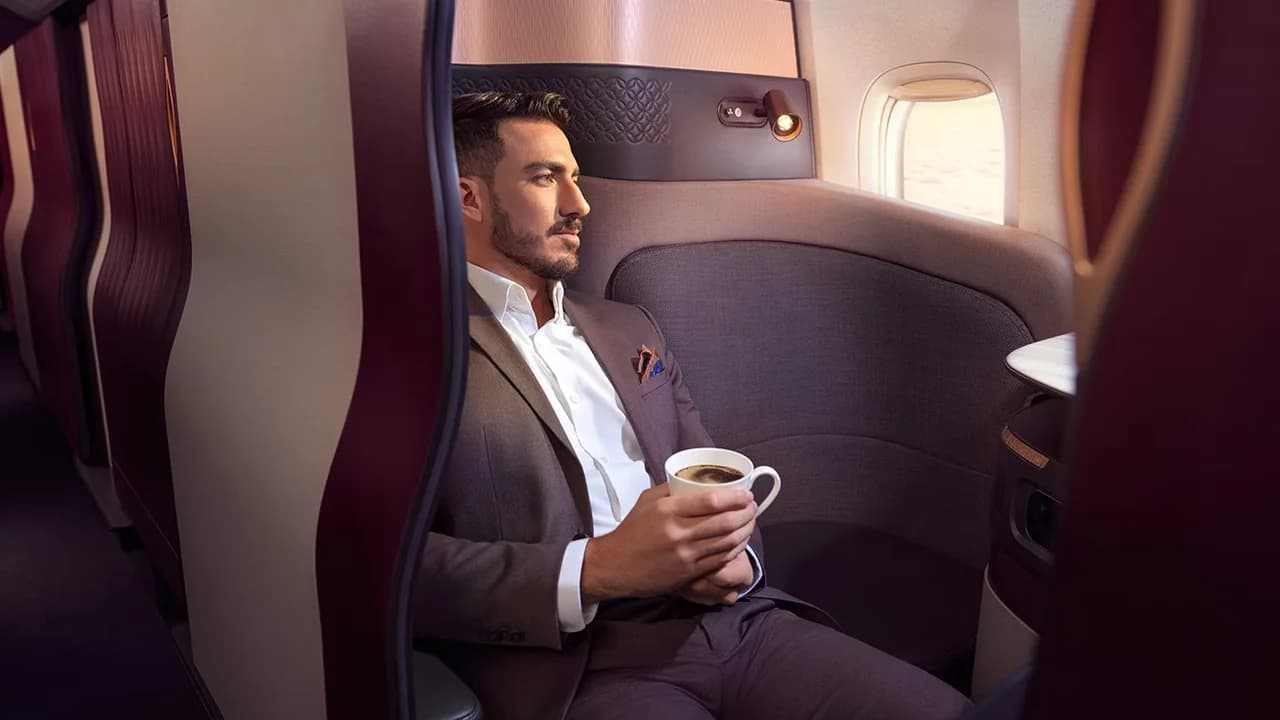
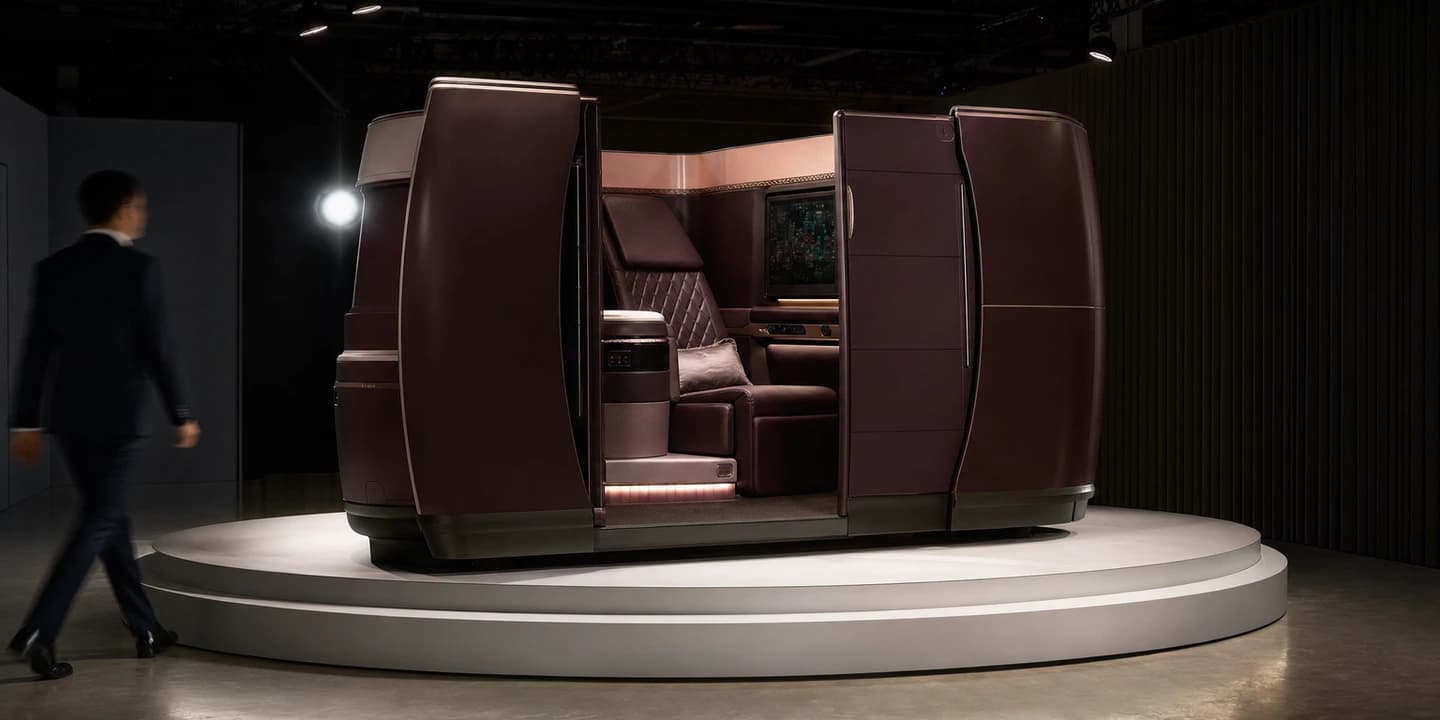
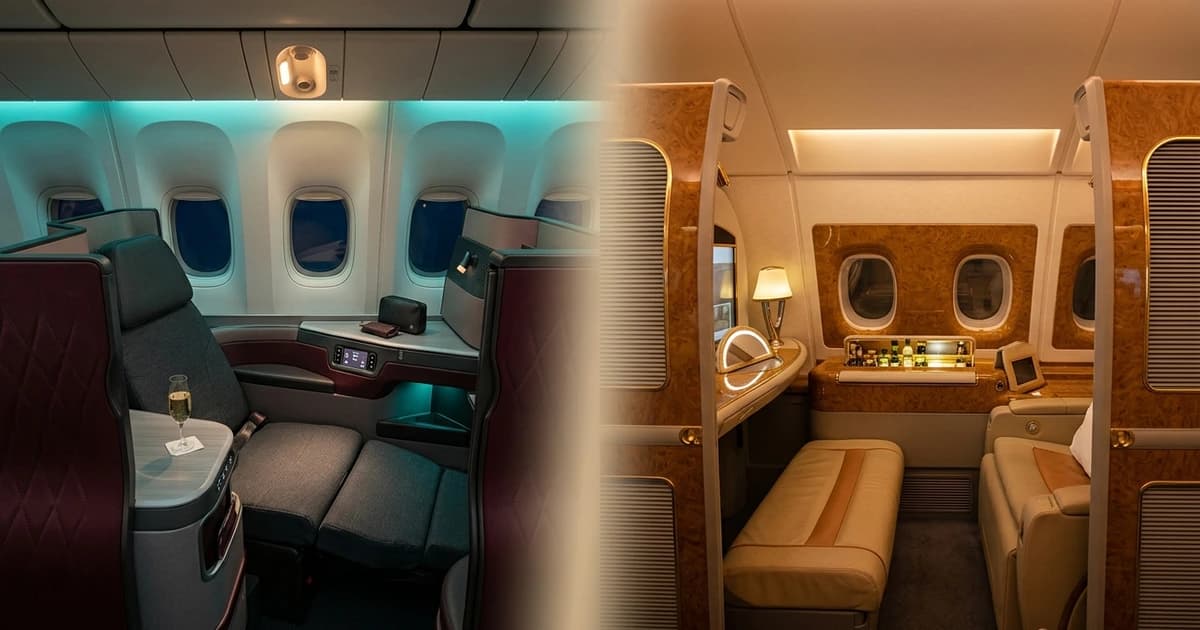
Qatar Airways changed the industry when they introduced the Qsuite. It brought sliding doors and fully private suites to business class. ANA followed with "The Room," offering a business class seat so wide two people could sit side-by-side. Delta rolled out the Delta One Suite. Suddenly, the defining feature of first class — privacy — was available for a fraction of the cost.
So what does first class offer structurally that business class does not?
Space is the ultimate luxury. A typical business class seat in a reverse herringbone configuration provides about 21 inches of width and a 78-inch bed. A first class suite on Singapore Airlines offers 35 inches of width and an 81-inch separate bed. You are not sleeping on the same surface you sit on. The flight attendant folds down a dedicated mattress adjacent to a plush leather armchair.
First class cabins are also much smaller. An Emirates Boeing 777 might have 42 business class seats packed into the middle section, while first class has only six fully enclosed suites. This translates to a significantly quieter cabin. You don't hear 40 other people opening overhead bins, requesting drinks, or walking to the lavatory. The ambient noise is noticeably lower.
The footprint of a first class seat often removes the need for a restrictive footwell. In business class, your feet frequently slot under the armrest of the seat in front of you. This forces back sleepers into a coffin-like space and frustrates side sleepers who cannot bend their knees. First class gives you the freedom to sprawl out naturally.
Storage space also differs dramatically. Business class seats offer a small cubby for your headphones and perhaps a tiny shelf. First class suites feature personal closets, large stowage compartments under ottomans, and expansive surfaces to place laptops, books, and drinks without feeling cluttered.
The sleep experience
Sleeping is the primary reason travelers pay a premium for long-haul flights. The quality of sleep varies wildly between cabins.
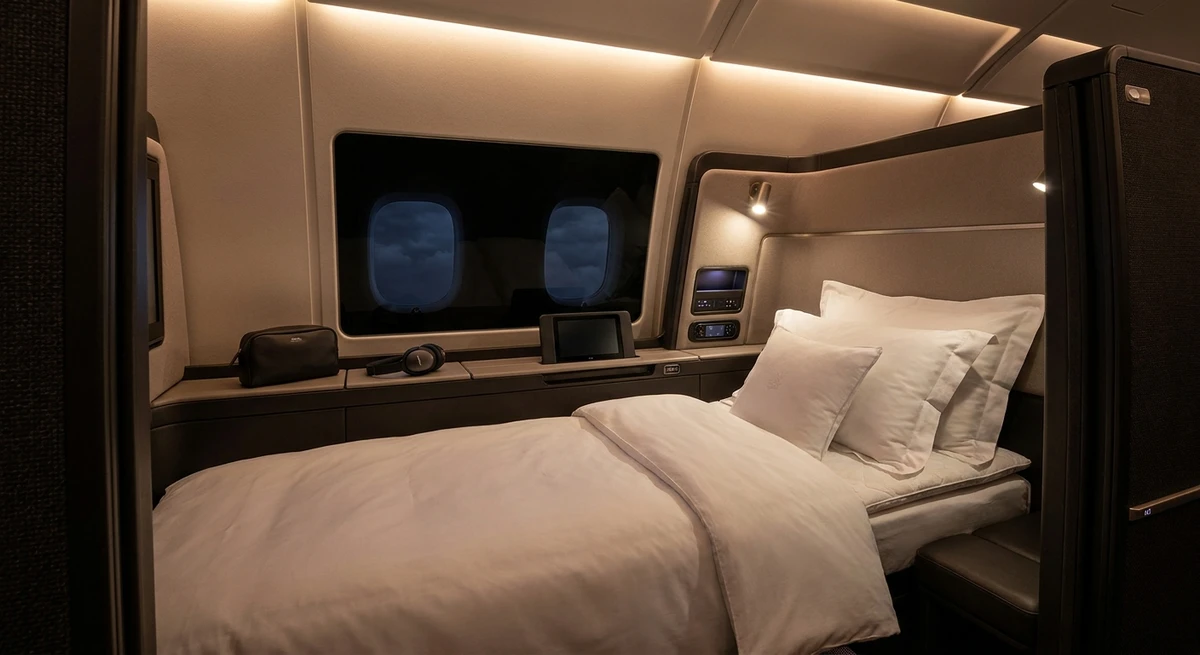
In business class, you press a button and your seat reclines into a flat bed. You are provided with a light blanket and a basic pillow. The padding on the seat is designed for sitting, meaning the bed can feel firm or lumpy. You must arrange the bedding yourself.
First class treats the bed as a distinct entity. Flight attendants perform a turndown service. They add a thick mattress pad that covers the gaps between the seat cushions. They provide proper duvets and full-sized memory foam pillows. When you return from brushing your teeth, the bed is perfectly made.
Temperature control is another massive advantage in first class. Individual air nozzles are not always present in business class, leaving you at the mercy of the cabin thermostat. First class suites often have dedicated climate controls. You can set the temperature of your suite exactly how you prefer.
The soft product and service differences
The soft product includes everything consumable and the human element of service. This is where first class justifies its price tag for food and wine enthusiasts.
Business class dining is an assembly line process. Flight attendants must serve dozens of passengers simultaneously. Meals are plated in the galley, but they are still airline meals heated in convection ovens. The champagne is usually a solid non-vintage brand like Laurent-Perrier or Taittinger. The wine list consists of respectable but unremarkable $20 bottles.
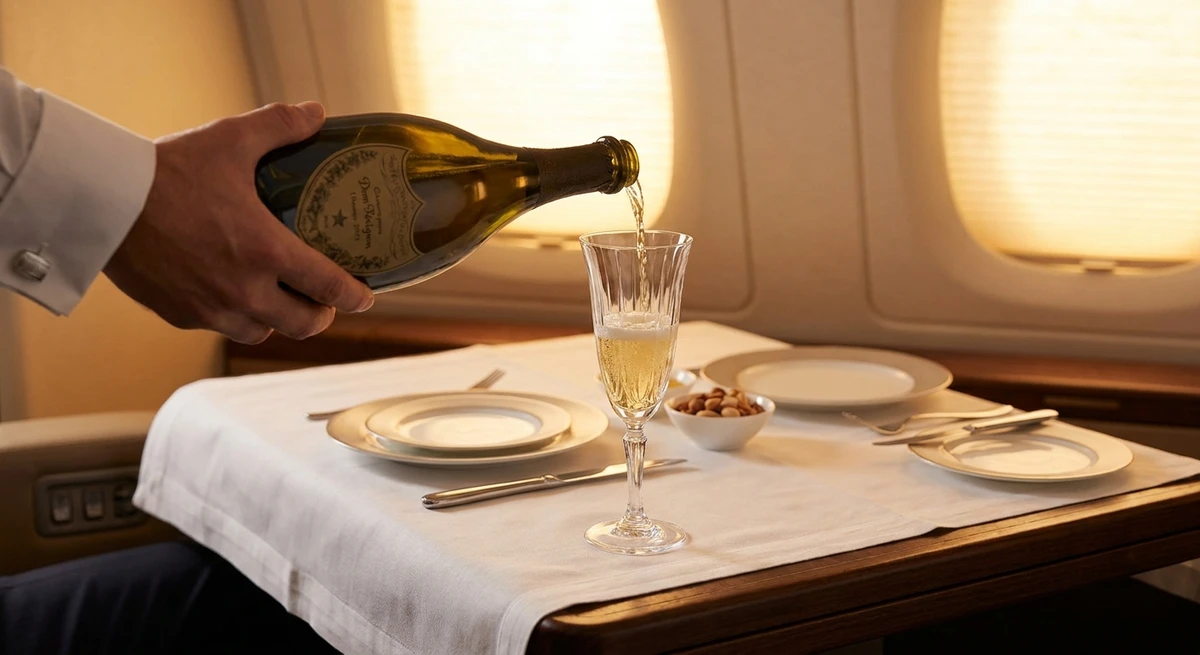
First class service operates like a high-end restaurant. There are no trolleys rolling down the aisle. Every dish is plated individually and brought directly to your suite. You dine on demand, eating precisely when you want, rather than when the crew decides to serve the entire cabin. This flexibility is crucial if you want to sleep immediately after takeoff and eat later.
The ingredients are demonstrably better. Caviar service is the hallmark of international first class. Emirates, Singapore Airlines, Air France, and Lufthansa all serve generous portions of caviar with traditional garnishes like chopped egg, onion, and blinis. The champagne flows from prestige cuvées like Dom Pérignon, Krug, or Salon. The wine lists feature bottles that retail for hundreds of dollars on the ground.
Amenities are upgraded as well. While business class passengers receive a small amenity kit and perhaps a thin mattress pad, first class passengers get designer pajamas, premium skincare products, thick duvets, and plush pillows. The flight attendants will make your bed for you while you change into your sleepwear in the lavatory.
Speaking of lavatories, the ratio of passengers to bathrooms is a critical difference. In business class, you might share a lavatory with 15 other people, leading to lines after meal services and before landing. In first class, you share with two or three people. The lavatories are constantly cleaned by the crew after every single use. On the Emirates A380, the first class lavatory famously includes a shower spa, allowing you to arrive at your destination completely refreshed.
When business class is the smarter choice
You should stick to business class if the route is relatively short. On a transatlantic flight from New York to London, the flight time is often under seven hours with favorable tailwinds. By the time you reach cruising altitude and the crew begins service, you have barely five hours left to sleep. Paying a massive premium for a first class suite you will only use for a quick nap makes zero financial sense.
Business class is also the better option when flying airlines that have invested heavily in their business product but neglected first class. British Airways is a prime example. Their new Club Suite business class is fantastic, featuring sliding doors and direct aisle access. Their first class cabin on many aircraft is essentially a slightly roomier business class seat without a door. The price difference does not align with the product difference. Cathay Pacific's business class is so incredibly consistent and comfortable that upgrading to their aging first class product on a 777 often feels redundant unless you desperately want the caviar.
If your primary goal is simply to arrive rested and capable of attending a meeting, business class gets the job done perfectly well. A lie-flat bed is a lie-flat bed. The ability to sleep horizontally is the single biggest upgrade in air travel. Everything beyond that is just an exercise in extreme luxury.
When we book clients at CEOFLIGHTS, we often advise them to save their cash or miles on the outbound flight if it's a short red-eye where sleep is the only priority. You won't care about vintage champagne if you pass out before takeoff. You can call us at (888) 851-6897 to figure out exactly which flights warrant the premium upgrade.
Airlines where the first class upgrade is absolutely worth it
Certain carriers provide a first class experience so exceptional that it becomes a destination in itself. If you are flying these airlines and have the budget or the points, the upgrade is completely justified.
Emirates The Emirates "Game Changer" first class on select Boeing 777 aircraft features fully enclosed suites with floor-to-ceiling doors. You have virtual windows if you are seated in the middle aisle, which project high-definition exterior views. You can adjust the lighting and temperature of your individual suite using a control panel. It is the closest thing to a private jet available on a commercial airliner. The A380 version, while slightly older and less private, features the legendary onboard shower spa and the first class bar located at the front of the upper deck.
Singapore Airlines The A380 Suites Class on Singapore Airlines is legendary for a reason. The suites are massive rooms measuring over 50 square feet. If you travel with a companion and book adjacent suites, the dividing wall lowers to create a double bed in the sky. The service is universally praised as the best in the industry, anticipating your needs before you even realize them. You can use the "Book the Cook" service in advance to order meals like lobster thermidor or perfectly prepared wagyu beef.
Air France La Première is arguably the most elegant first class product flying right now. There are only four seats in the cabin on their Boeing 777s. Instead of sliding doors, Air France uses heavy, floor-to-ceiling curtains that you draw around your suite, creating a softer, more residential feel. The ground service in Paris is unmatched by any airline in the world. The culinary program is spectacular, offering Michelin-level dining at 35,000 feet. It is notoriously difficult to book with miles, requiring top-tier elite status with Air France-KLM Flying Blue just to access the award inventory, which makes it highly exclusive.
All Nippon Airways (ANA) ANA First Class, particularly the new "The Suite" product found on their refurbished 777-300ERs, offers incredible privacy, a massive 43-inch 4K monitor that stretches across the entire width of the suite, and arguably the best Japanese catering in the sky. Their beverage list includes rare sakes and high-end Japanese whiskies like Hibiki 21. The attention to detail in the meal presentation is obsessive.
Pricing reality: Miles versus cash
The decision often comes down to the currency you use.
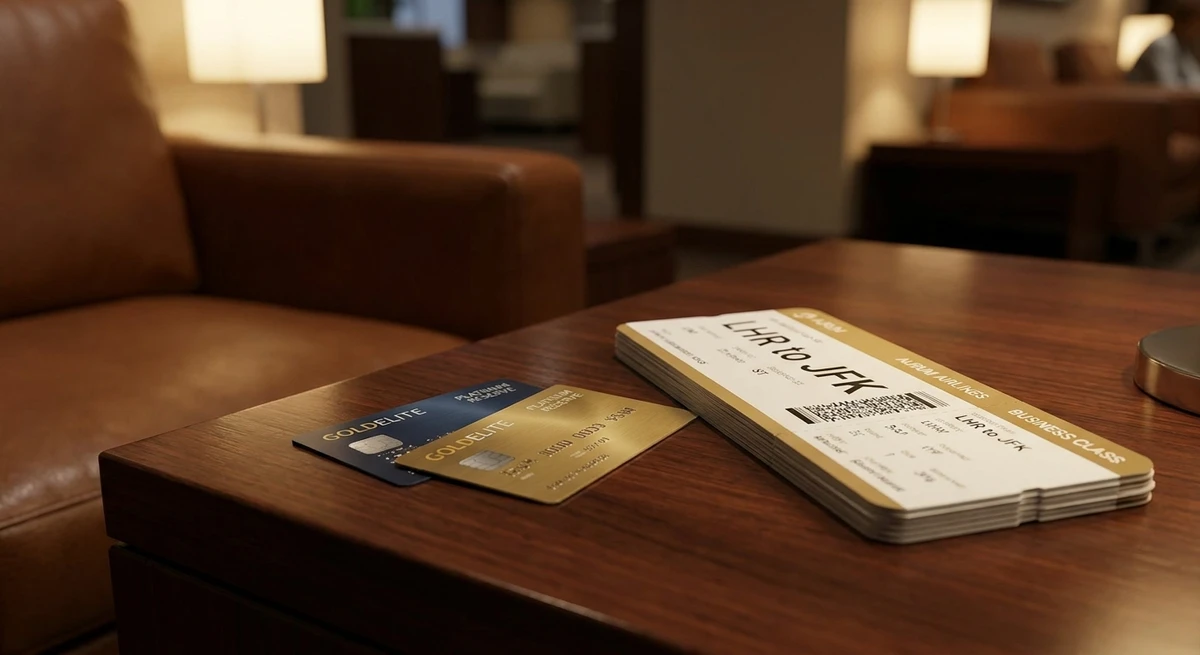
Paying cash for international first class is staggering. A round-trip business class ticket from Los Angeles to Tokyo might cost $4,500. The first class ticket on the same flight can easily cost $14,000 to $20,000. It is extremely difficult to justify spending $10,000 extra for caviar, a wider seat, and better champagne. Unless you are flying on a corporate dime with an unrestricted budget, cash upgrades to first class are rarely a logical financial decision.
Miles change the math entirely.
Booking business class from the US to Asia might cost 80,000 miles one-way. First class might cost 110,000 to 120,000 miles. Earning an extra 30,000 to 40,000 miles through credit card sign-up bonuses or daily spending is relatively easy. When the premium is only a fraction of the base mileage cost, the upgrade to first class represents incredible value. The challenge is finding award availability. Airlines release very few first class award seats, sometimes only one or two per flight, and they disappear instantly.
This is exactly where a specialized agency provides value. We handle the frustrating logistics so you can simply arrive at the airport.
The human factors you won't read in a brochure
Product specifications don't tell the whole story. Real travel involves unpredictable human elements. First class provides a massive buffer against the friction of commercial aviation.
When weather delays strike and connections are missed, first class passengers are immediately prioritized for rebooking. You have dedicated agents in the lounge managing your itinerary while hundreds of people wait in line at customer service desks. If your bag is overweight by five pounds, the check-in agent waves it through without a word. If you board late, the flight attendant still manages to serve you a pre-departure drink while everyone else is rushing to stow their luggage. You are treated as an individual, not part of a massive herd.
We recently had a client flying out of London Heathrow during a massive strike. The security lines were catastrophic, stretching out the doors of the terminal. Because he was booked in British Airways First Class, a representative met him curbside, walked him through the dedicated First Wing, and had him sitting with a coffee in the Concorde Room in under 12 minutes. That single experience validated the cost of his ticket because he avoided two hours of intense stress.
Wi-Fi reliability is another factor. Some airlines now offer free, unlimited high-speed Wi-Fi to first class passengers while charging business class passengers for expensive data-capped packages. If you need to work efficiently, the seamless connectivity and massive tray tables in first class make a significant difference.
Baggage handling is another hidden perk. First class luggage is tagged with special priority markers. Your bags are physically loaded last and unloaded first. When you arrive at baggage claim after a 14-hour flight, waiting an extra 45 minutes for your suitcase is agonizing. First class bags are almost always circling the carousel by the time you clear immigration.
Making your decision
Upgrading from economy to business class fundamentally changes how you feel when you land. Upgrading from business to first class fundamentally changes how you feel during the flight.
If your flight is under 10 hours, save your money. Book a modern business class suite with a door, enjoy a decent meal, and go to sleep. You will arrive perfectly fine. The premium for first class on a quick jump across the Atlantic simply does not make sense for most travelers.
If you are flying a 14-hour ultra-long-haul route on a top-tier airline like Singapore or Emirates, and you have a stash of miles burning a hole in your account, book first class. It transforms a miserable endurance test into an experience you actually look forward to. It is the absolute pinnacle of commercial aviation.
You should also look closely at the aircraft type before making a decision. An airline might fly an older aircraft with outdated business class seats on the same route as a brand new plane with cutting-edge suites. Knowing which tail number offers the best product requires extensive research. We track equipment swaps and cabin configurations daily to prevent unpleasant surprises at the boarding gate. As an ASTA accredited agency (#900292735), top rated on Trustpilot based on hundreds of reviews from thousands of happy customers, CEOFLIGHTS specializes in matching travelers with the absolute best premium cabin products available.
Flying should not be a chore. When executed correctly, sitting in the front of an airplane remains a genuinely special experience. Make sure you get exactly what you pay for on your next international journey.
Some images in this article may be AI-generated and are used for illustrative purposes only.