Quick summary
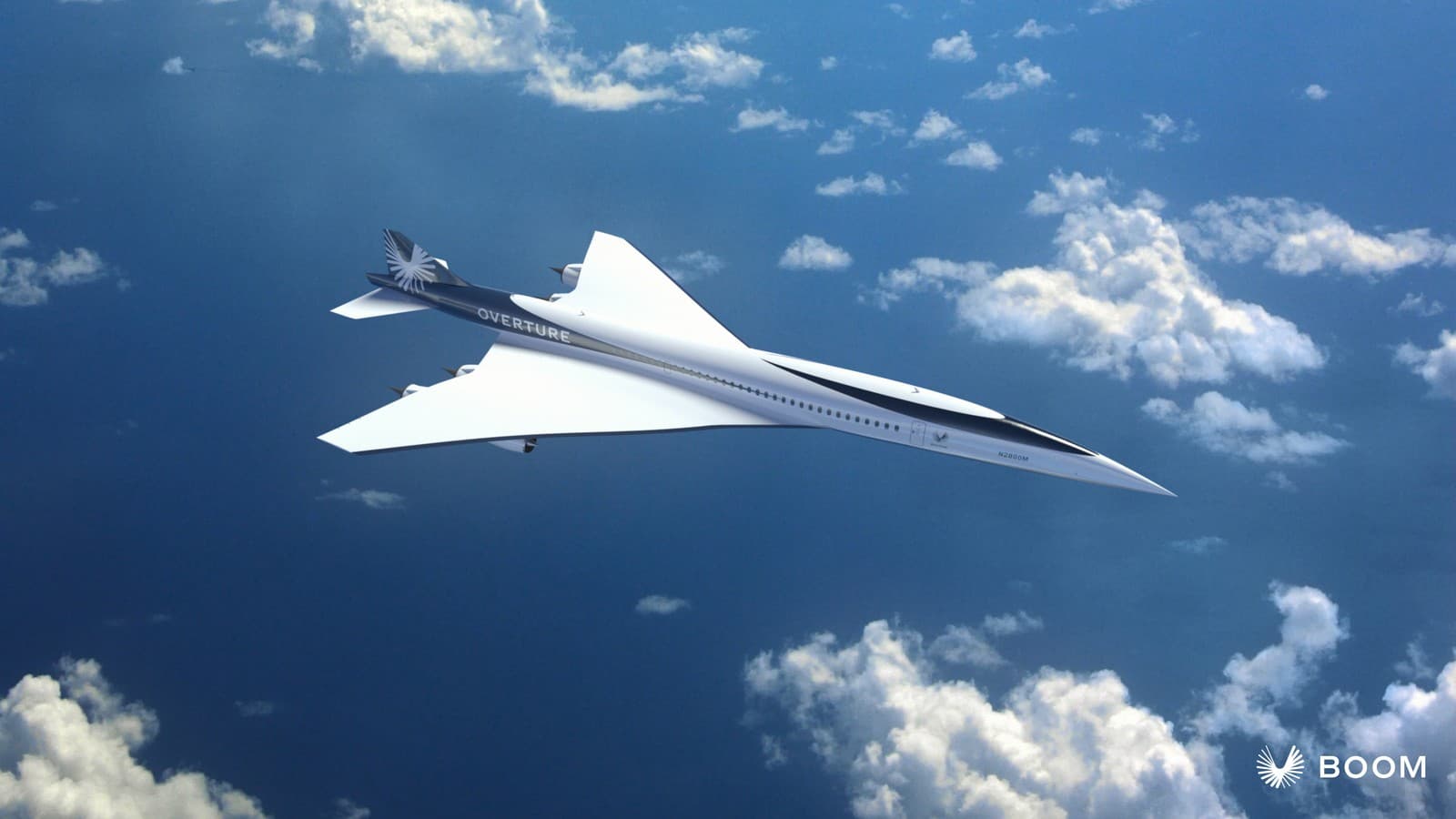
While aviation accounts for only 1.9% to 2.5% of global CO2 emissions—compared to 73.2% from energy production—the industry's path to net-zero by 2050 relies on scaling sustainable aviation fuels (which reduce emissions by up to 80%) and deploying fuel-efficient aircraft. When booking premium flights, proactively choose carriers operating modern composite airframes like the Airbus A350 or Boeing 787 that burn 20% to 25% less fuel per seat. Prioritizing these modern fleets allows business travelers to significantly reduce their per-flight carbon footprint without sacrificing comfort.
Aviation is an easy target. Boarding a long-haul flight feels viscerally polluting in a way that, say, leaving a coal-fired power plant running overnight does not. So aviation takes a disproportionate share of the criticism — from op-eds, from activists, from well-meaning dinner party guests who've just read their first IPCC summary.
The numbers, though, don't quite support that narrative. And the industry's response to its own emissions problem is more serious, more funded, and more technically credible than the discourse around it suggests.
This isn't a defense of reckless flying. It's a look at what aviation actually contributes to global emissions, what "net zero by 2050" means in practice, and what airlines are genuinely doing to get there — as opposed to what they're saying in press releases.
The actual numbers: aviation vs. everything else
Aviation accounts for approximately 1.9–2.5% of global CO2 emissions. That figure comes from multiple sources including Our World in Data and the International Air Transport Association (IATA). It's a real number, and it matters. But context matters more.
According to the Our World in Data emissions breakdown, the sectors that dwarf aviation are:
- Energy production: 73.2% — Burning coal, natural gas, and oil for electricity and heat is the single largest source of global greenhouse gas emissions. Power plants, particularly coal-dependent ones, account for the overwhelming majority of this figure.
- Agriculture: 18.4% — Livestock methane and deforestation for farmland make this sector a much larger contributor than most people realize. Cows, collectively, are doing more damage than Boeing's entire commercial fleet.
- Transport overall: 16.2% — This includes road, rail, sea, and air combined. Within that, road transport alone accounts for 11.9%. Aviation's 1.9% slice sits within this broader transport category.
- Industrial processes: 5.2% — Manufacturing, mining, and chemical production, each energy-intensive and difficult to decarbonize.
- Waste management: 3.2% — Landfill decomposition produces methane at scale. Not glamorous, but significant.
Road transport, at 11.9%, produces more than six times aviation's CO2 output. Nobody is staging protests outside Ford dealerships.
None of this means aviation gets a pass. A sector responsible for roughly 2% of global emissions still has a responsibility to reduce them, especially as passenger numbers are projected to double by 2050. The point is simply that the policy conversation and the public conversation are often focused on the wrong targets, for reasons that have more to do with visibility than arithmetic.
What "net zero by 2050" actually means
"Net zero by 2050" is a commitment to balance greenhouse gas emissions against greenhouse gas removal. You cut what you can, then offset or capture what you can't. The target is to get net emissions as close to zero as possible by the midpoint of the century.
The science behind the target is unambiguous. Limiting global temperature increase to 1.5°C above pre-industrial levels — the threshold beyond which climate impacts become dramatically more severe — requires deep decarbonization across every major sector. The Earth is already roughly 1.1°C warmer than in the late 1800s. The window is genuinely narrow.
The Paris Agreement sets an interim milestone: reduce global emissions by 45% by 2030. That's not a long-term aspiration. That's eight years from the original publication of the research this article draws on — and it's the decade that determines whether 2050 goals are achievable or theatrical.
IATA formalized the aviation industry's commitment to net zero by 2050 in October 2021. The pledge covers the full scope of airline operations. It is not universally credible — some critics argue the reliance on carbon offsets allows airlines to defer actual emission reductions — but the serious technical work happening on sustainable fuels, aircraft design, and operational efficiency is real and accelerating.
Six things airlines are actually doing
Sustainable aviation fuels (SAFs)
SAFs are the most discussed and arguably most promising near-term solution. These fuels are produced from sustainable feedstocks — waste cooking oils, agricultural residues, municipal solid waste, non-food crops — and are designed as drop-in replacements for conventional jet fuel. Existing aircraft engines don't need modification.
The lifecycle carbon reduction potential is up to 80% compared to conventional kerosene. That's a significant number. The catch is scale and cost: SAFs currently represent less than 1% of total aviation fuel consumption, and they remain roughly three to five times more expensive than conventional jet fuel. Multiple governments and airlines are committing capital to change that ratio.
United Airlines, for example, has invested in multiple SAF producers and completed flights using 100% SAF on one engine. Lufthansa, British Airways, and Air France have all run SAF blending programs. Production capacity is the constraint, not technology readiness.
Fuel efficiency in modern aircraft
The Airbus A350 and Boeing 787 Dreamliner — the aircraft you're most likely to be sitting in on a long-haul business class route today — consume approximately 20–25% less fuel per seat than the aircraft they replaced. That's not a projection. That's a measured operational reality.
Advanced composite materials reduce airframe weight. More efficient turbofan engines (the Rolls-Royce Trent XWB on the A350, the GE GEnx on the 787) extract more thrust per unit of fuel. Aerodynamic refinements, including winglet designs, cut drag measurably. Each generation of aircraft is materially cleaner than the last.
Carbon offsetting — useful, but not a substitute
Carbon offsetting allows airlines (and passengers) to compensate for emissions by funding CO2 reduction elsewhere: reforestation projects, methane capture at landfills, renewable energy installations in developing markets. Many airlines offer this option at booking.
Offsetting is real and has value. It is not, however, decarbonization. At its best, it buys time while structural solutions scale up. At its worst, it provides a convenient accounting fiction that delays harder changes. The distinction matters, and the most credible airlines are treating offsets as a bridge rather than a destination.
Operational efficiency: the unglamorous gains
Route optimization, continuous descent approaches (which reduce fuel burn on landing), single-engine taxiing, and reduced auxiliary power unit usage on the ground — none of these are exciting, but they aggregate into meaningful reductions across millions of annual flights.
Data analytics now allows airlines to fine-tune flight paths in real time based on wind patterns, reducing fuel burn on individual sectors by measurable percentages. Weight reduction initiatives — lighter seats, revised catering equipment, reduced onboard inventory — produce similar incremental gains. At the scale airlines operate, incremental is substantial.
Electric and hydrogen aircraft
Short-haul electric aviation is no longer theoretical. Manufacturers including Heart Aerospace (ES-30, targeting 30-seat regional routes) and Eviation (Alice) are in testing phases. Zero emissions at the point of use, zero combustion products.
Hydrogen is the longer bet for larger aircraft. Both hydrogen combustion and hydrogen fuel cell approaches are under active development, with Airbus targeting hydrogen-powered narrowbody operations by 2035 under its ZEROe program. These technologies won't transform long-haul aviation within this decade, but they will reshape regional and medium-haul flying within 15 years.
Industry-wide collaboration
The "Race to Zero" campaign, coordinated through the UNFCCC, unites airlines, airports, manufacturers, and fuel suppliers in a shared commitment to halve global aviation emissions by 2030 relative to 2005 levels. The collaborative structure matters because aviation emissions are genuinely a systemic problem — no single airline can decarbonize the airspace infrastructure alone.
Air traffic management reform in Europe (under the Single European Sky initiative) and equivalent programs in the US could reduce aviation's fuel burn by up to 10% simply by optimizing flight routing. That's not technology investment. That's regulatory coordination.
The honest assessment
Aviation will not be fully decarbonized by 2050. That's my opinion, stated plainly. The scale of transformation required — replacing the global fuel supply chain, retiring and replacing aircraft fleets, scaling SAF production from under 1% to something approaching 100% — is enormous, and the timelines are aggressive.
What aviation can do, and what the credible evidence suggests it will do, is reduce its emissions substantially while the broader energy grid decarbonizes in parallel. The 1.9% of global emissions from aviation will become a smaller and smaller share of a smaller and smaller total.
The other honest point: if you're a frequent flyer sitting in business class on a long-haul route, you're producing more per-flight emissions than an economy passenger, because your seat takes up more space and weighs more. That's a real trade-off. The premium travel industry is aware of this, and the better carriers are investing in SAF procurement and carbon programs that go beyond tokenism.
What this means if you're booking now
At CEOFLIGHTS, we work with carriers across the full spectrum of environmental commitment — from airlines that have made SAF purchases central to their strategy, to those still largely reliant on offsets. We're ASTA-accredited (member #900292735) and top rated on Trustpilot, which means we hear directly from travelers about what matters to them.
Increasingly, it's this.
If you want to fly business class on routes served by newer, more fuel-efficient aircraft — and on carriers with credible sustainability programs — that information should factor into your booking decision. Through our airline contracts, consolidator fares on premium long-haul routes often come in significantly below published retail, which means you can make a considered carrier choice without paying a premium for it.
Call us at (888) 851-6897 to discuss options on your specific route. We'll tell you which carriers are operating the cleanest metal on it.
References
- Emissions by sector — Our World in Data
- Global Emissions — Center for Climate and Energy Solutions
- Net Zero Coalition — United Nations
- Fly Net Zero by 2050 — IATA
- How airlines plan to end one billion tons of carbon emissions — CNBC
- 4 ways airlines are planning to become carbon neutral — World Economic Forum
- Reducing aviation's climate impact — Environmental Defense Fund