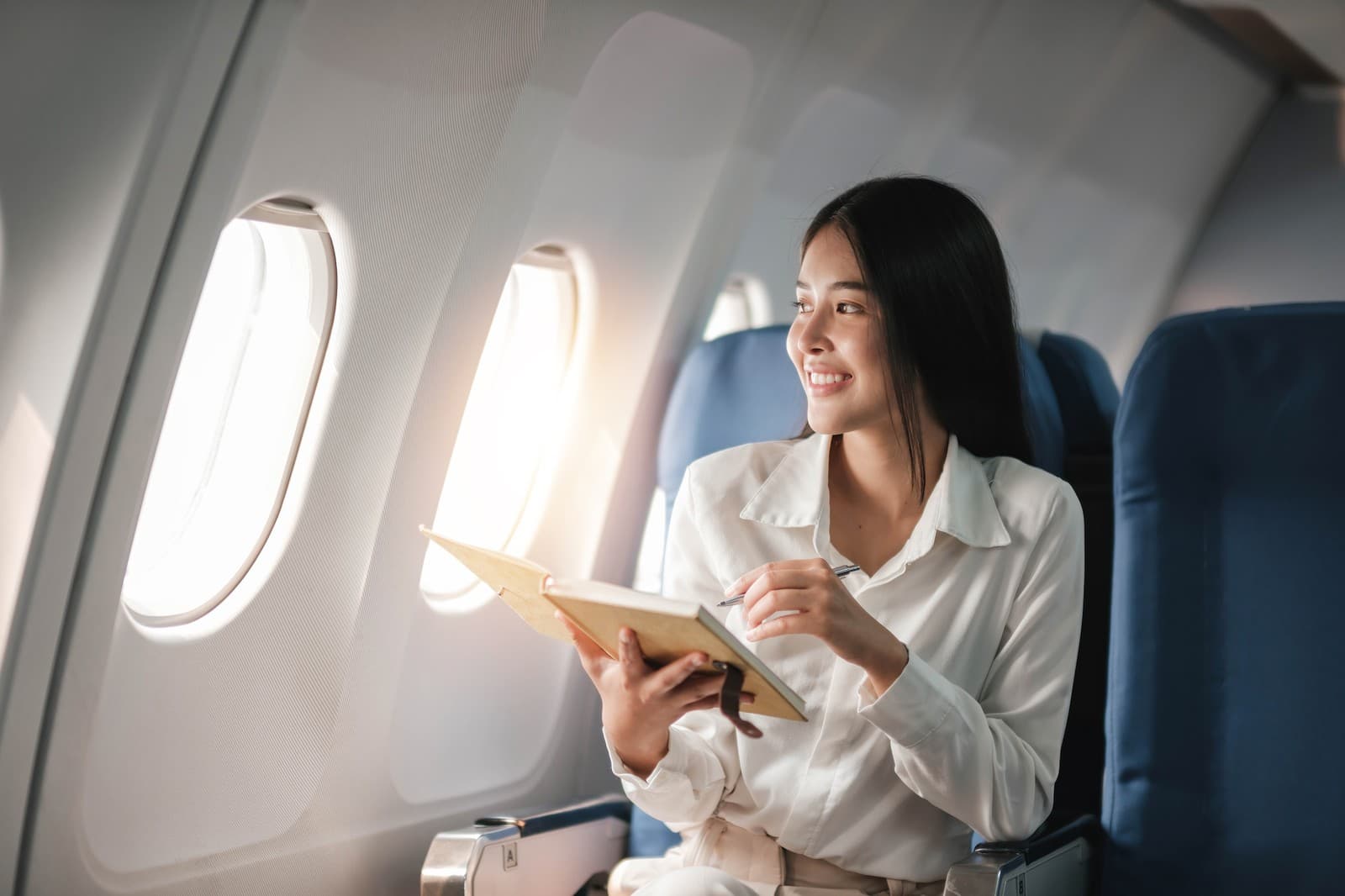
Your first business class flight is memorable — but not always for the right reasons. Most first-timers spend the first hour figuring out how the seat works, miss the pre-departure champagne because they didn't know to ask, and land having used about 40% of what they paid for. That's a lot of money to leave on the table.
This guide fixes that. Whether you're flying on miles, booking with a consolidator, or spending real cash for the first time, you deserve to walk off that plane feeling like you genuinely got your money's worth.
What actually sets business class apart
Forget the marketing language. Here's what the upgrade physically means for your body over a 10-hour flight.
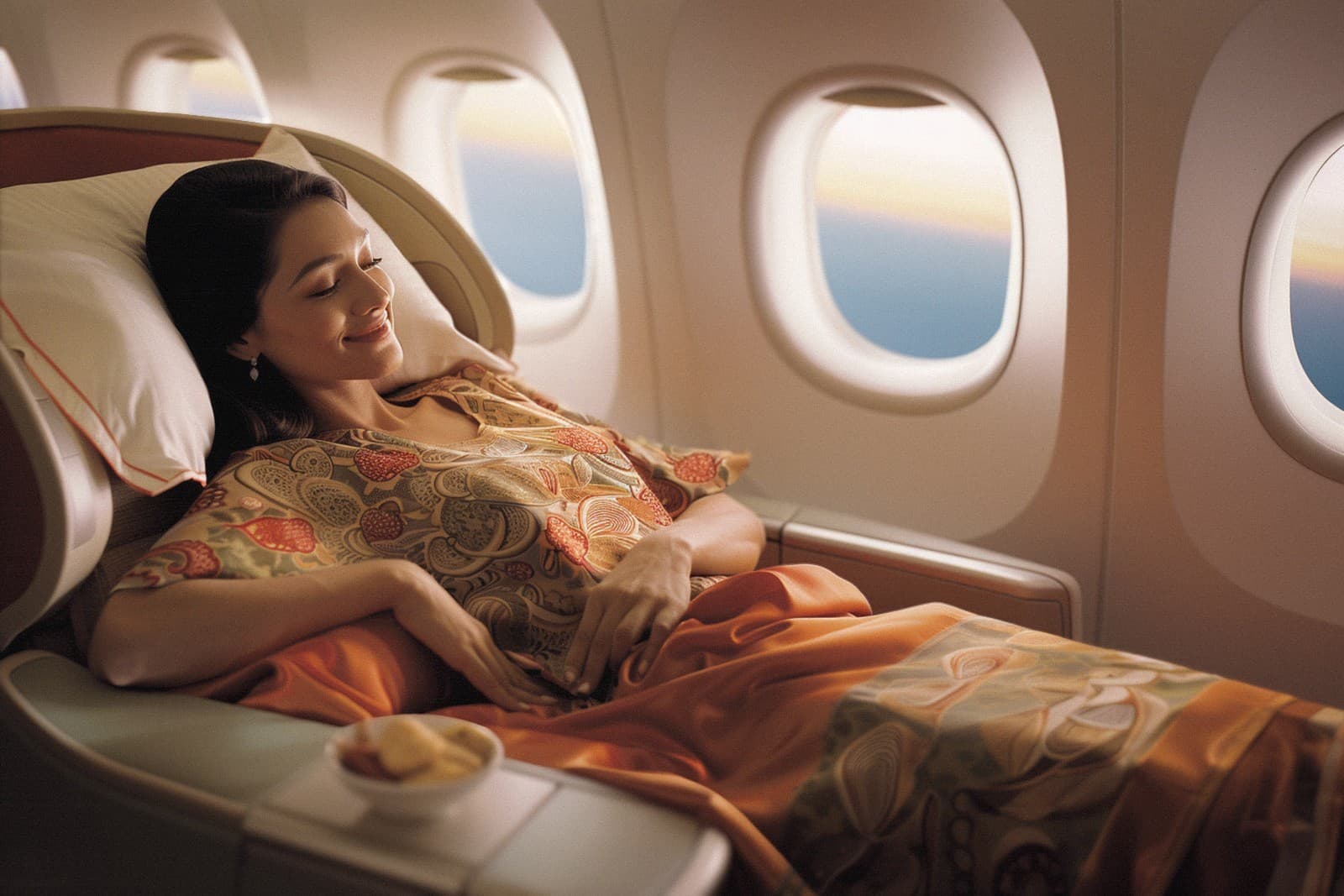
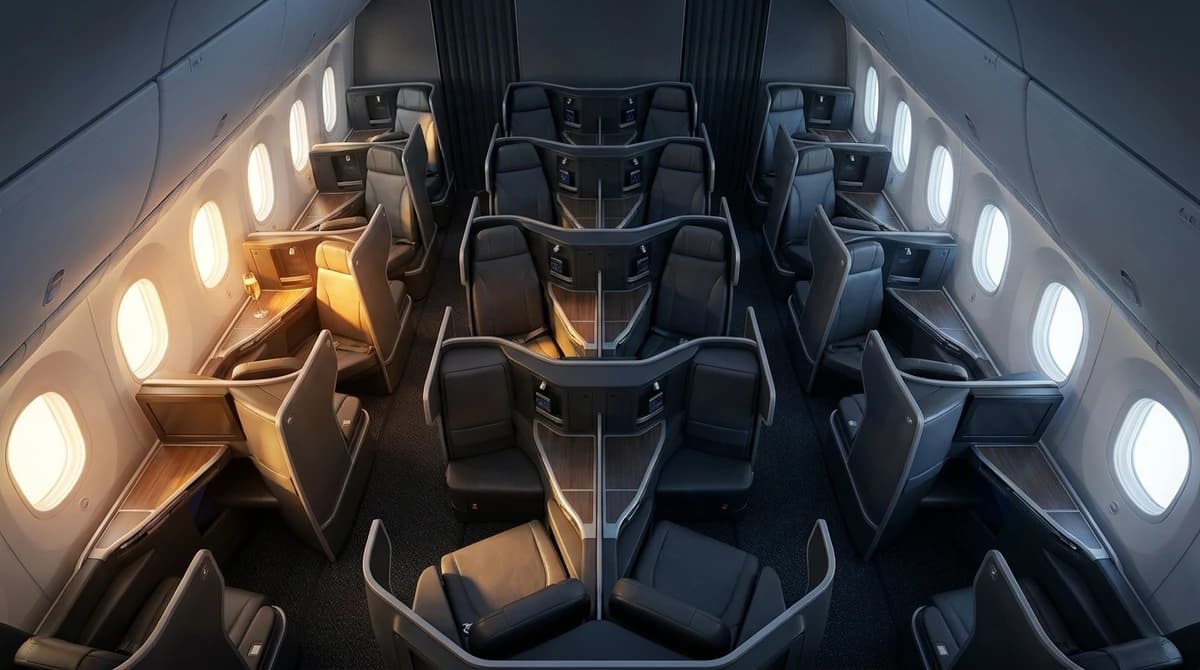
The seat is wider — typically 20 to 23 inches across compared to 17 inches in economy — and on most long-haul products it converts to a fully flat bed. Qatar Airways' QSuite stretches to 79 inches fully reclined. Singapore Airlines' Business Class on the A350 gives you a 28-inch seat width. These aren't marginal improvements; they're a different category of experience.
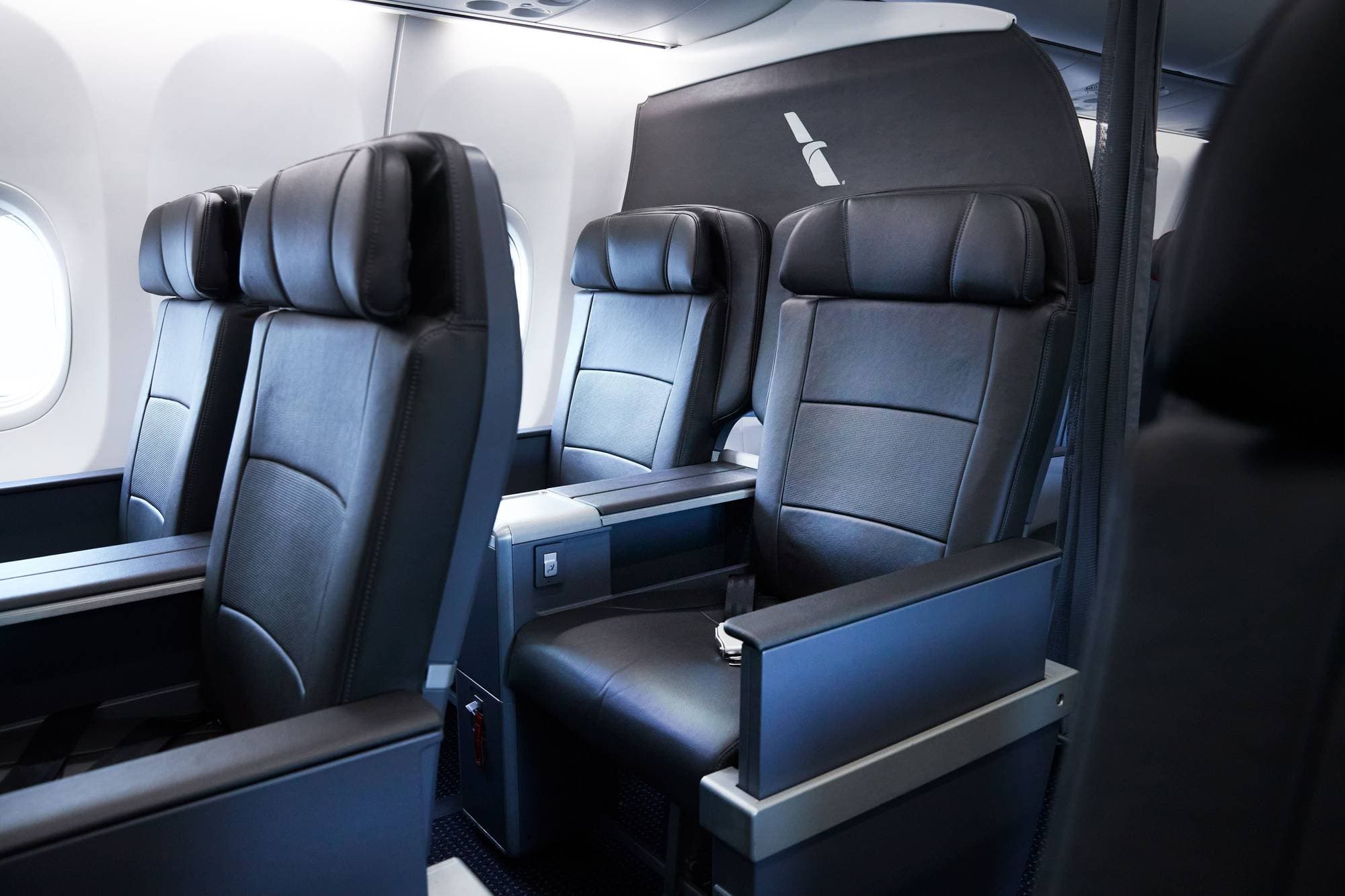
Privacy varies enormously between airlines and aircraft. A 2-2-2 configuration means you're climbing over a stranger to reach the aisle if you booked the window seat. A herringbone or staggered layout gives every passenger direct aisle access. This single detail can make or break a red-eye.
Beyond the seat, you're getting:
- A dedicated cabin crew ratio that means you're not waiting 20 minutes for water
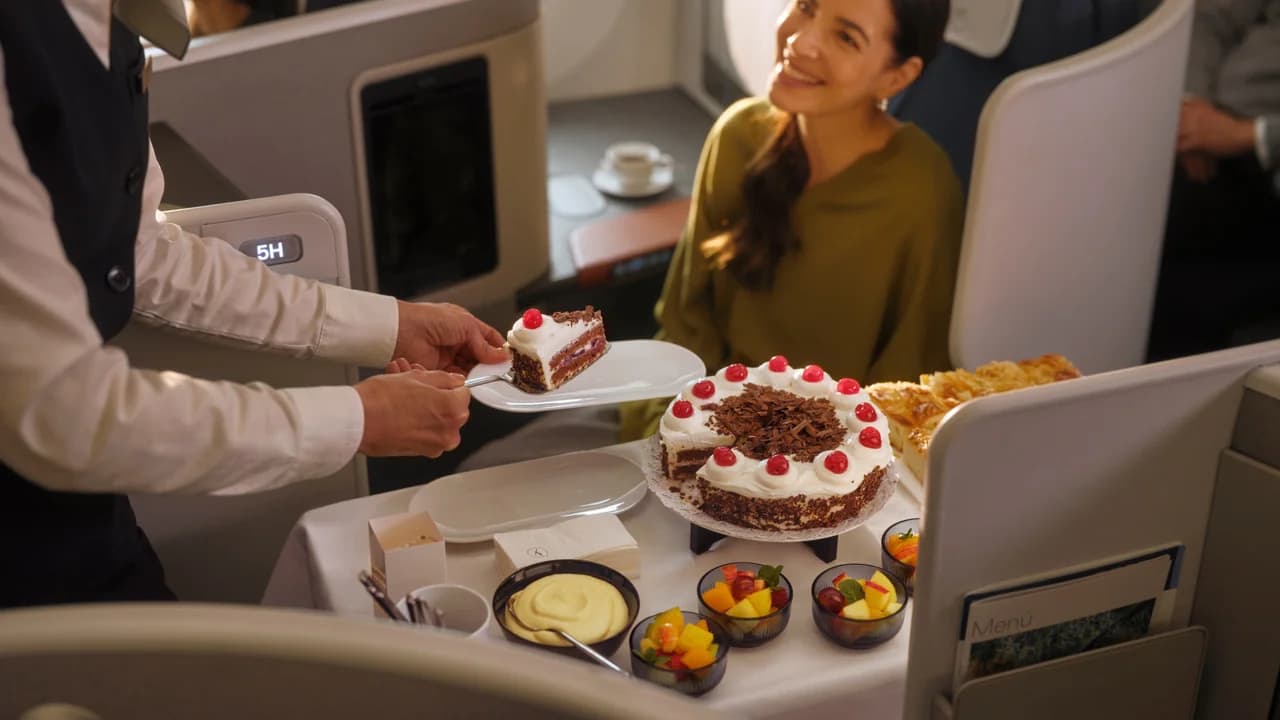
- Multi-course meals served on actual china, with a printed menu, on routes like JFK–LHR and SIN–SYD
- Noise-canceling headphones (Bose on some carriers, decent house-brand on others)
- A personal screen that's typically 17–24 inches — large enough to watch a film without squinting
- An amenity kit that, on carriers like Emirates or Cathay Pacific, includes legitimate skincare rather than a lip balm and a sad comb
The catch: none of this is standardized. An airline's "business class" on a domestic 737 is not the same product as its long-haul A380 cabin. Always verify the aircraft type and seat configuration before you book.
Choosing your seat — and why it matters more than you think
Most first-timers accept whatever seat they're assigned. Don't.
Start with SeatGuru or the airline's own seat map before you even confirm the booking. On a Boeing 777 with a 1-2-1 layout, every seat has aisle access — but the true solo seats along the windows are worth hunting down if you value privacy. On an Airbus A380, the upper deck business cabin on some airlines is quieter and less trafficked than the main deck.
Avoid seats directly adjacent to the galley or lavatories. The noise and foot traffic are relentless, and the crew congregates there during quiet periods. Row 1 sounds prestigious but often has no under-seat storage and puts you next to a bulkhead.
A few specific things worth checking:
- Whether your seat has a door (QSuite has one; most don't)
- The exact lie-flat length — critical if you're over 6 feet tall
- Whether window seats require climbing over a companion in middle configurations
- Where the power outlets are positioned relative to where you actually sit
If this research feels like a lot, call us at (888) 851-6897. Our team knows these aircraft configurations cold and can steer you toward the right seat for your body type, sleep style, and route.
Pre-booking your meal — do it, and do it 48 hours out
Business class food is genuinely good on the right airlines. On the wrong ones, it's economy food served on a nicer tray. Either way, the special meal program is an underused feature that most first-timers don't know exists.
Airlines including Lufthansa, Emirates, and Singapore Airlines let you pre-order from a dedicated menu — sometimes a more interesting menu than the standard cabin service — provided you request it at least 24 to 48 hours before departure. If you have dietary restrictions, this isn't optional; it's the only way to guarantee your meal is actually onboard.
Even without restrictions, browsing the menu before you fly pays off. You'll know what's coming, you can make a real choice rather than a panicked one when the crew asks, and on some carriers you can choose your meal service timing — useful if you'd rather sleep first and eat later.
Hydration matters more than the food. Cabin air at altitude is extremely dry, and alcohol compounds the effect. One glass of the Champagne (yes, have it — it's part of the experience), but then alternate with water throughout. You'll land feeling like a person instead of a husk.
The dedicated check-in counter is not optional
When you arrive at the airport, you have your own check-in lane. Use it.
Look for "Business Class," "Premium Check-in," or the airline's own premium branding (Lufthansa calls theirs "HON Circle & Senator," British Airways uses "First & Club World"). These lanes move fast because there are fewer people and the agents are experienced. Your bags often get priority tags slapped on them here, which means they're typically first off the carousel on arrival.
Some airlines — Emirates and Etihad are good examples — maintain completely separate terminal zones for premium passengers at their hub airports. At Dubai International (DBX), Emirates' dedicated business class check-in area operates more like a hotel lobby than an airport counter.
Don't show up at the wrong counter and stand in the economy line for 45 minutes. It happens. It shouldn't happen to you.
Get to the lounge early — and actually use it
This is where a lot of first-timers waste value. They arrive at the airport just in time to grab a coffee and rush to the gate, missing the lounge entirely.
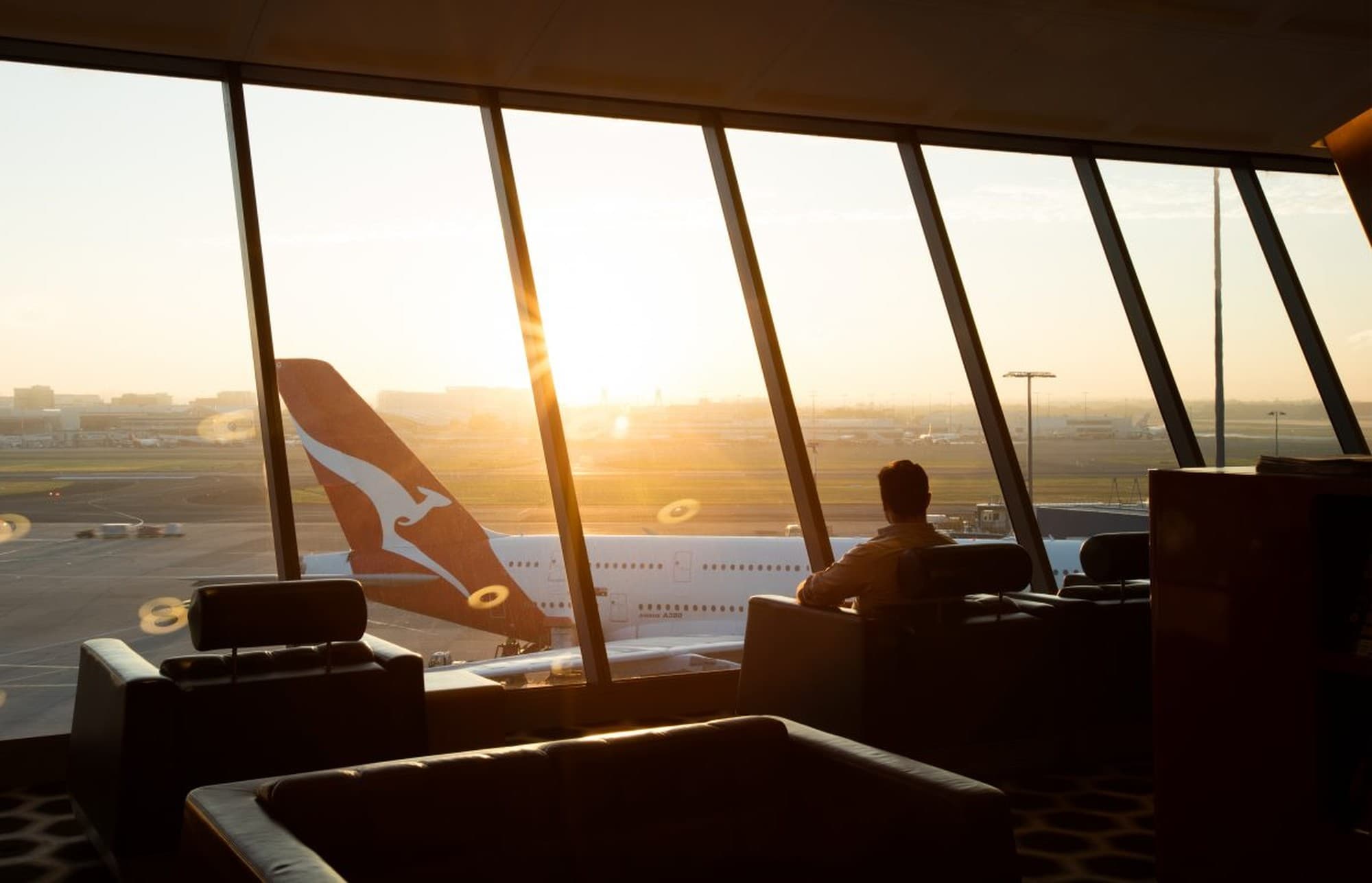
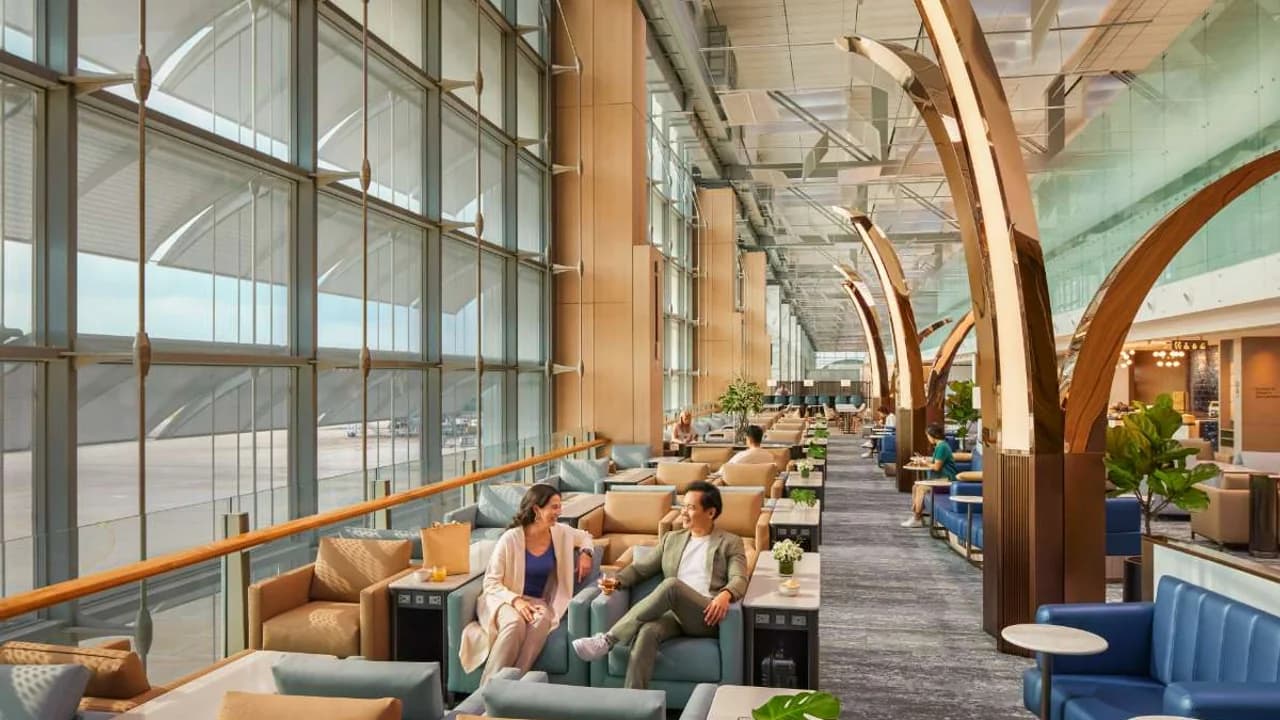
The lounge is part of what you paid for. Arrive at least two to three hours before departure. At major hubs — London Heathrow Terminal 5, Singapore Changi, Doha Hamad — the business class lounges are destinations in themselves. The Qantas International Business Lounge at SYD has a proper à la carte restaurant. The Cathay Pacific Pier Business at HKG has noodle bars and shower suites with product from Aesop.
Standard lounge offerings across most carriers include:
- Buffet and often à la carte dining with actual quality ingredients
- A full bar, typically open from early morning
- Shower suites (book these as soon as you arrive — they fill up)
- Wi-Fi fast enough to run a video call
- Quiet zones separate from the main seating area
- Day beds or sleep pods at a handful of flagship lounges
One opinion stated plainly: the lounge is often the best meal of the journey. Many long-haul business class meals, despite the marketing, are still reheated food. The lounge restaurant is fresh, cooked to order, and unhurried. Eat there.
Check which lounge you have access to before you travel — airlines don't always operate their own lounges at every airport and may direct you to a partner lounge that's considerably less impressive.
Fast-track security and priority boarding
Your boarding pass opens a different security lane. Find it and use it.
At busy airports like JFK, LAX, or LHR, the standard security queue can eat 45 minutes you'd rather spend in the lounge. Fast-track lanes move in a fraction of the time. Signs vary by airport — look for "Fast Track," "Priority," or the airline alliance's own branding (Star Alliance Gold, Oneworld Emerald).
Priority boarding typically means two things in practice: you board before the main cabin, and you have overhead bin space that isn't already claimed. On full flights this is genuinely valuable. Take a photo of where your bag goes in the overhead bin if you're the type to forget on a long flight — small thing, saves real friction on arrival.
One thing most first-timers miss: the pre-departure drink. Before the door closes, a crew member will come through with Champagne, orange juice, or water. It's a small ritual, but it signals that the service has started. Don't have your headphones on and wave them off.
How to actually sleep on the plane
A lie-flat seat is a tool. Most people use it poorly.
The single most effective thing you can do for long-haul sleep is match your sleep timing to your destination. Flying from New York to London overnight on, say, BA178 (departs JFK around 7 PM, arrives LHR around 7 AM)? Go to sleep as soon as the meal service ends. Don't watch three episodes of something and then try to squeeze in three hours. You'll arrive wrecked.
Practical mechanics:
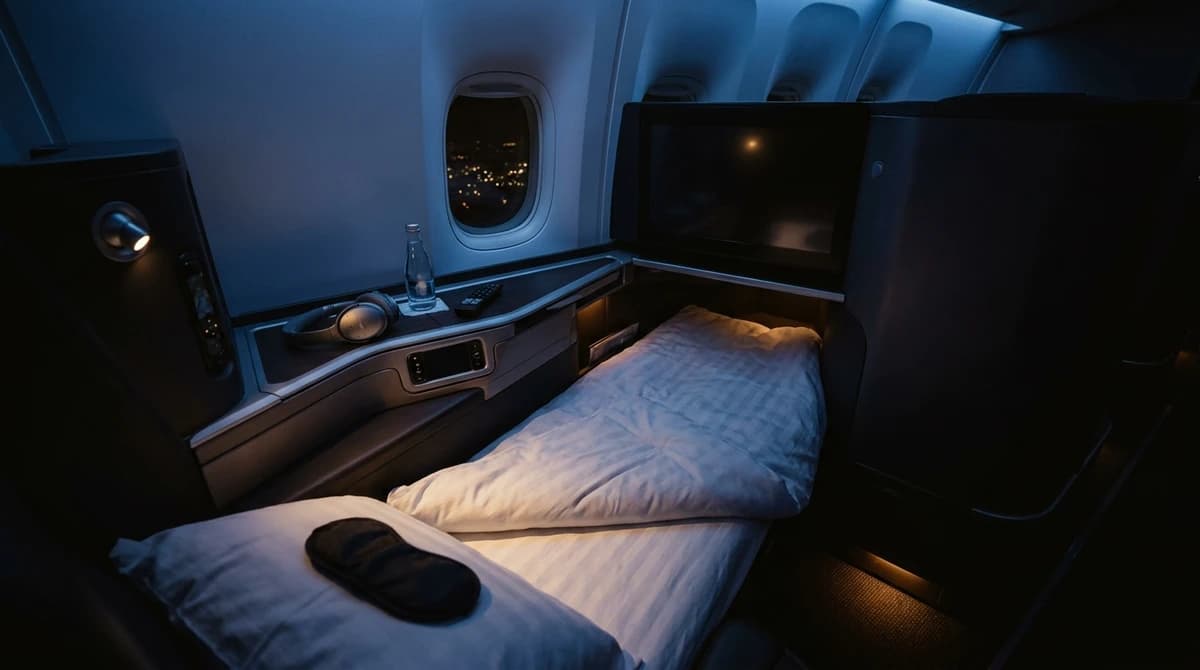
- Set the seat to fully flat before you want to sleep, not after you're already drowsy and fumbling with controls
- Use the mattress pad if one is provided — Emirates and Singapore both offer them in business class, and they make a genuine difference
- Put on the sleep mask before the lights dim, not after — your eyes need a few minutes to adjust
- Keep the noise-canceling headphones on even if you're not listening to anything; they reduce cabin noise passively
The crew will generally leave you alone once you've indicated you're sleeping. A politely placed "Do Not Disturb" indicator (available on some seat panels) or simply closing your privacy screen handles the rest. If you need the cabin temperature adjusted, ask before you settle in — don't try to flag someone down at 2 AM.
Alcohol is the enemy of quality sleep at altitude. One drink, maybe two over a long flight. Beyond that, the "sleep" you get is shallow and you'll feel worse on arrival than if you'd had nothing.
Evaluating your miles redemption — what did you actually get?
If you used points or miles for this ticket, spend a few minutes after the flight doing the math. It's satisfying when it works out, and it teaches you how to redeem smarter next time.
The basic calculation: find the cash price of your ticket (use Google Flights or the airline's website) and divide it by the number of miles you redeemed. If a JFK–LHR business class seat retailed at $4,800 and you redeemed 85,000 miles, you got about 5.6 cents per mile. That's excellent by any standard.
Some factors that affect the calculation:
- The cash price you're comparing should reflect what you actually could have bought the seat for, not the highest fare bucket. This is where consolidator pricing matters: through our airline contracts, CEOFLIGHTS regularly brings published fares on premium transatlantic routes down by 30–50%, which changes the math on whether a miles redemption actually makes sense
- Account for the lounge access, fast-track, and priority bags — those have real dollar value at airports where day passes sell for $50–$75
- Factor in whether the redemption required a connection that the cash fare wouldn't have, adding hours to your journey
CEOFLIGHTS is ASTA-accredited (member #900292735) and rated 4.8/5 on Trustpilot — when you're spending this kind of money, that accountability matters. We've helped executives and frequent flyers on routes from EWR–SIN to ORD–NRT find fares that make the miles-versus-cash decision genuinely interesting rather than obvious.
The mindset going in
Don't be tentative. Business class is not a space where you should feel like you're imposing by asking for something. The crew is there, the ratio of crew to passengers is favorable, and the whole point of the product is attentive service.
Ask for the full pour. Request the second dessert if you want it. Tell them you'd like your bed made up before you sleep. These aren't extravagant requests — they're the job.
And if something isn't right — the seat mechanism is stiff, the entertainment screen has a dead zone, the meal you pre-ordered isn't onboard — say so politely and immediately. Issues flagged early get resolved. Issues mentioned on the post-flight survey do not.
Your first business class flight won't be your last. The traveler who gets the most out of it is the one who arrives informed, boards early, uses the lounge, sleeps on purpose, and treats the experience as something to be actively enjoyed rather than passively received.
Call us at (888) 851-6897 before you book your next trip. We'll match you to the right product on the right aircraft — and through our airline contracts, fares that retail at $6,000 or more often come down significantly. That's the difference between a single experience and a habit.