Quick summary
Business class is absolutely worth the investment on long-haul flights exceeding 6 to 8 hours, protecting your physical health and post-arrival productivity with 79-inch lie-flat beds and priority airport access. By utilizing consolidator pricing through CEOFLIGHTS, travelers can bypass steep $12,000 retail sticker prices to secure premium cabins for $3,500–$5,500.
Economy class is a feat of engineering — they've compressed a human being into 17 inches of seat width and called it transportation. It works. It gets you there. But if you're flying more than six hours, "getting there" is not enough.
The real question isn't whether business class is comfortable. It obviously is. The real question is whether the comfort is worth the price differential — and on certain flights, in certain circumstances, the answer is so clearly yes that the debate feels almost quaint.
The actual pain of economy class (it's not just discomfort)
Most frequent flyers don't need to be told that economy class is cramped. They've lived it. Thirty-two inches of pitch, a seat that reclines exactly four degrees into the face of the person behind you, and a meal that arrives on a tray the size of a hardback novel.
But the consequences run deeper than mild annoyance.
Impaired productivity is the real cost. You land in Frankfurt or Singapore or São Paulo stiff, groggy, and off your game. If you're walking into a board meeting within 12 hours of a 10-hour flight in economy, you're not performing at your best — and everyone in the room can tell.
The physiological toll is real too. Prolonged sitting in cramped conditions restricts circulation, increases the risk of deep vein thrombosis on flights over eight hours, and produces the kind of lower back pain that ruins the first day of whatever you flew somewhere to do. This is not hyperbole. It's what happens when a six-foot person sits in a 31-inch pitch seat across the Atlantic.
Then there's the cabin environment itself:
- Noise from 200+ passengers, crying infants, and someone's unsolicited podcast playing through laptop speakers at 30% volume
- Meals that range from forgettable to actively bad, served on a fixed schedule regardless of your time zone
- Screens that max out around 9 inches, mounted far enough away to guarantee eyestrain on a transatlantic crossing
- The boarding process, which somehow feels longer every year
On a two-hour hop from New York to Chicago, none of this matters much. On a 14-hour flight from Los Angeles to Sydney on Qantas QF12, it matters enormously.
What business class actually delivers
The gap between economy and business class has never been wider. In 2026, the best long-haul business class products are genuinely extraordinary — and even the mid-tier offerings are a massive step up from what you'd experience 30 rows back.
Lie-flat seats and real sleep
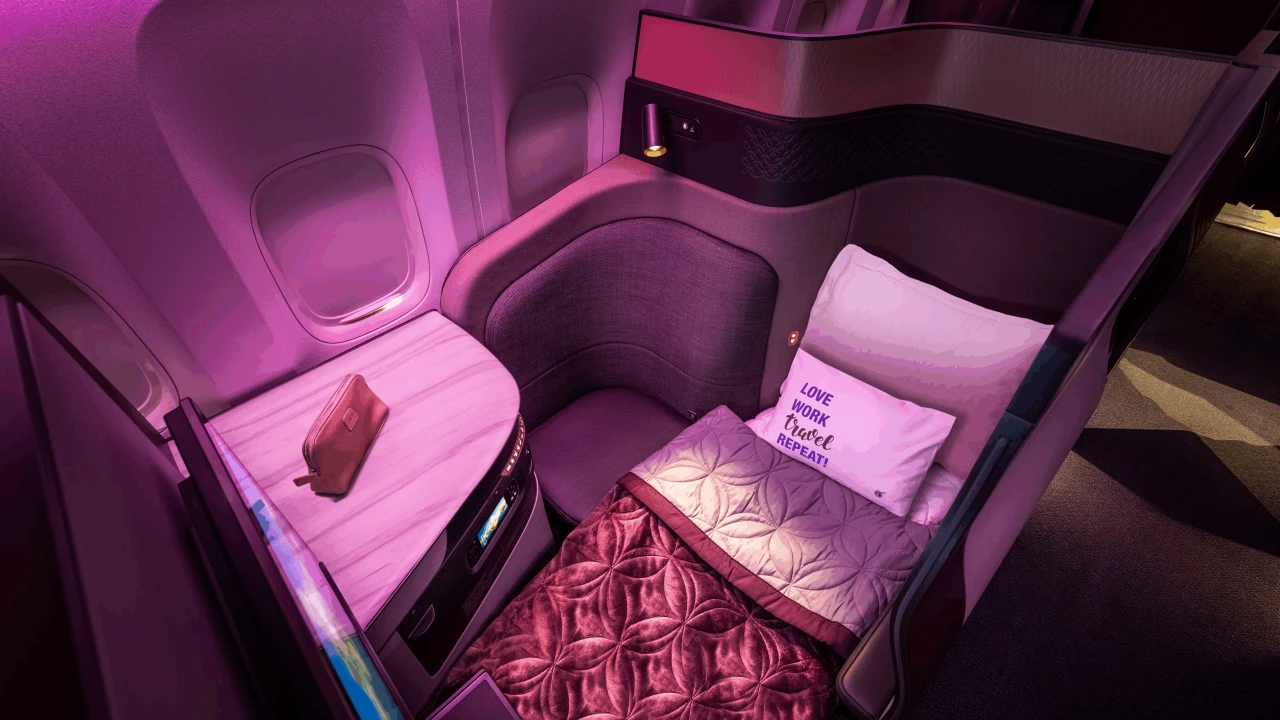
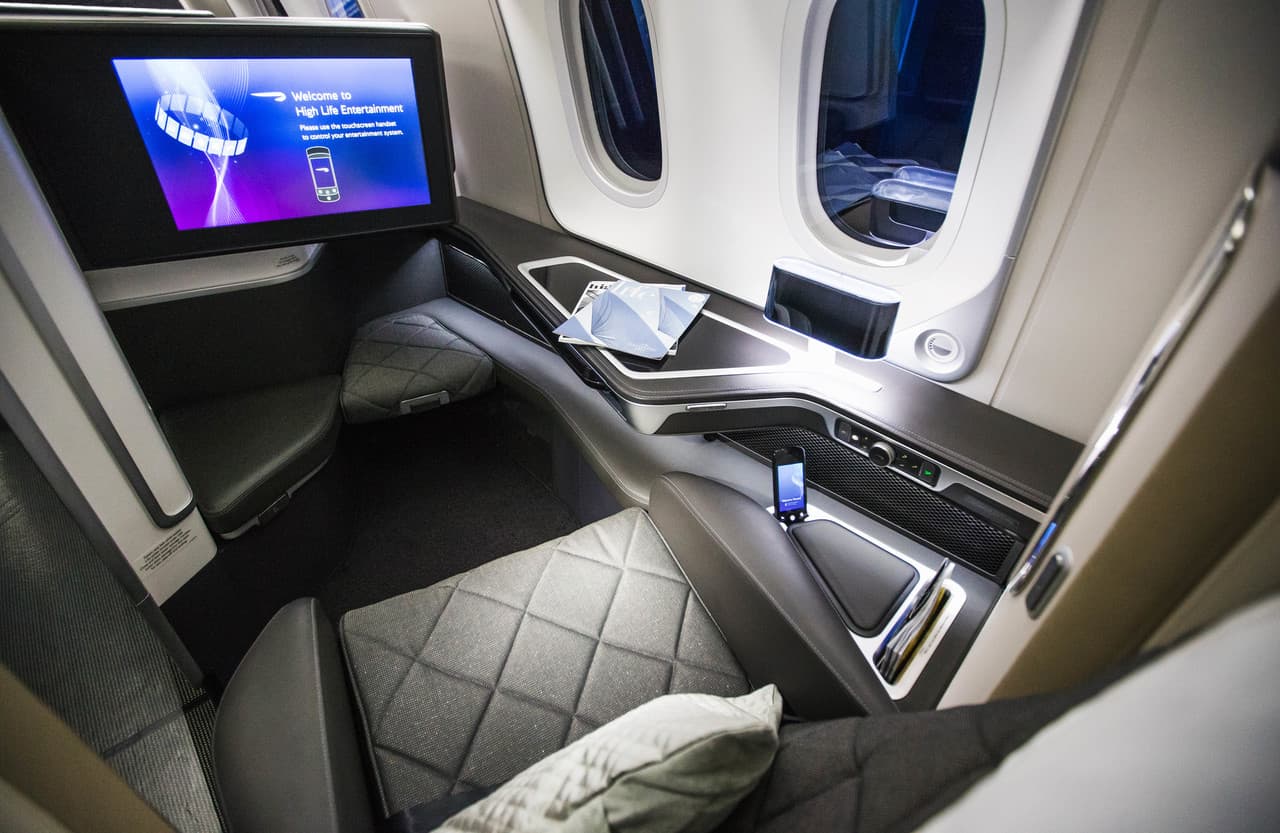
This is the single biggest differentiator on long-haul routes, and it's not close. Qatar Airways' QSuite converts to a fully flat 79-inch bed. Singapore Airlines' Business Class on the A350 offers a seat that's 28 inches wide. Emirates' Business Class on the 777-300ER gives you a fully enclosed mini-suite with sliding privacy doors.
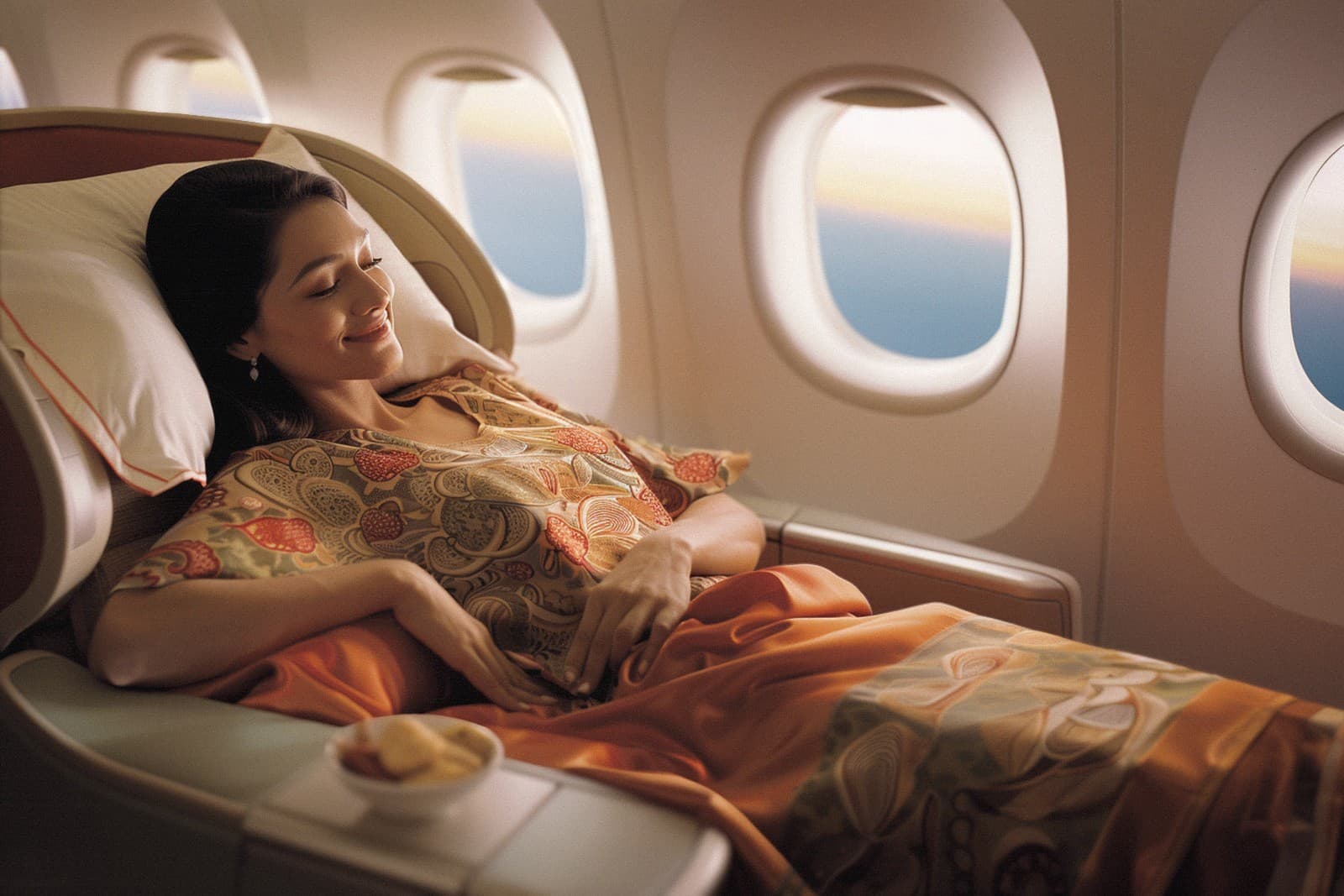
You sleep horizontally. You wake up feeling like yourself. That alone justifies the fare on any flight over eight hours.
The cabin is quieter — genuinely
Fewer passengers, better cabin design, and the physical separation from 180+ economy travelers combine to produce a fundamentally different acoustic environment. Many new aircraft configurations place business class forward of the wings, which reduces engine noise further. On Qatar Airways' QSuite configuration, the enclosed suites create near-complete privacy between rows.
For anyone trying to sleep, work, or simply decompress, this matters.
Dining that treats you like a guest
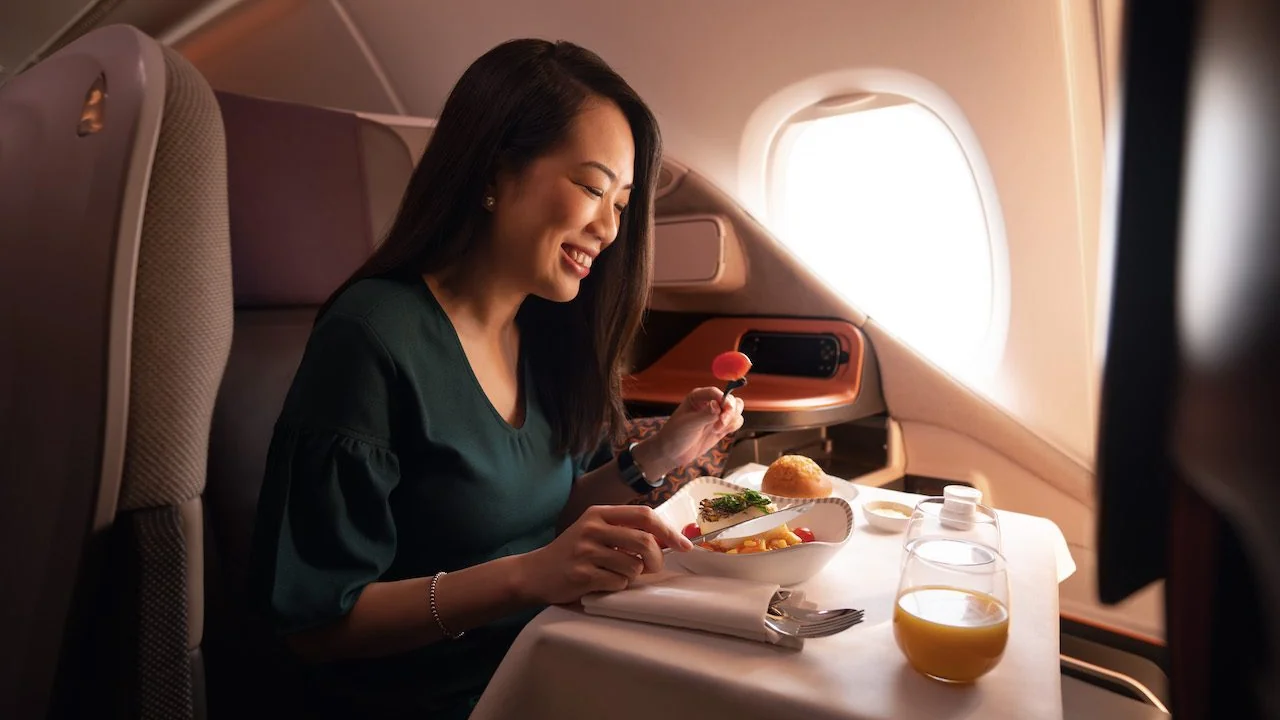
Business class dining on a carrier like Cathay Pacific or Air France La Première bears no resemblance to what's happening in the back of the plane. Multi-course meals designed by actual chefs, served on proper china, with a wine selection curated by a sommelier. You order when you're hungry, not when the cart reaches row 42. On Singapore Airlines, the "Book the Cook" program lets you pre-select from dishes like Lobster Thermidor or Chicken Biryani 24 hours before departure.
This is not airline food. This is restaurant food at 35,000 feet.
Priority everything
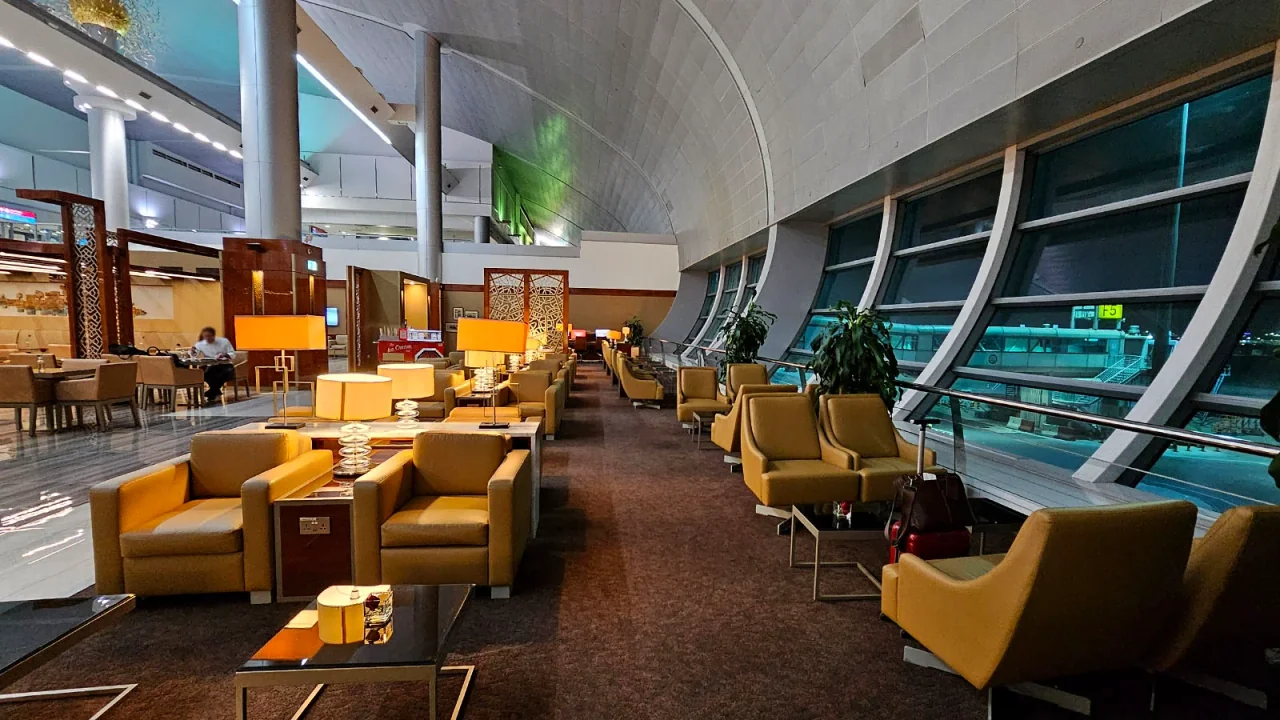
Business class access typically includes:
- Dedicated check-in desks (often with no queue at all during off-peak hours)
- Priority security lanes at major hubs — at London Heathrow Terminal 5, this difference can be 45 minutes versus 8 minutes
- Access to airport lounges: the Qatar Airways Al Mourjan Business Lounge in Doha, the Cathay Pacific The Pier in Hong Kong, the Qantas First Lounge in Sydney — these are genuinely excellent spaces with showers, proper food, and actual quiet
- Priority boarding, so you're settled and ordered a pre-departure drink before economy passengers have found their overhead bin space
- Priority baggage delivery, which routinely means your bags arrive 20 minutes faster
Entertainment and connectivity
Large screens — typically 17 to 24 inches in true business class — noise-canceling headphones included, and on most modern widebody aircraft, high-speed Wi-Fi that actually functions. On Emirates' Boeing 777, the ICE system offers over 6,500 entertainment options on a 23-inch screen. If you need to work, most business class seats include a dedicated power outlet, USB ports, and enough surface area to open a laptop properly.
When is business class worth the money?
The honest answer is: it depends on flight length more than anything else.
On a 90-minute domestic sector, business class is mostly a wider seat and a better snack. The lounge access and priority boarding still have value, but the in-flight product difference is minor. On U.S. domestic routes specifically, most "business class" seats are the same aircraft seats as economy — just with the middle seat blocked.
On medium-haul routes of three to six hours — transatlantic narrowbodies, intra-Asia flying, Europe to the Middle East — business class becomes meaningfully better. Proper meals, more space, and lounge access make a real difference.
On long-haul routes of eight hours or more, business class stops being a luxury and starts being a practical decision. The math changes entirely when you factor in lost productivity, health impacts, and the opportunity cost of arriving wrecked.
Three situations where business class pays for itself:
- You're flying for work and need to perform at full capacity within hours of landing. The cost of underperformance in a high-stakes meeting dwarfs the fare differential.
- You have limited vacation time. Spending two days recovering from a brutal Sydney-to-London economy flight in a hotel room is a terrible use of annual leave.
- You have a physical reason — chronic back issues, tall frame, circulation concerns — where economy-class conditions aren't just uncomfortable but medically problematic.
How to pay less than retail for business class
Here's where most travelers leave money on the table. Retail business class fares are expensive — often eye-wateringly so. A round-trip business class ticket from New York (JFK) to Dubai (DXB) can list at $12,000 or more on Emirates.
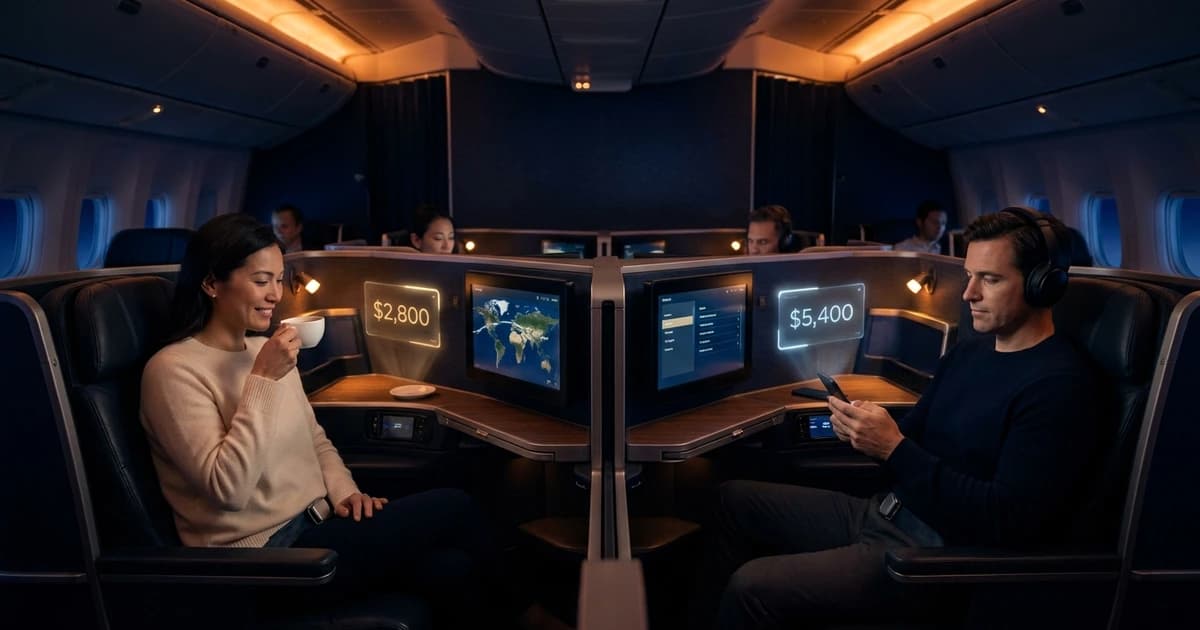
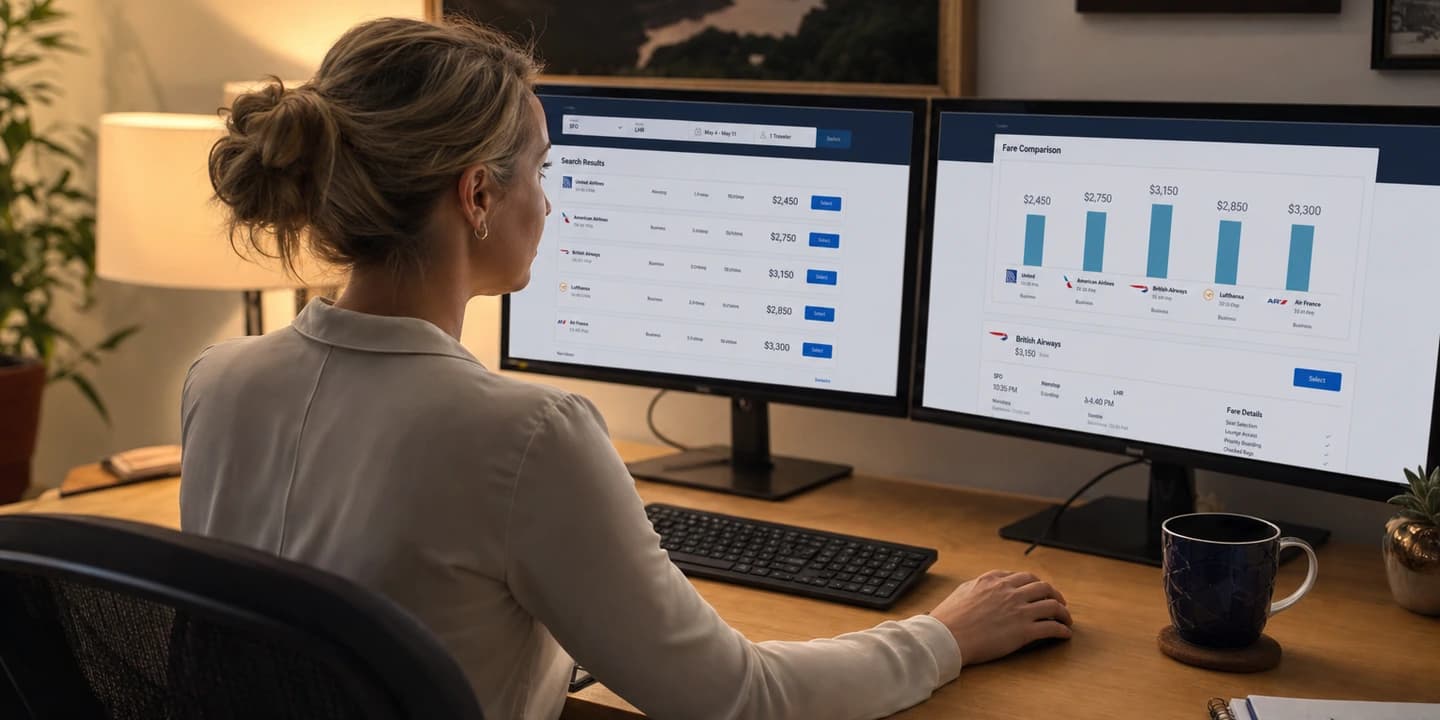
Through CEOFLIGHTS' airline contracts, that same Emirates Business Class fare on routes like JFK–DXB regularly drops to the $3,500–$5,500 range. That's not a sale. That's consolidator pricing — negotiated bulk rates that don't appear on Google Flights, Expedia, or the airline's own website.
CEOFLIGHTS is ASTA-accredited (member #900292735) and top rated on Trustpilot by travelers who've already made this switch. The model is simple: we hold inventory on premium cabin seats across carriers including Qatar Airways, Emirates, Lufthansa, Air France, United, Delta, Singapore Airlines, and Cathay Pacific, and we pass the negotiated rates directly to clients.
You call (888) 851-6897, tell us where you're going and when, and a consultant finds you the best available fare — including unpublished rates, seat selection, meal preferences, and mileage accrual where applicable.
What you get beyond the fare:
- A dedicated consultant who knows these products firsthand — which QSuite configurations have direct aisle access, which Polaris seats on United's 767 routes are better avoided (rows 1A and 1K have limited storage)
- Monitoring for price drops and upgrade opportunities after booking
- Support if something changes — rebooking, cancellations, irregular operations — handled by a person, not a chatbot
The premium cabin experience shouldn't come with a retail-price penalty. On the routes where it matters most, the gap between what airlines publish and what CEOFLIGHTS clients actually pay is significant enough to change the conversation entirely.
The honest verdict
Business class is not always worth it. On short domestic hops, the value proposition is thin. But on any international flight over six or seven hours, the combination of sleep quality, reduced physical stress, productivity preservation, and the general experience of being treated like an adult human being rather than a unit of freight makes a compelling case.
The counter-argument usually comes down to price. And that counter-argument gets a lot weaker when you're not paying retail.
If you've been telling yourself you'll fly business class "someday," the most useful thing you can do right now is call (888) 851-6897 and find out what that someday actually costs through CEOFLIGHTS. You might be surprised how close it already is.