Quick summary
Stick to top-tier business class for most 8-12 hour flights, and reserve first class exclusively for ultra-long-haul journeys where you require peak privacy, space, and a flawless ground experience. Leading modern business class products deliver 90% of the first class experience at 40–60% of the price, making a $3,200 consolidator fare much smarter than an $8,000+ retail first class ticket. While first class offers unparalleled personalized service, massive private suites (often 26-35+ inches wide), and exclusive ground terminals, the evolution of modern business class with lie-flat beds and direct aisle access makes the immense price premium hard to justify for most travelers.
Most people assume first class is just better business class with a fancier blanket. That assumption will cost you — either by overpaying for a product you didn't need, or by settling for something that underdelivers on a 14-hour red-eye.
The gap between these two cabins is real, but it's uneven across airlines and routes. On some carriers, business class rivals what other airlines call first class. On others, the jump from one to the other is the difference between a very good hotel room and a private villa. Knowing which situation you're walking into before you book matters enormously.
Here's a direct, experience-based breakdown of what separates these two cabin classes — and how CEOFLIGHTS (ASTA-accredited, member #900292735, top rated on Trustpilot) helps frequent flyers access both at prices that make the decision easier.
Seating: the hardware that defines your flight
Business class seats
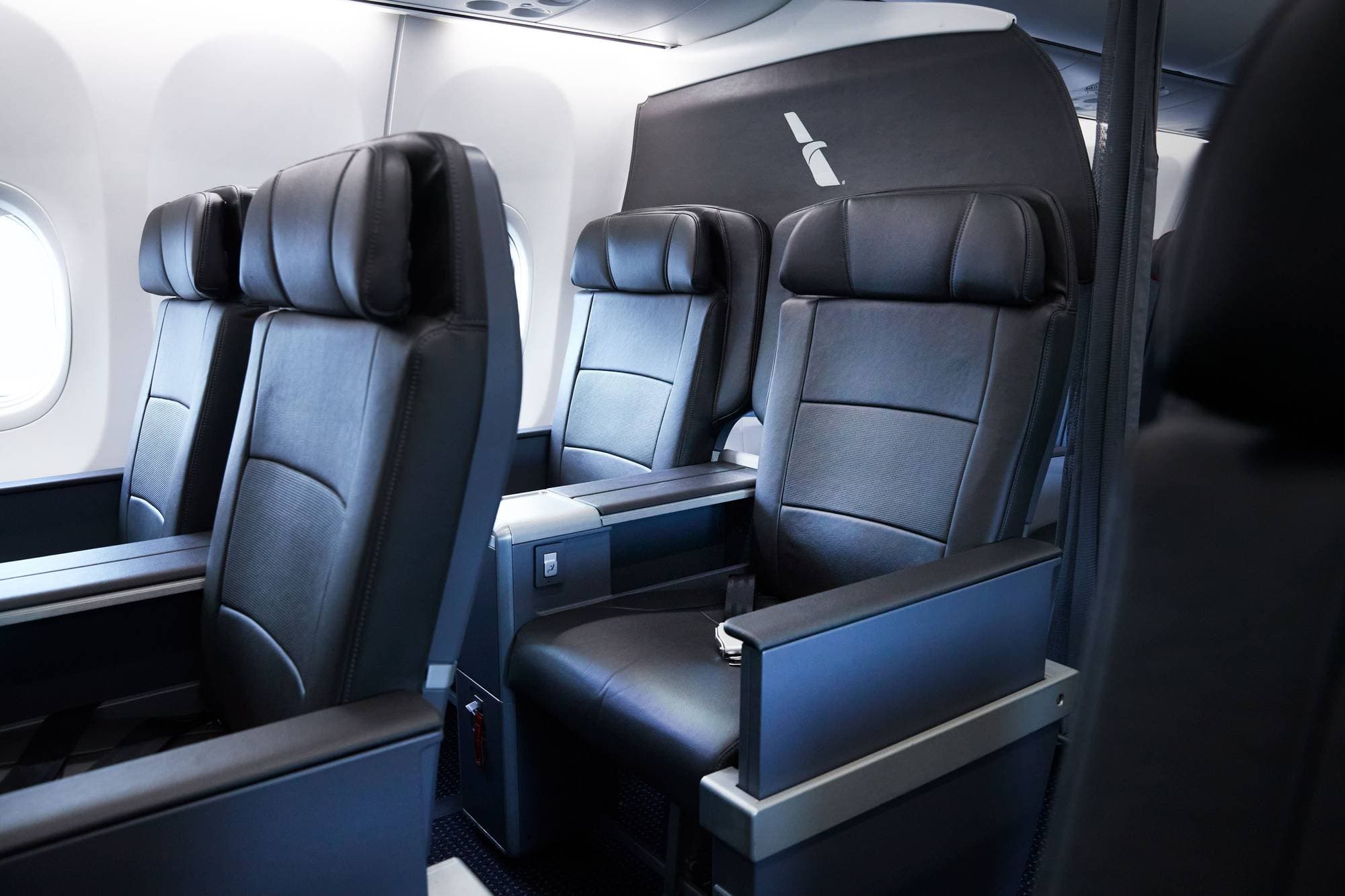
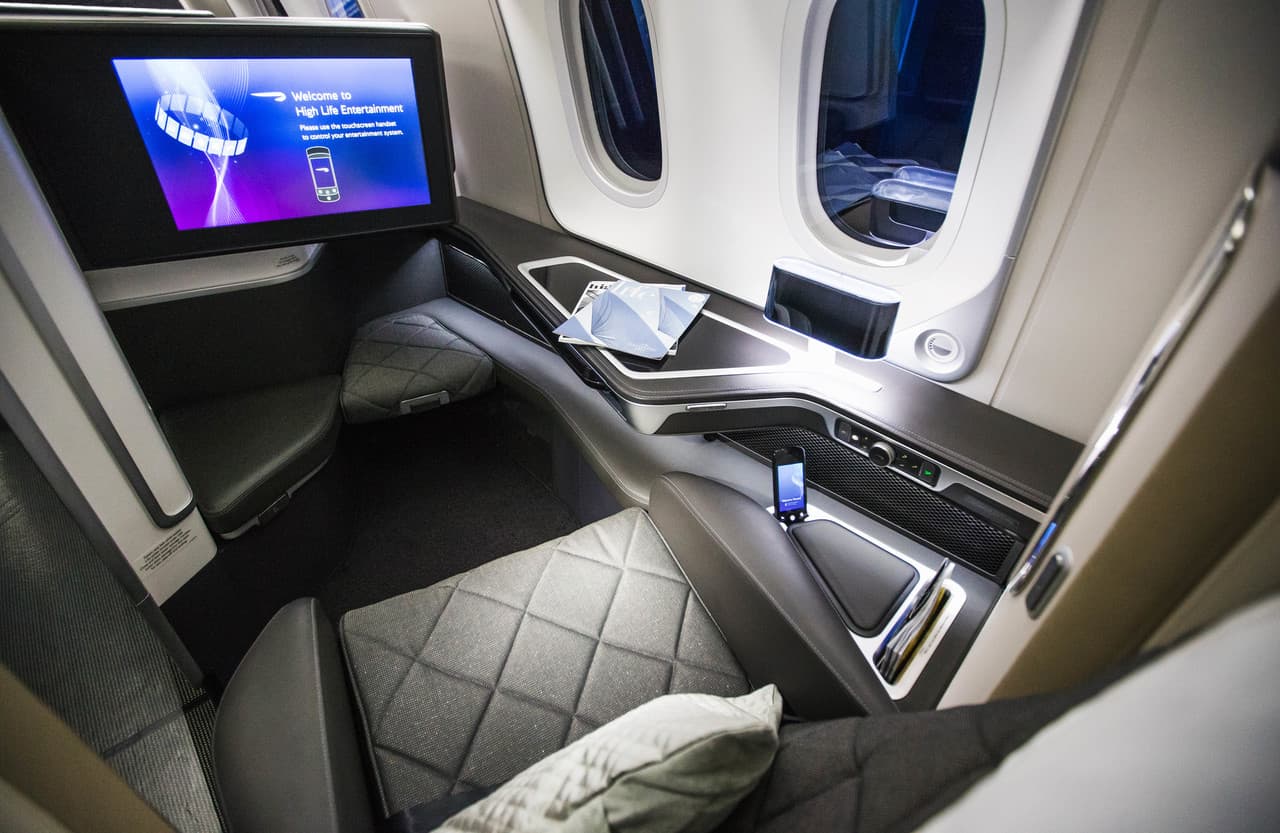
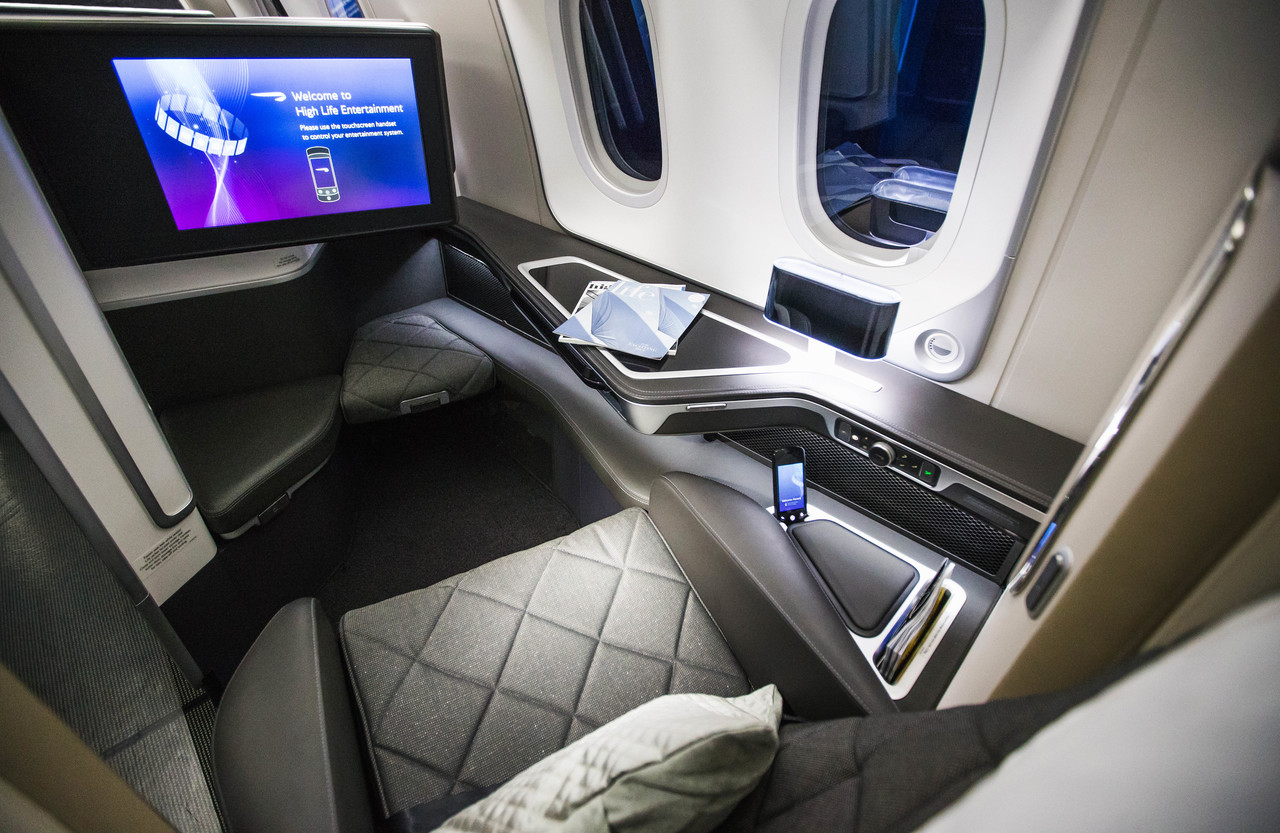
Business class has undergone a transformation over the last decade that the original "wider economy" reputation no longer captures. Today's leading business class products — Qatar Airways' QSuite, British Airways' Club Suite, Air France's New Business Class — offer lie-flat beds, direct aisle access, and privacy screens that would have been called first class in 2010.
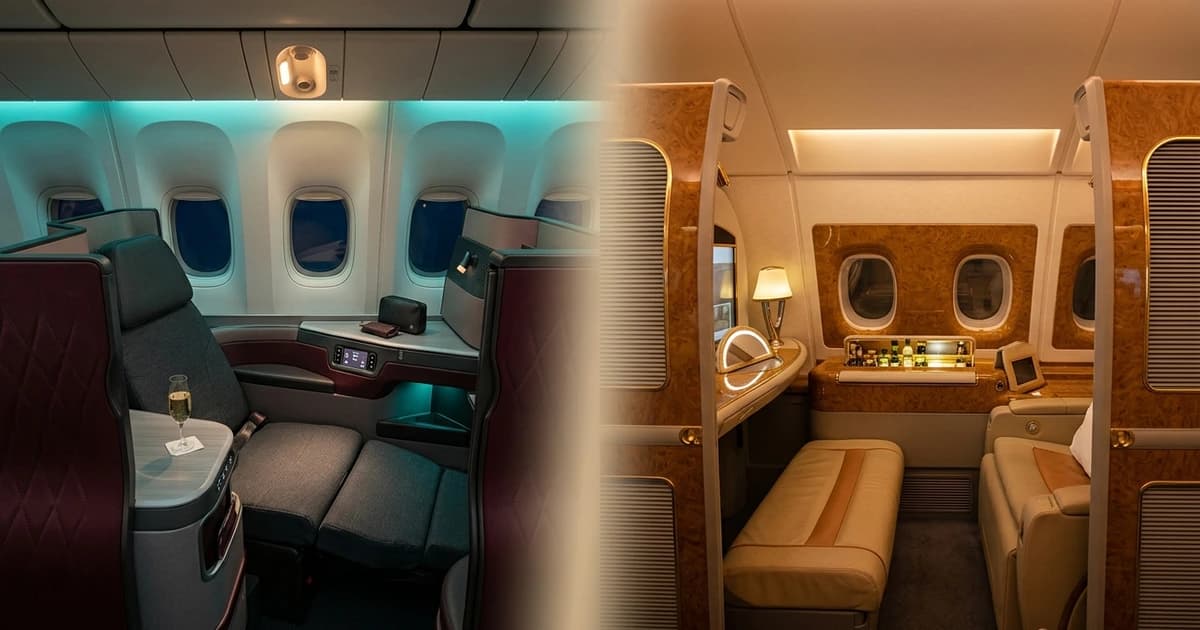
QSuite, operating on routes like QR1 (Doha to London Heathrow) and long-haul flights to New York JFK, gives passengers a 21-inch-wide seat that converts to a 79-inch flat bed. The suite doors close fully. Couples can combine adjacent seats into a shared space. It's the most ambitious business class product flying today, and it's not particularly close.
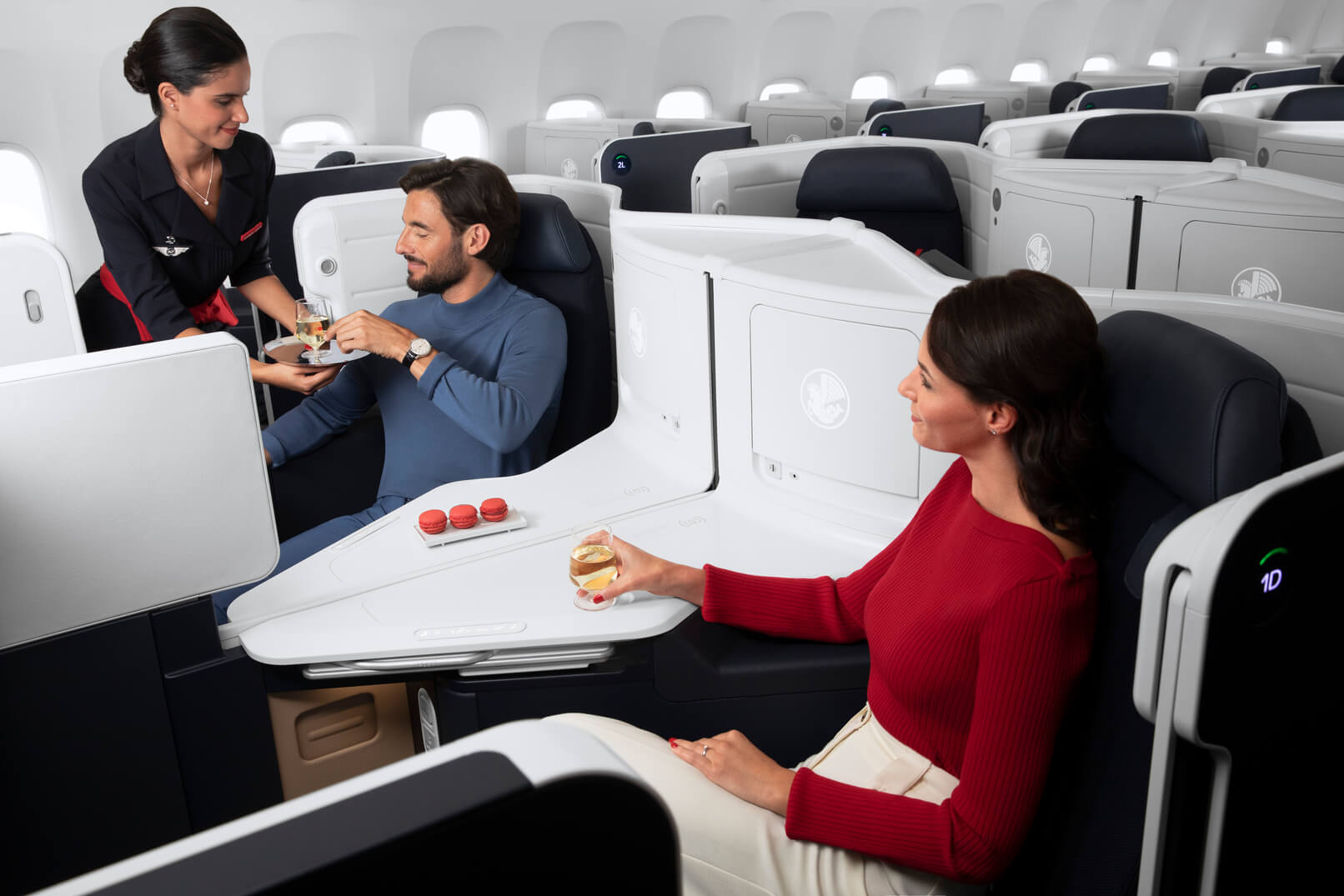
Seat widths in business class typically range from 20 to 23 inches, with bed lengths between 76 and 80 inches depending on the aircraft. On newer widebody aircraft — Boeing 777X, A350, A380 — configurations are almost universally 1-2-1 or 1-1-1, meaning every passenger has direct aisle access without climbing over anyone.
Older aircraft on short-to-medium-haul routes are a different matter. A 3-3-3 business class configuration in an older 777 is functionally premium economy with better food. Always check SeatGuru or the airline's own seat map before booking.
Amenity kits in business class range from serviceable (a sleep mask, earplugs, basic skincare) to genuinely impressive — Singapore Airlines Business Class on the A380 distributes FOREO and Penhaligon's products on select routes.
First class seats
First class is a different category of product entirely — not just incrementally better, but structurally distinct. The defining feature is space. Suites on Etihad's The Residence (A380), Emirates' First Class on the Boeing 777-300ER, and Singapore Airlines' Suites (A380) are effectively private rooms at altitude. Singapore's Suites feature a separate bed and ottoman that convert independently, 35 inches of suite width, and retractable privacy walls.
Seat widths in first class commonly run 26 to 35+ inches. The bed lengths often exceed 80 inches. But the dimension numbers miss the point — the real differentiator is that first class cabins typically seat between 4 and 14 passengers on a widebody aircraft. Fewer passengers means more dedicated crew, faster service, quieter surroundings, and a fundamentally different atmosphere.
Emirates First Class on the 777-300ER gives each passenger a closeable suite with a minibar, vanity mirror, and an 82-inch flat bed with Bulgari-branded bedding. The onboard shower spa — two showers shared across the first class cabin — is available on A380 routes including EK001 (Dubai to London Heathrow). That's not an amenity. That's a statement.
Pajamas and slippers are standard in first. Turndown service exists. Some airlines — Etihad, Singapore, ANA — assign a dedicated crew member to the first class cabin who learns your preferences during boarding and maintains them throughout the flight.
Lounges: where the experience starts before you board
Business class lounges
Business class lounge access is now near-universal across major international carriers, and the quality has risen significantly. These lounges offer hot food, bar service, shower facilities, and reasonably fast WiFi. American Airlines' Flagship Lounges, accessible to business class passengers on transcontinental and international routes, serve proper sit-down meals with tablecloths. Qatar Airways' Al Mourjan Business Lounge at Hamad International Airport in Doha is widely considered the best business class lounge in the world — a 100,000-square-foot facility with an à la carte restaurant, multiple bar concepts, and a prayer room.
What business class lounges generally don't offer: guaranteed quiet, true privacy, or spa treatments. They're good. Some are excellent. But they're shared environments.
First class lounges
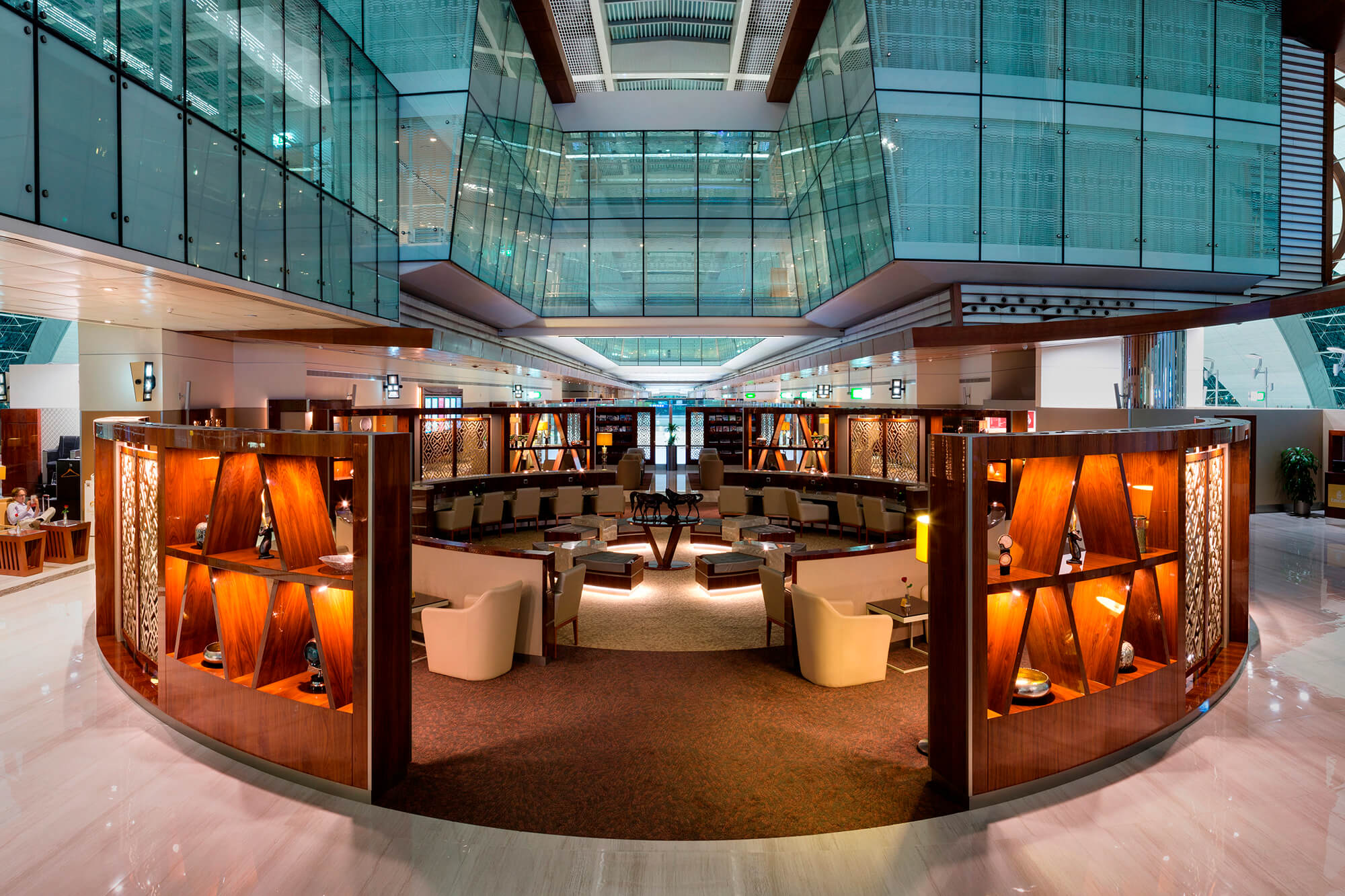
First class lounge access is where the airport experience diverges most dramatically. Lufthansa's First Class Terminal in Frankfurt (FRA) is a standalone building — not a wing, not a floor, a separate building — accessible only to first class passengers on select carriers. A dedicated agent handles check-in and security at a private desk. Chauffeur service from the terminal to the aircraft is included.
Emirates' First Class Lounges at Dubai International (DXB) feature à la carte dining, cigar lounges, spa treatments (complimentary), and direct boarding via private vehicles to the aircraft.
Guests are permitted in most first class lounges. Some allow accompanying pets in carriers. The contrast to business class lounges isn't about the food quality or WiFi speed — it's about the ratio of staff to guests, and whether the environment actually feels exclusive.
Food and drinks: fixed menus vs. dine on demand
Business class dining
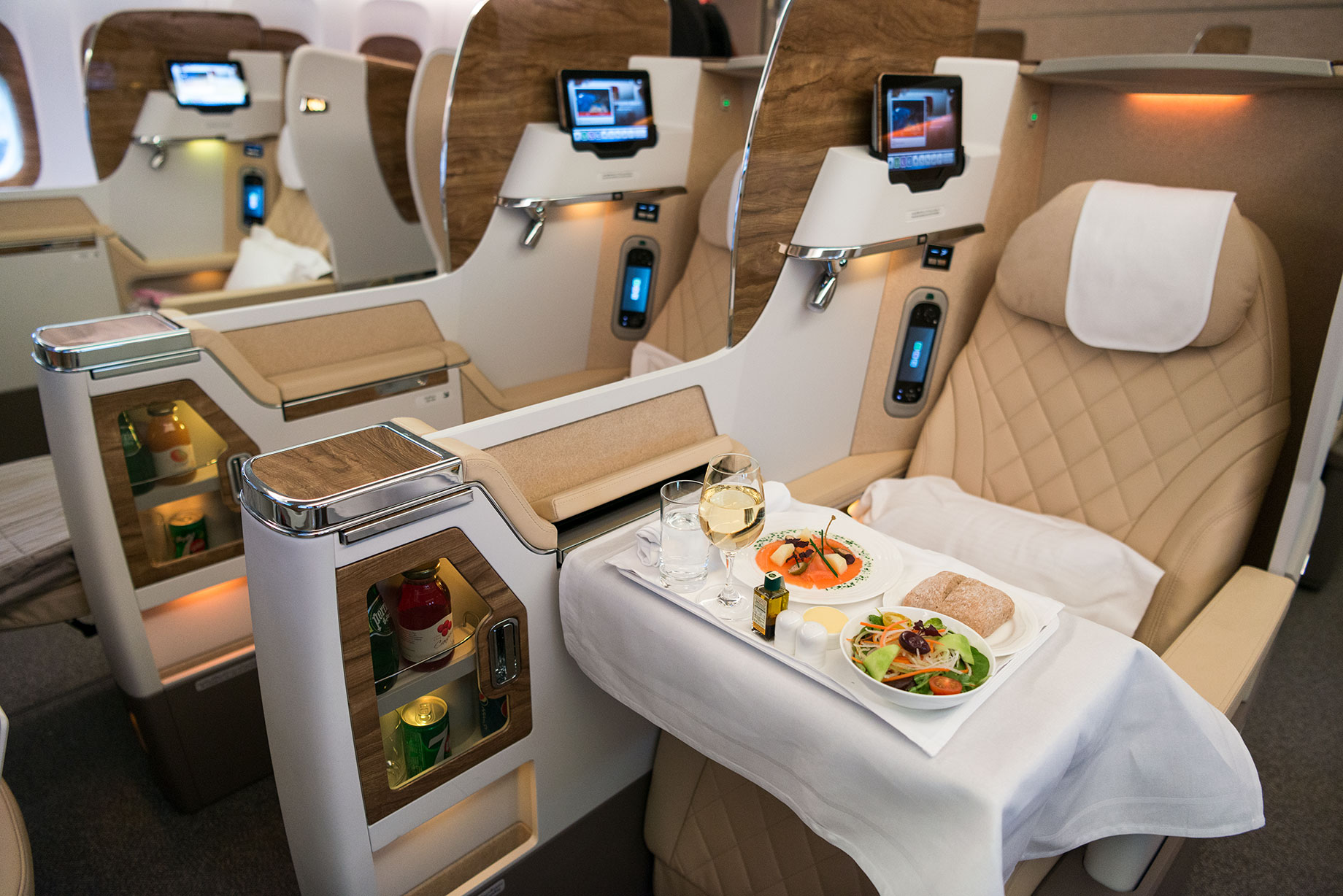
Business class food is genuinely good on most major international carriers. Expect a structured meal service with two or three courses, a reasonable wine list curated by an actual sommelier (Air France and Singapore Airlines both publish their wine selections and the credentials of the consultants who chose them), and mid-flight snack options.
Qatar Airways Business Class (QSuite) offers a dine-on-demand service on most long-haul routes — you order when you want, not when the crew decides to serve the cabin. That single feature alone resolves one of the most common complaints about business class meal service. Menus rotate seasonally and are printed in both English and Arabic.
China Eastern and a handful of other carriers still run set-time tray services in business class, which is noticeably less satisfying. Airline matters. Route matters. Check before you book.
First class dining
First class dining is a different exercise entirely. À la carte service with no fixed timing is the standard. On Air France La Première (their F product, operated on select 777-300ER routes including AF006 Paris CDG to New York JFK), the menu is developed in collaboration with chefs from the Ducasse group. You order from a full menu. The crew plates and presents to restaurant standard.
Emirates First Class offers a "dine on demand" service with a menu that includes caviar service, à la carte mains, and an extensive cheese board. The wine list runs to Moët & Chandon Grand Vintage Rosé, Dom Pérignon on certain routes, and a rotating selection of Bordeaux and Burgundy chosen by Emirates' in-house sommelier team.
Singapore Airlines Suites passengers on the A380 receive Book the Cook options — pre-ordered dishes including chili crab, beef short rib, and a full breakfast menu — prepared fresh in a proper galley and served at times of the passenger's choosing. No tray service. No synchronized cabin meal distribution.
The difference isn't just quality. It's the degree of control and personalization you have over the experience.
Ground services and the door-to-door experience
Business class passengers get dedicated check-in counters and priority boarding. On most carriers, that also means expedited security via TSA PreCheck lanes, CLEAR, or airline-specific fast-track programs. It's a material improvement over economy. You'll arrive at the gate calm.
First class, at its best, removes the airport entirely from your awareness. Lufthansa's Frankfurt First Class Terminal: your chauffeur drops you at the door, a dedicated agent handles every document, you're escorted through a private security lane, and you board from a separate area directly onto the aircraft. From arrival to seat, you may interact with a total of three people, all of whom know your name.
Emirates provides limousine ground transfers to first class passengers in select cities — the car picks you up at your front door. Etihad's concierge service for first class passengers at Abu Dhabi (AUH) includes expedited immigration processing. These aren't perks you notice until you've experienced them; after that, returning to standard airport processing feels genuinely unpleasant.
Availability and what it means for booking strategy
Business class is available on virtually every international route operated by a full-service carrier. It's also increasingly available on mid-haul routes — London to Istanbul, New York to São Paulo, Singapore to Tokyo — where the flight time justifies the upgrade.
First class is offered by far fewer airlines, on far fewer routes. Carriers that still operate genuine first class cabins include Lufthansa, Air France, Emirates, Etihad, Singapore Airlines, ANA, and Japan Airlines. Even among these, F cabins are loaded selectively — you won't find Lufthansa First on every Frankfurt departure, and Air France La Première doesn't operate on every JFK route.
This scarcity has two implications: award redemptions in first class are genuinely difficult to find (and disappear quickly when they appear), and cash prices for first class are structurally high because yield management systems protect those seats aggressively.
Cost: what you're actually paying and what CEOFLIGHTS does about it
Retail business class fares on competitive transatlantic or transpacific routes typically run $3,500 to $8,000 round-trip. Premium routes — New York to Singapore, London to Sydney — can hit $12,000 in business. First class retail fares commonly start at $8,000 round-trip and climb to $25,000+ for products like Etihad's The Residence or Lufthansa's First Class Terminal routes.
Those are rack rates. Nobody who books through a consolidator pays them.
Through our airline contracts, CEOFLIGHTS regularly prices transatlantic business class at $2,400–$4,500 round-trip on carriers including Lufthansa, Air France, and Swiss — routes where the retail fare runs $7,000 or more. First class discounts are route-dependent but follow the same pattern: negotiated bulk fares that reflect volume purchasing rather than last-seat availability pricing.
The math changes when you book through a specialist. A $3,200 business class fare on a 10-hour flight is not the same financial decision as paying $7,800 for the same seat because you booked directly through the airline's website at the wrong time.
Call us at (888) 851-6897 to get a specific quote on your route — we'll tell you exactly what the retail fare is, what our contracted price is, and which product you're actually getting for the money.
Pros and cons: the direct version
Business class
Worth it because:
- Lie-flat beds on all major long-haul routes, direct aisle access on newer aircraft
- QSuite and Club Suite genuinely rival older first class products on quality
- Lounge access, priority boarding, and dedicated check-in are included
- Available on virtually any route you'd want to fly
- Consolidator pricing through CEOFLIGHTS makes it financially reasonable for frequent travelers
Where it falls short:
- Meal timing and selection remain crew-controlled on many carriers
- Privacy is relative — suite doors don't always close fully, and fellow passengers are close
- Amenity kits and bedding vary wildly between airlines; research matters
First class
Worth it because:
- Ground experience at carriers like Lufthansa and Emirates is categorically different from anything in business
- Dedicated crew ratios (sometimes 1:2 or 1:3 staff to passenger) mean genuinely personalized service
- À la carte dining with no time restrictions is a qualitatively different product
- For 12+ hour flights, the extra space and quiet are measurable in how you arrive
Where it falls short:
- Retail pricing is prohibitive, and availability is limited — especially for aspirational routes
- Not all "first class" products are equal; some carriers' F cabins are essentially enhanced business class
- The ground experience, while superior, isn't always worth a $10,000 premium over business
Which cabin should you actually book?
For most long-haul flights in the 8–12 hour range, a top-tier business class product — QSuite, Club Suite, Air France's New Business Class — delivers 90% of the first class experience at 40–60% of the price. That's the honest calculation.
First class makes a clear case for itself on ultra-long routes (15+ hours), when you need to arrive in condition to perform — a board presentation, a critical negotiation — and when the airline's F product is genuinely differentiated rather than just marginally upgraded business. Singapore Suites on the A380. ANA's The Suite on the 777-300ER on JFK-NRT. Lufthansa First with the Frankfurt terminal experience. These are products where paying the premium makes sense.
For everything else, well-priced business class, booked through a consolidator who actually knows the product differences between carriers, is the intelligent choice.
CEOFLIGHTS is ASTA-accredited (member #900292735) and top rated on Trustpilot. Our team has personally flown — and evaluated — the products we sell. When you call (888) 851-6897, you're talking to someone who can tell you which seat configuration is on your specific aircraft, which routes load the better meal service, and what you'll actually pay versus what the airline's website shows.
That's the difference a specialist makes.