Quick summary
Skip paying a massive premium for domestic European business class that only offers a blocked middle seat, and save your budget for long-haul international flights over 8 hours where the $3,000 to $15,000 fare buys you a guaranteed lie-flat bed and true luxury.
Most booking sites treat "business class" as a single category. It isn't. The gap between a blocked middle seat on a 90-minute European hop and a Qatar Airways QSuite on a 14-hour transoceanic flight is roughly the same as the gap between a Marriott Courtyard and a private villa in Bali. Same label. Entirely different experience.
If you're spending serious money — and business class fares regularly run $3,000 to $15,000 — you should know exactly what you're buying. Here's how the three tiers actually break down.
Domestic business class: more space, fewer illusions
Domestic business class exists to make a short flight slightly less punishing. That's an honest description, not a criticism. For a two-hour flight, you don't need a lie-flat bed. You need a wider seat, a decent meal, and to board before the chaos.
Cabin configuration
The standard setup is 2-2, giving you more elbow room and no middle-seat neighbor. That alone is worth something on a crowded morning departure.
In Europe, the situation is more stripped back. British Airways, Lufthansa, and most other European carriers simply block the middle seat in economy and add a tray table. You're sitting in an economy seat. The privacy is minimal. The recline is the same. What you're paying for is the blocked seat and the meal service — full stop.
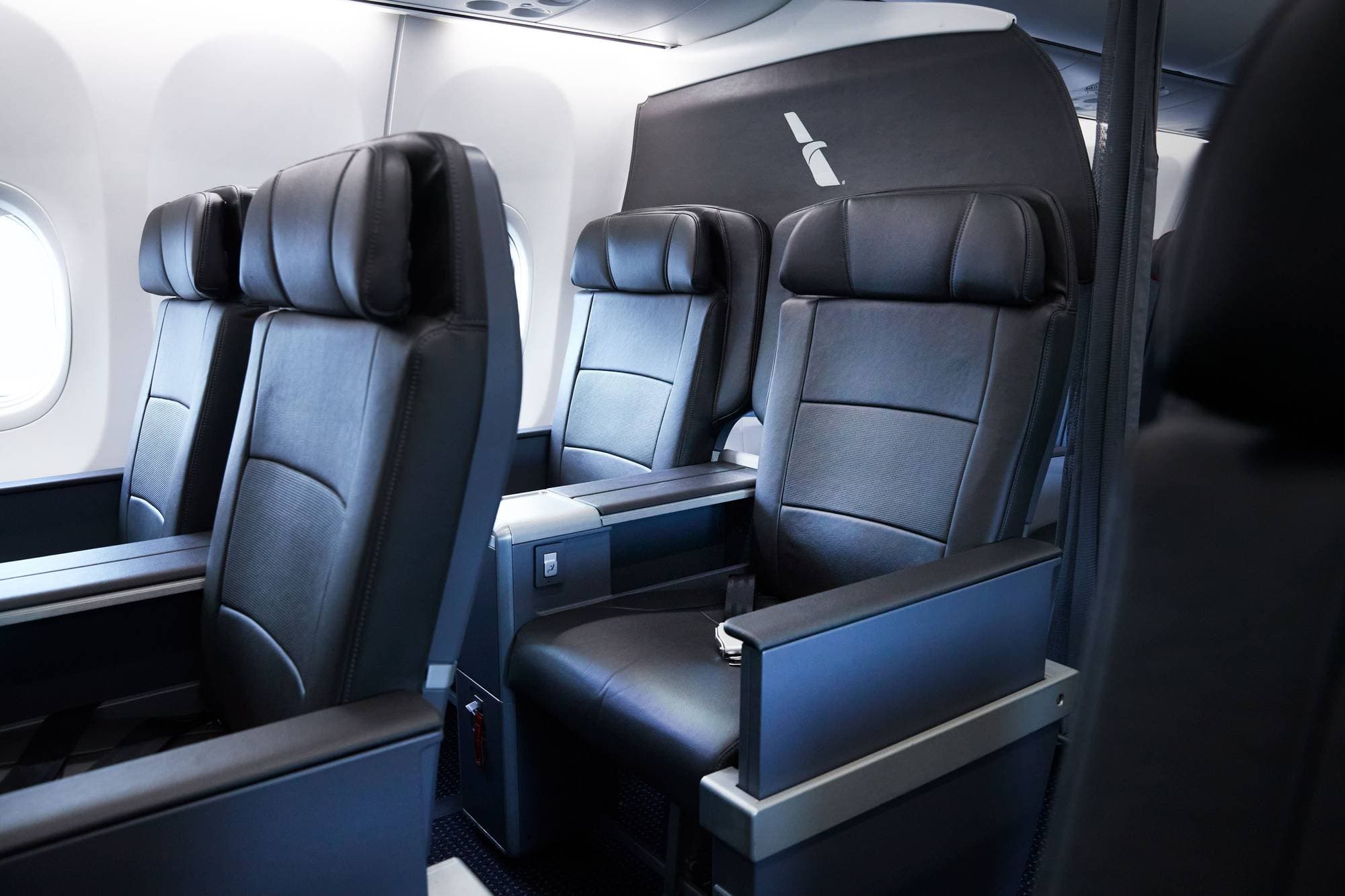
Australian carriers do it better. Qantas and Virgin Australia run a genuine 2-2 configuration on domestic routes with wider seats and real legroom. American carriers relabel the whole thing: Delta, American Airlines, and United call their domestic premium cabins "First Class," which causes endless confusion for international travelers expecting something grander. It's a 2-2 layout with enhanced catering and boarding priority. Respectable for a three-hour domestic hop, but nowhere near what the word "first" implies on an intercontinental flight.
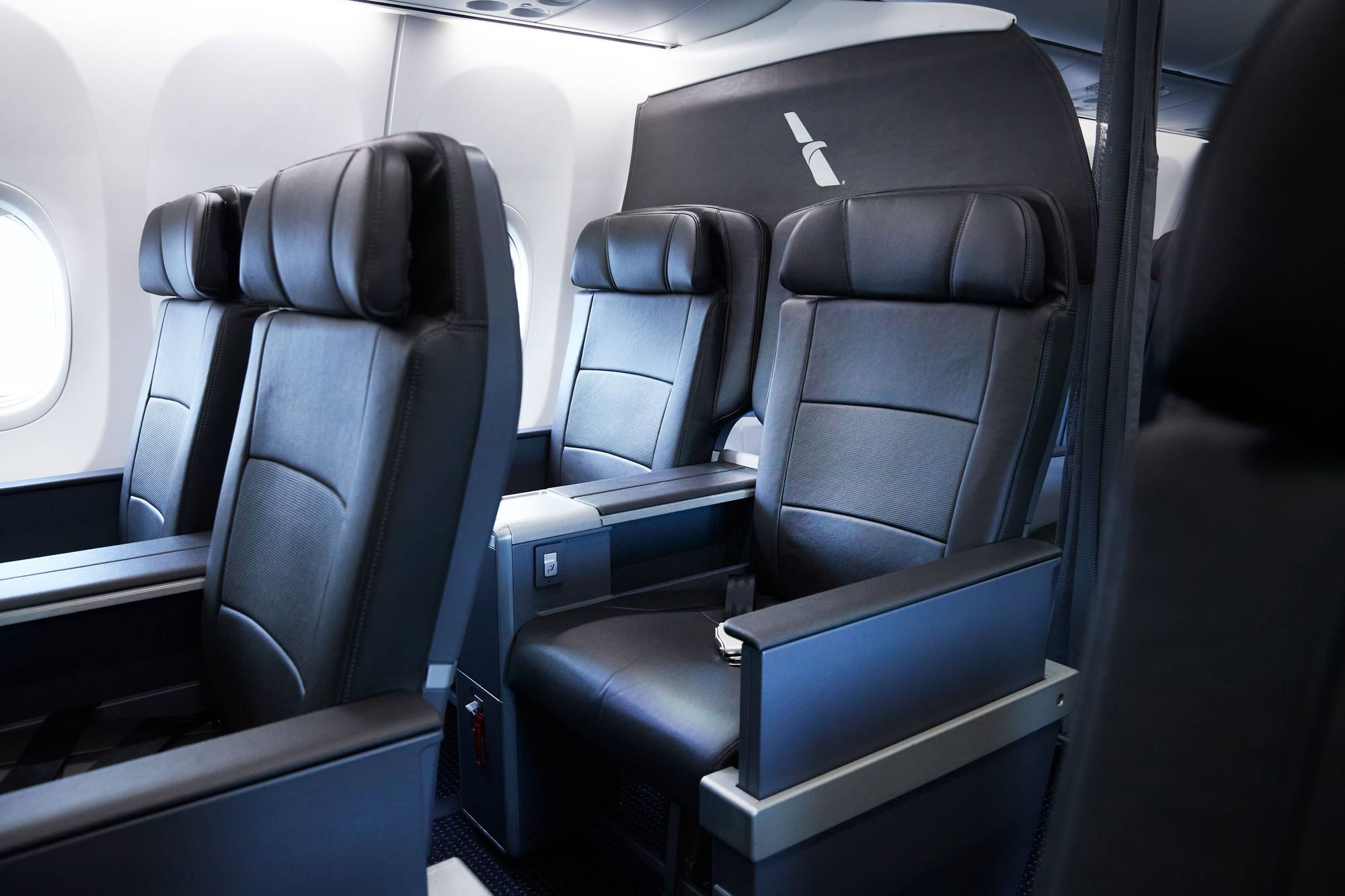
What you actually get
Priority boarding is consistent and genuinely useful. Baggage allowances are higher. Lounge access — where available — makes the pre-flight experience meaningfully better, with complimentary food, Wi-Fi, and somewhere quiet to sit.
Meal service ranges from a warm snack on a 90-minute flight to a proper multi-course service on a five-hour transcontinental. Cabin crew tend to be attentive, often addressing passengers by name. It's a notch above, and for shorter routes, that's exactly what you need.
Regional business class: the middle tier that actually earns its price
Regional business class covers the middle-distance market — think intra-Asia routes, transatlantic connectors, and North American routes in the four-to-seven-hour range. This is where the product starts to get genuinely interesting.
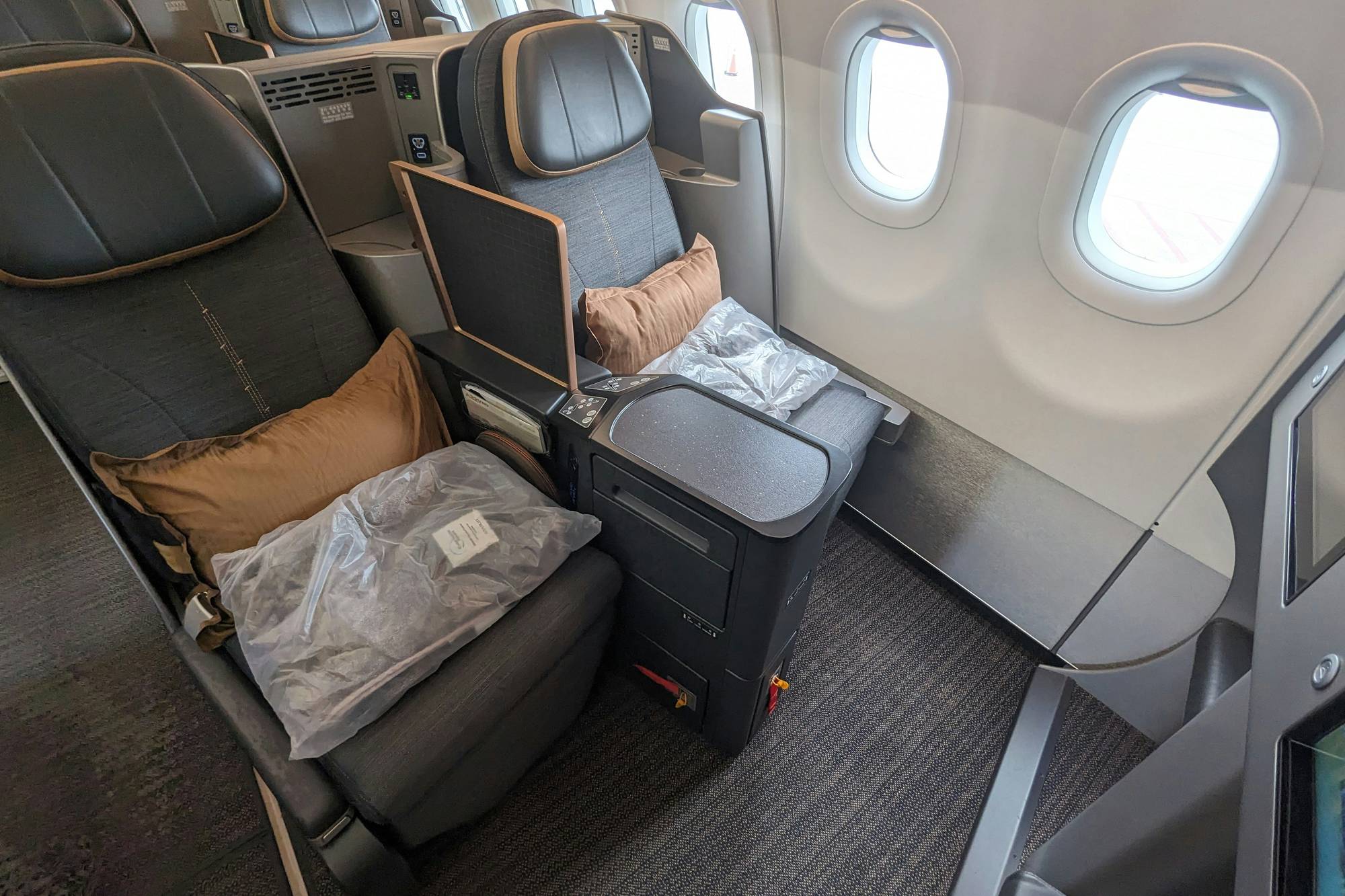
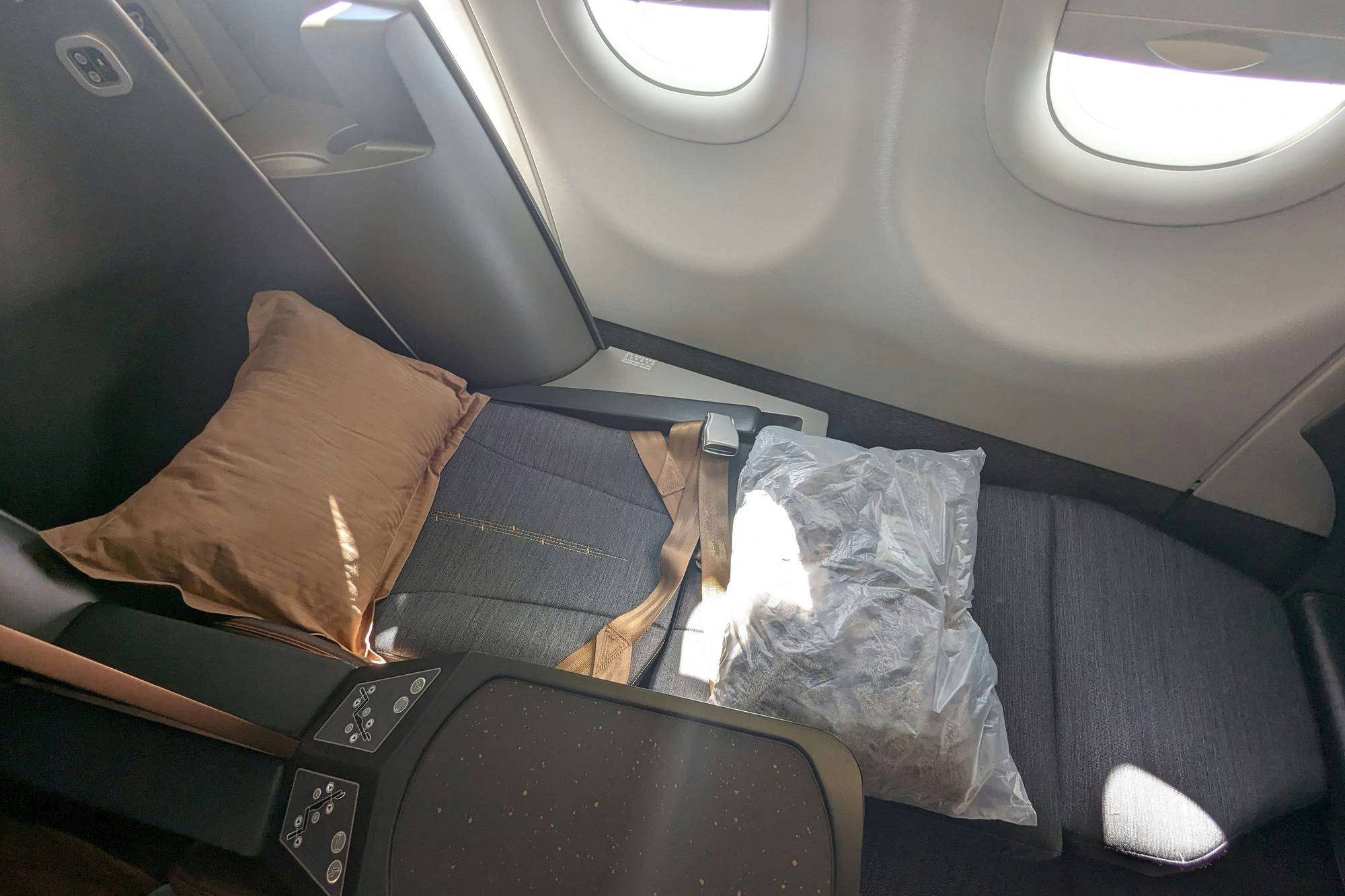
Seating
The seat quality here varies more than at any other tier. Some carriers still run recliner-style seats with limited recline. Others — particularly premium Asian carriers — have introduced lie-flat or angled-flat beds on regional routes, which changes the calculus entirely. STARLUX Airlines, for instance, operates lie-flat beds on its A321neo regional services, a product that would embarrass most European carriers on medium-haul routes three times as long.
Adjustable headrests and lumbar support are common. Seat width typically exceeds domestic configurations, and many newer aircraft on regional routes feature staggered 1-2-1 layouts that eliminate the shared-armrest problem.
Dining and entertainment
Food quality takes a meaningful step up. Expect multiple courses on flights over three hours, a genuine wine list, and dedicated service rather than a cart being pushed down the aisle. In-flight entertainment screens are larger, libraries are broader, and noise-canceling headphones — rather than the foam plugs handed out in economy — are standard on better carriers.
Wi-Fi is increasingly common on regional routes. For anyone who needs to stay productive on a six-hour flight, that's not optional, it's essential.
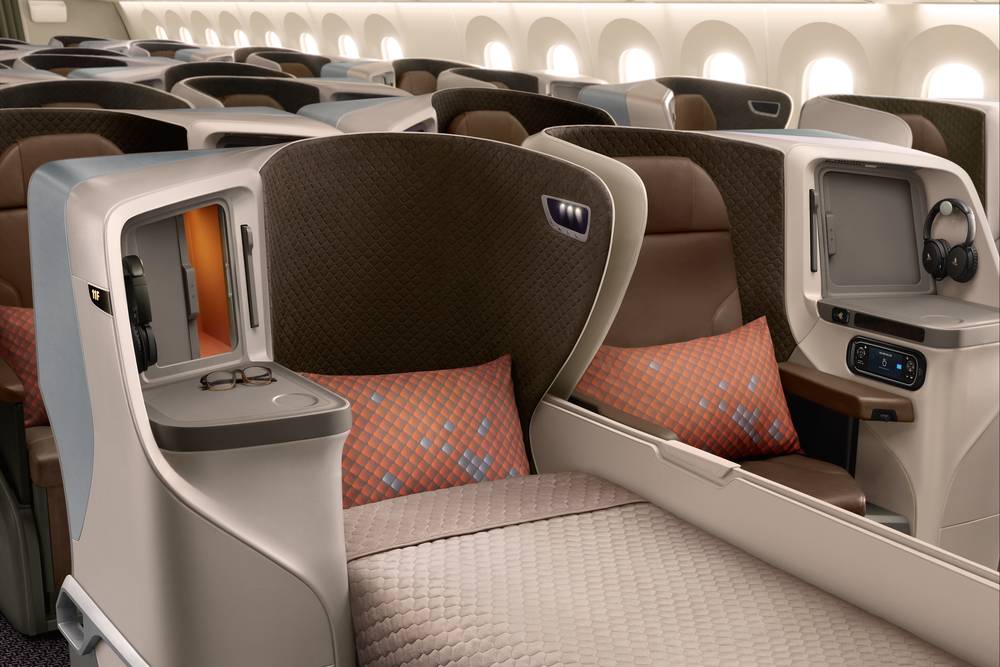
Privacy
Some regional seats include shells or partial partitions between seats. Singapore Airlines' regional 787 configuration, for example, offers meaningful separation between passengers — enough to work or sleep without feeling like you're sharing a table with a stranger.
Lounge access on regional routes is typically better than domestic equivalents. Shower facilities, dedicated workspaces, and more extensive food options appear more frequently in international terminals than domestic ones.
Long-haul international business class: the real thing
This is the product the industry's reputation is built on. Flights over six hours — transcontinental, transoceanic, cross-continental — demand a fundamentally different approach to the seat, and the best airlines deliver something genuinely extraordinary.
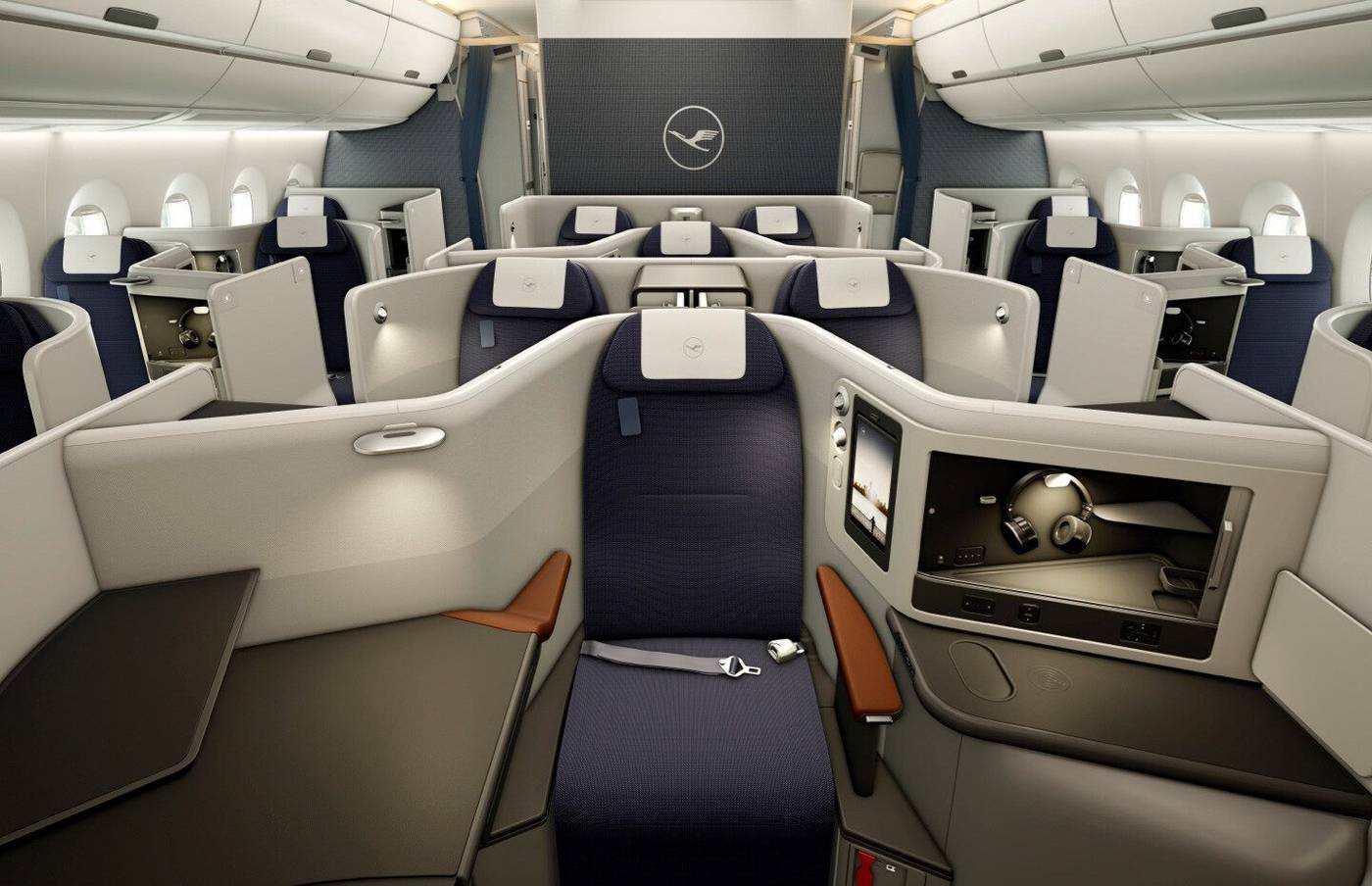
The seat itself
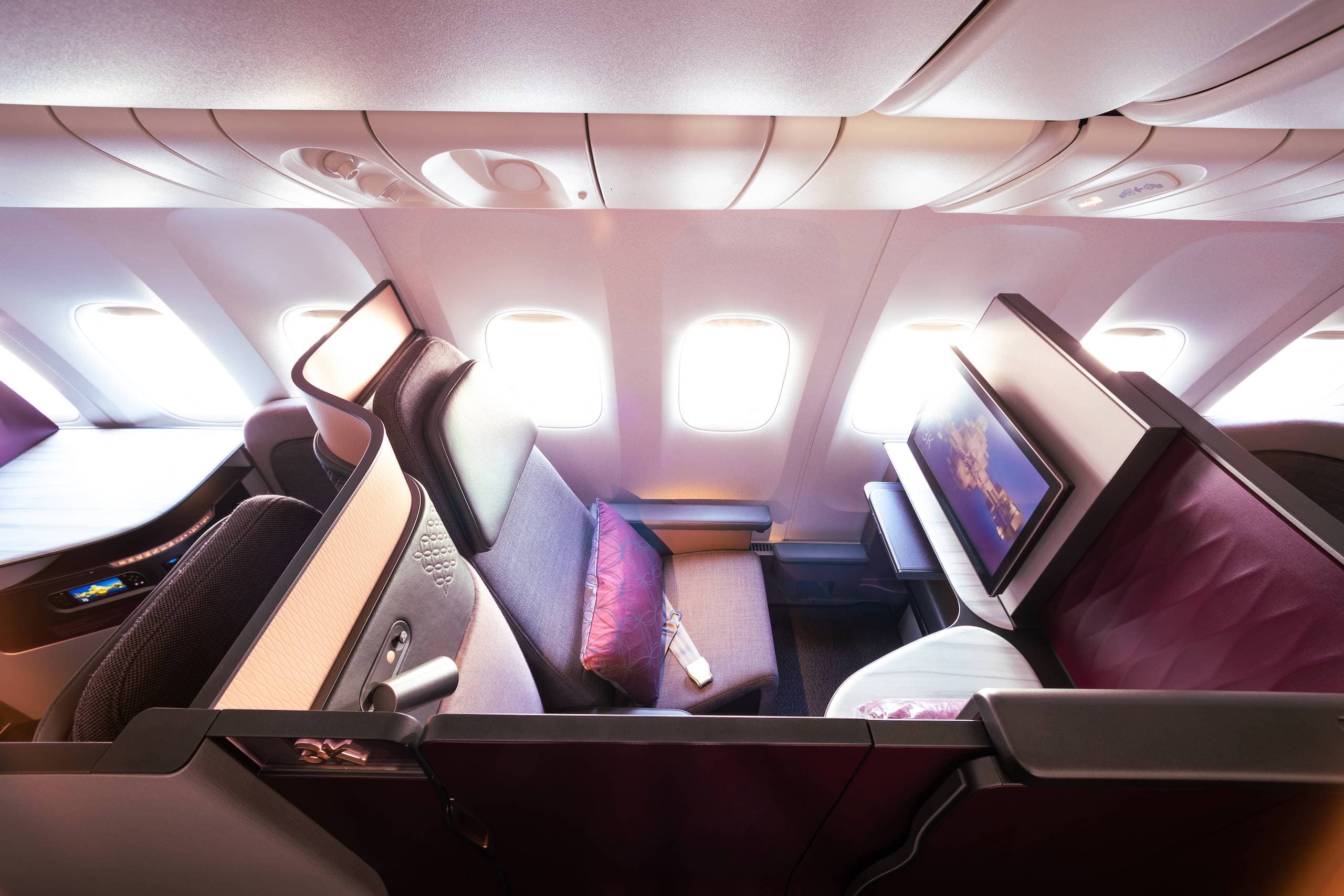
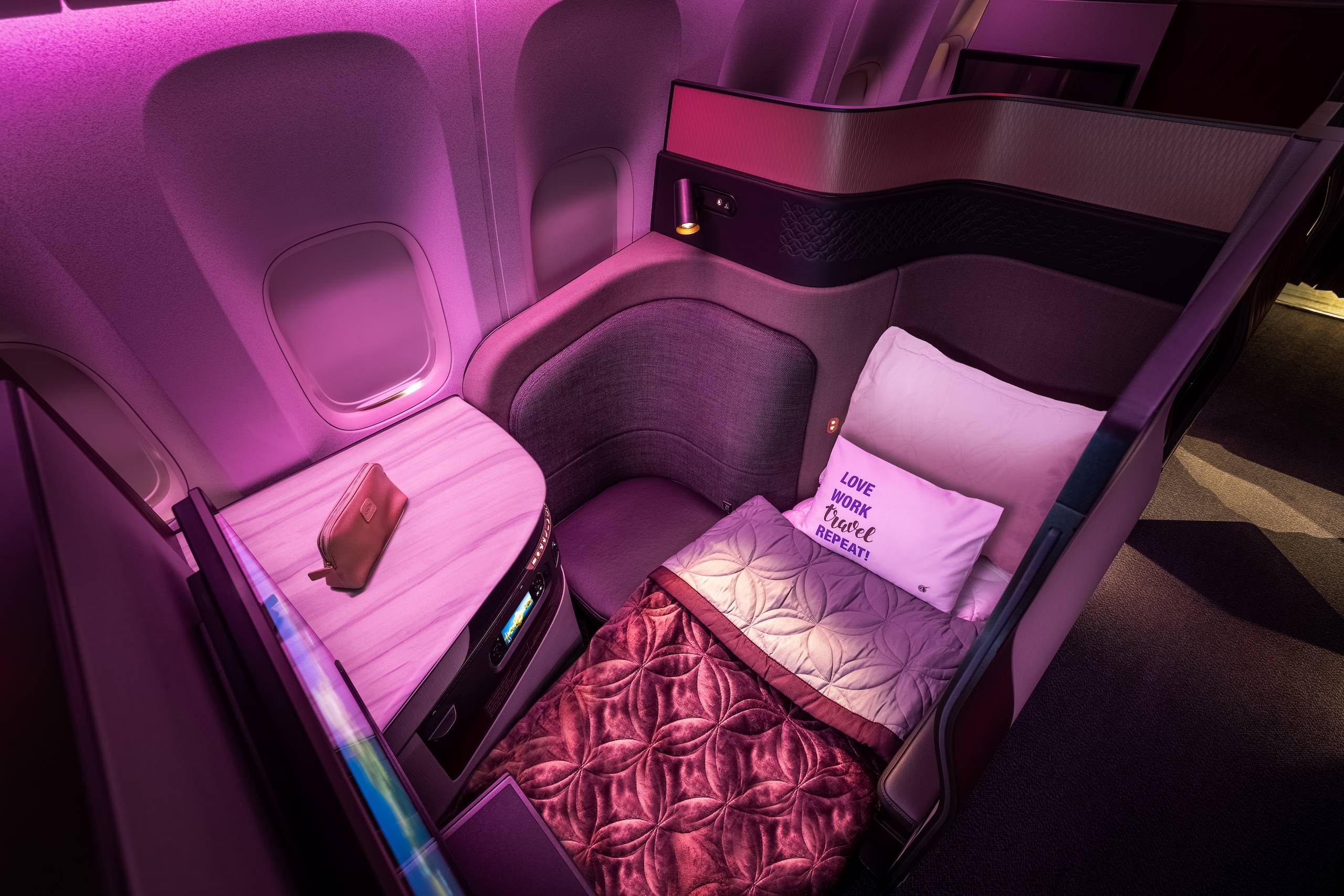
Fully lie-flat beds are the baseline, not the premium. On any credible long-haul carrier, your seat converts to a flat sleeping surface — typically 6 to 7 feet long, 20 to 23 inches wide depending on the product. United's Polaris seats run about 21 inches wide with a 76-inch pitch. Qatar's QSuites on the A350 offer fully enclosed suites with sliding doors, double-bed configurations on select seat pairings, and 21-inch seat width that genuinely sleeps well.
The difference between a good product and a great one shows up in the details: whether the bed is truly flat or slightly angled, whether there's direct aisle access from every seat, whether the enclosed suite doors actually give you privacy or merely the suggestion of it.
Lufthansa's new Allegris product, now flying on select long-haul routes, introduced a first-of-its-kind option where some business class seats come with a separate companion seat — a meaningful design shift for couples traveling together.
Dining
Gourmet is an overused word, but long-haul business class menus are genuinely produced by serious chefs. Multiple courses, à la carte ordering windows (Singapore Airlines, Qatar, and others let you eat when you want rather than at a scheduled service time), and wine lists curated by sommeliers.
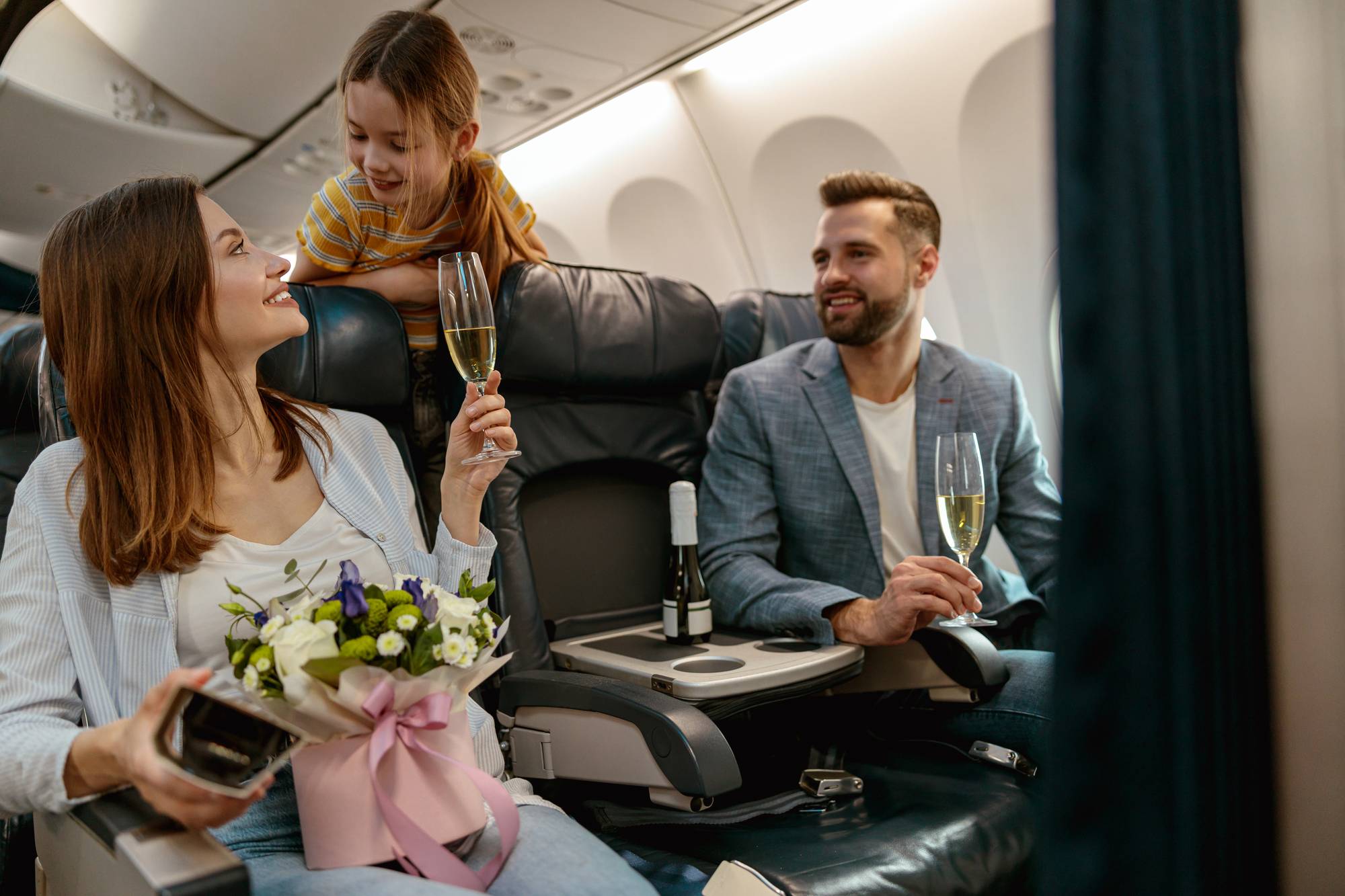
The champagne served at boarding on most premium long-haul carriers is not an afterthought. Emirates pours Moët on boarding. Qatar opens with a welcome drink and a warm towel before the aircraft moves. It's theater, but it's pleasurable theater.
Amenities
Amenity kits from luxury skincare brands — Bulgari with Lufthansa, The White Company with British Airways Club Suite, BRIC'S with Qatar — arrive before takeoff. Pajamas and slippers appear on flights over eight hours on virtually every top-tier carrier.
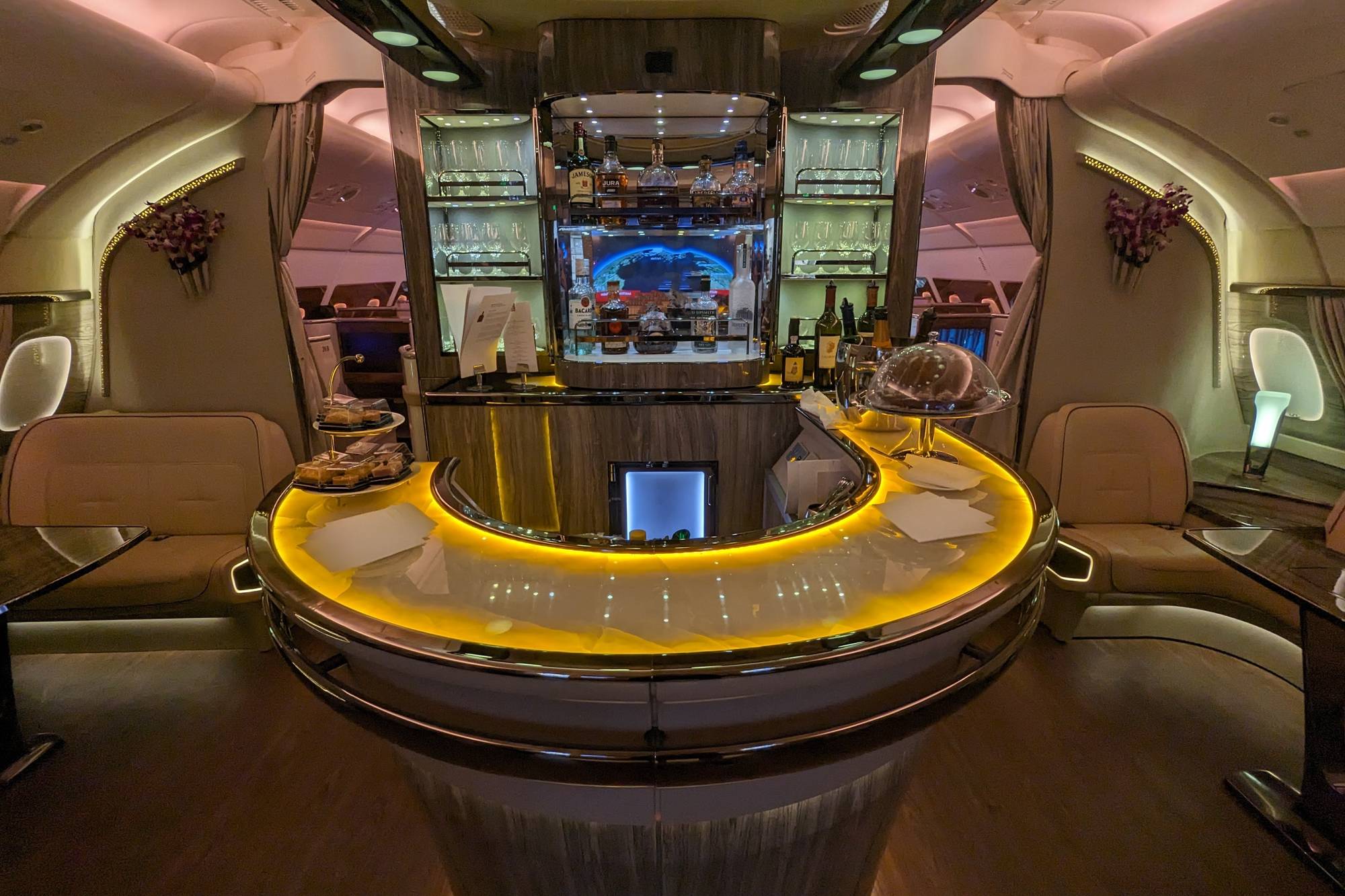
Some airlines go further. Emirates A380 service on routes like EK201 (Dubai–Los Angeles) includes an onboard shower spa in first class, accessible to business class passengers on certain configurations. Qatar's 777 service features a full onboard bar.
The onboard lounge
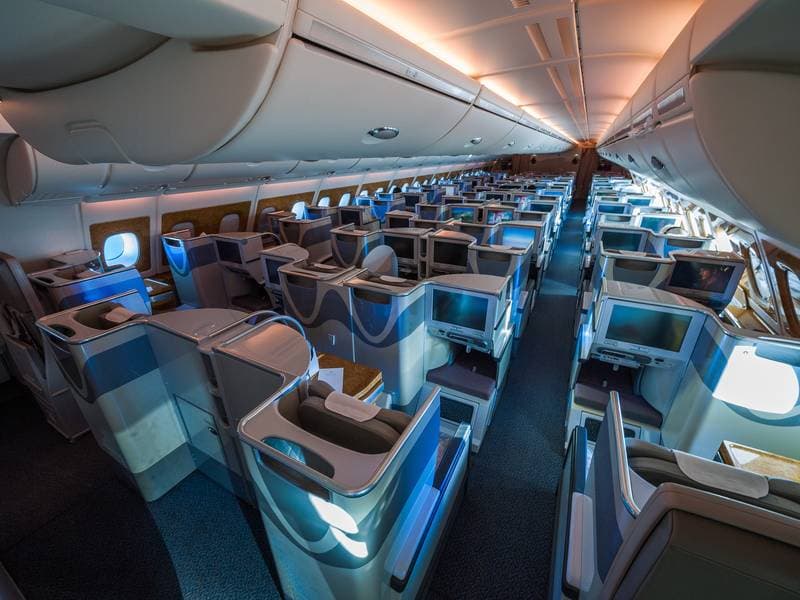
Emirates and Qatar Airways both run onboard social lounges on long-haul widebody aircraft. The Emirates A380 bar is genuinely well-stocked and well-staffed, with proper cocktails and space to stretch your legs during a 14-hour flight.
The connectors problem — and why it matters
Here's a situation that catches travelers off guard more than almost anything else in premium travel: your long-haul business class fare gets you a QSuite from Doha to New York, but the connecting flight from your home city to Doha might be on a regional aircraft with a recliner seat and a 2-2 layout. Same booking. Same booking class code. Completely different product.
On some intra-European or domestic segments, there may be no business class at all — just premium economy, or an economy seat with the middle blocked.
This isn't fine print. It's something to know before you commit to a routing. The itinerary that looks cleanest on a search engine might involve a redeye connection where you spend five hours in a seat that reclines 40 degrees and then a second flight in a full QSuite. The physical reset doesn't happen.
At CEOFLIGHTS — ASTA-accredited (member #900292735) and top rated on Trustpilot — we map your entire itinerary before you book, not just the marquee segment. Through our airline contracts, fares on popular long-haul routes regularly drop from published retail prices to significantly lower consolidated rates. A business class fare that retails at $8,500 round-trip from New York to Singapore can come down to $4,200–$5,500 through our inventory — and we'll route you on a product worth sleeping in. Call us at (888) 851-6897 to talk through your specific itinerary.
Which tier is worth paying for?
Domestic business class is worth it when you value the lounge, the legroom, and the boarding experience. It is not worth paying a dramatic premium over economy on a 90-minute flight in Europe where your "upgrade" is a blocked middle seat.
Regional business class earns its price on anything over three hours — particularly on carriers that have invested in genuine lie-flat products for medium-haul routes. The Asian carriers do this significantly better than their European or American counterparts.
Long-haul business class is a legitimate quality-of-life decision on any flight over eight hours. Arriving in Tokyo or Johannesburg having slept six hours in a flat bed, eaten a proper meal, and showered before landing (on certain Emirates configurations) versus arriving in a compressed economy seat with a stiff neck is not a small difference. For executives doing this six or ten times a year, the math on productivity alone makes the fare defensible.
The tier you're on shapes the entire trip. Know what you're buying before you book it.