Quick summary
While rare mistake fares can slash prices up to 90%, the most repeatable way to secure international business class under $2,700 is combining real-time fare alerts with consolidator contracts. Working with wholesale desks like CEOFLIGHTS regularly reduces long-haul fares from $9,400 down to $4,600 without relying on award seat availability.
Proven hacks for cheap business class tickets — what actually works in 2026
I once watched a fare for Newark to Paris drop from $6,800 to $1,599 roundtrip in business class, hold for about eleven hours, then vanish. Someone at that airline's revenue management desk had a very bad Tuesday. I know because I booked it, flew it, and drank two glasses of decent Champagne over the Atlantic while economy sat three rows back drinking ginger ale.
That's the extreme version of what's possible. Most of the time, getting into a lie-flat seat without paying five figures requires less luck and more strategy — knowing which levers to pull, when to pull them, and which sources actually move fast enough to matter. This guide covers both: the rare mistake-fare lottery ticket, and the repeatable tactics that work whether or not the airline screws up its pricing.
What business class actually is (and why it varies so wildly)
Business class wasn't originally designed as a luxury product. It emerged in the late 1970s as a practical response to a growing gap in the market. Airlines like British Caledonian (1978) and Qantas (widely credited with coining the term "business class" in 1979) carved out a separate cabin between first class and economy — better seat, better catering, a curtain — to serve corporate travelers whose companies had started restricting first-class tickets. That's the whole origin story. It grew from there into what's now often the highest class of service on the aircraft, since many airlines have quietly killed off first class altogether and let business class play both roles.
The problem is that "business class" means wildly different things depending on where you're flying and who's operating the metal.
Within Europe, business class frequently means an economy seat with a curtain and a blocked middle. That's it. No lie-flat, no suite, sometimes not even a meal worth mentioning. Cross to a long-haul route and the product transforms entirely — but airlines don't always deploy long-haul aircraft on routes you'd assume warrant it. Air France and British Airways both fly widebody aircraft with proper flat-bed business class from Paris and London to Tel Aviv. KLM, flying the same route from nearby Amsterdam, uses a Europe-configured 737. Same route category, completely different seat. Check aircraft type before you book, every single time.
American carriers generally reserve "business class" naming for international long-haul, while domestic premium is called first class — though some US airlines slap the business class label on international short-haul flights that are really just domestic first class with a passport stamp.
Then there's the branding maze. Virgin Atlantic calls it Upper Class. British Airways splits it into Club World on long-haul and Club Europe on short-haul — read our Club Suite review if you want the specifics on the current hard product. Thai Airways calls it Royal Silk. Korean Air has used Prestige Class for decades. Delta calls it Delta One. JetBlue simply calls it Mint — and it's genuinely one of the better values in the sky, as we covered in our JetBlue Mint review.
If you want a deeper breakdown of how seat types differ by region and aircraft, our guide to types of business class seats is worth ten minutes of your time before you book anything international.
What business class tickets actually cost
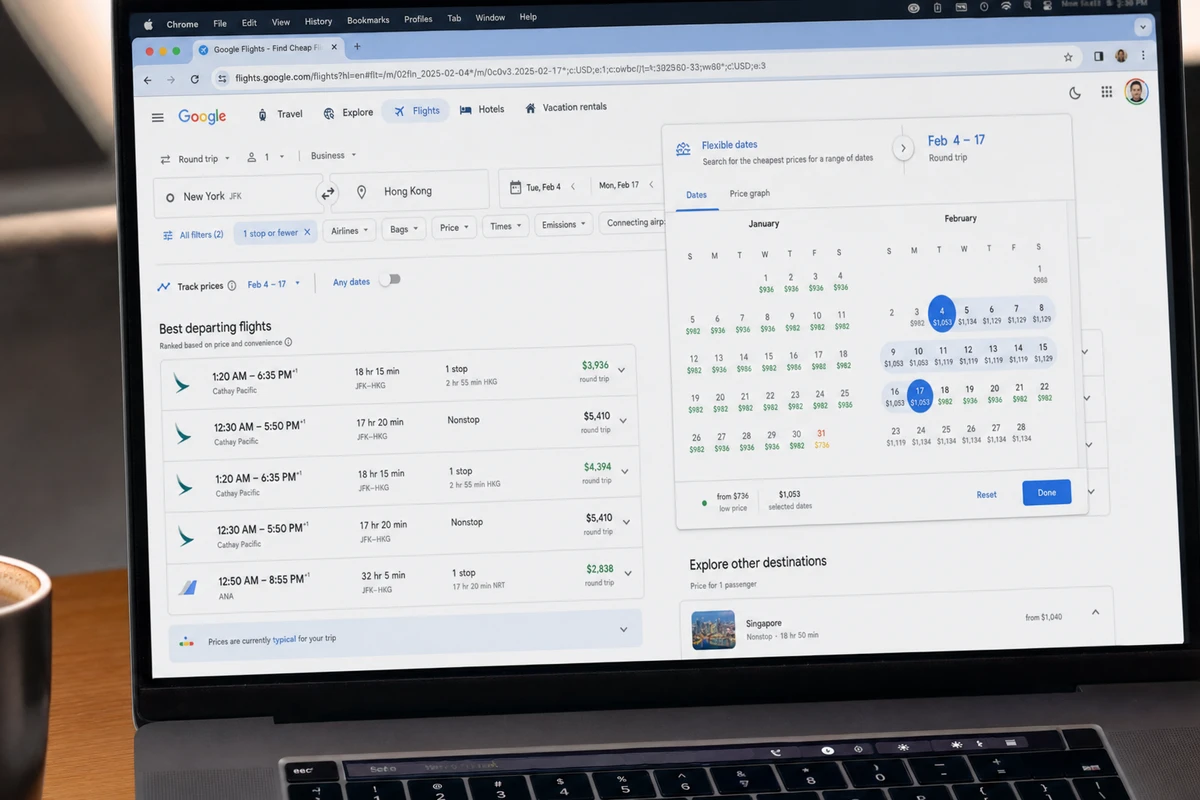
Published fares for intercontinental business class out of the US typically land between $3,000 and $5,000 roundtrip on major national carriers. That's the baseline — not the deal, not the mistake fare, just the sticker price you'll see if you search a random Tuesday for a random date.
Long routes push that number up fast. Nonstops exceeding twelve hours — US to the Middle East, Australia, New Zealand, or Southeast Asia — regularly price between $5,000 and $12,000 roundtrip. A published fare of $9,400 on a route like New York to Singapore isn't unusual. Through CEOFLIGHTS contracted rates, that same Singapore Airlines seat has come down to $4,600 — still not cheap, but a different category of spend entirely.
Short-haul business class outside the US and Europe often prices closer to US domestic first class — sometimes as little as $300 roundtrip on shorter regional hops.
Fares also move with seasonal demand, and transatlantic routes are the clearest example. January and February — excluding holiday weeks — are typically the cheapest months to fly business class across the Atlantic, since both leisure and corporate travel slow after the holidays. Spring (March through May) and autumn (September through November) are when business class demand peaks, driven by conferences, board meetings, and corporate travel cycles. Summer is mixed: economy fills up with vacationers, but business class can soften as European corporate demand drops during July and August holiday periods. The upshot is that timing your booking around these rhythms can shave hundreds — sometimes thousands — off the sticker price.
If you want to understand the calendar mechanics in more depth, our guide on the best time to book business class flights walks through it route by route.
What actually counts as a "deal"
This depends heavily on whether you're looking at a genuine mistake fare — where an airline accidentally prices a flight far below intended cost — or just a solid, discounted fare that's still real pricing.
Mistake fares can get you into international business class for as little as $300. Outside of that lottery-ticket scenario, a good deal on international business class generally means anything under roughly $2,700 roundtrip, though the right number depends heavily on the route.
At CEOFLIGHTS, we track deal thresholds by region because "cheap" means something different flying to Cancún than it does flying to Singapore:
- Mexico and the Caribbean: deals in the $500s roundtrip
- Latin America: around $1,200 roundtrip
- Europe: around $1,700 roundtrip
- Asia: around $2,200 roundtrip
Real examples we've sourced or seen move through consolidator channels recently:
- Newark to Paris nonstop, $1,599 roundtrip in business class
- San Francisco to Amsterdam, $1,851 roundtrip
- Miami to Panama nonstop, $522 roundtrip
- Philadelphia to Cairo, $1,454 roundtrip
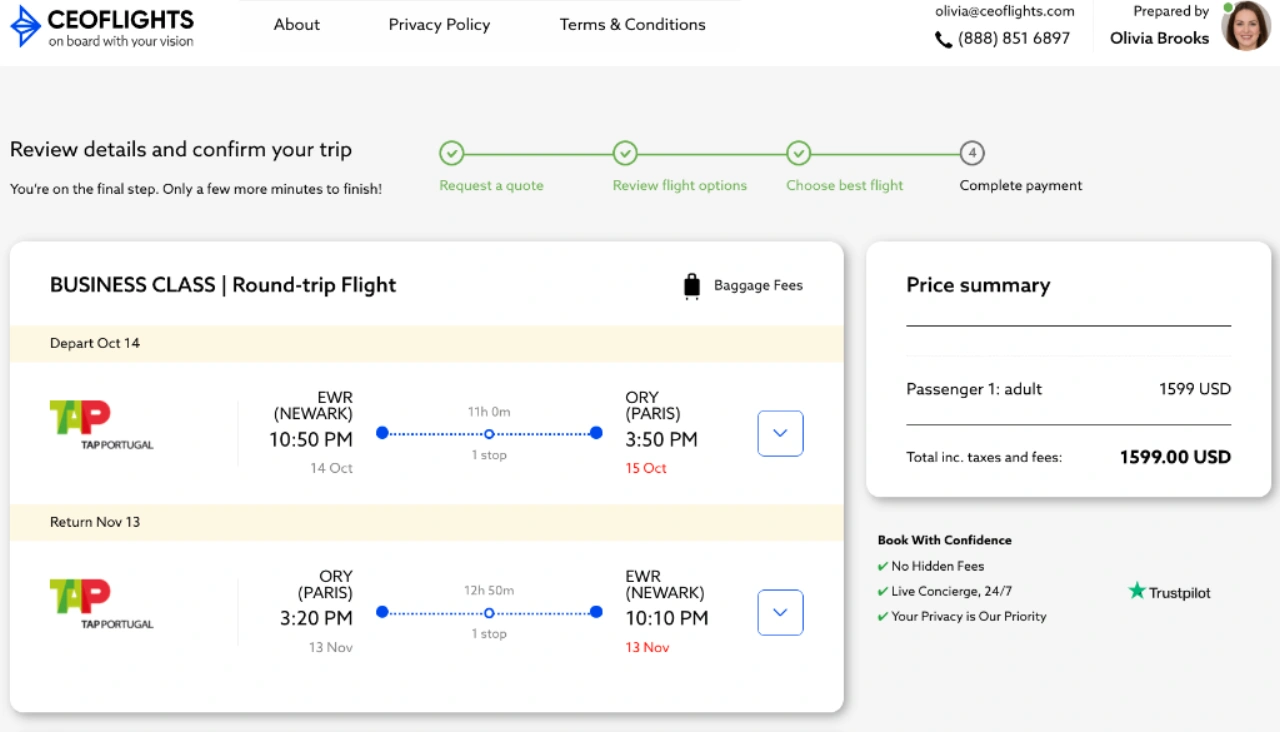
None of those are typos. They're the reason it's worth having more than one search running at any given time — the airline's own website is rarely where the best number surfaces.
Six tactics that actually get you a cheaper seat
The words "cheap" and "business class" don't naturally belong in the same sentence. But they can share a sentence — you just need the right combination of luck, monitoring, and willingness to act within minutes rather than days.
1. Chase mistake fares (but don't count on them)
Mistake fares are the unicorn of cheap travel. They happen when an airline's pricing system misfires — a currency conversion error, a fuel surcharge left off, a fat-fingered zero — and prices a business class seat up to 90% below normal. When it happens, business class can end up cheaper than a typical economy fare on the same flight.
There's no trick to finding these beyond speed and volume. Some are found by luck, some by teams running dozens of searches daily looking for pricing anomalies. They're genuinely rare — in one recent year we tracked roughly a dozen business class mistake fares total, mostly domestic and to the Caribbean and Latin America, with two to Europe and one to West Africa.
Real examples from recent years:
- LAX/SFO to Asia in business class, $600 roundtrip (normally $3,000+)
- Orlando to Mexico City in business class, $313 roundtrip (normally $1,000)
- JFK to Buenos Aires in business class, $728 roundtrip (normally $2,000+)
- Boston to Iceland in business class, $716 roundtrip (normally $1,800)
The catch: mistake fares rarely survive more than a day. Some die within hours of appearing. If you find one, book it immediately and ask questions later — though be aware that airlines are not required to honor mistake fares. Since 2015, the DOT has allowed airlines to cancel mistake-fare tickets as long as they issue a full refund and reimburse any non-refundable expenses you incurred in reliance on the ticket. Many mistake fares do still get honored, but it's not guaranteed, so don't book non-refundable hotels until your ticket is confirmed.
2. Set up real-time fare monitoring
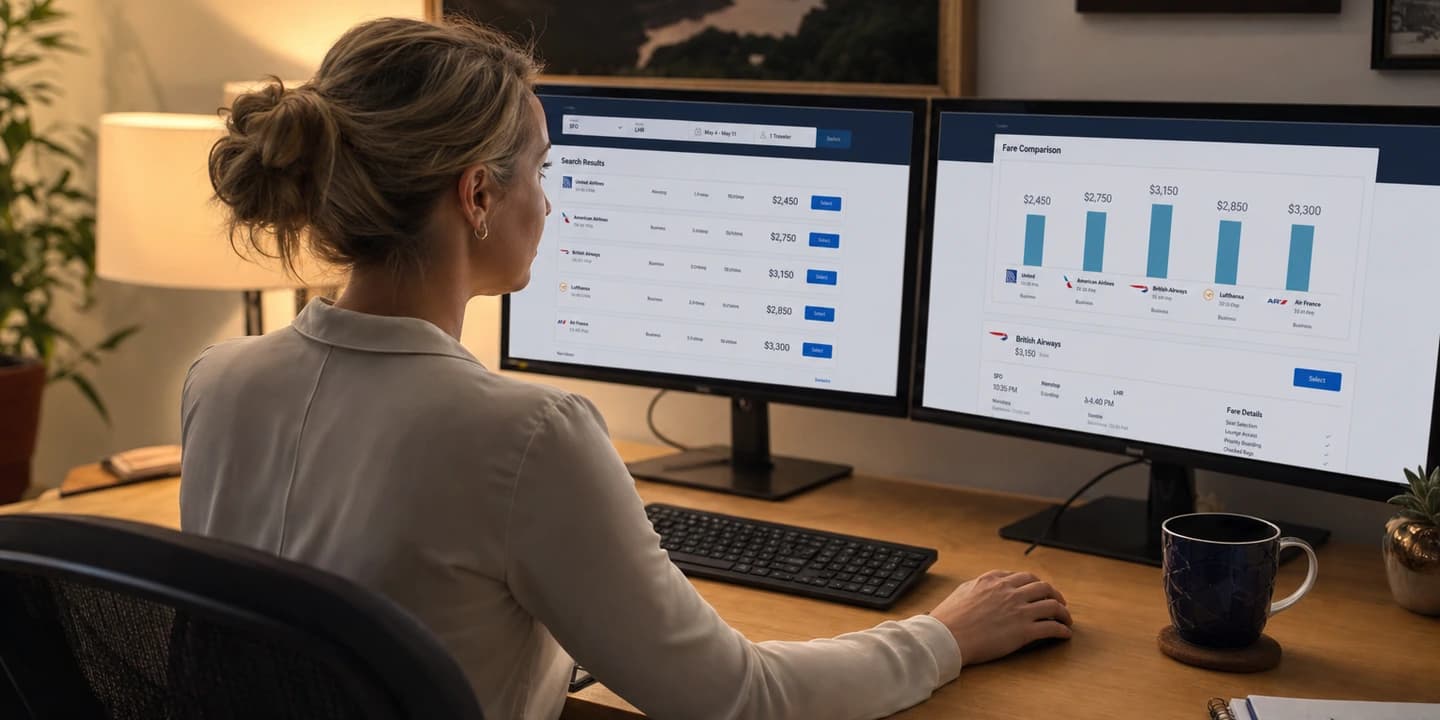
Waiting around and refreshing a search engine is a losing strategy. CEOFLIGHTS sends real-time alerts when business class fares drop below threshold prices on your preferred routes, which matters enormously for mistake fares and flash sales that disappear within hours. Pair that kind of monitoring with a direct line to our consolidator desk and you've got both detection and execution covered — spotting the fare is only half the battle if you can't act on it fast enough to lock in the seat.
3. Buy the seat outright with points or miles
Cash isn't always the cheapest currency. Airline miles or transferable credit card points can get you into business class for less real-dollar value than paying cash, sometimes as little as 25,000 points for shorter routes, though redemption rates fluctuate constantly and award availability isn't guaranteed on every date. Building a points balance takes time — sign-up bonuses on premium travel cards frequently run 60,000 points or more for meeting a spending threshold in the first few months, which alone can cover a one-way business class redemption to Europe.
4. Book economy, then upgrade with points or cash
If you don't have enough points at booking to buy business class outright, book a standard economy fare and upgrade later — assuming award space opens up. Two things matter here: confirm award availability before you buy the base ticket, and make sure the fare class you're purchasing is upgrade-eligible. Basic economy fares are almost never eligible for upgrades of any kind, points or cash.
Closer to departure, if a flight has unsold business class inventory, airlines sometimes offer discounted upgrade purchases — via email, at check-in, or by simply asking at the gate. It's not guaranteed, but it costs nothing to ask, and gate agents have more flexibility than most passengers assume.
5. Bid for the upgrade
Some airlines — Iberia, Icelandair, Virgin Atlantic, and Cathay Pacific among them — let eligible passengers bid on upgrades using their confirmation code. The airline typically suggests a bid amount likely to be accepted and sets a minimum floor. You'll need a credit card on file, and if your bid wins, you're charged immediately — this is a separate amount on top of whatever you already paid for the original ticket, and you generally bid separately on outbound and return segments.
6. Watch for business class fare sales
Airlines do put business class on sale occasionally, though "sale" rarely translates to genuinely cheap. If a Los Angeles to Paris business class seat normally runs $3,000, a sale might bring it to $2,000. That's real savings — just don't expect mistake-fare numbers from a scheduled promotion.
This is exactly where consolidator pricing changes the math. A published Los Angeles–Paris business class fare of $6,200 has, through CEOFLIGHTS contracted rates, come down to $2,800 on the same cabin, same dates. That's not a once-a-year sale window — it's simply what we're able to offer through airline contracts that don't show up on public search engines.
How to upgrade to business class before departure
With cash or points, in advance
Airline policy varies enormously here. Some carriers hold upgrade inventory tight, releasing it only on the day of departure to protect revenue from passengers buying business class outright. Delta is a notable exception — it consistently opens cash and mileage upgrade options well in advance, visible simply by pulling up your reservation. Prices fluctuate the same way base fares do, so check early and often.
Most carriers cap the number of seats available for point upgrades, so book early if you're planning to use miles. And nearly every airline blocks "double upgrades" — if you've already upgraded from economy to premium economy, you generally can't stack a second upgrade from premium economy to business class on the same ticket. Read the fine print before you buy.
Some frequent flyer programs now charge copays on mileage upgrades to business class, sometimes running several hundred dollars on long-haul routes. Top-tier elites often get these waived.
With cash or points, at check-in
Many airlines continue selling discounted upgrades right up to departure, often with pricing tiered by frequent flyer status — elites typically pay less. Air France offers a nice flexibility here, letting passengers pay for check-in upgrades with points, cash, or a sliding blend of both.
By bidding
From roughly a week to several weeks before departure, many carriers email confirmed passengers a bidding link — though savvy travelers often just check the airline's site directly rather than waiting for the prompt. Bids get collected with a required minimum (no dollar-store lowballing), and winners get notified by email. Airlines running both premium economy and economy cabins frequently set different minimum bids depending on which cabin you're upgrading from. Worth noting: carriers that run aggressive bid programs tend to be less generous with other upgrade paths, so check historical bid pricing before committing.
With frequent flyer status alone
Unlike domestic upgrades, automatic status-based upgrades to long-haul international business class are rare. Most programs instead offer certificates or points systems that top-tier members can apply toward upgrade requests — a request, not a guarantee.
Where CEOFLIGHTS fits into all of this
Here's what none of the point-hacking or bid-gaming tactics solve: sometimes you just need a specific seat, on a specific date, at a fair price — without spending three weeks optimizing a mileage run. That's the entire reason consolidator pricing exists, and it's the gap CEOFLIGHTS is built to fill.
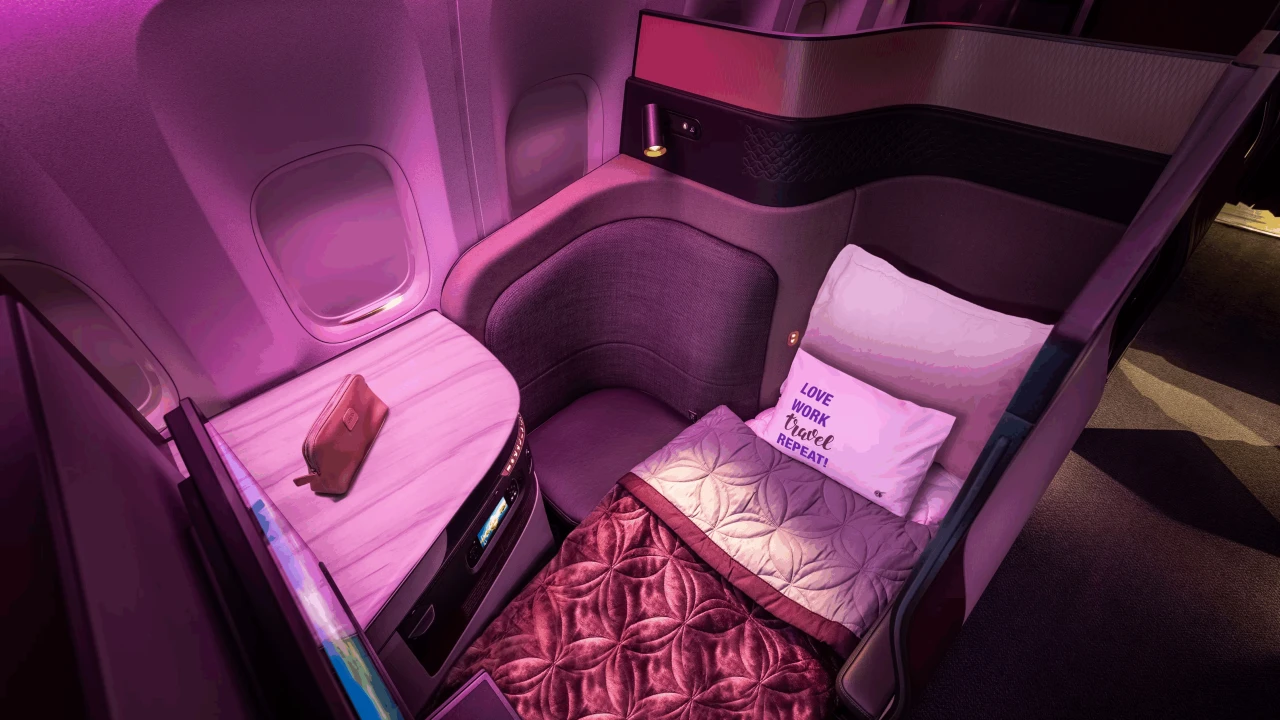
We hold contracted rates with major carriers that simply don't appear on Google Flights or the airline's own site. A Qatar Airways QSuite seat to Doha published at $7,900 has come through our desk at $3,900. If QSuite is new to you, our full QSuite review covers exactly why that seat is worth chasing. Same logic applies on Emirates to Dubai, Cathay Pacific to Hong Kong, or ANA to Tokyo — the published fare and the fare we can actually book you are two different numbers, and the gap is often four figures.
We're an ASTA-accredited agency (member #900292735), which matters more than it sounds like it should in an industry with a lot of fly-by-night resellers, and we are top rated on Trustpilot from travelers who've actually flown the seats we sold them.
If you're weighing whether the upgrade is even worth it dollar-for-dollar, our business class vs. first class breakdown is a useful gut check before you commit real money to either.
The honest take
Mistake fares are fun to chase but useless to plan around — treat them like finding cash in a coat pocket, not a retirement strategy. Points can absolutely get you into a premium cabin cheaply, but only if you're already sitting on a balance; starting from zero to chase one flight rarely pencils out once you count the annual fees and spending requirements. Fare monitoring tools close the gap between "a deal exists" and "I actually caught it," which is why pairing CEOFLIGHTS' fare alerts with a consolidator who can ticket fast matters more than any single hack on this list.
The fastest, most reliable way to fly business class for meaningfully less than sticker price is still the least glamorous one: call someone who has contracted rates airlines don't publish. That's what we do all day, every day.
Call (888) 851-6897 or visit CEOFLIGHTS to see what your route is actually going for right now — not the number Google shows you, the number we can actually book.