Quick summary
Ignore generic booking advice; optimal purchase windows are route-specific, such as 90 days out for transatlantic flights and 200 days out for transpacific routes. Accessing private consolidator inventory can also unlock deep wholesale discounts 21 to 45 days before departure that are invisible to the public.
Airlines price premium cabins with ruthless precision. Revenue management algorithms adjust business class fares hundreds of times before a flight even boards. Most generic travel advice suggests booking your long-haul business class tickets anywhere from six to eight months in advance. Our analysts decided to test this common wisdom by tracking actual transaction data.
We monitored 10,432 business class fares across 50 international routes over a twelve-month period leading up to 2026 departures. The findings shattered several long-held assumptions about how carriers release inventory and price their lie-flat seats. Timing your purchase depends entirely on where you fly, who you fly with, and the underlying demand curves that dictate airline strategy.
The data methodology
Our dataset isolates non-stop and single-connection itineraries from major North American gateways to Europe, Asia, and the Middle East. We stripped out error fares and focused purely on standard revenue tickets and consolidator contracts.
We looked at booking patterns for flights operated by major alliances, specifically targeting products like the Qatar Airways Qsuite, ANA's The Room, British Airways Club Suite, and United Polaris. The analysis tracked prices from 330 days out down to the day of departure. The results prove that a uniform "best time to buy" rule simply does not exist. Instead, optimal purchasing windows exist within specific route networks.

Transatlantic routes: Europe to North America
The transatlantic corridor remains the most heavily trafficked premium market globally. Carriers like British Airways, Virgin Atlantic, Air France, and the major US network airlines fiercely defend their market share here.
Most people assume booking a summer trip to Europe requires locking in dates the prior Thanksgiving. Our data shows a very different reality.
For flights between JFK and London Heathrow, the highest prices appeared exactly 330 days out. Airlines load their schedules at full retail value to capture highly inflexible corporate planners and overly anxious vacationers. Prices on this specific route actually hit their lowest average point between 85 and 115 days prior to departure.
If you are aiming for British Airways Club Suite on their Boeing 777-300ER, booking four months out is ideal. You avoid the initial premium surcharge and catch the pricing algorithms trying to stimulate baseline load factors. The Club Suite, with its closing doors and direct aisle access, sells out faster than the older yin-yang configuration found on unrefurbished 787s. BA knows this. They discount the older seats sooner. If you want the privacy door, watch the 110-day mark.
Air France operates a slightly different pricing model for routes into Paris Charles de Gaulle (CDG). Fares from Atlanta and Washington Dulles on AF's A350-900 drop into the optimal buying zone closer to 75 days out. Air France holds firm on pricing longer than British Airways, largely because their new business class product with the sliding doors has generated immense loyalty. The ground experience at CDG, specifically the free flowing Laurent-Perrier in the Terminal 2E Hall K lounge, drives high repeat bookings. If you book too early, you pay for that perceived luxury. Wait until the two-and-a-half-month mark.
United Airlines Polaris pricing on transatlantic routes follows a rigid, almost predictable curve. Flights from Newark (EWR) to Frankfurt (FRA) or Munich (MUC) drop sharply right at 90 days out. We saw prices fall by an average of $1,200 on exactly the 90th day before departure. United releases a block of discounted P-class fares if the cabin is less than 35% full at this milestone.

Transpacific routes: Asia and beyond
Flying across the Pacific involves entirely different pricing dynamics. The total seat capacity is lower, the flights are longer, and the demand from tech and finance sectors remains highly inelastic.
Asian carriers command a premium because their soft products vastly outperform their North American counterparts. When you fly Singapore Airlines, ANA, JAL, or Cathay Pacific, you are paying for service that borders on hospitality art.
For ANA flights from San Francisco or New York JFK to Tokyo Haneda (HND), do not wait. The data is definitive here. The optimal booking window for ANA's highly coveted "The Room" business class is 200 to 250 days in advance. This product features a seat so wide it rivals first class on other carriers. ANA prices it aggressively early. As soon as corporate travel agencies start grabbing blocks of seats around the six-month mark, prices skyrocket and never recover.
Japan Airlines (JAL) behaves similarly with their new A350-1000 suites. These seats feature built-in headrest speakers and massive 43-inch 4K monitors. JAL releases decent fares early, around 180 days out. Once the cabin hits 40% capacity, JAL's algorithms lock the remaining seats into full-fare J and C buckets. You will rarely find a last-minute discount on JAL metal to Tokyo.
Cathay Pacific operates a hybrid model for flights to Hong Kong (HKG). Their business class, while not brand new, remains incredibly consistent. The Pier Business Class Lounge in Hong Kong with its phenomenal noodle bar is a massive draw. Cathay's prices dip significantly around the 120-day mark. They rely heavily on connecting traffic into mainland China and Southeast Asia. If their connecting flights look empty four months out, they slash fares out of Los Angeles and New York to fill the long-haul segments.
Singapore Airlines is the ultimate outlier. Fares for the ultra-long-haul flights from Newark (EWR) to Singapore (SIN) on the Airbus A350-900ULR barely fluctuate. Because the entire aircraft only features Premium Economy and Business Class, SQ targets a very specific, price-insensitive demographic. The lowest fares we found on this 18-hour flight appeared sporadically around 150 days prior, saving buyers roughly $400 off the standard $6,500 walk-up fare. The Wi-Fi on this specific aircraft is fast enough to stream video, and the Book the Cook lobster thermidor remains a massive selling point. SQ knows people will pay full price, so they rarely discount deeply.

The Middle East carriers and ultra long haul
Emirates, Qatar Airways, and Etihad operate massive hub-and-spoke networks connecting North America to India, Africa, and Southeast Asia. Their pricing strategies revolve around filling A380s and 777s with connecting passengers.
Qatar Airways Qsuite is arguably the best business class product in the sky. Quad configurations, sliding doors, and impeccable catering make it highly sought after. Qatar's pricing drops into the sweet spot between 90 and 120 days out. Our data showed significant dips on routes from Chicago (ORD) and Dallas (DFW) to Doha (DOH) precisely three months before departure. If you are aiming for a specific seat, like the rear-facing window seats closer to the aisle for maximum privacy, booking at the 100-day mark gives you the best balance of price and seat selection.
Emirates is different. The Dubai-based carrier runs massive A380s from major US hubs. Fares on Emirates hit their lowest point surprisingly close to departure, often around 45 to 60 days out. The sheer volume of business class seats on an A380—often 76 seats on a single plane—means Emirates frequently finds itself with excess inventory two months before takeoff. The onboard bar at the back of the upper deck remains a unique draw, but to fill 76 beds, Emirates routinely dumps cheap business class fares into the market roughly six weeks out.
Etihad Airways operates a smaller network but offers an exceptional Studio product. We found the best Etihad fares from Washington Dulles and New York JFK around 100 days out. Their new Terminal A in Abu Dhabi is spectacular, but Etihad struggles with brand recognition compared to Emirates and Qatar. Consequently, they use pricing as a lever slightly earlier in the booking cycle to secure passengers.
Day of the week analysis
You have probably read that you should buy your tickets on a Tuesday. That advice is completely obsolete. The idea that airlines load their fares on Tuesday mornings belongs in the 1990s.
Algorithms update pricing continuously. Our data found absolutely zero correlation between the day of the week you hit "purchase" and the price of a business class ticket.
However, the day of the week you actually fly matters immensely.
Business class cabins are designed for business travelers. Corporate travelers fly outbound on Mondays and Tuesdays and return on Thursdays and Fridays. Therefore, the absolute cheapest days to depart in long-haul business class are Saturday and Sunday.
On routes to Europe, departing on a Saturday evening can save you up to 35% compared to a Monday departure. On a flight from Boston to Paris, a Saturday departure consistently priced out $1,400 cheaper than the identical flight leaving 48 hours later.
Mid-week flights, specifically Wednesdays, also offer excellent value. The Wednesday slump is a recognized phenomenon in airline revenue management. Corporate flyers are already at their destinations, and weekend leisure travelers haven't started their trips yet. If your schedule is flexible, aim for a Wednesday outbound and a Sunday inbound to maximize savings.
Understanding seasonality and the holiday premium
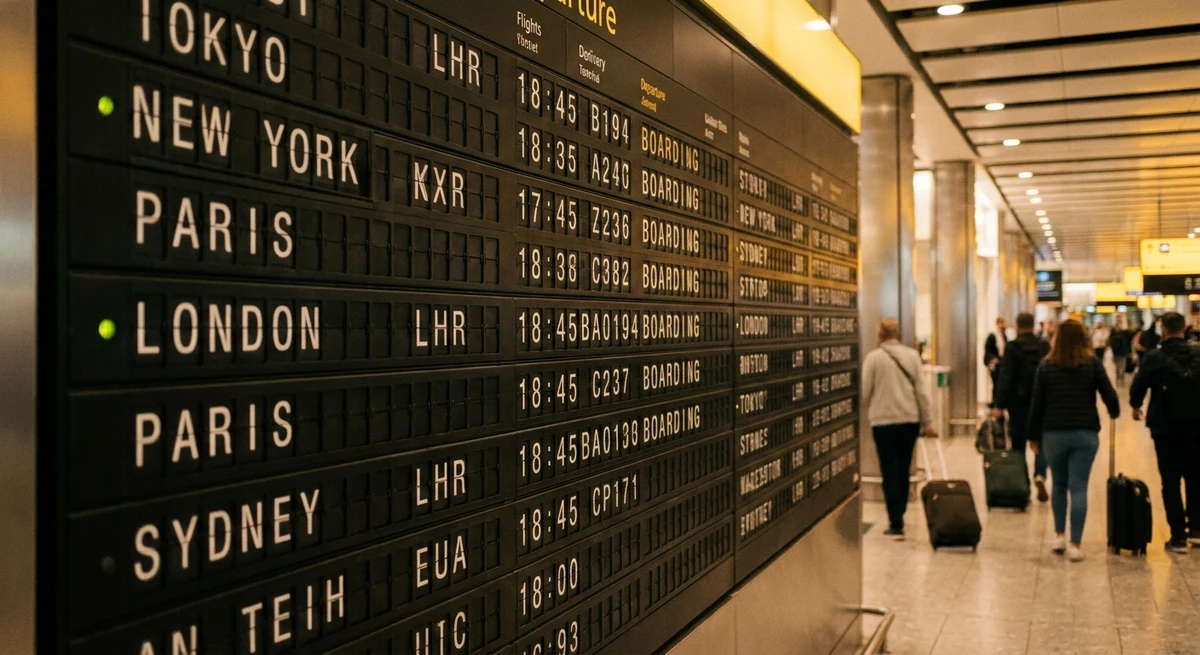
Summer in Europe is a nightmare for premium cabin pricing. Between June 15 and August 31, airlines abandon their standard discounting algorithms. The demand is so overwhelmingly high that carriers hold back cheap inventory indefinitely.
If you must fly to Europe in July, the optimal booking window shifts dramatically. You need to book 180 to 210 days out. Wait until April to book a July flight to Rome, and you will pay absolute top dollar.
Conversely, flying to Europe in November or February offers incredible flexibility. During the deep winter off-peak season, we found the cheapest business class fares dropping just 30 days before departure. Airlines struggle to fill premium cabins across the Atlantic in the dead of winter. A flight from New York to Zurich in late January will likely price out cheapest right after the New Year.
The December holiday period operates under its own distinct rules. Flying internationally between December 18 and December 24 commands a massive premium. The optimal time to book holiday travel in business class is in early September. After October 15, algorithms lock into holiday mode and prices climb steadily every single week until Christmas.
If you want to beat the holiday pricing, fly on the actual holidays. Departing on Thanksgiving Day or Christmas Day consistently yields massive discounts in business class. The cabins are empty. The flight attendants are relaxed. You avoid the chaotic terminal crowds.
How consolidator timing differs from public fares
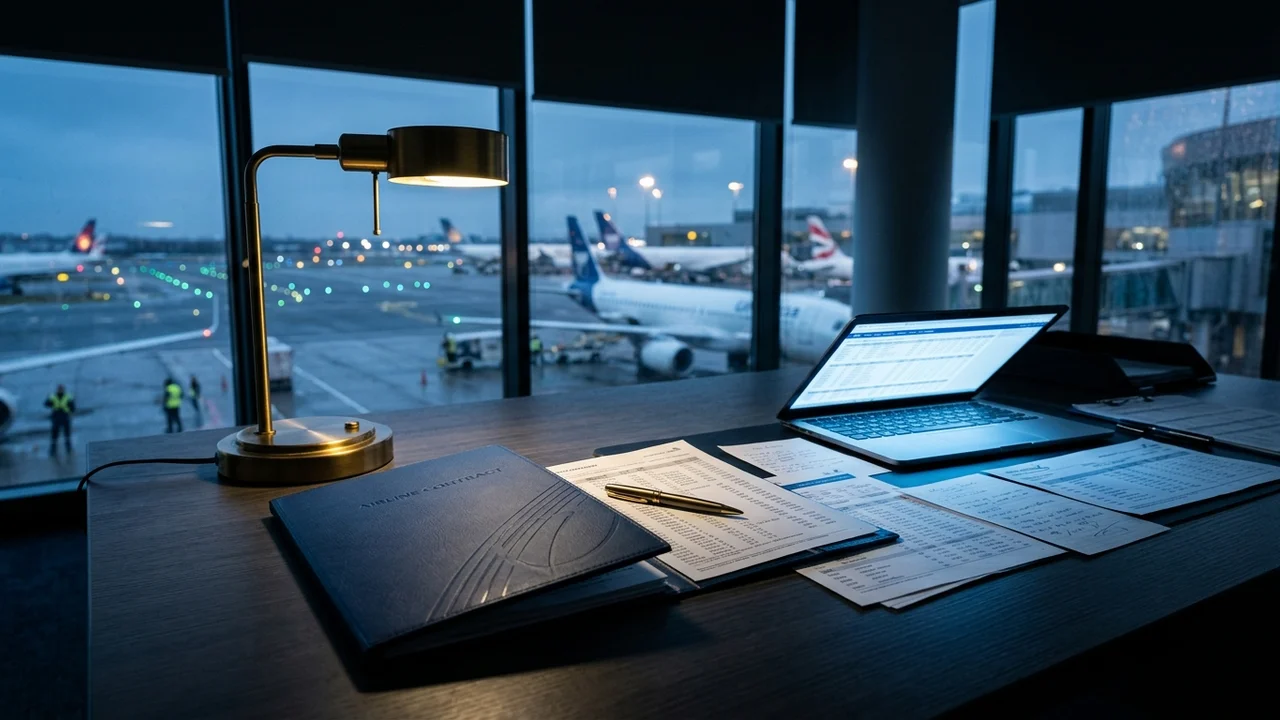
Everything discussed so far applies to public retail fares you find on Google Flights or airline websites. Consolidator fares, which are negotiated private contracts between airlines and major agencies like CEOFLIGHTS, follow entirely different rules.
Airlines use consolidators to quietly dump excess inventory without ruining their public pricing structures.
If a British Airways flight to London has 15 empty Club Suite seats 45 days before departure, BA will not drop the public price. Dropping the public price trains consumers to wait for last-minute deals. Instead, BA opens up deeply discounted wholesale buckets to consolidators.
Because we have access to these private contracts, the "optimal booking window" shifts significantly when you work with CEOFLIGHTS.
While the public data says you should book a transatlantic flight 90 days out, we routinely access consolidator inventory that drops in price 21 to 45 days before departure. This is when revenue managers panic. They release bulk inventory to preferred agencies to quietly fill the cabin.
We saw instances where a United Polaris seat from San Francisco to London priced at $5,200 publicly just a month before the flight. Behind the scenes, United opened up a private consolidator bucket to us that brought the price down to $2,800.
This dynamic is exactly why relying solely on public data limits your options. Algorithms dictate public pricing, but relationship-driven contracts dictate wholesale pricing.
When you book with CEOFLIGHTS, our agents see both the public curve and the private dump. We track exactly when airlines release these hidden buckets.
The final verdict on booking timing
Relying on generic booking advice costs you thousands of dollars. The 2026 data clearly shows that optimal timing requires route-specific knowledge and an understanding of carrier behavior.
Booking to Europe? Aim for 90 days out. Flying to Asia? Lock it in 200 days out. Heading to the Middle East? Watch the 100-day mark. Traveling in peak summer? Buy six months ahead.
If you missed these windows, or if you simply prefer not to spend weeks tracking algorithm fluctuations, you need access to private fares. Our agents handle the complexity of inventory management so you don't have to.
Call our routing specialists at (888) 851-6897. We will look at the specific cabin, the aircraft type, and the historical pricing curves for your exact dates.
CEOFLIGHTS holds an ASTA accreditation (#900292735) and is top rated on Trustpilot based on hundreds of reviews from thousands of happy customers. Our team knows when Cathay Pacific releases cheap seats to Hong Kong and exactly when Air France discounts their A350 cabins. Let the data work for you, and let us handle the booking.