Quick summary
Europe offers unparalleled cycling density across seven premier itineraries, ranging from the gentle ~320 km Danube Cycle Path to the challenging ~410 km Alpe-Adria mountain crossing. We recommend starting with the Danube or Loire Valley for leisurely châteaux rides, while timing Provence strictly between late June and mid-July for peak lavender blooms. Flying business class ensures you arrive rested for immediate saddle time while avoiding standard $8,000–$12,000 retail transatlantic ticket prices.
Few places reward cyclists the way Europe does. Dedicated bike paths, quiet country lanes, cross-border trail systems, and towns that have been making travelers feel welcome for centuries — it adds up to something genuinely hard to replicate anywhere else on the planet.
The distances are the real secret. You can ride through a German wine valley in the morning, cross into Austria by afternoon, and sit down to dinner in a baroque town you'd never heard of before this trip. That density of experience is why executives and seasoned travelers keep coming back, often flying in on a Tuesday to start pedaling by Wednesday morning.
Getting here in business class — particularly on routes where consolidator pricing through CEOFLIGHTS brings transatlantic fares down from retail rates of $8,000–$12,000 into a far more reasonable range — means you arrive rested, not wrecked. That matters when day one involves saddle time. Call (888) 851-6897 to check current availability on routes into Munich, Paris, Florence, or Madrid.
Here are seven cycling routes worth building a trip around this summer.
Danube Cycle Path (Germany to Austria)
Distance: ~320 km | Route: Passau → Vienna
This is the route I'd recommend to anyone who asks where to start. Flat, beautifully marked, and anchored at both ends by cities worth a few extra days — Passau with its old town and three-river confluence, Vienna with everything Vienna has.
The path follows the Danube almost continuously from the German border town of Passau to the Austrian capital. The terrain is gentle enough that you don't need to be a serious cyclist to enjoy it, but the scenery is serious enough to hold the attention of someone who's done a dozen European tours.
The standout stretch is the Wachau Valley, a UNESCO World Heritage Site running roughly between Melk and Krems. Terraced vineyards drop down to the river, medieval towers appear on clifftops, and Melk Abbey sits above it all like something from a fever dream of Baroque ambition. The abbey alone justifies a half-day detour.
Luggage transfer services operate along the full route, accommodations range from riverside guesthouses to four-star hotels in Linz and Vienna, and resupply points are frequent enough that you're never grinding it out in the middle of nowhere without options.
Provence Lavender Route (France)
Distance: 30–60 km per day (loop options) | Route: Luberon and Verdon regions
Timing is everything here. Arrive before late June and you'll miss the lavender entirely. Arrive after mid-July and the fields will already be harvested. The window is narrow, which makes planning ahead — including locking in your flights — more important than it is for most other routes.
The roads through the Luberon are quiet and winding. Hilltop villages like Gordes, Roussillon, and Sault appear around corners without warning. Gordes in particular is the kind of place that makes you question every life decision that led you somewhere other than Provence.
Daily distances are manageable, which is the point. This isn't a route you hammer through. You stop at distilleries, eat lunch at terraces overlooking lavender fields, and ride the next section when you feel like it. Restored farmhouse accommodations are plentiful, and the regional wine — particularly the Luberon AOC rosés — gives you an excellent reason to call it a day by 5pm.
Tuscany Cycling Trail (Italy)
Distance: ~200 km | Route: Florence → Siena via Chianti
The hills are real. Anyone who describes this route as "moderate" has either done a lot of cycling or is being generous with the term. The climbs through Chianti are not brutal, but they will remind you that you're not on the Danube anymore.
That said, the views from the top of every climb justify every meter of elevation gained. Cypress-lined roads, stone farmhouses, vineyards in every direction — this is the Tuscany of postcards, and it looks exactly like that in person.
Leave Florence via the Ponte Vecchio direction and you're into the Chianti hills within an hour. Greve in Chianti makes a logical first stop — good wine cellars, a proper triangular piazza, and enough cafés to recover your legs over an espresso. Castellina's medieval tunnels, carved directly through the town's walls, are unlike anything else on this list.
Siena at the finish is one of the great medieval cities in Europe. Arrive in time for early evening and walk the Piazza del Campo before dinner. The route deposits you into the city from the north, and the approach by bike is considerably more satisfying than arriving by tour bus.
Camino de Santiago by bike (Spain)
Distance: ~300 km | Route: León → Santiago de Compostela
The Camino on foot takes weeks. By bike, the León-to-Santiago section — the French Way's final stretch — takes most riders around five to seven days. You cover the same ground, stop at the same stone churches and ancient bridges, and arrive at the same cathedral. The experience is different from walking it, but it's not lesser.
The terrain shifts noticeably as you move west. The open Castilian plains around León give way to the green, forested hills of Galicia. The weather changes too — Galicia is genuinely wet, so pack accordingly and don't trust any forecast more than 48 hours out.
Food and accommodation along the route are abundant and tailored to long-distance travelers. Hearty regional cooking, pilgrim menus at reasonable prices, and a mix of historic inns and modern guesthouses keep logistics simple.
Fly into Madrid or Bilbao, train to León, and you're riding within a day of landing. CEOFLIGHTS, top rated on Trustpilot and ASTA-accredited (member #900292735), regularly books clients into Madrid on Iberia's Business class or British Airways Club Suite via LHR connection — both solid options for overnight transatlantic travel.
Alpe-Adria Trail (Austria to Italy)
Distance: ~410 km | Route: Salzburg → Grado
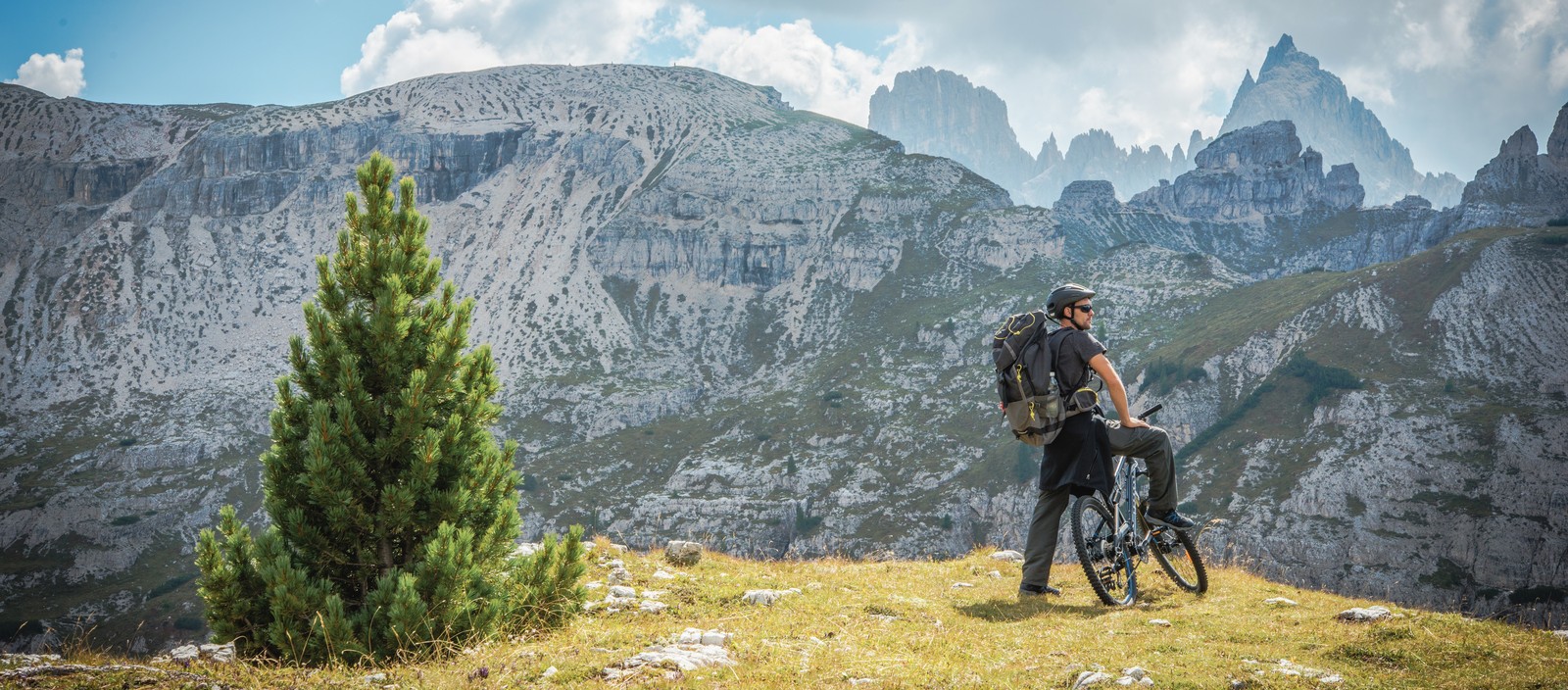
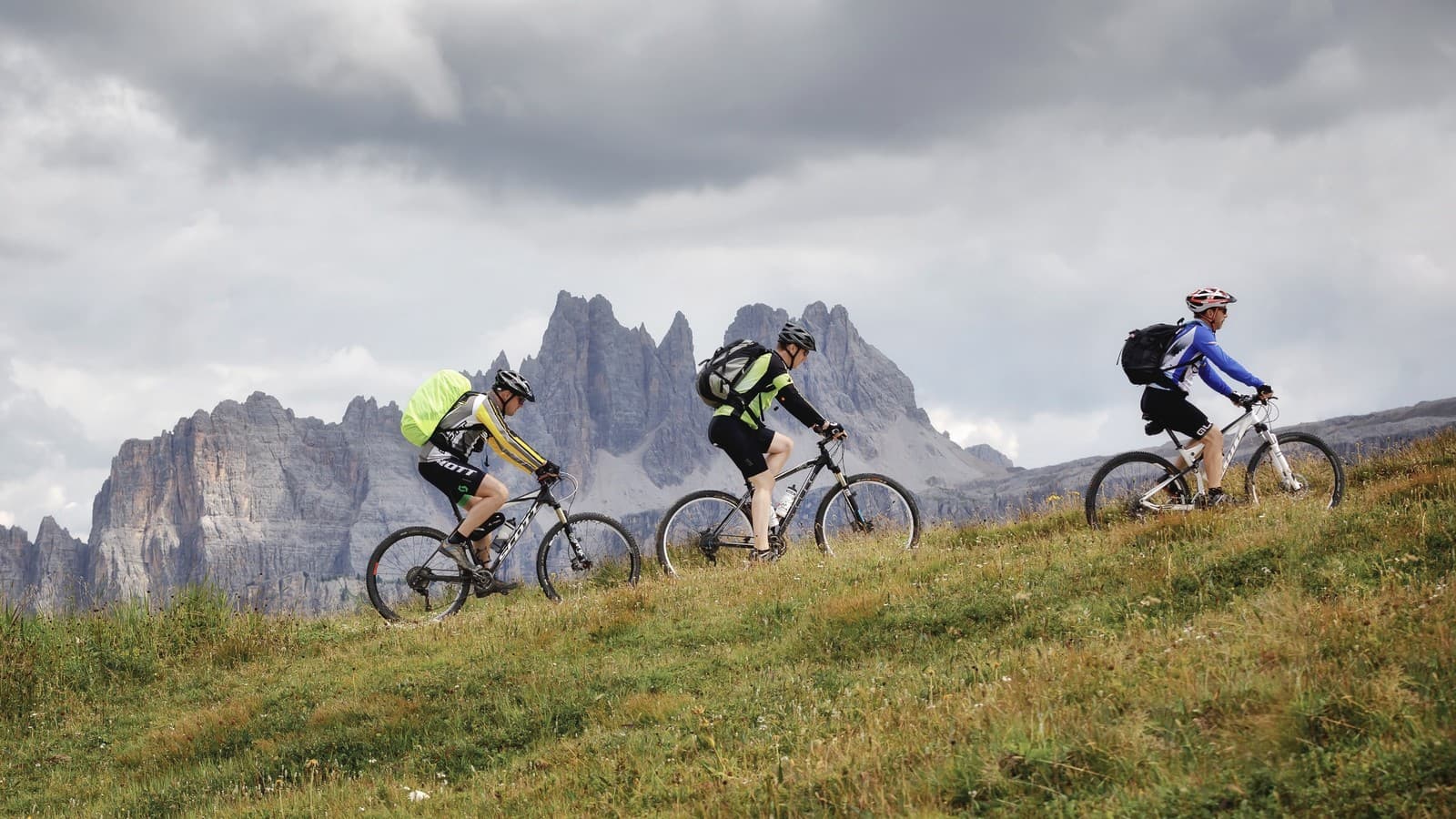
This is the most dramatic route on the list, and the one that rewards you most visibly for showing up in good physical shape. Starting in Salzburg, the trail climbs through alpine valleys, passes the spa town of Bad Gastein, and then drops through the Tauern Tunnel — a converted rail tunnel that takes cyclists directly through the mountain — into Carinthia.
From there the character of the route changes completely. The Alps recede, the temperature rises, and suddenly you're riding past vineyards and Roman ruins in northern Italy, heading toward the Adriatic coast at Grado.
The contrast between day one in Salzburg and the final day on the Adriatic is genuinely startling. Two countries, three distinct climate zones, and about ten days of riding if you take it at a sane pace. Fly into Salzburg (SZG) directly from Frankfurt or Vienna, or position overnight in Salzburg the evening before you start.
Loire Valley Trail (France)
Distance: ~250 km | Route: Orléans → Saumur
The Loire is flat, well-signed, and lined with châteaux. Chambord, Amboise, Chenonceau — you'll pass all three, and each one demands at least an hour off the bike. Chambord alone, with its double-helix staircase and 365 chimneys, could eat an entire afternoon if you let it.
The riding itself is easy. The Loire Valley is not the place to test your climbing legs; it's the place to cover comfortable daily distances, stop frequently, and eat and drink very well every evening. Loire Valley wines — Vouvray, Sancerre, Muscadet — are criminally underrated by people who fixate on Bordeaux and Burgundy.
Accommodation ranges from simple inns in riverside towns like Blois and Tours to full château hotels that let you stay inside the thing you rode past that afternoon. That option, when the budget allows for it, is worth doing at least once.
Lake Constance Cycle Path (Germany, Austria, Switzerland)
Distance: ~270 km | Route: Circular loop around the lake
Three countries, one loop, no significant climbing. The Lake Constance circuit — known locally as the Bodensee-Radweg — is the most logistically satisfying route on this list. You end where you started, which simplifies the flight-in, flight-out equation considerably.
The lake itself is enormous, and the trail stays close to the water for most of its length. Towns like Konstanz, Meersburg, Lindau, and Bregenz each have their own distinct character — German, Swiss, and Austrian sensibilities brushing up against each other in a stretch of shoreline you can ride in a week.
Boat crossings cut transit time between sections and add a legitimate highlight to the day. The ferry from Konstanz to Meersburg, for example, takes about 15 minutes and saves you a significant detour around the western shore. Worth building into your daily plan deliberately rather than treating it as a backup.
Fly into Zurich (ZRH) or Munich (MUC) and you're at the lake within 90 minutes. Through our airline contracts, CEOFLIGHTS can bring business class fares on these routes down meaningfully from published retail prices — call (888) 851-6897 for a quote before you book anything directly.
Beyond these seven routes
Romania's Transylvanian hills, Slovenia's Soča Valley, the Baltic coastlines of Estonia and Latvia, Norway's fjord roads — the list of underexplored European cycling territory is longer than most riders will ever manage to work through.
The infrastructure keeps improving. Trail signage, e-bike rentals, luggage transfer services, and English-language route guides have reached the point where planning a self-guided cycling holiday in Europe is genuinely straightforward, even for first-timers.
Pick your route, lock in your flights, and go.