Business class etiquette: the unwritten rules of flying premium
A Delta Diamond member recently turned a private Facebook group into a public referendum on cabin etiquette by photographing flight attendants and reporting them for cash. The backlash tells you everything about what premium cabin behavior should actually look like.
CEOFLIGHTS Team15 min read
Quick summary
A Delta Diamond Medallion flyer reportedly earned 8,500 SkyMiles for photographing and reporting flight attendants using personal devices, then faced a public backlash that spread from a private Facebook group to the Daily Mail
Recline protocol, window shade etiquette, and noise-canceling headphone volume are the three most common sources of premium cabin friction, and almost none of it is covered in any airline's actual conditions of carriage
The right way to escalate a genuine service failure is a calm, specific, written complaint after landing, not a phone photo mid-flight and a public campaign for miles
A story broke recently in frequent flyer circles that had nothing to do with delays, overbooking, or lost luggage, and everything to do with a woman who made a hobby out of snitching. A Delta SkyMiles Diamond member, the airline's top tier, spent her flights photographing flight attendants for using personal phones, then submitted the photos to Delta customer service. She bragged about it in a private Facebook group, calling herself a "winner" after receiving 8,500 SkyMiles and an apologetic phone call from a Delta rep. She filed three such complaints in two weeks. When other members pushed back, she told them to "kiss her grits."
It did not go well for her. Someone leaked her posts outside the group. The Daily Mail named her. Her published books started collecting one-star reviews. She then demanded, rather dramatically, that people remove content about her, citing an "active investigation" by Delta corporate security and the FBI. None of that stopped the story from spreading through every flight attendant forum on the internet.
I'm not interested in relitigating whether she broke any actual rule. She probably didn't, technically. What interests me is what the reaction revealed: a fairly universal, unwritten code that most premium travelers understand instinctively and that this woman violated on nearly every count. This is a good moment to write that code down, because a shocking number of people who can afford a $6,000 business class ticket have never actually flown one, and nobody hands out a manual at check-in.
The baseline rule nobody states out loud
Business class is not first class, and it's definitely not a chartered aircraft where you set the terms. You're still in a shared cabin with six, twelve, sometimes forty other paying passengers, plus a crew whose job is considerably harder than it looks from seat 3A. The fare buys you a wider seat, better food, and (on most widebodies) a 180-degree flat bed, not ownership of the environment.
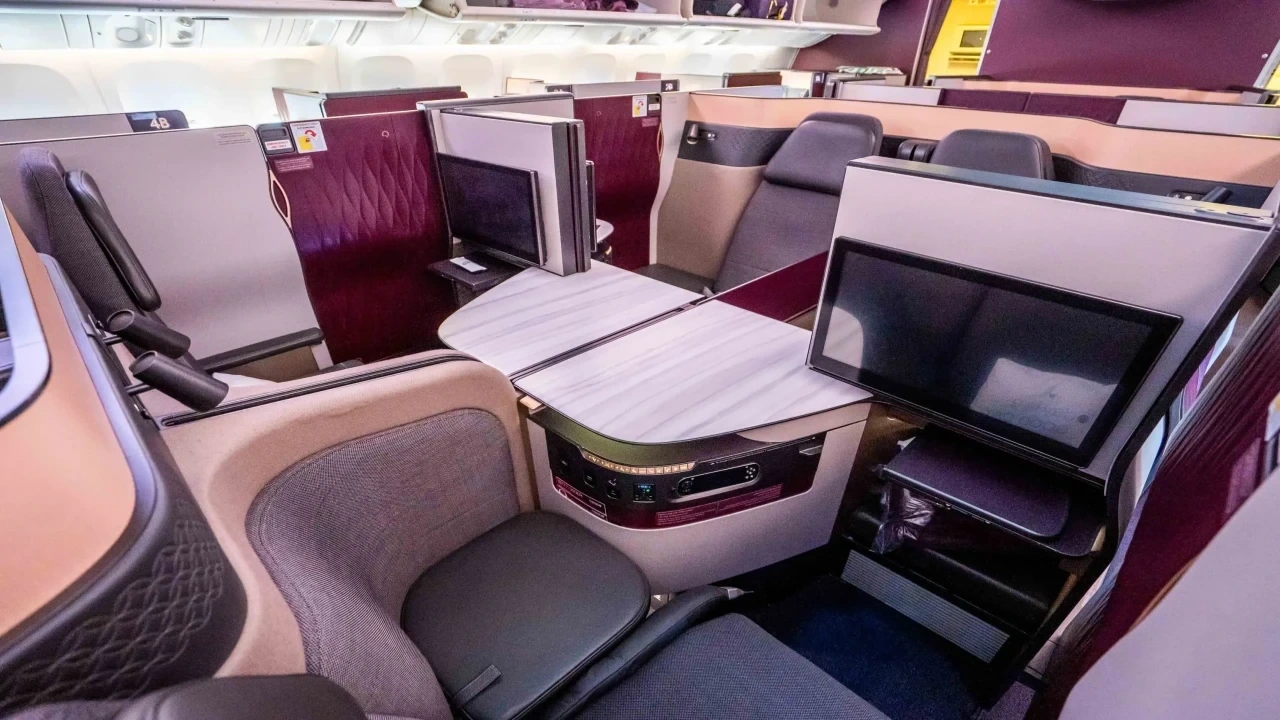
Qatar Airways' Qsuite sliding door closes off sightlines to the aisle, though its open ceiling means noise and light still carry across the 1-2-1 cabin.
That distinction matters because a lot of etiquette breakdowns in premium cabins come from passengers who confuse "I paid a lot" with "I'm in charge here." You're not. You're a guest in a small, pressurized room for anywhere from 90 minutes to nearly 19 hours, and the same social contract that governs a good dinner party applies at 41,000 feet: don't make yourself the main character.
If you mostly fly door-equipped suites, this is easy to forget. A Qatar Airways Qsuite with the door closed feels like a private room, but the aisle outside it is still shared, and the crew is still serving everyone else in the cabin. Commercial business class runs on tighter quarters, stricter norms, and a lot more people watching how you behave.
Seat recline: the most contested six inches in aviation
Reclining in business class is generally not controversial the way it is in economy, mostly because seats are staggered, angled, or fully enclosed on most modern widebody configurations. Cathay Pacific's Aria Suite, British Airways' Club Suite, and Qatar's Qsuite all give you a door or a fixed shell partition, which removes 90 percent of the recline anxiety entirely.
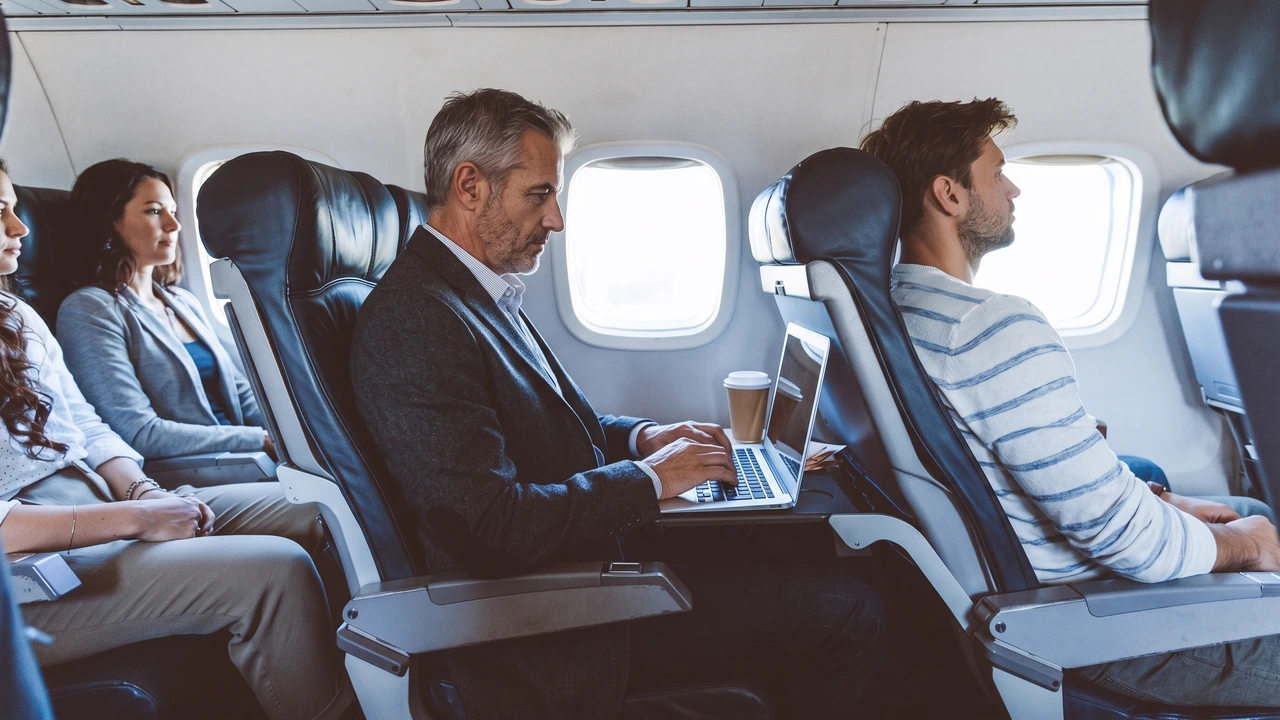
On short-haul and regional recliner cabins without fixed-shell pods, a sudden full recline during meal or laptop hours cuts directly into the workspace behind you.
The friction shows up on older configurations, particularly domestic first class or regional business class where seats still recline into the space behind them. Three rules solve almost every situation:
Recline slowly, in stages, especially during meal service. Nobody wants their tray table clipped mid-pour. Check behind you before you go all the way back, particularly if the person behind you is eating, working on a laptop, or visibly asleep with a device on their tray. And keep your seat upright for boarding and the first fifteen minutes after takeoff, when flight attendants are still moving carts and passengers are still settling.
Insider Strategy
On long-haul flights over 10 hours, ask your flight attendant to make up your bed early if you plan to sleep before the first meal service. Most crews are happy to skip straight to bedding on a red-eye departure if you ask politely before wheels-up, and it saves you the awkward mid-flight recline negotiation entirely.
Window shades: open, closed, and the politics of daylight
Nothing triggers a quieter form of cabin rage than window shades. On daytime long-haul flights, particularly westbound routes chasing the sun, half the cabin wants darkness to sleep and the other half wants to watch the Rockies or Greenland go by. There's no perfect rule, but there's a decent working norm: during meal service, shades stay at least partially open so crew can see what they're doing and passengers can see their food. During designated rest periods, usually announced by the crew dimming cabin lights, shades go down, full stop.
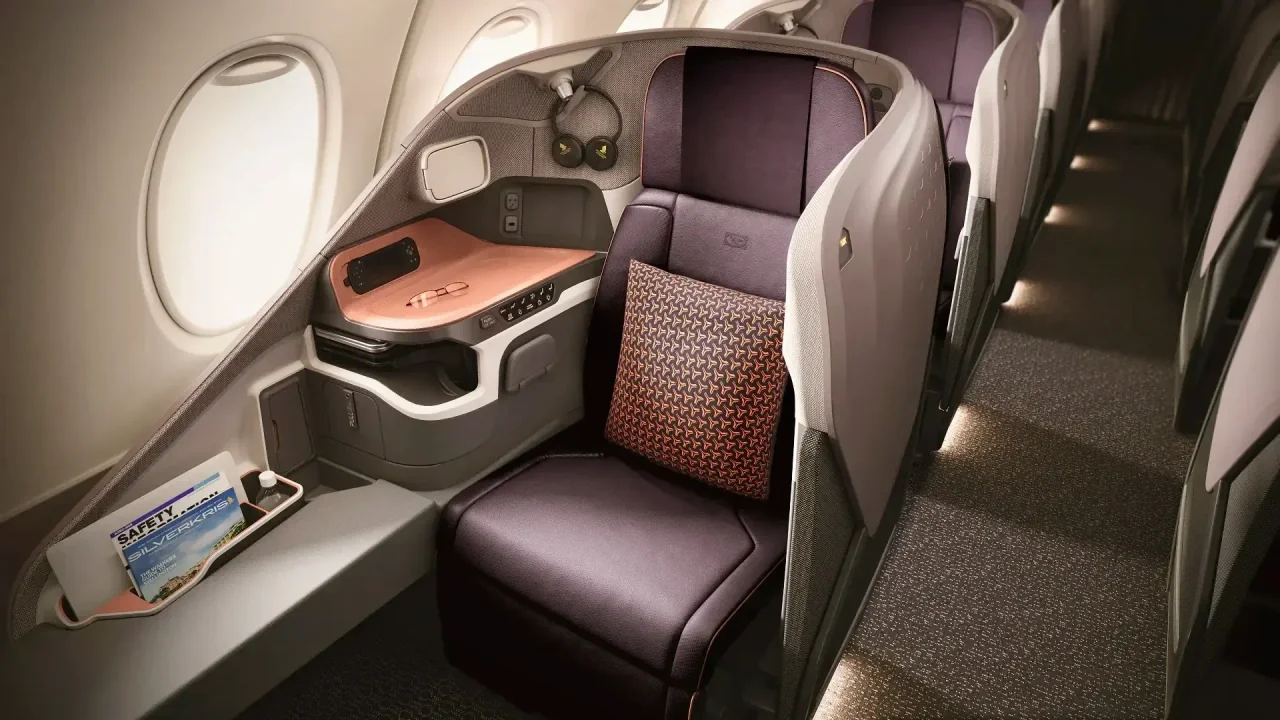
Singapore Airlines' A350-900 business class cabin: on ultra-long-haul sectors like the 18-hour-50-minute New York to Singapore crossing, a single raised window shade floods a darkened sleep zone.
If you're in a window seat and you want it open while your row-mates are sleeping, do it quietly and be ready to close it the second someone stirs. If you're in an aisle seat and the window passenger has it open at 3 a.m. Zurich time while you're trying to sleep, ask directly rather than glaring. Most people don't realize they're bothering anyone until told.
18h 50mScheduled block time on the world's longest business class flight (Singapore Airlines JFK–Singapore non-stop)
On flights that long, shade discipline basically dictates whether forty people get useful sleep or not. It's a bigger deal than it sounds.
Noise etiquette: headphones, calls, and the myth of airplane mode silence
Business class cabins are quieter than economy by design: better acoustic insulation, heavier curtains, fewer rows, and forward-of-the-wing placement on most widebodies. That quiet is part of what you're paying for, and it means sound travels further than people expect. A few specifics:
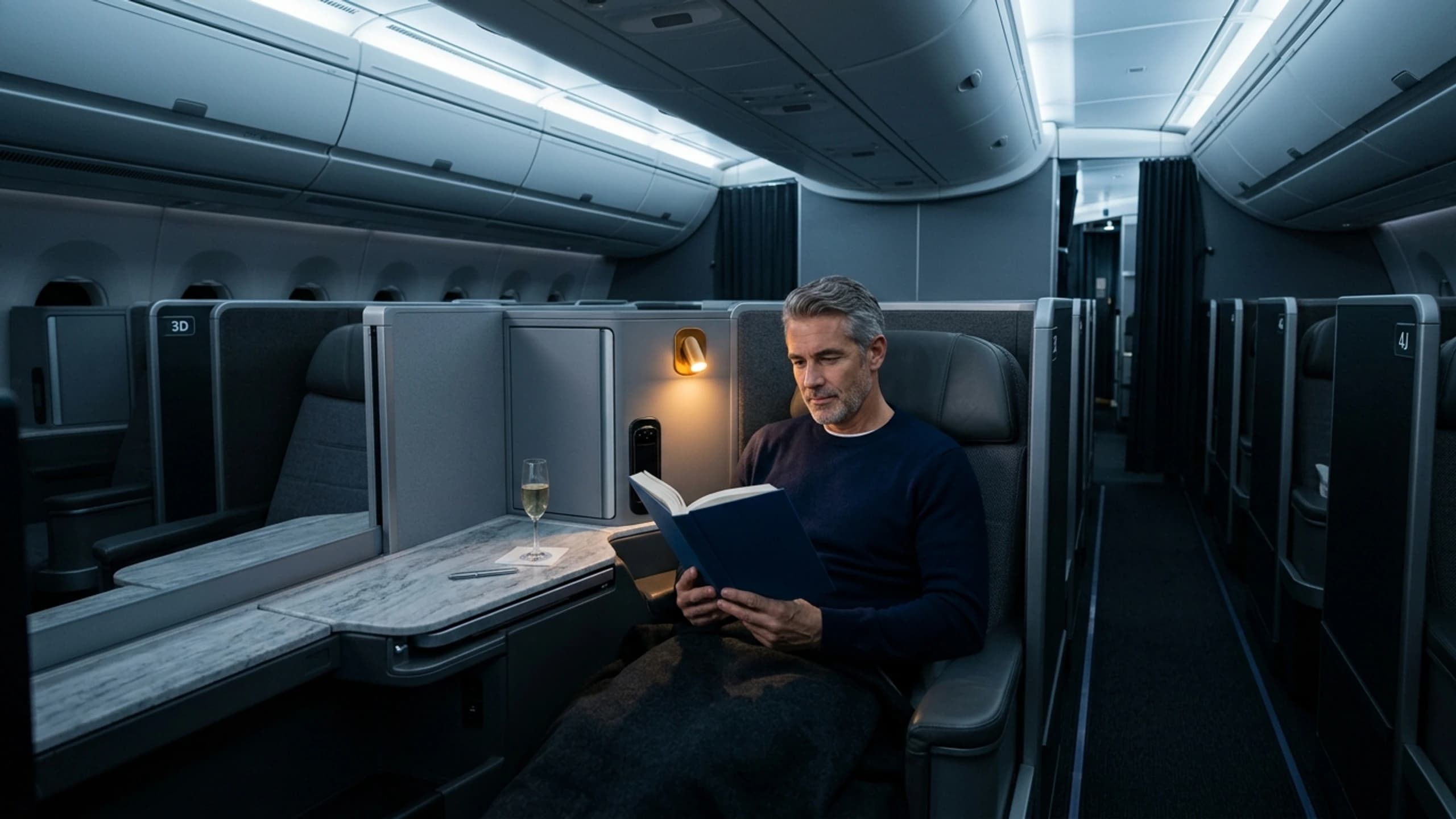
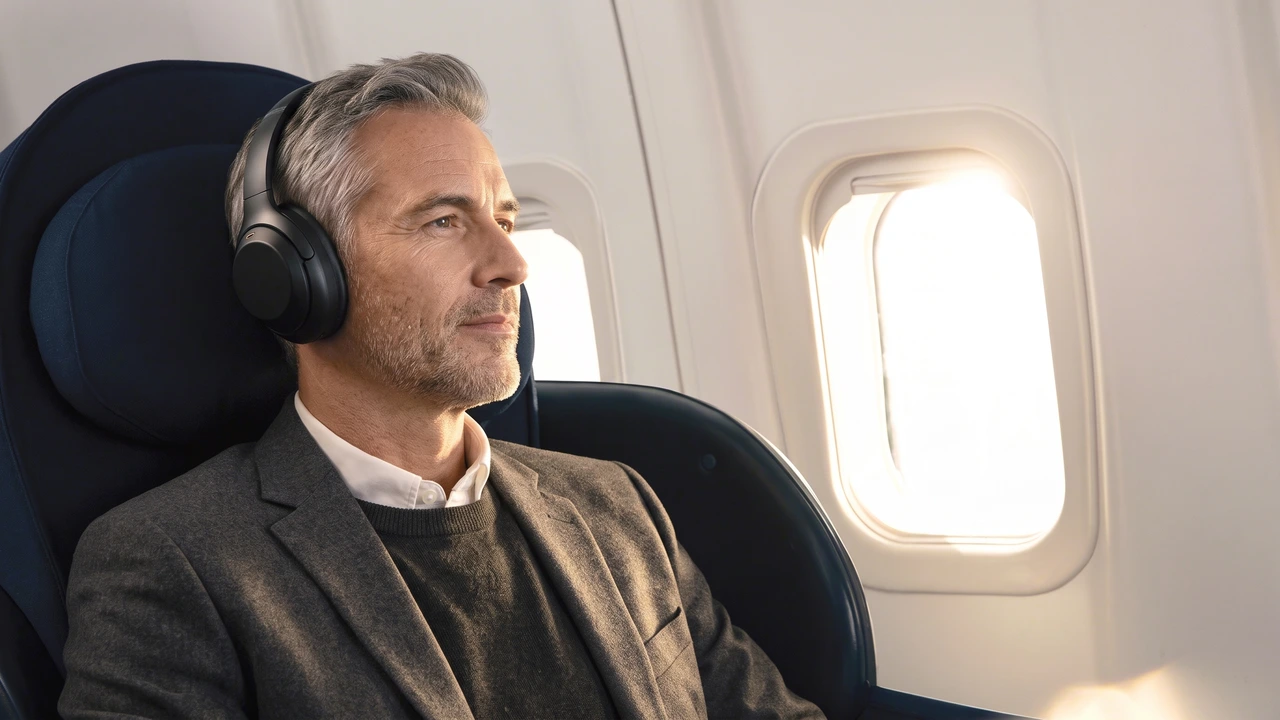
Over-ear noise-canceling headphones are standard gear in the forward cabin — keeping volume low enough that your neighbor cannot hear audio leakage is basic long-haul courtesy.
Keep headphone volume low enough that your neighbor can't identify the movie you're watching. If you can hear tinny leakage from someone else's AirPods three seats away, it's too loud, and yes, that's audible even over engine noise at cruise altitude.
Phone calls on the ground, before doors close, are generally tolerated, briefly. Phone calls once the seatbelt sign goes off for cruise are not, even on airlines with onboard Wi-Fi calling enabled. If you must take a call at altitude, use text-based apps or step (if the aircraft configuration allows it) toward a galley, away from seated passengers.
Laptop typing at 2 a.m. with the keyboard's mechanical click or iPad key-tap audio turned up is a real complaint flight attendants hear more than you'd think. Turn off keyboard sounds before a long-haul flight. It takes ten seconds in settings and it will not occur to most people until a stranger asks them to stop.
Crew interactions: where most etiquette actually breaks down
Here's where the Delta story is genuinely instructive, whatever you make of the specifics. Flight attendants in premium cabins are working a service job under safety regulations that most passengers never read. Personal device policy exists because a crew member using a phone during taxi, takeoff, or landing is, technically, a safety compliance issue on U.S. carriers; the Federal Aviation Administration's sterile cockpit rules extend loosely to cabin crew conduct during critical phases of flight. That's real. It's not nothing.
Addressing a catering or seat request calmly and directly with the cabin purser in the moment resolves almost any service issue without confrontation.
But there's a difference between noticing something and building a campaign around it. The Delta flyer in question filed three complaints in two weeks, photographed employees without consent (itself against most airlines' passenger conduct policies), and publicly celebrated the mileage payout like she'd won a hand of blackjack. That's not reporting a safety concern. That's a hobby with a scoreboard.
The etiquette line is this: if you witness something that genuinely compromises safety, mention it to the purser or lead flight attendant directly, in the moment, calmly. If it's a minor irritation, a flight attendant checking a personal phone in the galley during a quiet cruise period on a 75-minute flight, for instance, let it go. It cost you nothing. Reserve written complaints for things that actually affected your flight: a missed meal preference confirmed at booking, a broken seat that wouldn't recline or convert to a flat bed, a genuinely rude interaction that a reasonable person would flag.
On photographing crew
Most major carriers, Delta included, explicitly discourage or prohibit passengers from photographing employees without consent. If your etiquette complaint requires you to break a different policy to document it, that's usually a sign you've crossed from "concerned passenger" into something else.
And treat every crew member the way you'd want your own team treated by a client: by first name, with eye contact, with a "please" and "thank you" that isn't performative. The flight attendants working a 14-hour Doha to JFK sector have seen every personality type there is. The ones who get quietly excellent service, an extra pour, a genuine smile, a seat swap when one's available, are almost never the loudest passengers. They're the ones who were pleasant at boarding and stayed pleasant at 2 a.m. when the galley lights are still on and everyone's tired.
When to actually complain, and how
There is a right way to escalate a real problem, and it looks nothing like a Facebook group victory lap.
First, address it in real time if possible. A cold meal, a broken IFE screen, a seat that won't recline, tell the crew immediately, not after landing. Most premium cabin issues have an in-flight fix: a seat move if the cabin isn't full, a replacement meal, a manual reset of the entertainment system. Airlines can't fix what they don't know about until it's too late to fix it.
Second, if the issue is unresolved and material, meaning it actually affected your ability to work, sleep, or arrive functional, put it in writing after landing. Be specific. Flight number, date, seat number, what happened, what you'd like as resolution. "The IFE at seat 2K was non-functional for the entire 14-hour JFK-DXB sector despite two reset attempts" gets a response. "Your service was bad" does not.
Third, understand that airlines compensate for verifiable service failures, not for reporting other passengers or crew members for minor policy technicalities. The mileage payout in the Delta story wasn't really "winning" so much as a customer service department doing damage control on a complaint that, fair or not, they had to take seriously to avoid a bigger problem. That's not a system to game. It's a system that works better when it's used sparingly and in good faith.
Insider Strategy
If you fly a specific route often enough that service consistency actually matters to your bottom line, choose the aircraft, not just the airline. The same carrier can run a door-equipped suite one day and a dated 2-2-2 layout the next on the same route. A personal travel manager can steer you onto the right flight and lock in a seat away from the galley before the cabin fills.
Lounge behavior: the warm-up act nobody rehearses
Business class etiquette starts before boarding, in the lounge, and this is where a surprising number of otherwise sophisticated travelers lose the plot. A few specifics worth internalizing:
Qatar Airways' Al Mourjan Business Lounge at Doha Hamad International: sprawling architectural spaces absorb hundreds of transit passengers only when phone calls stay off speaker.
Shower suites, common in Cathay Pacific's The Wing, Qatar's Al Mourjan, and most Star Alliance flagship lounges, have time limits for a reason. Thirty minutes is standard. Going over when there's a queue is the lounge equivalent of reclining into someone's laptop.
Buffet lines are not all-you-can-eat challenges. Take a plate, take what you'll actually finish, come back for seconds. Piling a single plate six inches high at the Emirates lounge in Dubai isn't efficient, it's just conspicuous.
Workspaces and quiet zones exist because business travelers genuinely need to take calls or finish a deck before boarding. If you're in one, keep your voice down; if you need a longer, louder call, most lounges have a dedicated phone booth or business center for exactly that purpose. Use it.
And children: most premium lounges welcome families, but the same volume rules apply to a six-year-old running laps around the champagne bar as apply to an adult on a speakerphone call. Nobody expects children to behave like miniature bankers, but a parent actively managing the situation makes all the difference to everyone else trying to enjoy a pre-flight glass of Krug.
Dress code: what "business" actually means now
The unwritten dress code for business class has loosened considerably over the past decade, and honestly, that's mostly fine. Nobody expects a suit on a domestic hop anymore. But there's a meaningful difference between "comfortable" and "you clearly just rolled off a couch," and premium cabins still run on a baseline of self-respect that a surprising number of travelers ignore.
Athleisure is fine. Sweatpants with giant logos, rubber pool slides, and gym tank tops are pushing it, particularly on international long-haul where you'll be seated next to executives and, on some carriers with strict lounge or non-rev dress standards, drawing unnecessary attention at the gate. A blazer isn't required. Being dressed like you respect the $3,000 to $7,000 ticket you hold generally is.
If shared-cabin dynamics are what bother you most, the seat itself can do a lot of the work. British Airways' Club Suite on the A350-1000 gives every business class passenger a door and direct aisle access on the New York to London run: roughly seven hours with no stranger three feet away judging your cashmere joggers.
The middle seat problem, business class edition
Even premium cabins have hierarchy disputes. On older 2-2-2 or 2-3-2 widebody configurations — increasingly rare in 2026, though still flying on unretrofitted Emirates Boeing 777-300ERs and older Lufthansa Boeing 747 aircraft — a window or center seat without direct aisle access creates its own small etiquette minefield. Shared armrests go to the center occupant by default, the same rule as economy, though it matters less when the seat is 21 inches wide instead of 17.
The bigger issue is aisle access. If you're in a window or middle seat next to someone who's fallen asleep, and you need to get up, a light tap on the shoulder or forearm beats climbing over them in the dark, every time. And if you're the aisle passenger who fell asleep on a 2-2-2 frame, understand you signed up for occasional wake-ups when you took that seat. It's not an imposition. It's the geometry of the aircraft.
First-timers: what nobody tells you before your first business class flight
If this is your first time turning left at the boarding door, a few things that aren't etiquette exactly but adjacent to it, and worth knowing so you look like you belong there:
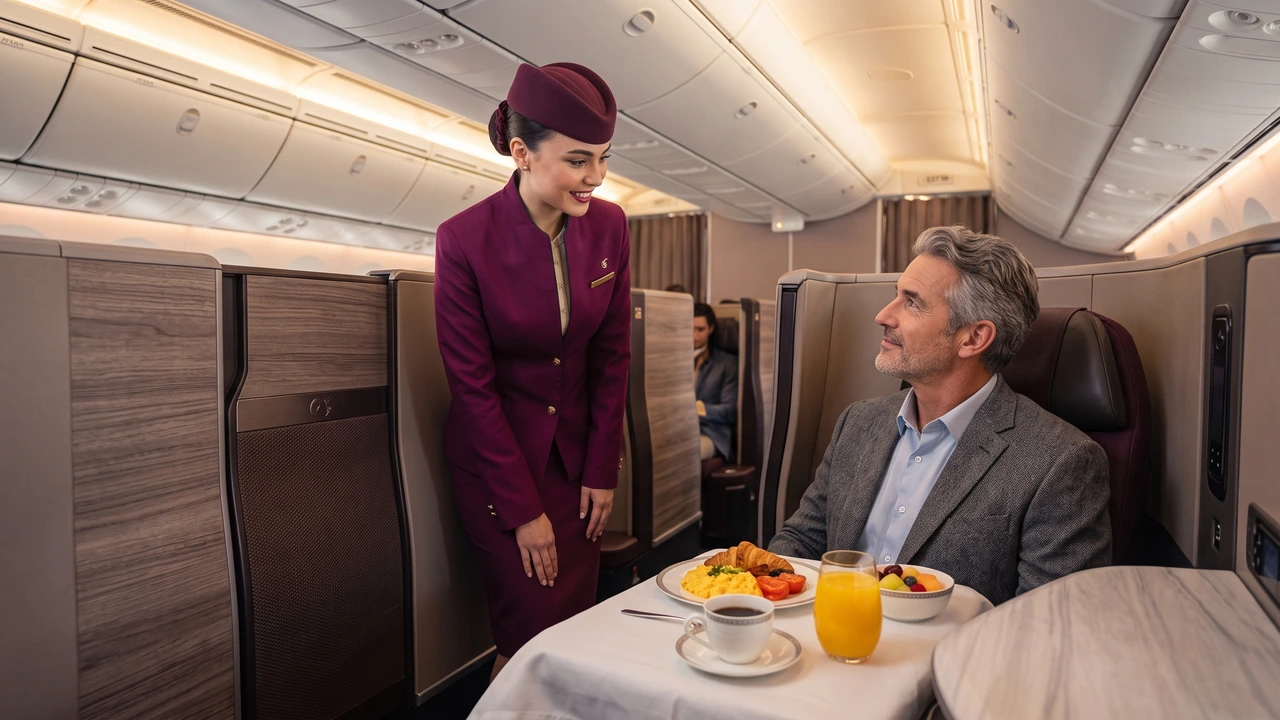
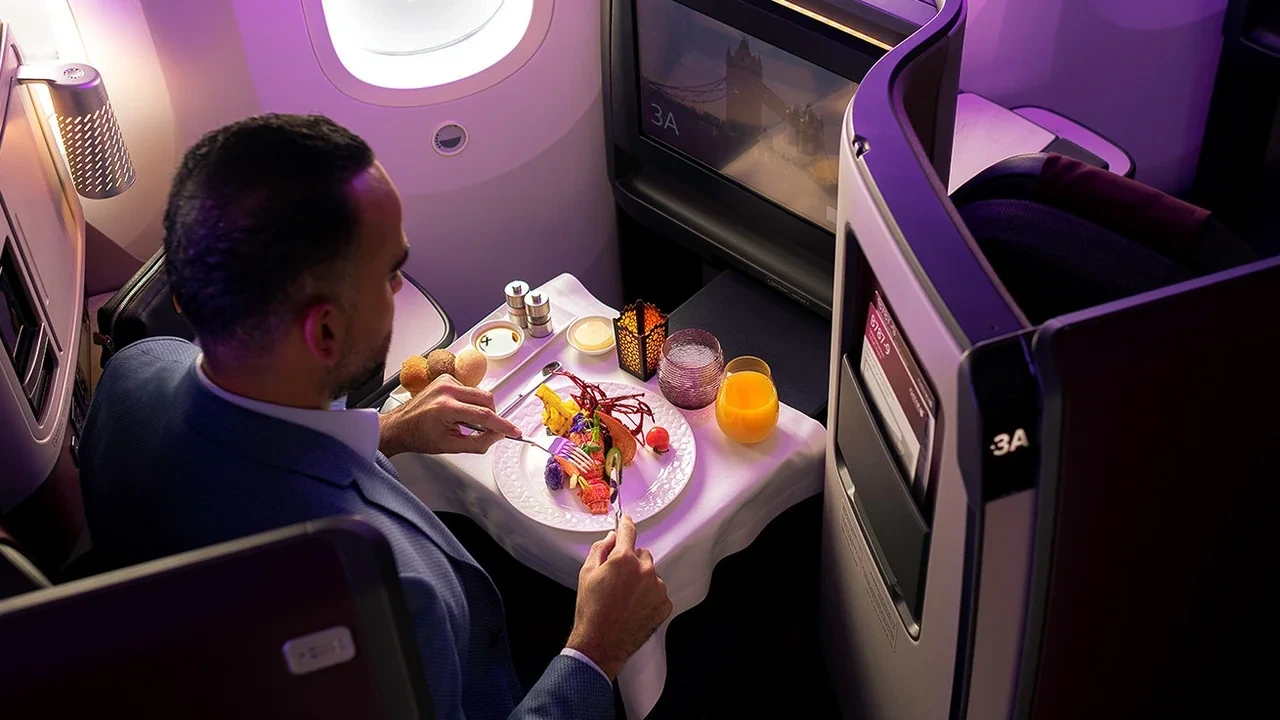
Dine-on-demand table service in business class sets your tray with linen, glassware, and porcelain — clearing your laptop before the first course arrives keeps the aisle moving.
You don't need to order everything on the menu. A four-course meal with wine pairing is available, but nobody's judging you for a simple request — an appetizer and the fish, skip the cheese plate, go straight to sleep. Ordering what you actually want reads as far more confident than ordering every line item because it's included.
Pajamas or loungewear, when provided (standard on Qatar Airways, Emirates on ultra-long-haul, and select Asian carriers), are meant to be worn in the restroom before meal service ends, not left in the plastic wrapper on the floor. Use the amenity kit. Ask the crew for a second pillow or mattress pad if you want one; that's what they're there for, and it's a normal, low-stakes request.
Tipping is not standard on commercial airlines and can create an awkward moment for crew members whose employers prohibit accepting cash gratuities. A handwritten note left with the purser, or a specific commendation naming the crew member through the airline's feedback portal after landing, carries real weight in their personnel file. That's the version of "reporting an employee" that's actually worth doing.
Where this all actually lands
The Delta Diamond story is, underneath the drama, a case study in the gap between what you're technically allowed to do and what you should do. She had the right, probably, to report what she saw. She was not obligated to turn it into a public performance, photograph employees without consent, or treat the resulting mileage payout as a trophy. The backlash that followed — the leaked screenshots, the press coverage, the flight attendant forums treating her name like a cautionary tale — wasn't really about phone policy. It was about the fact that flying premium comes with an implicit expectation of discretion and proportion, and she'd abandoned both.
Good etiquette in business class isn't complicated. Recline slowly and check behind you. Keep your headphones quiet and your shade down when the cabin's asleep. Treat the crew like professionals doing a hard job, not suspects under surveillance. Save your complaints for things that actually mattered, and make them specific, calm, and in writing. Dress like you respect the fare you paid. And if the entire idea of navigating a shared cabin's unwritten rules sounds exhausting, book the seat that minimizes them: a suite with a door, a true window seat in a 1-2-1 layout, a row well away from the galley.
Either way, the cabin's only as pleasant as the people sitting in it. Be one of the good ones. It's not a high bar, and it's remarkable how many people still clear it by inches.
Need help choosing the right flight and seat?
A CEOFLIGHTS travel manager can source unpublished business class fares saving 15%–60% below airline retail, pick the right aircraft configuration, and lock in your seat assignment. Get in touch for a route-specific quote before your next booking.
Content creator and business travel specialist at CEOFLIGHTS, bringing you the latest insights, tips, and trends in premium business and first-class travel.
Become the CEO of Your Journey
You take the lead. Your dedicated Personal Travel Manager handles every detail.