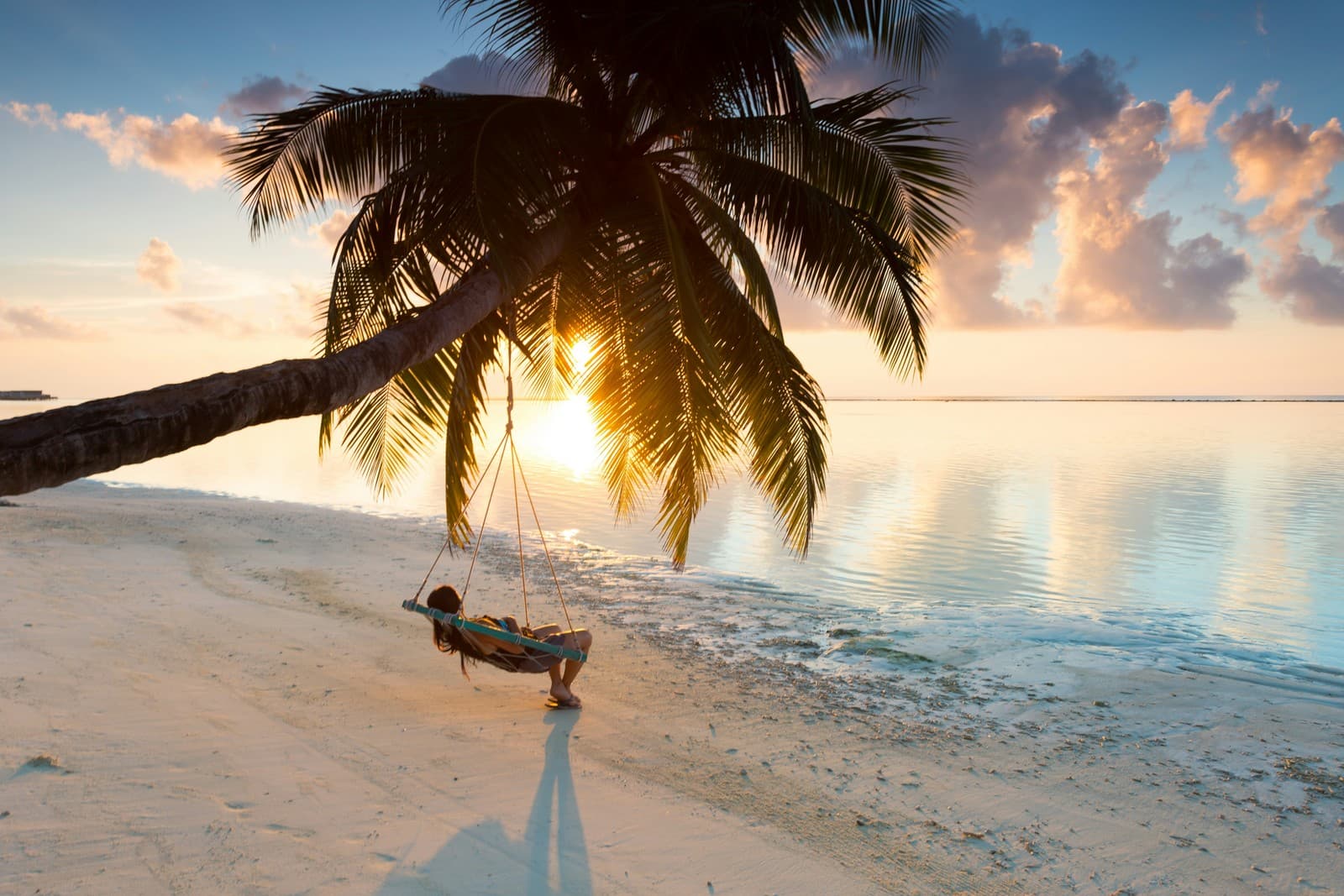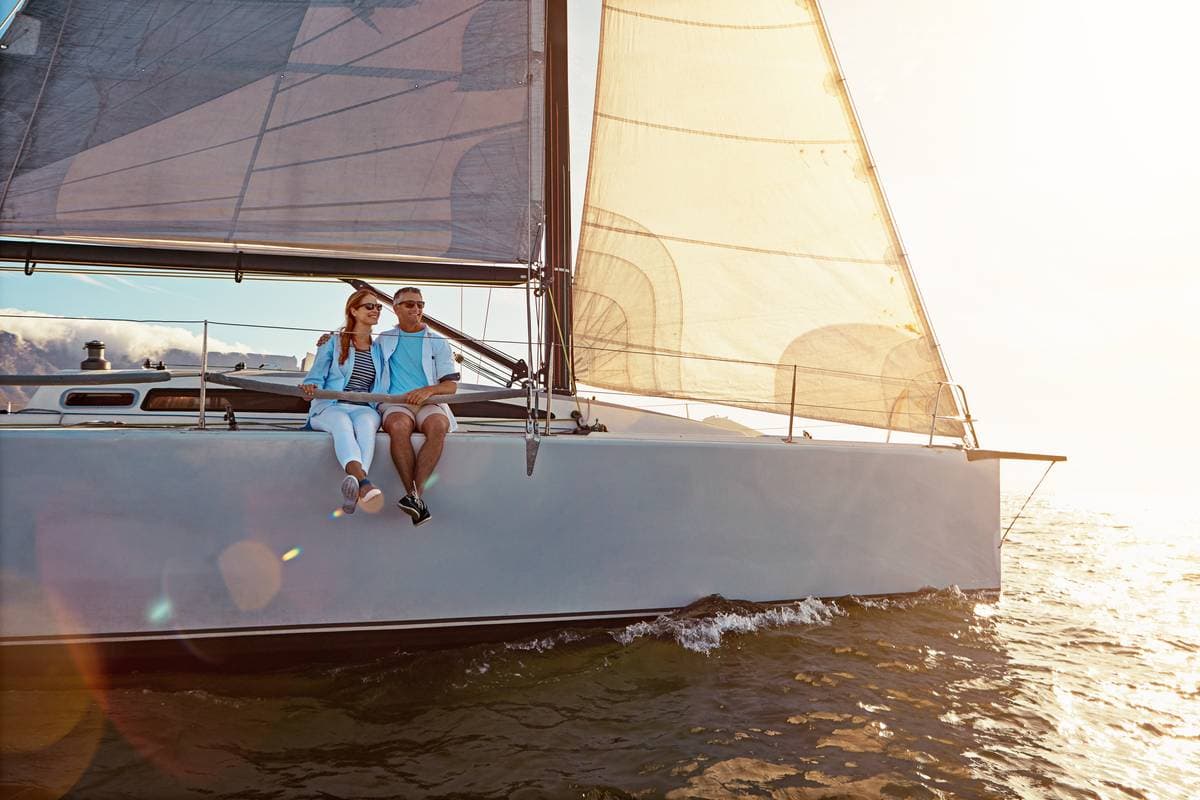
Slow travel has finally found its purest expression — and it's not a train through the Alps or a road trip through Patagonia. It's a 45-foot sloop anchored off a Seychelles beach, running on solar power, with a Starlink dish pulling down 150 Mbps in the middle of nowhere.
The appeal is obvious once you think about it. Sailing is the only mode of travel where your carbon footprint shrinks the faster you go. Wind costs nothing. The boat becomes your hotel, your office, and your transport. And modern technology has quietly solved most of the old problems that made long-distance sailing the exclusive domain of retired sea captains with nothing else to do.
For the executive who's already comfortable spending $8,000 on a business class seat, the economics of sailing are surprisingly compelling — and the experiences are incomparably richer.
Why sailing fits the slow travel ethos better than anything else
Most "slow travel" is still fast travel with a longer itinerary. You're still checking into hotels, eating at restaurants you could have found on Google Maps, and moving on before the place has any chance to leave a mark on you.
Sailing is structurally different. Your pace is governed by wind and tide, not flight schedules. You anchor in bays that don't have a TripAdvisor page. The communities you encounter are the ones that service boats, not tourists — fishermen, harbor masters, other sailors. That distinction matters enormously to the quality of the experience.
The environmental case is equally strong. A modern sailboat running on solar and wind produces a fraction of the emissions of a cruise ship, a long-haul flight, or even a road trip. For travelers who take their carbon footprint seriously, this isn't a compromise — it's the best available option.
And yes, sailing can be cost-effective at scale. Once you've covered the charter or purchase cost, your daily expenses drop dramatically. No accommodation bills, no fuel costs if you're sailing efficiently, no restaurants unless you choose them.
Bareboat yacht charters: the entry point worth knowing
A bareboat charter is exactly what it sounds like — you rent the boat, you captain it yourself, no crew included. That independence is the whole point. You set the itinerary, you choose the anchorages, you decide when to push on and when to stay an extra three days because the snorkeling is too good to leave.
The Caribbean, Mediterranean, and South Pacific are the obvious hunting grounds. The British Virgin Islands offer protected sailing with reliable trade winds. Croatia's Dalmatian Coast gives you 1,200 islands and genuinely excellent food within swimming distance. French Polynesia is for when you're ready to be serious about it.
Sunsail and The Moorings are the dominant booking platforms for flotilla and bareboat charters, with fleets ranging from 35-foot monohulls to 50-foot catamarans. Expect to pay anywhere from $2,000 to $8,000 per week depending on the vessel size, season, and destination. Split across four people, that math looks very different from four hotel rooms.
If you're researching destinations, the most popular bareboat yacht charter destinations guide is worth an hour of your time before you start pricing anything out.
The flexibility of a bareboat charter is genuinely unlike anything else in travel. Nobody tells you where to go tomorrow. That sounds simple, but it changes everything about how you experience a place.
The technology that actually makes this work
Five years ago, extended offshore sailing required real sacrifices — unreliable communications, constant water rationing, diesel dependency, and a generator running every evening like clockwork. That era is over. Four technologies, specifically, have transformed the calculus.
Starlink at sea
Starlink is the single biggest change to the offshore sailing lifestyle in a generation. Full stop.
Before it, staying connected at sea meant expensive and slow satellite phone data plans, or waiting until you reached a marina with passable WiFi. Now, a Starlink Maritime or Flat High Performance dish mounted on your stern rail gives you 100–200 Mbps essentially anywhere on the ocean. Video calls work. File uploads work. Real-time weather routing services like PredictWind or Expedition work better than ever.
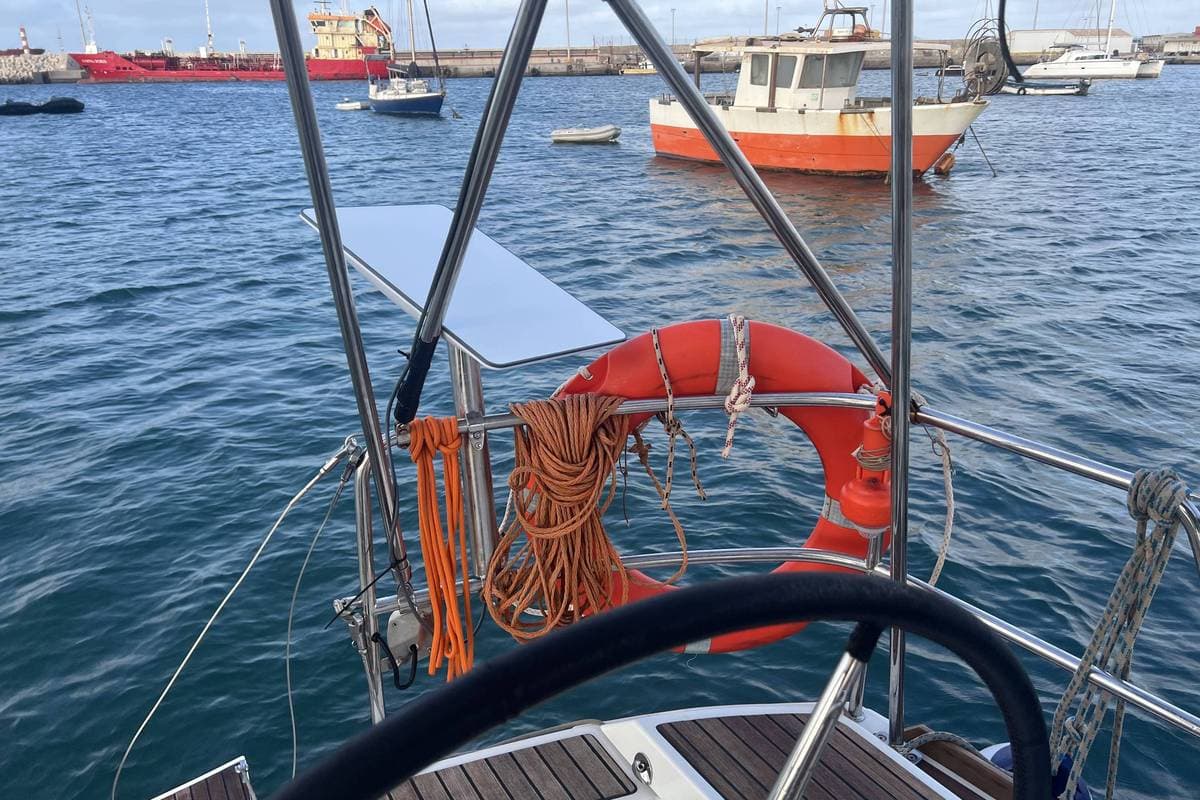
For anyone who needs to maintain any professional presence while sailing — and plenty of serious sailors do — Starlink is the difference between a sabbatical and a sustainable lifestyle change. The hardware runs around $2,500 for a maritime setup, with monthly service plans starting at $250. Compared to what offshore satellite used to cost, that's a rounding error.
Watermakers
A watermaker (technically a reverse osmosis desalinator) converts raw seawater into fresh drinking water. A decent 12-volt unit on a 45-foot boat produces 15–25 gallons per hour, which is more than enough for two people to live comfortably — showers included.
This matters more than almost any other piece of gear on a passage. Without a watermaker, you're constantly rationing, constantly calculating how far you are from the next provisioning stop, and carrying hundreds of extra pounds of water tanks that eat into your range. With one, you can stay offshore for weeks. You stop treating water like a scarce resource and start living at a normal human standard.
The environmental upside is real too. No single-use plastic water bottles. No marina water hookups running diesel-powered pumps. The reverse osmosis membrane does the work with whatever electricity you're already generating.
Solar power
A modern bluewater cruising yacht running a good solar array — typically 600–1,200 watts of panels — can keep batteries fully charged through most of the day in tropical and Mediterranean conditions. That covers your refrigeration, navigation electronics, lighting, watermaker, device charging, and Starlink dish without touching the engine.
Solar panels at sea require almost no maintenance. No moving parts, no filters to change, no fuel to source in remote anchorages. They just work. Combined with a lithium battery bank (which has dropped dramatically in cost and dramatically increased in capacity over the past five years), a well-set-up boat runs almost silently through the night on stored solar energy.
Electric inboard motors
This is the technology still maturing, but it's developing faster than most sailors expected. Electric inboard motors produce zero exhaust, run nearly silently — which matters enormously when you're anchored in a quiet bay and someone else's diesel is clattering away — and require substantially less maintenance than a conventional diesel inboard.
The honest limitation is range under power. A 40kWh battery bank on a 45-foot boat gives you roughly 40–60 nautical miles at slow speed. For coastal sailing, that's usually fine. For offshore passages where you might motor for a day through a wind hole, you still want a diesel backup or a very large solar array. But for daysailing, entering and leaving harbors, and maneuvering in marinas, electric is already clearly superior.
When paired with solar panels and a small wind generator, the system becomes genuinely closed-loop. Sun and wind go in, propulsion comes out.
Work, balance, and what "remote" actually means from an anchorage
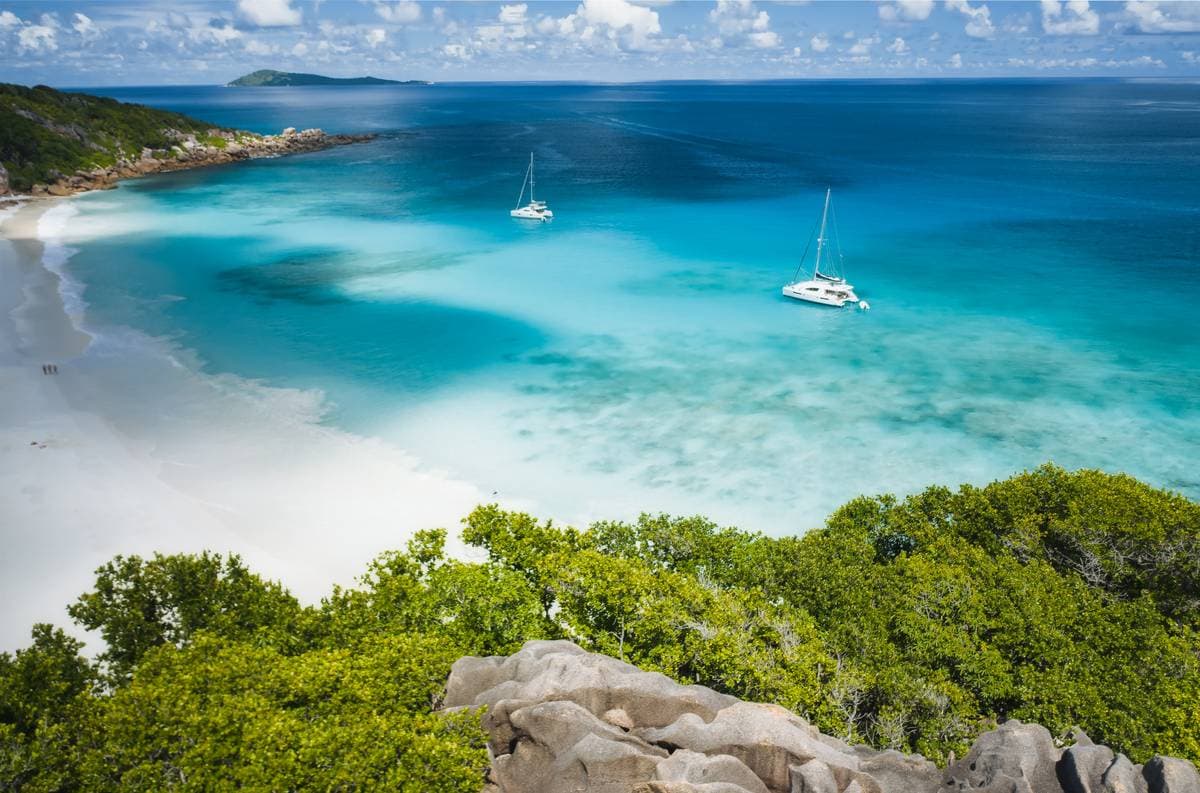
There's a version of remote work that means sitting in a café in Lisbon. And then there's sitting at anchor in the Tobago Cays, watching pelicans dive, with a video call at 10 a.m. and nothing else scheduled until tomorrow.
The second version changes you. Professionals who have tried both describe something that sounds almost embarrassingly obvious in retrospect: when your environment is genuinely beautiful and genuinely quiet, creative work becomes easier. Problems that felt complicated onshore have a way of simplifying. Your brain has actual recovery time.
Starlink and solar power enable this to be a real choice rather than a romantic fantasy. Lawyers, consultants, software developers, designers, and writers are all doing this now — not on sabbatical, but as their actual working arrangement. The technology stack required is a Starlink dish, a solar system big enough to run it, and a watermaker to handle the logistics of staying offshore.
It's also worth noting the financial structure. A well-found bluewater cruising boat costs $150,000–$400,000 to purchase and refit properly. Your monthly living expenses at anchor in most parts of the world run $2,000–$4,000 all-in. For anyone spending $5,000 a month on rent in a major city, the math deserves serious consideration.
Ocean crossings: families and couples doing it for real
The best evidence that this lifestyle is genuinely accessible comes from the YouTube channels documenting it in granular, unfiltered detail. These aren't highlight reels. They show engine failures, sleep deprivation on night watches, arguments about navigation, and babies crying at 3 a.m. in the South Atlantic.
See the Little Things (YouTube | Website) documents a family sailing with a baby. The channel is specifically useful for understanding the logistics — sleep schedules on passage, provisioning with an infant aboard, how you handle a medical situation 200 miles from the nearest hospital. Unglamorous, honest, and genuinely instructive.
Sailing Yacht Florence (YouTube | Website | Instagram) follows a couple on their yacht, Florence, with strong technical content on passage preparation and route planning. Good for people who want to understand the mechanical and navigational side before they commit to anything.
Sailing La Vagabonde (YouTube | Website | Instagram) is the most-watched sailing channel on the platform for good reason. Riley and Elayna have sailed hundreds of thousands of miles with their children, and their production quality has evolved from handheld GoPro footage to something genuinely cinematic. Watch a few episodes and you'll either decide sailing isn't for you, or you'll start researching boats that weekend.
How to actually get started
The path from "this sounds interesting" to "I am the skipper of my own boat" is sequential and not as long as people assume.
-
Take a formal sailing course. The American Sailing Association (ASA) 101 Basic Keelboat course is the standard entry point in the US. Two days on the water, genuine competency in the basics. Do this before you spend another hour on YouTube.
-
Log sea miles with an experienced crew. Join a delivery trip or a club race. Crewing for someone else costs you nothing and teaches you more in a weekend than a month of reading. Sites like FindACrew.net match beginners with boats needing extra hands.
-
Earn your offshore certification. The International Certificate of Competence (ICC) is recognized across Europe and much of the Caribbean. The ASA 104 and 106 courses cover coastal cruising and bareboat chartering respectively. Get these before you touch a charter contract.
-
Charter before you buy. A bareboat charter in Croatia or the BVIs tells you more about whether you actually want this lifestyle than any amount of research. Two weeks living aboard clarifies things quickly.
-
Plan your own passages on your own boat. At this point, you know whether you want to buy. If you do, budget properly — a $200,000 boat purchase is often followed by a $50,000–$80,000 refit to make it genuinely offshore-capable.
The part that doesn't fit neatly into a list
Sailing changes how you think about time. That's not a sales pitch — it's a structural reality. When you're waiting for a weather window, you can't manufacture one. You wait. You read, you swim, you fix something on the boat, you cook a proper meal. The urgency that defines most professional life simply cannot exist at sea. There's no rushing the wind.
For executives and frequent flyers used to being in three cities in a week, that friction is the point. CEOFLIGHTS helps you get to the departure port in the first place — through our airline contracts, business class fares on transatlantic routes regularly run $3,200–$5,800 versus $8,000–$12,000 at retail, which means more budget available for the actual adventure. We're rated 4.8/5 on Trustpilot, ASTA-accredited (member #900292735), and reachable at (888) 851-6897 when you're ready to start planning the positioning flight that gets this trip off the ground.
The sea has always been there. The technology to live on it comfortably, professionally, and sustainably is finally here too.