
Quick summary
Secure the best transatlantic business class seats by booking 3 to 4 months in advance, being flexible on mid-week departures, and leveraging alternative airports. Consolidator pricing can reduce published retail fares by 30–50%, dropping a $7,000–$9,000 ticket to $3,800–$5,200. Flight search engines only show public retail ceilings; securing true value requires strategic flexibility, routing through secondary hubs, and booking through a consolidator with contracted rates.
Business class to Europe is one of the most competitive — and most confusing — markets in premium air travel. Dozens of carriers, hundreds of route combinations, and retail fares that swing wildly between $3,500 and $12,000 for the same basic experience: a flat bed over the Atlantic. The spread in quality between a mediocre business class product and a great one is enormous. So is the gap between what airlines publicly advertise and what you can actually pay.
Here's what most travelers don't know: consolidator pricing on transatlantic business class can run 30–50% below published fares. Through our airline contracts at CEOFLIGHTS — top rated on Trustpilot and ASTA-accredited (member #900292735) — fares on routes like JFK to LHR or ORD to FRA regularly drop from retail prices of $7,000–$9,000 down to $3,800–$5,200. That's not a sale. That's just how wholesale pricing works when you have the right relationships.
But consolidator access is only one piece of the puzzle. The rest comes down to strategy.
Be flexible with your travel dates — and mean it
The 3-to-4-month booking window is real. Airlines release their most competitive business class inventory well in advance, and that inventory shrinks fast on popular transatlantic routes. On something like UA 16 (Newark to London Heathrow) or DL 404 (JFK to Paris CDG), the difference between booking 120 days out versus 60 days out can easily be $1,500 per seat.
Mid-week departures matter too. Tuesday and Wednesday flights consistently price lower than Sunday or Monday departures, which get hammered by business travelers trying to be at their desks by Monday morning. If you can structure your schedule around a Wednesday departure, you'll almost always find better availability and lower fares.
Off-peak windows deserve more respect than they get. Late January through mid-March is one of the most underrated periods for transatlantic business class — strong availability, softer pricing, and none of the summer crowds that turn European cities into organized chaos. Early November works similarly well.
The caveat: genuine flexibility requires actually being willing to shift. If you've mentally committed to flying out Friday, June 13, then "flexibility" is just a word you're using. The savings are real only if the flexibility is.
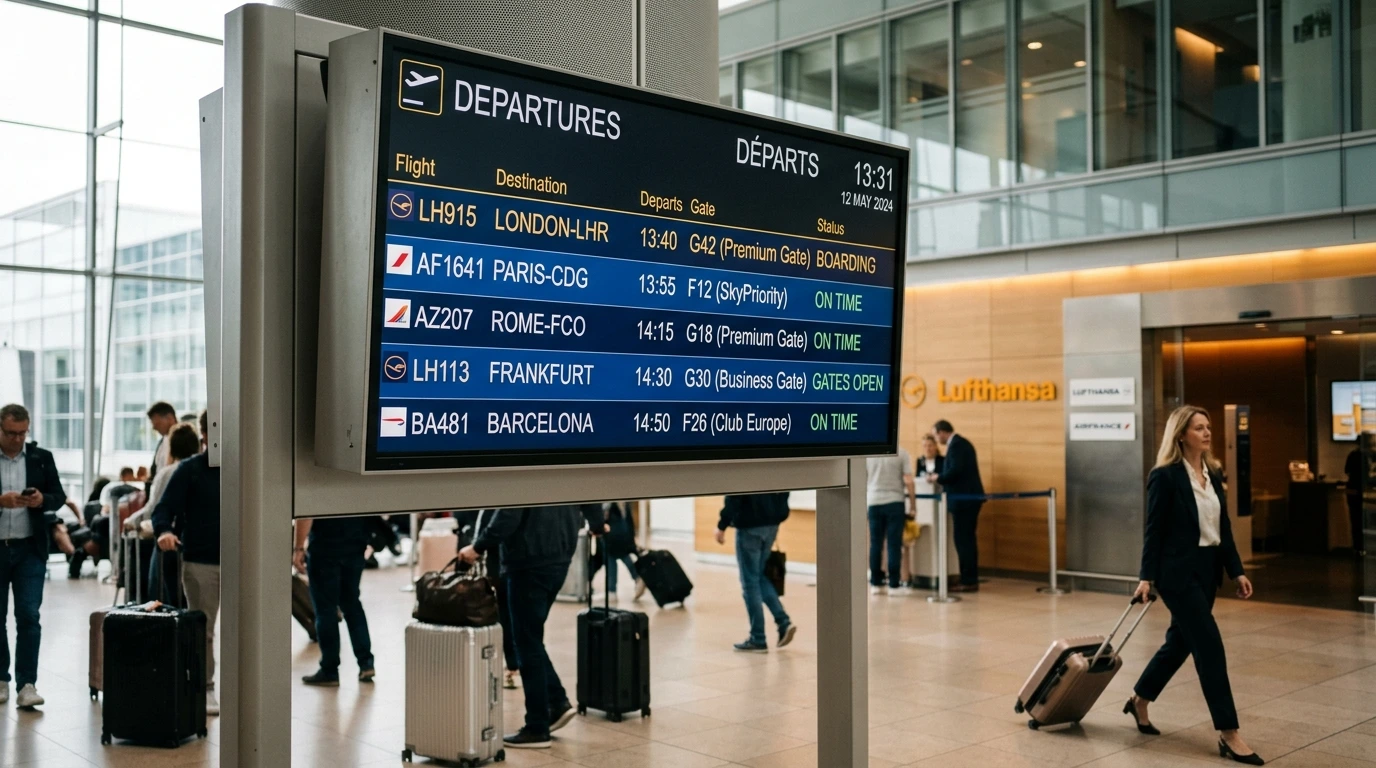
Think beyond your home airport
This one gets ignored constantly, and it shouldn't.
If you're based in a secondary market — say, Charlotte, Nashville, or Denver — defaulting to your closest major airport might be costing you money. A short positioning flight or even a two-hour drive to a different hub can open up meaningfully better fares and superior aircraft.
New York is the obvious example. EWR and JFK operate very differently. British Airways runs its A380 from JFK, Qatar operates QSuite on the JFK–Doha route, while Newark is United's stronghold with Polaris service on widebody aircraft. The products are different. The prices are different. Both airports are 45 minutes from Midtown depending on traffic, yet most New Yorkers reflexively default to one or the other without comparing.
On the European side, the same logic applies. Flying into Frankfurt (FRA) instead of your final destination and catching a cheap intra-European hop or a two-hour train often saves $800–$1,200 on the transatlantic leg. Paris CDG and Amsterdam AMS work similarly as entry points with excellent onward connectivity. Europe's train infrastructure makes this genuinely practical in a way that doesn't exist in the U.S. — a business class flight into Frankfurt and a 90-minute ICE train to Munich is a completely reasonable itinerary.

Flight search engines are a starting point, not an endpoint
Google Flights is excellent for mapping the landscape of what exists. Use its calendar view to identify low-fare windows, compare routing options, and track general price movements. Skyscanner is useful for catching oddly routed itineraries that pricing algorithms sometimes underprice.
What these tools won't do is get you consolidator fares, negotiate seat upgrades, or intervene coherently when your flight cancels at 6 a.m. in a foreign city. They're discovery tools, not service providers.
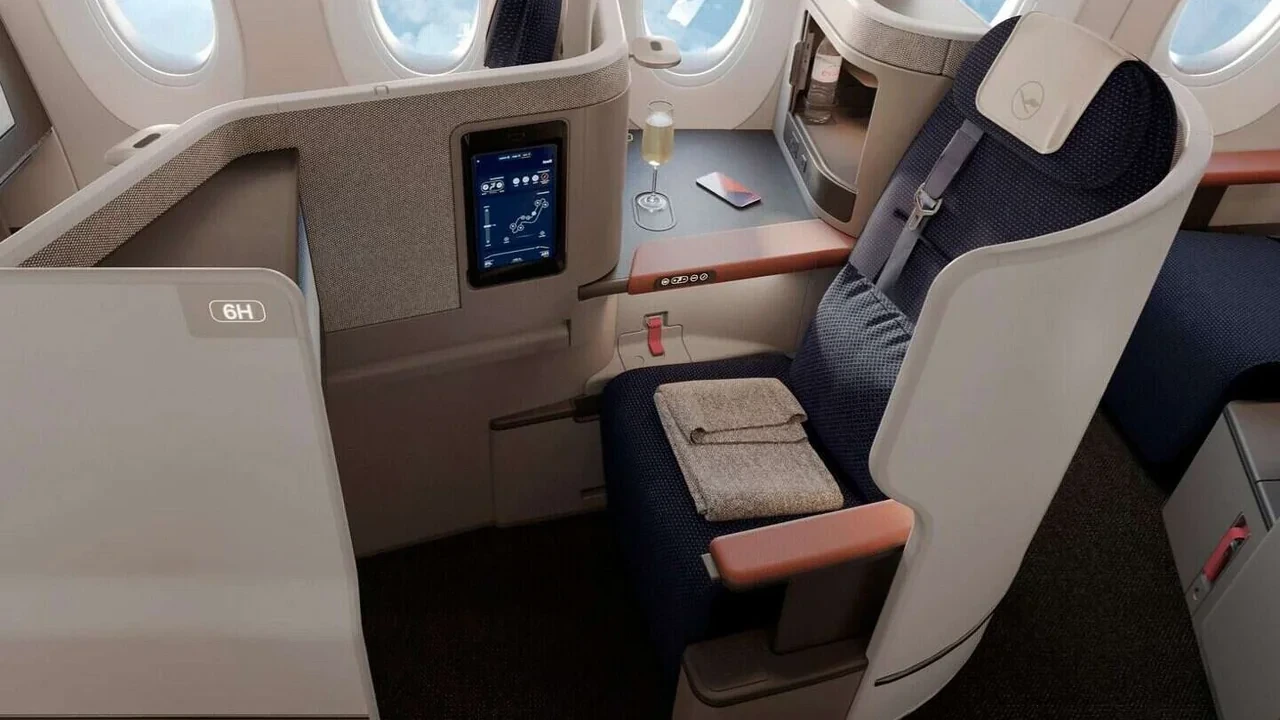
The structural problem with OTAs for premium travelers is that they're built for volume across all fare classes. They have no particular expertise in the QSuite configuration differences between Qatar's 777s and A350s, no opinion on whether Lufthansa's Business Class on the A380 MUC–JFK route is worth the slight premium over their standard 747 product, and no pull to do anything meaningful when something goes wrong.
Use search engines to do your homework. Then call someone who actually knows the product and has the contracts to back it up.
Watch airline promotions, but keep perspective
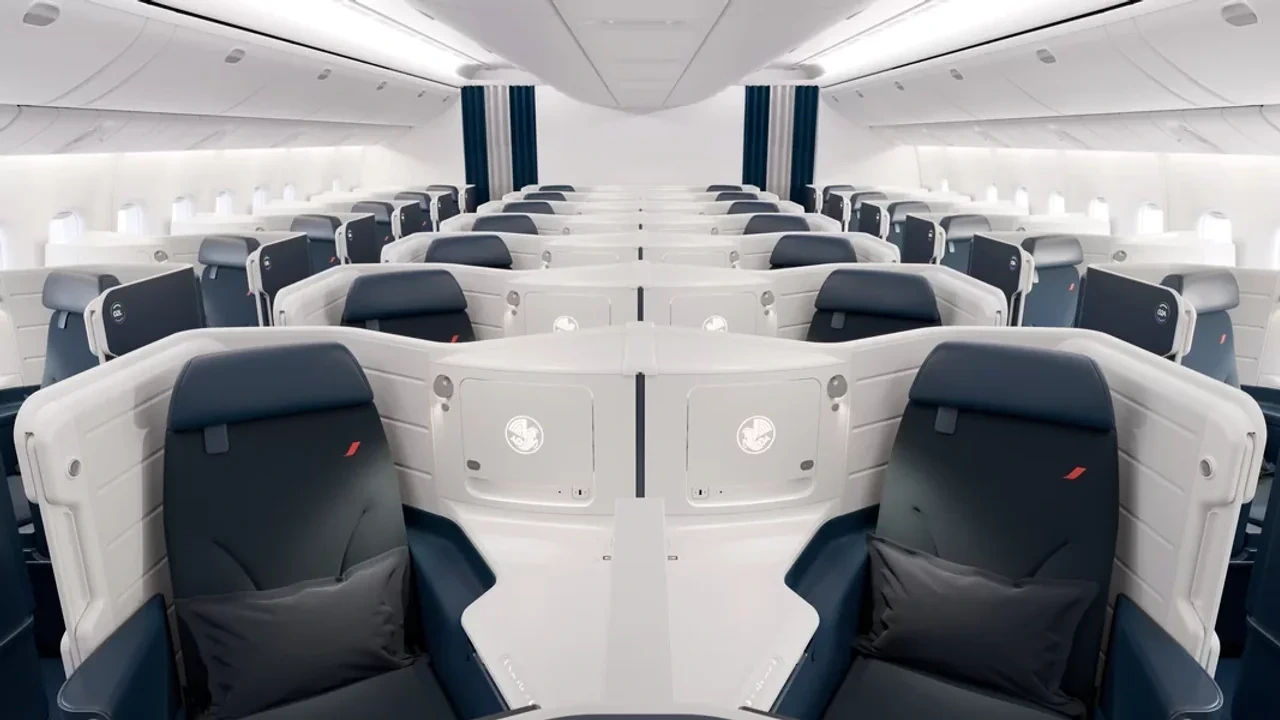
Every major carrier operating transatlantic business class runs promotional fares at some point during the year. United, Delta, American, British Airways, Lufthansa, Air France, KLM, SWISS, Turkish Airlines, Finnair, and LOT all run sales tied to seasonal demand shifts — typically around January–February for spring travel, and again in September for winter and early spring bookings.
Turkish Airlines in particular runs some of the most aggressive business class promotions in the market, with IST positioning fares that can make an otherwise indirect routing surprisingly worthwhile. Their business class product has improved considerably, and the price-to-product ratio is hard to argue with during a sale period.
The strategic point here is about sequencing. Lock in the transatlantic segment first — that's where 80% of your cost sits. Once you've secured a strong fare from, say, Chicago O'Hare to Paris, the intra-European connections become almost trivially cheap to sort out. Trying to build an itinerary from the European end backward is a more complicated way to approach the same problem.
One practical move: subscribe to airline newsletters specifically for the fare alerts, then ignore the rest of the marketing. You want the deal notifications, not the lifestyle content.
Timing your booking: the actual framework
The 3-to-4-month window is the default. But several variables can shift it.
- Holiday travel (Christmas, Thanksgiving, Spring Break) needs to be booked 5–6 months out minimum, and even then you're competing with everyone else who read the same advice
- Summer peak season (mid-June through August) on popular routes like JFK–LHR, LAX–CDG, or ORD–FCO — availability in true lie-flat business class gets tight by March for July departures
- Shoulder season and off-peak travel gives you more room to maneuver; a last-minute consolidator fare for a late October departure can occasionally surface at genuinely strong prices
- Mid-week departures on less popular routes — something like a Tuesday BOS–DUB on Aer Lingus — can stay competitively priced even relatively close to departure
Tracking all of this simultaneously is a legitimate time commitment. Most executives booking a $6,000 round-trip don't have the bandwidth to monitor fare calendars across eight carriers for three months. That's not a failing — it's just an accurate description of how people actually spend their time.
What working with a consolidator actually looks like
CEOFLIGHTS operates on a simple premise: we have contracted rates with major carriers that aren't available through public booking channels, and we pass most of those savings to clients while providing the kind of service that makes sense for people spending $3,000–$15,000 on a flight.
In practice, that means a client calling (888) 851-6897 looking for business class from Miami to Rome in early October might find that a publicly listed fare of $6,400 on Lufthansa comes down to $4,100 through our contracted pricing — with full flexibility on the ticket, seat selection assistance, and a human being available if the itinerary needs to change.
We're not running a search engine. We're running a service for people who want the right answer, not seventeen options and a checkout button.

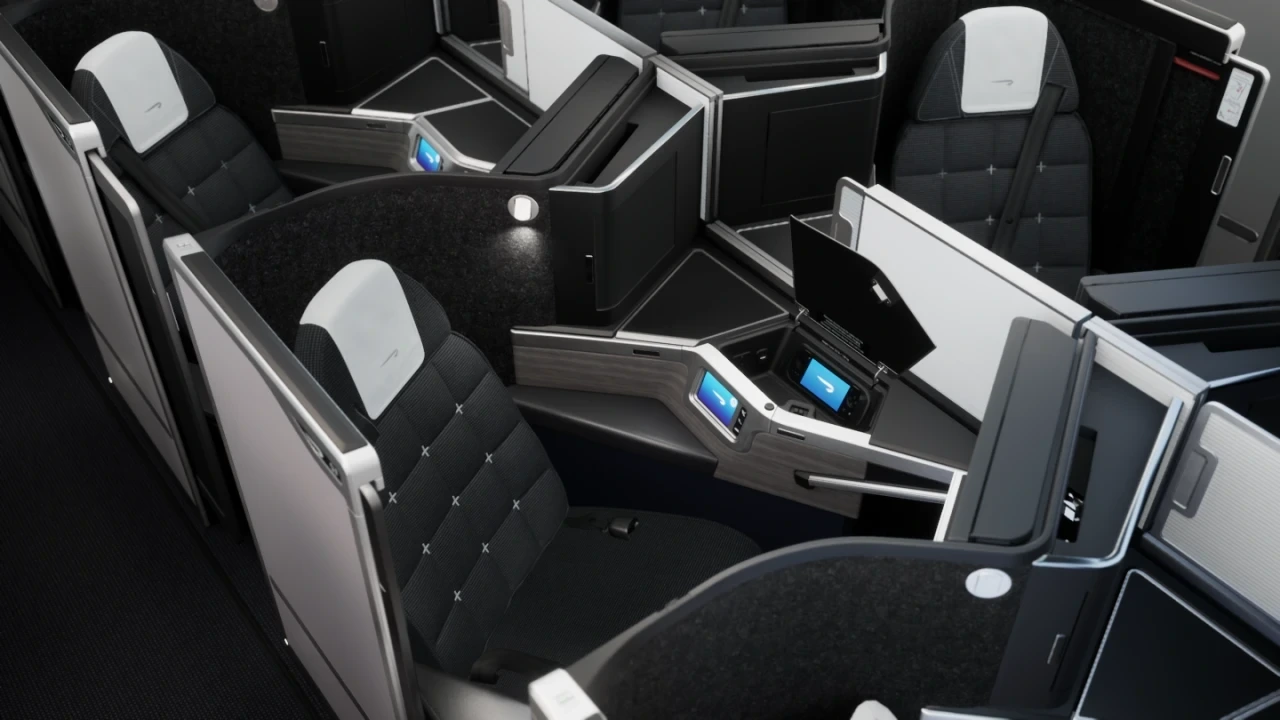
The product knowledge matters too. Not all business class is equivalent, and the differences are significant enough to affect a 10-hour overnight flight meaningfully. British Airways' Club Suite on the A350 is a fundamentally different experience from their older Club World configuration with the staggered herringbone layout — same route, same fare class, completely different night. Knowing which aircraft is operating which service, and how to request or confirm the better configuration, is the kind of detail that separates a good booking from a great one.
A few things worth knowing before you book
The transatlantic business class market rewards preparation and punishes last-minute decisions made under pressure. A few principles that hold up consistently:
- The best seats in any cabin go fast — window seats in QSuite, forward positions in Polaris, bulkhead seats in Club Suite. These are gone weeks before the cheaper middle configurations
- Routing through secondary hubs can yield genuinely superior aircraft, not just lower prices — a connection through Dublin on Aer Lingus business class, for example, often means a newer widebody with better seat pitch than some direct services
- Published fares are a ceiling, not a floor — particularly on routes where multiple carriers compete aggressively
- Airlines reprice inventory multiple times daily; a fare that looks high on Monday may shift by Thursday for no apparent reason
The executives and frequent flyers who get consistently good value on business class to Europe aren't necessarily smarter than everyone else. They've just figured out where to look, when to look, and who to call when the situation gets complicated. CEOFLIGHTS handles all three.