Some places don't look real. Not in a poetic sense — they genuinely appear to have been borrowed from a different planet and dropped, without explanation, onto ours. These are the destinations worth rearranging your schedule for, worth flying 18 hours to reach, and absolutely worth spending properly to get there.
Here are seven of them, along with the routing intelligence your travel agent probably won't give you.
Salar de Uyuni, Bolivia
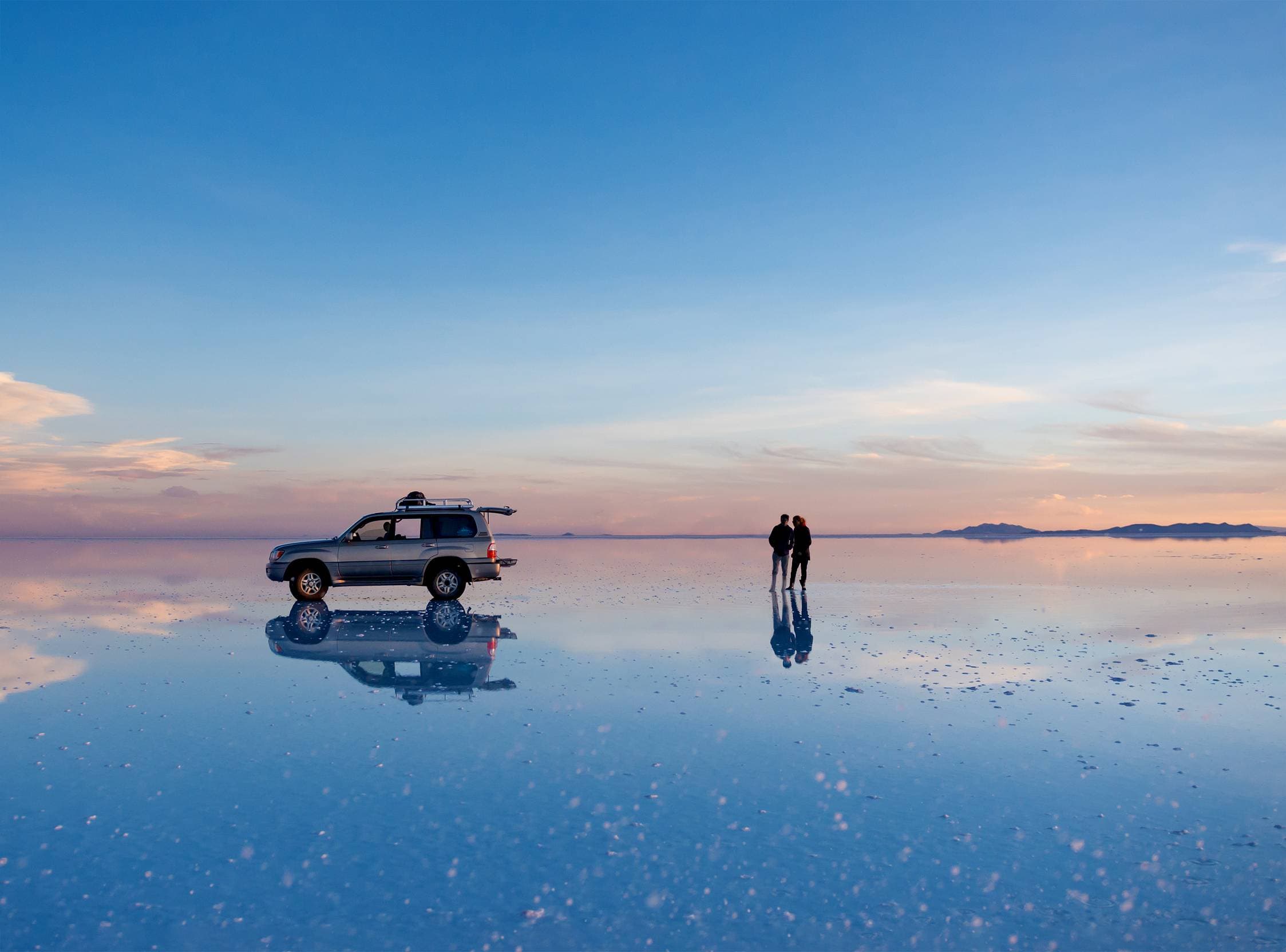
The world's largest salt flat covers 10,582 square kilometers of southwestern Bolivia. That statistic sounds dry until you arrive during the rainy season (December through April) and find the entire surface covered in a thin sheet of water — a perfect mirror reflecting the sky so precisely that distinguishing ground from atmosphere becomes genuinely disorienting. Photographers fly in from everywhere for this. You should too.
Getting here requires some planning. The best routing from the US is through Lima on LATAM, connecting onward to La Paz (LPB), then a short domestic hop or overland transfer to the town of Uyuni. LATAM's business class on the JFK–LIM leg features fully flat seats with direct aisle access — nothing revolutionary, but solid and reliable for a transatlantic-length overnight.
From La Paz, take a jeep tour across the flats, stop at Isla Incahuasi to walk among cacti that have been growing there for over 1,200 years, and plan your photography for early morning when the light hits the water layer at an angle that makes the whole thing shimmer. The nearest decent base is the town of Uyuni itself — modest, but there are comfortable lodges including the Palacio de Sal, a hotel literally built from salt blocks on the edge of the flat.
CEOFLIGHTS clients flying LATAM business class to Lima regularly see retail fares near $4,800 roundtrip from New York drop significantly through our airline contracts. Call us at (888) 851-6897 and we can quote the current consolidated fare.
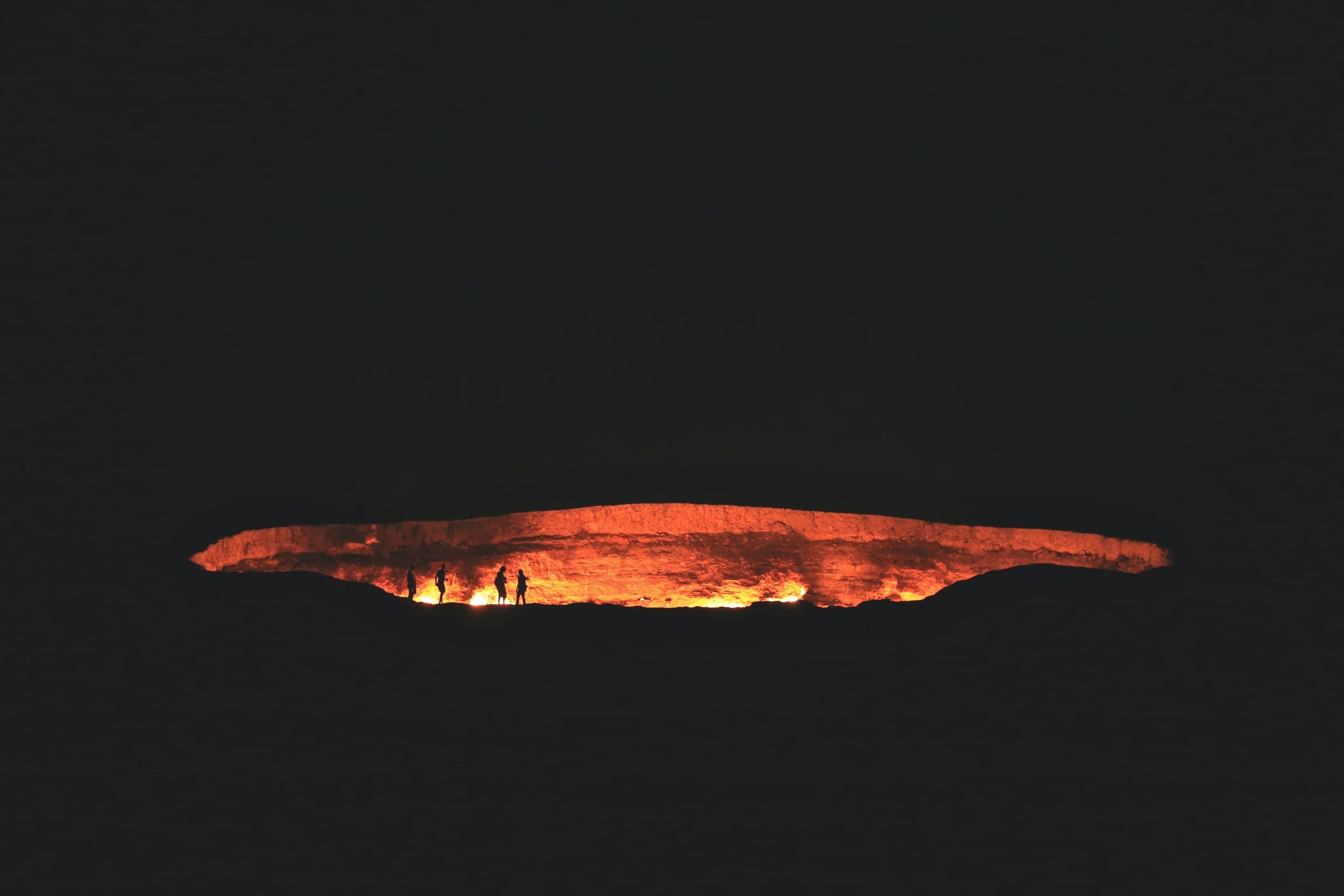
The Door to Hell, Turkmenistan
Since 1971, a crater in Turkmenistan's Karakum Desert has been on fire. It was an accident — Soviet geologists drilling for natural gas caused a collapse, then lit the methane to prevent it from spreading. They assumed it would burn out in weeks. It has now been burning for over 50 years, and nobody has given it a serious shutdown date.
The Darvaza gas crater is about 70 meters wide and 30 meters deep. At night, the glow is visible from miles away across flat desert. Standing at the edge — at a reasonable distance, behind the barriers — watching curtains of flame roll across a pit that deep is one of those experiences that genuinely recalibrates your sense of scale.
Reaching Ashgabat, Turkmenistan's capital, from European hubs is the practical approach. Turkish Airlines flies IST–ASB with reasonable frequency, and their business class — one of the most underrated in the industry, with solid food and genuinely warm service — handles the connection well. From Frankfurt or London, routing through Istanbul keeps the total journey under 12 hours. Hire a guided tour from Ashgabat — the crater is 260 kilometers north of the city, across open desert, and independent access is both logistically difficult and inadvisable.
Visit between October and March. Summer temperatures in the Karakum routinely exceed 45°C, which combined with an open fire pit makes for an unpleasant afternoon.
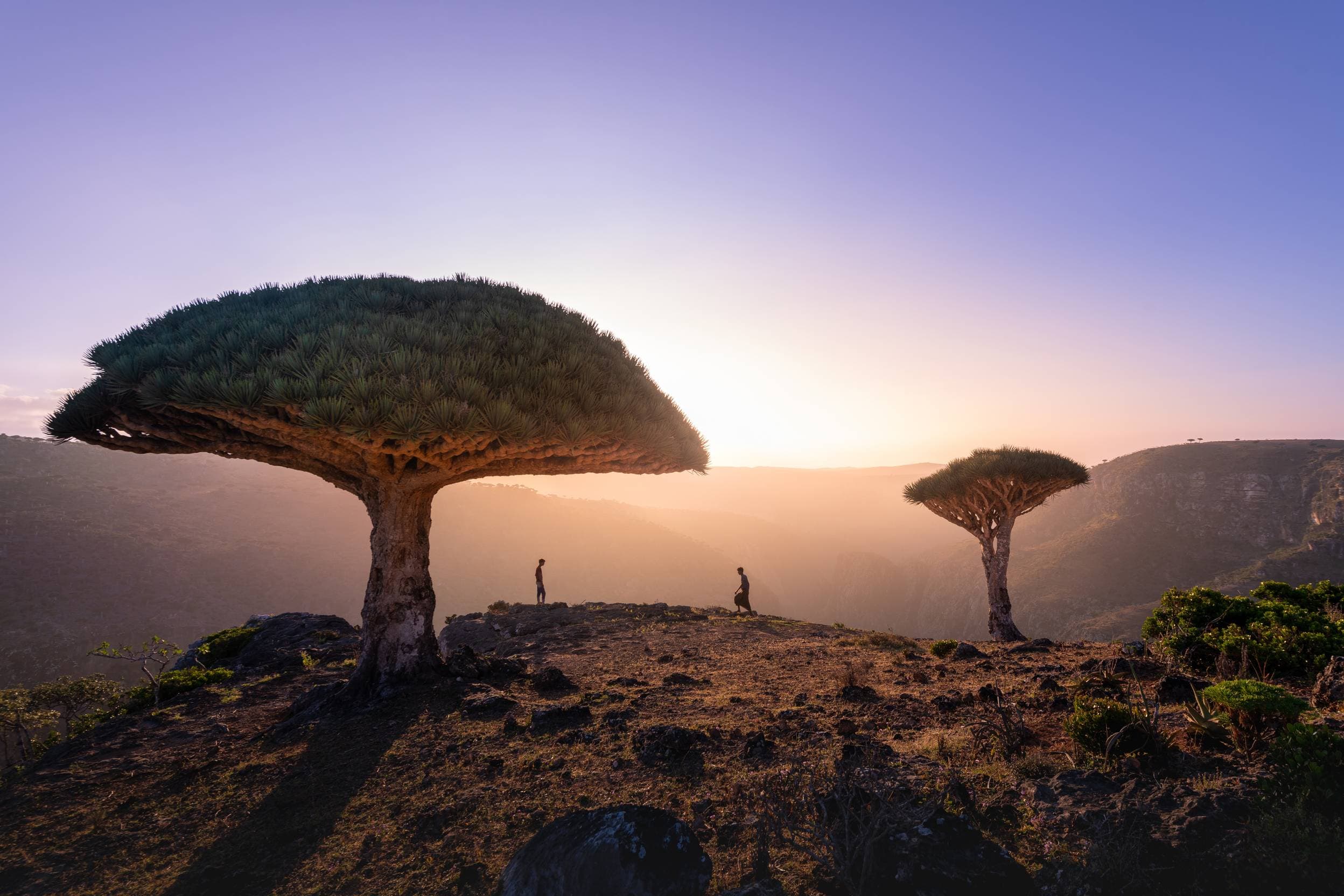
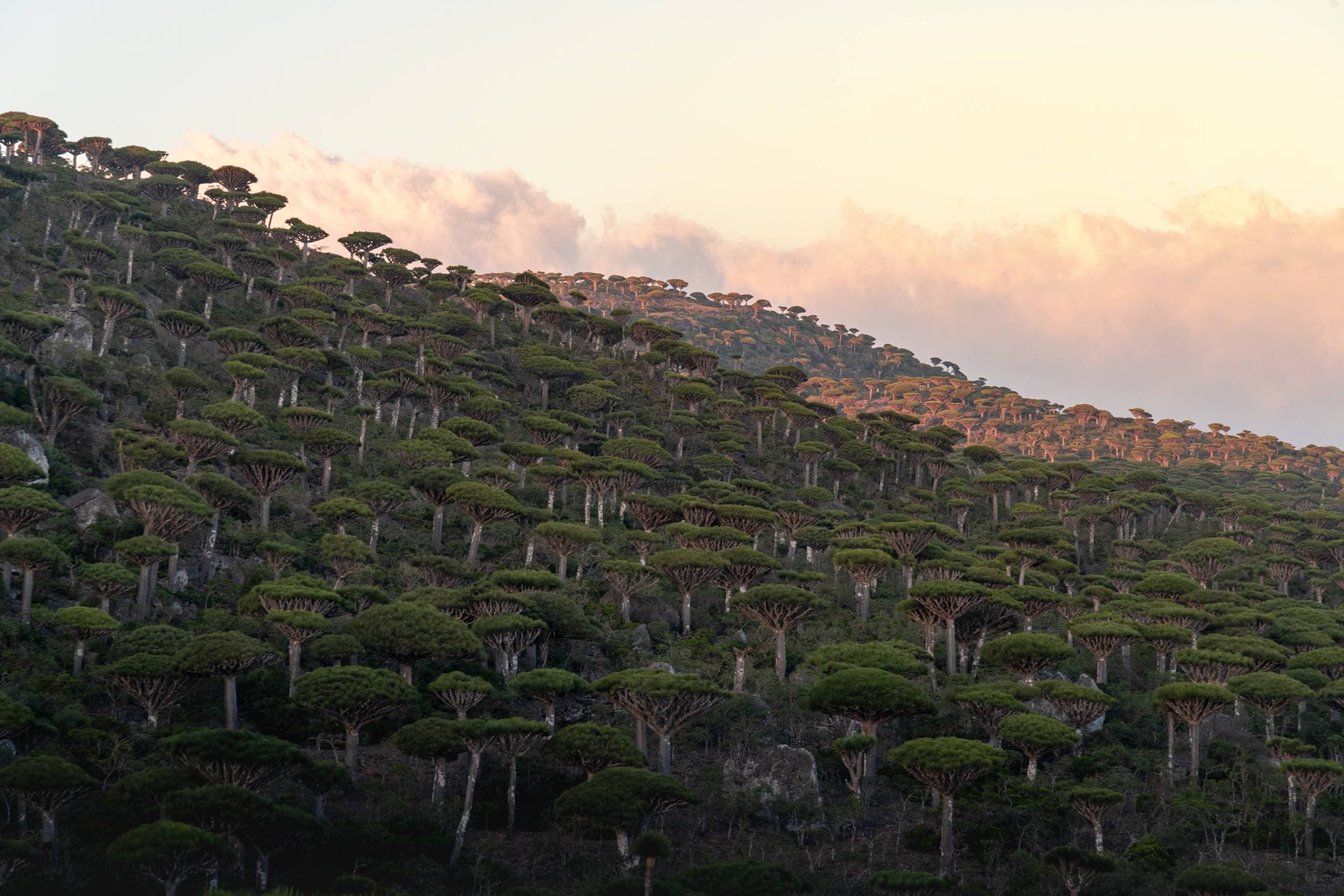
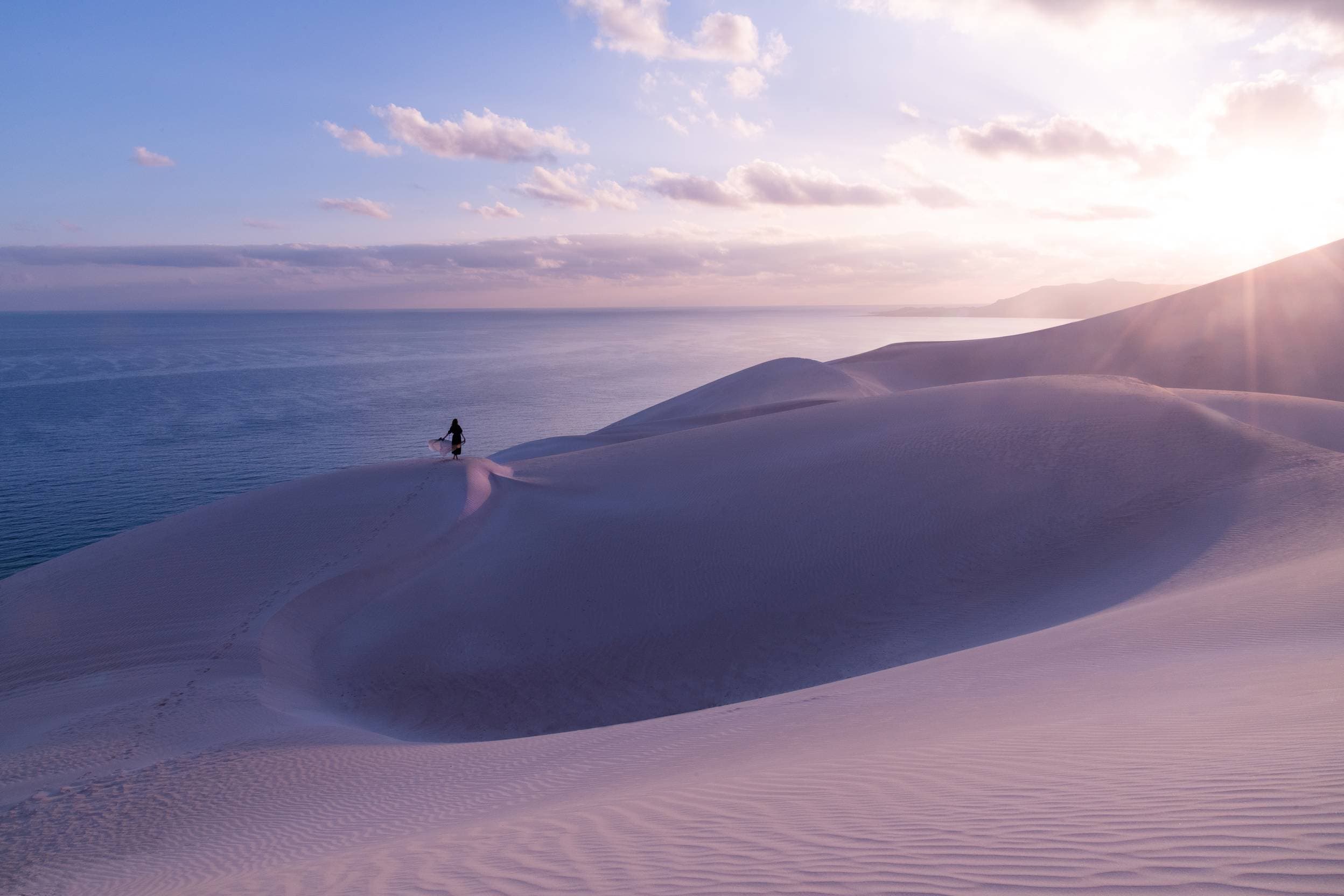
Socotra, Yemen
Socotra is the most alien-looking inhabited island on Earth. Full stop.
The Dragon's Blood Trees — named for the dark red resin that bleeds from their bark — grow in umbrella shapes that look like someone's concept art for a science fiction film set. They exist nowhere else on the planet. Neither do roughly a third of Socotra's other plant species. The island has been genetically isolated long enough to develop its own biological vocabulary.
Access is complicated by Yemen's ongoing political situation, and that is not a caveat to brush past. Check current Foreign Ministry travel advisories before booking anything. When conditions permit, flights connect through Cairo or Abu Dhabi to Socotra Airport (SCT). The October-to-April window offers manageable temperatures and stable conditions.
This is not a destination for a rushed long weekend. If you're going to make the journey, allow at least a week. The hiking across the Haghier Mountains, the endemic bird species, the beaches that look nothing like any beach you've seen before — it rewards time. Specialist operators who know the regional permit requirements are essential; this is one routing where calling an ASTA-accredited agency (we're member #900292735) genuinely saves you from bureaucratic complications that can derail an expensive trip.
Huacachina Oasis, Peru
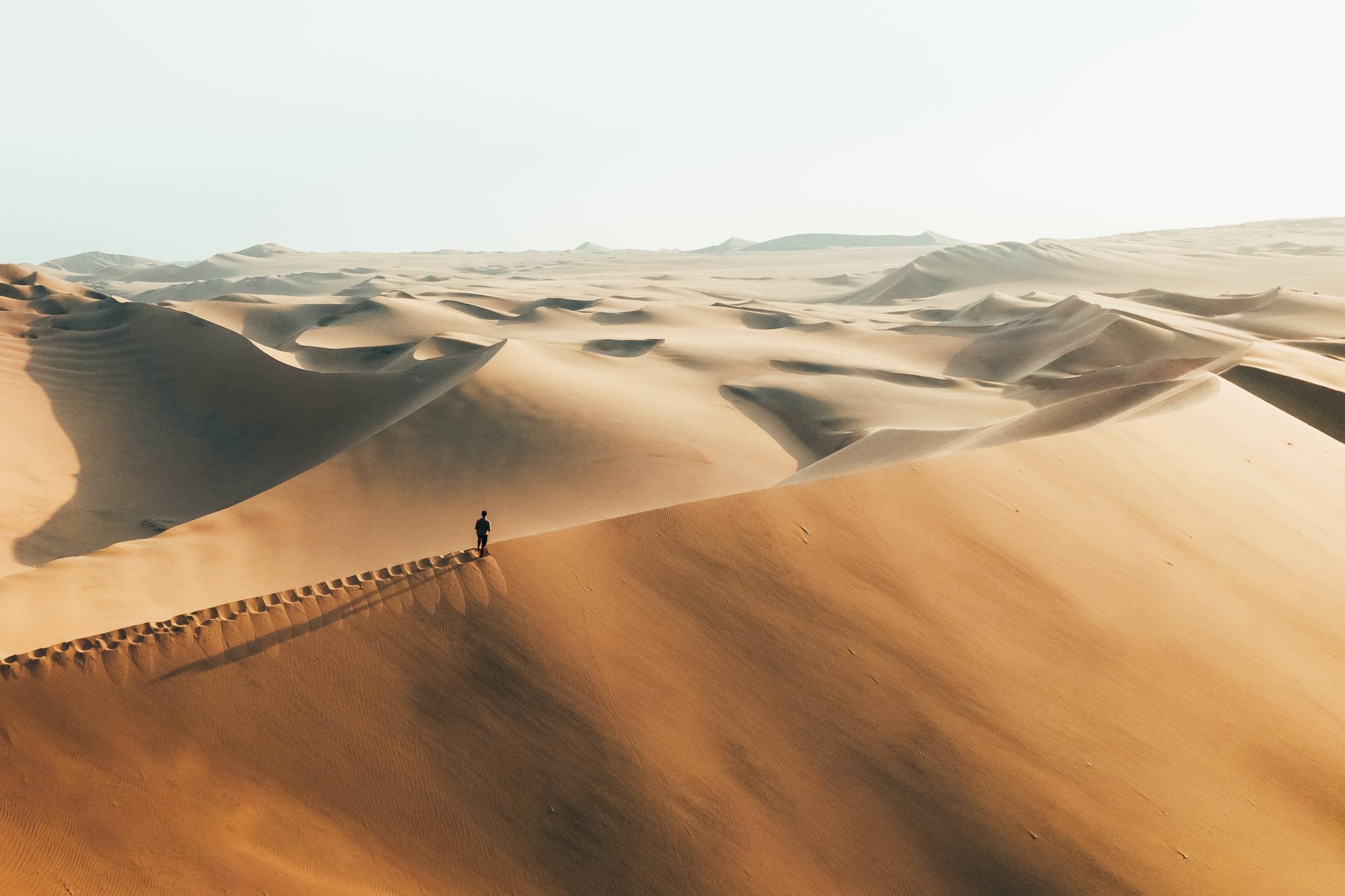
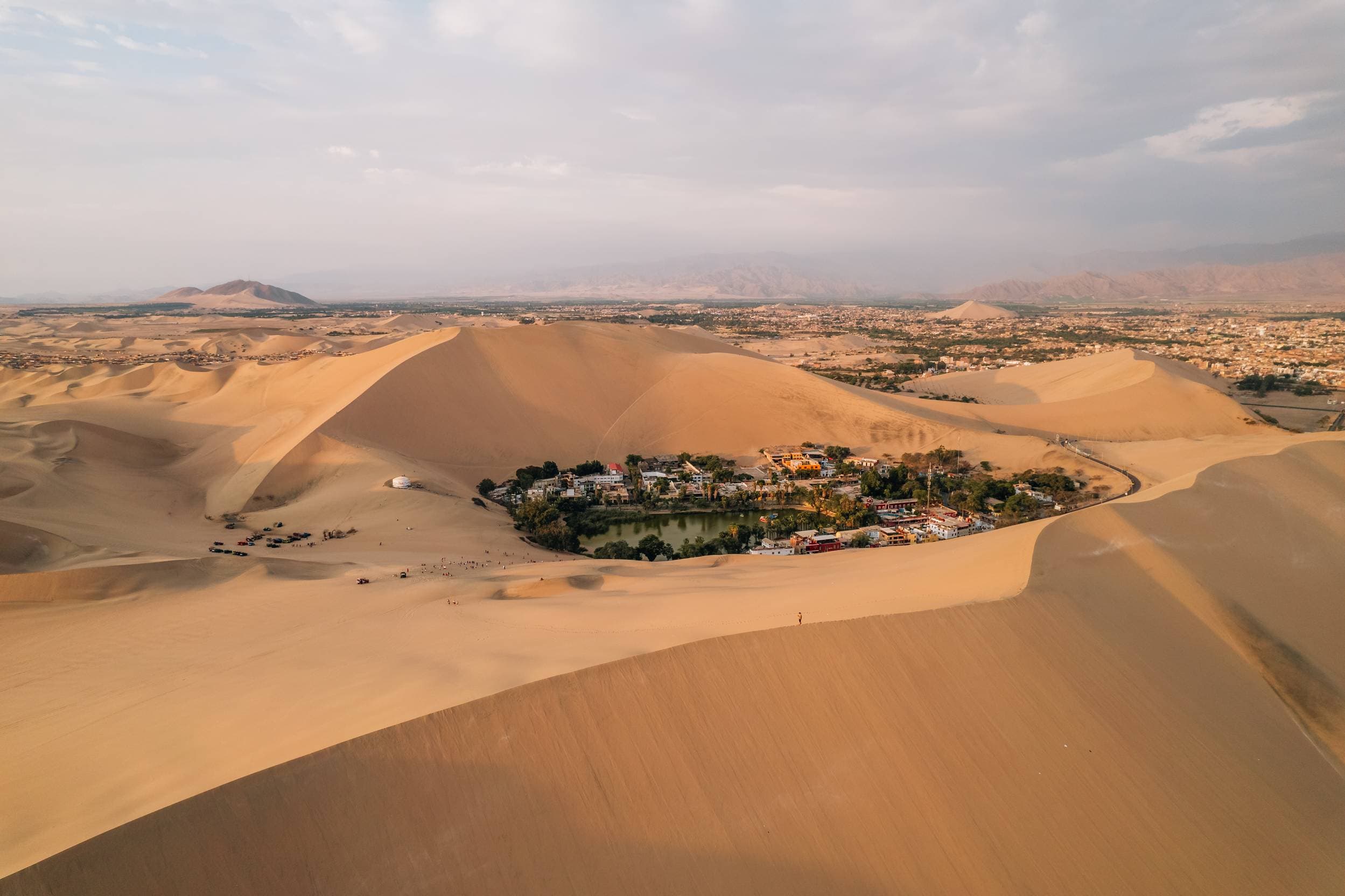
A lake surrounded by palm trees, surrounded by sand dunes the size of small mountains. That's Huacachina, and the visual contrast is as stark in person as it sounds on paper.
The oasis sits about 5 kilometers outside Ica, which is roughly a four-hour drive south of Lima along the Panamericana Sur. From Lima's Jorge Chávez International Airport (LIM), the transfer is straightforward — private car is worth the cost over a bus for the comfort alone, and rates are reasonable. Most travelers use Huacachina as a day-trip from Lima or a one-night stop, though the dune buggy rides and sandboarding are genuinely more fun than they sound and warrant arriving without a rushed schedule.
Stay in Ica rather than the oasis itself if you want a real hotel — the Hacienda Bahia Paracas, about an hour north toward the Paracas Reserve, is the best luxury property in the region. Combine Huacachina with a morning boat tour of the Ballestas Islands and you have one of Peru's most efficient routes for concentrated visual impact.
May through September gives you the most agreeable weather.
Grand Prismatic Spring, Yellowstone, USA
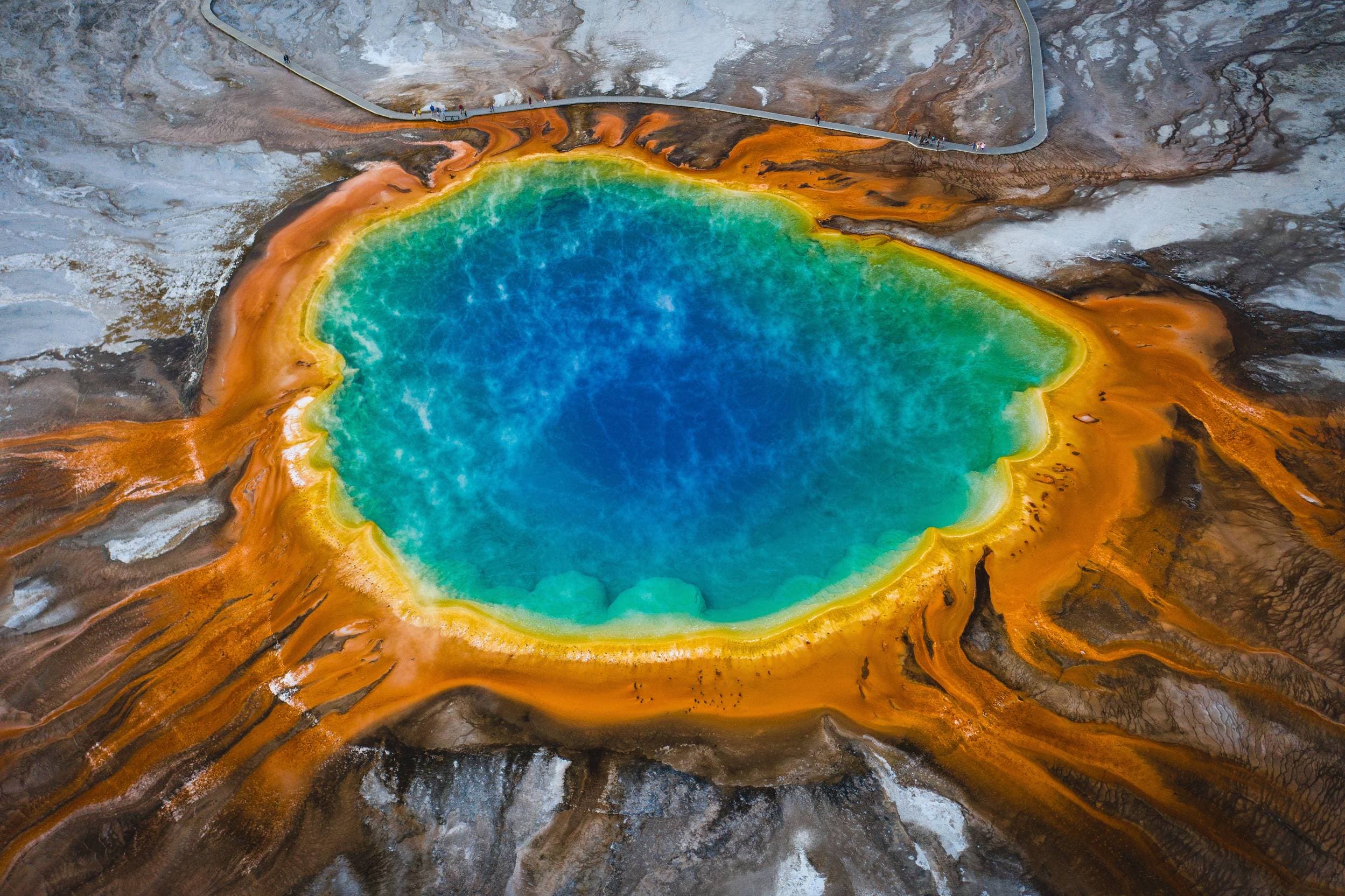
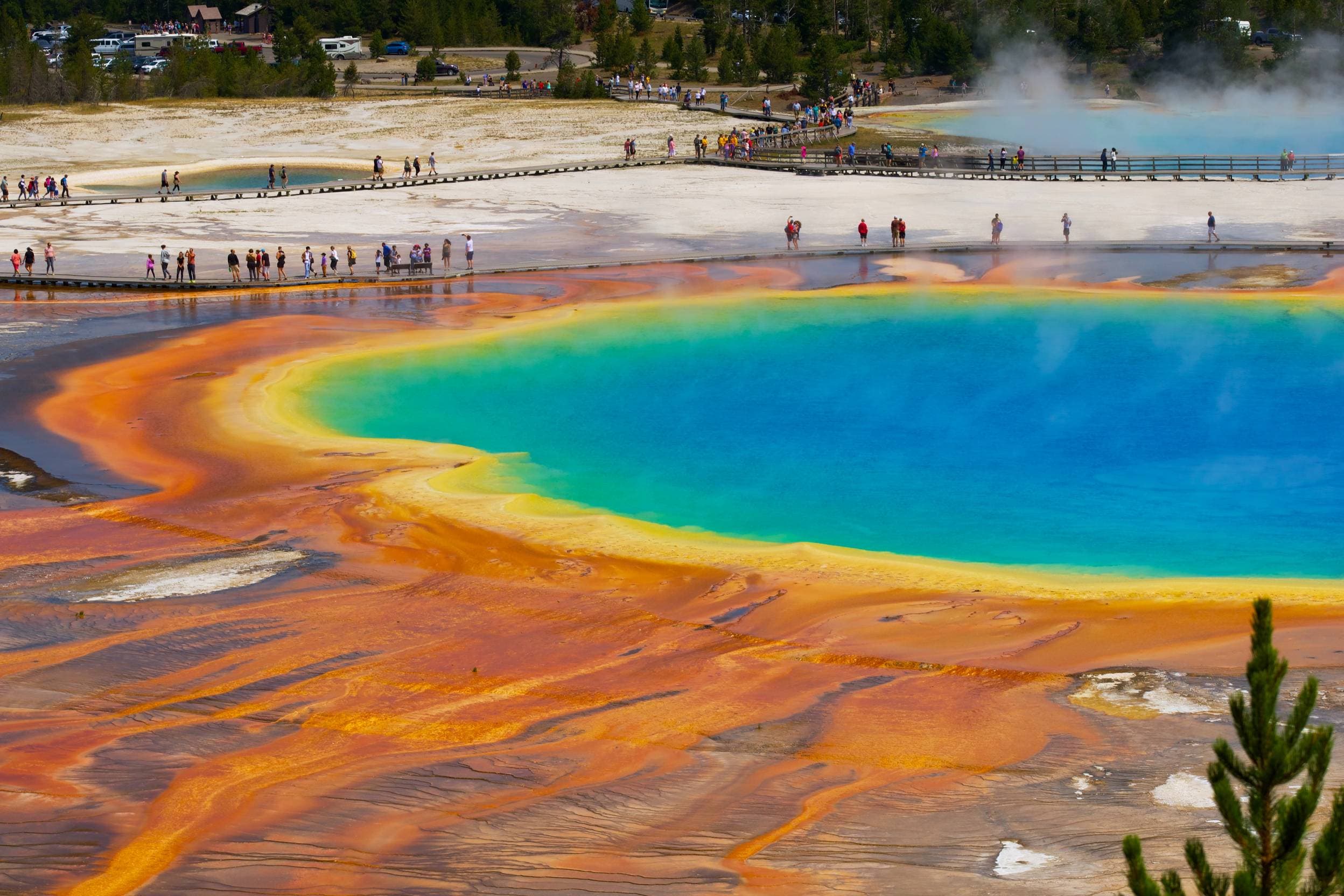
The largest hot spring in the United States is 113 meters wide, and the rings of color radiating outward from its deep blue center — turquoise, green, yellow, orange, rust — come from heat-resistant bacteria colonizing the water at different temperatures. The science is interesting; the visual result is extraordinary.
Yellowstone's West Entrance Road puts you closest to the Midway Geyser Basin where the Grand Prismatic sits. Jackson Hole Airport (JAC) is the premium traveler's entry point — United flies direct from Chicago O'Hare on select seasonal routes, and from JAC it's roughly two hours by car into the park. Book the drive early morning to catch the steam rising from the spring in cooler air; afternoon visits are perfectly fine but the morning light and mist create something different.
Delta and United both offer solid domestic first class on the routes feeding into JAC. Nothing transcontinental — but after a transatlantic business class crossing in Polaris or Delta One, domestic first handles the final leg adequately.
Summer and early fall (June through October) are when the park's full infrastructure is operational. The spring itself is accessible year-round by the boardwalk system, but winter access requires a snowcoach or snowmobile tour.
Zhangjiajie National Forest Park, China
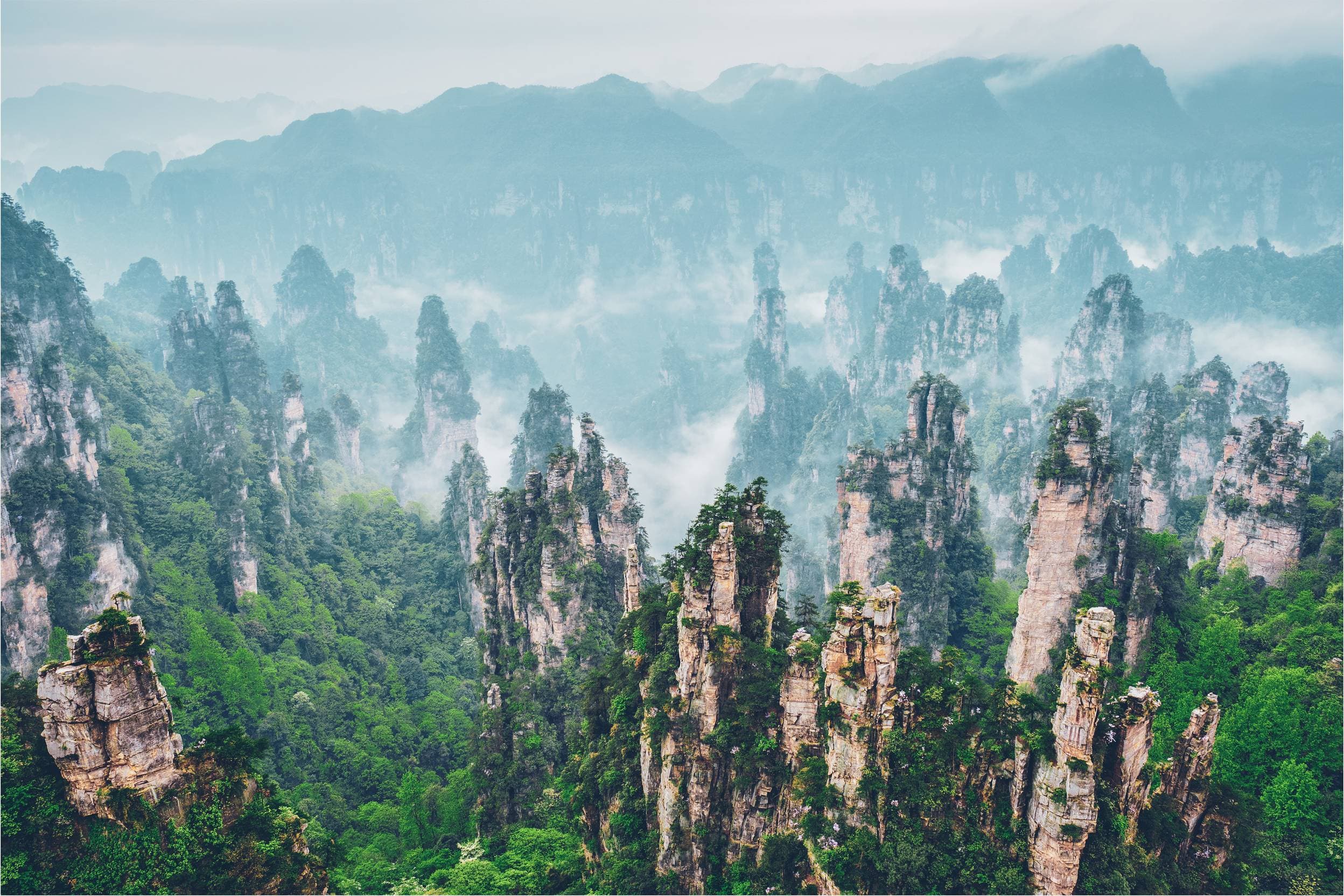
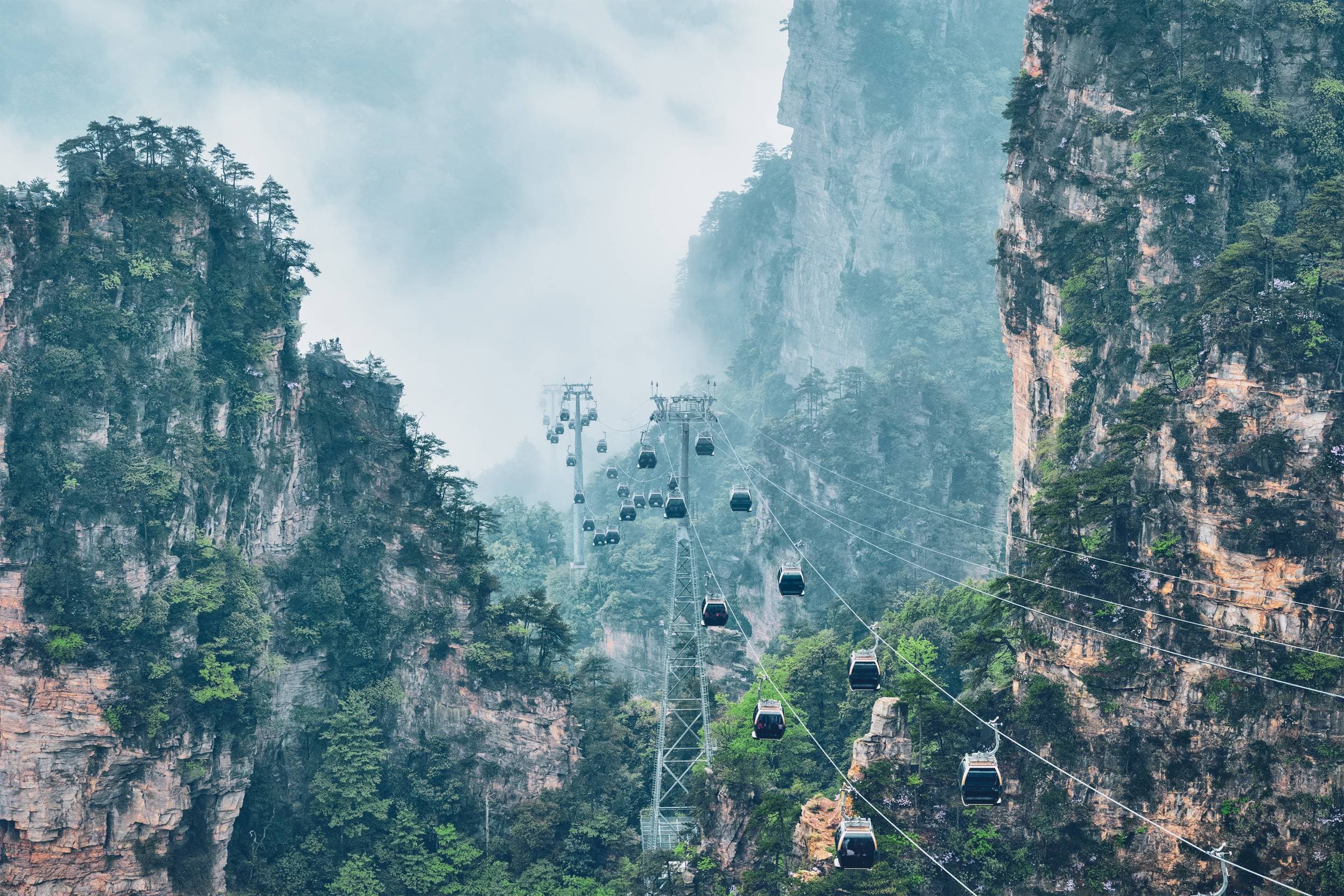
The Avatar connection is real. Director James Cameron's production team drew directly from Zhangjiajie's quartzite sandstone pillars when designing the floating Hallelujah Mountains. The Avatar Hallelujah Mountain — officially renamed in 2010 after the film's release — stands over 1,000 meters high and is one of more than 3,000 sandstone columns in the park, most of them draped in vegetation and frequently disappearing into cloud cover.
From the US, the best business class routing to Zhangjiajie runs through Shanghai or Beijing on Air China or United (Star Alliance partners), then connects domestically to Zhangjiajie Hehua International Airport (DYG). United's Polaris cabin on the SFO–PEK or ORD–PEK routes is genuinely excellent — 21-inch-wide seats, direct aisle access, good bedding, and one of the better business class dining programs in North American aviation.
Retail roundtrip business class from the US to China runs $6,000–$10,000 depending on carrier and season. Through our airline contracts, CEOFLIGHTS routinely brings those fares down to ranges that make the booking considerably easier to justify — worth a call to (888) 851-6897 before you book direct.
The Bailong Elevator, at 326 meters, is the world's tallest outdoor lift and offers a view of the pillar formations that no trail can replicate. Take it up; hike down. September through November gives you autumn color layered over the existing drama.
The Wave, Arizona, USA
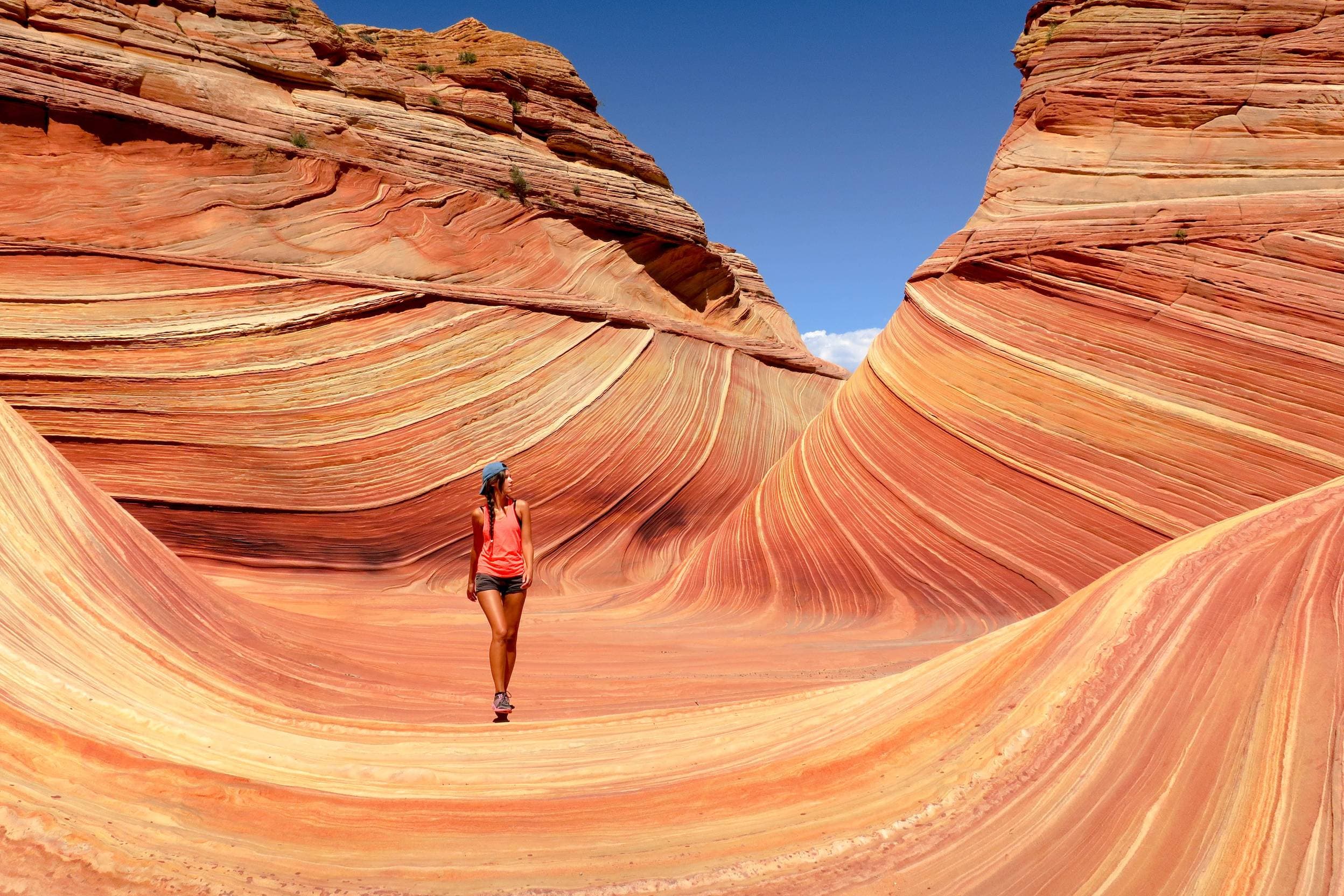
Possibly the most visually perfect piece of geology in North America. The Wave is a formation of Navajo sandstone near the Utah-Arizona border, shaped by millennia of wind and water erosion into flowing crests and swirls of layered red and pink rock. Photographs consistently undersell it, which is a significant achievement.
Access is strictly controlled. The Bureau of Land Management runs a lottery system — online applications open four months in advance, and in-person permits for the following day are also available at the Grand Staircase-Escalante National Monument visitor center in Kanab, Utah. Only 64 people per day are permitted on the trail. Plan around this; don't assume you'll get a permit on the dates you want.
The trailhead is at Wire Pass, accessible via a dirt road that requires a high-clearance vehicle. The hike is 6.4 kilometers roundtrip with no trail markers — you navigate by GPS waypoints provided with your permit. Spring and fall are the sensible windows; summer temperatures push past 40°C and the exposed terrain offers no shade.
The nearest commercial airport with real connectivity is Las Vegas (LAS), about three hours by car. Once you're there, the secondary Wave formation and Melody Arch are within walking distance and worth the time.
These seven destinations don't share a region, a climate, or a travel style. What they share is the quality of being genuinely unlike anywhere else — and the fact that reaching them properly, in a flat bed with good food and a functional lounge connection, makes the experience land differently than arriving exhausted after a middle seat.
CEOFLIGHTS is rated 4.8/5 on Trustpilot and ASTA-accredited (member #900292735). For business and first class pricing on any of the routes mentioned here, call (888) 851-6897 or reach out online. We've flown these routings, we know which products are worth the premium, and we have the contracts to back it up.