Behind the Radio: What Business Class Travelers Should Know About ATC Operations
A clipped exchange between an Emirates A380 crew and JFK tower went viral for the wrong reasons. Here's what actually happens on that frequency, and why it matters more than the drama suggests.
CEOFLIGHTS Team14 min read
Quick summary
New York TRACON manages roughly 1.3 million square nautical miles across JFK, LGA, EWR, and five other airports simultaneously, more than any other approach control facility in the country
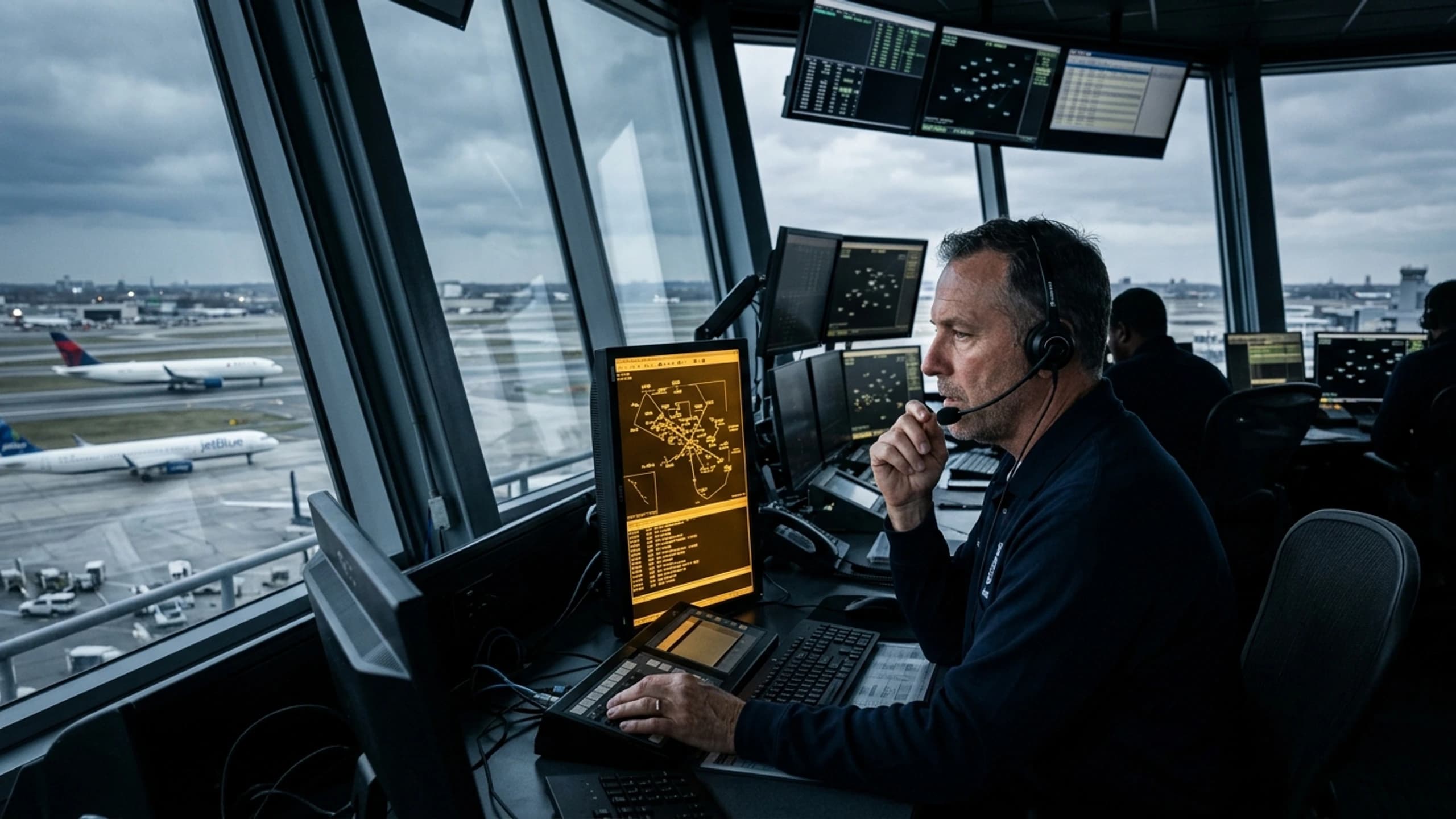
A single JFK controller can be responsible for guiding a Boeing 777 and a Cessna Citation through the same three-mile stretch of taxiway within seconds of each other
Executives flying private should understand: ATC delays hit private aviation too, but FBOs and off-peak slot flexibility cut the exposure dramatically
A clip of an Emirates A380 crew arguing with JFK tower controllers made the rounds recently, racking up hundreds of comments and roughly the same number of confident, contradictory opinions about who was "right." Pilots said the controller was rude. Controllers said the pilots should have just followed instructions. Everyone agreed the interaction sounded tense. Almost nobody explained what was actually happening on that frequency, or why.
That's the gap I want to fill. Not because the drama isn't entertaining (it is, mildly), but because if you fly business class or charter into JFK, LaGuardia, or Newark with any regularity, understanding how this system works changes how you interpret delays, ground holds, and the eight minutes your captain spends taxiing in a straight line for no apparent reason. It also changes your blood pressure. Once you understand the choreography, the "chaos" starts to look like exactly what it is: a genuinely difficult job, done under absurd volume, with almost zero margin for ambiguity.
The Airspace Nobody Designed for This Volume
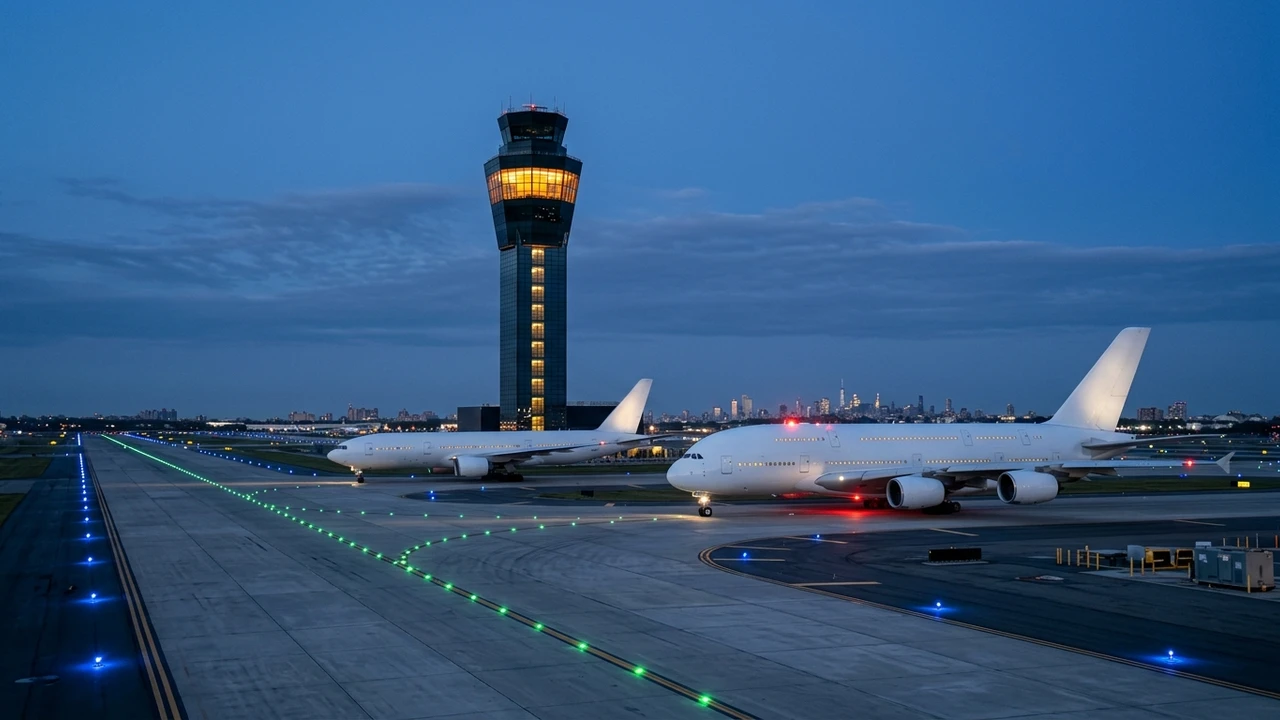
JFK opened in 1948 as Idlewild, back when the busiest hour might see a dozen aircraft movements. Today, on a clear October afternoon, JFK alone handles more than 1,300 operations a day, and it shares airspace with LaGuardia and Newark, both of which sit within about 20 miles of it. Add Teterboro, Westchester, and a scattering of smaller fields, and you get the single most congested piece of sky in the Western Hemisphere.
JFK alone handles more than 1,300 operations a day, sharing airspace with LaGuardia and Newark — all three within roughly 20 miles of each other.
1.3MSquare nautical miles managed by New York TRACON
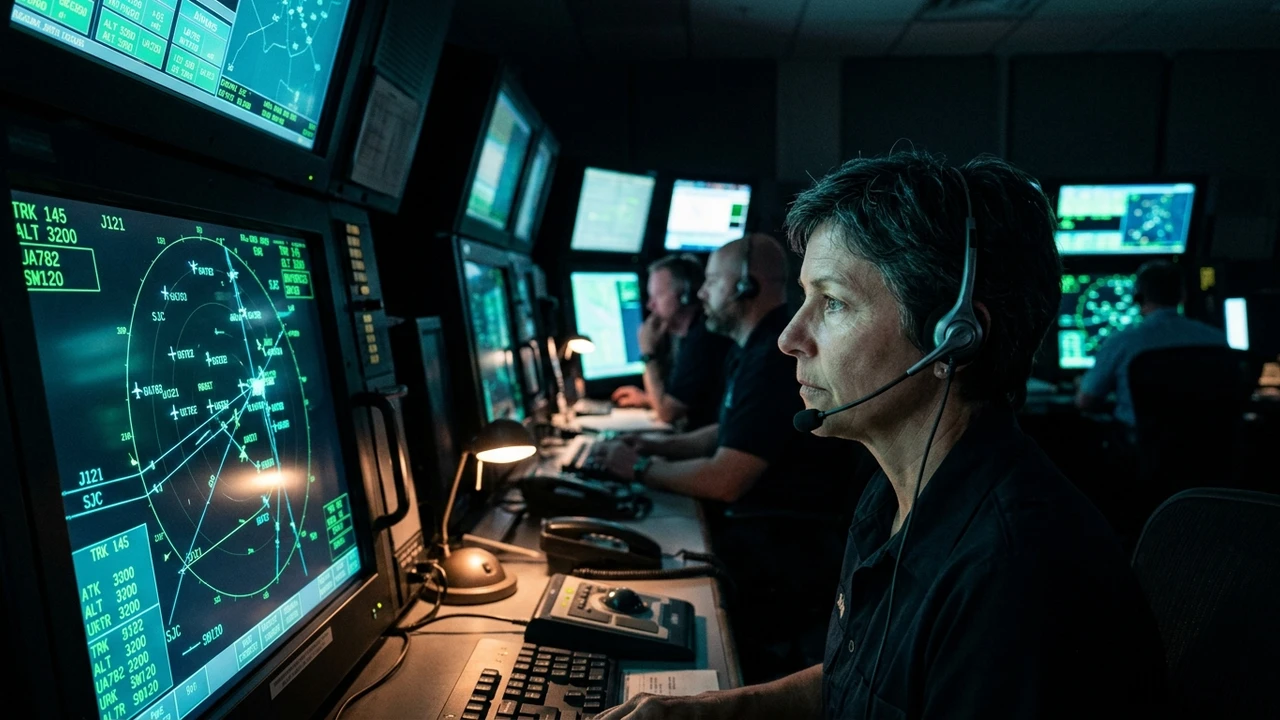
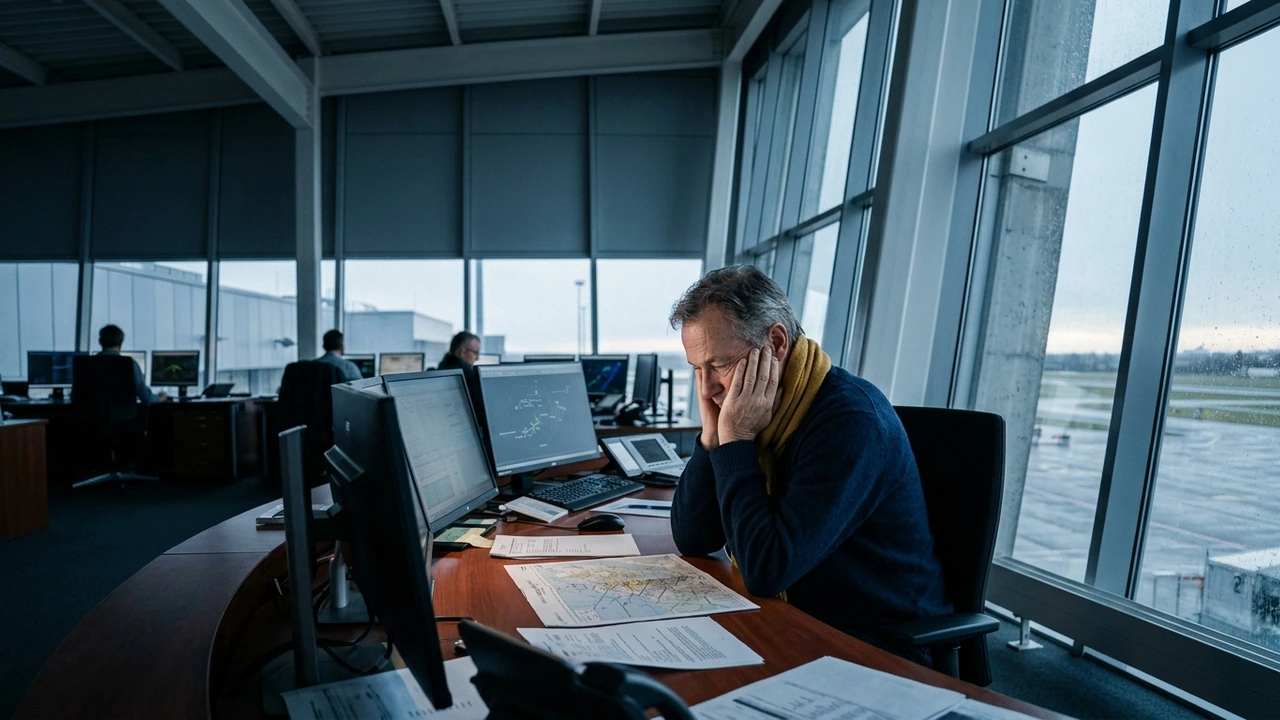
New York TRACON, the radar facility that sequences arrivals and departures for the entire metro area, sits in a windowless building in Westbury, Long Island. Controllers there work in total darkness except for radar scopes, coordinating aircraft that are frequently less than three miles apart laterally and 1,000 feet apart vertically. That's standard separation. It sounds tight because it is tight. It's also been the standard since the 1960s, and it works, which is easy to forget when you're the passenger staring out the window wondering why your 767 just banked hard over Rockaway Beach for the third time.
New York TRACON controllers in Westbury work in near darkness, sequencing aircraft as close as three miles laterally and 1,000 feet vertically — standard separation since the 1960s.
Here's the number that actually explains the tension in that Emirates clip: JFK runs a mixed fleet like almost nowhere else on earth. On any given hour you might have an A380 pushing 560 metric tons, a regional jet with 50 seats, a Gulfstream G650 repositioning to Teterboro, and a cargo 747 all sharing the same taxiway network. Every one of those aircraft has different turn radii, different acceleration profiles, and different crew familiarity with the airport layout. A pilot who flies JFK four times a week knows exactly what "Alpha, hold short Delta" means without a second thought. A crew that flies in from Dubai twice a month does not have that muscle memory, and there's nothing wrong with that. It's just a different kind of expertise.
ICAO Phraseology Exists Precisely to Remove This Ambiguity
The reason global aviation runs on a standardized script is that "clear communication" in English between a native speaker and a non-native speaker, at speed, under stress, on a scratchy VHF frequency, is genuinely hard to guarantee. ICAO Annex 10 lays out the phraseology every controller and pilot worldwide is supposed to use: specific words for specific meanings, numbers read as individual digits, a fixed vocabulary for headings, altitudes, and runway assignments.
The whole point is that "cleared to land runway 4 Left" should mean exactly the same thing whether you're hearing it in Tokyo, Frankfurt, or Queens. When a controller improvises, speeds up, drops words, or leans on local shorthand, that's when the system's built-in redundancy starts to erode. It doesn't usually cause an accident. It causes exactly what showed up in that viral clip: a confused readback, a slowdown, and a controller getting irritated that the aircraft isn't moving at the pace he expected.
Where the real risk sits
The danger in ATC communication was never rudeness. It's ambiguity combined with an aircraft in motion. A confused readback while a jet is holding on a taxiway is a minor delay. A confused readback while an aircraft is crossing an active runway is the scenario every incident investigator studies first, because runway incursions remain one of the FAA's top safety priorities year after year.
That's worth sitting with. In the incident that sparked all the online commentary, the confusion happened while the aircraft was crossing an active runway, not sitting comfortably at a gate. That's exactly the moment where "just expedite" is the wrong instruction to give a crew that's clearly uncertain about where they're going. Good controllers know this. The National Air Traffic Controllers Association has spent years pushing for better staffing specifically because fatigue and understaffing make these moments more likely, not because individual controllers are bad at their jobs.
Why JFK, LaGuardia, and Newark Are Structurally the Hardest Airports in America to Control
Three airports, one metro area, overlapping approach corridors, and a finite amount of usable airspace over the Atlantic and the Hudson corridor. That's the entire problem in one sentence.
LaGuardia has one of the shortest primary runways among major U.S. hubs, at 7,003 feet, which limits which aircraft can use it and forces tighter approach spacing. Newark's departure corridor threads directly beneath JFK's arrival paths depending on wind direction. JFK itself runs four runways in configurations that change based on wind, and switching a runway configuration during a busy departure push can back up ground traffic for 45 minutes while every aircraft on the field gets re-sequenced.
Add weather. A summer thunderstorm cell sitting over the Verrazzano Bridge can force ground stops across all three airports simultaneously, because the airspace they share simply doesn't have room to reroute around it. The FAA's own data consistently ranks Newark, JFK, and LaGuardia among the top handful of airports nationally for both arrival and departure delays, and it's not close. In 2023 and 2024, Newark alone accounted for a disproportionate share of national ATC-related delay minutes, largely tied to controller staffing shortfalls at the Philadelphia TRACON facility that handles its approaches (a separate, longer story involving a mass controller resignation after a near-miss, but that's for another article).
JFK to London is the busiest premium transatlantic corridor out of New York, and the evening departure bank that feeds it (roughly 6 to 10 PM) runs straight into the peak-hour congestion described above. If you have a choice, the earliest evening departure or a late-morning day flight usually spends less time in the taxi queue than the 8 PM wave.
What Actually Happened in That Emirates Clip, Minus the Theater
Strip out the tone and look at the mechanics. The A380 landed, and its assigned gate was occupied, which happens constantly at JFK given how tightly gates are scheduled. Ground control needed to reroute the aircraft, which meant sending it the long way around the airfield instead of the short, expected path. The instruction changed mid-taxi, while the aircraft was crossing an active runway, and the new routing wasn't accompanied by any explanation of why it had changed.
Put yourself in that cockpit for a second. You've just flown 13 hours from Dubai. You're expecting a short taxi to your gate. Instead you get a modified clearance, on a runway crossing, that sends you looping around unfamiliar taxiways, with four pilots trying to cross-check the instruction against an airport diagram they don't use every day. Slowing down to confirm you understood correctly isn't incompetence. It's exactly what CRM training (Crew Resource Management, the industry-standard protocol for exactly this kind of ambiguity) tells pilots to do: when in doubt, verify before proceeding.
The controller's job in that moment wasn't to prove the instruction was clear. It was to recognize a confused crew and add the ten words of context that would have resolved it instantly: "Emirates 201, we're routing you the long way around due to gate congestion, continue straight ahead Alpha." That's it. That single clarifying phrase, which ICAO phraseology explicitly permits controllers to add when non-standard routing is issued, would have ended the entire exchange before it started.
Insider Strategy
If you're a frequent flyer paying attention to cockpit-to-tower chatter on apps like LiveATC or FlightAware, resist the urge to judge tone. The controllers you hear sound clipped because they're managing simultaneous conflicts across multiple frequencies. A controller working JFK ground during a peak departure push might be talking to fifteen aircraft in a two-minute window. Brevity isn't rudeness. It's triage.
Delays: What's Actually Causing Them at Peak Hours
Ask ten passengers why their JFK departure is delayed and nine will say "weather," even on a clear day. The real culprits, in order of frequency according to FAA delay-cause tracking, are ground delay programs, ground stops, and what's called MIT restrictions, miles-in-trail spacing that controllers impose when downstream airspace is saturated.
Here's how it actually plays out. Say there's a thunderstorm building over Philadelphia. That storm doesn't need to touch JFK at all to delay your flight. If it's sitting in the departure corridor JFK uses to route westbound traffic, the FAA's Air Traffic Control System Command Center in Warrenton, Virginia (a facility most passengers have never heard of, which coordinates flow control nationally) will impose a ground stop or ground delay program on JFK departures headed that direction. Your aircraft sits at the gate with engines off, burning your patience instead of fuel, because the airspace 200 miles away is full.
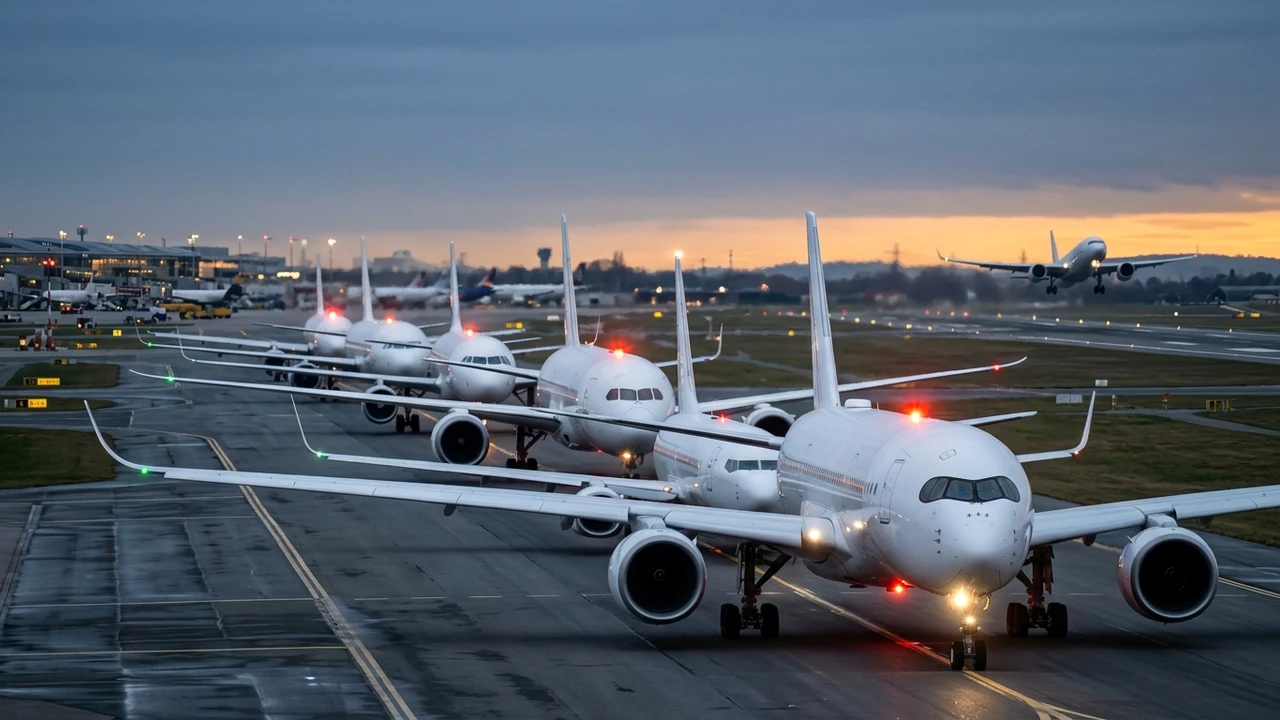
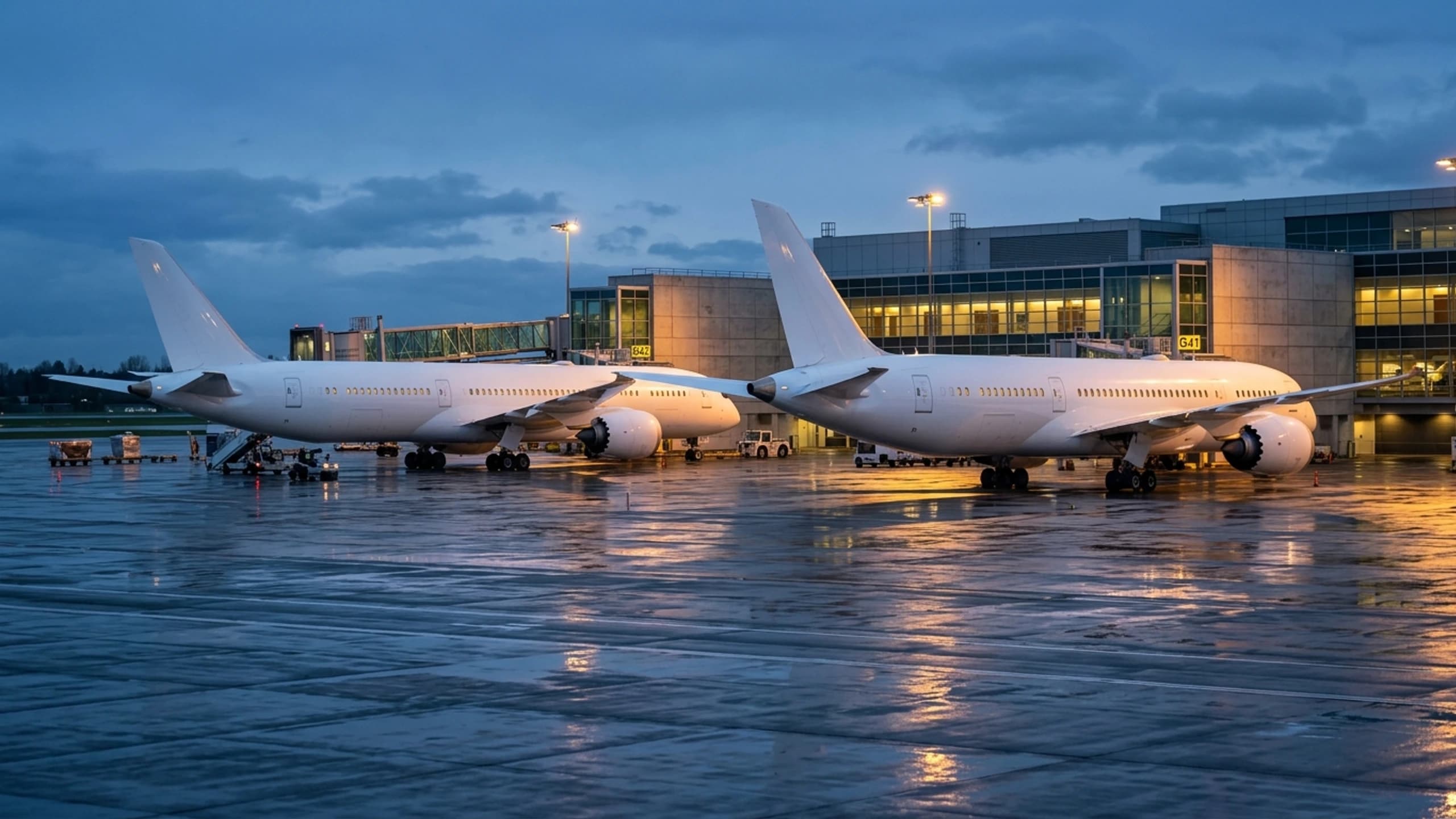
Peak hour compounds this. JFK's busiest departure banks, roughly 7 to 9 AM and 4 to 7 PM, push dozens of wide-bodies into a queue that the airfield's physical taxiway geometry simply can't absorb instantly. A 25-minute taxi to the runway during peak evening departures isn't unusual. It's not incompetence on anyone's part. It's physics: you cannot fit 40 departures into a runway that can safely launch one aircraft every 90 to 120 seconds without somebody waiting.
During JFK's 4–7 PM departure bank, a 25-minute taxi is normal: one runway can safely launch a jet only every 90 to 120 seconds, whatever the cabin class on board.
A useful mental model
Think of JFK's runway system less like a highway and more like a single-lane bridge feeding four highways. Every aircraft using that bridge, regardless of size or cabin class, waits its turn based on sequence, not status. Your business class ticket doesn't move you up the runway queue. Your departure slot does.
Why Private Aviation Doesn't Escape This, But Mitigates It
This is the part worth being honest about, because charter marketing tends to oversell "skip the delays" as a blanket promise. It isn't one. A Gulfstream G650 departing Teterboro or Westchester still shares New York TRACON's airspace with every commercial flight in and out of JFK, LaGuardia, and Newark. If the Command Center imposes a ground stop on New York metro departures, that applies to your Global 7500 too.
What actually changes with private aviation is exposure, not immunity. Three things matter:
First, FBO-based departures avoid the terminal gate queue entirely. You're not waiting behind a bank of 15 widebodies pushing back simultaneously; you're one aircraft among a handful at a general aviation ramp, which shortens ground time even when the airborne sequencing delay is identical.
Second, secondary airports matter enormously. Teterboro, Westchester County, and Republic in Farmingdale all sit within the same congested airspace but see a fraction of JFK's movement volume, which means shorter taxi times and more controller attention per aircraft. Flying private out of JFK itself gets you very little advantage over a commercial widebody in terms of airspace priority. Flying out of Teterboro changes the equation meaningfully.
An FBO ramp skips the terminal pushback queue, but not the airspace: a ground stop on New York departures applies to a Global 7500 exactly as it does to an A380.
Third, and this is the one that actually saves hours, is schedule flexibility. A private charter can shift a departure by 90 minutes to dodge a known peak-hour push or an approaching weather cell, something no commercial schedule can do without rebooking hundreds of passengers. ATC doesn't treat private aircraft differently; flexible scheduling simply avoids the conditions that create the delay in the first place. Commercial travelers can borrow a version of this by picking departure times outside the 7–9 AM and 4–7 PM banks whenever the schedule allows.
The Human Factor Nobody Wants to Talk About
Controller staffing in the U.S. has been a genuine, documented problem, not internet speculation. The FAA has acknowledged staffing shortfalls at several major facilities, including the Philadelphia TRACON that handles Newark approaches, where a controller shortage contributed to sustained delays and, in 2023, a near-miss serious enough that several controllers reportedly took trauma leave afterward. New York TRACON itself has operated below its target staffing levels for years, according to figures the FAA and NATCA have both cited publicly.
Mandatory overtime and six-day weeks are routine at understaffed New York facilities — context for why patience on frequency runs thin during peak pushes.
What that means practically: the controllers working JFK, LGA, and EWR approaches are frequently working mandatory overtime, six-day weeks, and back-to-back shifts that push against FAA fatigue guidelines. None of that excuses unprofessional tone on frequency. But it explains, structurally, why patience runs thin during the busiest pushes of the day, and why a confused readback from an unfamiliar crew during a runway crossing might land on a controller who's already handled forty tight sequences that hour with zero room for error.
This is not a defense of rudeness. It's context that most passengers, and frankly most online commentators arguing about a viral clip, never bother to look up before forming an opinion.
What This Actually Means for You as a Traveler
You are not going to change how JFK ATC operates by having a strong opinion about a YouTube clip. What you can do is calibrate your expectations correctly, which, oddly, makes flying less stressful.
Delays at JFK, LaGuardia, and Newark are structural, not a reflection of your airline's competence or your seat class. A 45-minute ground hold on a clear day almost always traces back to flow restrictions dozens or hundreds of miles away, not anything happening on the tarmac in front of you. If you're booking connections through any of the three, build in real buffer, not the 60-minute minimum connection time the airline's booking engine will happily sell you. Ninety minutes minimum for domestic-to-domestic, two hours for international connections, is the number seasoned New York flyers actually use.
If you fly private with any regularity into the metro area, ask your operator directly whether Teterboro or Westchester makes more sense for your specific routing than JFK itself. The tail number doesn't get airspace priority. The airport choice does.
And if you're ever listening to ATC audio and it sounds clipped, fast, and short on pleasantries, understand what you're actually hearing: a system running at the outer edge of its physical capacity, staffed by people managing genuinely difficult sequencing problems in real time, using a communication protocol specifically designed to strip out everything except the information that keeps aircraft separated. It's not always pretty. It is, by an enormous margin, one of the safest and most tightly engineered systems human beings have ever built. The fact that a mildly tense taxi exchange generates 555 comments says more about how rarely people think about ATC than it does about how badly the system is failing.
It isn't failing. It's just loud, honest, and occasionally impatient, which, if you've spent any time in New York at all, should sound familiar.
If you want to build a New York itinerary that actually accounts for this, from airport selection to realistic timing around peak departure banks, a CEOFLIGHTS travel manager plans around exactly these variables every week, alongside sourcing the business class fare itself.
Content creator and business travel specialist at CEOFLIGHTS, bringing you the latest insights, tips, and trends in premium business and first-class travel.
Become the CEO of Your Journey
You take the lead. Your dedicated Personal Travel Manager handles every detail.