Business Class Luggage: Carry-On Rules, Garment Bags, and Packing Strategies
The overhead bin math changes entirely once you're up front. Here's what business class actually gets you in carry-on space, garment bag allowances, and priority stowage, airline by airline.
CEOFLIGHTS Team15 min read
Quick summary
Most international business class fares allow two carry-on cabin pieces plus a personal item or garment bag, versus a single 7kg–8kg cabin bag in economy on the same aircraft
Weight limits double in premium cabins on international carriers: Emirates, Singapore Airlines, Qatar Airways, and Turkish Airlines bump business class carry-on allowances to 31–35 pounds (14–16kg) combined versus 15–17 pounds in economy, while British Airways allows up to 51 pounds (23kg) per bag
Priority boarding isn't just about comfort. It's the most reliable way to guarantee bin space directly above your suite on a full A350, A380, or 777
There's a specific kind of irritation that comes from paying $6,400 for a one-way lie-flat seat and then getting told your garment bag has to go in a closet three rows back, if there's room at all. It happens more than you'd think, and it happens because most travelers, even seasoned ones, are still operating off economy-class carry-on assumptions. Business class changes the math. Sometimes dramatically. Sometimes not at all, depending on the carrier, and that inconsistency is exactly why this guide exists.
Airlines rarely advertise their premium cabin baggage allowances with any clarity. You'll find the economy carry-on dimensions plastered across every fare comparison page, but ask a gate agent what business class actually gets you beyond "more legroom" and you'll often get a shrug. So we pulled the actual policies. Here's what's true, what's exaggerated, and what you should pack accordingly.
Why Business Class Carry-On Rules Are Actually Different
The short version: most full-service international carriers grant business class passengers a second cabin bag, a garment bag option, and roughly double the carry-on weight allowance of economy passengers on the identical aircraft. This isn't marketing fluff. It's written into the fare rules, even if nobody at check-in mentions it.
On Emirates, for example, economy passengers get a single 7kg (15.4lb) carry-on. Business class passengers get two pieces—one briefcase plus either one handbag or one garment bag—at up to 7kg each, totaling 14kg (~31 pounds). Qatar Airways runs a similar split: one 7kg (15lb) bag in economy, versus two cabin pieces up to 15kg (33 pounds) combined in Business Class. Singapore Airlines publishes a formal Business Class carry-on allowance of two pieces up to 7kg (15.4lb) each plus a slim laptop bag or handbag, though cabin crew rarely weigh bags at the gate unless a roller visibly strains the overhead bin.
The dimensional limits tend to stay roughly consistent across cabins, hovering around 22 by 14 by 9 inches (55 x 40 x 23 cm) for the primary bag, but the second cabin piece and doubled weight allowance are where business class earns its advantage.
Emirates business class allows a briefcase plus a handbag or garment bag at 7 kg each; Qatar Airways allows two pieces up to 15 kg combined. Economy on both gets one 7 kg bag.
2xCarry-on weight allowance increase in Business vs. Economy on international carriers (14–16kg vs. 7–8kg)
Garment Bags: The Detail Almost Nobody Explains Properly
If you've ever tried to board a domestic economy flight with a suit bag draped over your arm, you know the drill: it counts as your carry-on, full stop, and gate agents will make you gate-check it if the bin fills up before you board.
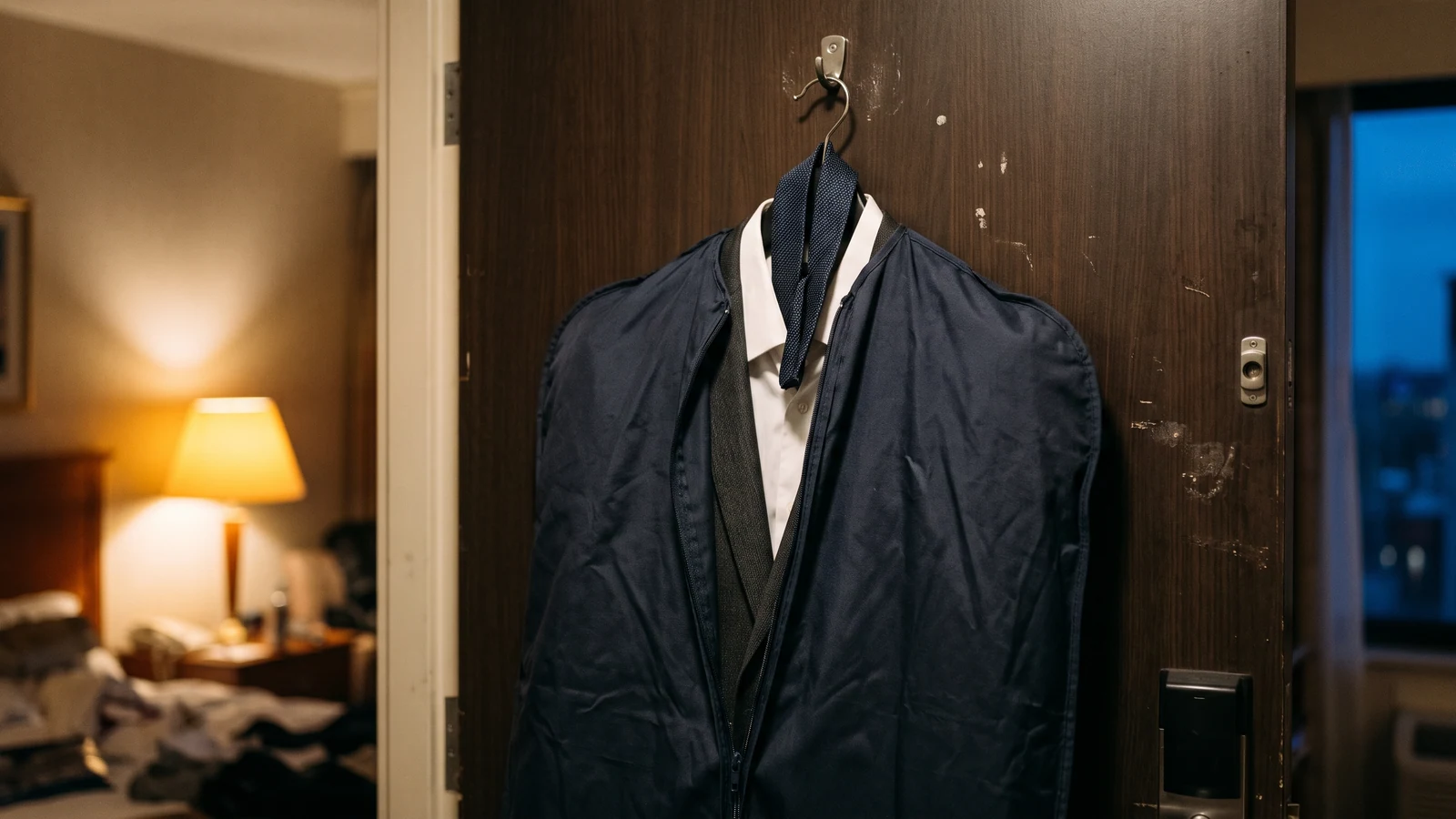
Business class is different, and it's different specifically because the airlines assume (correctly, mostly) that their premium cabin is full of people traveling for meetings, not vacations. British Airways, Lufthansa, and Emirates all permit a foldable garment bag as one of your cabin pieces in business and first class, and widebody cabin crew will typically hang a soft suit bag in the forward wardrobe closet upon boarding.
British Airways, Lufthansa and Emirates accept a foldable garment bag as one of your business class cabin pieces, and widebody crews will usually hang a soft suit bag in the forward closet.
Domestically and on U.S. carriers, Delta One, American Flagship Business, and United Polaris formally count a garment bag as your primary carry-on item if it's a bulky wheeled case, but in practice, cabin crew up front will hang a slim suit jacket or thin dress bag in the forward coat closet if you hand it over politely after stepping through the boarding door.
Insider Strategy
Fold your garment bag to its smallest compressed dimension before boarding, and hold it the way you'd hold a coat rather than wheeling it like luggage. Gate agents count what they see, and a slim garment sleeve draped over your forearm reads as a coat, not a third bag.
Overhead Bin Space: The Real Reason Business Class Boarding Priority Matters
Everyone talks about priority boarding as a comfort perk. It's actually a logistics necessity, and the reason comes down to bin geometry.
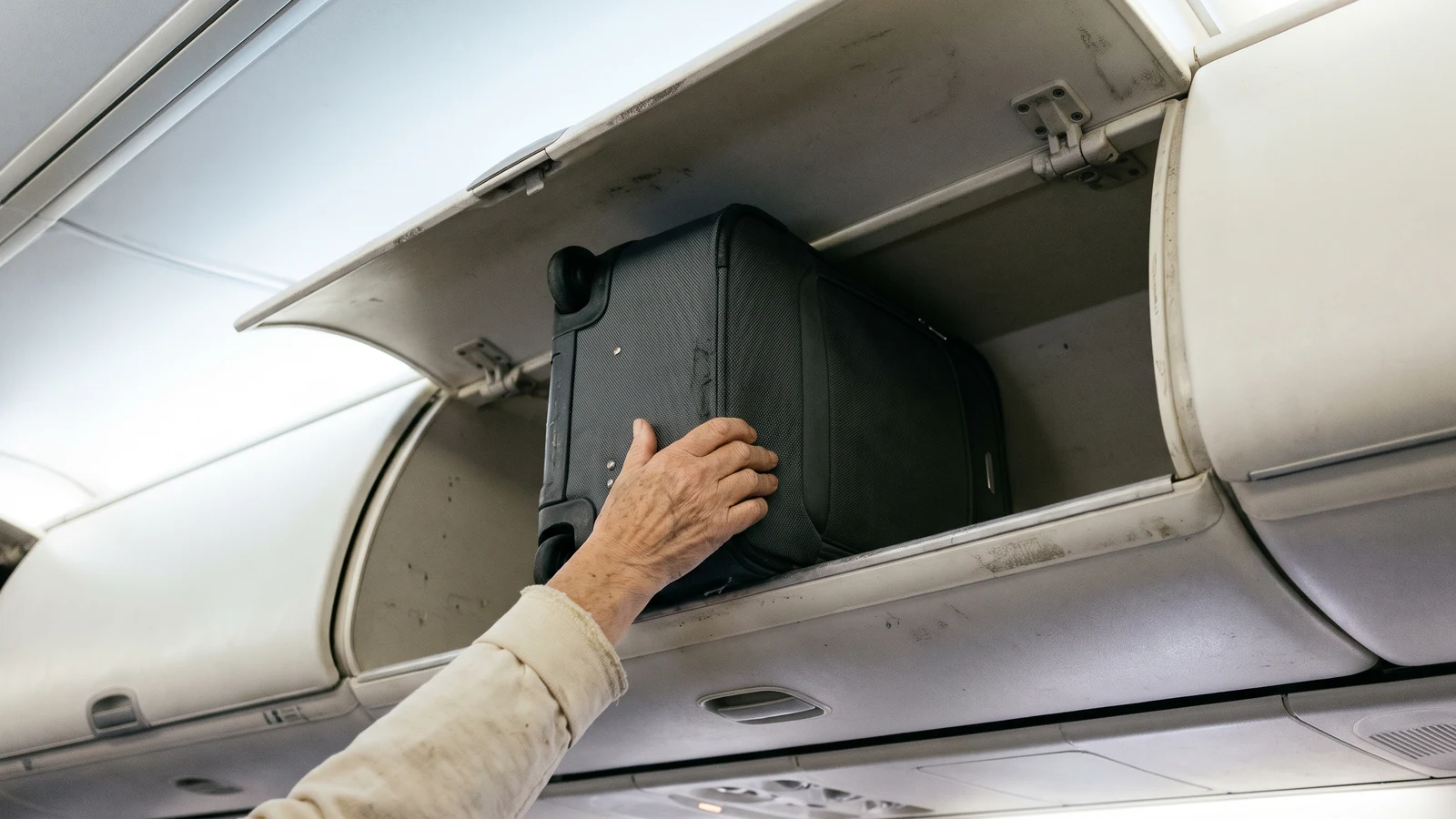
Boarding early is about bin space. Where center bins are removed, middle-seat passengers share the side bins, and late boarders can find the space above their seat already full.
On many widebodies, airlines remove the center overhead bins above the middle 1-2-1 Business Class seats to give the cabin an airy, vaulted ceiling (you'll see this on Qatar Airways A350s, Singapore Airlines A350s, and several 787 configurations). While the outboard window bins are deep, having no center bin means middle-seat passengers also stow their rollaboards in the side bins—and on an Emirates A380 upper deck, the curved fuselage walls make the side bins shallower than on a 777-300ER.
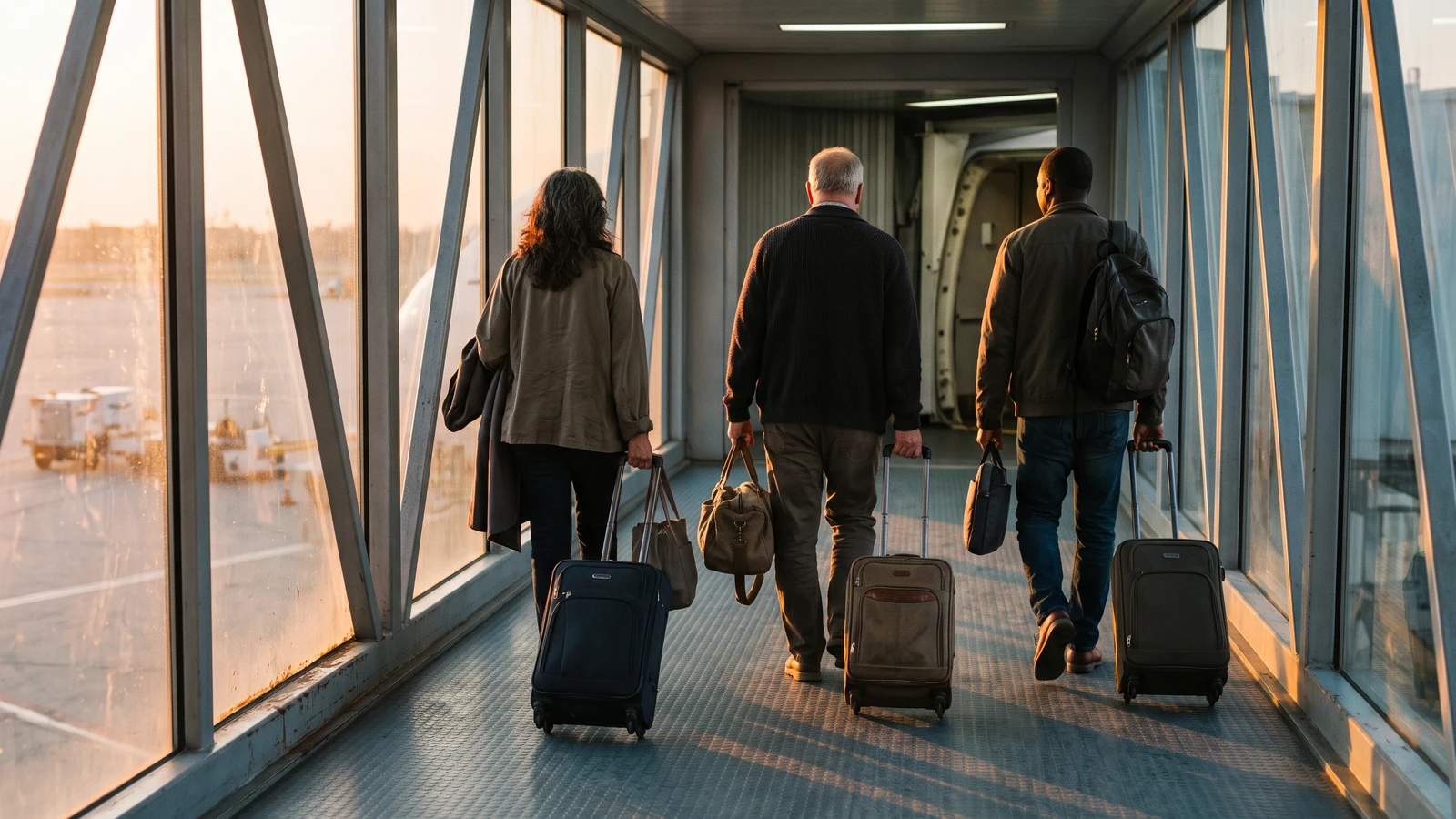
This is where Group 1 / Business Class boarding priority earns its keep. Board early and you claim the bin directly above your suite; board at the tail end of general boarding and you may still find your garment bag sharing space with pillows, crew kits, or duty-free boxes.
Newer widebody cabins with Airbus Airspace XL bins (on the latest A350-900/1000 and A330neo deliveries) and Boeing's Space Bins (on newer 787-9 and 777X/retrofitted 777 cabins) hold standard 22-inch rollers vertically on their side edge, nearly doubling bin capacity. If cabin stowage matters to you, check the specific aircraft sub-type before you book.
Airspace XL bins on newer A350 and A330neo cabins, and Boeing's Space Bins, take a 22-inch roller on its side edge, nearly doubling capacity. Check the aircraft sub-type.
Airline-by-Airline: Business Class Carry-On Policies
Here's the verified breakdown, cabin by cabin, for the carriers our clients fly most.
Delta One / Delta Premium Select
Two items permitted: one carry-on bag up to 22 x 14 x 9 inches (56 x 35 x 23 cm) for the overhead bin plus one personal item. No weight limit applies on U.S. or European routes; carry-on weight restrictions only apply on departures from select airports in China (10kg / 22lb) and Singapore Changi (7kg / 15lb).
American Airlines Flagship Business
One carry-on bag (22 x 14 x 9 inches) plus one personal item (18 x 14 x 8 inches) with no published weight cap, plus a soft garment bag up to 51 linear inches counts as your carry-on item. Flagship First and Business passengers board in Group 1 or 2, guaranteeing first access to forward widebody bins.
United Polaris
One carry-on bag up to 22 x 14 x 9 inches plus one personal item up to 17 x 10 x 9 inches, with no weight limit. Polaris passengers board in Group 1 ahead of economy groups, and every Polaris 777-300ER, 787-9, and 787-10 features deep overhead bins plus an enclosed granite-topped side console cubby at every suite for headphones, passports, and tablets.
British Airways Club World / Club Suite
One primary cabin bag up to 22 x 18 x 10 inches (56 x 45 x 25 cm) plus one laptop or handbag up to 16 x 12 x 6 inches (40 x 30 x 15 cm), with a standout weight limit of 23kg (51lb) per piece—roughly triple the weight cap of Gulf and Asian carriers.
Emirates Business Class
Two carry-on pieces permitted: one briefcase (up to 18 x 14 x 8 inches) plus either one handbag (up to 22 x 15 x 8 inches) or one garment bag (up to 8 inches thick when folded). Each piece is capped at 7kg (15.4lb)—giving you 14kg (~31lb) combined versus a single 7kg bag in Economy.
Qatar Airways Qsuite / Business Class
Two carry-on pieces up to 15kg (33lb) combined (each up to 20 x 15 x 10 inches / 50 x 37 x 25 cm) plus a small personal item—more than double Economy's single 7kg (15lb) allowance. Inside Qsuite, the upholstered side storage ottoman holds a slim laptop briefcase, shoes, and amenity kit right beside your seat.
Singapore Airlines Business Class
Two cabin bags up to 7kg (15.4lb) each (14kg / 31lb total, with linear dimensions up to 115 cm / 45 inches per bag) plus one personal item (laptop bag, handbag, or camera bag up to 40 x 30 x 10 cm). In practice, SQ's cabin crew are famously accommodating up front, and Changi's gate-side security scanners rarely weigh Business Class bags unless they exceed dimensional limits.
Cathay Pacific Business Class
One cabin bag up to 10kg (22lb) (22 x 14 x 9 inches) plus one small personal item, up from 7kg (15lb) in Economy. Cathay's A350-900, A350-1000, and retrofitted 777-300ER Aria Suite cabins include dedicated side-cabinet storage and generous side overhead bins.
Turkish Airlines Business Class
Two cabin bags up to 8kg (17.6lb) each—16kg (35lb) combined (55 x 40 x 23 cm each) plus one personal item up to 4kg (8.8lb), double Economy's single 8kg bag.
La Compagnie (All-Business A321neo)
Two carry-on items (one cabin bag + one personal item) up to 18kg (39.6lb) combined—remarkably generous for a single-aisle transatlantic aircraft, because with only 76 lie-flat seats in a 2-2 configuration on the A321neo, every passenger gets nearly an entire overhead bin module to themselves.
The exception that catches people off guard
Weight-based carry-on limits on Emirates, Qatar Airways, Lufthansa (2 x 8kg in Business), and SWISS are almost always checked at the departure check-in counter if you walk up with an overstuffed roller, not at the boarding gate. If you already have your mobile boarding pass and aren't checking hold bags, going straight through fast-track security to the lounge bypasses the check-in desk scale entirely.
The Best Carry-On Bags for Lie-Flat Flights
Not every "business class approved" bag sold online is actually well suited to lie-flat cabins. A rigid 22-inch polycarbonate or aluminum trunk with external pockets might look sharp in the terminal, but an empty aluminum shell such as the Rimowa Original Cabin already weighs about 4.3kg (9.5lb)—eating up nearly two-thirds of a 7kg or 8kg per-bag weight limit before you pack a single shirt.
Here's what actually works across both U.S. and strict international carriers:
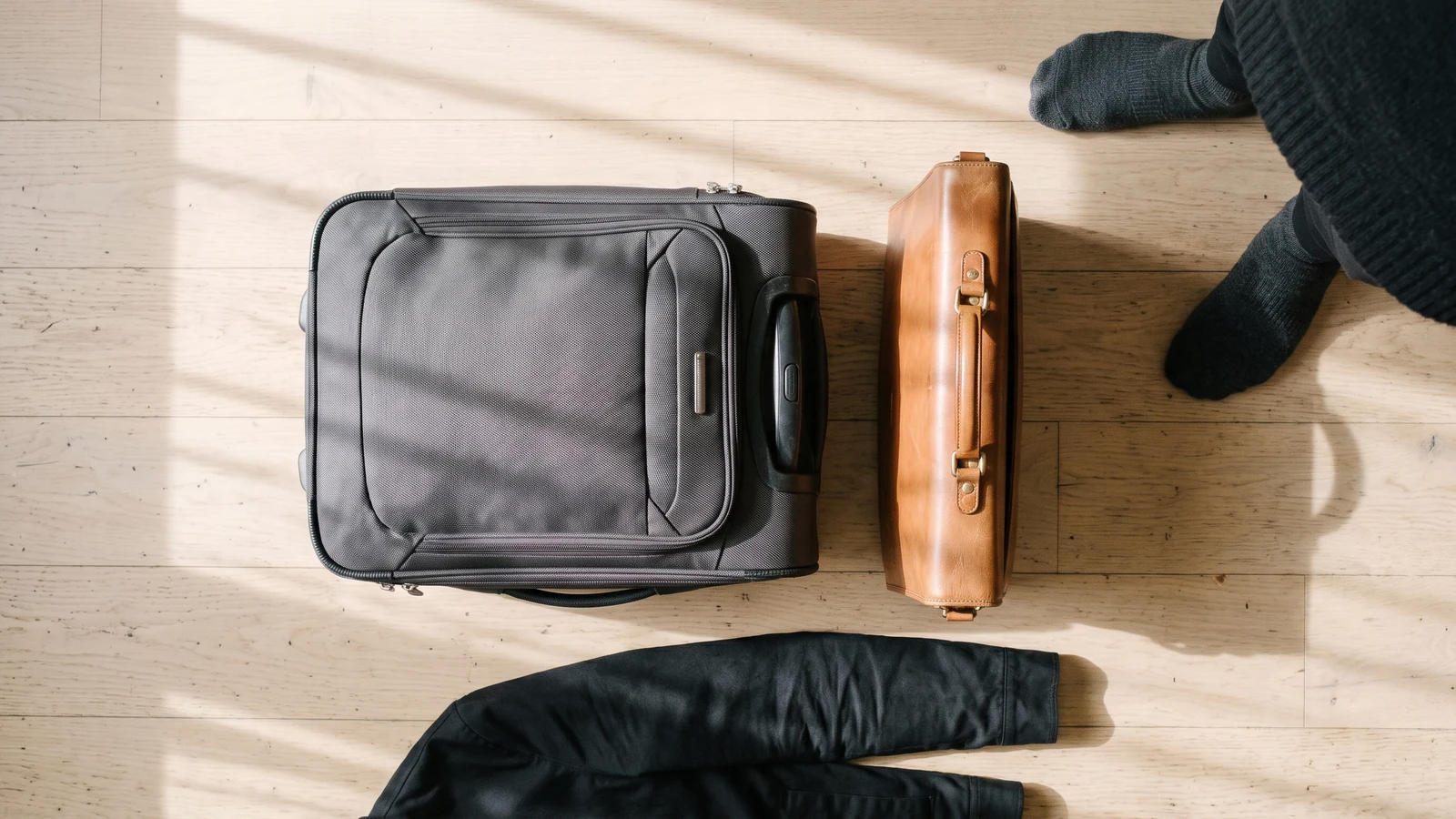
For the overhead bin: A high-density ballistic nylon or lightweight polycarbonate 21-inch international carry-on (55 x 40 x 20 cm, weighing roughly 3.5kg / 8lb empty or less) such as the Rimowa Essential Sleeve Cabin (3.6kg, 55 x 39 x 23 cm). The 21-inch international footprint fits every European, Asian, and U.S. widebody bin without friction.
For the suite side-console: A slim, structured leather or ballistic-nylon brief (40 x 30 x 12 cm) that slides over your roller's telescoping handle in the terminal and tucks directly into your lie-flat suite's side cubby or footwell stowage during takeoff.
Power banks stay in the bag at your seat, never in the hold. Emirates allows one per passenger under 100 Wh and has banned using them in flight since October 2025.
Insider Strategy
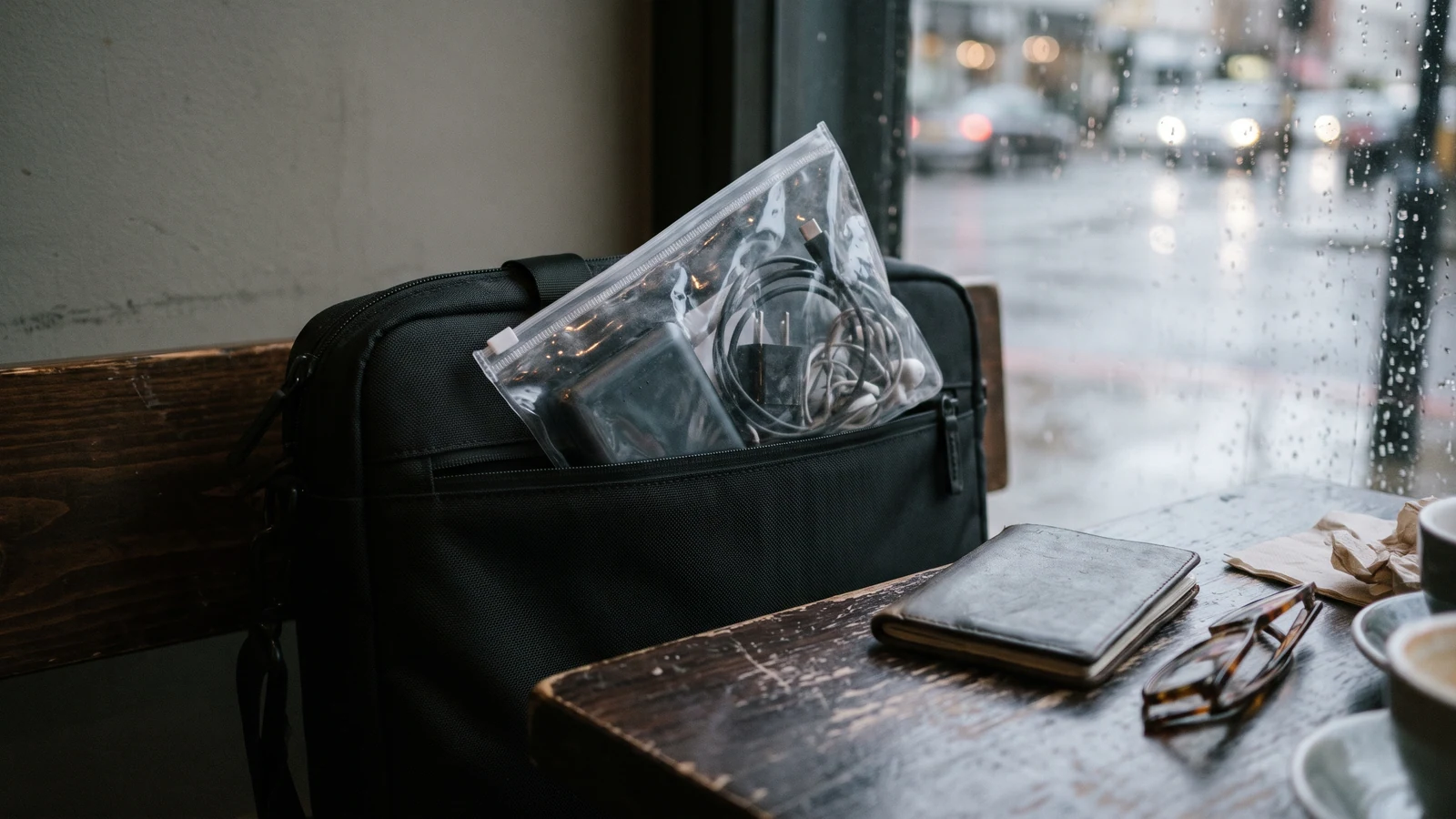
Pack your laptop, passport, charger, and medications in your personal brief, never in your overhead roller—even in Business Class. Keep power banks there too, never in the hold: Emirates has banned using them in flight since October 2025 and allows one per passenger under 100Wh, and several other carriers now cap or restrict them as well. Once your suite is reclined into a 79-inch flat bed after dinner, standing up in the dark aisle to unlatch an overhead bin for a USB-C cable or customs document defeats the entire purpose of the suite's side console.
Duty-Free Shopping Space: The Allowance Nobody Plans For
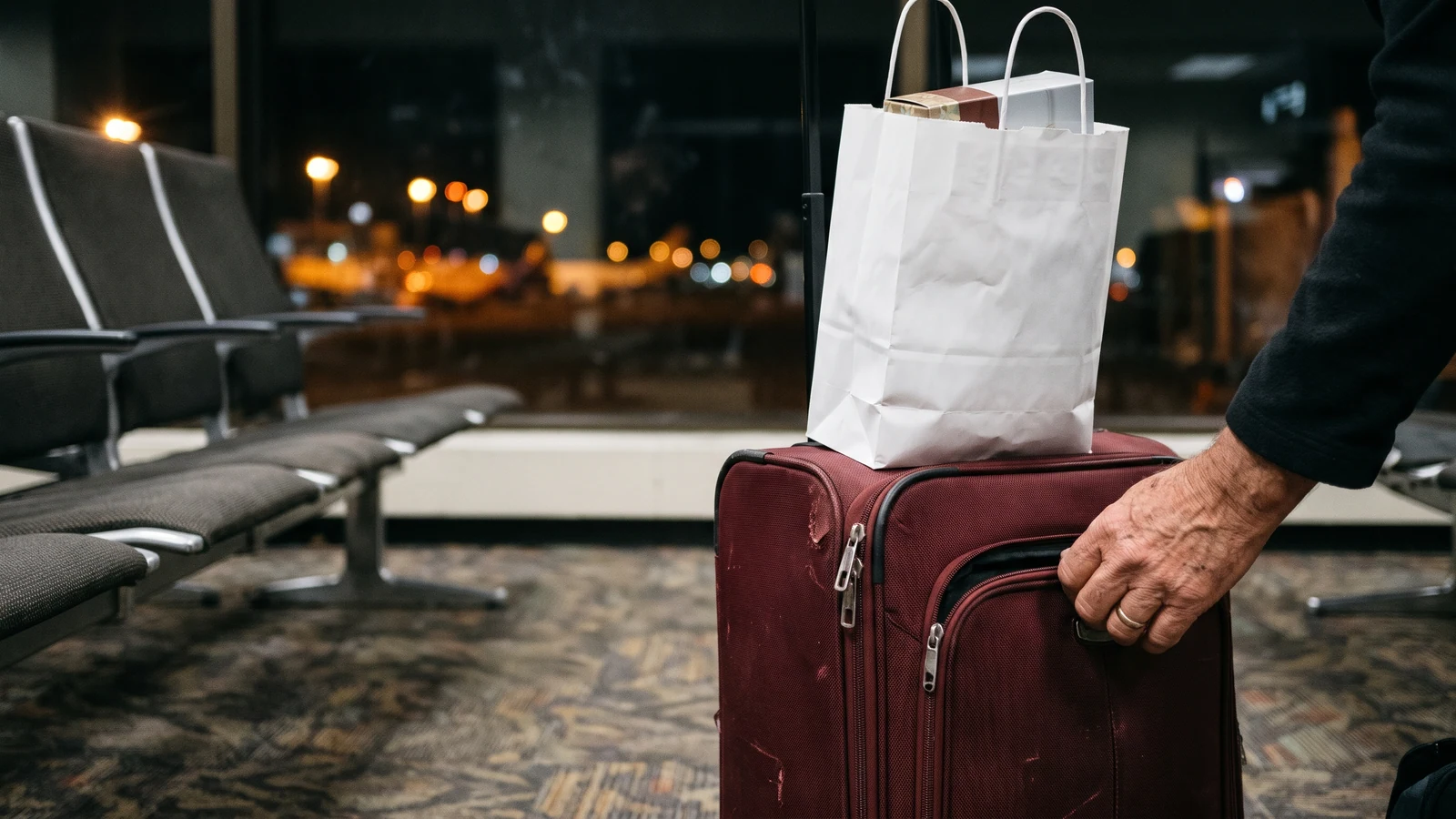
Here's something standard carry-on guides rarely mention: while most airports advertise that duty-free bags are "exempt," airlines at strict transit hubs (including London Heathrow, Doha, Dubai, and Tokyo Haneda) increasingly count a large duty-free carrier bag toward your two-piece cabin limit at the boarding gate.
Heathrow, Doha, Dubai and Haneda increasingly count a large duty-free bag toward your two-piece limit at the gate. Leave 15 to 20 percent slack in your cabin bag to pack it away.
The practical fix: leave 15% to 20% slack in your primary carry-on or leather tote when transiting major international hubs. Consolidating a duty-free box into your existing cabin bag before walking to the gate keeps your hands free and prevents any piece-count friction during Group 1 boarding.
Building a Business Class Packing Strategy That Actually Works
Most packing advice online is written for economy travelers trying to dodge a $35 checked bag fee. That's the wrong problem for a Business Class flyer—your ticket already includes two 32kg (70lb) priority-tagged checked bags. Your real goal is connection agility and arrival speed: walking straight from the jet bridge through Global Entry to your car in five minutes without waiting 30 minutes at the baggage carousel.
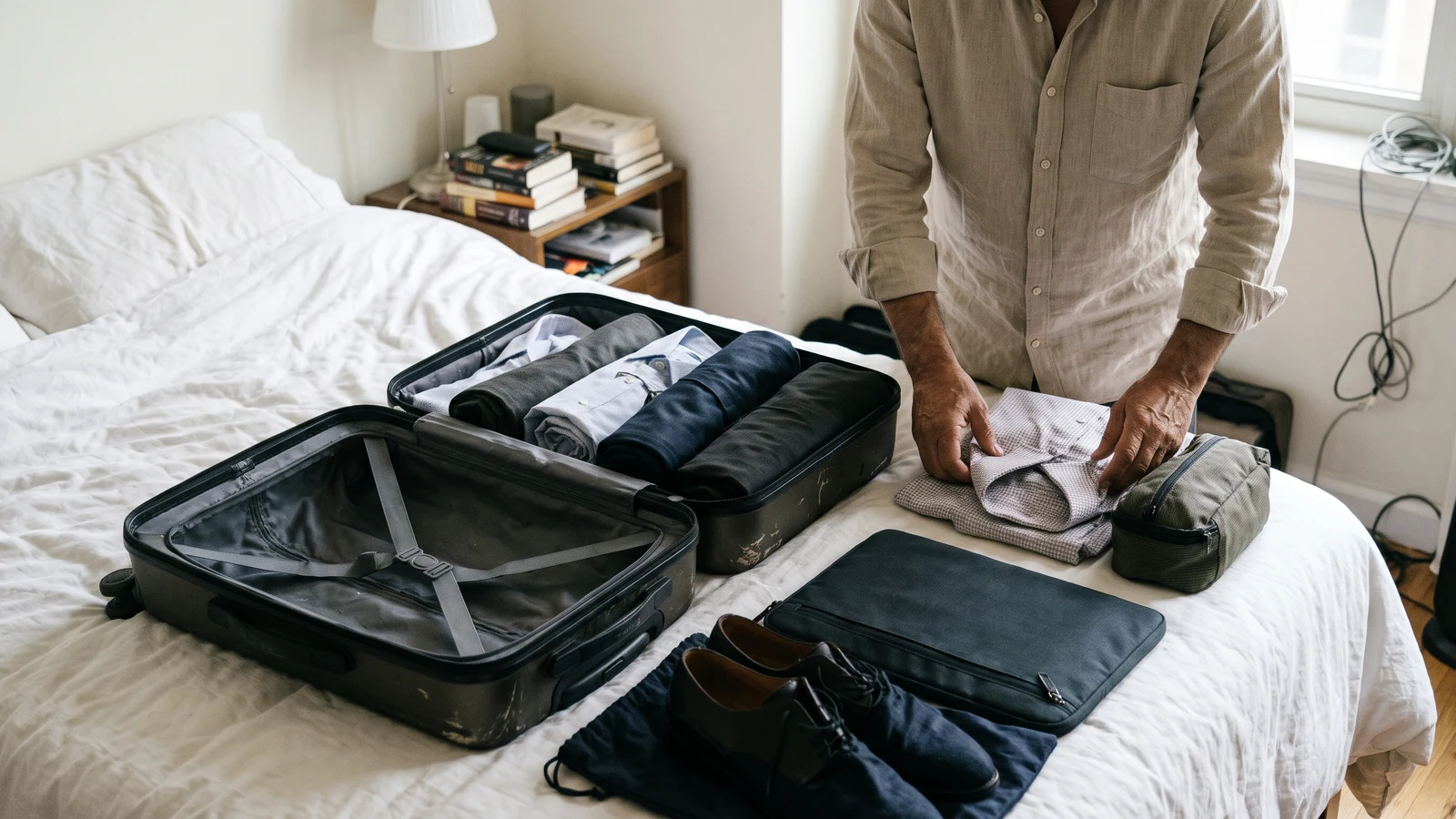
For any trip up to four nights, the two-piece Business Class carry-on allowance on carriers like British Airways (2 x 23kg), Qatar Airways (15kg combined), Turkish Airlines (2 x 8kg), Emirates (2 x 7kg), or U.S. flagship carriers is more than enough to travel 100% carry-on with two suits, four dress shirts, a pair of dress shoes, and a full mobile office.
For trips up to four nights, a two-piece business class cabin allowance fits two suits, four dress shirts, dress shoes and a laptop setup, so you never wait at the carousel.
One more thing worth knowing
If your trip requires checking prototypes, trade-show cases, or formalwear across multiple carriers, let our team verify the exact aircraft bin configuration and cabin baggage rules on your specific flight numbers before ticketing so there are zero surprises on departure day.
The Bottom Line on Business Class Carry-On Rules
Business class buys you more than a lie-flat bed. On nearly every international carrier, it doubles your carry-on piece and weight allowance, adds onboard wardrobe access for a suit or garment bag, and puts you at the front of Group 1 boarding so your bags stay right above your suite.
Know the two numbers that vary by carrier—56 x 45 x 25 cm / 23kg on British Airways, 2 pieces / 14–16kg combined on Emirates, Qatar, Singapore, and Turkish, and unlimited weight / 2 pieces on U.S. carriers—and pack a 21-inch international roller paired with a slim brief that fits inside your suite's side console.
When you're comparing aircraft types and unpublished business class fares for your next long-haul itinerary, talk to a CEOFLIGHTS travel manager—we'll make sure both the suite and the cabin logistics fit the way you travel.
Content creator and business travel specialist at CEOFLIGHTS, bringing you the latest insights, tips, and trends in premium business and first-class travel.
Become the CEO of Your Journey
You take the lead. Your dedicated Personal Travel Manager handles every detail.