Quick summary
Turkish Airlines offers an excellent 1-2-1 layout and flexible dining with a Flying Chef on its newer 787-9 and A350-900 fleets. We strongly recommend checking your aircraft type before booking, as securing these newer cabins via consolidator fares can yield incredible value compared to the $5,000-$9,000 retail price.
Turkish Airlines operates one of the widest route networks on the planet — 340+ destinations across more than 120 countries, all funneling through Istanbul Airport (IST). That connectivity is genuinely impressive. What's less widely appreciated is that the premium cabin on their newest widebody aircraft is also worth taking seriously.
The qualifier matters, though. Turkish flies multiple business class products across a mixed widebody fleet, and not all of them are created equal. The product reviewed here — the fully flat, 1-2-1 configuration — exists only on the Boeing 787-9 Dreamliner and Airbus A350-900. Get one of those aircraft and you're in for a strong long-haul experience. End up on an older A330 or 777 and the story changes considerably. More on aircraft selection later.
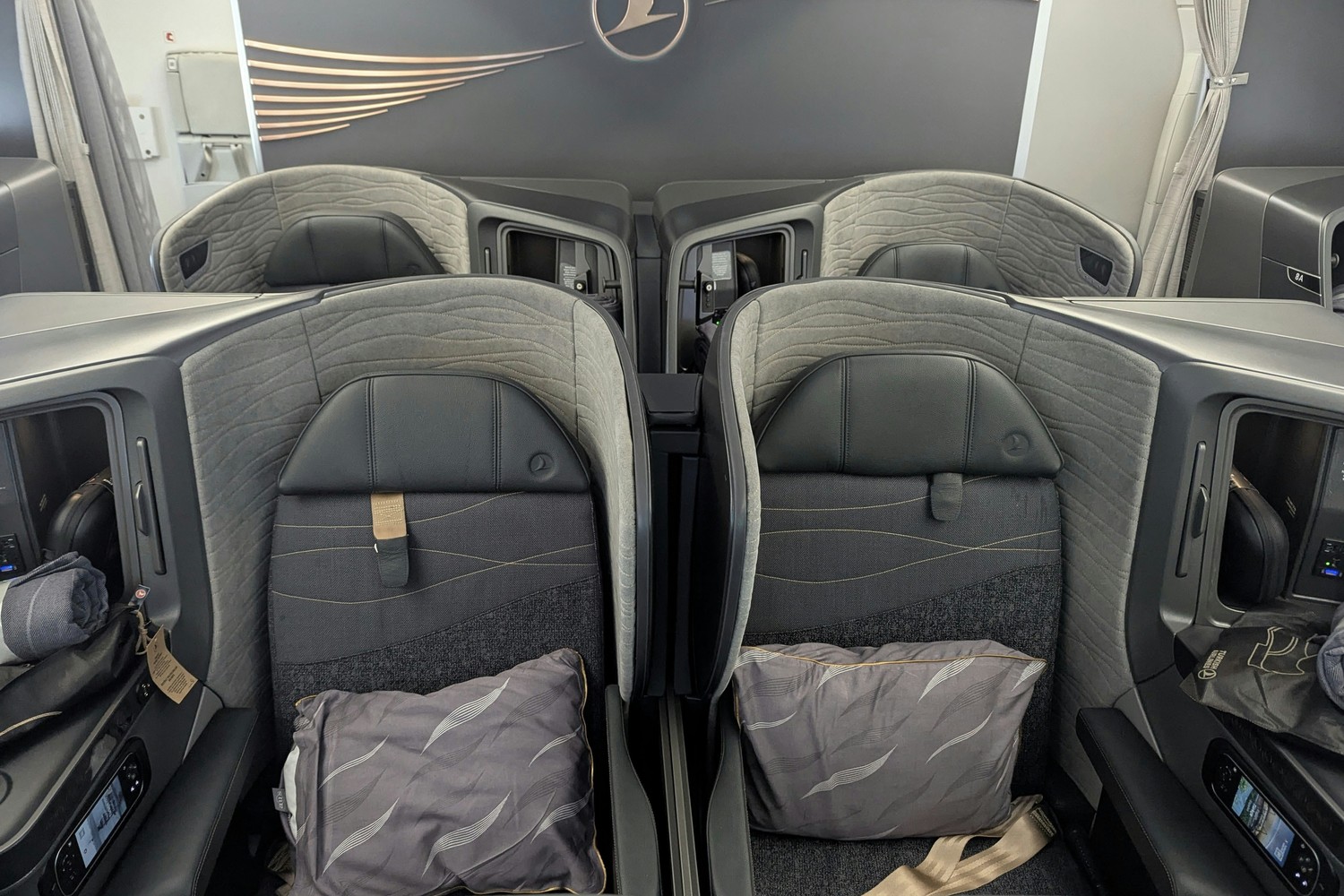
For executives flying Istanbul to New York (TK 1 operates IST–JFK), Chicago, Los Angeles, or onward into Asia Pacific, this is the product that competes with the likes of Lufthansa Business Class and Singapore's regional configurations. It's not QSuite. It doesn't pretend to be. But at the right price — and through CEOFLIGHTS consolidator contracts, fares on this route can drop well below published retail — it represents excellent value for a transatlantic or ultra-long-haul sector.
Cabin design and seat configuration
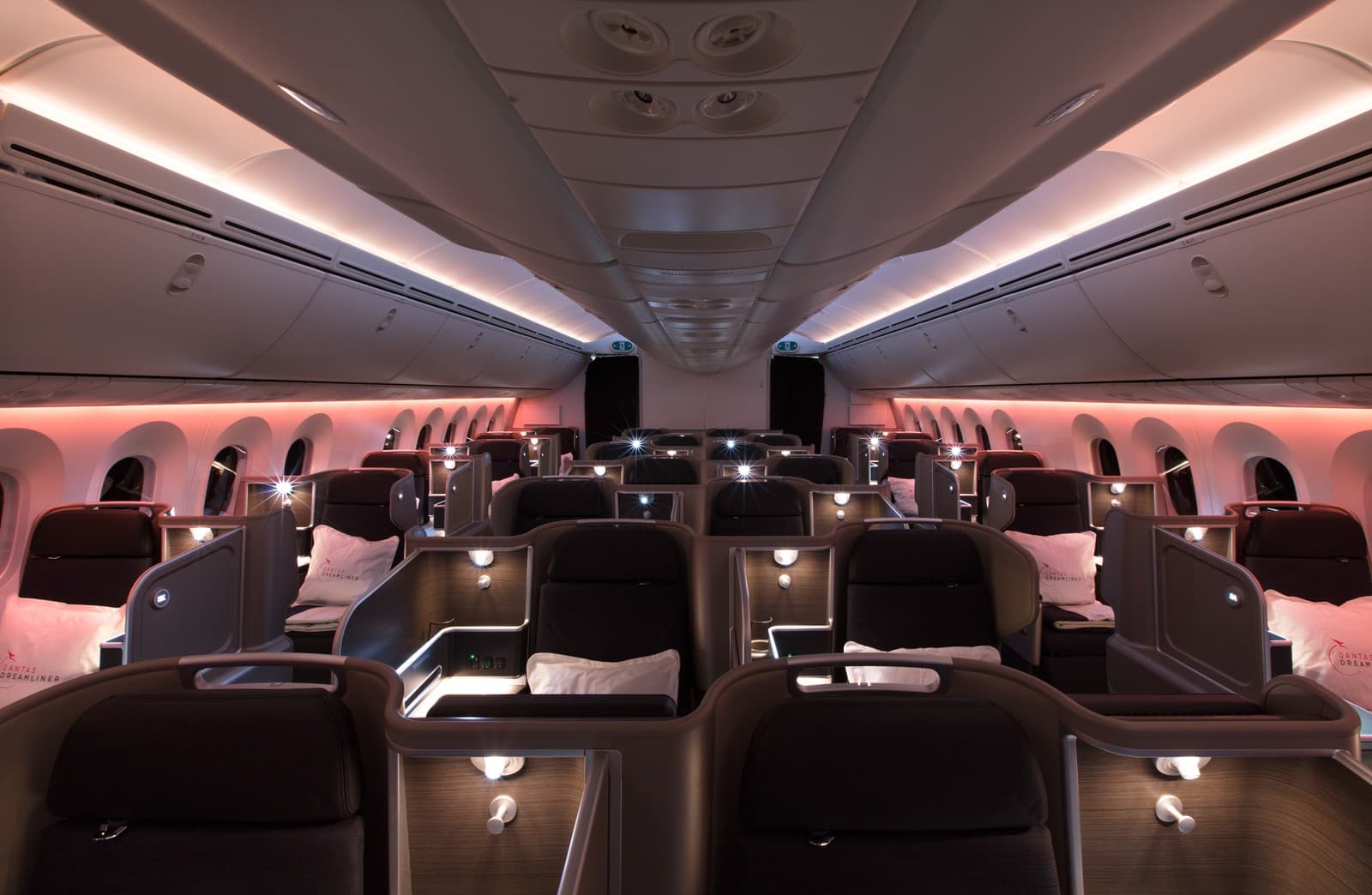
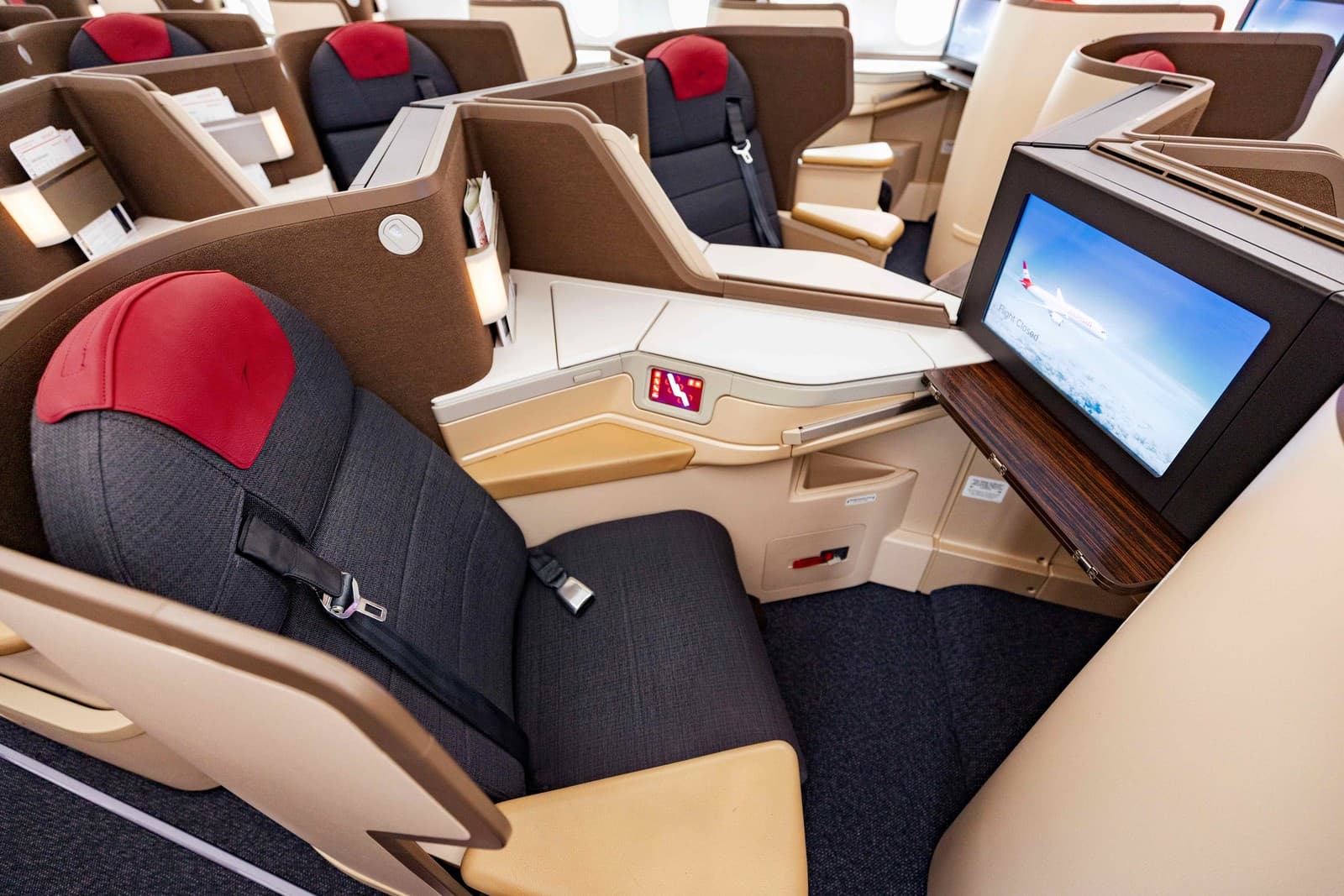
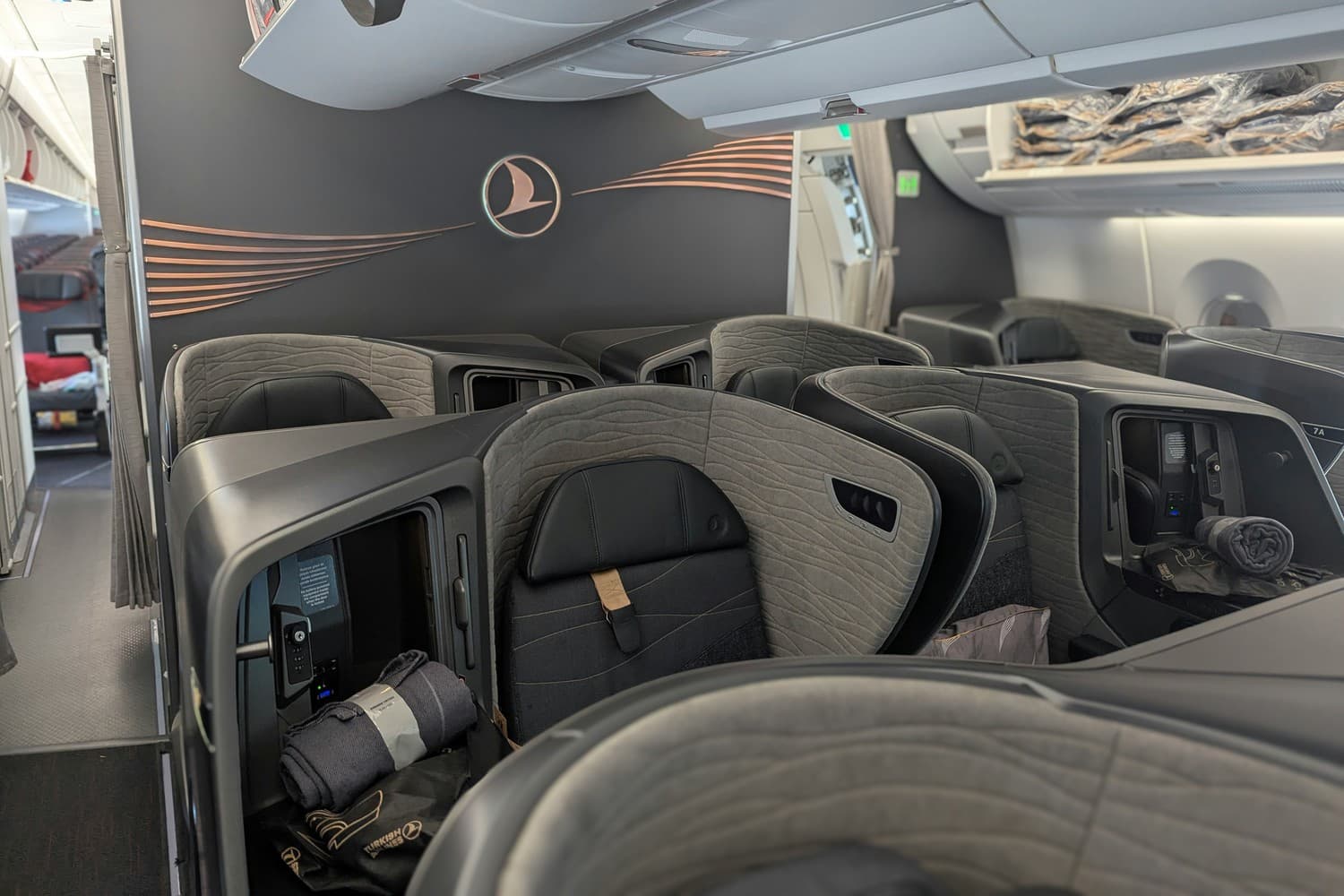
Both the 787-9 and A350-900 feature a staggered 1-2-1 layout, which means every single seat has direct aisle access. No climbing over a sleeping neighbor at 3am. That's still not universal across business class cabins in 2025, which tells you something.
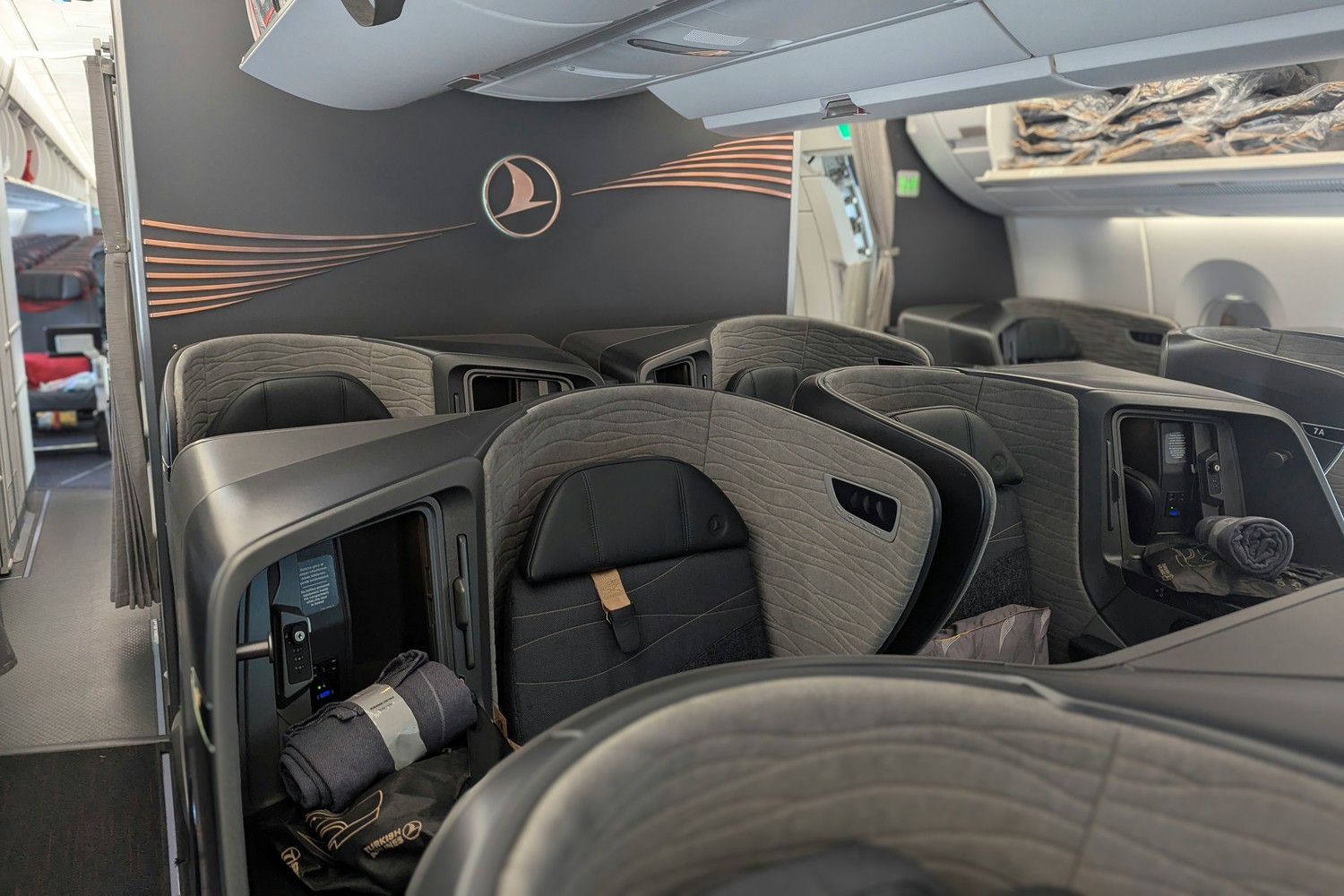
The aesthetic leans understated — charcoal tones, dark greys, muted metallic accents, soft ambient lighting that shifts with the time of day. It won't make your jaw drop the way a Qatar QSuite cabin does on first impression, but it works exceptionally well for overnight flying. The A350's larger windows add genuine breathing room; the cabin never feels compressed.
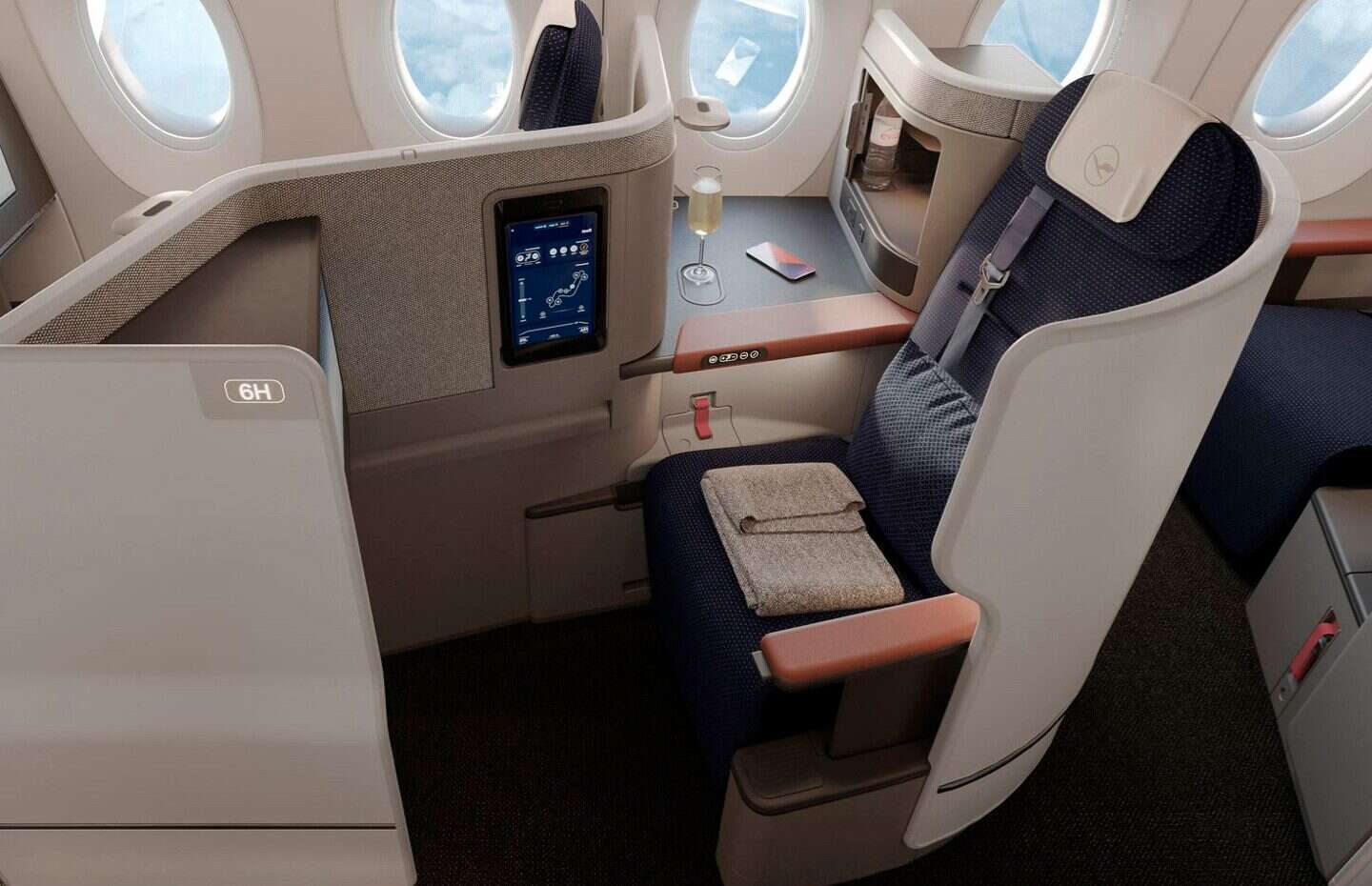
Window seats alternate in their relationship to the fuselage depending on the row — some sit close to the window wall and feel genuinely private, others sit slightly more aisle-adjacent. Solo travelers should target the former. Pairs of center seats share an adjustable divider that folds away entirely, making them the best option for couples. The configuration is flexible without being gimmicky.
Seat comfort and features
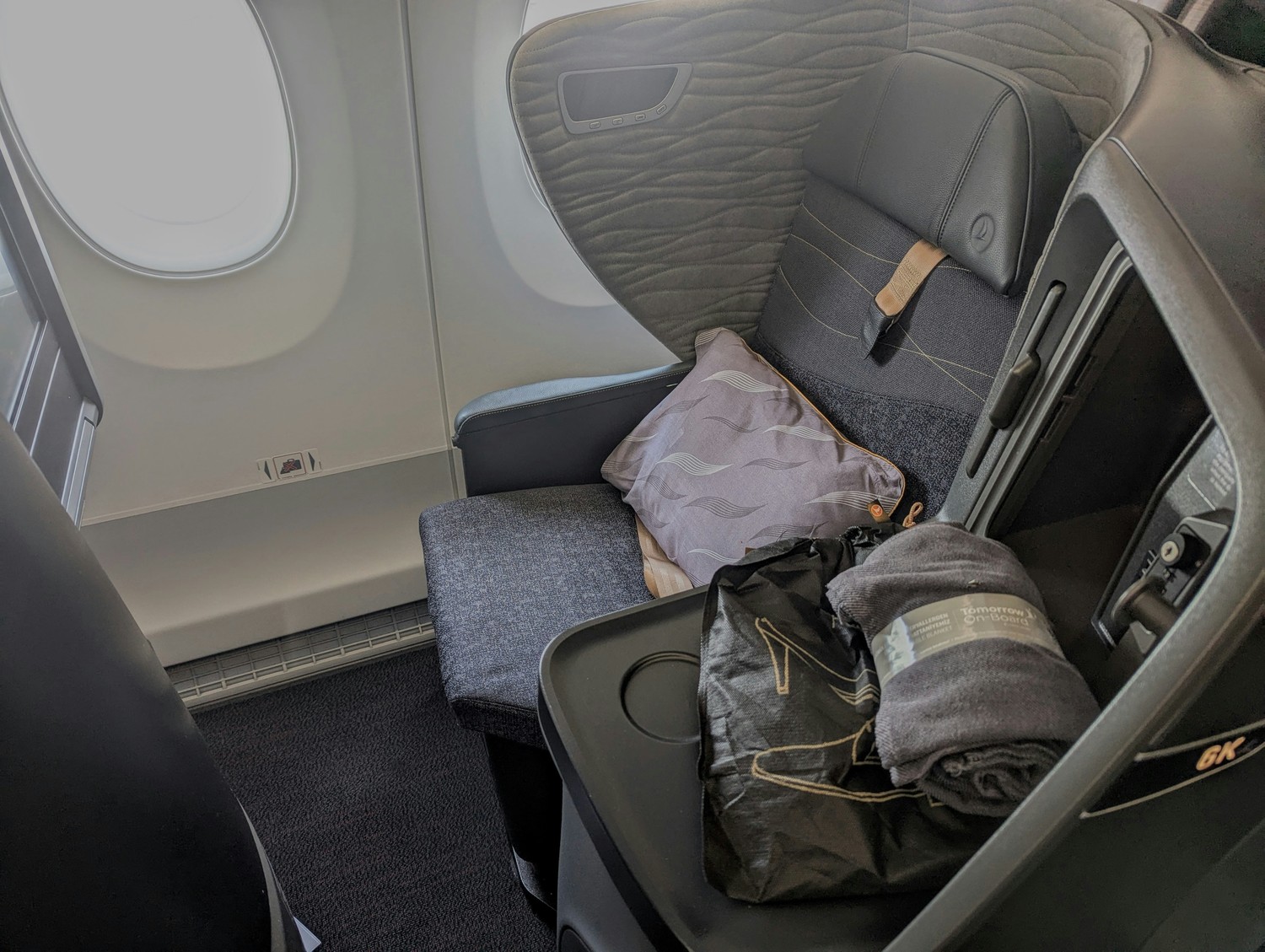
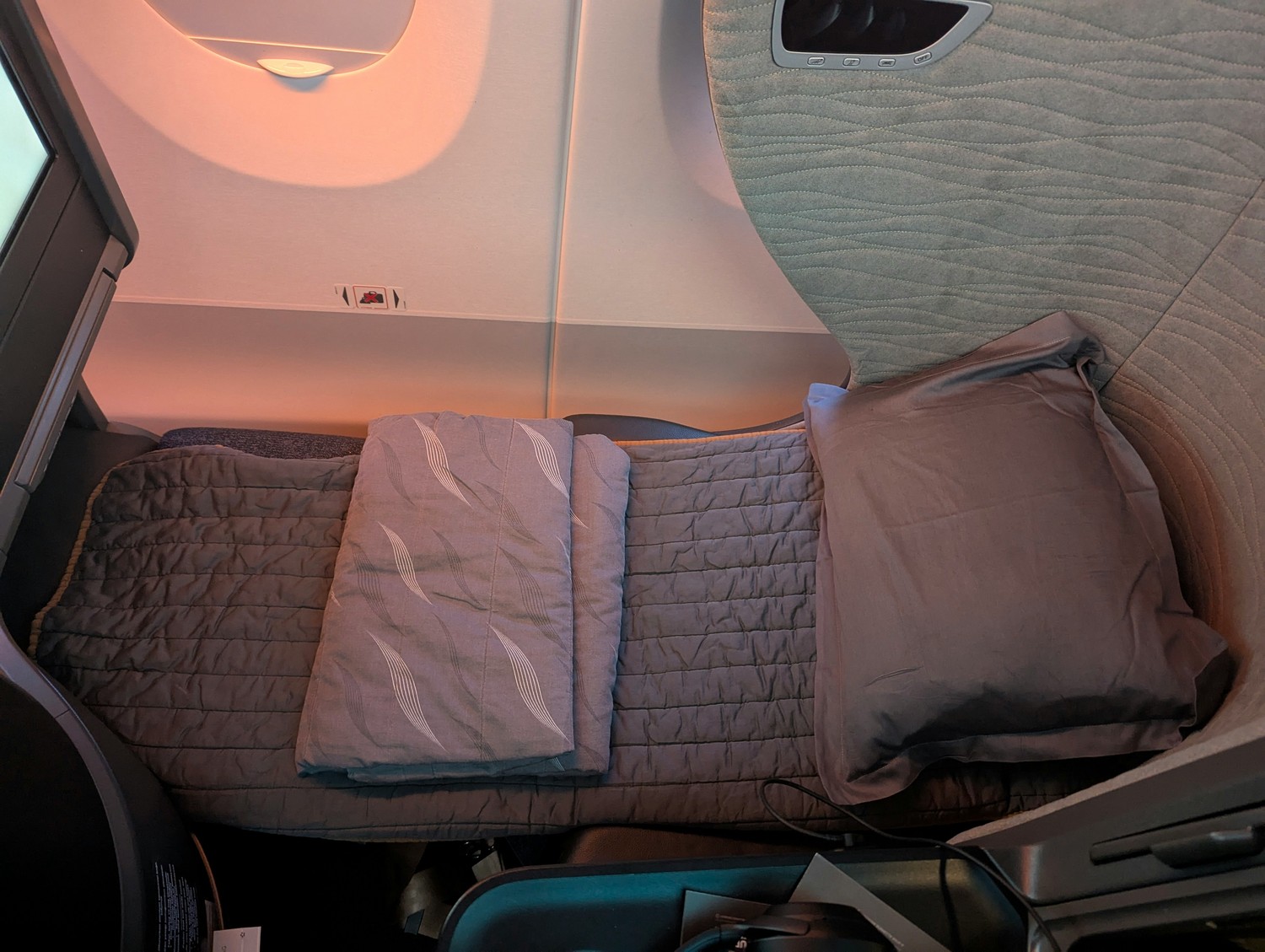
The seat itself converts to a fully flat bed running approximately two meters in length. At that dimension, anyone under 6'3" sleeps straight. Taller travelers may notice the footwell tapers slightly — worth considering if you're booking a 13-hour IST–LAX sector.
Seat controls are clean and responsive, with a dedicated bed mode that handles the recline-to-flat transition without fuss. The cushioning is on the firmer side of comfortable — supportive rather than plush — though the mattress pad offered on longer sectors compensates significantly.
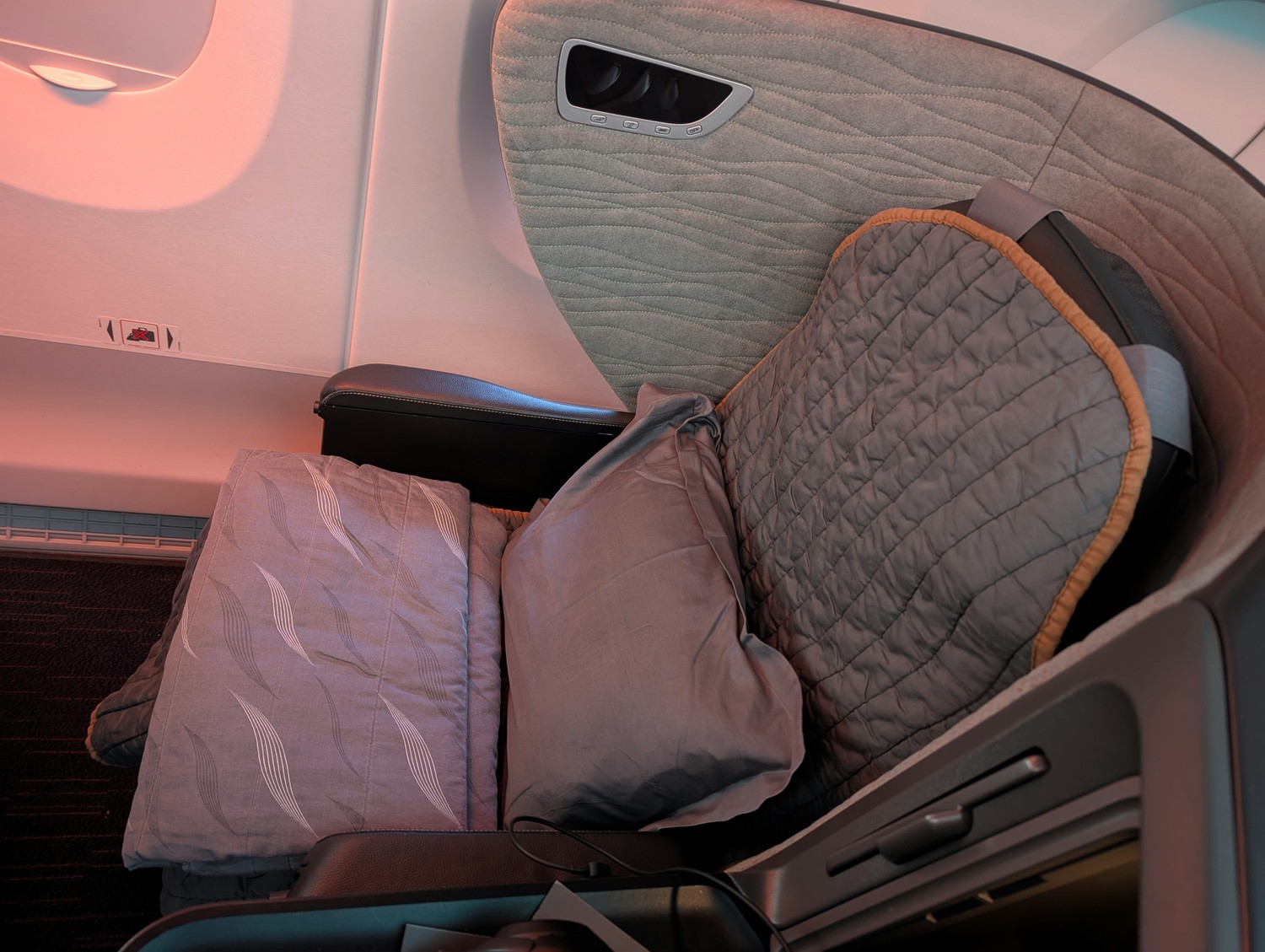
The practical kit at each seat is solid:
- Universal AC power outlet and dual USB ports — both work reliably, unlike on certain European carriers where one inevitably fails
- A reading light positioned well enough to use without disturbing neighbors
- Side console with stable surface area for drinks or a laptop
- Multiple personal storage compartments — actually large enough for over-ear headphones without crushing them
- Sturdy tray table, relevant if you plan to work rather than sleep
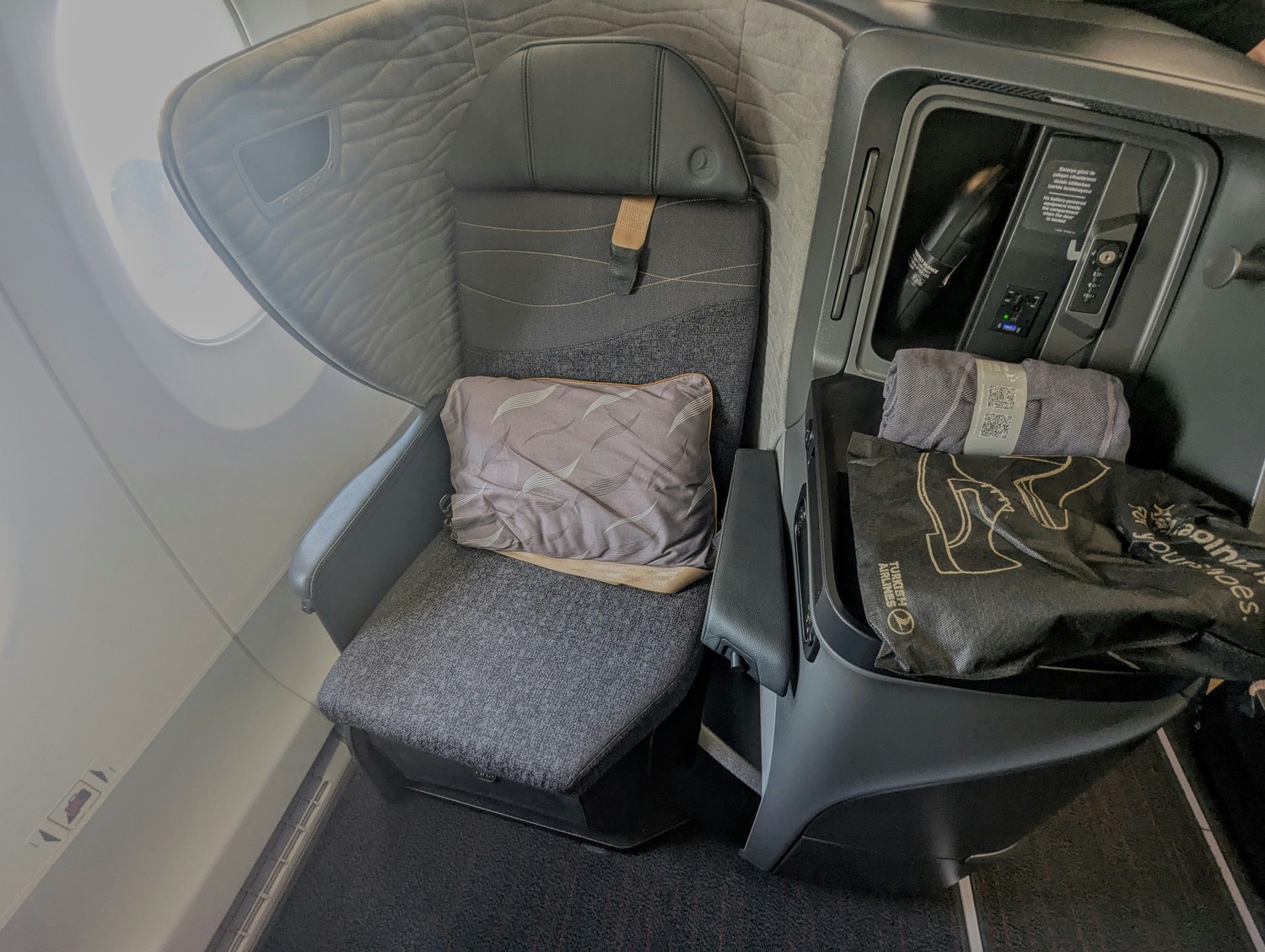
Aisle proximity varies by row. If you're reviewing the seat map on Seatguru before booking, odd-numbered window seats on the A350 tend to sit closer to the fuselage and offer more enclosure. That's my preference on overnight flights.
In-flight entertainment and connectivity
The IFE touchscreen is large, sharp, and genuinely responsive — no aggressive tapping required. The content library is broad: recent film releases, Turkish cinema, international television series, documentary collections, and a music library that runs deeper than most. Multi-language content is well represented given the airline's international routing.
Noise-canceling headphones are provided and deliver clean, clear audio. The screen size relative to seat distance is well calibrated; extended viewing doesn't strain.
Wi-Fi is available on both the 787-9 and A350-900. Speeds are functional rather than fast — emails, messaging, and document access work fine. Video calls are unreliable on busy sectors. That's honest, and broadly consistent with most non-Starlink inflight connectivity in 2025.
Dining experience
This is where Turkish genuinely pulls ahead of several competitors at similar price points.
Meals are served with a flexible timeline — depart and eat immediately, or sleep first and dine later. That flexibility alone is worth something on a red-eye. The menu structure opens with cold mezze: think tabbouleh, hummus, marinated vegetables, olives. Hot main options typically include grilled meats (usually lamb and a chicken variant), a pasta, and a vegetarian selection. The bread arrives warm. Dessert and cheese close the service.
The Flying Chef program — present on most long-haul departures — adds a layer of personalization that feels authentic rather than performative. The chef walks the cabin during service, explains the menu, handles special requests, and genuinely engages. It's one of the things that distinguishes Turkish from airlines where the meal service is efficient but clinical.
Wine selections include Turkish and international labels. The tea program is exceptional — properly strong Turkish çay served in proper glasses. The coffee is respectable. These details matter on a 10-hour sector.
Amenity kits and sleep comfort
The duvet is thick and the pillow is generously sized. On longer sectors, the mattress topper makes a real difference — the sleeping surface with it deployed is competitive with any business class bed in its price tier.

The amenity kit — currently a Lanvin-branded pouch — contains skincare, socks, an eyeshade, earplugs, and dental kit. The Lanvin collaboration elevates the presentation meaningfully. Contents are practical rather than excessive.
Cabin lighting on both aircraft types dims gradually after meal service and stays low. The 787's dimming windows are a useful bonus — no fumbling with a plastic shade at 4am. Both aircraft types also benefit from higher cabin pressure altitude (6,000 feet on the 787 versus the industry standard 8,000), which reduces the dehydration and fatigue that punish frequent long-haul travelers.
Routes and aircraft deployment
This is the most practically important section if you're booking.
The 1-2-1 product exists only on the 787-9 and A350-900. Turkish's A330 and older 777 variants fly a 2-2-2 or angled configuration that represents a completely different tier of comfort. Same airline, same route sometimes — different aircraft entirely.
The 787-9 operates heavily on transatlantic routes: IST–JFK, IST–ORD (Chicago O'Hare), IST–IAD (Dulles), and several Asian city pairs. The A350-900 handles ultra-long-haul routes including IST–SYD (Sydney) and IST–MEL (Melbourne), as well as Asian Pacific destinations where range and efficiency matter.
Aircraft assignments shift seasonally and with operational demand. My strong advice: check the seat map at booking, not just the aircraft type listed in the schedule. Seatguru and ExpertFlyer both show the configuration clearly. If you see a 1-2-1 map, you have the right product. If the map shows 2-2-2, change your search parameters or contact the booking desk.
When you call CEOFLIGHTS at (888) 851-6897, our agents confirm aircraft type as part of the booking process — it's standard practice, not an afterthought.
Airport experience and lounges
Priority check-in, fast track security (at IST and most major hubs), and priority boarding are included. At Istanbul Airport, this matters: IST is enormous and the standard security queues are genuinely long.
The Turkish Airlines Business Lounge at Istanbul Airport is one of the best airline lounges operating today. Full stop. The square footage alone is staggering — multiple seating zones, quiet rooms, private suites, shower facilities, dedicated rest areas with reclining chairs.

The dining offer is exceptional: live cooking stations with rotating Turkish and international dishes, mezze spreads, fresh pastries, a proper breakfast service in the morning hours, and dessert stations that would embarrass some hotel restaurants. Coffee bars are spaced throughout so you're never more than 50 meters from a good cup.
For departures outside Istanbul, Star Alliance partner lounge access applies. Quality varies by city, as it always does with alliance lounges — Frankfurt and Singapore are strong, some regional Star Alliance lounges less so. But the IST lounge experience alone justifies arriving early on a connection through Istanbul.
How to book Turkish Airlines business class at a better price
Retail business class fares on Turkish Airlines' transatlantic routes regularly run $5,000–$9,000 return. Through our airline contracts, CEOFLIGHTS brings many of those same itineraries down to a range where the value calculus looks very different. The product on a 787-9 IST–JFK run at a consolidator fare is hard to beat per dollar spent in premium cabin travel.
CEOFLIGHTS is top rated on Trustpilot and ASTA-accredited (member #900292735). We handle aircraft type confirmation, routing optimization, and seat selection as part of the booking process — not extras you chase after the fact.
Call (888) 851-6897 to check current fares on Turkish Airlines business class. If the 787-9 or A350-900 is on your route, it's worth the conversation.