Executive Briefing
Published international business class fares on Google Flights and airline websites reflect retail price anchoring aimed at corporate expense accounts. Repeat long-haul travelers bypass these sticker prices using two distinct mechanisms: 24/7 route-specific fare floor monitoring to capture booking code dips, and wholesale consolidator desks that issue standard commercial GDS tickets with full PNRs at 25% to 40% below public pricing.
The $9,400 Illusion
Last month, a client forwarded me an itinerary for two round-trip business class tickets between New York (JFK) and London Heathrow (LHR) on a major transatlantic carrier. The quote directly from the airline's website was $9,420 per passenger.
Same metal. Same departure date. Same lie-flat seats in row 4.
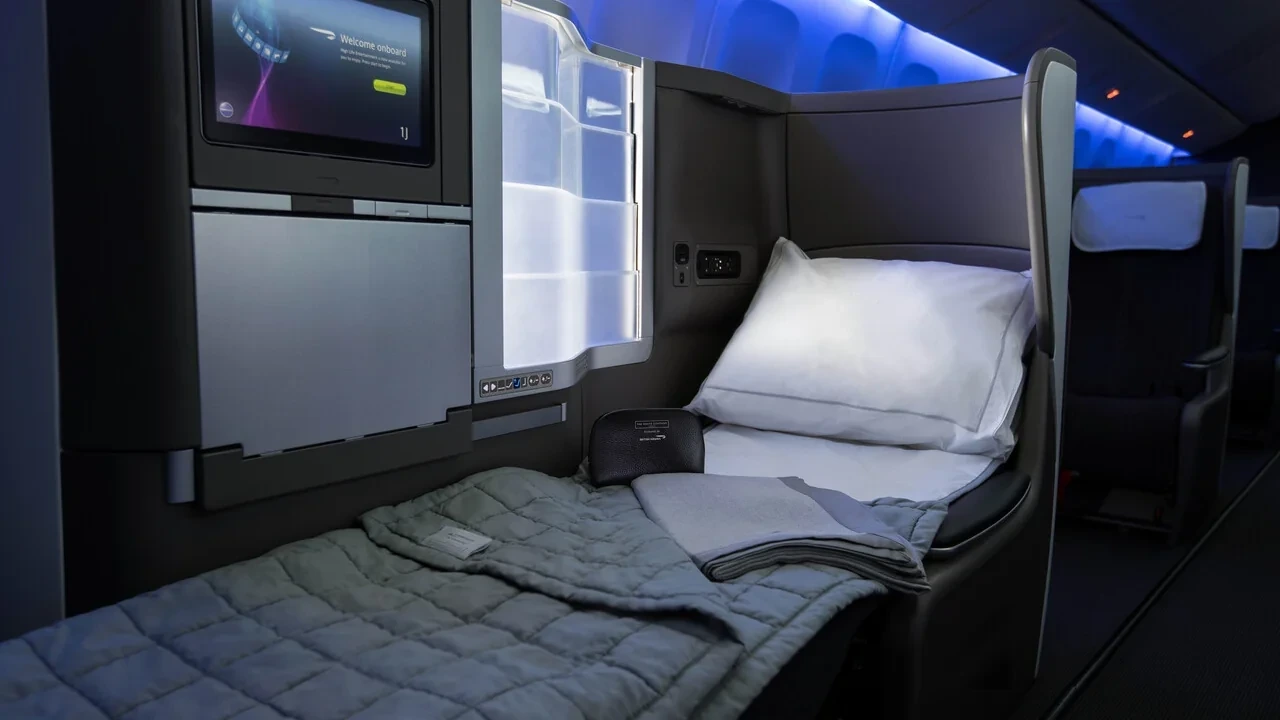
We ticketed the exact flights through private wholesale inventory for $3,180 per passenger. That is a $12,480 difference for two travelers who boarded through the same priority jetway, drank the same Laurent-Perrier before pushback, and earned the standard airline mileage credit on their frequent flyer accounts.
The travel industry wants you to believe that business class airfare operates like the stock market: a single, transparent, universally visible price determined purely by supply and demand.
It does not.
Airlines run one of the most segmented pricing systems in modern commerce. The price you see on Google Flights, Expedia, or direct carrier portals is what revenue management teams call the public retail tariff. It is intentionally set high to capture corporate travel budgets that are contractually bound to book through automated corporate booking tools (OBTs) with zero price flexibility.
If you are paying out of your own pocket—whether as a business owner, partner, or luxury vacationer—paying published retail is simply an urgency tax. To fly flat without draining five figures, you need to understand the hidden tier of airfare distribution and the tools built to unlock it.
The Anatomy of an Airline Ticket: Published vs. Private Net Fares
Every commercial flight has two distinct lives: its operational life (airplanes, pilots, fuel, gates) and its inventory life (fare codes, tariff filings, routing rules, distribution pipes).
When an airline opens a Boeing 777-300ER or Airbus A350-1000 for sale 330 days before departure, the business class cabin is partitioned into alphabetical fare buckets.
- J and C: Full-fare, completely flexible, unrestricted business class. This is the $8,000–$12,000 corporate bucket.
- D and I: Discounted commercial business class. Fares typically range from $3,500 to $6,000.
- Z, P, and R: Deep-discount promotional buckets. When airlines run flash sales, these buckets quietly open for 48 to 72 hours, dropping fares to $2,000–$2,800.
If you want a breakdown of how airlines construct these buckets, read our guide on business class fare construction.
The critical detail most travelers miss is that airlines do not sell all their premium seats through public channels. Because empty business class seats generate zero marginal revenue once the cabin door closes, major carriers distribute unpublished, contracted net fares to specialized wholesale brokers and licensed consolidators.
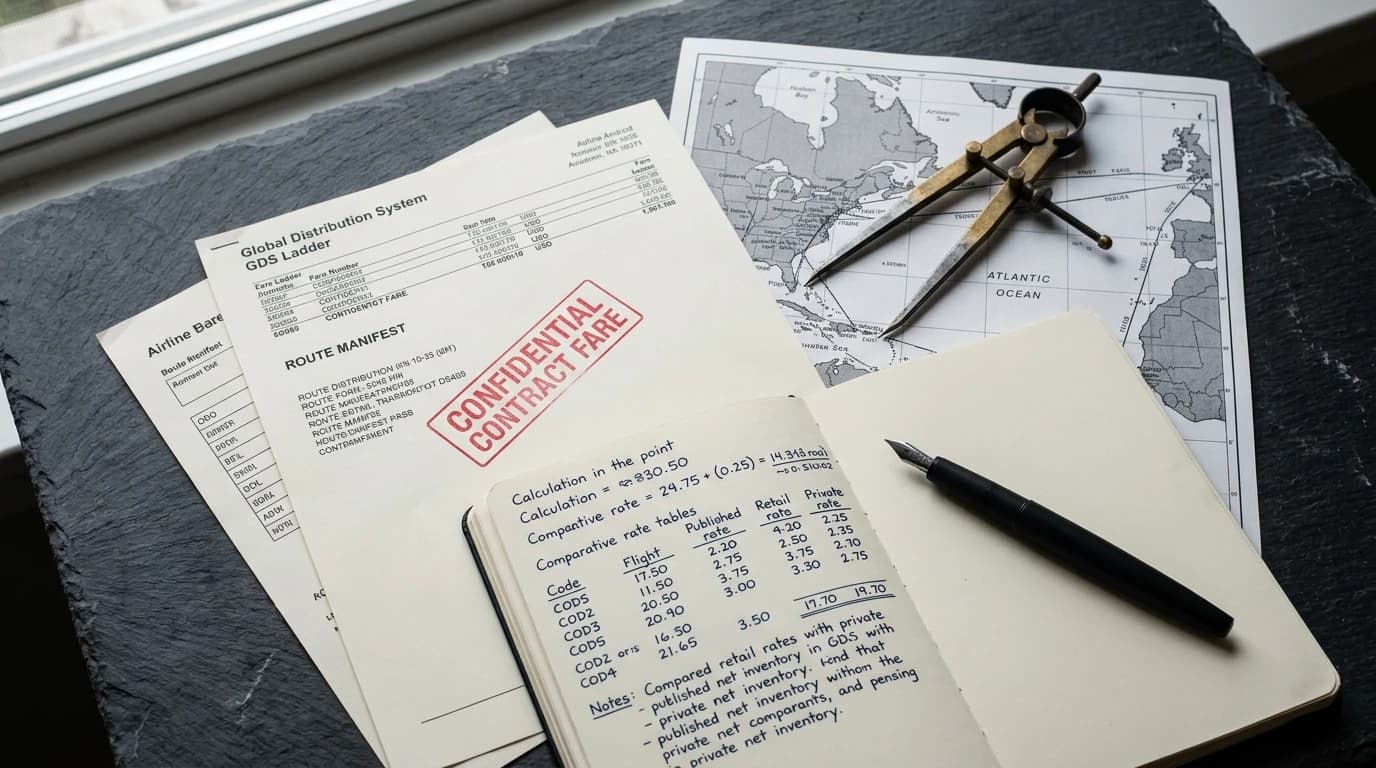
A wholesale rate is not a standby pass, an illegal coupon, or a points-brokered ticket. It is an official commercial fare filed directly into the Global Distribution System (GDS)—the global reservation backbone shared by Sabre, Amadeus, and Travelport. Consolidators hold private contracts with 70+ international carriers allowing them to mark up wholesale base rates and issue confirmed tickets with legitimate airline passenger name records (PNRs).
When you book through these channels, your ticket comes with standard baggage allowances, business class lounge access, and seat selection rights.
The question is: how do you access these rates without spending hours calling airline tariff desks?
Strategy 1: The Consolidator Concierge Desk
The most straightforward way to secure unpublished rates is through specialized premium-cabin consolidators.
General consumer travel agencies focus on volume economy ticketing where margins are thin and automation handles the checkout. Premium airfare consolidators do the opposite. They maintain dedicated contracts with global airline rate desks, exploiting market-specific currency differentials and Point of Sale (POS) inventory differences.
For example, an airline might price an 'I' bucket departing Chicago at $4,800 on the US point of sale, but file an equivalent contracted private net fare through its European or Middle Eastern rate desk at €2,400 ($2,600). A consumer searching Google Flights in New York only sees the domestic tariff. A wholesale desk pulls the private contracted inventory directly from the GDS.
If you want to see how this works in practice, look at dedicated wholesale portals like BestBusinessClass.com. Their booking workflow strips out the manual friction: you enter your route parameters, alliance preferences, and dates, and their rate desk queries unpublished consolidator inventory across partner carriers. For an insider breakdown of this process, read their detailed walkthrough on how flight consolidators work, which unpacks the exact mechanics of private GDS inventory and ticket issuance.
On popular transatlantic corridors, the spread is substantial. For instance, comparing published retail vs. wholesale rates on New York to London business class consolidator rates frequently reveals spreads of $1,200 to $2,500 per seat on flagship carriers like British Airways, Virgin Atlantic, and United.
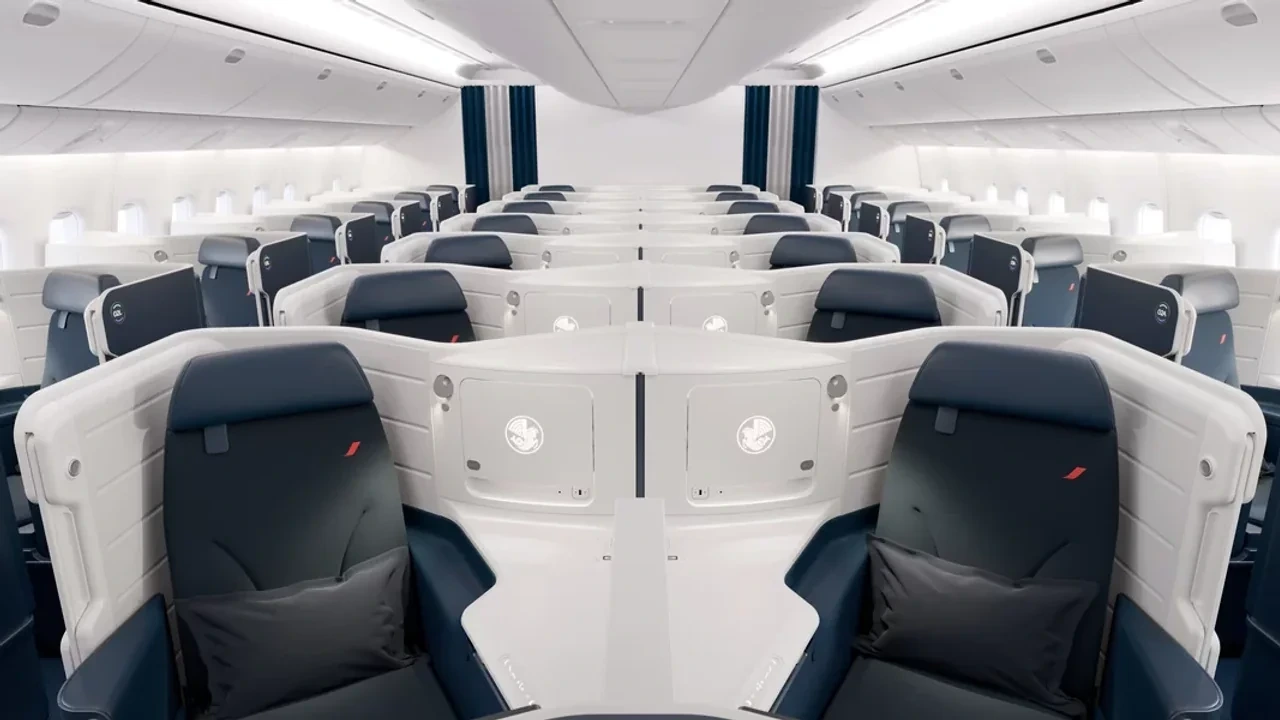
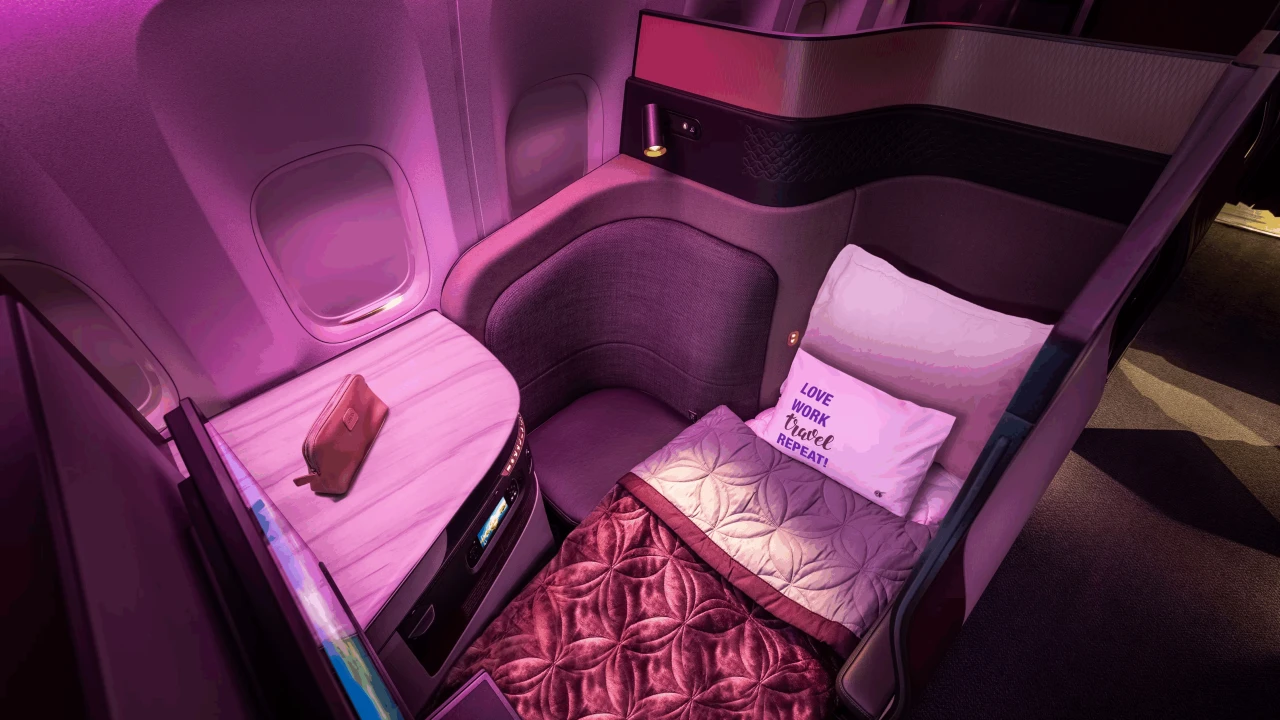
Before booking any long-haul ticket, check the aircraft hardware. Not all business class seats are created equal; a 2-3-2 layout on an older Boeing 777 does not warrant the same expenditure as a private enclosed suite on an A350. You can review side-by-side business class seat evaluations to compare pitch, bed length, and door privacy across 80+ international carriers before locking in your reservation.
Strategy 2: Automated 24/7 Fare Floor Monitoring
Wholesale consolidators solve the problem when your dates are fixed and you need to book an itinerary today. But what if you are planning a trip three to six months out and have flexibility?
This is where automated tracking comes in.
Most travelers rely on Google Flights price alerts. The problem with Google Flights is twofold:
- It is built for the masses. It triggers alerts for minor $40 fluctuations on economy tickets while missing high-volatility premium cabin drops.
- It has no concept of a "pricing floor." It tells you that a fare dropped from $6,200 to $5,800, but cannot tell you whether $5,800 is a genuine bargain or an inflated price on that corridor.
Airline revenue algorithms constantly adjust business class buckets based on historical route load factors. If corporate bookings on a Newark-to-Frankfurt flight lag behind quarterly projections at the 90-day mark, the airline's automated yield management system will quietly release a block of 'Z' or 'P' promotional buckets.
These discounted inventory drops typically last 24 to 72 hours before either selling out or being pulled by the revenue desk. If you are checking manually once a week, you will miss them 100% of the time.

To catch these drops, experienced flyers use specialized premium tracking software like BusinessClassSignal. Rather than tracking broad economy routes, it monitors hundreds of specific international city-pair corridors twice daily, comparing live fares against years of historical pricing data.
The advantage here is knowing the true floor price for your route. If you check real-time corridor fare benchmarks, you will see that intercontinental business class has predictable floors:
- Transatlantic (East Coast to Western Europe): Historical floor is $1,900–$2,400 round-trip. Anything under $2,300 is an immediate buy signal.
- Transpacific (West Coast to Tokyo/Seoul): Historical floor sits around $2,800–$3,400 round-trip.
- US to Southeast Asia (Singapore/Bangkok): Historical floor is $3,200–$3,800 round-trip.
By setting up a corridor monitor—such as a dedicated JFK-to-Heathrow fare tracker—you get alerted via email or SMS the second an airline opens a promotional bucket that touches the historical floor. You get the direct Google Flights booking link and can issue the ticket directly with the airline before the bucket closes.
Strategy 3: The Hybrid Arbitrage Workflow
The most effective booking strategy combines both tools into a single, repeatable workflow:
- Check Public Retail: A quick search on Google Flights establishes the baseline retail rate.
- Consult the Route Floor: You check historical benchmarks on BusinessClassSignal to discover where the actual floor price sits.
- Run the Consolidator Desk: You request an unpublished fare quote from a wholesale desk like BestBusinessClass or CEOFLIGHTS to see private contracted inventory.
- Compare & Lock In: If an airline yield flash drop touches the historical floor, you book directly. If published rates remain elevated, you lock in the private consolidator net fare.
Let's walk through a real-world execution.
Suppose you need to travel from Chicago (ORD) to Paris (CDG) in October for a ten-day trip.
- Check Public Retail: A quick search on Google Flights shows Air France and United pricing nonstop business class at $5,650 round-trip.
- Consult the Route Floor: You check historical benchmarks and discover that the ORD-to-CDG business class floor is $2,350. The public rate is more than double the route floor.
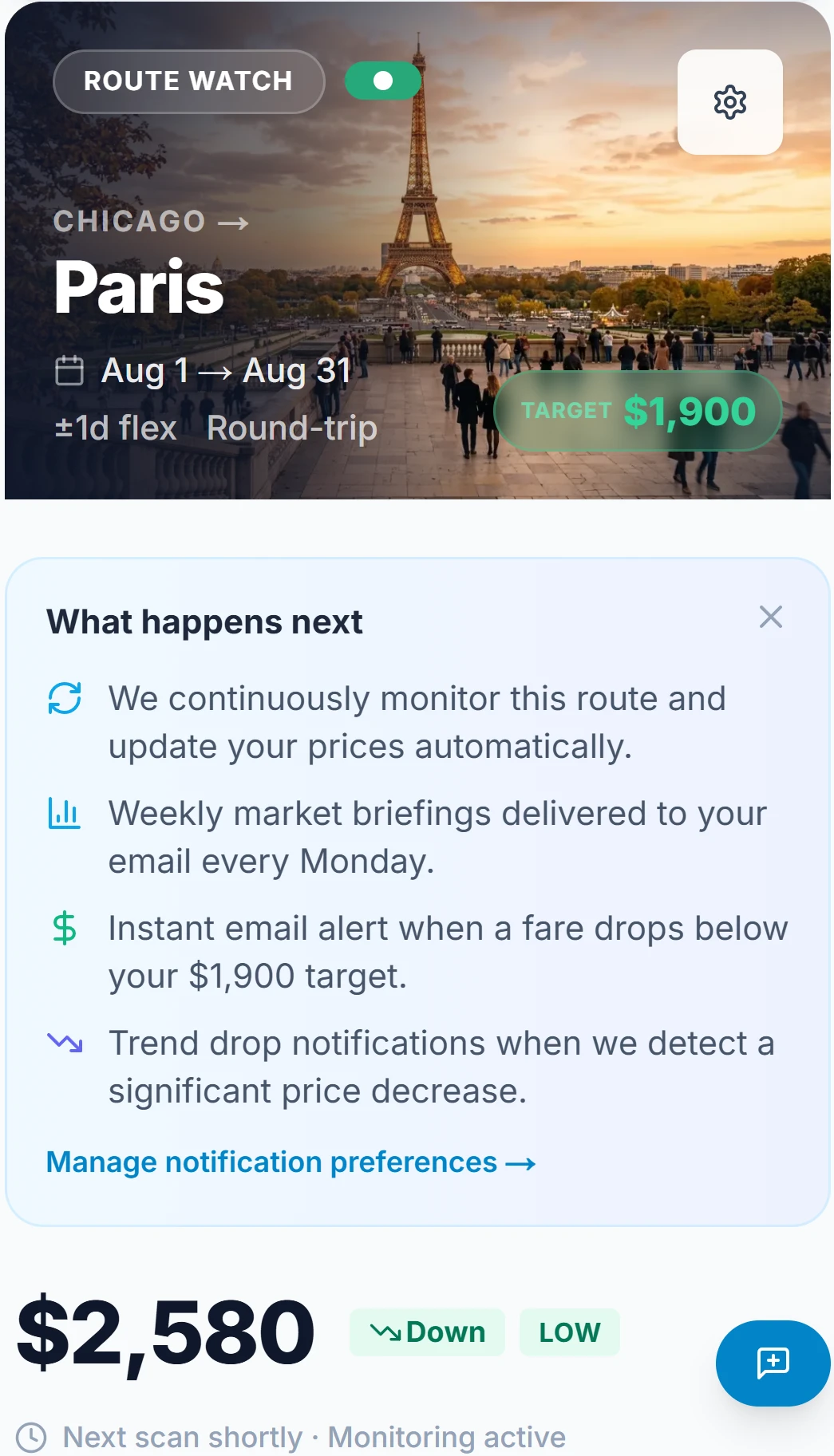
- Run the Consolidator Desk: You request an unpublished fare quote from a wholesale desk. Because consolidators access European Point of Sale private tariffs, they return an Air France business class option on the flagship A350 for $3,120—saving you over $2,500 on the spot.
- Active Alert Monitoring: If your dates have three weeks of flexibility, you also set an alert on your route tracker. If an airline yield algorithm flushes out a $2,200 promotional flash fare in the meantime, you grab it. If not, your wholesale consolidator rate is locked in.

For more timing tactics on when to pull the trigger, read our research on proven hacks for cheap business class tickets and our breakdown of the best time to book business class flights.
Hard Realities: What to Avoid
While seeking discounted premium travel, it is easy to stumble into high-risk traps. Keep these ground rules in mind:
1. Never Buy Brokered Frequent Flyer Miles
Dozens of websites advertise "70% off business class" by using purchased credit card points or frequent flyer miles to book award seats in your name.
This violates airline contract-of-carriage rules. Airlines actively run fraud audits on accounts that transfer points to unrelated third parties. If an airline flags a ticket as brokered, they will cancel the reservation without warning—often while you are standing at the check-in desk in an international airport.
Legitimate consolidators never use points. They issue revenue tickets filed in the GDS with standard commercial ticket stock (e.g., ticket numbers beginning with 001 for American, 016 for United, 125 for British Airways).
2. Watch for "Business Class" Disconnects on Regional Legs
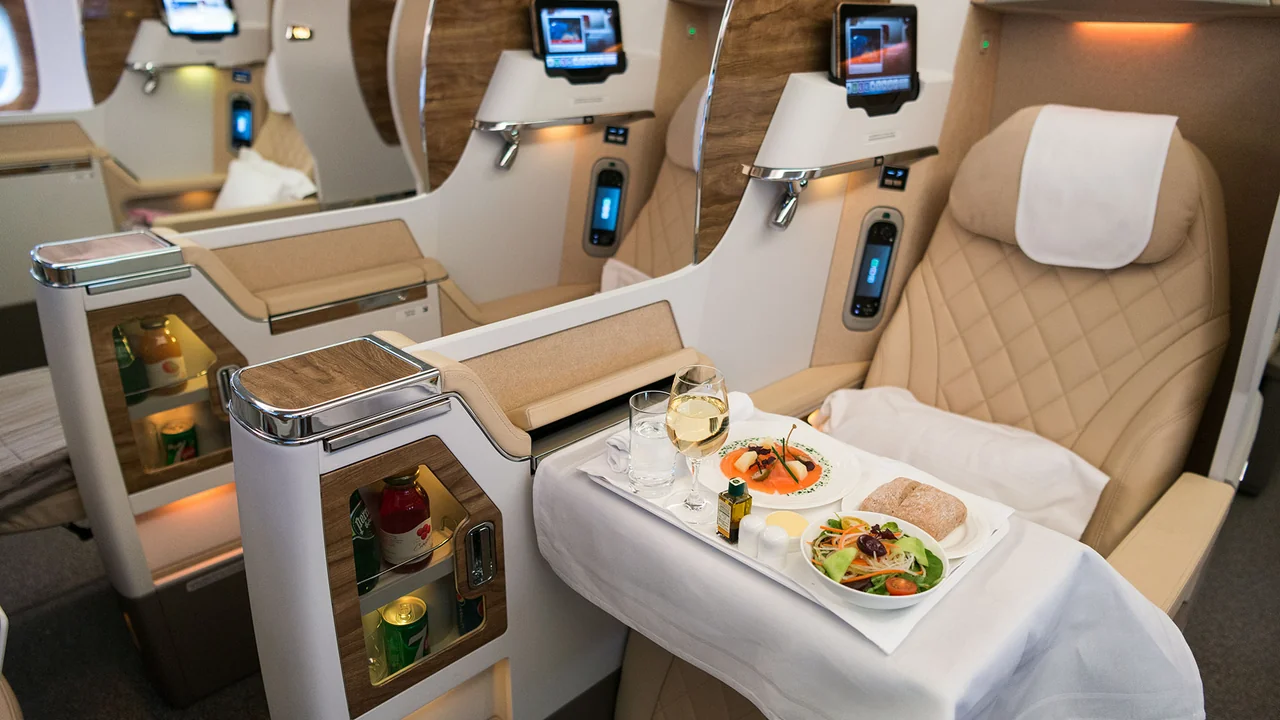
When booking a long-haul itinerary with a connecting flight, verify the cabin class on every leg. Airlines frequently market an itinerary as "Business Class" when only the 8-hour intercontinental leg is in a lie-flat bed, while the 3-hour connecting flight is in standard European or regional economy. Check out our guide to types of business class seats so you know exactly what hardware to expect on each segment.
3. Verify PNR Generation Before Payment
When working with any travel desk, confirm that they hold the reservation and generate an active six-character airline PNR (confirmation code) before charging your card. You should be able to take that PNR, log into the operating airline's official website (e.g., ba.com, qatarairways.com), select your seat, and see your itinerary confirmed.
The Value Equation
At CEOFLIGHTS, we have spent 15 years tracking the mechanics of premium aviation. Our clients include fund managers, founders, and private families who fly tens of thousands of miles every quarter.
The consensus among seasoned travelers is clear: comfort on long-haul flights is an investment in your stamina, your focus, and your time. Arriving in London, Tokyo, or Dubai after eight hours of uninterrupted sleep in a lie-flat bed changes your entire first 48 hours on the ground.
You do not need to pay $9,000 to get that experience. By understanding how airline fare buckets work, tracking route-specific price floors, and working with licensed consolidator desks, you can consistently fly the world's best business class cabins for a fraction of corporate retail.

If you are planning an upcoming international trip and want our team to search private GDS inventory on your behalf, call our personal travel managers at (888) 851-6897. Every itinerary we issue is backed by our ASTA accreditation #900292735 and our top rating on Trustpilot.
Frequently Asked Questions
What is a flight consolidator?
A flight consolidator is a licensed wholesale travel company that holds private, negotiated contracts with major airlines to sell unpublished inventory. Unlike retail travel agencies that sell public published fares, consolidators access private net rates directly through the Global Distribution System (GDS), offering savings of 20% to 50% on long-haul business and first class flights.
Do business class tickets booked through consolidators earn airline miles?
Yes. Legitimate consolidator tickets are issued as standard commercial revenue fares under specific booking classes (such as D, I, Z, or R). Because they are not award tickets, they accrue frequent flyer miles and elite status credits according to the operating carrier's loyalty program rules.
How do business class price alerts differ from standard Google Flights trackers?
Standard fare trackers monitor general price movements on public search engines, often prioritizing economy fluctuations. Specialized business class price monitors scan premium cabins multiple times daily, tracking specific booking codes against historical route price floors to identify genuine pricing anomalies and promotional drops.
Can an airline cancel a ticket purchased through an airfare consolidator?
No. Unlike tickets booked through unauthorized mileage brokers (which violate airline rules), consolidator tickets are legitimate commercial tickets issued directly onto the airline's reservation system with an official passenger name record (PNR) and e-ticket number. They carry the same protections as tickets purchased directly from the carrier.
When is the best time to book international business class?
For transatlantic and transpacific routes, the optimal booking window for published fares is typically 60 to 120 days before departure. However, private consolidator rates often remain available up to two weeks before departure, offering a reliable alternative when last-minute airline retail prices spike.