Hotel booking pitfalls every business traveler must avoid
A Titanium elite member with a confirmed reservation still ended up sleeping in his car in Las Vegas. Here's what that story actually teaches about protecting a hotel booking, and why the mistake was made three days before check-in, not at the front desk.
CEOFLIGHTS Team15 min read
Quick summary
A Marriott Bonvoy Titanium Elite member with a confirmed reservation, valid ID, and Apple Pay was still denied a room over a missing physical credit card, and Marriott corporate backed the property
Most "guaranteed" hotel reservations only guarantee a charge for a no-show, not a room for a late arrival; the actual guarantee language usually requires the front desk to find you comparable lodging elsewhere, not upgrade you to a suite
The fix costs nothing: call the property directly 24-48 hours before arrival, confirm the exact check-in requirements in writing, and always travel with a backup card in a second traveler's name
A family with a three-year-old spent a hot Las Vegas night sleeping in a rental car in a hotel parking lot. Not because the hotel was full. Not because the card on file had been declined. The reservation was confirmed, the guest was a Marriott Bonvoy Titanium Elite member, he'd completed mobile check-in, and he was standing at the front desk with a government-issued ID and a phone loaded with Apple Pay. The room was sitting there, empty, waiting for him.
He just didn't have a piece of plastic in his wallet.
This story went semi-viral in travel circles a few weeks ago, and most of the commentary settled into two camps: either Marriott is a disgrace, or the guy should have carried a backup card. Both are true, actually, and neither is the point. The real story here isn't about one property in Nevada. It's about how many business travelers book hotels the same way this guest did: trusting that "confirmed reservation" means what it sounds like it means, and discovering the gap between marketing copy and operational policy only when they're standing in a lobby at 11pm with nowhere else to go.
If you fly international business or first class four times a month, you've optimized the airborne part of the trip to an exacting degree. Seat width, lie-flat angle, cabin layout, and dining menus — all dialed in. Then you land and book the hotel with the same three minutes of attention you'd give a rideshare pickup. That asymmetry is where these disasters live.
The reservation confirmation you got is not a room guarantee
Here's the uncomfortable truth about hotel bookings that almost nobody reads before they need it: a "confirmed reservation" and a "guaranteed room" are two entirely different legal and operational concepts, and hotel chains are not in a hurry to clarify which one you actually have.
A confirmation number in your inbox only guarantees a no-show billing hold — front-desk verification rules determine whether those room keys actually cross the marble counter at midnight.
When you book a room with a credit card guarantee, you're entering a contract where the hotel agrees to hold the room past the standard cancellation hour (usually 6pm) in exchange for the right to charge you for a no-show. That's it. Most chains' fine print does not obligate the property to have your exact room type, floor, or bed configuration available if something goes sideways: overbooking, a plumbing failure, a group that refused to check out on time. What you actually have a right to, in most cases, is "walked" accommodation at a comparable property nearby, transportation there, and the price difference covered. That's a meaningfully worse outcome than the room you booked, and it's the outcome the fine print actually promises.
Marriott's own Ultimate Reservation Guarantee, the exact policy the Las Vegas guest tried to invoke, states that if a confirmed reservation "cannot be honored," the guest is compensated. Marriott corporate's position in this case was that the reservation technically could have been honored, the guest simply didn't meet the property's payment verification requirement. That's a distinction most people would call a technicality. It's also exactly the kind of technicality that determines whether your claim gets paid or gets a form-letter apology.
$0What most hotel guarantee policies actually cost the property if invoked correctly
The lesson isn't that guarantee programs are worthless. It's that you need to read the specific exclusions before you rely on one, the same way you'd read a travel insurance policy before assuming it covers a canceled connecting flight.
Late arrival guarantees: what "held until midnight" actually means
Business travel runs on delayed departures, weather diversions, and meetings that run forty minutes past their scheduled end. Every frequent business traveler has landed at 10:45pm for an 11pm hold time and sprinted through a lobby like it was a connecting gate at O'Hare.
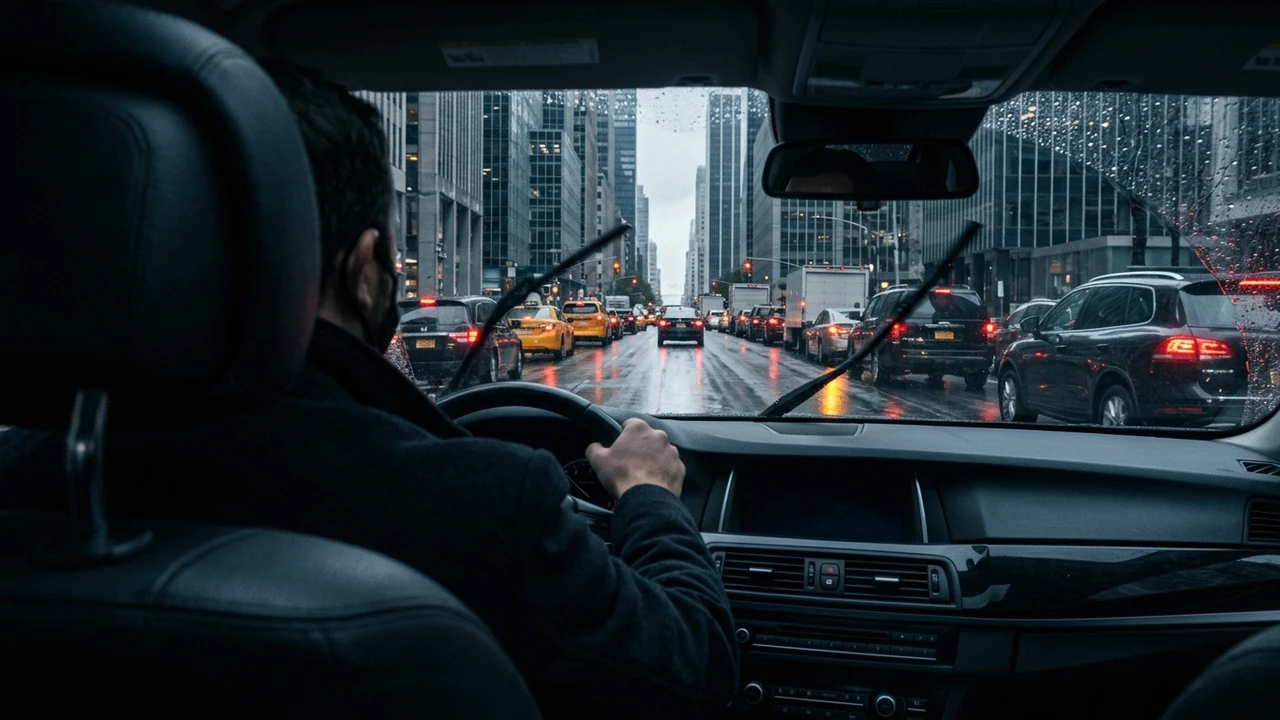
When a weather delay at JFK turns an 8:00 p.m. arrival into an 11:30 p.m. crawl through rain-slicked city traffic, an unflagged reservation can be released to walk-in demand before your car reaches the porte-cochère.
Standard late arrival guarantees, when purchased or attached via a credit card guarantee, hold a room until whatever time the property specifies, typically until check-out the following day since the room is already paid for as a no-show risk. Without that guarantee, most independent and limited-service properties will release your room to walk-in demand anywhere from 4pm to 6pm local time if you haven't called ahead.
The failure mode here isn't usually the hotel canceling maliciously. It's the traveler assuming a same-day booking made from an airport lounge at 2pm automatically includes late-arrival protection. It doesn't, unless you explicitly select a rate plan that guarantees the room with a card, or you call the property and ask them to flag the reservation for late arrival. A five-minute phone call from the tarmac, or before you even board, closes this gap completely.
Insider Strategy
If your itinerary includes a same-day connection with any real chance of delay, call the property directly (not the chain's 800 number) and ask them to note "guaranteed late arrival" on the reservation, then get the confirmation number for that specific call. This takes ninety seconds and it's the single highest-value habit in this entire article.
Automated cancellation policies: the silent killer of peak-season bookings
Here's a mistake that happens far more often than a front-desk standoff, and gets almost no attention because there's no dramatic story attached to it: automated cancellation triggered by a card that quietly failed a pre-authorization hold.
During sold-out convention or Grand Prix weeks, a silent pre-authorization failure 48 hours before arrival will hand your corner suite to the waitlist before you ever board your flight.
Most major chains now run automatic pre-authorization checks on the card attached to a reservation somewhere between 24 and 72 hours before arrival, particularly for prepaid or non-refundable rates. If that card has expired, hit a fraud flag from a recent large purchase (a five-figure business class ticket purchase, for instance, which can look unusual to a card issuer's algorithm), or simply been replaced after a data breach notification, the system can cancel the reservation without a phone call, a text, or anything beyond an email buried in a promotional inbox.
You find out when you arrive and the room doesn't exist anymore. During a citywide convention or a Formula 1 weekend, that's not an inconvenience, it's a five-figure problem because every comparable room within twenty miles is gone or priced at three times the original rate.
The fix is boring and effective: update the card on file 72 hours before any high-value or peak-season stay, and if you've recently reported a card lost or stolen, assume every hotel reservation tied to the old number needs to be manually re-verified.
Peak-season cancellations compound fast
During major events (conventions, marquee sporting weekends, festival dates), a canceled reservation often can't be rebooked at any price within a reasonable radius. Treat card updates on file as urgent, not administrative, in the week before travel.
The conventional wisdom in loyalty circles is to always book direct through the chain's own site or app, since third-party bookings supposedly forfeit elite benefits, upgrade eligibility, and dispute leverage if something goes wrong. That's mostly true. But there's a rate parity trap hiding inside "book direct" that costs sophisticated travelers real money.
Public 'book direct' rates often sit 10% to 20% above a chain's own app-only member tiers or preferred partner desk rates for the exact same room category.
Rate parity agreements are supposed to guarantee that a hotel's direct rate matches or beats any rate found on Expedia, Booking.com, or a corporate travel platform. In practice, chains routinely release "opaque" or "member exclusive" discounted rates through their own app that undercut the publicly listed direct rate by 10 to 20 percent, meaning the rate parity promise only holds against other public channels, not against the hotel's own hidden pricing tiers.
This means the traveler who books the first direct rate they see, without checking the app-only or "genius rate"-style discount, can end up paying full rack rate while a colleague at the same property, same dates, pays substantially less simply because they logged into the loyalty app first instead of the standard website. It's a small thing multiplied across forty hotel nights a year, and it adds up to a real number.
15%Typical gap between a chain's public direct rate and its app-exclusive member rate
The rule that actually protects you: check the loyalty app rate, the corporate negotiated rate if your company has one, and the public direct rate, in that order, before booking anything.
Loyalty status matching: the leverage most executives leave on the table
If you hold elite status with one major chain, nearly every competing program will match it, often within 24 to 72 hours, sometimes with a short stay challenge attached (three or four qualifying nights within 60 or 90 days to retain the matched tier). This exists precisely because chains know that business travelers rarely stick to a single brand loyally, they stick to whichever property is closest to the client meeting.
Holding matched elite status across multiple hotel groups does more than secure complimentary breakfast and late checkout — it gives you priority escalation when inventory gets tight.
Status matching matters here for a reason that goes beyond free breakfast and a marginally better room. Elite status is, in practice, the single biggest factor in how a front desk handles a problem. The guest in the Las Vegas story was Titanium Elite, one of Marriott's top tiers, and it still didn't move the needle at the property level, which tells you something important: status protects you at properties that care about the relationship, and does nothing at properties that don't, regardless of the tier.
The practical move for a business traveler who splits nights across Marriott, Hilton, and Hyatt properties depending on client geography: hold matched status across all three rather than concentrating stays in one program hoping for outsized loyalty. It costs nothing to request the match, and it means you're never walking into an unfamiliar property with zero standing.
Insider Strategy
Request a status match before a trip, not during a crisis. Matches typically process in one to three business days; asking for one from a hotel lobby at 11pm accomplishes nothing.
Mobile check-in is marketing language, not an operational promise
This is the actual root cause of the Las Vegas disaster, and it's worth separating from the specific chain involved because the same gap exists across nearly every major hotel brand.
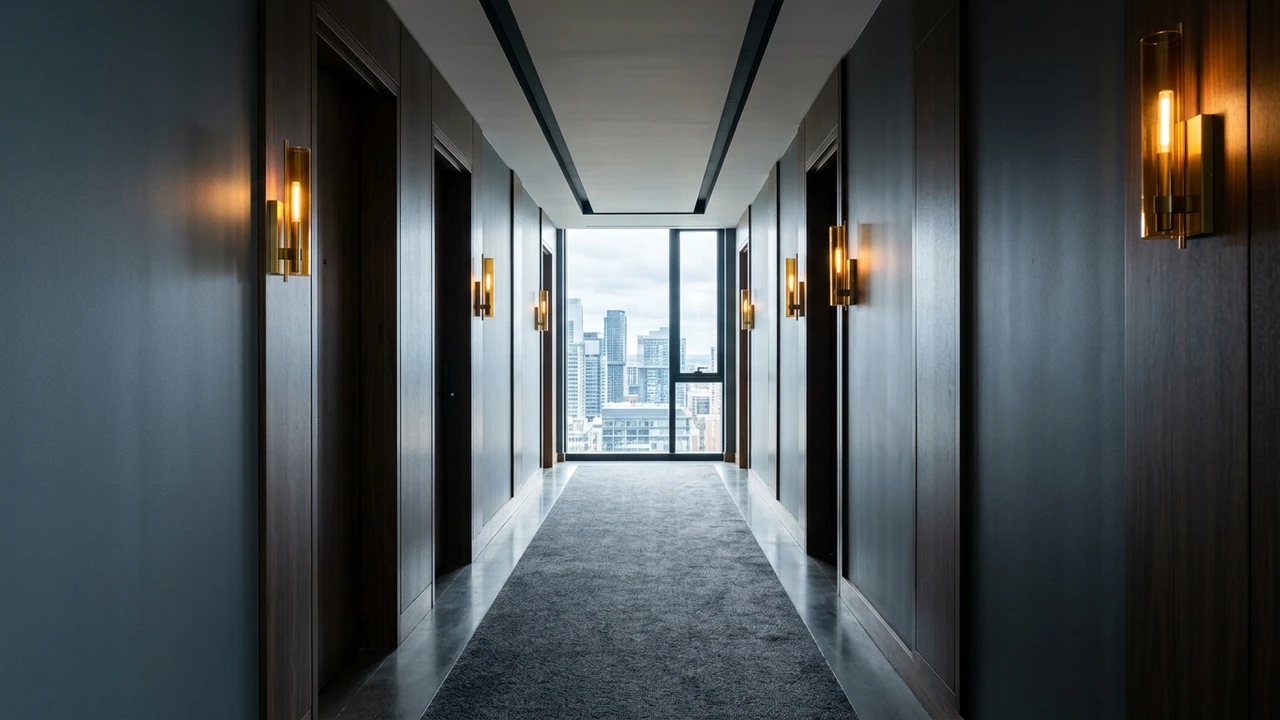
Mobile check-in promises a frictionless walk straight to your suite door, but newly opened properties and first-time stays frequently enforce physical card swipes at the front desk.
"Mobile check-in" and "digital key" are marketed at the corporate level as universal features. Operationally, they are configured property by property, sometimes room type by room type. A property can advertise mobile check-in on its amenity page, in the app, and in confirmation emails, while requiring in-person physical card verification for every first-time guest, every guest without a card on file from a prior stay, or every guest at a newly opened property still running manual verification because the digital key infrastructure hasn't fully integrated with the front desk system yet, which is exactly the situation at the newly opened dual-branded property in Las Vegas where this incident occurred.
Marriott corporate's own response to the guest acknowledged this directly: "physical verification remains a standard practice at select locations," despite digital check-in being advertised as a universal convenience. That's a corporate admission that the marketing and the operational reality diverge, and the burden of discovering that gap falls entirely on the guest, at the worst possible moment, with no advance warning anywhere in the booking flow.
The takeaway isn't to avoid mobile check-in. It's to treat it the way you'd treat any airline's "usually" and "typically" language: useful most of the time, and completely unenforceable the one time you actually need it.
One extra phone call solves this
Before relying on mobile check-in for a first stay at any property, or any newly opened property, call the front desk directly and ask what payment verification is required at arrival. Get a name. This single call would have prevented the entire Las Vegas incident.
How to protect a reservation before you ever land
The travelers who never end up in a parking lot at midnight aren't lucky. They've built a short, boring pre-trip checklist and they run it every single time, regardless of how many times they've stayed at a given brand.
Call the property directly, not the chain's central line, 24 to 48 hours before arrival. Confirm check-in requirements, late arrival status, and whether a physical card is required regardless of what the app promises. Get the name of whoever you spoke with.
Carry two cards from two different issuers, and if traveling with a partner, make sure at least one card is in their name. This isn't about distrust, it's about redundancy. A single point of failure on payment method is the same mistake as flying with only one form of government ID.
Confirm your loyalty status is matched across the two or three chains you're likely to encounter on a given trip. A five-minute request submitted before departure beats a desperate negotiation at the desk.
Screenshot your reservation confirmation, rate, and cancellation policy the moment you book, and again 72 hours before arrival. Automated systems change room types, rates, and occasionally cancel reservations outright when a pre-authorization fails; a screenshot from booking day is your only proof of what you were originally promised.
If a stay coincides with a major local event, verify the cancellation policy specifically, since properties in high-demand markets sometimes shift standard reservations to non-refundable status closer to the date. Read the updated terms, not the ones you agreed to at booking.
None of this takes more than ten minutes total per trip. It's the same discipline that goes into confirming a seat assignment before a long-haul flight, and the return on that ten minutes, measured in avoided 2am crises, is enormous.
When it goes wrong anyway: what to actually do at the desk
Even with every precaution taken, properties make mistakes, or apply policy inconsistently, or simply have a front desk agent having a bad night. When that happens, the instinct to argue the merits with the person standing in front of you is understandable and almost always unproductive. That employee frequently doesn't have the authority to override a documented policy, whatever you think of the policy itself.
The move that actually works: ask calmly for the on-duty manager, not the front desk agent's supervisor by phone, the actual person on property with authority to make an exception. If no exception is possible, ask the manager to document the denial in writing, including the specific reason given, and get their name and employee ID if the property uses one. This documentation is what turns a guarantee claim from "he said, she said" into something a corporate escalation team has to take seriously.
Simultaneously, book a backup room at a nearby property on your phone before you've fully resolved the situation at the first desk. You can always cancel the backup within the free cancellation window if the original issue resolves. What you cannot always do is find last-minute inventory in a sold-out market an hour after you've exhausted every option at the first property. The Las Vegas family's actual failure point wasn't the missing card, it was not immediately pivoting to a same-night alternative the moment the front desk held firm.
File the guarantee claim within 24 hours, in writing, with the documentation from the manager attached. Corporate escalation teams move faster and more favorably when a claim arrives complete rather than as a follow-up phone call two weeks later after the traveler has cooled off and lost some of the specifics.
For travelers arranging both legs of a trip
Travelers who spend real effort choosing the right flight often give the hotel half that attention, even though ground logistics deserve the same pre-trip diligence. If a CEOFLIGHTS.com travel manager is booking your business class flights, share your hotel and check-in time so the arrival lines up with it. A 6:30 a.m. transatlantic landing into London or Paris with a 3:00 p.m. hotel check-in, especially at a newly opened property still working out operational kinks, is worth planning around before you fly.
It's tempting to read the Las Vegas story and conclude the answer is "avoid that specific brand" or "always carry a physical card," and both of those are fine, narrow lessons. The broader one is this: the hotel industry has spent a decade selling frictionless, app-based, front-desk-optional convenience, while quietly leaving enormous operational gaps between what's advertised and what individual properties actually deliver. That gap doesn't show up until you need it not to be there.
Business travelers who fly forty or fifty segments a year have generally already internalized this same lesson about airlines: the fare rules matter more than the marketing, the fine print on a "guaranteed" seat assignment often isn't a guarantee at all, and the smart move is always verification before departure rather than argument on arrival. Apply that exact same skepticism to hotel bookings and the entire category of disaster in this article simply stops happening to you.
The family in that Las Vegas parking lot didn't lose because of ADHD, a misplaced card, or even a rigid front desk policy, though all of those were real factors. They lost because a five-minute phone call the day before would have surfaced the property's actual requirement before it became a midnight crisis with a toddler in the back seat. That's the whole article, really, compressed into one sentence: call ahead, get it in writing, and never assume the app's promise is the property's policy.
Content creator and business travel specialist at CEOFLIGHTS, bringing you the latest insights, tips, and trends in premium business and first-class travel.
Become the CEO of Your Journey
You take the lead. Your dedicated Personal Travel Manager handles every detail.