Quick summary
Fly during corporate travel lulls in January or late August and use consolidators to bypass public search engines, potentially dropping $6,000+ published transatlantic business class fares down to the $3,200-$4,800 range.
The cheapest business class flights by route and season — a data-driven breakdown
Business class pricing doesn't move the same way on every route, and treating a Tokyo fare like a London fare will cost you real money. After booking hundreds of premium cabin tickets for clients at CEOFLIGHTS, I've noticed the same patterns repeat: certain corridors run cheap almost year-round, others spike hard around specific weeks, and a few routes are simply overpriced no matter when you buy. This guide breaks down where the actual value sits, route by route and season by season, so you're not guessing.
What you're actually paying for
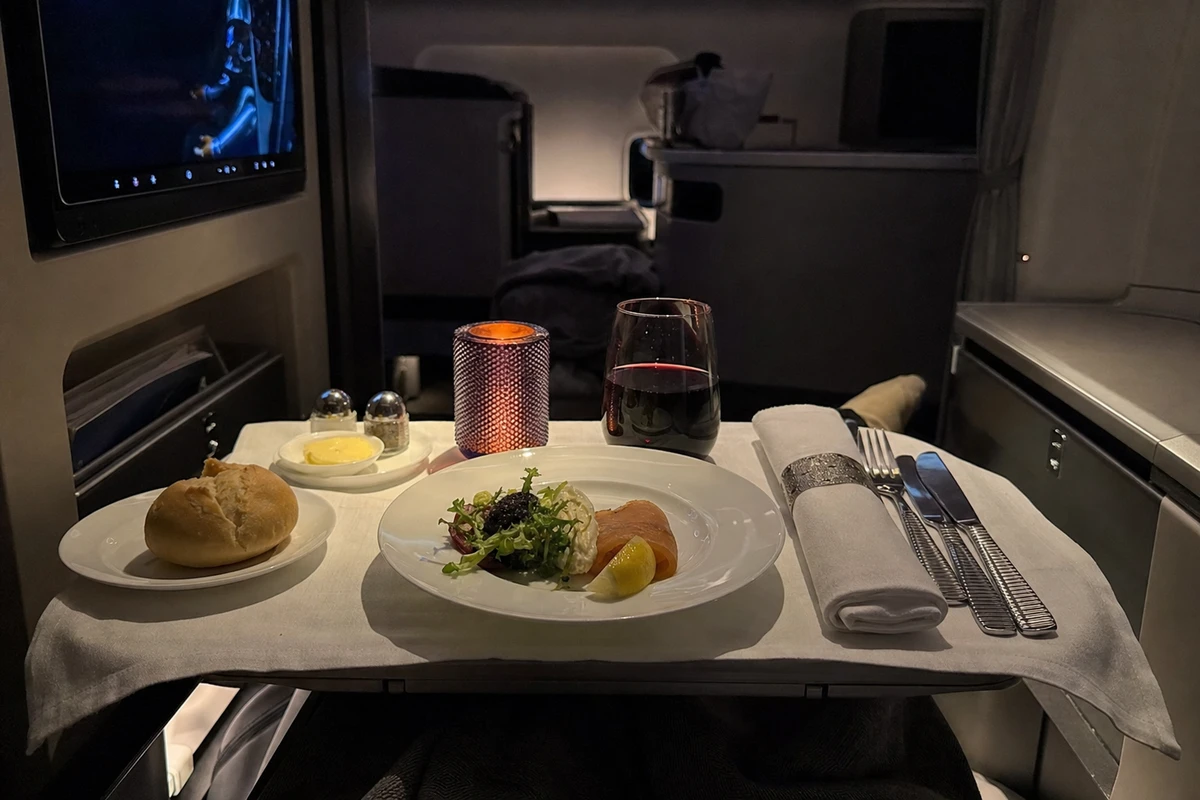
Business class sits above economy and premium economy, and below first class on the long-haul widebodies that still carry a first cabin. The seat itself — usually a lie-flat or near-flat design with direct aisle access on newer aircraft — is the headline feature, but the real value shows up around it: priority boarding, lounge access before departure, a proper multi-course meal service, and priority baggage handling that gets your bags off the belt first. On an 18-hour sector to Singapore or a 9-hour hop to Frankfurt, that combination turns a grueling flight into something you can actually work or sleep through.
Where the value actually lives, route by route
Transatlantic: the most efficient premium cabin dollar
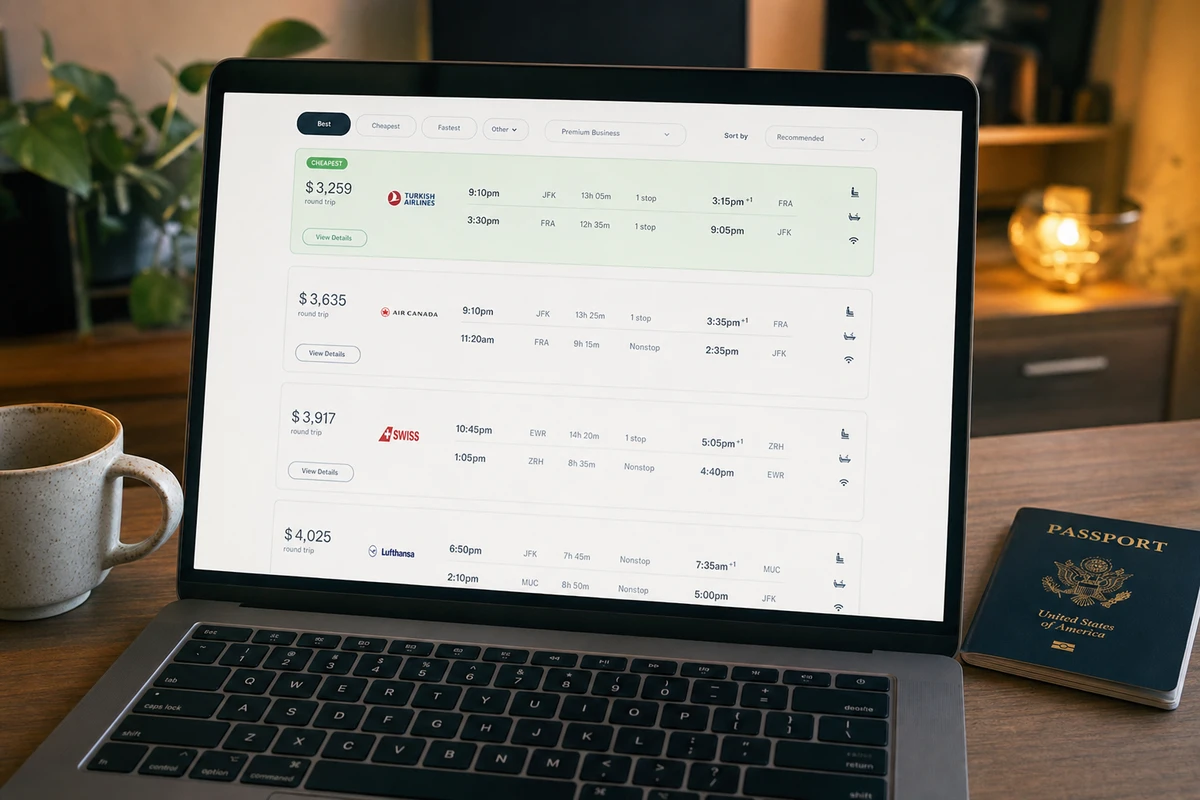
New York to London, Miami to Madrid, Chicago to Frankfurt — these routes carry the deepest competition of any long-haul corridor, and it shows in the pricing. With British Airways, Virgin Atlantic, Lufthansa, Air France, and the US majors all fighting for the same passengers, business class fares on transatlantic routes through CEOFLIGHTS commonly land in the $3,200–$4,800 range round-trip during off-peak weeks, versus $6,000+ published fares. This is the corridor where a consolidator relationship pays for itself fastest, because the airlines themselves rarely discount aggressively — the savings come from negotiated fare classes you won't find on a public search engine.
If London's your destination, check our London business class flights page before booking direct — the fare spread between carriers on this single route can run into the thousands. Paris runs similarly competitive; see Paris business class flights for current options across Air France and partner carriers.

Transpacific: higher floor, but the redemptions are worth chasing
Flights to Tokyo, Singapore, and Hong Kong don't discount the way transatlantic routes do. Fewer carriers compete on these long sectors, fuel costs are higher, and demand from business travelers rarely softens. Expect to pay more per mile here — but the miles-and-points math often works better on transpacific routes than anywhere else, since award availability on carriers like Singapore Airlines and Cathay Pacific tends to open up business class seats that would otherwise sell for $8,000 or more one-way.
For cash fares, our Tokyo business class flights and Singapore business class flights pages track consolidator pricing across ANA, JAL, Singapore Airlines, and Cathay Pacific — worth a look before you commit points you might want to save for something else.
Middle East hub carriers: the most aggressive pricing in the sky
Qatar Airways, Emirates, and Etihad have built entire business models around routing passengers through Doha, Dubai, and Abu Dhabi, and it makes them the most consistently aggressive on business class pricing of any airline group. A New York–Dubai–Bangkok itinerary on Emirates can undercut a direct US carrier fare to Southeast Asia by a wide margin, even accounting for the extra hours in the air. Turkish Airlines runs a similar playbook through Istanbul.
Qatar Airways gets voted best business class in the world with some regularity, and for good reason — the Qsuite product with its sliding doors and double-bed configuration for couples has genuinely changed what people expect from a business cabin. Check Qatar Airways business class, Emirates business class, or Turkish Airlines business class for current consolidator fares, and if Dubai's on your itinerary, our Dubai business class flights page is worth bookmarking.

Seasonal patterns worth building your calendar around
Business class pricing follows corporate travel demand more than leisure demand, which flips the usual "peak season" logic on its head. January and February tend to run cheaper on transatlantic and transpacific routes because corporate travel budgets reset slowly after year-end, and leisure travelers haven't started booking summer trips yet. Late August through mid-September sees a similar dip as the corporate calendar quiets down between summer vacations and the fall conference circuit.
The expensive weeks are predictable too: the ten days around Thanksgiving, the two weeks bracketing Christmas and New Year's, and the run-up to major global events in destination cities. If your travel dates have any flexibility at all, shifting a trip by even four or five days can mean a four-figure difference on a long-haul business class fare.
Seven ways to pay less for the seat up front
None of this seasonal knowledge helps if you're not shopping the market correctly. Here's what actually moves the needle.
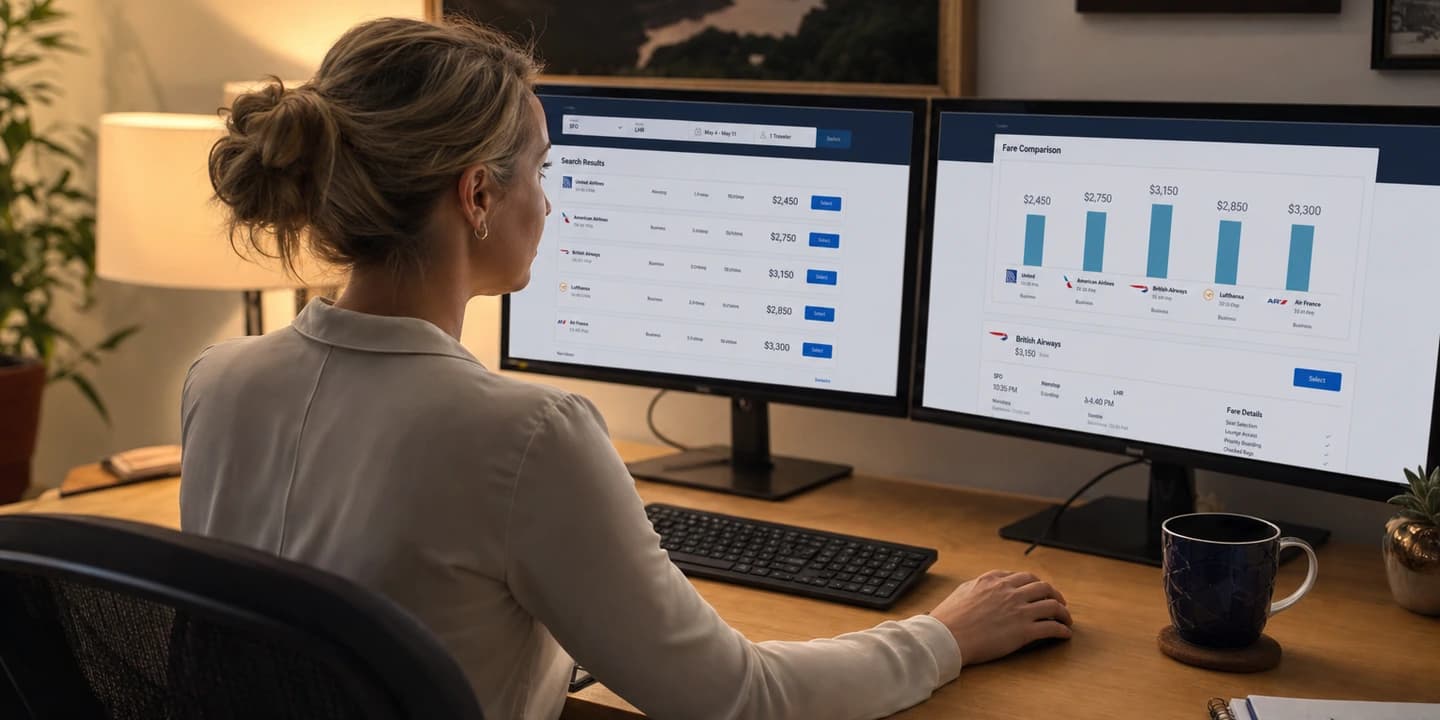
Compare across the full market, not one airline's site. Call CEOFLIGHTS or search by cabin class rather than checking a single carrier's website — a consolidator relationship gives you access to negotiated business class fares that don't show up on public booking engines, and comparing options side by side is the single fastest way to spot which airline is discounted on your specific route this month.
Stay flexible with your travel dates. A one-week shift can change a fare by thousands on the same route. If your dates aren't locked, ask about flexible date options across an entire month rather than fixating on a single departure.
Redeem miles and points, but do the math first. Compare what a redemption actually costs you in miles against the cash price of that same seat. On plenty of airlines, an economy saver award stretches your miles further than a business class redemption — so if you're trying to preserve points for future travel, business class isn't always the better use of them. Some credit card programs also offer redemption paths outside airline transfers that beat the airline's own award chart.
Watch for airline sales around Black Friday, Cyber Monday, and Travel Tuesday. These promotional windows can drop business class fares meaningfully, though they usually come loaded with blackout dates and route restrictions. If your schedule has room to bend, these sales are genuinely one of the cheapest ways to book a premium cabin seat.
Set fare alerts instead of checking prices manually. Nobody wants to refresh a search engine every morning hoping for a price drop. Set an alert through CEOFLIGHTS, which specializes specifically in business class fare tracking — you'll get notified the moment a fare on your route moves, rather than finding out three weeks after it dropped.
Consider a nearby hub or alternative gateway. Add nearby airports to your search and you'll sometimes find a meaningfully better business class fare departing from a different hub. Flying out of Newark instead of JFK, or routing through Washington Dulles instead of New York, can save real money depending on the week and which carrier is discounting. The same trick works overseas — Milan Malpensa instead of Rome Fiumicino, or Zurich instead of Frankfurt, for instance, since different hubs have different competitive dynamics. Our Frankfurt business class flights and Amsterdam business class flights pages are good starting points for comparing hub pricing in Europe.
Try upgrade auctions and last-minute deals. A number of airlines run upgrade auctions or offer discounted last-minute upgrades at check-in when business class seats haven't sold. Log into your airline account directly if you haven't received an email — these offers don't always get advertised widely, and unsold inventory close to departure is sometimes your best shot at a real discount.
Final thoughts
The cheapest path to business class isn't a single trick — it's stacking flexibility on dates, flexibility on airports, and consistent fare monitoring until the right price shows up on the right route. Transatlantic corridors reward patience and consolidator pricing. Transpacific routes reward points strategy. Middle East hub carriers reward shopping the market broadly instead of assuming your home airline has the best fare. Run all three approaches at once and you'll end up paying meaningfully less than the passenger next to you paid for the identical seat.
Frequently asked questions
Why is business class so expensive? You're paying for the full package — priority boarding, a lie-flat or near-flat seat, multi-course dining, premium beverages, lounge access, and priority baggage handling. All of that costs the airline more to deliver, and they price accordingly.
Is first class better than business class? Depends on the flight length and whether the carrier even offers both. On shorter sectors, business class is usually the smarter buy — the price gap versus first class rarely justifies the marginal comfort difference. On true long-haul flights, first class delivers a noticeably more luxurious experience, assuming the airline still flies it.
Which airline has the best business class? Qatar Airways gets voted best in class most consistently, largely on the strength of Qsuite. But "best" depends heavily on what you actually want — a fully lie-flat seat, privacy, workspace, extra baggage allowance, lounge access, or standout food. Compare products directly through our Cathay Pacific, Singapore Airlines, and Etihad pages before deciding what matters most to you.
What's the difference between business class and premium economy? Premium economy gets you extra legroom, priority boarding, and a slightly better baggage allowance. Business class gives you all of that plus a genuinely different seat, premium dining, lounge access, and far more privacy.
What kind of business class deals can I find through CEOFLIGHTS? Filter by cabin class to see fares across every airline flying your route, set a fare alert so you're notified the moment pricing drops, and call our team directly for consolidator rates that beat public fares more often than not.
What are the main benefits of flying business class? A more spacious, more comfortable seat that actually lets you rest. Beyond that: priority boarding, better food and drinks, lounge access before your flight, and a more generous priority baggage allowance.
Ready to see what your route actually costs right now? Call CEOFLIGHTS at (888) 851-6897 or search current fares at CEOFLIGHTS.com. We're ASTA-accredited (member #900292735) and are top rated on Trustpilot — book with someone who tracks these fares for a living, not a search engine that treats every route the same.
Some images in this article may be AI-generated and are used for illustrative purposes only.