

Jet lag doesn't care what you paid for your seat. But the seat determines how you fight back — and that's the part most travel advice gets wrong.
Most jet lag articles read like they were written by someone who's never crossed more than two time zones. Melatonin tips, hydration reminders, the usual. None of that addresses the real variable business travelers actually control: which cabin, which seat configuration, and which departure time gets your body clock working with you instead of against you. This guide is about the mechanics — the seats, the lighting systems, the meal timing tricks flight attendants won't volunteer unless you ask.
We book long-haul business class for a living at CEOFLIGHTS, and the jet lag question comes up on nearly every call. New York to Tokyo. Los Angeles to London. New York to Singapore. Different routes, same physiological wall. The good news: a lie-flat suite with the right pre-flight routine can cut recovery time by a day or more compared to flying economy or even a mediocre business class product.
Why Business Class Actually Changes Your Jet Lag Recovery
Jet lag is a circadian rhythm problem, not a tiredness problem. Your body's internal clock releases cortisol and melatonin on a schedule tied to your departure city's light exposure. Fly six time zones east and that schedule is suddenly wrong by six hours. The only real fix is sleep — actual REM-cycle sleep, not the fitful, neck-craned dozing you get in a recliner.
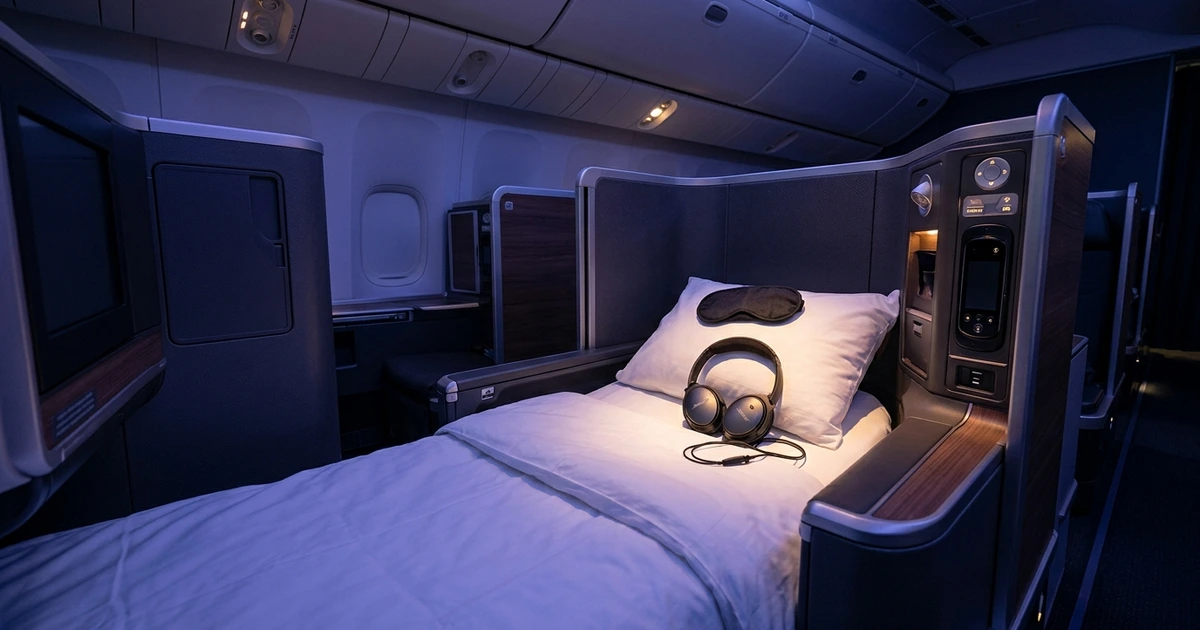
This is where seat geometry stops being a comfort issue and becomes a medical one. A true lie-flat seat at 180 degrees lets your body settle into sleep stages the way it would in a bed. Angled-flat seats, still marketed as "business class" on some older aircraft, top out around 150-160 degrees — enough to feel like a nap, not enough to reach deep sleep. On a 14-hour Los Angeles to London run through the night, that difference is the entire game.
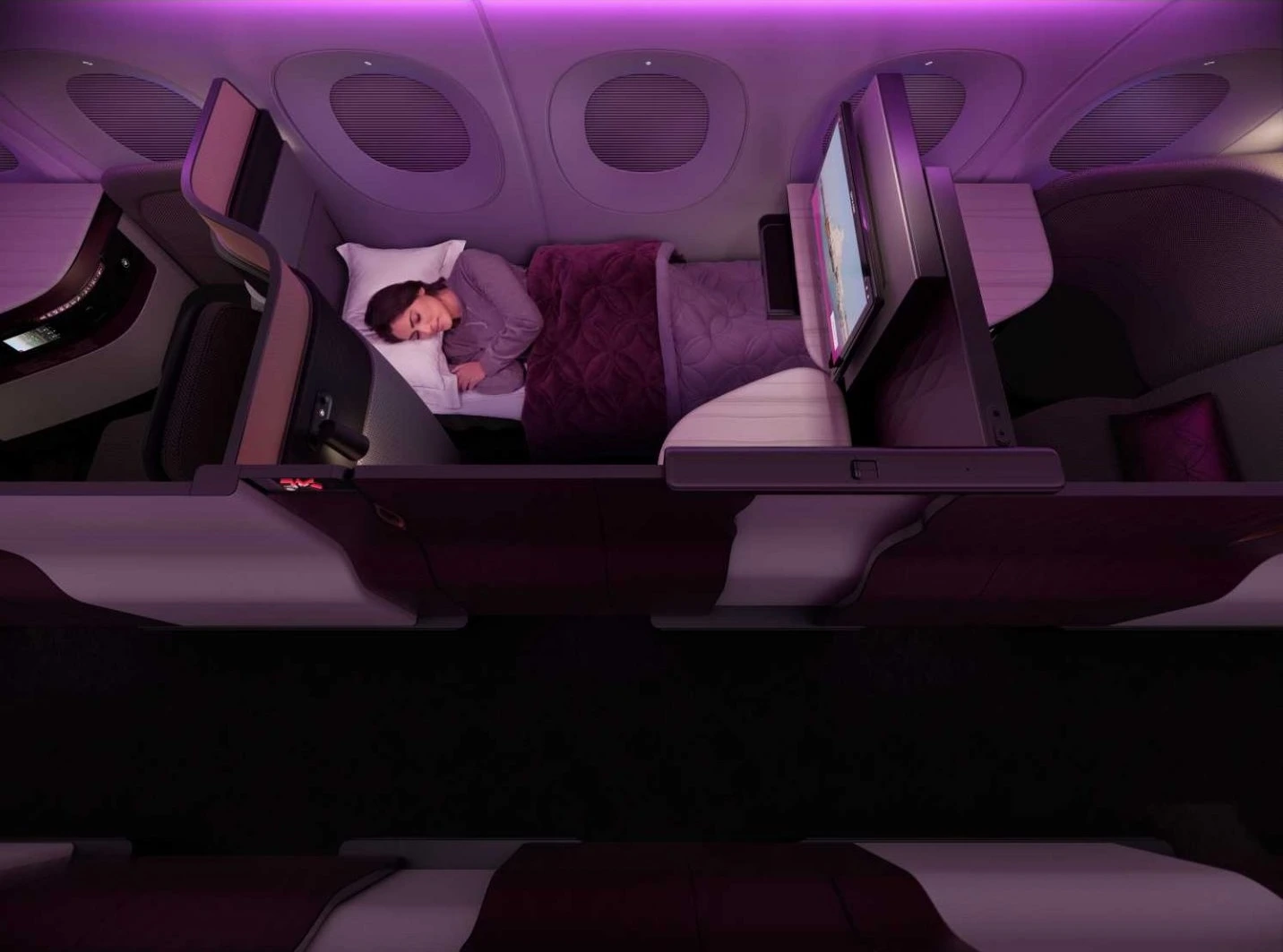
I've flown the old British Airways Club World angled seat and the newer Qatar Qsuite back to back on similar routing. The recovery difference the next day wasn't subtle — it was a full 24 hours faster feeling normal in the Qsuite.
The Seat Matters More Than the Airline Loyalty Program
Frequent flyers get attached to their airline of choice for status reasons, and I understand the instinct. But if jet lag recovery is the priority, the seat hardware should drive the decision, not the loyalty tier.
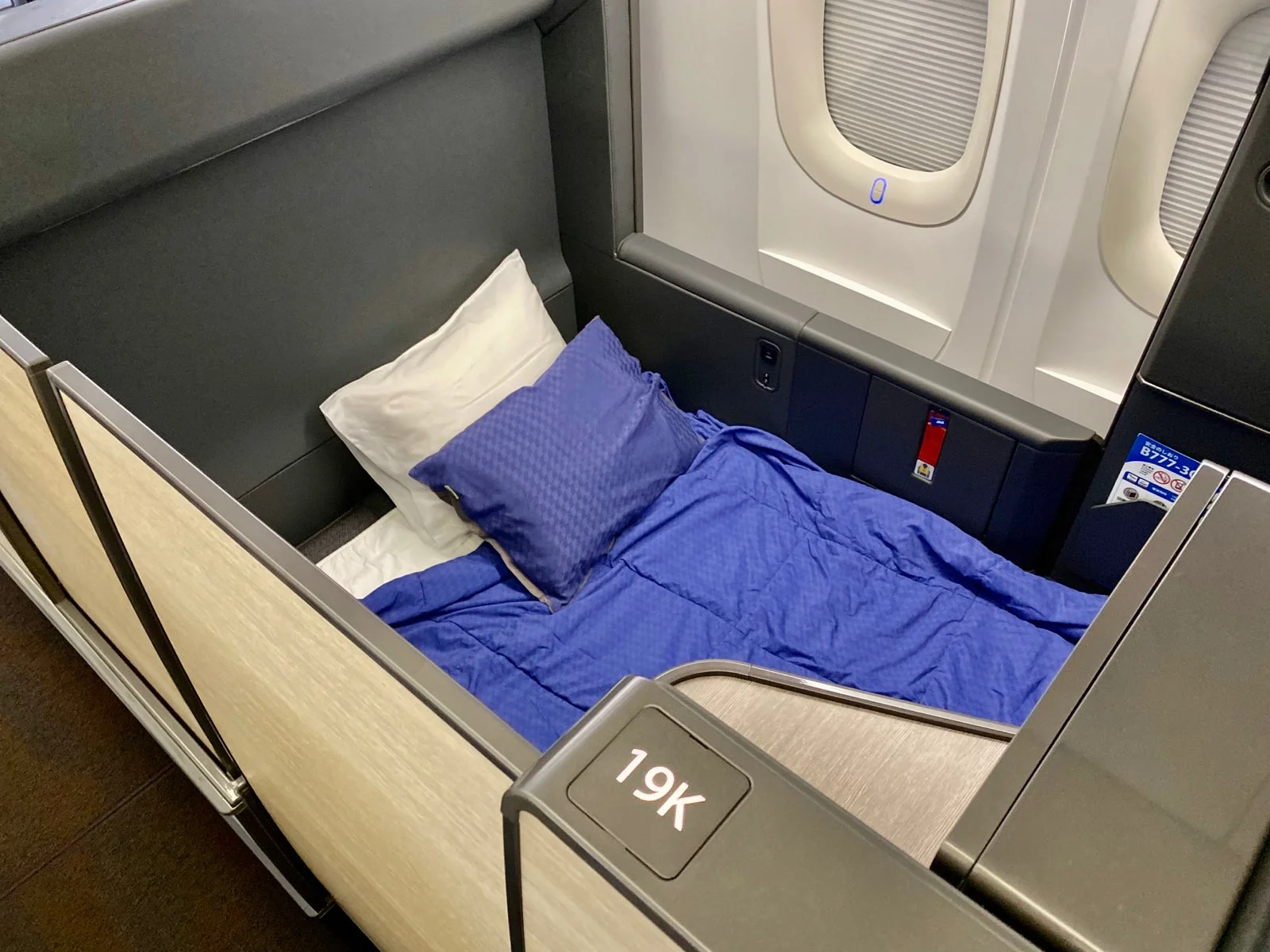
Qatar Airways' Qsuite remains the benchmark. It's a fully enclosed suite with a sliding privacy door, and on the DOH hub routes you can even convert two suites into a double for couples. Delta's Delta One Suite, now flying on the A350 and A330-900neo, brought that same sliding-door privacy to a U.S. carrier for the first time, paired with premium bedding that's noticeably better than what most airlines hand out. ANA's THE Room takes it further — up to 38 inches of width, which on a red-eye from New York to Tokyo (a 14-hour haul any way you slice it) makes a real difference in how you position yourself for sleep.
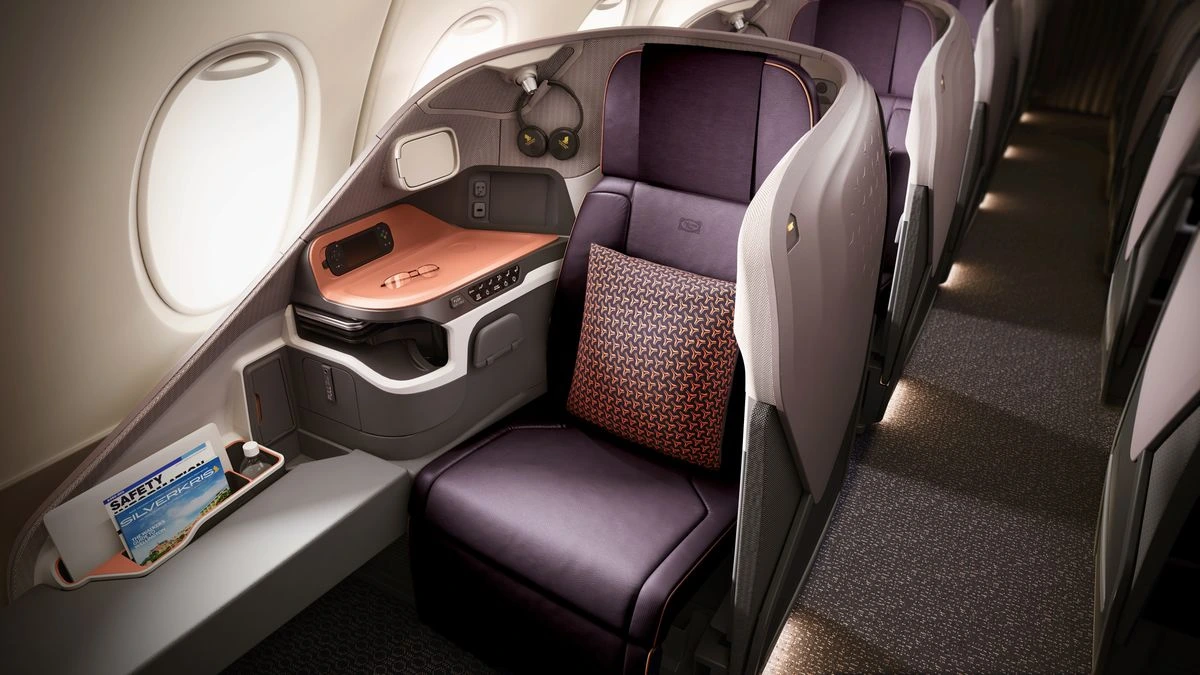
United's Polaris seat doesn't have a door, but the 1-2-1 direct aisle access layout means you're never climbing over a stranger at 3am cabin time, which matters more than people expect. Singapore Airlines' current business class, rolled out across the fleet, is the widest in the category at 28 inches — genuinely wider than some first class seats on other carriers.
| Airline | Product | Privacy Door | Seat Width | Best For |
|---|---|---|---|---|
| Qatar Airways | Qsuite | Yes | ~21-23" | Couples, longest-haul sleep quality |
| Delta Air Lines | Delta One Suite | Yes | ~20-21" | U.S. departures, consistent fleet-wide product |
| ANA | THE Room | Yes | 38" | Trans-Pacific routes, side sleepers |
| Singapore Airlines | Business Class | No | 28" | Widest seat, stretch-out room without a door |
| United Airlines | Polaris | No | ~20" | Direct aisle access, Star Alliance connections |
Timing Your Flight and Sleep Windows Before You Board
Most people ignore their pre-flight schedule entirely and try to fix everything with an eye mask over the Atlantic. That's backwards.
Two days before a New York to Tokyo flight — where you're crossing 13 time zones — start shifting your bedtime and wake time by 20-30 minutes toward Tokyo's schedule. It sounds small. It compounds. By the time you board, you're not fighting a 13-hour deficit, you're fighting an 11 or 12-hour one, and that's meaningfully easier on the body.
Flight selection matters too. On the New York to Tokyo corridor, ANA and JAL both run late-morning departures from JFK that land you in Tokyo the following evening — structured so the long flight segment overlaps with Tokyo nighttime. That's not an accident; airlines schedule these routes with circadian science in mind, even if they don't advertise it that way. Delta and American fly the same corridor with slightly different timing, so if you're booking through us at CEOFLIGHTS, this is exactly the kind of detail we flag before you commit to a fare.
Cabin Lighting and Meal Timing: The Tools Airlines Already Give You
Every major long-haul cabin now runs programmable LED lighting that simulates dawn and dusk. Most passengers never notice, let alone use it. That's a mistake.
The trick: treat meal service as a circadian signal, not just a perk. If it's dinnertime in London when you board that Los Angeles to London flight, eat the meal, even if your stomach thinks it's lunchtime in LA. Then get to sleep as soon as the cabin dims. Skip the second meal service if it falls during what would be nighttime at your destination — light eating suppresses the digestive signal that keeps your body clock anchored to the wrong city.
Delta's Delta ONE Suite cabins and Qatar's Qsuite cabins both run subtle wake-up lighting sequences before landing, gradually brightening to simulate sunrise. Lean into it rather than fighting it with a sleep mask past the point the crew starts the wake sequence.
One firm opinion here: skip the alcohol on outbound overnight legs. I know it's tempting when the amenity kit and the wine list are this good — Delta's Missoni kits and the wine programs on Singapore and Qatar are genuinely excellent — but alcohol fragments sleep architecture right when you need consolidated REM cycles most. Save the glass of wine for the flight home, when you don't need to perform the next day.
Lounge Time: The Underrated Jet Lag Weapon
Nobody talks about pre-flight lounge time as a jet lag tool, but it should be part of the routine every time.
United's Polaris Lounges at major hubs like Chicago O'Hare and San Francisco have dedicated shower suites, and using one before an evening departure resets your body in a way that's hard to quantify but easy to feel. Qatar's Al Mourjan Business Lounge in Doha — genuinely one of the best lounges anywhere, with a full à la carte restaurant — gives you the option to eat a proper meal on the ground instead of relying entirely on inflight service timing. ANA's lounges at Narita and Haneda do the same for the Tokyo end of the trip.
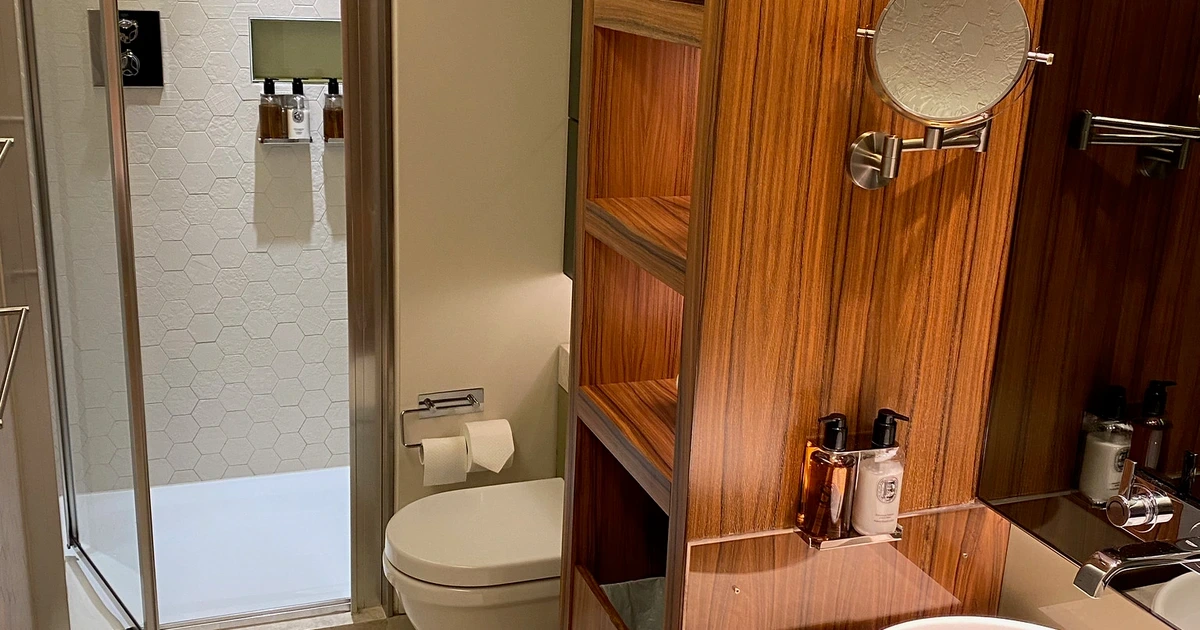
The lounge shower is not a luxury indulgence. It's a circadian reset tool. Arrive two and a half hours before an international departure, shower, change out of travel clothes, eat something light in the lounge, and board already halfway toward your destination's clock.
What This Actually Costs — And Why the Seat Is Worth It
Here's where people get the value calculation wrong. They assume the jet lag benefit only comes with the most expensive fare on the route. It doesn't.
Los Angeles to London runs $2,200 to $6,000 round-trip in business class across British Airways, American, Virgin Atlantic, and United. New York to Singapore, one of the longest true business class routes in the world at nearly 18 hours on Singapore Airlines' nonstop, runs $3,000 to $8,000. New York to Tokyo sits between those two, at $2,800 to $7,500, spread across ANA, JAL, American, and Delta.
The spread inside each of those ranges is enormous, and it's rarely about the seat quality — it's about how the fare was booked. We've placed clients in Delta One Suites on the New York to Tokyo route for fares closer to the $2,800 floor than the $7,500 ceiling, same lie-flat seat, same sliding door, same premium bedding. That's the actual value CEOFLIGHTS brings: finding the fare class and routing that gets you the enclosed suite without paying peak-season, walk-up pricing for it.
My opinion, unhedged: paying full retail for a published business class fare on these routes is close to the worst move a frequent long-haul traveler can make. There is almost always a smarter path to the same seat.
Building Your Own Jet Lag Protocol Around the Cabin You Booked
A protocol only works if it's built around the actual flight, not a generic template.
If you're flying Qatar's Qsuite through Doha to reach a final destination in Asia, the layover itself becomes part of the jet lag strategy — use the Al Mourjan Lounge to shift your eating schedule before the second leg, rather than treating the connection as dead time. If you're on a Delta One nonstop from JFK to Narita, there's no layover buffer, so the pre-flight lounge shower and the 48-hour sleep shift carry more weight because the flight itself is your only reset window.
Singapore Airlines' New York to Singapore nonstop deserves its own note here: at close to 18 hours, it's long enough that the 28-inch-wide seat becomes less about luxury and more about necessity. You need the space to change sleep positions multiple times across a flight that long, and Singapore's product gives you that room better than almost anything else flying.
Book the seat first. Build the protocol second. That order matters more than people think.
Book the Seat That Actually Lets You Sleep
Jet lag isn't beaten with a supplement or a podcast episode telling you to "just stay hydrated." It's beaten by picking a route, a departure time, and a cabin that work with your body's clock instead of against it — and then actually using the tools the airline already put in front of you: the lie-flat seat, the lighting sequence, the lounge shower, the meal timing.
If you want help matching the right suite to your specific route and travel dates — without paying the published fare ceiling for it — call CEOFLIGHTS at (888) 851 6897. We book these routes every day, we know which fare buckets actually contain the Delta One Suite or the Qsuite you want, and we'll tell you plainly if a route isn't worth the money.
