

The transpacific run is a different animal from anything you'll fly across the Atlantic. We're talking 11 to 17 hours in a metal tube, crossing the date line, and landing into meetings that start while your body still thinks it's yesterday. Pick the wrong seat and you arrive wrecked. Pick the right one and you walk into that Tokyo boardroom or Sydney client dinner looking like you slept in your own bed.
I've booked this route more times than I can count for clients who don't have the luxury of a recovery day. What follows is a ranked, opinionated breakdown of which carriers actually deliver on the promise of "business class" across the Pacific, and which ones are coasting on reputation. Prices below reflect real fare ranges we see booking through CEOFLIGHTS, and they routinely beat what you'll find calling the airline direct.
What Makes a Transpacific Business Class Seat Actually Worth the Price
Anyone can slap a lie-flat seat on a 777 and call it business class. The difference on a route this long comes down to three things: whether you have direct aisle access without climbing over a stranger, whether there's an actual door or shell that blocks the cabin lighting and noise, and whether the seat is wide enough to sleep on your side instead of flat on your back like a corpse.
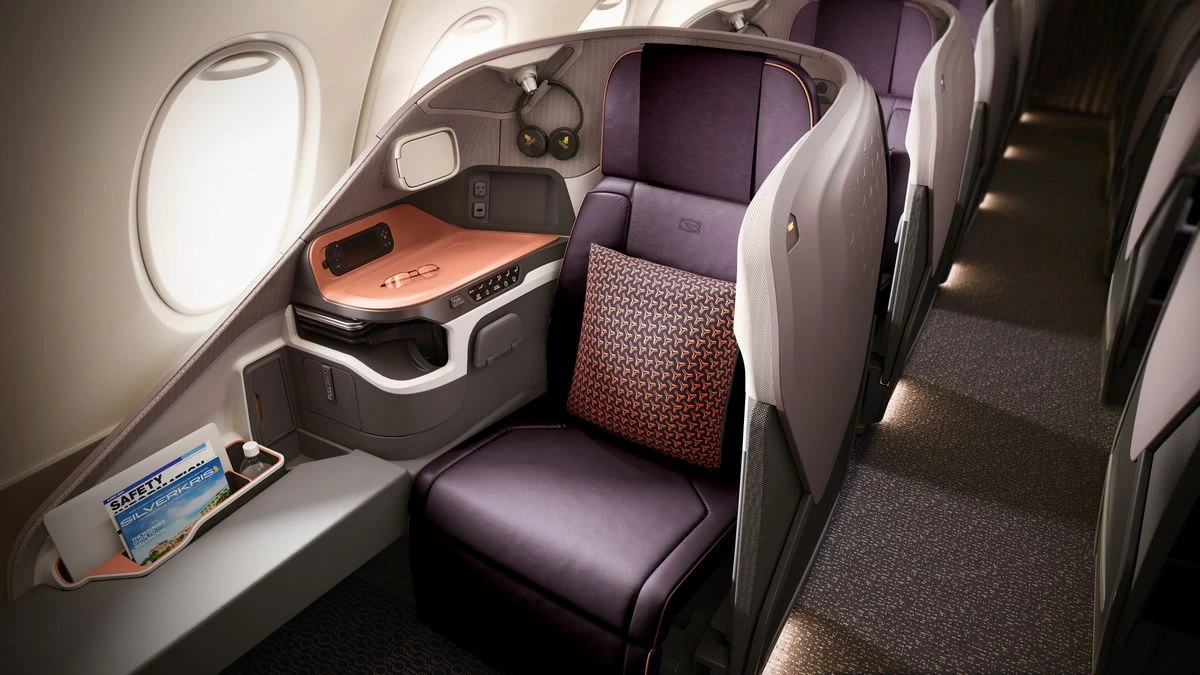
Singapore Airlines gets this right with a 28-inch wide seat — genuinely the widest in the category, not marketing-speak widest. ANA's THE Room takes the opposite approach: a sliding door and a footprint up to 38 inches wide at the shoulder, but the enclosure makes it feel like a private room even without the extra width. Both work. What doesn't work is the older 2-3-2 configurations some legacy US carriers still fly on certain 777s, where middle-seat business class is still, unfortunately, a thing in 2024.
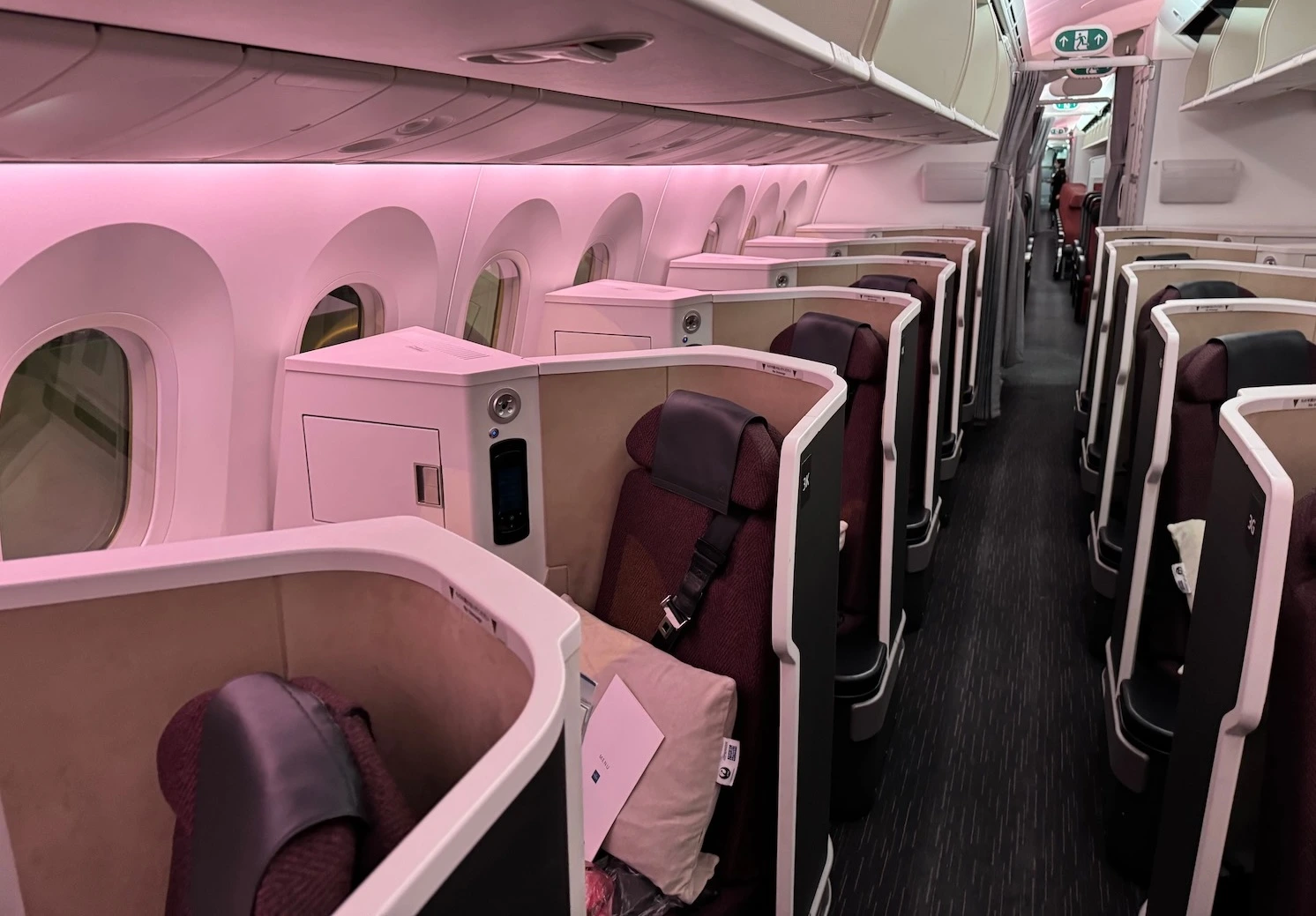
ANA and JAL: Japan's Two Flagship Suites Go Head-to-Head
If you're flying Los Angeles to Tokyo or New York to Tokyo, you have a genuine embarrassment of riches. ANA's THE Room, found on select 777-300ERs, gives you a sliding door that closes you off almost entirely from the aisle — it's the closest thing to a hotel room I've found in economy-plus footprint aircraft. The Japanese-Western dining service is also a cut above; I've had a properly executed dashi-based soup at 38,000 feet that I'd happily order again on the ground.
JAL counters with SKY SUITE III, a reverse herringbone seat with a privacy shell rather than a full door. It's not quite as enclosed as ANA's product, but the seat itself feels more stable in turbulence — the reverse herringbone angle means you're braced against the shell rather than floating in open space. JAL also pairs it with Nishikawa bedding, which is noticeably better than the standard-issue duvets most carriers hand out.
Both airlines run the JAL Sakura Lounge and ANA Lounge networks out of Narita and Haneda, and both are worlds better than the domestic lounges you'll find in most US hub airports. If I had to pick one for a first-timer, I'd send them on ANA. If they've flown ANA before and want variety, JAL won't disappoint.
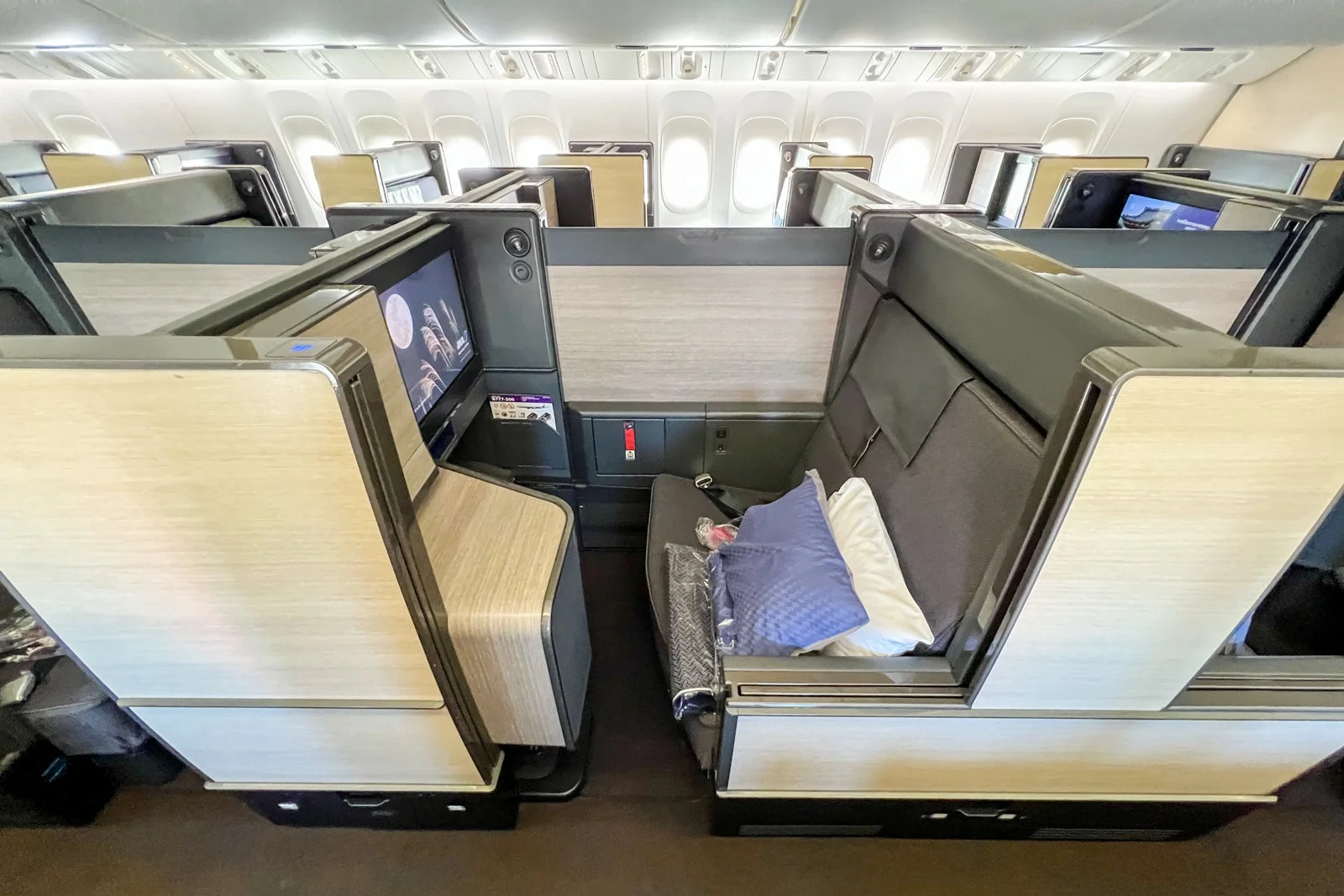
| Airline | Seat Product | Configuration | Standout Feature | Typical LA-Tokyo Fare (via CEOFLIGHTS) |
|---|---|---|---|---|
| ANA | THE Room | 1-2-1 | Sliding privacy door, 38" width | $2,767 - $7,000 |
| Japan Airlines | SKY SUITE III | 1-2-1 | Reverse herringbone shell, Nishikawa bedding | $2,767 - $7,000 |
| Korean Air | Prestige Suite | 1-2-1 | Sliding door on 787-10 (doors installed but currently cannot be closed during flight, pending regulatory approval) | Priced via Seoul connection |
| Singapore Airlines | Business Class | 1-2-1 | Widest seat in class at 28" | $2,800 - $7,500 (SFO-SIN) |
Korean Air and EVA Air: The Underrated Middle Ground
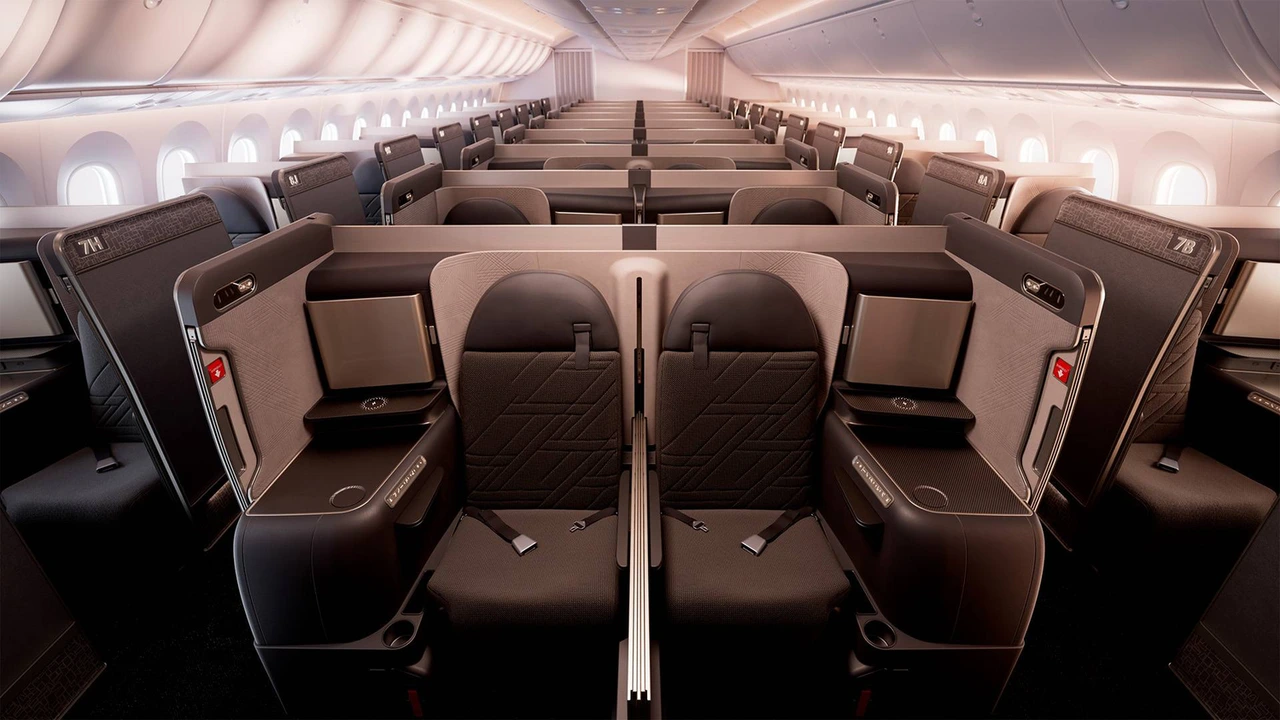
Here's an opinion I'll stand behind: Korean Air's new Prestige Suite is criminally underrated. It rolled out with a sliding privacy door on the 787-10 (doors are installed but currently cannot be closed during flight, pending regulatory approval), and it's genuinely competitive with anything ANA or JAL offers — but because Korean Air doesn't have the same brand cachet in the US market, fares routing through Incheon tend to run cheaper for equivalent comfort. If your final destination is Southeast Asia and you don't mind a stop in Seoul, this is one of the best-kept secrets in premium travel right now.
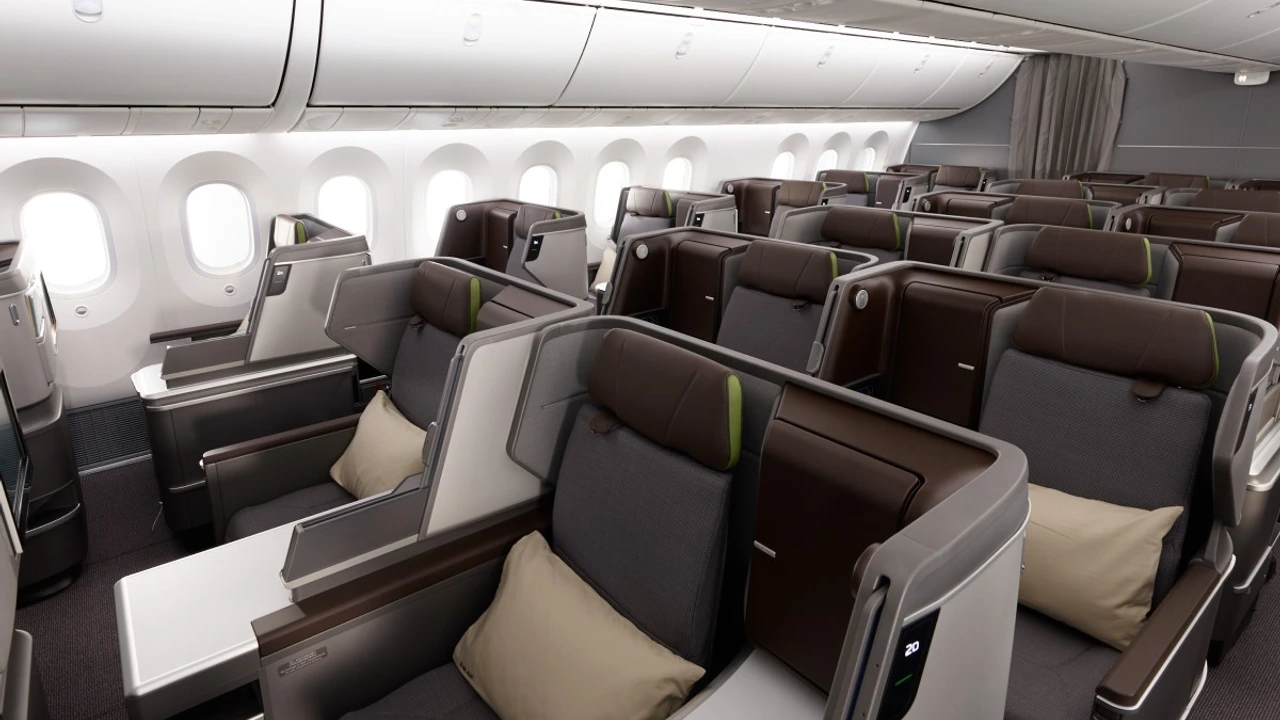
EVA Air plays a similar game out of Taipei. Royal Laurel Class uses a reverse herringbone layout on both the 787-10 and 777, and EVA hands out a Maison Kitsuné amenity kit that's a nice step above the usual zippered pouch. Taiwanese cuisine on board is genuinely good — not "airline good," actually good. Both carriers connect into the broader Star Alliance network, which matters if you're continuing on to Bangkok, Manila, or Jakarta after your transpacific leg.
I'll say this plainly: if you're booking based on brand name alone and skipping Korean Air or EVA Air without checking their fares first, you're probably overpaying for a marginally better logo.
Cathay Pacific and Singapore Airlines: The Southeast Asia Gateway Play
Singapore Airlines doesn't get enough credit for how good its regular business class is — everyone talks about Suites Class, but the standard flagship business seat, at 28 inches wide, is the widest lie-flat business seat flying the Pacific. Add in Book the Cook, where you pre-select your meal weeks in advance from an actual chef-designed menu, and an 18-inch HD entertainment screen, and you've got a product that punches above its category. San Francisco to Singapore runs $2,800 to $7,500 depending on season and cabin availability, and booking through CEOFLIGHTS typically lands you toward the lower half of that range with more schedule flexibility than booking direct.
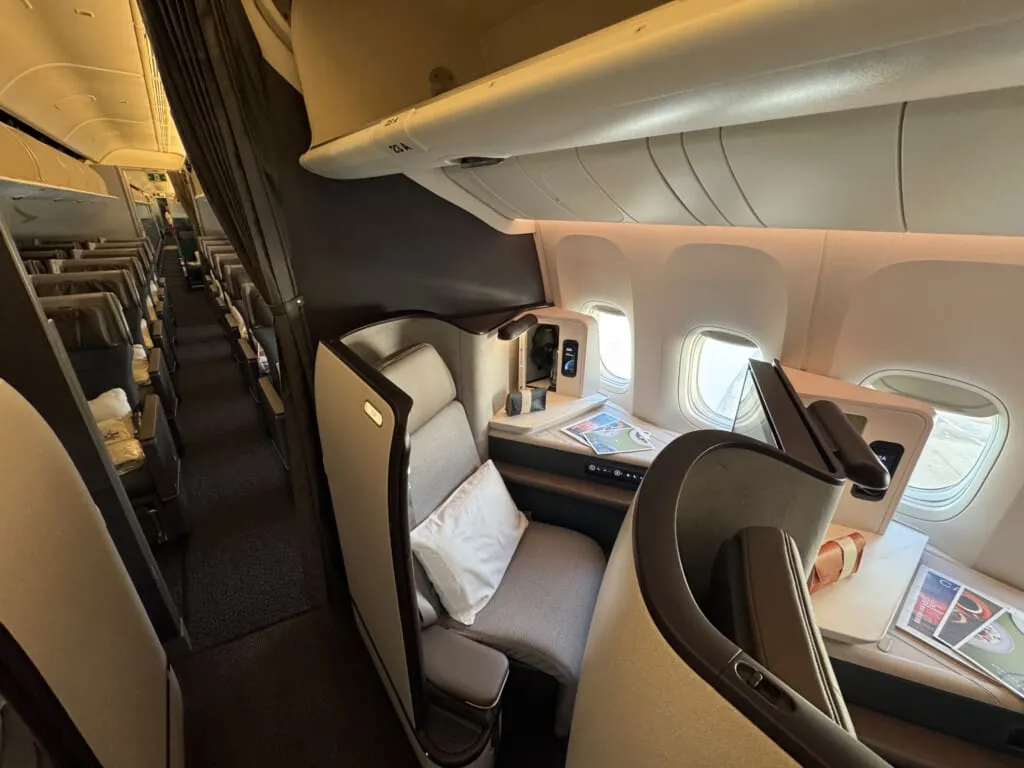
Cathay Pacific is mid-transition right now, rolling out the new Aria Suite on 777-300ER aircraft. It's a reverse herringbone layout with meaningfully better privacy than the outgoing product, and if you connect through Hong Kong you get access to The Pier and The Wing — two of the best business lounges in Asia, full stop. Cathay Delight cocktails and Bamford bedding round out a product that's clearly designed to compete directly with Singapore and Cathay's Gulf-carrier rivals.
Qantas: The Australia Nonstop Advantage
Los Angeles to Sydney is a brutal routing no matter how you slice it — 15 hours in the air, and that's before you account for the time change wrecking your first two days on the ground. Qantas is the only airline running true nonstop service on this city pair, and they know it, which is part of why fares run $3,500 to $9,000 depending on season.
The current fleet uses Thompson Vantage XL seats on refitted 787s, which are solid but not spectacular — a reverse herringbone with decent width but nothing that'll make you forget you're on hour twelve. The real upgrade is coming with Project Sunrise: new 1-2-1 suites on the A350 specifically built for the ultra-long-haul Sydney and Melbourne routes. Once that fleet is fully in service, Qantas becomes a legitimate top-three product on this list rather than a "best available for this route" pick.
Qantas First Lounge access at Sydney and Melbourne is genuinely excellent if you're connecting onward within Australia or New Zealand, with proper à la carte dining rather than a buffet.
How to Book the Right Seat Without Overpaying
This is the part nobody wants to admit publicly: published business class fares on transpacific routes are frequently inflated, and airlines count on corporate travelers booking without shopping around. A New York to Tokyo business class ticket on JL5 or NH9 can list anywhere from $2,800 to $7,500 depending on how close to departure you're booking — and the difference between those two numbers is almost never about the seat. It's about who has access to negotiated fare buckets.
We book this route constantly for executives who need to land ready to work, not ready for a nap. Working with a dedicated desk means real-time seat map access, the ability to lock in a specific suite rather than "business class, seat TBD," and pricing that reflects actual market rates rather than whatever the airline's revenue management system decided to charge this week.
Final Verdict: Ranking the Best Transpacific Business Class Products
If someone forces me to rank these with no wiggle room, here's where I land: ANA takes the top spot for the Japan routes on the strength of THE Room's sliding door and dining program. Singapore Airlines takes the top spot for pure seat comfort thanks to that 28-inch width. And for Australia, Qantas wins by default today and will win outright once Project Sunrise seats are fully deployed across the fleet.
JAL, Cathay Pacific, and EVA Air all sit in a tight second tier — any of them will get you across the Pacific comfortably, and the right choice often comes down to your connecting city rather than the seat itself. Korean Air is the value play I'd point most clients toward if they're flexible on routing and want flagship-quality comfort without flagship-level pricing.
| Rank | Airline | Best For |
|---|---|---|
| 1 | ANA | Privacy and dining, Tokyo routes |
| 1 (tie) | Singapore Airlines | Seat width and comfort |
| 3 | Japan Airlines | Seat stability, bedding quality |
| 4 | Cathay Pacific | Southeast Asia connections |
| 5 | Korean Air | Value on Seoul-routed itineraries |
| 6 | EVA Air | Taipei connections, value |
| 7 | Qantas | Nonstop US-Australia access |
Booking any of these seats blind is a mistake. Fare rules, seat maps, and availability shift by the week on these routes, and the difference between a middle-of-cabin seat and a true suite can be the same price if you know where to look.
Call CEOFLIGHTS at (888) 851 6897 and our team will pull real-time availability across ANA, JAL, Singapore, Cathay, Korean Air, EVA, and Qantas, then match you to the seat and fare that actually fits your trip — not just whatever the airline's website surfaces first.
