

If you're 6'2" or taller, you already know the truth nobody at the check-in counter wants to admit: not all "lie-flat" seats actually lie flat for a person your size. Some stop at 78 inches. Some taper at the footwell so your feet jam into a cubby built for someone 5'9". A few — and this is the whole point of this guide — were engineered by people who apparently understand that adult humans come in different heights.
I've spent years booking premium cabins for executives who range from 6'2" to 6'7", and the complaints are always the same three things: cramped footwells, shoulder-width pinch points, and doors or bulkheads that force a diagonal sleeping position. This guide ranks the five business class products that consistently solve those problems, based on actual bed length, footwell design, and width — not marketing copy.
What Actually Matters for Tall Fliers (Not Just "Lie-Flat")
Airlines love to advertise pitch — the distance between your seat and the one in front — because it's the biggest number they can put on a slide. But pitch is nearly meaningless for a 6'4" traveler. What matters is the actual bed length when the seat reclines flat, and whether the footwell (the enclosed cubby your feet slide into) is wide enough to fit shoulder-width feet without turning sideways.
Most modern business class beds run 76 to 82 inches. That extra six inches is the difference between sleeping on your back for eight hours and waking up with your knees jackknifed against a plastic wall somewhere over Greenland. Qatar's Qsuite and ANA's THE Room both post beds around 79-80 inches with a footwell wide enough to keep your feet flat and parallel. Delta's newer A350 configuration comes close. Older United Polaris installs on the 767 fleet are noticeably tighter.
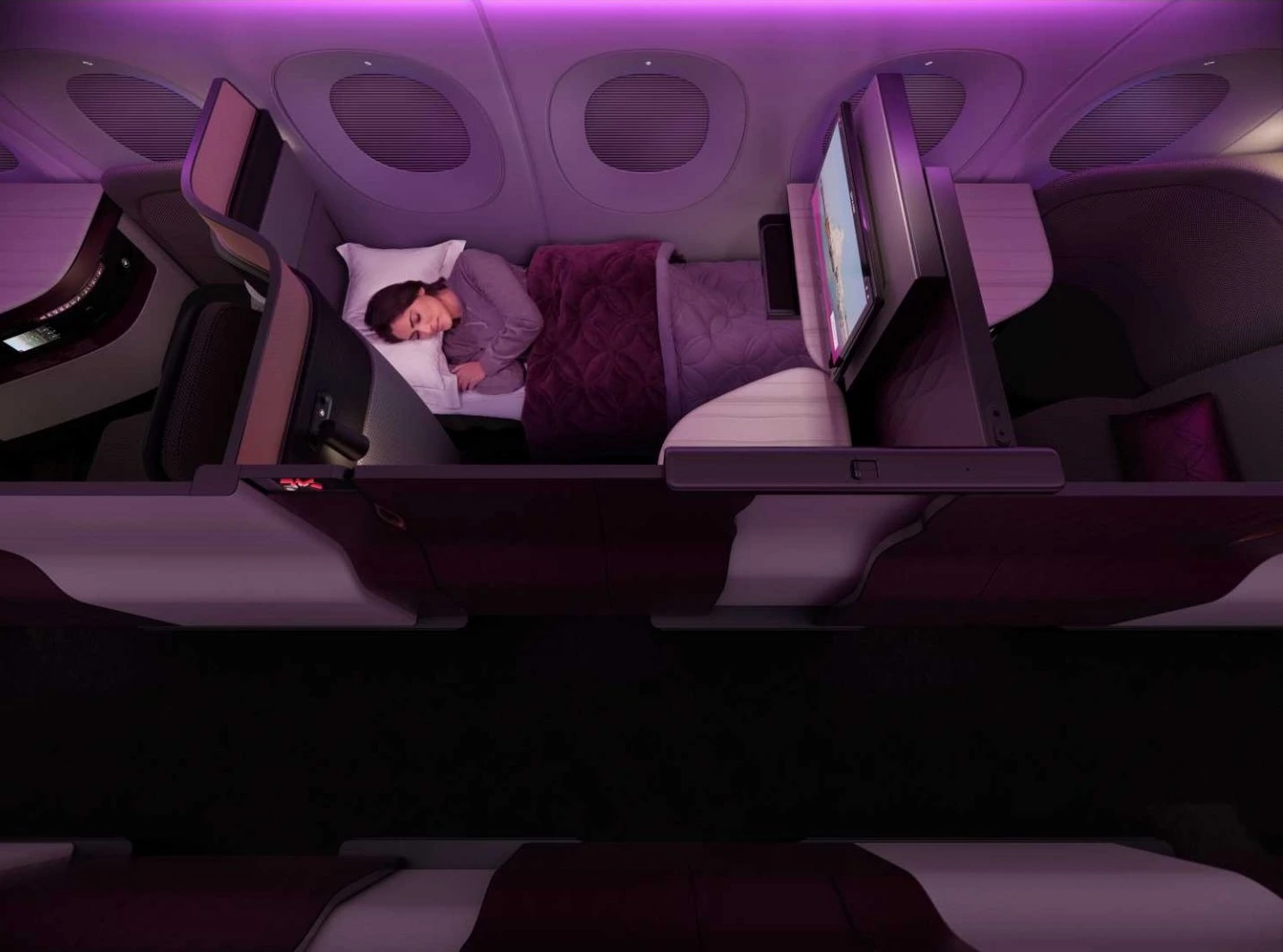
Qatar Airways Qsuite — Still the Benchmark for Long Legs
Qsuite earned its reputation honestly. The 1-2-1 configuration with a fully enclosed sliding door gives you a private room, not just a seat, and the footwell is genuinely one of the widest in the industry — closer to 17 inches at its base than the 12-13 inches you'll find on older Emirates or Cathay configurations. For a 6'4" client of mine flying DOH-JFK last spring, that extra footwell width was the difference between actual sleep and a fitful half-doze.
The companion suite mode, where two center seats convert into a shared space, is a nice touch for couples but largely irrelevant if you're traveling solo for work — the real value here is the door itself. Close it, and you've got a private room at 39,000 feet. Qatar's Al Mourjan lounge at Doha, with its own à la carte dining room, is worth the layover on its own.
Booking Qsuite through the open market can run $6,800-$9,500 round-trip on routes like DOH-JFK depending on season. CEOFLIGHTS regularly negotiates fares on this exact product 15-60% below published business class rates — we booked a New York executive into Qsuite for a Doha-to-Singapore itinerary last month at roughly $4,100 round-trip, well under what he'd have paid booking direct.
ANA's THE Room — The Widest Seat in the Sky
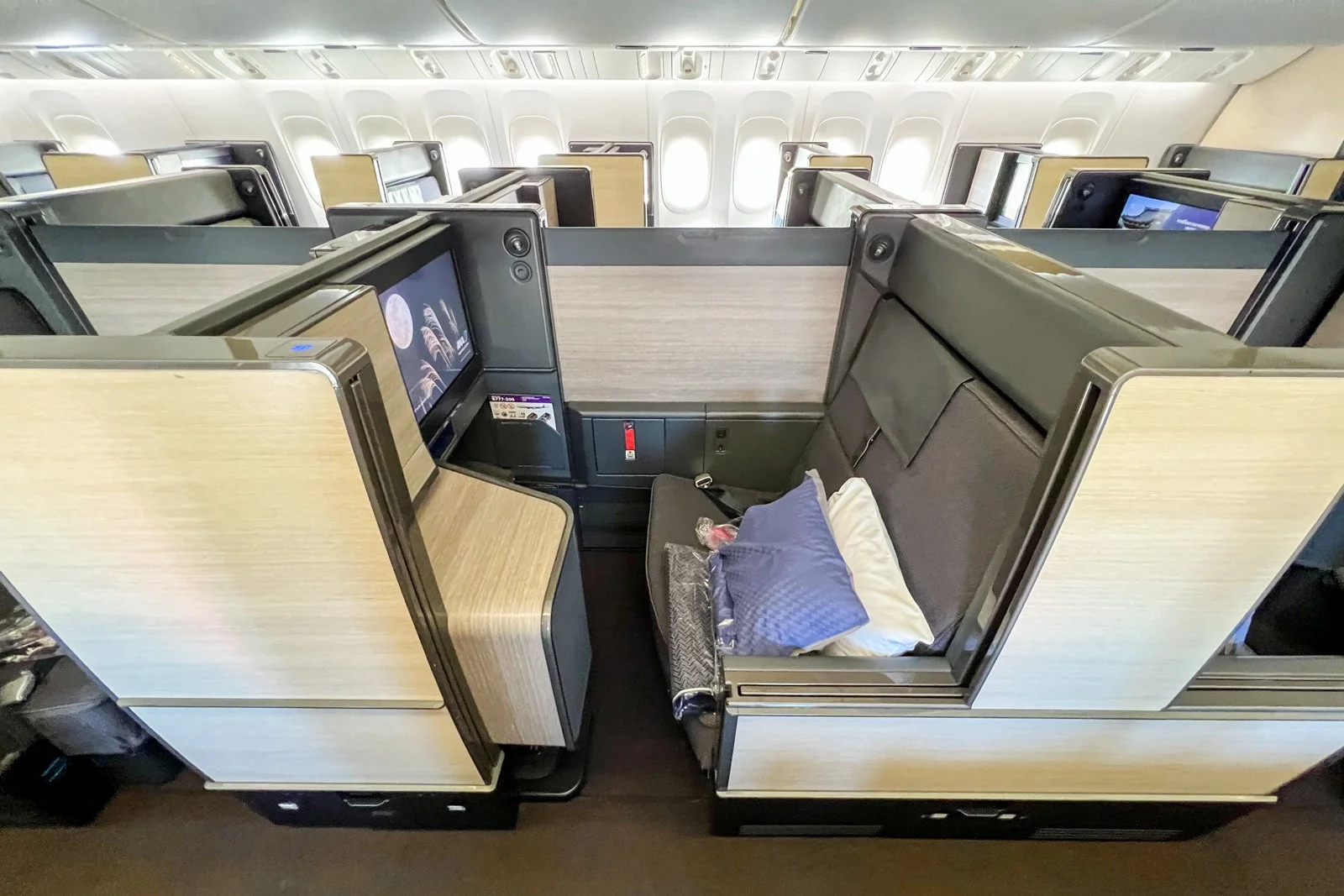
I'll say this plainly: THE Room is underrated by American travelers simply because it's harder to book. ANA operates it on a limited number of aircraft, mostly on Tokyo routes, and it doesn't get the marketing push that Qatar or Emirates commands. That's a mistake on the traveler's part, because the seat itself — At up to 38 inches wide with its own sliding door — is arguably more comfortable than Qsuite for anyone with broad shoulders.
The bed length runs close to 80 inches, and unlike some enclosed suites, the footwell doesn't taper sharply. ANA also pairs it with a genuinely good dining program — a multi-course Japanese-Western menu that beats the reheated pasta you'll find on plenty of competitors. If you're routing through Tokyo Narita or Haneda, the ANA Lounge is a legitimate reason to arrive three hours early rather than ninety minutes.
The catch: THE Room flies on a small subset of ANA's 777 fleet, so seat maps matter enormously here. We always confirm the specific aircraft and seat configuration before booking a client into this product — assuming ANA automatically means THE Room is a rookie mistake that leads to disappointment on a 787 with standard staggered seating instead.
Delta One Suite — The Best Domestic-Adjacent Option
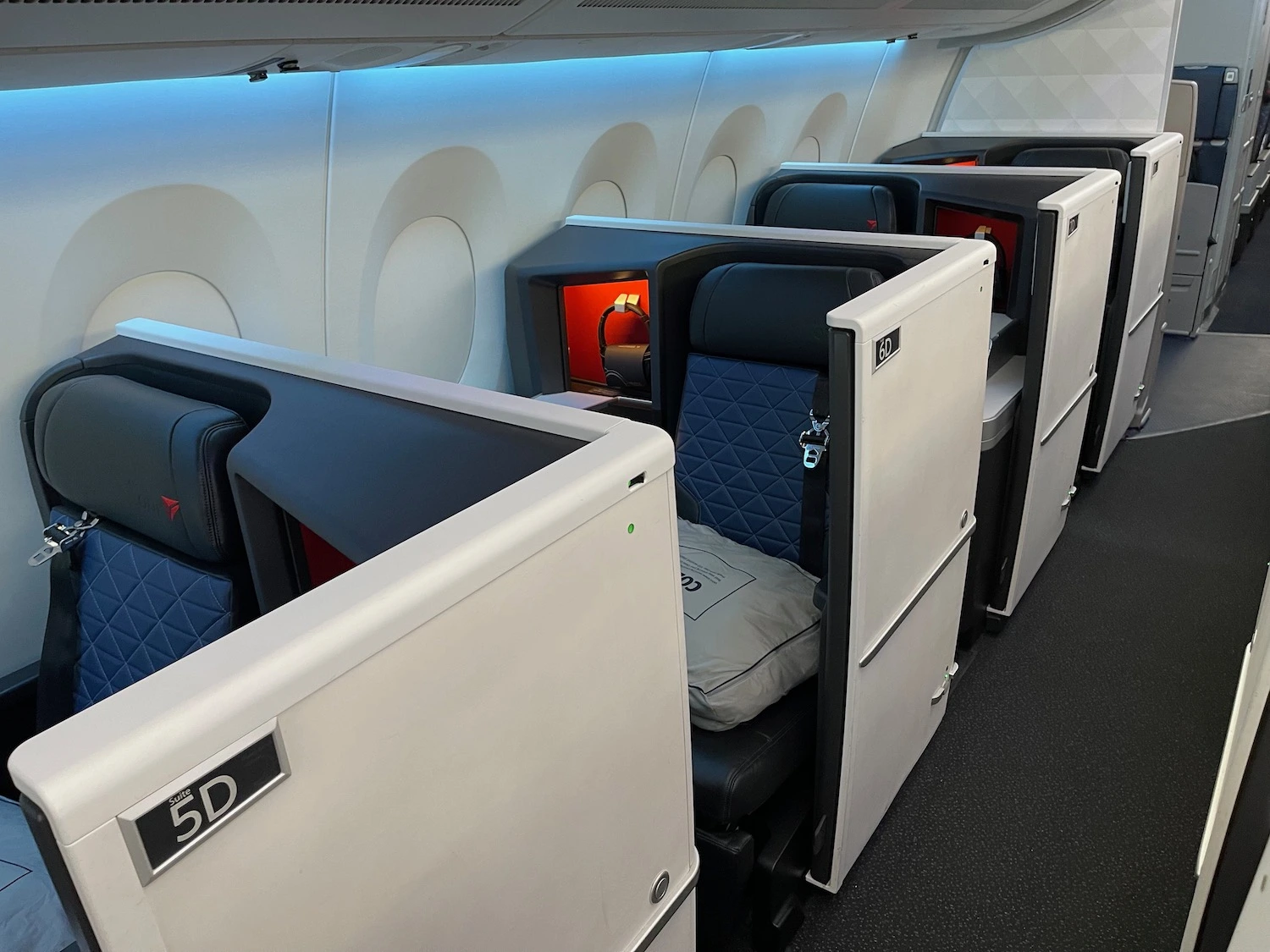
Delta gets criticized for inconsistency across its fleet, and fair enough — the 767-300 and older A330 configurations don't have doors and feel dated next to Qatar or ANA. But the Delta One Suite specifically, flown on the A350-900 and the A330-900neo, closes that gap. The sliding door isn't as tall or enclosing as Qatar's, but it does the job, and the premium bedding is a genuine step up from the thin blankets you get on most US carriers.
For a domestic executive who wants premium cabin comfort without booking through a foreign hub, Delta One is the pragmatic choice. JFK-NRT on the A350 (flight DL 5, for reference) puts you in a suite with roughly 78 inches of bed length — a notch below Qatar and ANA, but entirely workable for a 6'3" frame, and Delta's mileage and upgrade ecosystem (their term, not mine) makes repeat bookings easier for US-based frequent fliers.
Delta One fares on transpacific routes list around $7,200-$8,900 round-trip in peak season. Through CEOFLIGHTS we've consistently secured the same seats for clients in the $4,800-$5,600 range by working corridors and fare classes most travelers never see on public booking engines.
Head-to-Head: Bed Length, Footwell, and Width Compared
Here's how the five products stack up on the specific measurements that matter for a 6'2"+ frame.
| Airline / Product | Bed Length | Seat Width | Footwell Design | Privacy Door |
|---|---|---|---|---|
| Qatar Airways Qsuite | ~79 in | 21 in | Wide, minimal taper | Yes, sliding |
| ANA THE Room | ~80 in | 24 in | Wide, no taper | Yes, sliding |
| Delta One Suite (A350-900/A330-900neo) | ~78 in | 21 in | Moderate taper | Yes, sliding |
| United Polaris | ~76-77 in | 20.4 in | Noticeable taper on 767 fleet | No |
| Emirates Business (A380/777) | ~78 in | 20 in | Narrower cubby, more taper | No |
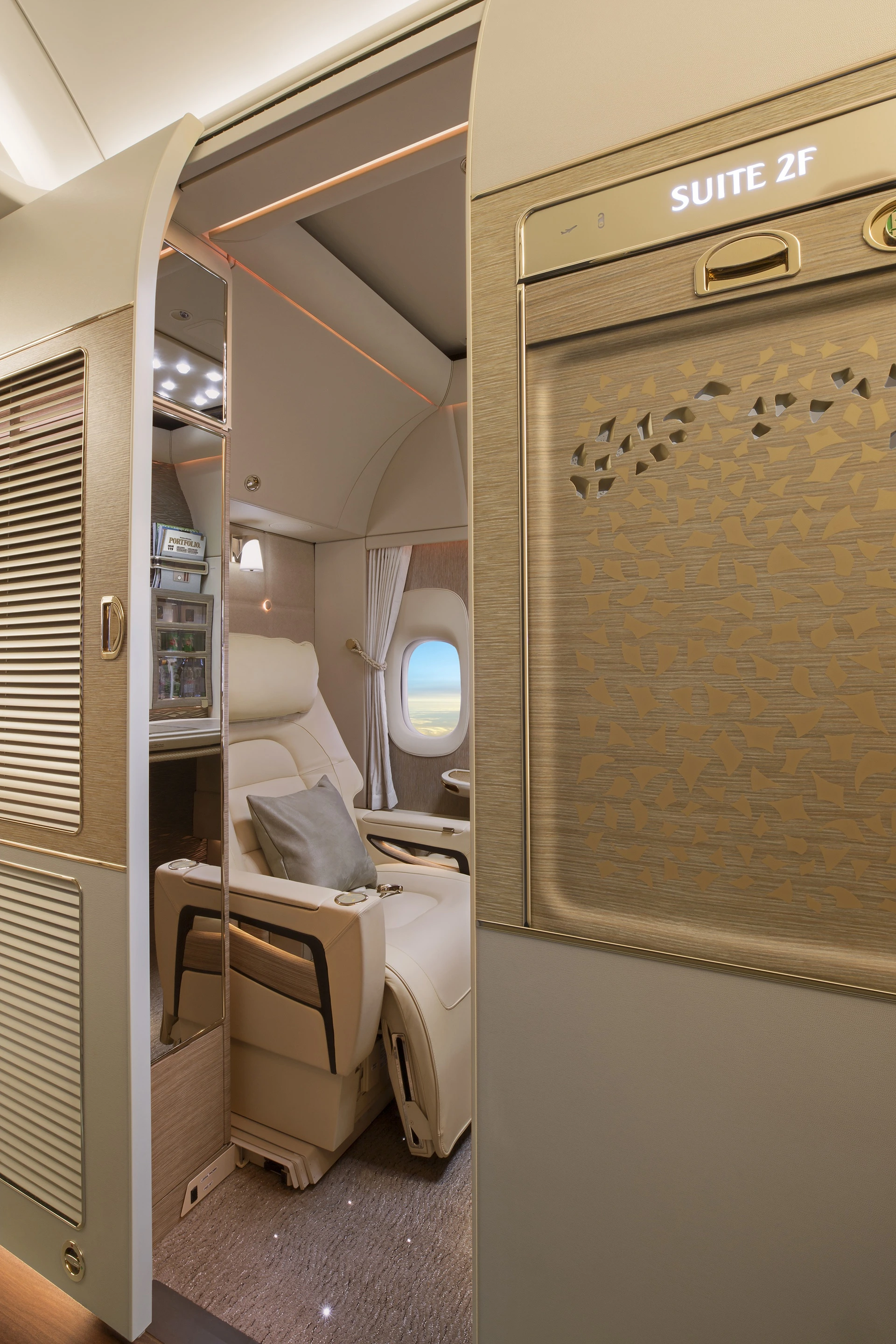
Emirates deserves credit for atmosphere — the A380's onboard bar and the sheer novelty of a mini-bar at every seat make the flight feel like an event. But if you're 6'4" and trying to actually sleep for seven hours, the footwell taper on the 777 configuration is a real limitation. I've had clients specifically request A380 routing over 777 routing on Emirates for this exact reason, and honestly, they're right to.
Emirates and United Polaris — Strong Products, Real Limitations for Height
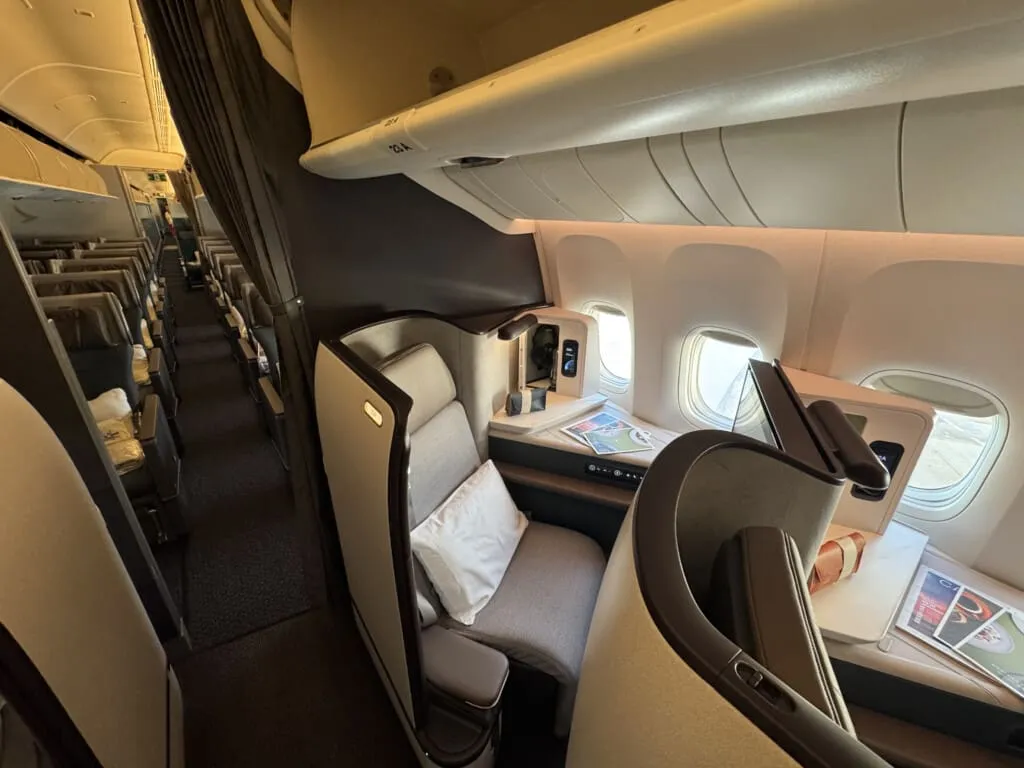
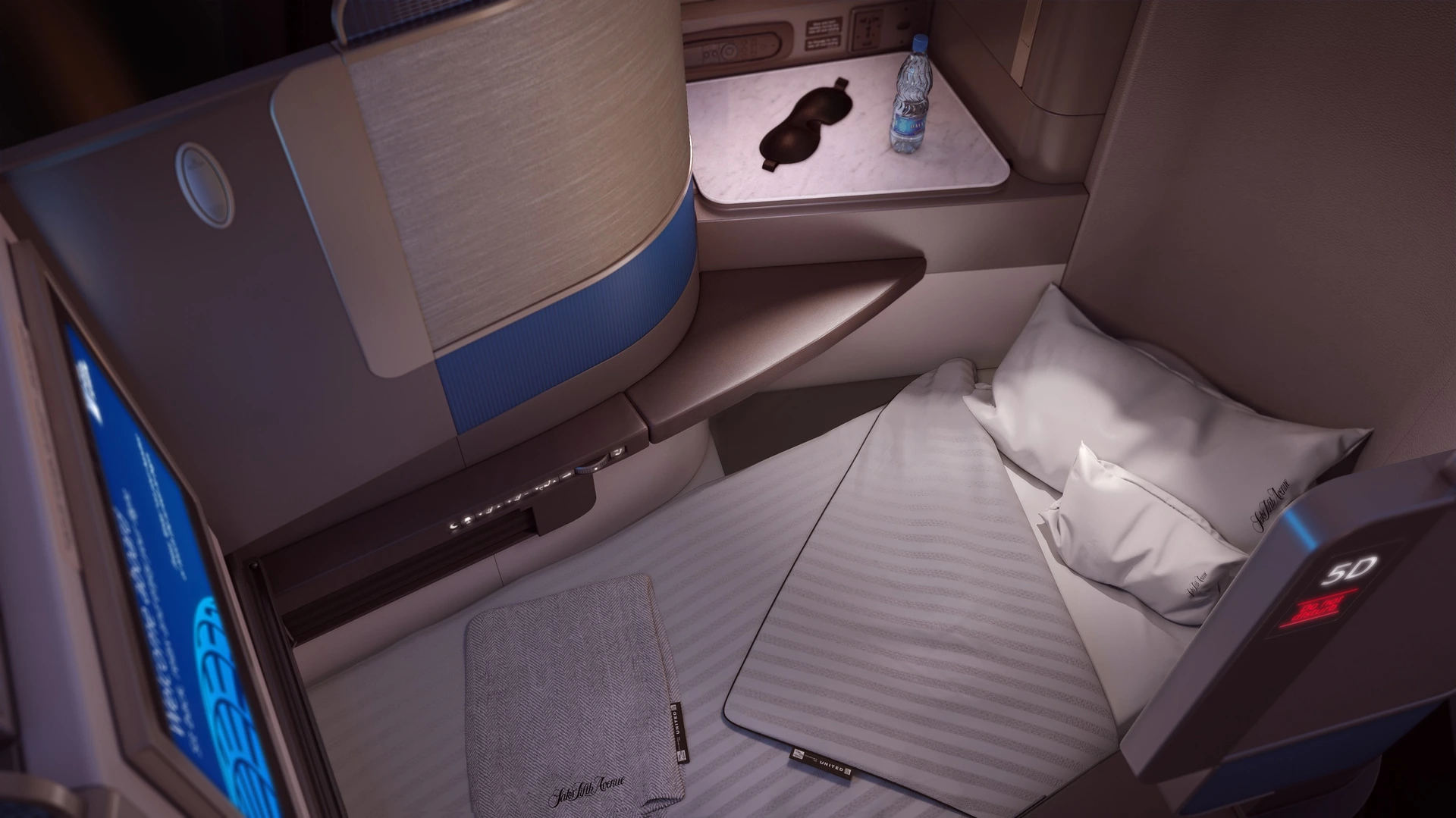
I don't want to bury these two, because they're both good products with loyal followings, and United's Polaris Lounge network at hubs like Chicago O'Hare and Newark is genuinely excellent for a pre-flight shower and a real meal. But direct aisle access on Polaris comes at the cost of a narrower footwell on much of the 767 fleet, and taller travelers routinely mention their feet hitting the wall before their body reaches full recline.
Emirates' strength is the overall experience — the shower spa on the A380 upper deck, the ICE entertainment system with over 6,500 channels, the sheer scale of the operation. It's a great flight. It is not, in my opinion, the best flight for someone over 6'3" trying to sleep eight hours straight. If cabin theater matters more to you than raw sleep quality, book Emirates. If sleep is the priority, Qatar and ANA win outright.
How to Actually Book the Right Seat (Not Just the Right Airline)
This is where most travelers get burned. You book "Delta One" and end up on an older 767-300 without a door because the flight number changed aircraft type two weeks before departure. You book "ANA business class" expecting THE Room and land in a standard staggered seat because the route uses a 787 instead of the 777 fleet that carries THE Room.
Seat maps matter. Aircraft swaps happen. And most travelers booking through a standard online travel agency have no way to catch this before it's too late to fix. This is the actual value CEOFLIGHTS provides beyond just negotiating fares — we confirm the specific aircraft and cabin configuration before ticketing, so a client paying for Qsuite is actually getting Qsuite, not a Qatar 787 with an older business seat.
Final Verdict for Tall Travelers
If I'm booking for a client who's 6'4" and flying twelve hours overnight, I'm steering them toward Qsuite or THE Room every time, availability permitting. Both give you real bed length, a footwell that doesn't force you into a diagonal crunch, and a door that turns a shared cabin into something closer to a private room. Delta One is the right call when US-based service and mileage programs matter more than squeezing out the last inch of footwell width. Emirates and United remain excellent — just not my first recommendation for anyone pushing 6'3" or taller on a long-haul red-eye.
Fares on all five products fluctuate constantly by season, route, and how far out you book. That's the part most travelers underestimate — the difference between a published fare and a negotiated one can run into the thousands on a single round-trip ticket.
Call CEOFLIGHTS at (888) 851 6897 and tell our team your height, your route, and your travel dates. We'll match you to the specific aircraft and seat configuration that actually fits your frame — not just the airline name on the ticket — and we'll do it at a fare well below what you'd find booking direct.
