

Business class used to mean a wide recliner and a free glass of Champagne. That version of the cabin is dead. What replaced it is a genuinely confusing lineup of seat architectures — herringbone, reverse herringbone, staggered, and now fully enclosed suites with doors that shut like a hotel room. Airlines love to name these products something aspirational (Qsuite, Upper Class Suite, Aria Suite), which only adds to the fog when you're actually trying to book a ticket.
I've sat in most of these seats on actual revenue flights, not press junkets, and the differences matter more than most booking sites let on. A herringbone seat and a suite with a closing door are not the same product even if both get labeled "business class" on a fare chart. This guide breaks down what you're actually buying, seat by seat, airline by airline.
What "Business Class Seat Types" Actually Means
The term covers a handful of distinct cabin architectures, not one standardized product. Configuration — how seats angle relative to the aisle — determines privacy, aisle access, and whether you're sleeping flat next to a stranger or in your own enclosed pod.
Angled lie-flat seats, still flying on some older 767s and A330s, recline to flat but point toward the front at a slant, which means your feet often wedge into a triangular footwell. They're increasingly rare on premium long-haul routes and, frankly, I steer clients away from them whenever a newer alternative exists on the same route.
Herringbone seats angle away from the aisle in a chevron pattern, giving every passenger direct aisle access. Reverse herringbone flips that angle so seats point toward the windows, often with more shoulder room. Staggered seating alternates seat position between window-adjacent and aisle-adjacent rows to maximize space efficiency. Suites are the newest tier: privacy doors, more square footage, and in some cases furniture-grade finishes that resemble a small hotel room more than an airplane seat.
Herringbone Seats: The Aisle-Access Standard
Herringbone seating was the innovation that fixed the worst problem in old business class — the fact that half the cabin couldn't get to the aisle without climbing over a sleeping seatmate. It's still one of the most functional layouts flying today.
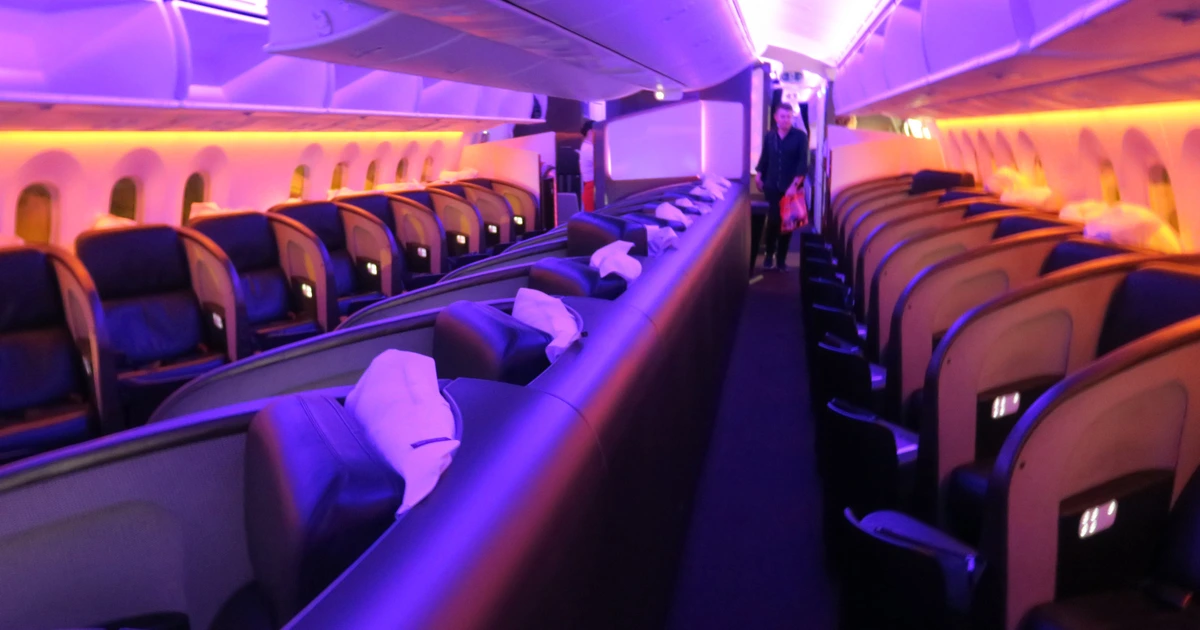
Virgin Atlantic's previous-generation Upper Class seat, which flew for years on the airline's 747 and A340 fleet, used a herringbone layout that angled passengers toward the aisle in a 1-1-1 configuration. It was distinctive for its flip-over bed mechanism — passengers literally flipped the seat cushion to create a flat sleeping surface, which was clever engineering for its time but felt dated compared to modern lie-flat designs. The cabin had genuine character, and the Upper Class bar at the back was a social fixture that no other airline replicated as well.
The trade-off with herringbone seats generally is shoulder space near the aisle-facing edge. Because the seat angles outward, the width narrows toward your feet, and taller passengers sometimes find the footwell tight. Most carriers have moved away from pure herringbone toward reverse herringbone or enclosed suites, but the layout's legacy as the first all-aisle-access business class design remains significant.
Reverse Herringbone and Staggered Configurations
Reverse herringbone flips the seat angle so you face toward the window rather than the aisle, which sounds like a small detail until you realize it changes your entire sense of privacy and space.
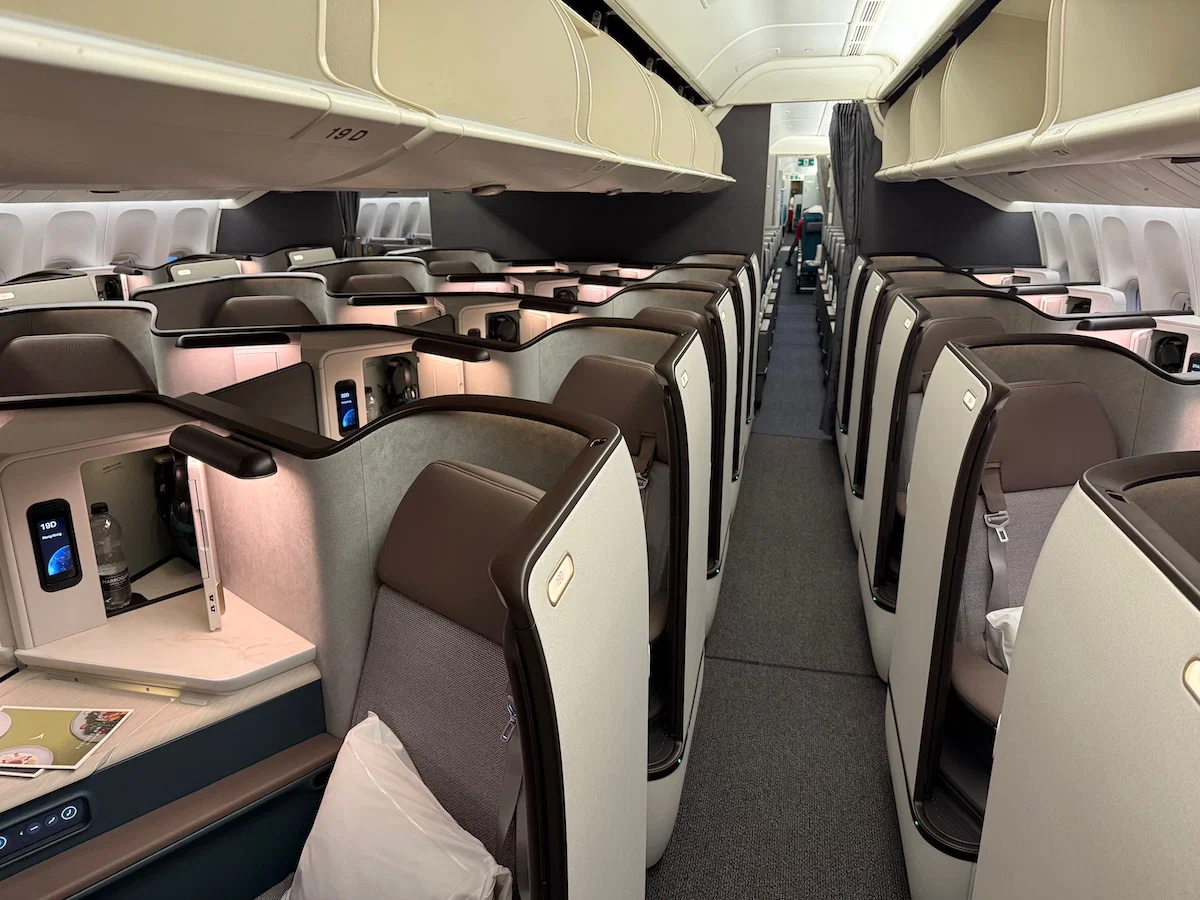
Cathay Pacific's Aria Suite builds on its long-running reverse herringbone platform but adds a sliding privacy door, effectively making it an enclosed suite on a herringbone base. I flew the older doorless reverse herringbone product on CX880 out of Hong Kong a few years back, and even then the design felt noticeably more private than JAL's reverse herringbone because you're facing away from foot traffic. The new Aria Suite with its door takes that privacy significantly further. The Wing and The Pier lounges at Hong Kong International remain two of the best business lounges anywhere — the noodle bar at The Wing has genuinely spoiled me for airport food everywhere else.
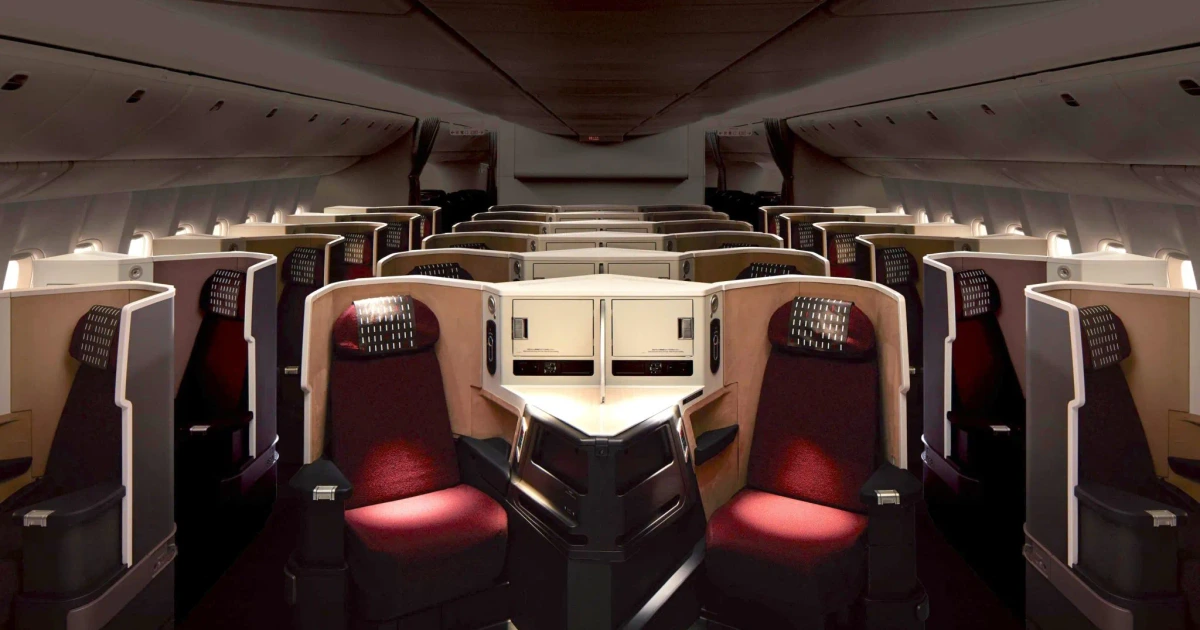
Japan Airlines' SKY SUITE III uses the same reverse herringbone platform — specifically the Zodiac Aries design — in a 1-2-1 configuration with a raised privacy shell around each seat. I've flown JL5 from Narita to JFK in this cabin, and the shell height is enough that you don't see your neighbor even in the center pair, which is rare for a reverse herringbone product. JAL pairs it with Nishikawa bedding — actual Japanese futon-technology mattress pads, not the thin quilted throws most carriers hand out — and a dining service that lets you choose kaiseki courses over Western plates. The Sakura Lounge network at Haneda and Narita is worth arriving early for; the sushi counter alone beats most airline lounges in any hemisphere.
Staggered seating, used by carriers like British Airways' Club Suite and several others, alternates window-close and aisle-close positions row by row. It's a space-efficiency solution more than a luxury one, though newer versions add doors and shells that push it closer to true suite territory.
Enclosed Suites: The New Top Tier
This is where the category has moved fastest in the last five years. A door that closes — even a low, sliding one that doesn't lock — changes the psychological experience of a ten-hour flight more than any other single feature.
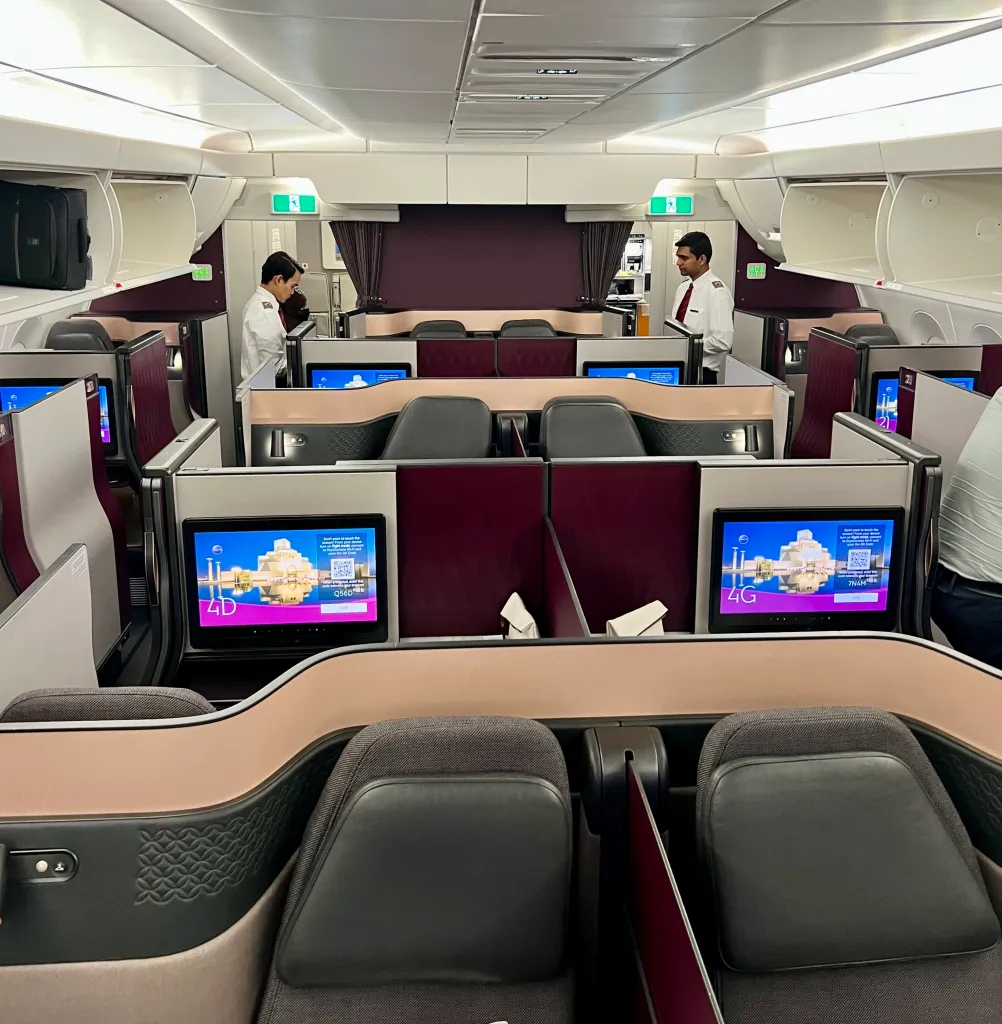
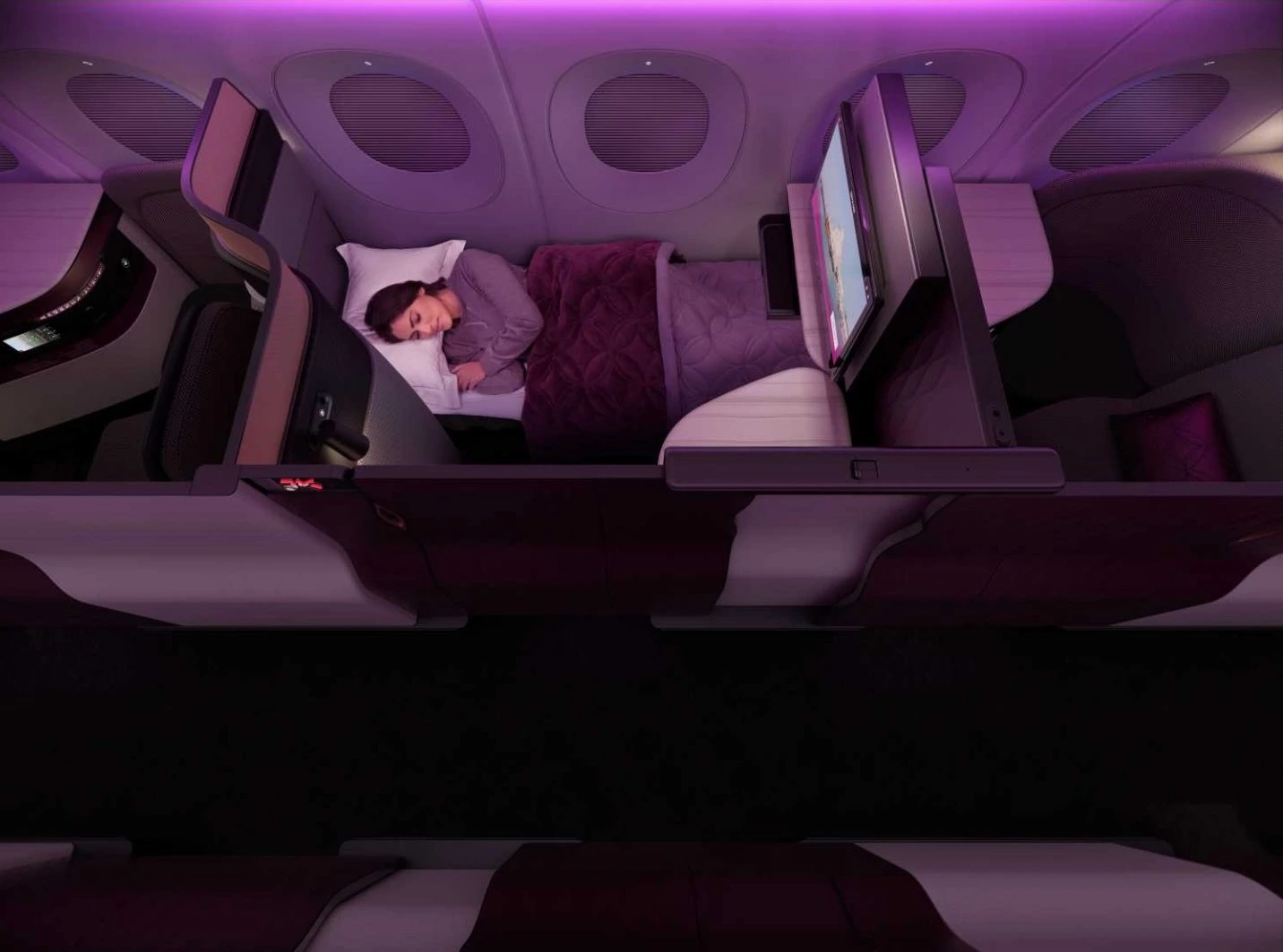
Qatar Airways' Qsuite remains the seat I recommend most often when a client asks, "just book me the best one." It's a 1-2-1 all-aisle layout with a sliding door on every seat, and the center pair can convert into a shared suite for couples by dropping a partition — genuinely useful for anyone traveling with a spouse who still wants their own bed. I've flown Qsuite on QR701 from Doha to New York twice, and both times the seat felt less like an airplane product and more like a compact private office that happened to recline flat. The Al Mourjan Business Lounge in Doha, with its own à la carte restaurant, makes the connection experience better than the flight on some carriers.
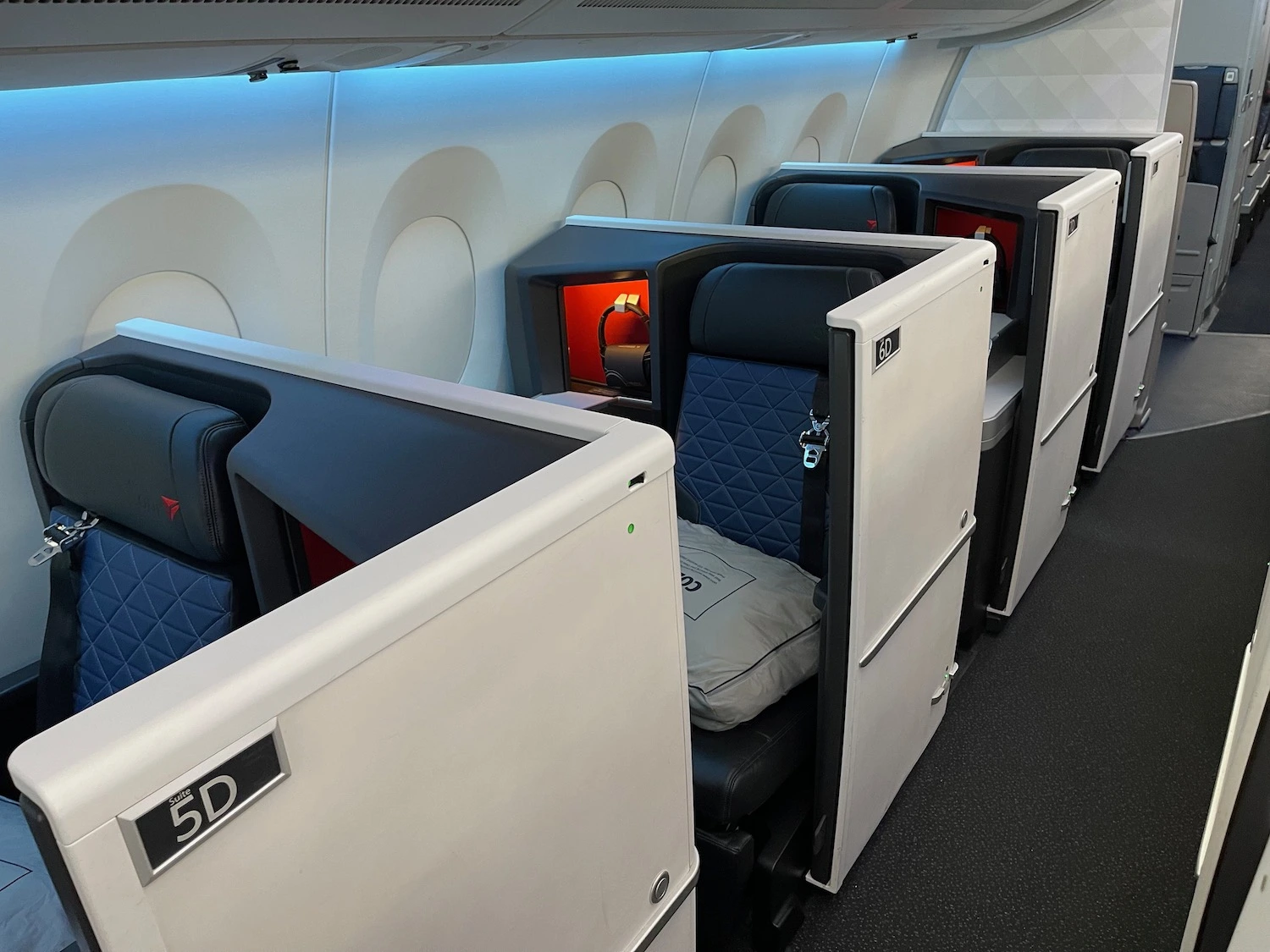
Delta's Delta One Suite, flying on the A350-900 and A330-900neo, brought sliding doors to a U.S. carrier for the first time and did it well. premium bedding and a genuine Missoni amenity kit (not a rebranded drugstore kit) round out a product that's consistent across the fleet — a point Delta deserves credit for, since so many airlines run three or four different business class hard products simultaneously and call all of them the same name.
Virgin Atlantic's Upper Class Suite, on the A350 and A330neo, adds a social bar space in some cabins and spa treatments at The Clubhouse (via Secret Spa partnership) in Heathrow before departure. It's a smaller suite than Qsuite in raw square footage, but the onboard bar gives the experience a different character — less private pod, more shared cabin with the option to retreat.
Comparing the Top Business Class Suite Products
Numbers help cut through the marketing copy. Here's how the five products in this guide stack up on the features that actually affect your flight.
| Airline | Seat Type | Configuration | Privacy Door | Notable Feature |
|---|---|---|---|---|
| Qatar Airways | Qsuite | 1-2-1 all-aisle | Yes, sliding | Companion suite mode for couples |
| Delta Air Lines | Delta One Suite | 1-2-1 | Yes, sliding | Consistent across A350 and A330-900neo |
| Virgin Atlantic | Upper Class Suite | 1-2-1 | Yes, sliding | Onboard social bar space |
| Cathay Pacific | Aria Suite | 1-2-1 reverse herringbone | Yes, sliding (retrofitted 777-300ERs) | 24-inch 4K screen, reverse herringbone with door |
| Japan Airlines | SKY SUITE III | 1-2-1 reverse herringbone | No, privacy shell | Kaiseki dining and Nishikawa bedding |
Which Seat Type Is Actually Worth Your Money
Here's my honest opinion after years of booking these routes for clients: pay for the door if the flight is over eight hours, and don't bother if it's under six.
A ten-hour redeye from Doha to New York in a seat with a closing door means real sleep. A six-hour hop from Tokyo to Hong Kong in a reverse herringbone seat is plenty comfortable without needing the extra privacy layer, and you'll usually pay several hundred dollars less for it. I've had clients insist on Qsuite for a five-hour flight and then admit afterward they never even used the door.
Price matters here too, and this is where a lot of travelers overpay. Qsuite fares booked directly can run north of $6,000 round-trip in peak season on the New York–Doha route; through CEOFLIGHTS, we've regularly secured the same cabin, same dates, for meaningfully less by working airline consolidator fares and corporate rate agreements that aren't visible on public booking engines. The seat doesn't change. The number on the invoice does.
Booking the Right Seat for Your Route
Seat selection matters as much as cabin selection. Two passengers on the same Qsuite flight can have very different experiences depending on where they're sitting.
One detail airlines don't advertise clearly: the same airline can fly two or three different business class hard products across its fleet. Cathay Pacific's older reverse herringbone seats and the new Aria Suite are both flying right now on different 777-300ERs, and the online booking flow doesn't always tell you which one you're getting. This is a place where a human agent checking the actual aircraft registration and seat map beats a self-service booking site every time. We do that check on every CEOFLIGHTS booking before confirming a seat assignment, because I've had clients board expecting a suite and get an older shell seat instead.
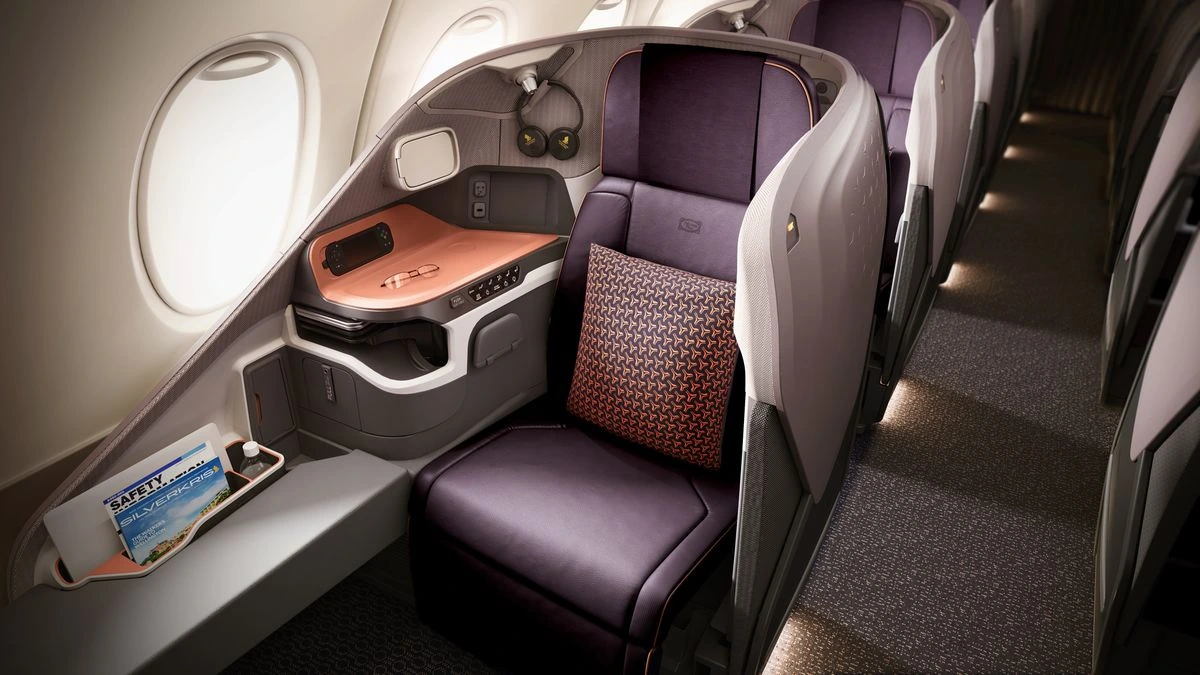
For couples, the center pair in a Qsuite or reverse herringbone cabin is worth requesting specifically — Qsuite's dropping divider is the single best couples feature in business class right now, full stop. For solo travelers prioritizing privacy, request the far window or aisle position away from the galley and lavatory, and avoid the very front row on herringbone products where foot traffic is heaviest during meal service.
If you're weighing seat types against a specific itinerary, budget, or travel date, calling a consultant who has actually flown the product beats scrolling seat-map forums for an hour. Our team at CEOFLIGHTS books these cabins daily and knows which aircraft variant is flying on which date for most major long-haul routes — call (888) 851 6897 and we'll match the right seat type to your actual flight, not just the marketing name on the fare class.
