




Air India vs Emirates Business Class — Full Comparison
| Feature | Air India | Emirates |
|---|---|---|
| Product Name | Business Class | Business Class |
| Seat Type | Lie-flat seat on Boeing 777 and 787 | 1-2-1 lie-flat with mini-bar on A380; 777 fleet retrofit to 1-2-1 in progress (some 777s remain 2-3-2) |
| Alliance | Star Alliance | Independent |
| Primary Hubs | DEL, BOM | DXB |
| US Gateways | JFK, EWR, ORD, SFO | JFK, EWR, IAD, ORD |
| Top Destinations | Delhi, Mumbai, Bengaluru | Dubai, London, Bangkok |
| CEOFLIGHTS Savings | Up to 40% | Up to 40% |
Air India
Emirates
For travelers weighing premium options between South Asia and the Middle East, Air India and Emirates represent two very different chapters in the same story of ambition. Air India, newly energized under Tata Group ownership, is in the midst of the most significant transformation in its history, retrofitting its long-haul fleet and rethinking its business class product from the ground up. Emirates, by contrast, is the established heavyweight, a Dubai-based juggernaut with a mature, globally consistent business class experience honed over decades. Neither carrier belongs to a major alliance, which means the comparison ultimately comes down to hard product, service culture, and network reach rather than loyalty ecosystems.
How Do the Seats Compare?
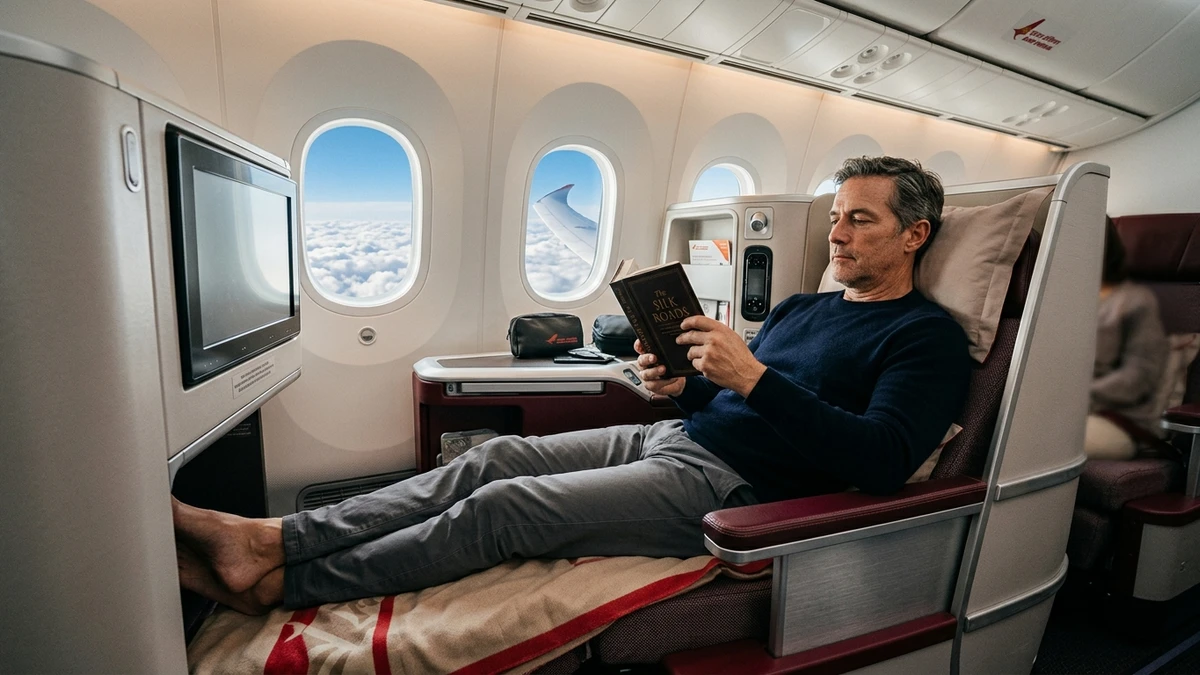
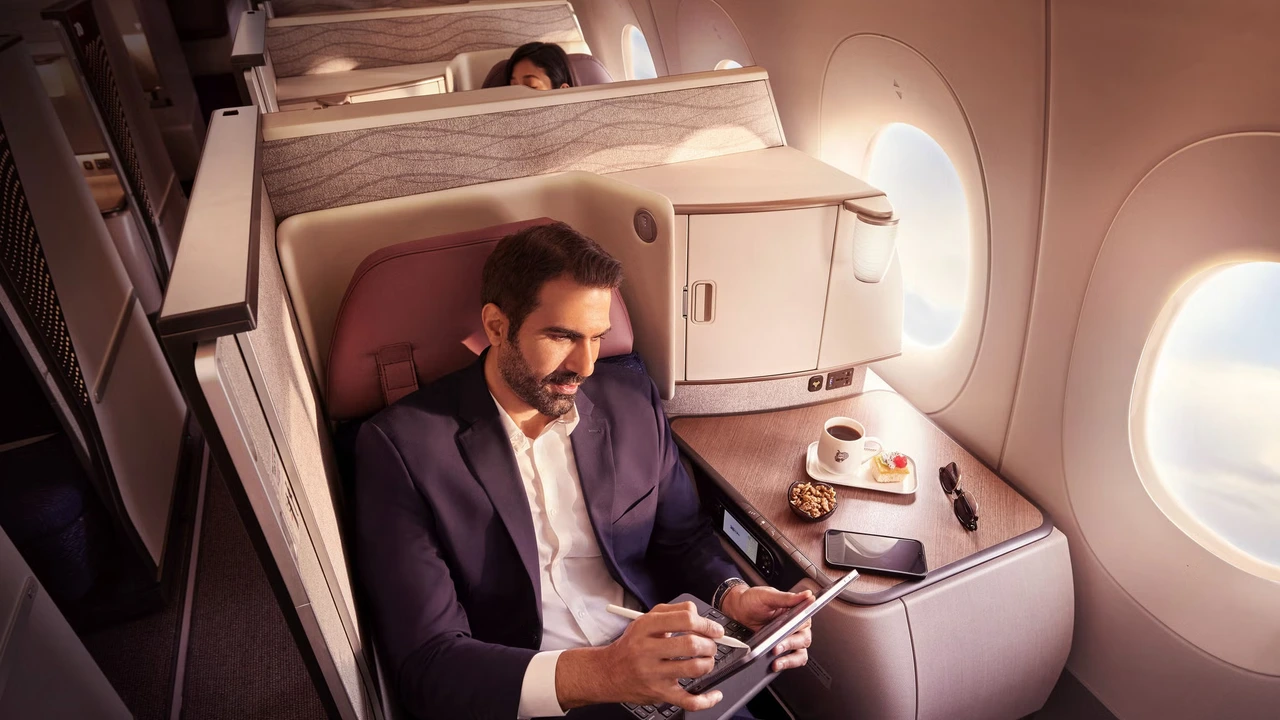
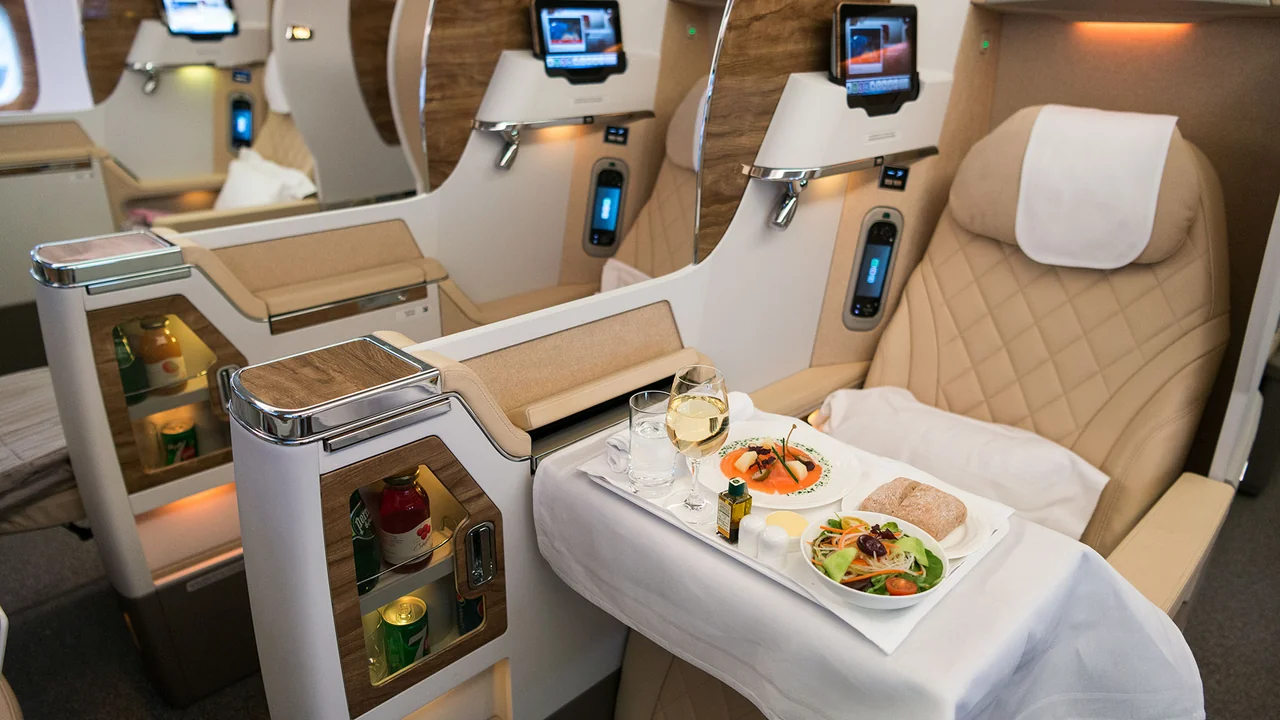
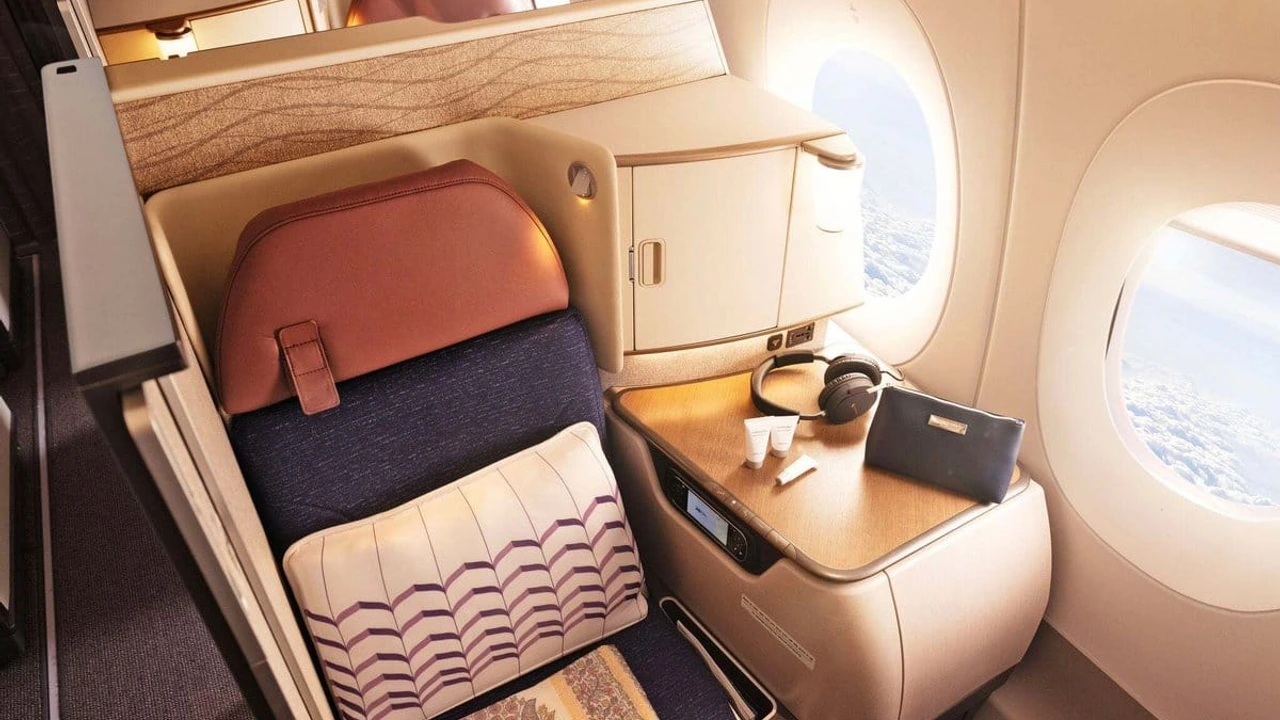
On the hard product front, Emirates currently holds a clear edge, though Air India is closing the gap. Emirates' 1-2-1 lie-flat configuration, found on its 777s and the iconic double-decker A380, delivers direct aisle access from nearly every seat, generous privacy, and a genuinely flat bed. The A380 adds a signature touch few carriers can match: an onboard bar and lounge where business and first class passengers can socialize mid-flight. Air India's business class, offered on its Boeing 777 and 787 widebodies, also features a proper lie-flat seat, a meaningful upgrade over the airline's pre-Tata era, though the cabin design and consistency across the fleet still trail Emirates' more uniform, purpose-built layout. Travelers booking Air India today should expect variability depending on aircraft age, as the fleet refresh continues to roll out.
What About Dining & Service?
Air India
Emirates
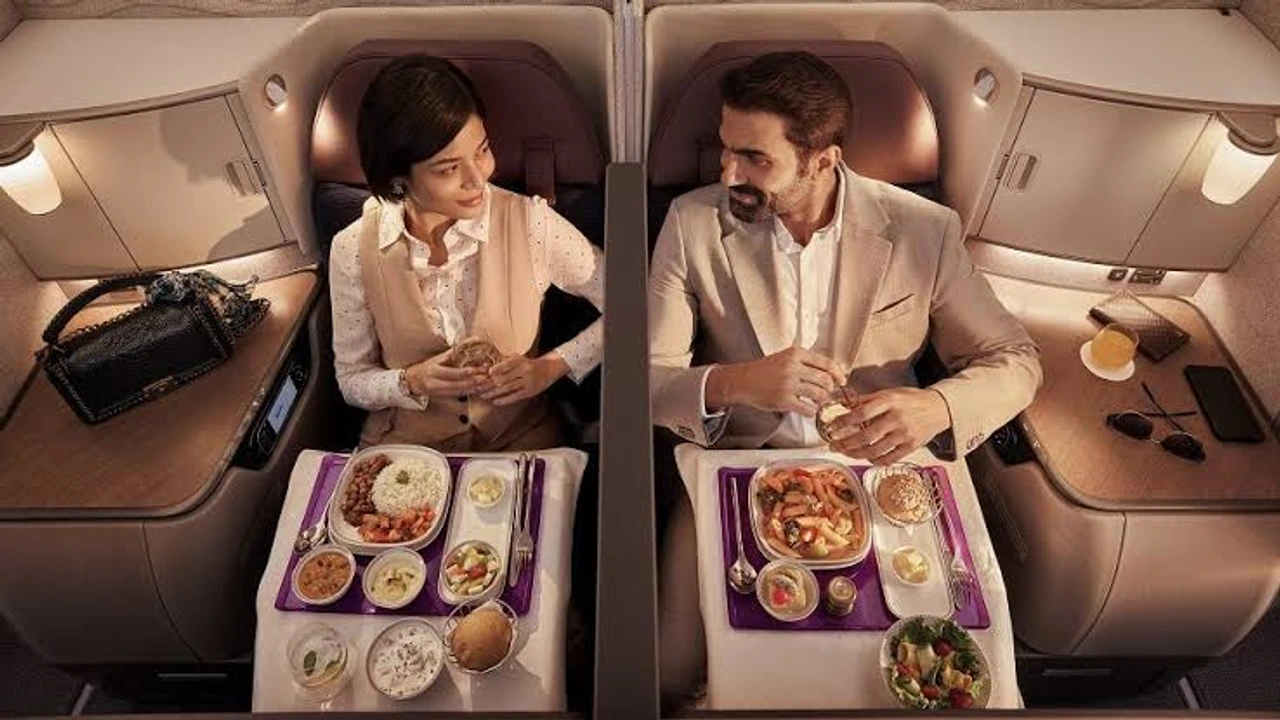
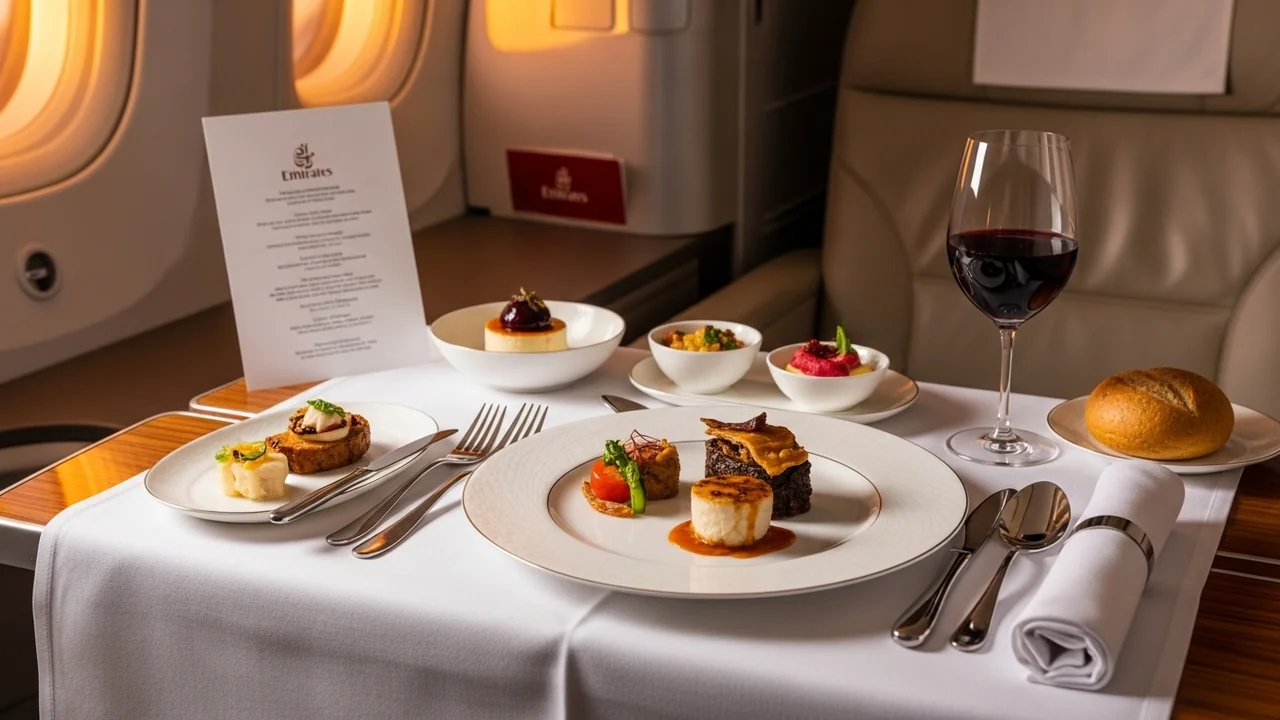
Dining and service reveal each carrier's cultural identity. Air India leans into its heritage, serving Indian regional specialties alongside international menus, a genuine draw for travelers seeking an authentic culinary experience en route to Delhi, Mumbai, or Bengaluru. Emirates takes a more expansive, cosmopolitan approach, with multi-course dining, a well-regarded wine and champagne program, and cabin crew drawn from dozens of nationalities trained to a famously polished standard. Emirates also equips every business class seat with its own mini-bar, a small but telling detail of the airline's attention to consumer touchpoints. Air India's service culture is warm and improving rapidly, but Emirates' consistency, built over a much longer runway, remains the benchmark.
How Do the Airport Lounges Compare?
Air India
Emirates
Ground experience is where Emirates' scale advantage becomes most obvious.
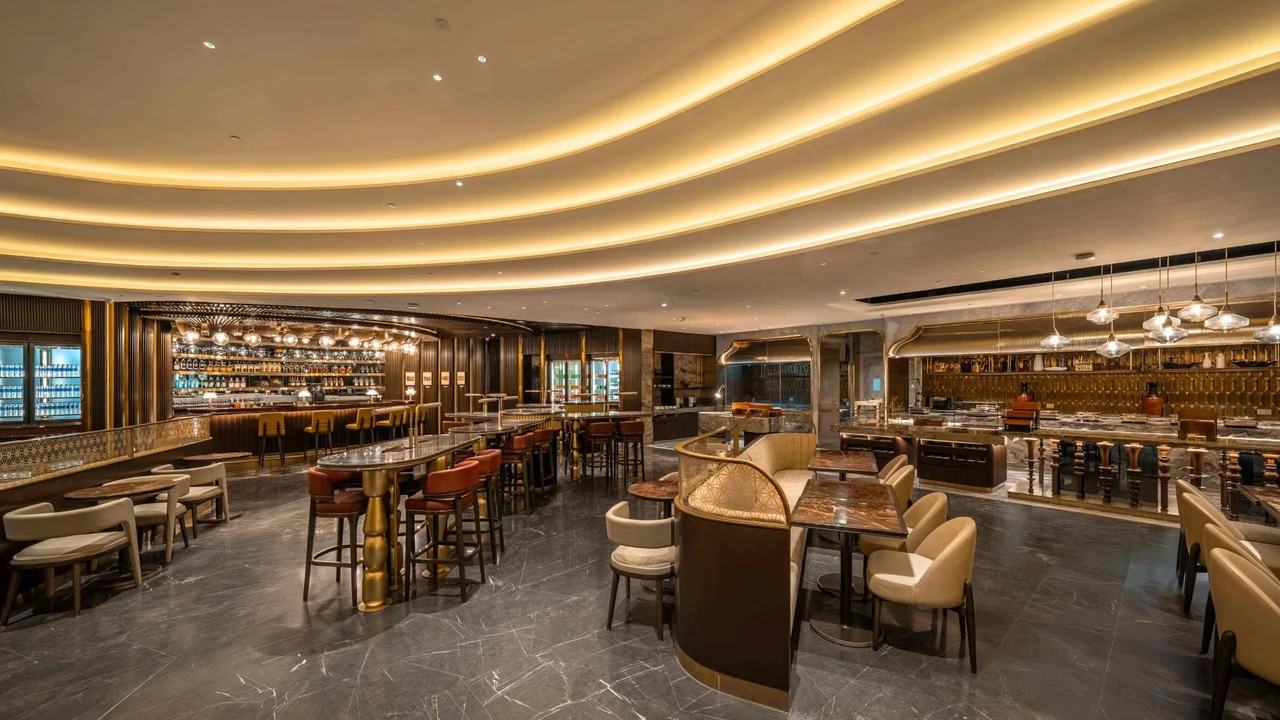
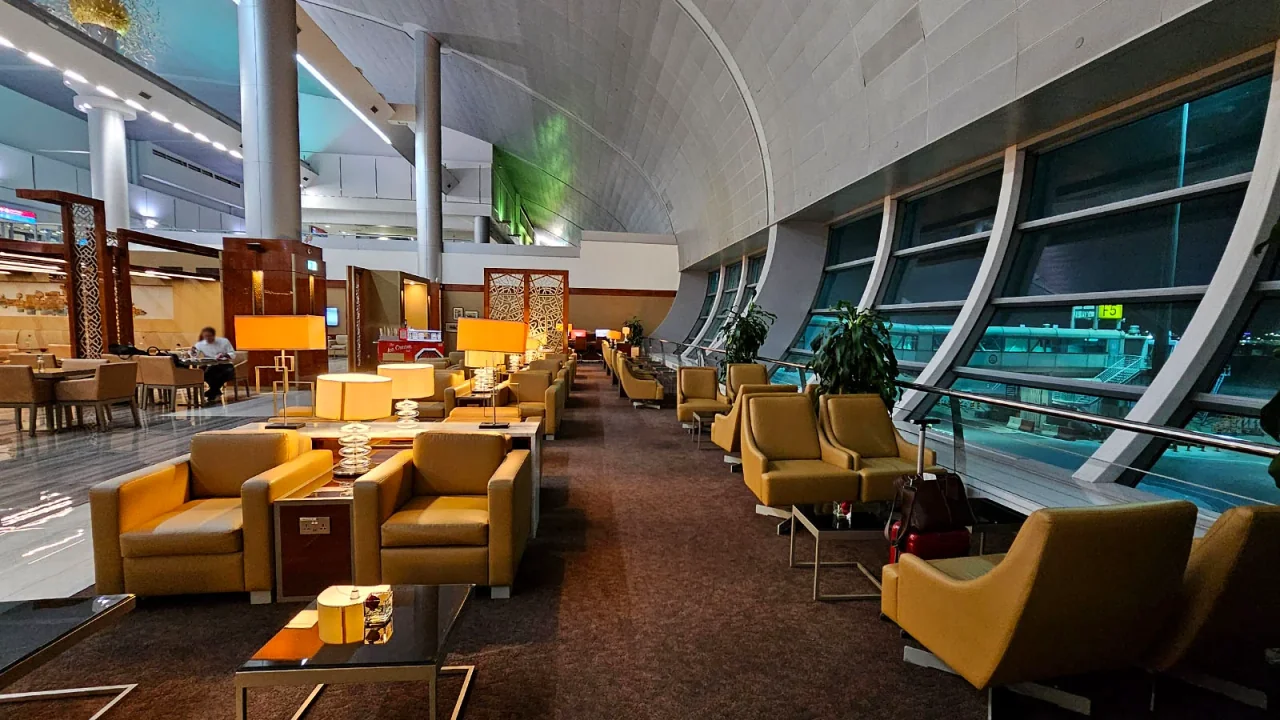
Ground experience is where Emirates' scale advantage becomes most obvious. Its Dubai hub is a purpose-built showcase for premium travel, with dedicated business class lounges offering spa services, extensive dining, and direct boarding access at Concourse B and the A380-exclusive Concourse A. Air India's hub airports, Delhi and Mumbai, are undergoing their own upgrades as part of India's broader aviation boom, but lounge offerings and airport infrastructure are still maturing relative to Dubai's globally benchmarked facilities. For travelers connecting through either hub, Emirates currently offers the more polished layover experience, though Air India's improvements are worth watching closely over the next few years.
Network breadth is a genuine point of separation. Emirates flies from ten US gateways, including JFK, LAX, ORD, DFW, and Miami, into Dubai, then onward to an enormous global network spanning London, Bangkok, Tokyo, Sydney, and Cape Town, making it a formidable one-stop connector for nearly any long-haul itinerary. Air India, flying from five US gateways including JFK, EWR, and SFO, offers a more focused network centered on Delhi, Mumbai, Bengaluru, and London, making it the stronger choice specifically for travelers whose itineraries revolve around the Indian subcontinent. Neither carrier's alliance status matters much here, since neither belongs to one, but Emirates' sheer route density gives US-based travelers more flexibility for onward connections.
Whichever carrier fits your itinerary, both are accessible through CEOFLIGHTS® private fares, with savings of up to 40% off published business class rates on Air India and Emirates alike. Our Personal Travel Managers know the nuances of each product, from which Air India aircraft have completed the retrofit to which Emirates route puts you on an A380 with the onboard bar, and can match your trip to the right seat and the right price. Call (888) 851 6897 to speak with a Personal Travel Manager and book your next business class journey through CEOFLIGHTS®.
Book Your Premium Cabin Today
✅ Choose Air India If You Value
- Lie-flat on 777 and 787 widebodies
- Indian and international cuisine
- Undergoing major fleet and product refresh under Tata ownership
- Star Alliance member with global connectivity via Delhi and Mumbai
✅ Choose Emirates If You Value
- A380 onboard bar and lounge
- Mini-bar at every business class seat
- ICE entertainment with 6,500+ channels
- Global network via Dubai hub — 140+ destinations
