There's a particular kind of exhaustion that hits experienced travelers when they scroll through the same curated Instagram locations for the hundredth time. Santorini. The Eiffel Tower. Machu Picchu at dawn, obscured by forty other people trying to get the same shot.
The travelers who fly business class are, almost by definition, people who've already done the obvious trips. They've ticked the boxes. Now they want something else — something harder to find and impossible to replicate. That's where unconventional travel comes in, and it's exactly why the most interesting premium routes aren't always the most obvious ones.
This article is about both things: the case for traveling differently, and the practical reality of getting to unusual destinations in the cabin your schedule demands.
Why unconventional travel matters more now
Frequent flyers accumulate miles and hotels. They also accumulate something harder to shake — a low-grade sense that every trip is starting to blur into the last one. Business trips to Frankfurt, leisure weekends in London, a family vacation in the Maldives. All fine. None of them particularly surprising.
Unconventional travel — meaning deliberately choosing experiences, routes, and destinations outside the tourist mainstream — is the antidote to that blur. It doesn't require discomfort. It doesn't mean backpacking or roughing it. It means making choices that prioritize depth over familiarity.
For the executive traveler, this often translates to three things: going somewhere genuinely off the beaten path, building in unstructured time to actually experience a place, and traveling solo or with a small group rather than a packaged tour where someone tells you when to get back on the bus.
The mental health argument is real and underappreciated. Research consistently shows that novel experiences — situations where the brain can't rely on autopilot — generate stronger emotional memories and a more pronounced sense of restoration. A week in Borneo does more psychological work than two weeks in a place you've already visited three times.
The business class routes worth knowing for off-path destinations
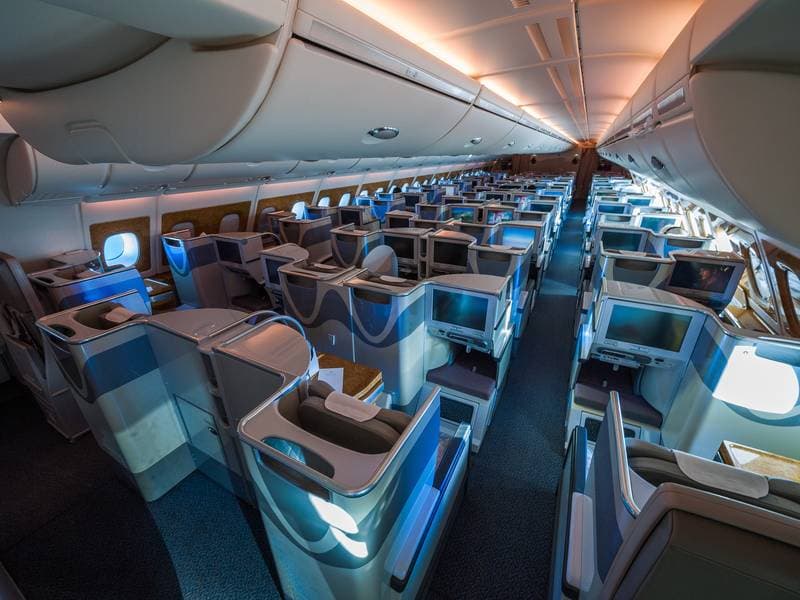
Here's where most travel writing fails the premium traveler: it tells you where to go but says nothing about how to get there in a cabin that makes a 14-hour flight something other than a punishment.
A few routes and products worth knowing:
Scandinavia and the Norwegian Arctic — If a husky ride under the Northern Lights in Tromsø is on your list, you're likely routing through Oslo (OSL) or Stockholm (ARN). From New York JFK, SAS flies direct to Copenhagen (CPH) in business class on their A330, with lie-flat seats and a respectable Scandinavian menu. Retail on that route runs $4,200–$6,800 roundtrip in business. Through our airline contracts at CEOFLIGHTS, we regularly place clients in that cabin for considerably less — call (888) 851-6897 and ask specifically about Scandinavian positioning routes. If you're continuing to Tromsø (TOS), budget for a 1-stop connection via OSL on Norwegian or SAS domestic — short haul, but worth it for what's waiting.
Borneo — Getting to Kota Kinabalu (BKI) or Kuching (KCH) in premium cabin requires a connection, full stop. The two serious options are via Kuala Lumpur (KUL) on Malaysia Airlines or via Singapore (SIN) on Singapore Airlines. Singapore Airlines' A380 Suites product on the SIN-operated longhaul — specifically on routes like EWR-SIN on SQ22 — is still one of the finest long-haul products in commercial aviation. Business class on that flight runs $7,000–$12,000 retail roundtrip from the US East Coast. The KrisFlyer sweet spot is famously hard to hit, which is where consolidator pricing becomes genuinely useful.
Remote Caribbean and Central America — If you're thinking about sailing to the San Blas Islands (Panama) or reaching lesser-visited Eastern Caribbean islands, the premium cabin story starts at Miami (MIA) or Fort Lauderdale (FLL). Copa Airlines flies to Panama City (PTY) with a decent business product — full lie-flat on their 737 MAX routes — and Copa's hub at PTY is genuinely efficient. American's A321 product on MIA routes is fine for a 3-hour flight but nothing to write home about.
Flying solo in business class — yes, it's worth it
There's a persistent cultural idea that business class travel is for corporate road warriors flying on someone else's dime, or couples celebrating anniversaries. Solo travelers in premium cabins are, in fact, the most rational customers in the building.
When you're alone, you control everything. Departure time, routing, connection length, which hub lounge you spend three hours in. You eat when you want, sleep through the night flight without negotiating with anyone, and arrive on your terms. The best business class seats for solo travelers — Qatar Airways' QSuite on the B777, for instance — are designed with privacy walls precisely because the airline understands that isolation at 38,000 feet is a feature, not a bug.
Solo business class travelers also connect differently on the ground. When you haven't spent 12 hours managing a companion's comfort, you arrive somewhere with more energy for actual engagement — the conversation with the stranger at the hotel bar, the detour suggested by a local guide, the spontaneous yes to something unplanned. That's not a soft observation. It's the mechanism through which unconventional travel actually works.
The case for small-group adventure — and one company doing it right
While researching this piece, we looked closely at Flash Pack, a company that has built something genuinely interesting in the adventure travel space. Their pitch — "arrive solo, leave as friends" — could easily read as marketing copy, but their model backs it up.
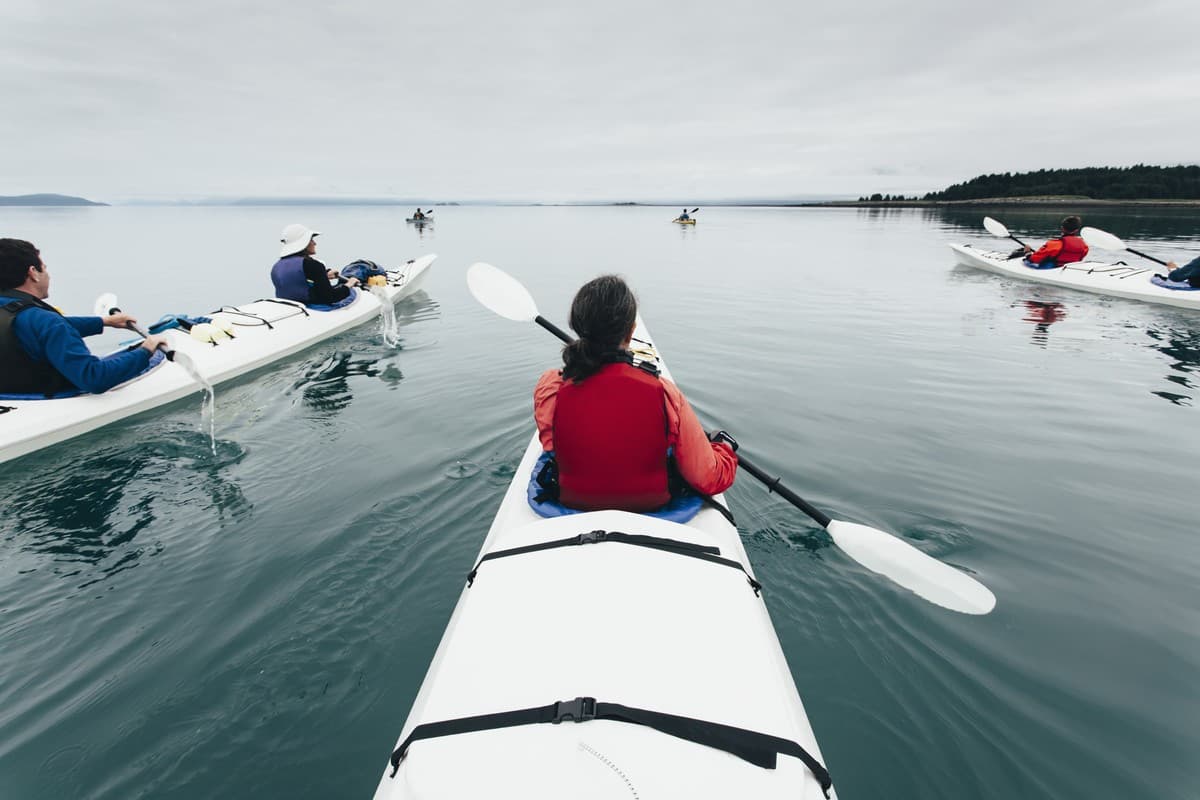
Flash Pack runs small-group trips (typically 10–16 people) specifically designed for solo travelers in their 30s and 40s. Not gap-year backpackers, not retirees — people who have careers, spending power, and a limited tolerance for anything that wastes their time. The itineraries reflect that: dining beneath the Northern Lights in Iceland, rafting in Borneo's Danum Valley, sailing to uninhabited Caribbean islands. These aren't experiences you stumble into; they require logistics that would take weeks to arrange independently.

Founders Radha Vyas and Lee Thompson built the company around a stated mission: create one million meaningful friendships through travel. They're currently somewhere around 100,000 — with 80% of participants reportedly staying in contact after trips. That number suggests something is working beyond the itinerary.
What they don't handle is the flight. That's a sensible division of labor. Flash Pack focuses on the in-destination experience; getting there in the right cabin is your problem to solve.

Lounge strategy for long connections
Unconventional destinations often require unconventional routings. A trip to the Norwegian Arctic might involve JFK to CPH to OSL to TOS — three flights, two connections. A Borneo trip might mean EWR to SIN to BKI — crossing 16 time zones in 22 hours of travel time. The lounge stops matter.
A few worth knowing:
- Qatar Airways Al Mourjan Lounge, Doha (DOH) — The best single airport lounge in the world, full stop. The a la carte dining alone is worth routing through DOH. If you're flying QSuite on a long-haul Qatar flight, you have access. Caviar, wagyu, à la carte service at 3am — it's absurd in the best way.
- Singapore Airlines SilverKris First Class Lounge, Changi (SIN) — Changi Terminal 3, post-security. The private dining rooms book up; arrive early. The laksa at the hawker section of the public terminal, however, is also excellent and free — the airport's way of reminding you that Singapore does food better than almost anywhere.
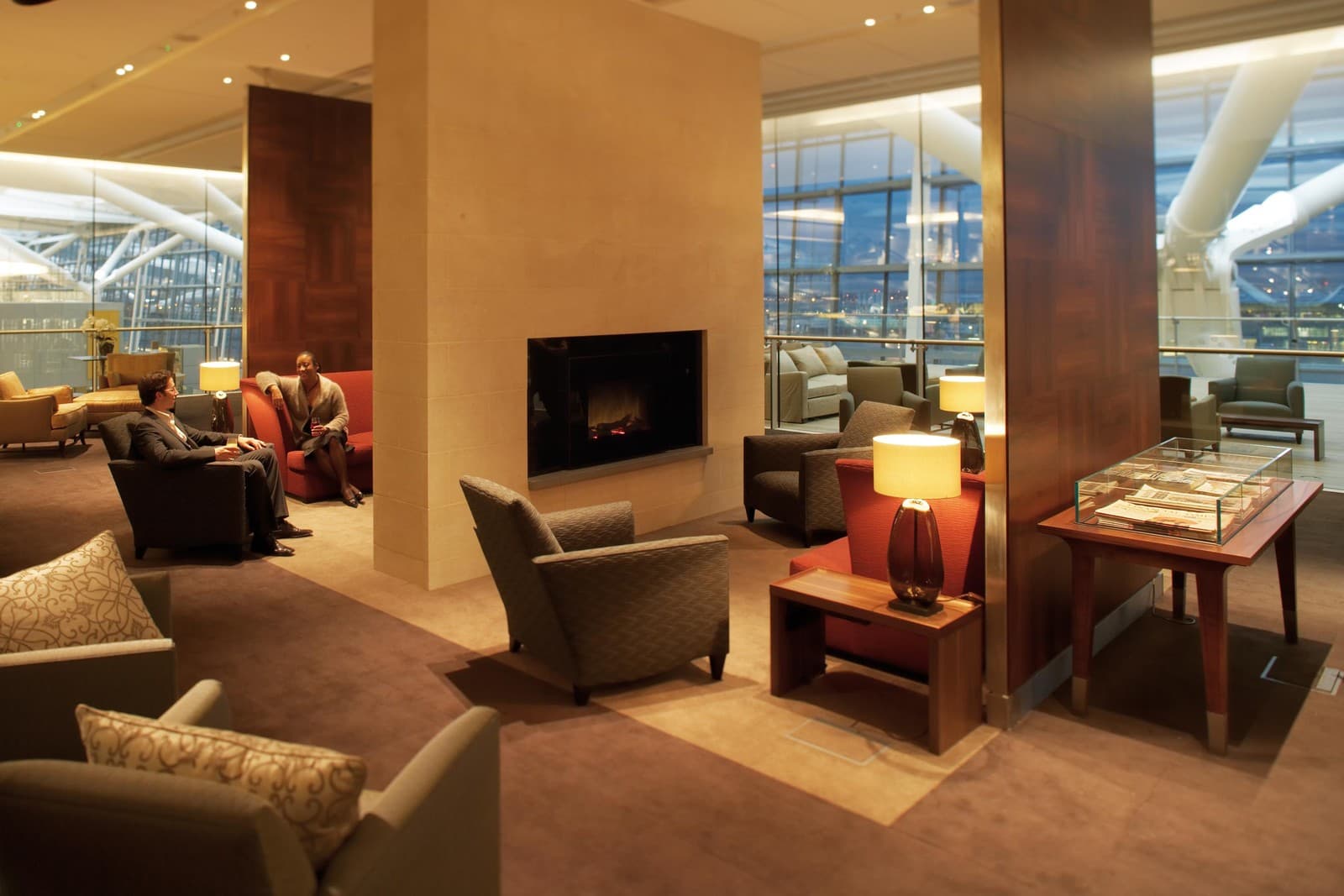
- SAS Gold Lounge, Copenhagen (CPH) — Underrated. Good smørrebrød, reasonable wine selection, quieter than its size suggests. Copenhagen also has the most efficient transit I've experienced in a European hub — budget 45 minutes for a connection and you'll be fine.

Real pricing context — what unconventional routes actually cost
Premium travel to off-path destinations tends to get quoted at eye-watering retail prices because the routes carry fewer passengers and the airlines price accordingly. But consolidator fares exist precisely because airlines would rather fill seats at negotiated rates than fly them empty.
Some realistic retail ranges and what CEOFLIGHTS clients typically pay:
- New York to Tromsø (via CPH or OSL), business class: Retail $5,500–$9,000 roundtrip. Through our contracts, clients regularly travel this route for 25–35% below published fares. CEOFLIGHTS is rated 4.8/5 on Trustpilot and ASTA-accredited (member #900292735) — we're not a booking engine, we're a team that negotiates on your behalf.
- New York to Kota Kinabalu via Singapore, business class: Retail $8,000–$13,000. Singapore Airlines' pricing on the SQ22 (EWR-SIN) flight is particularly rigid on points and miles redemptions, which is where cash consolidator fares become genuinely competitive.
- Miami to Panama City, then onward to San Blas, business class: Copa's PTY business product is comfortable and underpriced at roughly $1,800–$2,800 retail roundtrip in business from MIA. This is one route where the retail fare is already reasonable — the value-add is packaging the connection correctly.
Call (888) 851-6897 to discuss any of these routing options. We'll tell you honestly whether a consolidator fare makes sense for your specific dates, or whether a points redemption will serve you better.
What makes a trip actually memorable
The answer isn't the destination. It's the quality of attention you bring to it, which is directly correlated with how depleted you arrive.
Someone who flew coach for 16 hours, slept badly across two middle seats, and ate whatever was left in the meal cart at hour 11 — that person arrives in Borneo already running a deficit. The gorge hike on day one feels like work. The meal with local guides is endured rather than enjoyed.
Someone who flew business class, had a proper sleep cycle in a flat bed at 35,000 feet, ate reasonably well, and cleared customs without the specific misery of a 6am arrival after no sleep — that person shows up ready. That's the actual argument for premium travel to premium experiences. It's not about luxury as an endpoint. It's about arriving in condition to be present.

Flash Pack's founders understand this — their trips are designed for travelers who have things to bring to the table, not people who need to be entertained. The best experiences they offer require participants who are alert, curious, and genuinely open to what happens next. None of those things are possible when you're running on 90 minutes of economy class sleep.
The practical takeaway
If you're seriously considering an unconventional trip — Borneo, Arctic Norway, the San Blas Islands, a remote East African itinerary, anywhere that requires real routing thought — the planning sequence should be:
- Fix the dates around the in-destination experience (Flash Pack's calendar, a specific natural event, whatever anchors the trip)
- Work backward to identify the best premium cabin routing
- Call us at (888) 851-6897 before booking anything — we'll check whether consolidator pricing beats the retail fare or a points redemption on your specific routing
- Book the destination experience separately, with the knowledge that your flight situation is handled
Unconventional travel doesn't require sacrifice. It requires intention — and occasionally, the willingness to fly somewhere most people haven't thought to go.