Quick summary
- Non-stop business class flights from Los Angeles (LAX) to Tokyo (HND/NRT) span 5,451 statute miles, with flight times averaging 11 hours 45 minutes westbound and 10 hours eastbound.
- ANA "The Room" on the Boeing 777-300ER and Japan Airlines SKY SUITE lead the market in hard-product specs, while Singapore Airlines SQ11 offers an elite fifth-freedom option to Narita.
- Tokyo Haneda (HND) reduces ground travel to central business districts (Marunouchi, Ginza, Roppongi) to 15–20 minutes, compared to 60–75 minutes from Tokyo Narita (NRT).
- Standard published GDS retail fares range between $5,800 and $9,500 roundtrip. CEOFLIGHTS consolidator contracts access private wholesale rates from $2,780 to $4,100.
The transpacific corridor between Los Angeles International Airport (LAX) and Tokyo’s two major airports—Haneda (HND) and Narita (NRT)—is one of the most competitive corporate air routes in world aviation. Premium demand is fueled by cross-border commerce across technology, finance, entertainment, and advanced manufacturing. Airlines deploy their flagship cabins, latest seat configurations, and top catering concepts on this key transpacific trunk line.
Navigating this market requires clear analysis of seat architecture, aircraft assignments, airport ground proximity, and fare structures. Published retail business class tickets routinely cross the $8,000 threshold during peak travel windows. However, understanding revenue management logic, fare buckets, and wholesale contract pricing allows corporate travel desks and executive travelers to secure premium lie-flat suites at fractions of published rates.
Direct Carrier Breakdown: ANA, JAL, and Singapore Airlines
Six major carriers operate direct non-stop service between Los Angeles and Tokyo. The three market leaders—All Nippon Airways (ANA), Japan Airlines (JAL), and Singapore Airlines—deliver superior seats, soft product refinement, and operational consistency compared to domestic US legacy carriers.
All Nippon Airways (ANA)
ANA operates multiple daily non-stops from LAX to both Haneda and Narita. The carrier's flagship hard product is "The Room," featured on select retrofitted Boeing 777-300ER aircraft. Designed in collaboration with architect Kengo Kuma and British design firm Acumen, The Room sets the global benchmark for seat width in long-haul business class.
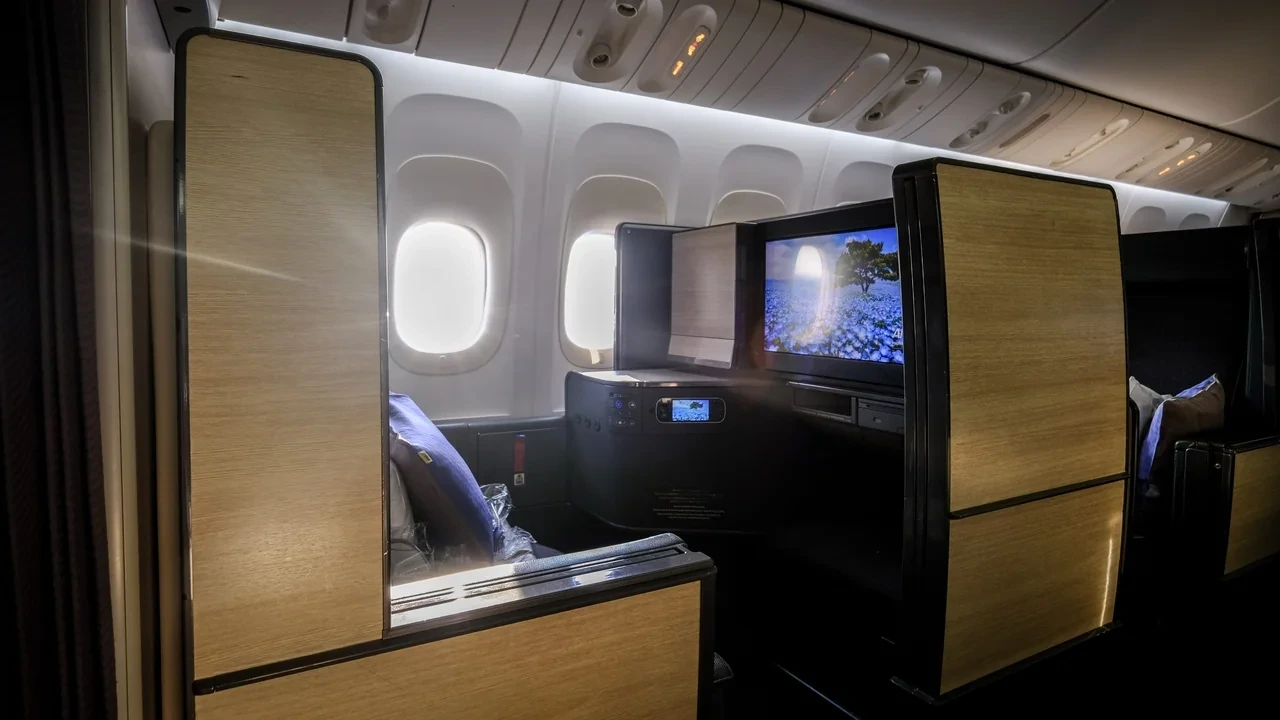
Arranged in a 1-2-1 alternating forward-and-aft facing layout, The Room provides double-sliding privacy doors, a 43-inch-wide seat (nearly double the width of conventional business class seats), and a 24-inch 4K screen. When converted into lie-flat mode, the sleeping surface measures 76 inches in length, paired with Nishikawa Airweave mattress pads and custom bedding.
On routes operated by ANA's Boeing 787-9 and 787-10 fleet, the airline deploys its staggered lie-flat configuration. While offering direct aisle access in a 1-2-1 layout and robust privacy, these seats lack full doors and measure 21 inches in width. Confirming aircraft registration and frame assignments via CEOFLIGHTS fare monitoring is essential if securing "The Room" suite is a priority.
Japan Airlines (JAL)
Japan Airlines operates daily non-stops to Haneda and Narita using Boeing 777-300ER and Boeing 787-9 aircraft. JAL’s signature hard product on the 777-300ER is the JAL SKY SUITE (Apex Suite design). Arranged in a 2-3-2 configuration, every seat provides direct aisle access via private passageways without stepping over adjacent passengers.
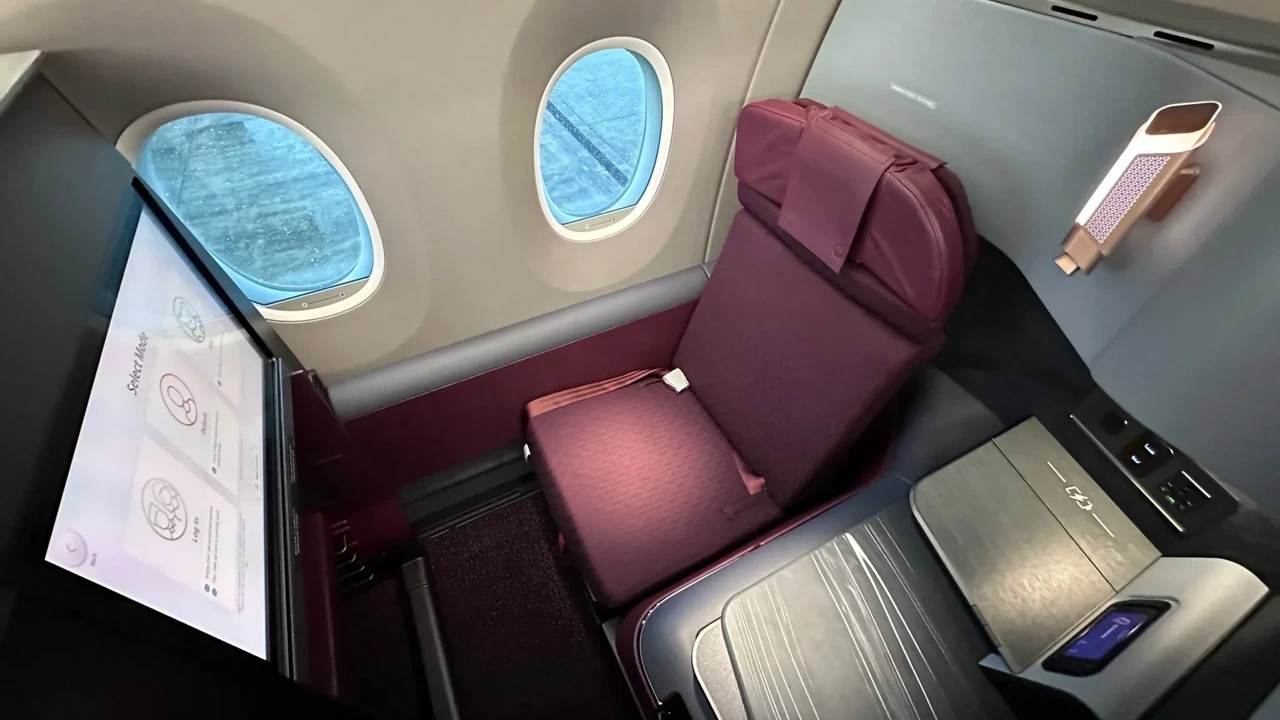
The Apex Suite is praised by frequent flyers for footwell space. Unlike reverse herringbone designs where feet are inserted into a narrow cubby under the seat ahead, the Apex Suite offers an open, rectangular footrest, allowing side sleepers complete freedom of movement. Seat dividers retract or extend electronically, providing full privacy.
On select 787-9 frequencies, JAL deploys the SKY SUITE III, a reverse herringbone layout in a 1-2-1 formation. While modern and comfortable, the footwell space is tighter than the original Apex Suite design. JAL differentiates its onboard experience through soft product execution, featuring dual-firmness Airweave mattress toppings, Sony noise-canceling headsets, and ultra-quiet cabin acoustics.
Singapore Airlines (SQ11 / SQ12)
Singapore Airlines operates a daily fifth-freedom flight between Los Angeles and Tokyo Narita (SQ11 westbound, SQ12 eastbound) continuing on to Singapore Changi. Fifth-freedom rights allow Singapore Airlines to sell tickets directly between the United States and Japan without requiring travel to its home hub.
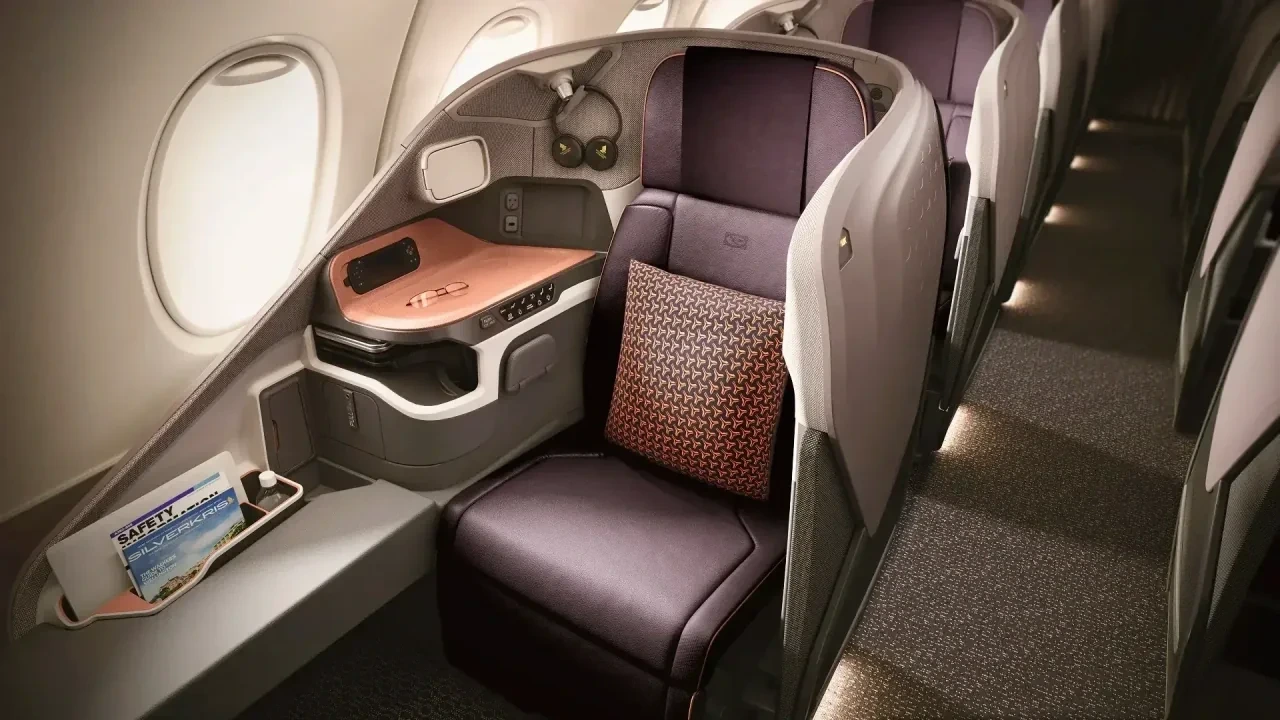
Operated by a three-class Boeing 777-300ER, Singapore Airlines provides its spacious 1-2-1 business class cabin. Constructed with hand-stitched full-grain leather, the seat measures 28 inches wide. The seat flips forward to reveal a flat bed with plush linens, dual pillows, and a padded duvet. Passengers can take advantage of the carrier's "Book the Cook" service, ordering gourmet main courses up to 24 hours prior to departure from LAX.
US Domestic Flag Carriers: United, Delta, and American
- United Airlines: Operates daily non-stops from LAX to Tokyo Haneda and Narita using Boeing 787-9 and 777-200ER aircraft featuring the Polaris suite. The Safran Optima seat provides direct aisle access, custom Saks Fifth Avenue bedding, and good storage, though footwells feel restrictive for taller travelers.
- Delta Air Lines: Flies daily from LAX to Tokyo Haneda on Airbus A350-900 aircraft equipped with Delta One Suites. Featuring full sliding privacy doors, ambient lighting, and Memory Foam cushions, Delta delivers a strong hard product, though inflight dining options lag behind Japanese competitors.
- American Airlines: Operates non-stop LAX to Haneda on Boeing 787-9 aircraft using Safran Cirrus or Super Diamond reverse herringbone seats. Comfort is consistent, but service execution and catering quality remain variable.
Hard Product & Service Head-to-Head Comparison
Selecting the right carrier depends on priorities across seat dimensions, sleeping comfort, food and beverage execution, and technology integration.
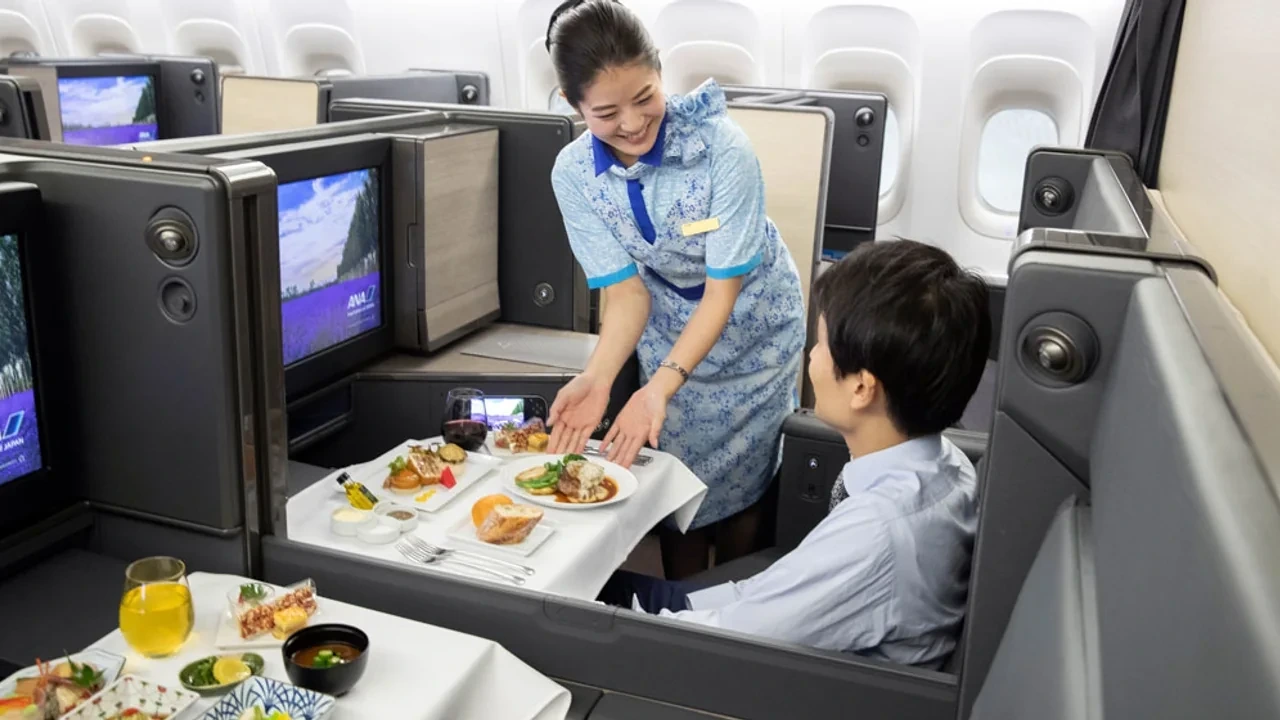
Japanese flag carriers focus heavily on culinary precision. ANA collaborates with master chefs under its "THE CONNOISSEURS" program, serving multi-course Japanese Kaiseki meals featuring seasonal regional ingredients, paired with high-end sakes such as Dassai 23. JAL partners with Michelin-starred culinary talent for its Bedd Sky Auberge menu, offering seasonal Japanese sets alongside modern Western menus.
Below is a direct comparison of the hard and soft products available non-stop between LAX and Tokyo:
| Airline & Aircraft | Seat Type & Layout | Bed Length / Width | Inflight Dining | Published Fare | CEOFLIGHTS Rate |
|---|---|---|---|---|---|
| ANA (Boeing 777-300ER) | The Room (1-2-1 Direct Aisle) | 76 in / 43.0 in | Japanese Kaiseki & Western | $7,200 - $9,500 | $3,150 - $4,100 |
| Japan Airlines (777-300ER) | SKY SUITE Apex (2-3-2 Direct Aisle) | 74 in / 25.5 in | Bedd Sky Auberge / Michelin | $6,800 - $8,900 | $2,950 - $3,850 |
| Singapore Airlines (777-300ER) | Forward-Folding Leather (1-2-1) | 78 in / 28.0 in | Book the Cook / International | $5,800 - $7,800 | $2,780 - $3,400 |
| Delta Air Lines (A350-900) | Delta One Suites (1-2-1 Door) | 77 in / 22.0 in | Regional US / Japanese | $6,200 - $8,400 | $2,850 - $3,600 |
| United Airlines (787-9) | Polaris Suite (1-2-1 Staggered) | 78 in / 20.5 in | United Signature / Japanese | $5,900 - $8,100 | $2,800 - $3,500 |
Airport Lounges & Ground Operations: LAX, Haneda, and Narita
Ground logistics impact total travel efficiency as significantly as cabin comfort. Executive travelers must balance airport transit distances against lounge access when picking departure and arrival terminals.
Los Angeles Departure Experience (LAX)
- Tom Bradley International Terminal (TBIT): Departure point for ANA, JAL, and Singapore Airlines. Business class passengers accessing Star Alliance (ANA, SQ) use the Star Alliance Lounge at TBIT, featuring an open-air outdoor terrace, fire pit, and full-service bar. Oneworld passengers (JAL) access the International Business Lounge or, for Oneworld Emerald elites, the Qantas First Class Lounge.
- Terminals 3 & 7: Delta departs from Terminal 3, offering access to the flagship Delta Sky Club. United operates from Terminal 7, providing qualified Polaris passengers access to the dedicated United Polaris Lounge, complete with waiter-service dining and shower suites.
Airport Comparison: Haneda (HND) vs. Narita (NRT)
When flying to Tokyo, airport location significantly affects transfer times into the corporate centers of Marunouchi, Otemachi, Roppongi, and Akasaka.
| Metric | Tokyo Haneda (HND) | Tokyo Narita (NRT) |
|---|---|---|
| Distance to Tokyo Station | 9 miles (15 km) | 40 miles (65 km) |
| Taxi / Private Transfer Time | 15–20 minutes | 60–75 minutes |
| Taxi Fare (Central Tokyo) | ¥6,000 – ¥9,000 ($40 – $60 USD) | ¥28,000 – ¥35,000 ($180 – $230 USD) |
| Express Train Option | Tokyo Monorail / Keikyu (20 min) | Narita Express (N'EX) (55–60 min) |
| Primary Carriers from LAX | ANA, JAL, Delta, American, United | ANA, JAL, Singapore Airlines, United |
For executive travelers with tight schedules, Haneda (HND) is the preferred arrival point. Private transfers reach downtown hotels in 15 minutes under normal traffic, whereas Narita (NRT) transfers are vulnerable to major delays on the Shuto Expressway.
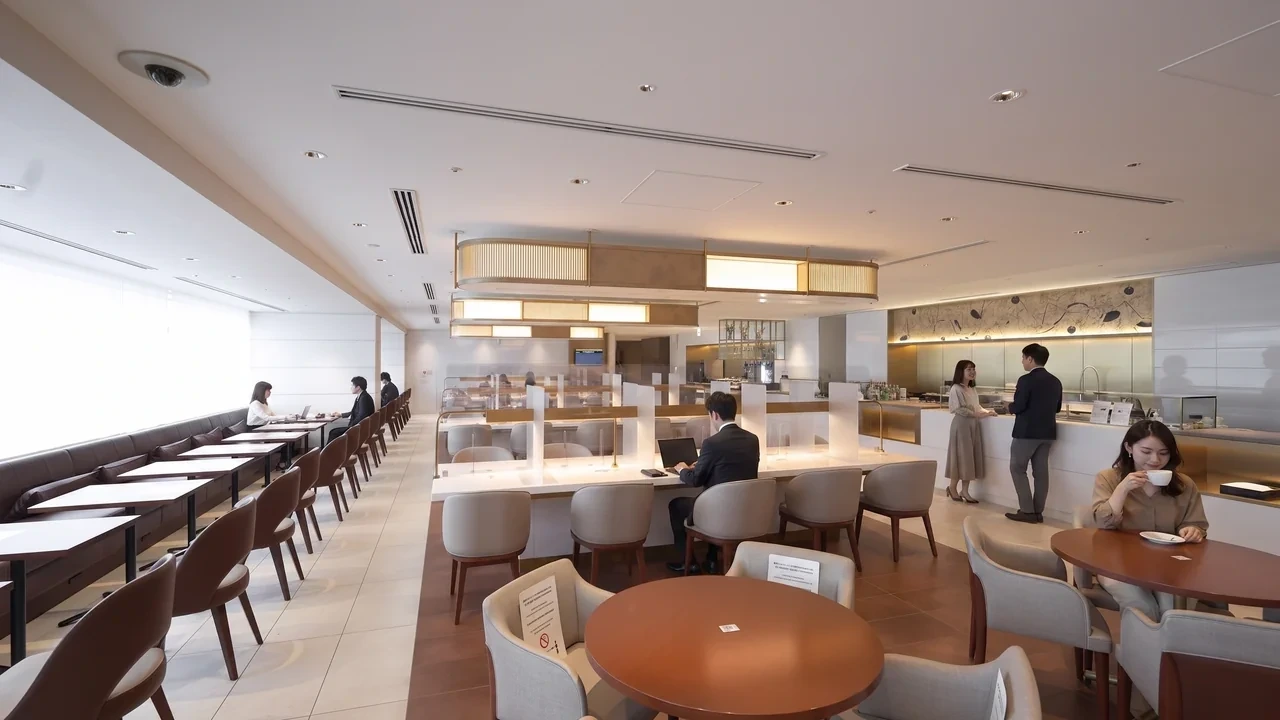
At Haneda, both ANA (ANA Suite Lounge / ANA Business Lounge) and JAL (JAL First Lounge / Sakura Lounge) operate premium lounge facilities. The JAL Sakura Lounge features tarmac views, private shower facilities, and its signature Japanese beef curry bar. At Narita, Singapore Airlines passengers can relax in the SilverKris Lounge prior to the late-afternoon return flight to LAX.
Retail Markups vs. CEOFLIGHTS Wholesale Rates
Published retail airfares for transpacific business class are subject to dynamic yield management algorithms. During peak travel windows, algorithms increase published fares to maximize yield from uncontracted corporate buyers.
Mechanics of Published GDS Pricing
Airlines publish retail fares through Global Distribution Systems (GDS) such as Sabre, Amadeus, and Travelport. Business class fare buckets follow a hierarchy from highest to lowest flex:
- J Fare Class: Full-fare, unrestricted business class ($9,000 – $12,000+ roundtrip).
- C & D Fare Classes: Standard corporate business class ($6,500 – $8,500 roundtrip).
- Z & P Fare Classes: Discounted advance-purchase business class ($4,500 – $6,200 roundtrip).
When high-demand business dates approach, airlines restrict access to lower fare buckets (Z and P), forcing buyers into expensive C and J buckets.
How CEOFLIGHTS Wholesale Net Rates Work
CEOFLIGHTS bypasses public GDS retail markups by tapping into contracted consolidator net rates. Airlines allocate non-published inventory to corporate brokers to ensure base load factors on transpacific routes without diluting their public retail pricing structure.
+-------------------------------------------------------+
|  Published GDS Retail Rate (C / D / Z Fare Buckets)    |
|                  $5,800 - $9,500                      |
+-------------------------------------------------------+
                           |
                           v  [Yield Management Markups & Distribution Fees]
+-------------------------------------------------------+
|        CEOFLIGHTS Private Consolidator Net Rate       |
|                  $2,780 - $4,100                      |
+-------------------------------------------------------+
These wholesale rates apply the same physical cabin seats, mileage accrual rights, and lounge privileges as published retail tickets. By tapping into corporate net contracts, CEOFLIGHTS delivers savings between 40% and 58% on LAX-HND and LAX-NRT flights.
Access unlisted corporate business class rates on LAX to Tokyo routes with savings up to 55%.
Expert Booking Strategies for Executive Travel
Maximizing comfort and efficiency requires aligning flight times with your body's circadian rhythm and using optimal booking channels.
Optimizing Transpacific Sleep Cycles
For maximum productivity upon arrival, book late-night departures from LAX (such as ANA NH105 departing around 00:30 AM). Eat dinner prior to boarding in the Star Alliance Lounge, step onboard, and sleep immediately. You will land at Haneda around 05:00 AM local time, rested and aligned for a full business day in Tokyo.
Strategic Scheduling Recommendations
- Westbound Flight Selection (LAX to Tokyo):
- Red-Eye Option: Flights departing LAX between 11:00 PM and 01:00 AM (ANA NH105 / JAL JL015) arrive in Tokyo early morning (04:30 AM – 06:00 AM). This maximizes rest and saves a business day.
- Daytime Option: Flights departing LAX between 10:00 AM and 01:00 PM (Singapore Airlines SQ11 / JAL JL061) land in Tokyo late afternoon (03:00 PM – 05:30 PM). This schedule suits travelers who prefer sleeping in a hotel bed upon arrival.
- Eastbound Flight Selection (Tokyo to LAX):
- Eastbound transpacific flights benefit from strong tailwinds, reducing flight duration to approximately 9 hours 45 minutes to 10 hours 15 minutes.
- Evening departures from Tokyo (17:00 PM – 19:30 PM) arrive back at LAX between 11:00 AM and 13:30 PM on the same day due to crossing the International Date Line.
Overcoming Married Segment Logic
Airlines frequently use "Married Segment Logic" within GDS systems, restricting availability on point-to-point routes (LAX-HND) while opening seats if bundled with a connecting domestic or Asian flight. The CEOFLIGHTS desk overcomes these ticketing barriers by issuing tickets under corporate net fare agreements, bypassing Married Segment restrictions to lock in non-stop seats at wholesale rates.
Frequently Asked Questions
Which airline offers the best business class seat from LAX to Tokyo?
ANA "The Room" on the Boeing 777-300ER provides the best business class seat on the route. Featuring a 43-inch wide seat, double privacy doors, and a 24-inch 4K screen, it outperforms competitor dimensions. CEOFLIGHTS desk can verify aircraft tail assignments to confirm "The Room" configuration.
What is the difference between flying into Haneda (HND) versus Narita (NRT)?
Haneda Airport is located 9 miles from central Tokyo, requiring a 15-to-20-minute drive or train ride to business districts like Marunouchi and Ginza. Narita Airport sits 40 miles east of the city, requiring 60 to 75 minutes by taxi or Narita Express train. Haneda is preferred for tight business itineraries.
How much can I save on LAX to Tokyo business class using consolidator rates?
Published retail business class fares on LAX to Tokyo range from $5,800 to $9,500 roundtrip. CEOFLIGHTS consolidator net rates access private corporate inventory starting from $2,780 to $4,100, saving executive travelers and corporate flight departments between 40% and 58% off retail tariffs.
Can I fly Singapore Airlines business class directly from LAX to Tokyo without going to Singapore?
Yes. Singapore Airlines operates SQ11/12 as a fifth-freedom route between Los Angeles (LAX) and Tokyo Narita (NRT). Fifth-freedom traffic rights allow passengers to book standalone travel between California and Japan, enjoying Singapore Airlines' top-tier service, wider leather seating, and signature "Book the Cook" inflight catering.
What is the best departure time from LAX to minimize jet lag in Tokyo?
Late-night departures leaving LAX between 11:00 PM and 01:00 AM allow passengers to sleep immediately after takeoff. Landing in Tokyo between 04:30 AM and 06:00 AM aligns well with local daylight hours, enabling a full day of meetings and rapid adaptation to Japan Standard Time.